

Why Toilet Trapways Are Curved Like an S
Toilets4.6
Learn why toilet trapways curve like an S, how each bend blocks sewer gas, and what the shape means for clogs and…
Read the guideMost toilet clogs are completely avoidable. This guide covers the 10 habits that plumbers consistently say stop repeat clogs, explains why certain toilets clog far more than others, and tells you when a low-MaP bowl or narrow trapway is the root cause, not your household habits.
Most toilet clogs are caused by flushing non-flushable items, using too much toilet paper at once, or having a toilet with a narrow trapway and a weak flush. Prevent them by flushing only waste and single-ply toilet paper, using only as much paper as needed, keeping the tank full and flapper functional, and upgrading to a toilet with a MaP score of 800 grams or higher if repeat clogs persist despite good habits.
A toilet that clogs regularly is one of the most aggravating household problems, and the frustrating part is that the solution is almost always behavioral rather than mechanical. According to data from municipal water utilities, the overwhelming majority of sewer blockages that trace back to the household level are caused by materials that never belonged in the toilet in the first place. The rest come down to toilet paper overload, a weak or low-water flush, or a bowl design with a trapway that is simply too narrow to handle normal household use.
Understanding why clogs happen makes preventing them straightforward. A toilet flushes by siphon: the rushing water pulls everything through the trapway, that S-shaped ceramic channel behind the bowl, and into the drainpipe below. When something interrupts that siphon, whether it is a mass of compressed paper, a wad of wipes, or a foreign object, the result is a clog. The 10 habits below address every major cause, ordered by impact so you can start with the one that matters most for your household.
Research published by the Water Research Foundation found that "flushable" wipes are responsible for a disproportionate share of residential drain blockages. Unlike toilet paper, which is engineered to disintegrate in water in a matter of seconds, wipes retain their structure through an entire drain trip and accumulate into masses called fatbergs where they combine with fats and grease in the sewer. Even a single wipe flushed per day adds up quickly in a household with two or more bathrooms.
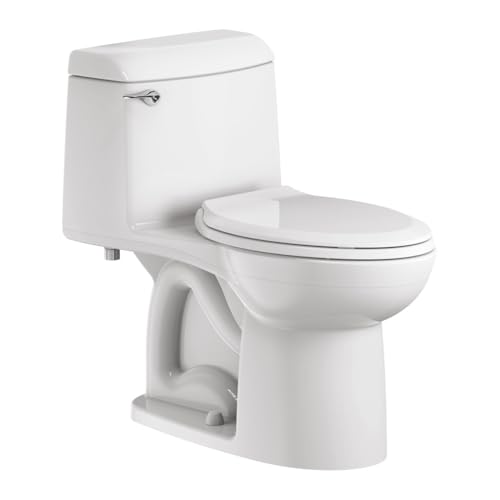
Toilet paper itself becomes a problem only when the amount flushed exceeds what the toilet's flush volume and trapway size can move in one shot. A toilet with a 1.6 GPF flush and a wide trapway, like the American Standard Champion 4 with its 4-inch flush valve, handles a generous amount of paper without straining. A 1.28 GPF toilet with a narrow passageway and a weak flush can clog on a moderate amount. That is why the same habits produce different outcomes in different bathrooms.
| Clog Cause | How Common | Difficulty to Prevent | Best Fix |
|---|---|---|---|
| Non-flushable items (wipes, paper towels) | Very common | Easy | Stop flushing them entirely |
| Too much toilet paper at once | Common | Easy | Use less; flush twice if needed |
| Low-flush toilet with narrow trapway | Common in older models | Medium | Upgrade to high-MaP toilet |
| Low water level in tank | Moderate | Easy | Adjust fill valve to correct level |
| Worn flapper (weak flush) | Moderate | Easy | Replace flapper ($5-$10 part) |
| Hard water mineral buildup in trapway | Less common | Medium | Monthly cleaning with citric acid |
| Partial drain blockage downstream | Less common | Requires plumber | Snake the drain line |
The single most impactful habit is the simplest: flush nothing except human waste and toilet paper. This means no wipes (including those labeled "flushable"), no paper towels, no cotton balls, no dental floss, no feminine hygiene products, no cotton swabs, and no medications. Every one of these items either does not break down in water, is too large for the trapway, or accumulates into blockages downstream. Place a small wastebasket with a lid next to every toilet in the house and use it for everything that is not toilet paper.
Plumbing industry associations have consistently found that "flushable" wipes do not disintegrate in water within any reasonable timeframe. Independent testing by consumer groups in the UK and North America has shown that wipes retain structural integrity after 10 minutes of agitation in water, unlike toilet paper, which breaks apart within 30 seconds. The safest rule is to treat all wipes as non-flushable regardless of packaging claims.
Toilet paper is the intended flushable material, but quantity still matters. A toilet's flush is designed to move a specific volume of material through a specific trapway diameter. Exceeding that volume in one flush, especially with thicker multi-ply paper, creates the same kind of compression that causes a clog. Use a sensible amount per flush. If you use a large amount, fold rather than bunch (folded paper moves through water more smoothly) and consider splitting into two flushes. This is especially important for guests, children, and households where thicker paper is preferred.
Not all toilet paper breaks down at the same rate. Single-ply toilet paper dissolves significantly faster than 2-ply or 3-ply, which matters most in households with older toilets, low-flow models, or septic systems. Rapid-dissolve toilet paper, sometimes marketed as RV toilet paper or marine toilet paper, breaks down in seconds and almost never contributes to clogs. For most homes, 1-ply or standard 2-ply from major brands is fine as long as amounts are kept reasonable. Ultra-plush, quilted, or thicker 3-ply paper presents more risk in toilets with weak flushes or narrow trapways.
EPA WaterSense certified toilets are tested for both water efficiency and flush effectiveness, but the WaterSense program tests assume standard toilet paper, not ultra-thick varieties. If you experience repeat clogs in an otherwise well-functioning toilet, switching from 3-ply to 2-ply or 1-ply paper is often enough to eliminate them entirely without any other changes.
A toilet's flushing power depends directly on how much water leaves the tank. The tank has a fill line marked on the inside wall, typically about an inch below the top of the overflow tube. When the water level sits below that line, the flush does not generate enough force to clear the bowl reliably, especially for heavier loads. Check the water level in your tank by removing the lid. If the water is more than an inch below the overflow tube, adjust the float arm or float cup on the fill valve upward until the tank fills to the correct level. This takes about two minutes and can dramatically reduce clog frequency in older toilets.
The flapper is the rubber seal at the bottom of the tank that lifts to release water during a flush. Over time, rubber flappers warp, stiffen, or develop mineral coating that prevents them from lifting fully or releasing all the tank water before closing. A flapper that closes too early means the flush only delivers a fraction of the tank's volume to the bowl, which is often not enough to clear heavy waste or a generous amount of paper. Flappers cost under ten dollars and take five minutes to replace. If your toilet has become significantly weaker over the past year or two, the flapper is the first thing to check. See our guide on how to replace a toilet flapper for step-by-step instructions.
Mineral deposits from hard water gradually accumulate inside the rim jets, the small holes under the bowl rim through which flush water enters the bowl. When rim jets become partially blocked, water enters the bowl unevenly and at lower velocity, reducing the flushing power and the siphon effect. Monthly cleaning with a rim cleaner or a citric acid solution poured into the overflow tube keeps the jets clear. For the trapway itself, a monthly enzymatic toilet cleaner helps prevent organic buildup at the trapway entrance, which is where soft clogs most often form. Avoid aggressive chemical drain openers, which can soften the wax ring and corrode the internal tank components over time.
Hard water areas with high calcium and magnesium content are particularly prone to rim jet blockage. If your household is on a well or in an area with water hardness above 200 mg/L, a monthly citric acid or white vinegar soak through the overflow tube is more effective at keeping the jets open than standard toilet bowl tablets, which clean the bowl surface but do not reach the rim jets.
Toys, paper scraps, excess wipes, and curiosity-driven experiments with the toilet are among the leading causes of acute clogs in households with young children. A solid toy lodged in the trapway cannot be cleared by plunging and often requires removing the toilet from the floor entirely. The investment of a short conversation explaining that only toilet paper goes in the toilet is worth far more than the cost of an emergency plumber call. For households with toddlers, a childproof toilet lid lock that requires an adult hand to open is a reliable physical barrier. Our guide to childproofing a toilet covers the full range of options.
Drop-in toilet bowl cleaners, the blue or green tablets that sit in the tank and release chemicals with each flush, can slowly degrade the rubber components inside the tank, particularly the flapper. The bleach or chlorine in many tablets causes the rubber to crack and stiffen faster than normal, shortening the effective lifespan of the flapper and fill valve seal. A worn flapper means a weaker flush, and a weaker flush means more clogs. If you want an automatic cleaning action, use under-rim gel applicators or in-bowl tablets instead of tank drop-ins. These clean the bowl without contacting the tank's internal parts.
Every toilet drain connects to a vent stack, the vertical pipe that runs up through the roof and allows air into the drain system. Without adequate venting, the flushing siphon breaks early, leaving waste in the trapway rather than pulling it all the way through. A partially blocked vent stack, caused by leaves, bird nests, or debris accumulation at the roof opening, causes sluggish flushing and gurgling sounds after a flush without an obvious blockage in the trapway. If multiple toilets or fixtures in your home have started flushing slowly at the same time, the vent stack is a likely culprit. Annual inspection during routine roof maintenance costs almost nothing and prevents this overlooked cause of clogging. See our toilet gurgling guide for more on vent-related symptoms.
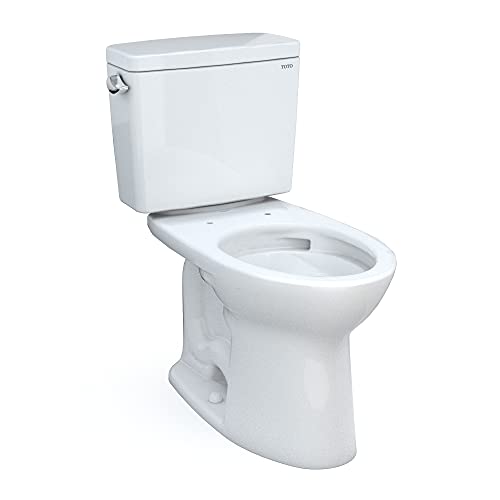
If you follow habits 1 through 9 and still experience regular clogs, the toilet itself is almost certainly the problem. MaP (Maximum Performance) flush testing is the industry standard for measuring how many grams of solid waste a toilet can clear in a single flush. A score of 800 grams is strong, and 1,000 grams is near the top for a residential gravity toilet. Older toilet designs, particularly those from the early 1990s when low-flow mandates first took effect without the bowl geometry improvements that came later, often score as low as 250 to 350 grams and clog with ordinary use. A trapway diameter below 2 inches compounds the problem by physically restricting what can pass through. Modern toilets like the TOTO Drake, Kohler Highline, Kohler Cimarron, and American Standard Champion 4 post MaP scores of 1,000 grams and feature wider trapways that make clogs rare under normal use. See our complete guide to best flushing toilets for rated models across every budget.
When comparing toilet models specifically for clog resistance, four specification points matter more than anything else.
MaP score. Independent MaP testing by IAPMO and the Canadian Water and Wastewater Association measures precisely how many grams of solid waste (using soy-paste test media) a toilet can clear in a single flush. Anything above 800 grams is reliably clog-resistant for normal household use. The TOTO Drake II posts 1,000 grams with 1.28 GPF. The American Standard Champion 4 posts 1,000 grams with 1.6 GPF. The Kohler Highline Arc also reaches 1,000 grams at 1.28 GPF. The Gerber Viper posts 1,000 grams and is a consistent performer in the value segment.
Trapway diameter and glaze. A toilet's trapway is the channel waste travels through between the bowl and the drain pipe. Wider is better for clog resistance. The American Standard Champion 4 uses a 2.625-inch trapway, which is exceptionally wide. Most modern quality toilets use 2 to 2.25 inches. Fully glazed trapways reduce the surface friction that causes paper and waste to catch; TOTO's CeFiONtect glaze and American Standard's EverClean surface both contribute to smoother waste passage. A rough, unglazed trapway lets paper fibers snag, which is how soft clogs begin.
Flush valve size. The flush valve is the opening at the bottom of the tank. A 3-inch flush valve releases water faster than the standard 2-inch valve, which means a higher volume of water enters the bowl in the critical first fraction of a second of a flush. The American Standard Champion 4's 4-inch flush valve is the widest available in a residential gravity toilet. The Kohler Cimarron uses a 3-inch AquaPiston flush valve. Both are significantly less prone to clogging than toilets with a 2-inch valve.
Water level in the bowl. A higher water surface in the bowl, measured as the water spot, reduces the area of dry porcelain where paper can rest instead of floating toward the trapway. Elongated bowls generally maintain larger water spots than round bowls. Toilets with a small water spot are more likely to leave paper resting on dry porcelain where it can accumulate before the next flush.
| Toilet Model | MaP Score | GPF | Trapway | Flush Valve | Clog Risk | Check Price |
|---|---|---|---|---|---|---|
| American Standard Champion 4 | 1000 g | 1.6 | 2.625 in | 4 in | Very Low | Check price |
| TOTO Drake II | 1000 g | 1.28 | 2.125 in | 3 in | Very Low | Check price |
| Kohler Highline | 1000 g | 1.28 | 2.25 in | 3 in | Very Low | Check price |
| Kohler Cimarron | 1000 g | 1.28 | 2.25 in | 3 in | Very Low | Check price |
| TOTO UltraMax II | 800 g | 1.28 | 2.125 in | 3 in | Low | Check price |
| Woodbridge T-0001 | 800 g | 1.28 | 2.125 in | 3 in | Low | Check price |
| Gerber Viper | 1000 g | 1.28 | 2.125 in | 3 in | Very Low | Check price |
| Typical 1990s low-flow toilet | 250-400 g | 1.6 | 1.75 in | 2 in | High | Check price |
Water utility tests have shown that thick, quilted toilet paper can take 15 or more minutes to begin breaking apart in water, compared with standard toilet paper's 30-second disintegration window. For a toilet with a high MaP score and a wide trapway, this difference rarely matters because the flush volume moves the paper through before it has time to accumulate. For a toilet with a 1.28 GPF flush and a 1.75-inch trapway, that same thick paper bunches up at the trapway entrance and does not fully clear before the next use.
The safest toilet paper for preventing clogs is labeled rapid-dissolve, septic-safe, or 1-ply. Brands in this category include Scott 1000, Cottonelle Gentle Care, and various RV or marine toilet paper products. If switching paper is not appealing, reducing the amount used per flush to two to four squares for liquid waste and four to six squares for solid waste is an effective alternative for most standard toilets. See our related article on why a toilet clogs with toilet paper for more detail on paper-specific causes.
Most toilet clogs are a single-point problem: something has lodged in the trapway and a plunger or closet auger clears it. But there is a category of repeat clogging that does not respond to better habits or basic tools, and that is when professional diagnosis becomes necessary.
Multiple slow drains across different fixtures, such as a toilet that clogs while the bathroom sink also drains slowly, typically means the obstruction is downstream of the individual fixtures, in the main drain line rather than the toilet's trapway. This is beyond what a residential plunger or auger can reach. A plumber with a drain snake that extends 50 to 100 feet, or a hydro-jetting service for severe buildup, is the right tool. Tree root intrusion, which is common in homes older than 30 years, is another cause that requires camera inspection and mechanical root cutting to resolve permanently.
If your toilet clogs frequently but other fixtures are fine and you have already confirmed good flushing habits, a worn internal mechanism (specifically a warped flapper causing a partial flush) or a toilet with a fundamentally low MaP score are the two most likely causes. A toilet that has been clogging regularly for years despite normal use is often one from the early low-flow era, 1992 to 2005, before manufacturers had fully solved the engineering challenge of flushing effectively at 1.6 gallons. In that case, replacement is more cost-effective than repeated service calls. Our guide to the best no-clog toilets covers the top-rated models for repeat clog sufferers.
Cleaning the bowl and rim jets once a week with a toilet brush and a mild cleaner prevents the mineral and organic buildup that restricts water flow and can contribute to soft clogs. Pouring an enzymatic drain cleaner or citric acid solution into the overflow tube once a month keeps the trapway clear. These two routines cover the vast majority of maintenance needed for a normally functioning toilet.
No, not reliably. Despite the labeling, most wipes marketed as flushable retain their structure in water far longer than toilet paper and accumulate into drain blockages. Independent testing by consumer organizations in multiple countries has consistently found that wipes do not break apart during a drain trip. Treat all wipes as non-flushable and dispose of them in the trash.
MaP stands for Maximum Performance, an independent flush test that measures how many grams of solid waste a toilet can clear in a single flush using standardized test media. Scores range from under 200 grams in the weakest toilets to 1,000 grams at the top. A toilet with a MaP score of 800 grams or higher will handle normal household waste without clogging under correct use, while a low-MaP toilet may clog with ordinary amounts. MaP data is published at map-testing.com.
A poorly designed 1.28 GPF toilet can clog more easily than a well-designed 1.6 GPF toilet, but a well-designed 1.28 GPF model like the TOTO Drake II or Kohler Highline posts a MaP score of 1,000 grams, matching the strongest 1.6 GPF models. Water volume is only one factor. Bowl geometry, trapway diameter, flush valve size, and the engineering of the siphon action together determine flush performance, not gallons per flush alone.
For households with a history of frequent clogs, the American Standard Champion 4 is the most commonly recommended model because of its 4-inch flush valve, 2.625-inch trapway, and 1,000-gram MaP score. The TOTO Drake and Kohler Highline are strong alternatives at 1.28 GPF with equally high MaP scores. All three have extensive owner review histories documenting very low clog rates in real-world use.
Hard water does not cause clogs directly, but the mineral scale it deposits inside the rim jets and trapway gradually reduces flow and flushing power over years of use. When rim jets become partially blocked, water enters the bowl at lower velocity and the siphon is weaker. Monthly treatment with citric acid or white vinegar poured into the overflow tube dissolves mineral deposits before they restrict flow significantly.
A worn flapper usually produces two symptoms: a running toilet (water trickling from the tank into the bowl) and a noticeably weaker flush. To confirm, add a few drops of food coloring to the tank without flushing. If color appears in the bowl within 15 minutes, the flapper is not sealing and needs replacement. A flapper that does not lift fully also reduces flush volume, which weakens clog resistance. Flappers are inexpensive and replacing one takes about five minutes.
Double flushing is not harmful to the toilet, but it should be treated as a signal rather than a routine solution. Occasionally flushing twice on a heavy use is fine. Needing to flush twice consistently means either too much paper is being used, the toilet has a weak flush mechanism, or the toilet model itself has a low MaP score and undersized trapway. Address the root cause rather than accepting double flushing as normal.
Never flush wipes (including those labeled "flushable"), paper towels, facial tissues, cotton balls, cotton swabs, dental floss, feminine hygiene products, condoms, diapers, medications, cat litter, food waste, or any solid object. Even small amounts of these items accumulate into blockages in the trapway or downstream drain lines. The rule is simple: only human waste and toilet paper belong in the toilet.
Elongated bowls generally maintain a larger water surface area (water spot) than round bowls, which means waste is more likely to float and be carried toward the trapway rather than resting on dry porcelain. This reduces soft clog risk at the trapway entrance. The difference is modest compared to trapway diameter and MaP score, but it is a real one, particularly noticeable in households with heavy daily use.
A partially blocked vent stack does not cause a traditional clog but it does cause the flush siphon to break early, leaving waste in the trapway instead of pulling it through completely. Symptoms include a gurgling sound after flushing, slow drainage across multiple fixtures, and a weak siphon pull even when the toilet is in good mechanical condition. Annual inspection of the vent stack opening on the roof is a simple preventive step.
Standard toilet paper typically begins breaking apart within 20 to 30 seconds of contact with water and fully disintegrates within a few minutes. Rapid-dissolve toilet paper breaks apart almost immediately. Thick 3-ply and ultra-soft quilted papers can take several minutes to begin breaking down. For households with septic systems or low-flow toilets, rapid-dissolve paper is the safest choice.
Tank drop-in tablets are not recommended for long-term use because the bleach or chlorine they contain degrades rubber flappers and fill valve seals faster than normal. A worn flapper causes a partial flush, which increases clog frequency. Use under-rim gel applicators or in-bowl cleaning tablets instead, which deliver cleaning agents to the bowl without affecting tank components.
The cheapest prevention measures are entirely behavioral: flush only waste and toilet paper, use moderate amounts of paper, do not flush wipes, and teach children the same rules. These habits cost nothing and eliminate the vast majority of residential toilet clogs. If the toilet itself is old and low-MaP, replacing the flapper (under ten dollars) is the next cheapest step to restore flush power before considering a full replacement.
A fully glazed trapway has a smooth, slick inner surface that reduces friction as waste and paper travel through it. On an unglazed or partially glazed trapway, paper fibers can snag on the rough ceramic surface and accumulate until they form a blockage. TOTO's CeFiONtect ion-barrier glaze and American Standard's EverClean antimicrobial surface are two examples of glazing technologies that reduce this kind of gradual accumulation in addition to keeping the bowl visibly cleaner.
Chemical drain cleaners (liquid or gel formulas) are not appropriate for toilet use and should not be used as a preventive measure. They are formulated for sink and tub drains and tend to sit in the trapway without reaching a blockage. Over time they can soften the wax ring seal, corrode internal tank parts, and damage the bowl. Enzymatic drain cleaners are a safer alternative for monthly trapway maintenance because they break down organic matter without harsh chemicals.
Pressure-assisted toilets use compressed air in a sealed tank to push water into the bowl at higher velocity, which gives them excellent clog resistance even at low GPF ratings. They are louder than gravity toilets and the internal vessel costs more to repair or replace. For households where clog resistance is the top priority and noise is acceptable, a pressure-assisted toilet is a strong choice. For most homes, a high-MaP gravity toilet like the TOTO Drake or American Standard Champion 4 provides comparable clog resistance at lower noise and maintenance cost.
A low water level in the bowl usually means the toilet's fill valve is not filling the tank to the correct level, or the flapper is closing too early and delivering less than a full tank of water to the bowl. Adjust the float on the fill valve upward to raise the tank level to the correct fill line. If the water level in the bowl is low even after the tank fills completely, the bowl's water level is set by the toilet's internal design and a low-MaP model may need replacement. Our article on toilet keeps clogging with low water covers this in detail.
Preventing toilet clogs is mostly a matter of flushing discipline: only waste and toilet paper, in sensible amounts, with nothing else ever entering the bowl. If good habits do not stop repeat clogs, check the tank water level, replace the flapper, and look at the toilet's MaP score. Any toilet rated below 600 grams on the MaP test is a candidate for replacement with a modern model like the TOTO Drake II, Kohler Cimarron, or American Standard Champion 4, all of which post 1,000-gram MaP scores and clog rarely under normal household use.
Learn why toilet trapways curve like an S, how each bend blocks sewer gas, and what the shape means for clogs and…
Read the guideAlmost every US toilet has a left-side handle. Learn the plumbing and mechanical reasons behind the layout and when it actually changes.
Read the guideHome toilets rely on tanks because household water lines lack the pressure that public flushometer systems use to flush straight from the…
Read the guide