
Best Vitreous China Bathroom Sinks (2026)
Faucets & Sinks4.6
Vitreous china is the classic bathroom sink material for a reason: a clay body fired at extremely high temperature and finished with…
Read the guideA powder room, half bath, or compact en suite gives you somewhere between 18 and 30 inches of vanity width to work with, and finding a sink that fits that footprint without making the room feel cramped comes down to four things: basin width and projection (how far the front of the bowl extends from the wall), mount type, material durability, and whether the drain and faucet configurations are practical for a tight install. We ranked the best small bathroom sinks of 2026 by measuring published footprints against what actually fits in rooms under 35 square feet, comparing material and glaze durability, faucet-hole drilling and drain compatibility, and the patterns across thousands of aggregated owner reviews, so you can pick the right compact basin without spending time sorting through inflated marketing specs.
The best small bathroom sink is the Kohler Caxton K-2355 Undermount, a 17-by-14-inch vitreous-china basin that installs flush under a stone counter and keeps its slim 14-inch projection from eating into room depth, with a built-in overflow and a glazed nonporous surface that resists staining for the life of a powder room renovation.
Small bathrooms punish wrong sink choices more than any other room, because there is no extra counter real estate to absorb a basin that projects too far, no vanity width to hide a bowl that looks outsized, and no distance from the toilet or door to forgive a choice made on aesthetics alone. The two measurements most buyers skip are projection (the depth from wall to front of basin) and overall vanity width, and those two numbers eliminate most catalog options before you get to style at all. A sink that looks slim on a product page but projects 20 inches into a 30-inch-deep bathroom leaves barely ten inches of clearance to stand at the bowl, which is tight enough to feel claustrophobic.
The good news is that small-bathroom sink design has improved meaningfully since 2020. Wall-mount sinks now come in 16-inch widths. Compact undermount basins work with 24-inch vanities. Pedestal and console sinks shrink to 18 inches. Vessel sinks, long dismissed as impractical for tight rooms, actually free up the counter surface below them, which is why they appear in powder rooms and half baths more than anywhere else. For the best performance-first overview of fixtures these sinks share a bathroom with, see our guide to the best flushing toilets.
We do not install sinks. Instead we compare published manufacturer dimensions and projections, basin material and glaze, faucet-hole and drain configuration, mount type compatibility with common vanities and wall assemblies, and the patterns across thousands of verified owner reviews weighted on fit, staining, durability and installation ease.
| Small Bathroom Sink | Best For | Width | Mount Type | Rating | Check Price |
|---|---|---|---|---|---|
| Kohler Caxton K-2355 | Best overall | 17 in | Undermount | 4.8 | Check price |
| American Standard Boxe Wall-Mount | Best wall-mount | 19.5 in | Wall-Mount | 4.7 | Check price |
| Kohler Memoirs Stately Pedestal | Best pedestal | 24 in | Pedestal | 4.7 | Check price |
| Swiss Madison Sublime Vessel | Best vessel for small bath | 16.5 in | Vessel | 4.6 | Check price |
| Kraus Elavo Small Drop-In | Best drop-in budget | 19.5 in | Drop-In | 4.6 | Check price |
| VIGO Paloma Undermount | Best modern compact | 16 in | Undermount | 4.6 | Check price |
| American Standard Studio S Pedestal | Best compact modern pedestal | 20 in | Pedestal | 4.5 | Check price |
| Kohler Verticyl Small Round | Best tiny undermount | 15 in | Undermount | 4.5 | Check price |
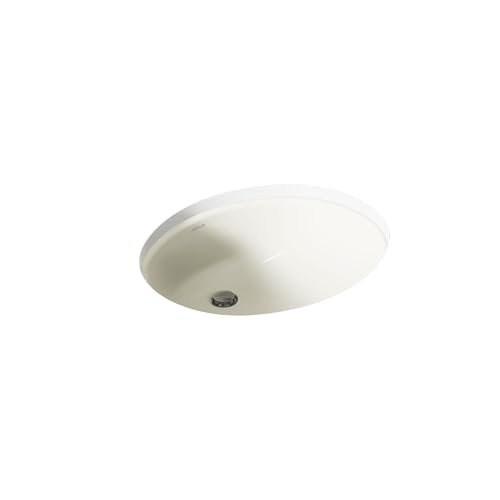
The Kohler Caxton K-2355 is the small-bathroom undermount we recommend first, pairing a 17-by-14-inch oval vitreous-china basin with a built-in overflow, a smooth nonporous glaze, and a slim 14-inch projection that fits under a 24-inch vanity without crowding the room.
The Caxton K-2355 is Kohler's small-format oval undermount, designed specifically for bathrooms where a standard 20-by-17-inch basin would be too wide or too deep. The 17-inch width fits under a 24-inch vanity with room for caulk seal on each side, and the 14-inch projection means the basin sits well within even a 20-inch-deep cabinet without the front of the bowl pushing past the vanity edge. Kohler's vitreous-china construction is fired nonporous, so it resists the staining and crazing that plague cheaper acrylic or resin basins, and the glaze holds up to daily cleaning with standard bathroom cleaners.
The built-in overflow is a practical advantage over vessel sinks in a powder room where guests may leave the tap running, and it keeps the basin compatible with standard drain assemblies rather than requiring a specialist grid drain. Owner reviews consistently note that the surface stays white and wipe-clean for years, and that the small footprint transforms a tight powder room by opening up counter space beside the basin. The one firm requirement is a solid or quartz countertop that can support the undermount clips and silicone seal.
The K-2355 is the undermount we point compact-bathroom buyers to first, because it lands the smallest practical width and projection in a basin that still has a built-in overflow and Kohler's nonporous glaze. If your counter is stone or quartz and your vanity is 24 inches or wider, this is the default choice before anything else is considered.

The American Standard Boxe eliminates the vanity entirely, mounting directly to the wall studs and projecting only 16.5 inches from the wall surface, which is the most effective way to recover usable floor space in a bathroom under 30 square feet.
Wall-mount sinks recover floor space by removing the cabinet entirely, which is particularly valuable in powder rooms where the visual sense of openness matters as much as physical clearance. The Boxe is American Standard's compact wall-hung vitreous-china basin, with a clean rectangular silhouette, a 19.5-inch width that keeps the visual footprint modest, and a standard 4-inch centerset faucet-hole drilling that works with a wide range of compact faucets. The exposed wall beneath the sink allows floor-to-ceiling tile, which is a common technique in small bathrooms to make the room read as larger.
Installation requires either a wall-mount carrier (a steel frame set inside the wall and anchored to studs) or confirmed mounting into solid blocking. American Standard publishes the required rough-in dimensions and recommended carriers in the installation guide, and most plumbers are familiar with the process. Owners report that the rectangular shape is easy to keep clean and that the floating effect consistently opens up tight bathrooms visually. The limit is practical: without under-sink storage, plumbing is exposed and cabinet storage must come from another source such as a recessed medicine cabinet.
If the bathroom is genuinely small, a wall-mount sink is often the correct answer, not just a design choice. The Boxe is the version we recommend because it brings American Standard's lifetime-backed vitreous china to a format that genuinely recovers usable square footage. Budget for professional installation, and treat the storage gap as a design problem to solve with recessed shelving, not a reason to avoid the format.

The Kohler Memoirs Stately is the pedestal sink that balances a traditional aesthetic with a genuinely compact footprint, at 24 inches wide with a 19.5-inch projection, making it the right pedestal for half baths and powder rooms that want a finished, furniture-like appearance without the space consumption of a full vanity.
Pedestal sinks are the classic small-bathroom solution because they provide a self-contained basin and column without needing a vanity cabinet, which keeps the floor visible and makes a tight room feel less enclosed. The Memoirs Stately uses Kohler's vitreous-china construction with a smooth nonporous white glaze and the same stately architectural detail that matches traditional hardware and mirrors. The 24-inch width is compact enough for a powder room and still provides enough counter edge for a soap dish and toothbrush holder.
Owner reviews consistently note that the installation is straightforward for experienced DIY plumbers, with clear rough-in dimensions, and that the finished look elevates a basic half bath into something closer to a primary fixture in a formal bathroom. The exposed plumbing under the pedestal is either a design element in period-appropriate bathrooms or a visual inconvenience in modern ones, which is worth considering before choosing pedestal over wall-mount. For a pedestal that projects closer to 15 inches, a wall-mount is the right step down in projection. For buyers who prefer a contemporary silhouette, the American Standard Studio S below is the comparison point.
The Memoirs Stately is the pedestal sink that has consistently earned its place in our rankings because Kohler's vitreous china and the classic detailing genuinely hold up over decades in half baths that get intermittent but concentrated daily use. If you want storage, this is the wrong format. If you want a no-compromise fixture that looks finished and right, this is the default pedestal pick.

The Swiss Madison Sublime is the vessel sink that makes the most sense in a small bathroom because its 16.5-inch round ceramic bowl sits above the counter and frees the counter surface below it, which is a counterintuitive but effective way to make a compact vanity feel less crowded.
Vessel sinks have an underappreciated advantage in tight bathrooms: because the bowl sits above the counter rather than dropping into it, the counter surface underneath remains visually open. On a 24-inch vanity, a 16.5-inch vessel leaves about four inches of counter on each side visible, which reads as more counter presence than the same dimension undermount where the bowl occupies all of the visible counter depth. The Swiss Madison Sublime uses a clean round white ceramic bowl with a smooth nonporous interior and walls deep enough at 5.5 inches to contain splashing during normal handwashing.
The practical trade-off is the absence of an overflow, which is standard on most vessel sinks and means a running tap can overflow the bowl if unattended. The bowl also raises the rim height by 5.5 inches above the counter surface, so on a standard 32-inch vanity the rim sits at about 37 to 38 inches, which suits adults but can feel awkward for children. Owner reviews note that the surface stays clean and stain-free, that installation is straightforward, and that the modern look lands well in powder rooms with a floating vanity. For a broader look at the vessel format in different room sizes, see our dedicated guide to best vessel sinks for bathroom.
If the room is under 30 square feet and the goal is to make it feel as open as possible, a vessel sink on a floating 24-inch vanity is often the smarter choice than an undermount on a larger cabinet. The Swiss Madison Sublime earns its place here because the 16.5-inch round format does not overwhelm small counters and the ceramic quality is solid for the format. Install a grid drain to match the no-overflow design and pair it with a tall single-hole vessel faucet.

The Kraus Elavo is the drop-in small sink that works on laminate counters where an undermount is not possible, delivering a glazed ceramic basin with a built-in overflow and a 19.5-inch width that fits most 21-inch-deep compact vanities without requiring a stone countertop.
Drop-in sinks remain the most DIY-friendly format for small bathrooms: you cut the counter to the template, drop the basin into the cutout, and seal the rim with silicone. The Kraus Elavo uses a ceramic basin with a high-gloss white glaze that resists staining and wipes clean, and the 19.5-inch width is narrow enough for a 24-inch vanity while leaving a useful rim of counter on each side. The built-in overflow is a safety advantage over vessel sinks in a household with children.
Owner reviews note that the basin depth is adequate for handwashing without significant splash, that the rim seal around the drop-in edge is easy to apply cleanly, and that the glaze holds up to daily use without yellowing. The visible rim around the edge of a drop-in does trap soap and toothpaste over time, which is the real maintenance difference from an undermount with a flush wipe-clean edge. For a laminate counter or a budget that does not allow solid-surface counter installation, the Elavo is the right practical choice in this size class.
Drop-in sinks get dismissed in design circles but they are the most practical format for rental properties, laminate counters, and budget renovations, and the Kraus Elavo is the version that earns its place: the ceramic glaze is honest quality, the footprint works in a compact vanity, and the built-in overflow is a detail that matters in a bathroom with multiple users. Clean the rim seal annually and it will last for years.

The VIGO Paloma is the compact undermount pick for buyers who want a rectangular modern bowl at the smallest available footprint, with a 16-inch width that pairs with 21-inch vanities and a matte or polished white stone composite surface that resists scratching and staining.
VIGO's Paloma is the sink for bathrooms where even the Kohler K-2355 at 17 inches is too wide, targeting powder rooms with 21-inch or narrower vanities that still need an undermount look. The 16-inch width and 12-inch projection are the smallest practical undermount dimensions in the current market that still provide a usable basin depth, and the matte stone composite surface is a non-ceramic option that resists scratching from rings and hardware better than some glazed finishes.
Stone composite basins are heavier than ceramic equivalents, which affects installation, and they require the same solid-surface or quartz countertop requirement as vitreous china undermounts. Owner reviews highlight the minimal footprint and the clean rectangular silhouette as the primary reasons for choosing this over an oval basin, along with positive notes on the matte finish resisting water spot visibility. The 12-inch projection is genuine, which matters in a bathroom where the toilet or door are within 24 inches of the vanity wall. For buyers who want a vessel above this vanity instead, the Swiss Madison Sublime in position 4 above is the comparison.
The Paloma earns its place in this ranking because it solves a real problem: buyers who need an undermount look but have a vanity narrower than 21 inches consistently run out of options. At 16 by 12 inches this is as small as a practical undermount basin gets, and the stone composite surface is a genuine durability advantage in a basin that will get concentrated daily use in a tiny room.

The American Standard Studio S is the pedestal pick for buyers who want a contemporary silhouette rather than a traditional one, with a 20-inch width, crisp rectangular basin lines, and a slimmer column profile that reads as a modern furniture piece rather than a classic bathroom fixture.
American Standard's Studio S uses the same vitreous-china construction as their full bath lineup, with a nonporous white glaze and a wall bracket installation that anchors the basin independently of the pedestal column, so the column is a visual cover rather than a structural support. The 20-inch width and 17.5-inch projection are slightly more compact than the Memoirs Stately, making the Studio S the right choice when the bathroom has contemporary tile and hardware that a traditional pedestal would contrast against.
The centerset faucet-hole drilling accommodates a wide range of compact single-handle or two-handle faucets, and the installation documentation is clear on rough-in requirements. Owner reviews note that the simplified column looks proportionally right in modern bathrooms that might make a traditional pedestal look out of place, and that the vitreous-china quality is consistent with the broader American Standard lineup. This is a legitimate alternative to a floating wall-mount for buyers who prefer a freestanding fixture with no wall carrier installation required.
When a powder room has modern matte-black hardware, geometric tile, and a floating mirror, the Kohler Memoirs Stately with its traditional columns will look wrong. The Studio S solves that without compromising American Standard's vitreous china quality. Choose this when the room's design language is contemporary and the Memoirs styling conflicts with it.

The Kohler Verticyl small round undermount, at 15 inches across, is the basin for installations where even the 16-inch VIGO is too wide, targeting narrow vanities of 18 to 20 inches and specialty powder rooms where the sink footprint is the single binding constraint.
The Verticyl is Kohler's answer to the genuinely tight installation: a 15-inch round vitreous-china undermount with a nonporous glaze that fits under a countertop cutout of the same dimensions. At 15 inches wide and 12.5 inches of projection, it is the most compact undermount format Kohler offers and one of the smallest in the mainstream market. The round shape is deliberate: at this size, a rectangular basin produces sharp corners that are harder to clean and a visual mismatch with the small footprint.
Because the basin is so small, it suits powder rooms and single-user half baths better than primary bathrooms with multiple daily users. Owner reviews consistently praise the compact footprint and the clean finish, with a few noting that the basin is shallow enough that tall users occasionally splash the counter edge if the water pressure is high. Pair it with a low-arc or short-spout faucet to keep the water stream centered over the drain rather than hitting the shallow walls at an angle. For buyers using this in a primary bathroom, the K-2355 at one size up is a better match.
The Verticyl small round is not a compromise for buyers who need 15 inches -- it is the correct spec. When the vanity is 18 to 20 inches wide and you want maximum counter surround and an undermount look, there is no better option from a major brand. Keep the faucet spout short and the water pressure moderate, and this basin performs exactly as expected for years.
The format decision -- undermount, wall-mount, pedestal, vessel, or drop-in -- should be made before any brand or model is considered. Undermount is the best finish for solid counters. Wall-mount recovers the most floor space. Pedestal suits powder rooms with no cabinet. Vessel frees counter surface but raises rim height. Drop-in is the only format that works on laminate. Measure projection before width, confirm your counter material, and only then choose the model. All the picks above meet those criteria for their respective formats.
The smallest standard bathroom sinks from major brands measure 15 inches wide, with a projection of 12 to 13 inches from wall to front of basin. Examples include the Kohler Verticyl small round undermount (15 inches) and the VIGO Paloma undermount (16 by 12 inches). Wall-mount sinks can project as little as 10 to 12 inches from the wall in specialty compact formats, though most mainstream models project 15 to 18 inches. Below 15 inches, specialty vessel sinks on small floating vanities are often the practical answer, since the above-counter format avoids a vanity width constraint entirely.
The best sink type for a small bathroom depends on whether storage, projection, or visual openness is the binding constraint. Wall-mount sinks recover the most floor space by eliminating the vanity entirely, projecting as little as 12 to 16 inches and leaving the floor visible. Pedestal sinks suit powder rooms with no storage need and project 17 to 22 inches. Undermount sinks on compact 24-inch vanities project the full vanity depth but provide storage below. Vessel sinks on floating 24-inch vanities free the visible counter surface above the cabinet while keeping storage below. Drop-in sinks are the right choice when the counter is laminate and an undermount is not feasible.
Measure projection first: stand at the wall where the sink will mount and measure to the nearest obstacle (toilet, door, or opposite wall). Subtract 18 to 24 inches for comfortable standing clearance, and the remainder is your maximum projection. Then measure the available vanity or counter width and confirm the basin width fits inside it with at least one inch of margin on each side for mounting. For wall-mount sinks, also confirm stud locations or plan for a steel carrier installation. Published specifications list both overall width and the sink depth (front-to-back projection), and both numbers must clear your measurements before a model is selected.
Undermount sinks are the easiest to maintain because the counter sits flush over the basin edge with no rim to trap soap scum, toothpaste, or water deposits. Vitreous-china and ceramic glazes with a nonporous surface resist staining and wipe clean with a damp cloth. Drop-in sinks with a visible rim require regular cleaning of the caulk seal around the rim edge. Vessel sinks are easy to wipe inside the bowl but leave water deposits visible on the outer surface. Wall-mount sinks are easy to clean around because there is no vanity cabinet to work around, but exposed plumbing pipes collect dust. Pedestal sinks require cleaning behind and around the column, which can be awkward in a tight room.
Small bathroom sinks require faucets that match both the sink's faucet-hole configuration and the basin's compact dimensions. Drop-in and pedestal sinks typically have a four-inch centerset or an eight-inch widespread drilling, which determines which faucet spread fits. Undermount sinks are often drilled for a single hole, requiring a single-hole faucet or a deck plate to cover multiple holes. Vessel sinks require a tall vessel faucet with a spout high enough to clear the above-counter rim height, typically eight to twelve inches of spout height. For all compact sinks, a short-arc spout keeps the water stream centered over the drain rather than striking the shallow basin walls at an angle.
The four decisions that determine the right sink for a tight space.
Every other decision flows from mount type, because it must match your existing counter material and the presence or absence of a vanity cabinet. Undermount requires a solid, non-porous countertop material (stone, quartz, solid surface) that can be cut and support the basin from below. Drop-in works on any counter including laminate. Wall-mount requires either stud mounting or a steel carrier frame inside the wall. Pedestal is freestanding and requires only floor and wall rough-in plumbing. Vessel mounts on any flat counter surface with a vessel drain installed through the countertop. Choosing a mount type that does not match your counter forces either a counter replacement or a different sink, both of which add cost and time to the project.
Vanity width is the dimension buyers fixate on, but projection (the front-to-back depth of the basin) is what determines whether the bathroom feels usable. A compact 22-inch-wide sink with a 21-inch projection on a 24-inch-deep vanity leaves three inches of cabinet depth behind the basin, which is negligible and not usable for storage. That same sink in a 25-inch-deep bathroom leaves only four inches of clearance to the vanity door, which means the door swings against the back of the sink if the cabinet is open. Measure the available projection from the wall to the nearest obstacle, subtract 20 to 24 inches of standing clearance, and that number is your maximum allowable projection before any model is compared.
Small bathroom sinks are sold with one of four faucet-hole configurations: single hole (one opening for a single-hole or vessel faucet), three-hole four-inch centerset (the two outer holes are four inches on center), three-hole eight-inch widespread (outer holes are eight inches on center, for a separate spout and two handles), or no holes (for an undermount paired with a deck-mounted or wall-mounted faucet above). Choosing a sink before confirming its hole configuration against your chosen faucet is the most common installation mismatch. Small bathrooms almost always suit a single-hole or centerset faucet because a widespread faucet requires a wider deck than most compact basins provide.
Vitreous china is the most durable and stain-resistant standard material for bathroom sinks: it is fired nonporous, resists crazing, and holds a white glaze for decades with standard cleaning. Ceramic is similar but fired at lower temperatures and slightly more prone to micro-crazing over time. Stone composite (natural stone resin) is scratch-resistant and available in matte finishes that hide water spots better than high-gloss china. Tempered glass is visually striking but shows water deposits immediately and requires more frequent drying. Acrylic and resin basins are inexpensive and lightweight but soften with some cleaners and scratch under metal hardware. For a small powder room with heavy daily use, vitreous china from a major brand is the recommendation that holds up longest without maintenance.
Most small-bathroom sink buying mistakes come down to one skipped measurement: projection. A basin that looks right in a photo can turn a tight powder room into an uncomfortable squeeze if the front of the sink extends further into the room than the clearance allows. Measure first, choose the mount type second, and then let the brand and style follow from those constraints. Every sink in this list was selected because it clears those two filters cleanly before any design consideration was applied.
A bathroom sink is generally considered small when the basin width is 20 inches or less, compared to a standard bathroom sink width of 22 to 27 inches. Compact undermount sinks start at 15 inches wide. Pedestal sinks in small formats start around 18 to 20 inches wide. Wall-mount sinks in compact versions range from 16 to 20 inches wide. Below 15 inches, the available basin depth becomes too shallow for practical daily handwashing in most configurations.
Yes. Vessel sinks are well-suited to small bathrooms because they sit above the countertop rather than dropping into it, which keeps the counter surface visually open and can make a compact vanity feel less crowded. The trade-off is that the raised rim height (typically 37 to 38 inches on a standard 32-inch vanity) may be awkward for children, and the absence of an overflow on most vessel models means a running tap can flood the bowl if unattended. For powder rooms and adult-only half baths, a vessel sink is a legitimate and often visually effective choice.
Residential building codes in most US jurisdictions require a minimum of 21 inches of clearance in front of a sink, measured from the front of the basin to the nearest obstacle (wall, door, toilet, or cabinet). The 2021 IRC (International Residential Code) specifies 21 inches as the minimum floor area clearance. However, 24 to 30 inches is more comfortable for daily use, and accessible bathrooms under ADA guidelines require 30 inches of clear knee space below a wall-mount or console sink. When choosing a sink for a tight space, subtract 21 to 24 inches from the available room depth to determine the maximum allowable projection.
The smallest standard vanity that can hold a practical undermount bathroom sink is 21 inches wide, which accommodates a 15-inch wide basin with three inches of margin on each side for the silicone seal and countertop edge. Most manufacturers recommend a minimum counter depth of 19 to 21 inches for an undermount to sit safely within the counter perimeter without the basin cutout coming too close to the cabinet edge. Vanities under 21 inches are available but most undermine the undermount format, making a vessel sink or wall-mount a better option.
Vitreous china is the most consistently recommended material for bathroom sinks at any size, including small formats, because it is fired nonporous, resists staining and crazing, holds its white color for decades, and is easy to clean with standard bathroom cleaners. Stone composite is a close alternative with better scratch resistance and matte finishes that hide water spots. Ceramic is similar to vitreous china but fired at lower temperatures and slightly more prone to hairline crazing over many years of use. Acrylic and resin are the least durable options and not recommended for daily-use bathrooms.
The drain requirement depends on the sink format. Undermount and drop-in sinks with a built-in overflow require a standard drain with overflow port (the small hole in the side of the drain body that connects to the overflow opening in the basin). Vessel sinks without an overflow require a non-overflow drain, typically a grid drain or a waterfall drain that allows water to pass through without a secondary overflow port. Vessel sinks use a standard 1.65-inch drain opening in most cases. Always confirm whether your sink has an overflow before ordering a drain assembly, since pairing an overflow drain with a no-overflow basin floods the connection point.
Installing a wall-mount sink requires either mounting directly into wall studs or installing a steel carrier frame inside the wall cavity first. The carrier frame is a steel assembly anchored to the floor and top plate, providing a horizontal bar at the correct height for the sink to hang from. Studs are typically 16 inches on center in residential construction, and the mounting holes on most wall-mount sinks are spaced to align with a stud pair or a carrier frame. The drain rough-in must be set in the wall at the correct height for the finished sink height. Most plumbers familiar with ADA-compliant installations will have done wall-mount carrier installs before and can complete the job in a half-day.
A small bathroom sink most commonly requires a single-hole faucet or a four-inch centerset faucet, since the compact basin dimensions suit a smaller faucet spread. Single-hole faucets are the simplest: one control handles both temperature and flow, and the installation requires only one hole in the deck or countertop. Four-inch centerset faucets use two handles and a spout in a single combined body, covering three holes with one piece of hardware. Vessel sinks require a tall vessel faucet with a spout height of at least eight to ten inches above the deck, enough to clear the raised rim of the above-counter bowl. For all compact sinks, a short arc spout keeps the water stream aimed at the drain center rather than the basin walls.
Both formats eliminate the vanity cabinet and leave the floor visible, which makes the room feel more open. The key difference is installation and storage. A pedestal sink has a self-supporting column that covers the plumbing, requires no wall carrier, and installs with two wall brackets that hold the basin. A wall-mount sink mounts directly to the wall via a bracket or carrier, with no column, leaving all plumbing exposed below. Wall-mount sinks have a smaller visual footprint and can project as little as 12 inches from the wall, compared to 17 to 22 inches for most pedestal models. Pedestal sinks are easier to install and suit traditional or transitional bathrooms; wall-mount suits contemporary bathrooms and the tightest projection constraints.
Yes, replacing a pedestal sink with a compact vanity and undermount basin is a common small-bathroom update. It requires installing new cabinetry with a countertop made from a material compatible with undermount mounting (stone, quartz, or solid surface), rough-in plumbing that enters the wall at the correct height for the new vanity depth, and a new drain assembly. The main planning consideration is the rough-in height: pedestal and wall-mount sinks typically rough in the drain at a higher height off the floor than a vanity cabinet, so a plumber may need to lower the drain rough-in inside the wall to match the new vanity configuration. Budget for that plumbing adjustment if the rough-in height does not match the new vanity.
Corner bathroom sinks are designed specifically for tight bathrooms and powder rooms where a straight wall layout does not have enough linear footage for a standard sink position. They mount into a corner at a 45-degree angle, with a triangular or fan-shaped basin that fits against two walls. The advantage is recovering usable wall space on both sides of the sink for towel bars or shelving. The trade-off is that corner sinks are often shallower in bowl depth than standard small sinks, and the triangular basin shape limits the usable washing area. They are available in pedestal, wall-mount, and drop-in formats, and several brands including Kohler and American Standard offer corner-specific models.
With no cabinet below the sink, storage in a small bathroom with a pedestal or wall-mount sink must come from the walls and recessed spaces. A recessed medicine cabinet above the sink recovers 4 to 6 inches of depth inside the wall for toiletries without projecting into the room. Open wall shelves on the side walls are practical for towels, candles, and small baskets. A narrow towel bar or ring on the wall beside the sink keeps hand towels accessible. Under-sink pedestal caddies and wicker baskets are a common approach to organizing cleaning supplies under a pedestal without a cabinet, though they are not as secure as a cabinet door. Recessed niches built into a non-structural wall section are the cleanest built-in storage option.
A 24-inch vanity is the most common compact vanity size and is specifically designed to hold a small bathroom sink. At 24 inches wide, a 17-inch basin fits with about three and a half inches of counter on each side. Most 24-inch vanities are 21 inches deep, which accommodates an undermount basin of up to 15 to 16 inches in projection. The 24-inch format is not too small for a functional bathroom sink; it is an intentional compact format for half baths, powder rooms, and tight en suites. It is too small for a double-basin sink or for the larger 22-by-19-inch standard undermount, which is why the picks in this guide are specifically selected to fit 24-inch and smaller vanities.
Kohler, American Standard, VIGO, Kraus, and Swiss Madison are the brands most consistently rated for small bathroom sinks in aggregated owner reviews as of 2026. Kohler's Caxton and Verticyl undermount lines cover the smallest practical undermount dimensions with lifetime-backed vitreous china. American Standard's Boxe and Studio S cover wall-mount and pedestal formats respectively. VIGO's Paloma addresses the sub-16-inch undermount market with a stone composite option. Kraus covers the drop-in and vessel formats at competitive price points. Swiss Madison produces compact vessel sinks with clean contemporary lines suited to small floating vanities. For the pillar bathroom overview, our guide to the best flushing toilets covers all major fixture categories.
A vitreous-china or ceramic bathroom sink from a major brand should last 30 years or more with standard cleaning and no physical impact damage. The finish life depends on the glaze quality and the cleaning products used: abrasive cleaners scratch glazed surfaces and can introduce staining over time, while gentle non-abrasive cleaners preserve the surface. Wall-mount and pedestal sinks outlast their brackets and mounting hardware, which should be inspected every 10 to 15 years. Acrylic and resin sinks typically show visible wear within 10 to 15 years of daily use. Stone composite basins have similar durability to vitreous china with better scratch resistance but require sealing in some natural stone variants. The fixture itself rarely fails; it is the drain assembly, supply lines, and faucet that require periodic replacement.
The best small sink for a powder room depends on the available wall space and the design direction. For a classic or traditional powder room, the Kohler Memoirs Stately pedestal at 24 inches provides a polished self-contained look. For a contemporary powder room where every square foot matters, the American Standard Boxe wall-mount at 16.5 inches of projection recovers the most floor space. For a design-forward powder room on a floating 24-inch vanity, the Swiss Madison Sublime vessel sink opens up the visible counter surface and looks striking without requiring a carrier installation. Powder rooms are almost universally single-user intermittent-use spaces, which makes them ideal for any of the three formats above without the wear concerns of a primary bathroom.
Yes, provided the basin material is vitreous china or ceramic from a major brand with a nonporous glaze. The limiting factor in heavy daily use is not the basin material but the drain assembly and faucet, which experience more wear than the sink itself. Wall-mount sinks in heavy-use bathrooms should have the mounting bracket inspected annually to confirm the basin has not moved or loosened under daily load. Drop-in sinks in heavy-use bathrooms should have the rim caulk seal inspected and refreshed every few years to prevent water seeping under the rim. Pedestal sinks are less affected by heavy use than wall-mounts, since the column carries no structural load. Overall, basin material is more important than format for longevity under heavy daily use.
Round basins are generally better for the smallest sizes (15 to 16 inches) because the curved corners are easier to clean and the shape distributes bowl depth more evenly than a rectangle at the same width. A 15-inch round basin provides more usable interior wash area than a 15-inch rectangular basin of the same stated width, because the rectangle loses usable area in its squared corners. Rectangular basins are better at 17 inches and above, where the straight walls contain splashing more effectively and the design suits modern cabinetry. For drop-in and pedestal sinks, the rim shape is a primary design signal: round suits traditional, rectangular suits contemporary and transitional. The key exception is corner sinks, which are typically fan-shaped regardless of the room's design direction.
Non-abrasive liquid or gel bathroom cleaners applied with a soft cloth or sponge are the correct method for vitreous china and ceramic basins. Avoid powder cleansers, steel wool, or abrasive scrub pads, which scratch the glaze surface and create microfractures that trap staining over time. For hard water deposits and calcium buildup around the drain and faucet base, a solution of white vinegar applied for five to ten minutes and rinsed thoroughly dissolves mineral deposits without damaging the glaze. Drop-in sinks require additional attention to the caulk seal around the rim, which should be dried after use and replaced when it shows cracking or discoloration. Wall-mount and pedestal sinks benefit from a quick wipe of the area around and behind the fixture, where splashing accumulates on the wall tile.
When the bathroom has a wall-mount or pedestal sink with no counter surface at all, the most common practical solutions are a narrow floating shelf at sink height (typically 32 to 34 inches from the floor), a mirrored medicine cabinet with a small ledge shelf on the bottom edge, or a sink console table with a shelf below the basin. For wall-mount sinks, a narrow ledge shelf bracketed directly to the wall beside the sink at the same height provides a soap and hand-lotion surface without projecting far into the room. For pedestal sinks, a half-pedestal console table that wraps around the pedestal column is available from several manufacturers and adds a small countertop above the plumbing area while covering the pipes. None of these solutions replicate the counter space of a vanity, which is a structural trade-off of the no-cabinet formats.
For most small bathrooms with a solid countertop, the Kohler Caxton K-2355 Undermount is the clearest choice: a 17-by-14-inch vitreous-china basin with a built-in overflow, a slim 14-inch projection, and Kohler's lifetime warranty covering a no-fuss install on any 24-inch vanity. For powder rooms where every square foot counts, the American Standard Boxe Wall-Mount recovers more floor space than any cabinet-based option. For a contemporary floating vanity look, the Swiss Madison Sublime Vessel frees the counter surface visually. Choose your format first based on projection and counter material, and then let the brand and model follow from those two constraints, not from the photo.
Vitreous china is the classic bathroom sink material for a reason: a clay body fired at extremely high temperature and finished with…
Read the guide
A glass bathroom sink trades the quiet, functional profile of vitreous china for something meant to be seen, a tempered glass vessel…
Read the guideStep-by-step fixes for the bathroom sink problems homeowners deal with most, from slow and clogged drains to cracked basins, leaking faucets, and…
Read the guide