Most disappointing toilet purchases trace back to one of two mistakes: buying a toilet that does not physically fit the existing plumbing, or buying one that looks good in a showroom but flushes weakly and clogs in real life. Both are completely avoidable. A toilet is a simple machine with a handful of published specifications, and once you know which numbers actually predict performance, the decision gets far easier. You do not need to guess, and you do not need to trust a display unit that has never been connected to water.
This guide is built on the way we research every product on this site. We do not physically install toilets. Instead we compare published manufacturer dimensions, independent MaP (Maximum Performance) flush-test scores, EPA WaterSense certification status and the patterns that recur across thousands of verified owner reviews. That combination tells you what a toilet will actually do in a bathroom far better than marketing copy. By the end of this guide you will be able to read any toilet listing, pull out the five numbers that matter, and decide whether it is right for your home. For the shortlist of models that consistently score best on these measures, see our roundup of the best flushing toilets.
What specs actually matter when buying a toilet?
The five specifications that predict toilet performance are the MaP flush score (aim for 800 g or higher), GPF water use (1.28 GPF for WaterSense efficiency), rough-in (almost always 12 inches), trapway diameter (2 inches or wider resists clogs) and bowl height. MaP and rough-in matter most: MaP predicts whether it flushes cleanly, and rough-in determines whether it fits at all.
Before you compare brands, prices or styling, anchor on the data below. Every reputable manufacturer, including TOTO, Kohler, American Standard, Woodbridge, Swiss Madison and Gerber, publishes these figures, and the independent MaP program verifies flush scores separately from the maker. The table that follows shows how the top picks in this guide stack up on those exact measures, so you can see the tradeoffs at a glance before reading the detail.
What is a good MaP score for a toilet?
A good MaP score is 800 grams or higher, and 1000 grams (the practical ceiling of the test) is excellent. MaP, or Maximum Performance, is an independent program that measures how many grams of solid waste a toilet clears in a single flush. Scores of 500 g are acceptable for light use, 800 g suits a busy family bathroom, and 1000 g means you will rarely reach for a plunger.
The MaP score is the single most useful number for predicting real-world performance, precisely because it is measured by an independent body at map-testing.com rather than the manufacturer. It reports grams of solid waste cleared on one flush, ranging from around 250 g (weak) to 1000 g, where most testing caps out. Crucially, a high MaP score and low water use are not in conflict. Good bowl engineering delivers both, which is why a 1.28 GPF TOTO Drake can hit the same 1000 g rating as a thirstier 1.6 GPF model. When in doubt, let the MaP score settle the argument about flush strength.
Read this first. Before you fall in love with any model, measure the distance from the finished wall behind the toilet to the center of the bolt caps at the base. That number is your rough-in. If it is not 12 inches, you must shop specifically for a 10-inch or 14-inch rough-in toilet. This single measurement prevents the most common and most expensive toilet-buying mistake.
Step 1: Measure your rough-in (the make-or-break number)
The rough-in is the distance from the finished back wall to the center of the drain pipe, which equals the center of the floor bolts on an installed toilet. The vast majority of homes use a 12-inch rough-in, and nearly every toilet on the market is built for it. But older homes and some tight layouts use a 10-inch rough-in, and a few use 14 inches. If you buy a 12-inch toilet for a 10-inch rough-in, the tank will not seat against the wall and may not fit at all.
To measure, take the distance from the wall behind the tank (not the baseboard) to the center of one of the bolt caps holding the toilet to the floor, then round to the nearest standard size. If you are replacing an existing toilet, this is a two-minute job with a tape measure. If the room is gutted, measure to the center of the floor flange. Every manufacturer lists rough-in in the spec sheet, so once you know your number, filtering becomes simple. Our detailed guide to how to choose a toilet walks through the full measurement and clearance checklist if you want extra reassurance.
Step 2: Choose the flush system that fits how you live
The flush system is the heart of the toilet and the part most buyers underthink. There are three main types, and each has a clear best-fit situation. Modern versions of all three can move waste cleanly on a single flush when the bowl geometry is right, which is exactly what the MaP score measures.
Gravity flush (the default for most homes)
A gravity toilet uses the weight of water dropping from the tank to create a siphon that pulls waste through the trapway. It is quiet, reliable, inexpensive to repair and by far the most common system. Strong gravity designs like the TOTO Drake, TOTO UltraMax II and Kohler Cimarron post excellent MaP scores while staying quiet, which makes a well-engineered gravity toilet the right answer for most households.
Pressure-assisted (maximum power, more noise)
Pressure-assisted toilets use incoming water-line pressure to compress air in a sealed inner tank, then release it for a forceful, fast flush. They clear heavy waste and resist clogs better than anything else, which makes them popular in high-traffic bathrooms and commercial-style settings. The American Standard Champion 4 and Gerber Avalanche are well-regarded examples. The tradeoff is a louder flush and pricier replacement parts, so they suit a basement or guest bath better than a bedroom-adjacent one.
Dual flush (water savings with two buttons)
A dual-flush toilet gives you a light flush for liquids (often around 0.8 to 1.0 gallons) and a full flush for solids (about 1.28 gallons). Over a year in a busy home the savings add up. The TOTO Aquia IV and Swiss Madison St. Tropez are common dual-flush picks. The one caution is that some budget dual-flush bowls were engineered around water savings first and clearing power second, so the MaP score matters even more here. Stick to models that rate 600 g or higher on the full flush.
Step 3: Understand GPF, WaterSense and water efficiency
GPF, or gallons per flush, is the amount of water a toilet uses, and lower is better for your bill and the environment. The federal maximum is 1.6 GPF, but EPA WaterSense-certified toilets use 1.28 GPF or less while still being independently verified to clear waste effectively. The label is worth seeking out: it certifies both efficiency and verified performance, and many local water utilities offer rebates for installing a WaterSense toilet, which can offset the upgrade cost.
The trick is pairing low water use with a strong MaP score so you save water without trading away performance. A toilet that clogs and needs a second flush wastes more water than a slightly higher single-flush rating ever would. Do not assume a low-water toilet flushes weakly. Check the MaP score, confirm the WaterSense label, and let the two numbers settle the question together.
Step 4: Choose bowl shape, round or elongated
Bowl shape is mostly a comfort-versus-space decision. An elongated bowl is oval and projects roughly 29 to 31 inches from the wall, while a round-front bowl is more circular and projects about 25 to 27 inches. Elongated bowls are more comfortable for most adults and are the default in full bathrooms. Round bowls save those few critical inches in tight powder rooms and half baths.
If you have the floor space, elongated is the easy choice. If the room is tight, a round-front model frees up legroom and door clearance without giving up flush power, since shape and flush strength are unrelated. We break down the full tradeoff, including comfort, cleaning and fit, in our guide to round versus elongated toilets.
Step 5: Choose toilet height
Toilets come in two main seat heights. Standard height places the rim around 14 to 15 inches off the floor. Comfort height, sometimes labeled chair height or right height, sits around 16 to 17 inches, similar to a dining chair. The taller seat is easier to sit down on and rise from, which matters for taller adults, anyone with knee or back issues, and seniors.
Standard height can suit children and shorter adults whose feet reach the floor more comfortably. For a household with mixed needs, comfort height is the more common modern choice, and most major models including the Kohler Highline, TOTO Drake and American Standard Cadet 3 offer a comfort-height version. We compare the two in detail in our guide to comfort height versus standard height toilets so you can match the seat to the people using it.
Step 6: One-piece or two-piece?
A one-piece toilet molds the tank and bowl into a single seamless unit. A two-piece toilet bolts a separate tank onto the bowl. The performance difference is essentially zero, so this comes down to cleaning, weight, price and looks.
One-piece toilets like the Kohler Santa Rosa, Woodbridge T-0019 and TOTO UltraMax II have no tank-to-bowl seam to scrub, wipe down quickly and look sleek, but they are heavier to maneuver during installation and usually cost more. Two-piece toilets like the TOTO Drake and Gerber Viper are lighter, cheaper, easier to carry up stairs and simpler to repair one part on if something cracks, at the cost of a seam that collects dust. Our full comparison of one-piece versus two-piece toilets covers the cleaning and installation details.
Editorial Take
If you are overwhelmed by options, ignore styling for the first five minutes and filter purely on rough-in and MaP score. That alone eliminates the toilets that will frustrate you, and it usually leaves a short list of about a dozen models from TOTO, Kohler and American Standard. Pick the body style and height from what remains. A great-looking toilet with a 500 g flush is a daily annoyance, while an ordinary-looking toilet with a 1000 g flush is something you will forget you own, in the best way.
Step 7: Trapway design, glazing and cleaning features
The trapway is the S-shaped channel that carries waste out of the bowl. A wider trapway, 2 inches or larger, passes bulk more easily and resists clogs. On a traditional toilet you can see the trapway contours molded into the side of the base, and those nooks collect dust. A skirted toilet hides the trapway behind a smooth, flat side panel that wipes clean in one pass, so if easy cleaning is a priority, skirted designs like the TOTO Aquia IV are worth the small premium.
Glazing matters too. A fully glazed trapway is slicker inside, which resists the buildup that causes repeat clogs, and surface glazes like TOTO CeFiONtect, Kohler's special coatings and American Standard EverClean make the bowl more resistant to staining and odor. These do not replace cleaning, but they stretch the time between deep scrubs and keep the bowl looking fresh in a high-use bathroom.
Step 8: Brand reliability and warranty
Brand track record and parts availability are easy to overlook and expensive to ignore. TOTO and Kohler lead for engineering and parts ecosystems, with flush valves and fill mechanisms stocked in every hardware store. American Standard offers strong value and the powerful Champion 4. Woodbridge and Swiss Madison deliver modern skirted styling at lower prices, while Gerber is a reliable workhorse brand favored for rentals and budget upgrades.
Most quality toilets carry a one-year warranty on mechanical parts and a longer warranty (often 5 years to limited lifetime) on the china itself. The warranty length matters less than parts availability: a toilet that uses standard, widely sold internal components will be cheap and quick to service for its entire life, which is a bigger long-run advantage than a slightly longer paper warranty on a model with proprietary parts.
Top recommendations to start your shortlist
If you want three safe, well-rounded toilets that satisfy the fundamentals above, these are strong starting points across the most common needs. Each pairs a high MaP score with efficient water use and a deep, positive owner track record.
Best All-Rounder
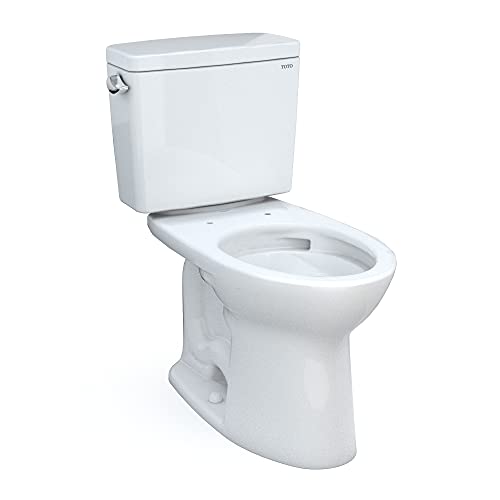
TOTO Drake
Reliable flush for most family bathrooms
A 1000 g MaP score, wide trapway and efficient 1.28 GPF flush make the Drake the dependable default for daily use, backed by a deep, well-supported parts ecosystem.
Check price on Amazon
Best Comfort Height
Kohler Cimarron
Easier sit and rise for taller users and seniors
A comfort-height bowl paired with Kohler's strong Class Five flush and a 1000 g MaP score makes this a safe, widely available choice when seat height and a clean rinse both matter.
Check price on Amazon
Best Water Saver
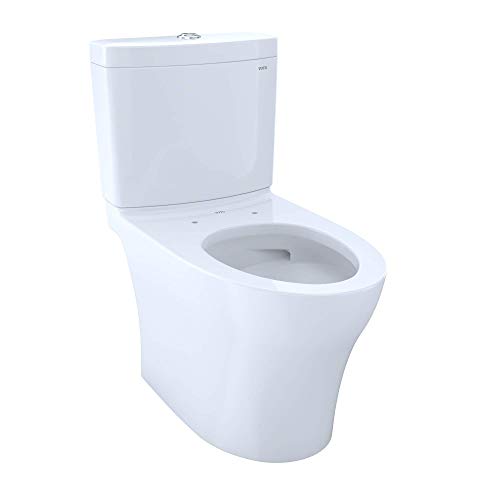
TOTO Aquia IV
Dual flush savings with a clean, skirted body
A dual-flush system, CeFiONtect glaze and a skirted body deliver real water savings, easy cleaning and reliable single-flush clearing in one efficient package.
Check price on Amazon
Which toilet offers the best value?
The best-value toilet in 2026 is the Gerber Viper, which delivers a 1000 g MaP flush at 1.28 GPF for a budget price, making it the smart pick for rentals and cost-conscious upgrades. For a step up in styling at modest cost, the Woodbridge T-0019 one-piece offers an 800 g flush and skirted modern looks, while the TOTO Drake remains the best long-term value thanks to cheap, universal repair parts.
Value is not the same as cheapest. The least expensive toilet that clogs, runs or needs proprietary parts will cost more over a decade than a mid-priced model with a strong flush and standard internals. Weigh the MaP score and parts availability alongside the sticker, and the genuinely economical choice usually has a higher upfront price than the bargain-bin option. For a focused look at the strongest budget performers, see our guide to the best flushing toilet for the money.
What is the most powerful toilet flush you can buy?
The most powerful flushes come from toilets that earn the top 1000 g MaP score combined with a wide trapway. The American Standard Champion 4 leads for raw bulk-clearing power thanks to its pressure-driven design and 2-3/8-inch trapway, while gravity models like the TOTO Drake II and Kohler Cimarron also reach 1000 g at a quieter 1.28 GPF. For heavy daily use, prioritize trapway width alongside MaP.
If clog resistance is your top concern, look beyond the MaP score alone to trapway diameter and glazing. A 1000 g flush pushing through a narrow, unglazed trapway will still snag, while a slightly lower score paired with a wide, fully glazed passage clears reliably. The Champion 4 wins on brute force, but for a household balancing power with quiet operation and low water use, a 1000 g gravity toilet like the Drake or Cimarron is the more livable answer.
Should you replace the toilet yourself or hire a plumber?
Replacing a standard floor-mounted toilet is a manageable DIY job for most homeowners and takes one to two hours with basic tools, a new wax ring and supply line. Hire a plumber if the flange is damaged, the floor is soft or rotted, you are converting to a different rough-in, or you are installing a wall-hung toilet, which requires in-wall carrier mounting and is best left to a pro.
For a like-for-like swap, the work is mostly lifting and aligning. Shut off the water, drain and remove the old toilet, scrape the old wax, set a fresh wax ring, lower the new toilet onto the bolts, and reconnect the supply. The two common pitfalls are overtightening the bolts (which can crack the china) and rocking caused by an uneven floor, solved with shims. If anything about the flange or subfloor looks compromised, that is the moment to call a plumber rather than improvise.
Putting it all together
Choosing a toilet becomes simple once you follow the order of operations. Measure your rough-in so the toilet fits, choose a flush system that suits your noise tolerance and water goals, demand a MaP score of 800 g or higher with a WaterSense 1.28 GPF rating, and only then decide bowl shape, height, body style and surface features based on comfort and cleaning. Verify those numbers on the spec sheet rather than trusting the product photo, and you will end up with a toilet that performs quietly and reliably for the next decade or two.
Editorial Take
If you want one toilet to recommend to almost anyone, it is still the TOTO Drake in the elongated comfort-height configuration with a soft-close seat. It hits a perfect MaP score, sips water at 1.28 GPF, and uses parts you can buy at any hardware store for the next twenty years. Spend your decision energy on rough-in and MaP, treat styling as a tiebreaker, and you will not regret the purchase.
Sources
- EPA WaterSense, epa.gov/watersense
- MaP (Maximum Performance) flush testing, map-testing.com
- Manufacturer published specifications (TOTO, Kohler, American Standard)
FAQ
Frequently asked questions
? What is the most important thing to check before buying a toilet?
Your rough-in measurement. Measure from the finished wall behind the tank to the center of the floor bolts. Almost all homes are 12 inches, but some older houses use 10 or 14 inches. Buy the wrong rough-in and the toilet will not seat against the wall, so confirm this number before anything else.
? What is a good MaP score for a toilet?
MaP measures how many grams of solid waste a toilet clears in one independent flush test. A score of 500 g is acceptable for light use, 800 g is a comfortable target for a family bathroom, and 1000 g (the typical testing ceiling) means you will rarely need a second flush or a plunger.
? What does GPF mean and what number should I look for?
GPF is gallons per flush, the amount of water used. The federal maximum is 1.6 GPF, but EPA WaterSense-certified toilets use 1.28 GPF or less while still clearing waste effectively. Look for 1.28 GPF paired with a high MaP score so you save water without losing performance.
? What is the WaterSense label and is it worth it?
WaterSense is an EPA program that certifies a toilet uses 1.28 GPF or less while meeting independent flush-performance standards. It signals both efficiency and verified clearing power, and many water utilities offer rebates for installing one, so it is generally worth seeking out.
? Should I choose a round or elongated bowl?
Elongated bowls are more comfortable for most adults and are the default in full bathrooms, projecting about 29 to 31 inches from the wall. Round-front bowls project roughly 25 to 27 inches and save space in tight powder rooms. Flush power is unrelated to shape, so choose by room size and comfort.
? What is comfort height and who needs it?
Comfort height places the seat around 16 to 17 inches off the floor, similar to a chair, versus 14 to 15 inches for standard height. It is easier to sit down on and rise from, which benefits taller adults, seniors and anyone with knee or back issues. Standard height can suit children better.
? One-piece or two-piece, which should I buy?
Performance is the same, so it is a preference call. One-piece toilets have no seam to scrub and look sleek but are heavier and pricier. Two-piece toilets are lighter, cheaper and easier to install or repair. Decide on flush score and fit first, then choose the body style you prefer.
? Are low-flow 1.28 GPF toilets weaker than older ones?
Not necessarily. Modern bowl engineering lets many 1.28 GPF WaterSense toilets clear waste as effectively as older 1.6 GPF models. The proof is the MaP score: pick a 1.28 GPF toilet that also rates 800 g or higher and you save water without sacrificing flush strength.
? What type of flush system is best, gravity or pressure-assisted?
Gravity flush is the best choice for most homes because it is quiet, reliable and cheap to repair, and strong models reach 1000 g. Pressure-assisted toilets clear heavier waste and resist clogs better but are louder, which suits a basement or busy guest bath more than a bedroom-adjacent bathroom.
? How wide should a toilet trapway be?
Look for a trapway 2 inches in diameter or larger, with the widest common sizes around 2-1/8 to 2-3/8 inches. A wider, fully glazed trapway passes bulk more easily and resists the buildup that causes repeat clogs, so it matters alongside the MaP score for clog resistance.
? What is a skirted toilet and is it worth the extra cost?
A skirted toilet hides the trapway behind a smooth, flat side panel instead of the molded contours of a standard base. It wipes clean in one pass, so if easy cleaning is a priority it is worth the small premium. Performance is identical to an exposed-trapway model.
? How much water does a modern toilet use per year?
A 1.28 GPF WaterSense toilet used by a family of four saves thousands of gallons a year compared with an old 3.5 GPF or 1.6 GPF model. Dual-flush toilets like the TOTO Aquia IV cut usage further by offering a 0.9 GPF light flush for liquids.
? Which brands make the most reliable toilets?
TOTO and Kohler lead for engineering and widely stocked parts, American Standard offers strong value and the powerful Champion 4, and Woodbridge and Swiss Madison provide modern skirted styling at lower prices. Gerber is a dependable workhorse brand favored for rentals and budget upgrades.
? How long does a good toilet last?
The vitreous china body of a quality toilet can last several decades. Internal parts like the flapper, fill valve and seal wear out sooner, typically every five to ten years, but these are inexpensive and easy to replace, especially on models that use standard universal components.
? Do I need a special toilet for a small bathroom?
For tight spaces, choose a round-front bowl or a compact elongated model to save a few inches of projection, and consider a one-piece or wall-hung design for a smaller visual footprint. A round Cadet 3 or compact one-piece keeps flush power while freeing up legroom and door clearance.
? Is it hard to install a toilet myself?
For a standard floor-mounted swap, no. It takes one to two hours with a new wax ring and supply line, mostly lifting and aligning. Hire a plumber if the flange is damaged, the subfloor is soft, you are changing rough-in, or you are installing a wall-hung toilet on an in-wall carrier.
? What warranty should I expect on a new toilet?
Most quality toilets carry a one-year warranty on mechanical parts and a longer warranty, often 5 years to limited lifetime, on the china. Parts availability matters more than warranty length: a toilet using standard internal components stays cheap and quick to service for its whole life.
? Can I get a strong flush and water savings at the same time?
Yes. Good bowl engineering delivers both, which is why a 1.28 GPF TOTO Drake reaches the same 1000 g MaP score as thirstier older models. The key is to check that any low-water toilet you consider also posts an 800 g or higher MaP score.
Keep reading
Related guides
Our Verdict
Buy in order: rough-in fit, then flush system and MaP score (target 800 g or higher), then EPA WaterSense at 1.28 GPF, then shape, height and body style for comfort. The TOTO Drake covers the fundamentals for most homes with a 1000 g flush and universal parts, the Kohler Cimarron adds comfort height, and the TOTO Aquia IV saves water with a dual flush. Confirm the rough-in matches yours, then check the current price on Amazon before you order.