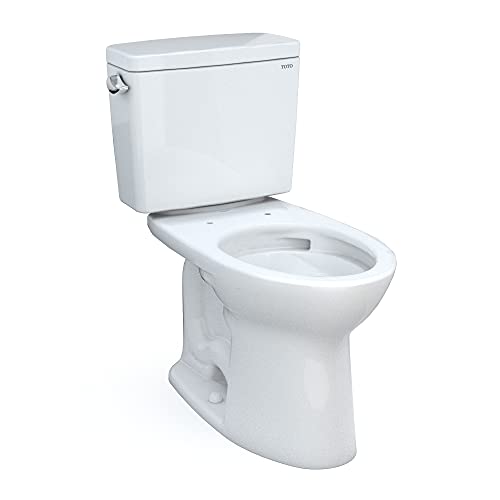
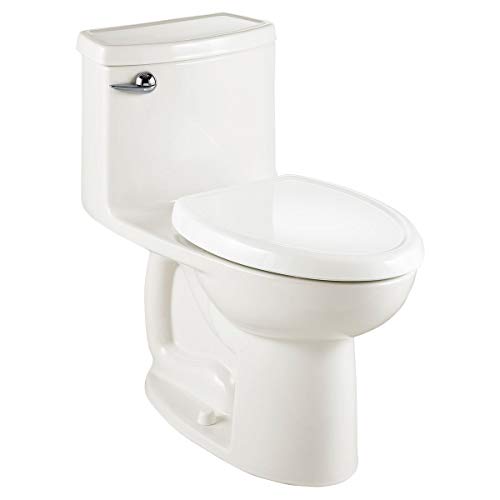
A toilet that does not fit is the most expensive mistake in a bathroom project, because you usually discover it on install day with the old fixture already gone and the floor exposed. Unlike a sofa you can angle through a doorway, a toilet has to land precisely over a drain, sit flat against the wall and leave legally required clearance on either side. None of that is hard to plan for, but it does come down to numbers, and the listing photo will never tell you whether a unit clears your vanity or seats against your back wall. This guide covers every dimension that matters, in the order you should check them, with real measurements drawn from TOTO, Kohler, American Standard, Woodbridge, Swiss Madison and Gerber.
We do not install fixtures in a bathroom of our own. Everything here is built from published manufacturer specifications, independent MaP (Maximum Performance) flush-test data, EPA WaterSense certification records and the consistent patterns that surface across thousands of aggregated owner reviews. That combination is enough to tell you exactly what fits and what flushes without marketing spin. Once you have your measurements, our roundup of the best flushing toilets ranks the models that perform, and our broader How to Choose a Toilet: the complete 2026 guide walks the full decision from fit to flush power.
Start here
The five measurements that decide fit
Check these in order before you buy: rough-in (distance from wall to drain center), footprint depth (how far the toilet extends into the room), overall width (tank width plus required side clearance), bowl height (floor to seat top) and front clearance (open space the code wants in front). Rough-in and footprint are the two that ruin purchases most often. Get all five right and almost any quality fixture will seat cleanly.
Rough-in: the one measurement that must match exactly
The rough-in is the distance from the finished wall behind the toilet to the center of the drain pipe in the floor, which is the same as the center of the bolt caps that hold the toilet down. It is the single dimension that has to match, because a toilet built for one rough-in will not bolt down on another. The overwhelming majority of homes use a 12 inch rough-in. Older houses sometimes use 10 inch, and a few use 14 inch, so you cannot assume.
To measure, ignore the baseboard and measure from the bare wall to the center of the rear bolt cap. If the bathroom is gutted, measure from the wall to the center of the drain hole in the floor. A toilet rated for 12 inches will not reach a 10 inch drain, and on a 14 inch drain it leaves a visible gap behind the tank. Several brands sell 10 inch and 14 inch versions of popular models, including the Kohler Highline and TOTO Drake, so a non-standard rough-in is not a dead end. Our dedicated guide to measuring toilet rough-in walks the step in detail, and the broader toilet rough-in guide covers offset flanges and other fixes for awkward drains.
Footprint depth: how far the toilet sticks into the room
Footprint depth is the front-to-back measurement from the back of the tank to the very front of the bowl, and it is what decides whether you can comfortably walk past or close the door. A standard two-piece elongated toilet runs roughly 28 to 31 inches deep. A round-bowl model is shorter, usually around 26 to 28 inches, because the bowl extends about two inches less. Compact and space-saving designs pull elongated comfort closer to a round footprint, often landing near 27 to 28 inches.
The number that matters is the distance from the wall to the front of the bowl, since that is what projects into your usable floor. A TOTO Drake elongated sits around 28.75 inches deep, while the round version drops to about 26.5 inches. In a powder room, or a bathroom where a door swing or vanity is close, those two inches decide comfort. Measure from your finished wall straight out to where the front of the bowl would land, then compare against the listed depth before you order. Our guide to the best compact toilets ranks the models that save the most depth without giving up flush power.
Quick tip
Tape the footprint on the floor first
Before ordering, mark the toilet outline on your bathroom floor with painter's tape using the listed depth and width. Stand at the unit, open the door and check the swing. This thirty-second step catches a too-deep bowl or a door that clips the tank long before a heavy ceramic fixture shows up on your porch.
Overall width and required side clearance
The toilet itself is narrow. A typical tank measures roughly 14 to 20 inches wide, and the bowl is narrower still. What actually governs width is clearance, not the porcelain. Building codes, following the widely adopted International Residential Code, require a minimum of 15 inches from the center of the toilet drain to any side wall, vanity or adjacent fixture. That means you need at least 30 inches of total width for the fixture to be legal and usable, and many designers prefer a more comfortable 32 to 36 inches.
When you plan width, measure from the drain center out to the nearest obstruction on each side. If a vanity, a wall or a tub edge sits closer than 15 inches to the drain center, the layout is too tight regardless of how slim the toilet is. Wall-hung and skirted models look cleaner in narrow rooms because the smooth sides read as less bulky, but the legal 15 inch clearance is measured to the drain center and does not change with style. Our overview of the best toilets for small bathrooms covers layouts where every inch is contested.
Bowl height: standard, comfort and ADA dimensions
Bowl height is measured from the floor to the top of the seat, and it is the dimension that most affects daily comfort. Standard height sits around 14 to 15 inches, similar to a low chair. Comfort height, also called chair height or right height, sits around 16 to 17 inches, closer to a dining chair, which makes sitting down and standing up easier on the knees and back. ADA-compliant toilets fall in the 17 to 19 inch range measured to the top of the seat, the spec required in accessible bathrooms.
Comfort height has become the default for adult bathrooms and is strongly preferred by taller people, older adults and anyone with mobility concerns. Standard height can still be the better pick for a children's bathroom, where a lower seat lets small feet rest flat on the floor. Note that published bowl height usually excludes the seat, which adds roughly half an inch to an inch, so a 16.5 inch bowl seats near 17 to 17.5 inches in use. Our comparison of comfort height vs standard height toilets covers who each suits, and the best tall toilets roundup lists the highest-seat options. The Kohler Highline, TOTO Drake and American Standard Cadet 3 all offer comfort-height versions.
Worth knowing
Add the seat to the listed bowl height
Manufacturer specs almost always list the bowl rim height, not the seated height. A soft-close seat adds roughly half an inch to one inch on top. If you are choosing comfort height for a tall household or an older user, treat a 16.5 inch bowl as about 17.5 inches in practice, and confirm whether the seat ships in the box or is bought separately.
Bowl shape: round vs elongated and the inches each adds
Bowl shape is really a size decision in disguise, because it changes the footprint depth. Round bowls measure roughly 16.5 inches from the seat bolts to the front of the rim and are shorter front to back, making them ideal for small bathrooms, powder rooms and apartments where every inch counts. Elongated bowls measure roughly 18.5 inches and extend about two inches further forward, which most adults find more comfortable. Flush performance is not determined by shape, so this is a comfort and space trade, not a power one.
If your bathroom has the floor space, elongated is the more comfortable default and the standard choice in new homes. If a door swing or a tight corner is the constraint, a round bowl reclaims valuable depth without giving up flush strength. Popular lines like the TOTO Drake and Kohler Cimarron sell both shapes under the same name, so you rarely have to trade flush power for fit. Our guide to round vs elongated toilets: how to choose breaks down exactly how much depth each adds and which models offer both shapes.
One-piece vs two-piece: how the design changes the size
The number of pieces affects size in two practical ways: height profile and weight. A two-piece toilet has a separate tank that bolts onto the bowl, which is the most common configuration and ships in two lighter boxes that are easier to carry through a house. A one-piece toilet molds tank and bowl into a single seamless unit, usually with a lower, sleeker tank profile that suits a window or a low sightline behind the toilet, but it can weigh over 100 pounds in a single awkward box.
Flush strength does not depend on this choice, since it is driven by bowl design, trapway size and the flush valve. The size considerations are clearance and handling. A one-piece unit with a low tank can fit under a window where a tall two-piece tank would block it, while a two-piece unit is far easier for one person to set on the flange. The TOTO UltraMax II and Kohler Santa Rosa are well-regarded one-piece options with compact tank profiles. Our breakdown of one piece vs two piece toilets: which is better? covers the trade-offs in full.
Editorial Take
If you only verify two numbers, make them rough-in and footprint depth. Everything else can be adjusted, but a toilet that cannot reach the drain or that blocks the door is a problem you live with every day. Confirm 12 inches, measure the open floor in front of the fixture, and you have already dodged the two complaints that fill installation reviews. Bowl shape and height are then yours to pick for comfort, and any quality model from TOTO, Kohler or American Standard will seat cleanly.
Tank dimensions, water lines and the specs people forget
A few smaller dimensions catch people out after the main measurements check out. Tank height matters if a window, a shelf or a medicine cabinet sits low behind the toilet; standard two-piece tanks reach roughly 28 to 31 inches tall at the lid, while one-piece units are often a few inches lower. The water supply line enters near the base on the left side, and you need a few inches of side clearance there for the shutoff valve and the flexible connector, so a vanity butted hard against the left of the toilet can block service access even when the 15 inch code clearance is met.
Weight is the last overlooked spec. Two-piece toilets typically weigh 80 to 95 pounds split across two boxes, while one-piece units can exceed 100 pounds in a single box that one person cannot safely lift onto a flange. If you are installing alone, that single number can decide between a one-piece and a two-piece more than any cosmetic preference. Confirm the boxed weight on the listing, and plan a helper for a one-piece install. Our toilet installation guide walks the set-and-seal step so the wax ring seats right the first time.
Don't forget
Leave room for the supply valve on the left
The shutoff valve and flexible supply line connect at the lower left of nearly every toilet. A vanity or wall pushed tight to that side can meet the legal 15 inch clearance and still leave no room to turn the valve or swap the connector. Plan a few inches of working space on the left so a future repair does not mean pulling the whole vanity.
Make it easy
Top recommendations by size
Three proven models that cover the most common size situations. Each pairs a known footprint with a strong MaP flush and efficient 1.28 GPF water use, and each is widely stocked so any plumber can service it.
Best Standard Fit
TOTO Drake II
12 inch rough-in, normal floor space
A standard 12 inch rough-in elongated comfort-height bowl around 28.25 inches deep, with a perfect 1000 g MaP flush at 1.28 GPF and a glazed CeFiONtect trapway. The safe default when space is normal.
Check price on Amazon
Best Compact
TOTO Entrada
Small bathrooms and tight depth
A short round-bowl footprint near 26.5 inches deep that frees valuable inches in a tight room, with a strong gravity flush and a comfort-height seat. The pick when depth is the constraint.
Check price on Amazon
Best Low Profile
Kohler Santa Rosa
Low tank under a window
A one-piece elongated design with a lower tank profile that fits under windows and low cabinets, plus a comfort-height seat and a seamless body that wipes clean fast. The choice for a low sightline.
Check price on Amazon
Common questions
What Are the Standard Dimensions of a Toilet?
A standard residential toilet uses a 12 inch rough-in, measures roughly 28 to 31 inches deep with an elongated bowl, and stands about 28 to 31 inches tall at the tank lid. Bowl height is around 15 inches for standard and 16 to 17 inches for comfort height, and the overall width is about 14 to 20 inches at the tank. Codes require at least 15 inches of clearance from the drain center to each side.
How Much Space Do You Need Around a Toilet?
Building codes require a minimum of 15 inches from the center of the toilet drain to any side wall, vanity or fixture, meaning at least 30 inches of total width, plus at least 21 inches of clear space in front of the bowl. Designers often prefer 16 to 18 inches of side clearance and 24 to 30 inches in front for comfort. ADA bathrooms require wider clearances for wheelchair access.
What Size Toilet Fits a Small Bathroom?
For a small bathroom, choose a round-bowl or compact toilet with a footprint depth around 26 to 28 inches instead of the 28 to 31 inches of a standard elongated model. Round bowls extend about two inches less into the room. The TOTO Entrada and other compact models save depth while keeping a strong gravity flush, so you lose space and not flushing power.
How Tall Should a Toilet Be?
Comfort height, around 16 to 17 inches from floor to seat, is best for most adults because it is easier on the knees and back and suits taller and older users. Standard height, around 14 to 15 inches, is better for children and shorter users who want their feet flat on the floor. ADA-compliant toilets measure 17 to 19 inches to the top of the seat. Remember the seat adds roughly half an inch to one inch over the listed bowl height.
Does Toilet Size Affect Flush Power?
No. Flush power is set by bowl design, trapway diameter and flush valve size, not by the toilet's footprint, height or bowl shape. A compact round-bowl toilet and a large elongated one can both reach the top 1000 g MaP score at 1.28 GPF. Choose size for fit and comfort, then choose the model by its MaP flush score and WaterSense certification.
Putting the measurements together
Work the measurements in order and the fit becomes certain. Confirm the rough-in so the toilet reaches the drain. Measure footprint depth so it does not block the door or crowd the room. Check that you have 15 inches from the drain center to each side and at least 21 inches of clear space in front. Pick a bowl height for comfort and a bowl shape for the depth your room allows. Only after fit is locked should brand, styling and one-piece versus two-piece come into play. Reliable models from TOTO, Kohler, American Standard, Woodbridge, Swiss Madison and Gerber all ship in compact and standard sizes, so a tight bathroom is rarely a reason to settle for a weak flush. The Toilet Buying Guide (2026): everything you need to know expands each spec beyond fit.
Editorial Take
The most common sizing regret we see in owner reviews is buying for the bowl and forgetting the room. People obsess over the rough-in, get it right, then discover the door clips the tank or the vanity blocks the supply valve. Tape the full footprint on the floor, swing the door, and check the left-side service space before you order. A perfectly fitted drain means nothing if you cannot close the bathroom door or shut off the water. Measure the room, not just the pipe.
FAQ
Frequently asked questions
? What is the standard toilet rough-in?
The standard rough-in is 12 inches, the distance from the finished wall to the center of the drain. Some older homes use 10 inch or 14 inch rough-ins. Measure from the bare wall to the center of the rear bolt caps, ignoring the baseboard, and buy a model rated for that exact distance.
? How deep is a standard toilet?
A standard elongated two-piece toilet measures roughly 28 to 31 inches deep from the back of the tank to the front of the bowl. Round-bowl models are shorter, around 26 to 28 inches, and compact designs fall in between. Depth is the dimension that decides whether you can comfortably walk past or close the door.
? How wide is a toilet?
The toilet body is fairly narrow, with tanks running roughly 14 to 20 inches wide and bowls slightly less. What governs the space you need is clearance: codes require at least 15 inches from the drain center to each side, which means at least 30 inches of total width for the fixture to be legal and usable.
? How much clearance do I need in front of a toilet?
Building codes require a minimum of 21 inches of clear space in front of the bowl. Most designers prefer 24 to 30 inches for comfort and to allow the door to swing freely. In an ADA-compliant bathroom, the front clearance is larger to allow wheelchair maneuvering.
? What is comfort height versus standard height?
Standard height sits around 14 to 15 inches from floor to seat, while comfort height sits around 16 to 17 inches. Comfort height is easier on the knees and back and is the default for adult bathrooms. Standard height suits children and shorter users who want their feet flat on the floor.
? What height is an ADA toilet?
ADA-compliant toilets measure 17 to 19 inches from the floor to the top of the seat. This range, paired with wider side and front clearances and grab-bar provisions, makes the fixture accessible to wheelchair users and people with mobility limitations.
? Does the listed bowl height include the seat?
Usually not. Manufacturers list the bowl rim height, and the seat adds roughly half an inch to one inch on top. If you want a true comfort-height seated position, treat a 16.5 inch bowl as about 17.5 inches in use, and confirm whether the seat is included in the box.
? How much depth does a round bowl save over elongated?
A round bowl saves roughly two inches of depth compared with an elongated bowl, because the elongated rim extends about two inches further forward. Round measures around 16.5 inches from the seat bolts to the rim, while elongated measures around 18.5 inches. That two inches can decide comfort in a tight bathroom.
? What size toilet is best for a small bathroom?
Choose a round-bowl or compact model with a footprint depth around 26 to 28 inches. These extend less into the room while keeping a strong flush. Wall-hung and skirted designs also read as slimmer, though the legal 15 inch side clearance is measured to the drain center and does not change with style.
? How tall is a toilet tank?
A standard two-piece toilet tank reaches roughly 28 to 31 inches tall at the lid. One-piece units are often a few inches lower with a sleeker tank profile. Check tank height if a window, shelf or medicine cabinet sits low behind the toilet so the lid clears.
? How much does a toilet weigh?
Two-piece toilets typically weigh 80 to 95 pounds split across two boxes, while one-piece units can exceed 100 pounds in a single box. If you are installing alone, the boxed weight can decide between the two designs, since a one-piece unit is awkward for one person to set on the flange safely.
? Does toilet size change the flush power?
No. Flush power depends on bowl design, trapway diameter and flush valve size, not on footprint or bowl shape. A compact round-bowl model and a full-size elongated one can both reach the top 1000 g MaP score at 1.28 GPF. Pick size for fit, then pick the model by its MaP score.
? Can I fit a 12 inch toilet on a 10 inch rough-in?
No. A toilet rated for a 12 inch rough-in will not bolt down on a 10 inch drain, and it cannot seat. Buy a model made in a 10 inch version instead. Brands like TOTO and Kohler sell 10 inch variants of popular models for exactly this reason.
? What is the smallest toilet I can buy?
Compact and corner toilets can pull the footprint depth down toward 25 to 27 inches, and wall-hung units mount the tank inside the wall to save the most floor space. These trade some flush volume or add install complexity, so confirm the MaP score and the in-wall carrier requirements before committing.
? Where does the water supply line connect?
The shutoff valve and flexible supply line connect at the lower left of nearly every toilet. Leave a few inches of working space on that side, since a vanity butted tight against the left can meet the 15 inch code clearance and still block access to the valve and connector.
? Does a toilet seat come included?
Often not. Many premium two-piece toilets, including the TOTO Drake and Drake II, sell the seat separately. The seat also adds height, so read the listing and add a soft-close seat that matches your bowl shape before install day.
? How do I measure for a replacement toilet?
Measure the rough-in from the wall to the rear bolt centers, the open floor depth in front, and the side clearance from the drain center to the nearest wall or vanity. Note the tank height if anything sits low behind the toilet. Tape the planned footprint on the floor and swing the door to confirm before ordering.
? Are one-piece toilets bigger than two-piece?
Not necessarily. One-piece toilets usually have a lower, sleeker tank profile, which can fit under a window where a tall two-piece tank would not. They are heavier in a single box, though, so they are harder to handle even when the footprint is similar or smaller.