Toilet Rough-In Guide: 10, 12 and 14 Inch Explained
The rough-in is the single most important measurement when you buy a toilet, because it decides whether the fixture will physically fit over your drain. Get it wrong and the new toilet either will not sit flush against the wall or will not reach the floor flange at all. This guide explains exactly what a rough-in is, how to measure the 10 inch, 12 inch and 14 inch sizes correctly, how rough-in interacts with flush power and bowl shape, and which proven TOTO, Kohler, American Standard, Woodbridge and Gerber models are available in each size, all drawn from published manufacturer specifications, independent MaP flush-test scores and aggregated owner reviews.
Quick Answer
The rough-in is the distance from the finished wall to the center of the floor drain bolts, and 12 inches is the standard found in most homes. Measure yours before buying. For a 12 inch rough-in with the strongest flush, the TOTO Drake is the top pick: it pairs a 1000 gram MaP score and a 3 inch valve with broad availability and a deep parts ecosystem.
Almost every toilet-buying mistake that ends with a fixture going back in the box traces to one number: the rough-in. It is the measurement that tells you how far your drain sits from the wall, and it is the first thing you should confirm before you look at flush power, bowl shape, height or style. A toilet with a beautiful 1000 gram MaP score and a wide glazed trapway is useless if its base cannot line up with your floor flange. The good news is that rough-in is simple to measure, there are only three common sizes, and once you know yours, the rest of the buying decision opens up.
This guide is built the way we research every product on this site. We do not physically install or test toilets. Instead we compare published manufacturer specifications, independent MaP (Maximum Performance) flush-test scores, EPA WaterSense certification status and the patterns that surface across thousands of verified owner reviews. By the end you will understand precisely what the 10 inch, 12 inch and 14 inch rough-in sizes mean, how to measure your own without guesswork, why the standard matters so much for selection, how rough-in interacts with flush performance and comfort, and which dependable models from TOTO, Kohler, American Standard, Woodbridge, Swiss Madison and Gerber are offered in each size.
Read this first. Measure from the finished wall to the center of the closet bolts that hold the toilet down, not to the baseboard or trim. Round to the nearest standard size: a reading near 12 inches means a 12 inch rough-in, which covers the large majority of homes. Confirm this number before you shortlist any toilet, because rough-in fit is non-negotiable while flush specs are a choice.
What Is a Toilet Rough-In and Why Does It Matter?
A toilet rough-in is the distance from the finished back wall to the center of the floor drain (the closet flange) where the toilet bolts down. The three common sizes are 10 inch, 12 inch and 14 inch, with 12 inch being by far the standard in modern homes. The rough-in determines whether a toilet will physically fit, so it must be matched before any other spec.
The term rough-in comes from the construction phase when the plumbing is "roughed in" before walls and floors are finished. In practical terms for a buyer, the rough-in is the horizontal distance from the wall behind the toilet to the center of the waste pipe, measured at floor level. That waste pipe is capped by a fitting called the closet flange, and the toilet sits on top of it, sealed by a wax or rubber ring and held down by two closet bolts. The distance from the wall to the center of those bolts is your rough-in.
This number matters because the toilet's tank and base are manufactured to clear the wall at a specific rough-in. A 12 inch toilet placed on a 10 inch rough-in will not have room for its tank against the wall, so it will sit too far forward or the tank will hit the wall before the base reaches the flange. Put a 10 inch toilet on a 14 inch rough-in and you get an ugly gap behind the tank and wasted floor space. Matching the rough-in to the toilet is the foundation of a clean, leak-free installation, which is why our complete guide on how to choose a toilet puts fit ahead of flush power in the decision order.
The Three Common Rough-In Sizes at a Glance
Nearly every residential toilet is built for one of three rough-in distances. The table below summarizes how common each size is, what kind of home you tend to find it in, and how much model choice you will have when you shop.
Rough-In
How Common
Typical Home
Model Selection
10 inch
Uncommon
Older houses, tight or small bathrooms
Limited but available
12 inch
Standard, most common
Most modern homes and remodels
Widest, nearly every model
14 inch
Less common
Some older or custom builds
Limited but available
The takeaway is straightforward. If your rough-in is 12 inches, which it probably is, you can choose from almost any toilet on the market, including every model in our roundup of the best flushing toilets. If you have a 10 inch or 14 inch rough-in, your selection narrows, but every major brand still offers options, and you will not have to compromise on a strong flush as long as you know what to look for. The trick is simply confirming your number first so you shop within the right set of toilets from the start.
How Do I Measure My Toilet Rough-In?
To measure a toilet rough-in, measure from the finished back wall to the center of the closet bolts on the floor, not the baseboard. If the toilet is already installed, measure to the center of the bolt caps at the base. A reading near 12 inches is a standard 12 inch rough-in. Round to the nearest 10, 12 or 14 inches when buying.
Measuring your rough-in takes about a minute and requires nothing more than a tape measure. The most common error is measuring to the wrong reference point, so the steps below remove the guesswork. If you want the full walkthrough with diagrams and edge cases, our dedicated tutorial on how to measure toilet rough-in covers every scenario, but the essentials are here.
If a toilet is already installed
Measure from the finished wall behind the toilet to the center of the bolt caps that cover the closet bolts at the base. If there are two bolts, measure to the center point between them. Do not measure to the baseboard or any trim. If the toilet sits against a baseboard, measure to the wall surface above the baseboard, because the toilet's base clears the trim, not the wall. A reading right around 12 inches is a 12 inch rough-in. Round any odd reading to the nearest standard size.
If there is no toilet (new construction or bare flange)
Measure from the finished wall to the exact center of the closet flange, the round fitting in the floor where the drain opening is. The center of that flange is where the center of the waste pipe sits, and that is your rough-in. If the walls are not yet finished, account for the thickness of the drywall and any tile or wainscot that will be added, since the rough-in is measured to the finished surface, not the bare stud.
Watch out. Always measure to the wall, never the baseboard or trim. Baseboards are typically half an inch to three quarters of an inch thick, and measuring to them instead of the wall can make a true 12 inch rough-in read as 11.25 inches and send you toward the wrong toilet. When in doubt, round to the nearest standard size and confirm the toilet's listed rough-in matches before you buy.
10 Inch Rough-In: The Tight-Space Standard
A 10 inch rough-in places the drain two inches closer to the wall than the modern standard. It is most often found in older homes, in compact or half bathrooms, and in any space where the original plumbing was set tight to save room. If you measure close to 10 inches, you have a 10 inch rough-in and need a toilet specifically rated for it, since a standard 12 inch toilet will not fit against the wall.
Model selection at 10 inches is narrower than at 12, but the major brands cover it well. TOTO offers a 10 inch version of the Drake, and the brand's Entrada is available in a 10 inch configuration as well. American Standard's Cadet 3 comes in a 10 inch rough-in, Kohler offers the Highline in 10 inch, and several Gerber Viper and Avalanche models list a 10 inch option. The key is to read the exact listing, because the same model name often ships in both 10 inch and 12 inch versions, and they are not interchangeable. A 10 inch toilet rarely costs you performance: the TOTO Drake 10 inch still uses the same G-Max flush system and posts strong MaP scores.
Buying tip. Many popular toilets are sold in both 10 inch and 12 inch rough-ins under the same model name, distinguished only by a suffix in the SKU or model number. Confirm the rough-in stated in the product specifications, not just the model name, before you order a toilet for a 10 inch drain.
12 Inch Rough-In: The Modern Standard
The 12 inch rough-in is the default in modern construction and the most common size by a wide margin. If your home was built or remodeled in recent decades, there is a strong chance your rough-in is 12 inches. This is the size manufacturers design around first, so a 12 inch rough-in gives you access to essentially the entire market, including every high-MaP flagship.
Because selection is unrestricted at 12 inches, your decision shifts entirely to performance, comfort and style. This is where you can chase the strongest possible flush. The TOTO Drake, Drake II and UltraMax II, the Woodbridge T-0001 and T-0019, the Kohler Highline, Cimarron and Santa Rosa, the American Standard Champion 4 and Cadet 3, the Swiss Madison St. Tropez and Gerber Viper are all built for the 12 inch standard. With fit settled, you can prioritize a MaP score of 800 grams or higher, a 3 inch or larger flush valve, EPA WaterSense certification at 1.28 GPF, and the bowl shape and height that suit your household. Our broader toilet buying guide lays out that full checklist once fit is confirmed.
Key point. A 12 inch rough-in is the standard, so if you have it, do not let fit limit you at all. Skip straight to flush power, MaP score and bowl comfort, because every quality model on the market is available in 12 inch.
14 Inch Rough-In: The Wider Setback
A 14 inch rough-in sets the drain two inches farther from the wall than standard. It shows up in some older homes and certain custom builds, and it leaves more space behind the tank. If you measure close to 14 inches, you need a toilet rated for a 14 inch rough-in, or you can use a 12 inch toilet and accept a small gap behind it, though a properly matched 14 inch model gives the cleanest look.
As with 10 inch, the selection is smaller but real. TOTO, Kohler and American Standard all publish 14 inch rough-in versions of popular models, including 14 inch configurations of the TOTO Drake and the Kohler Highline. Because the flush mechanism is the same as the standard version, a 14 inch model does not sacrifice flush power: you are simply buying a base manufactured to bridge the wider distance to the wall. Always confirm the 14 inch rating in the specifications, since the standard listing for most models is 12 inch.
Your Situation
Recommended Rough-In
Why
Older home or tight half bath, drain near 10 in
10 inch
Standard toilets will not fit; buy a 10 in rated model
Most modern homes, drain near 12 in
12 inch
Standard size, full market selection, best flush options
Older or custom build, drain near 14 in
14 inch
Buy a 14 in rated model for the cleanest fit
Editorial Take
The smartest move any buyer can make is to measure the rough-in and write it down before opening a single product page. Almost every returned toilet we see in owner reviews comes from someone who assumed 12 inches and ordered a flagship, then discovered a 10 inch drain when the base would not reach the flange. Spend the sixty seconds with a tape measure first, and the rest of the decision becomes about flush power and comfort instead of fit.
How Does Rough-In Affect Flush Power and Bowl Shape?
Rough-in itself does not change flush power, because the flush system, valve and trapway are the same regardless of which rough-in version of a model you buy. Rough-in only affects fit and the distance from the wall. However, 10 inch models sometimes have slightly smaller tanks, so always confirm the MaP score on the exact rough-in version you choose.
It is a common worry that a 10 inch toilet must flush weaker than its 12 inch sibling, but in most cases the flush mechanism is identical. A TOTO Drake 10 inch uses the same G-Max valve and trapway as the 12 inch Drake, so its MaP performance is in the same range. Rough-in is fundamentally about geometry, the position of the bowl relative to the wall, not about how the water moves once you press the lever.
The one caveat is that some 10 inch models use a slightly smaller or reconfigured tank to fit the tighter space, and occasionally that changes the listed MaP score versus the standard version. This is rare, but it is why we always recommend confirming the MaP score and GPF on the exact rough-in variant you are buying rather than assuming it matches the headline model. Bowl shape, round versus elongated, is a separate choice that is available across all three rough-in sizes, so you do not have to give up an elongated bowl just because you have a non-standard rough-in. Our guide to round vs elongated toilets walks through that comfort decision in detail.
What Happens If the Rough-In Does Not Match?
If a toilet's rough-in does not match your drain, it will not install correctly. A toilet too large for the rough-in will not sit flush against the wall, and one too small will leave a gap or may not reach the flange. The fix is to buy a correctly rated model or, in some cases, use an offset flange to shift the drain position.
The most frequent mismatch is putting a 12 inch toilet on a 10 inch rough-in. The result is that the tank hits the wall before the base aligns with the flange, leaving the toilet sitting forward, unstable, and impossible to seal properly. The reverse, a 10 inch toilet on a 12 inch rough-in, leaves a two inch gap behind the tank, which looks unfinished but at least installs and functions. Neither situation is acceptable for a clean, lasting install.
When you cannot find your ideal model in the right rough-in, an offset closet flange can shift the effective drain position by an inch or two, letting a standard toilet fit a non-standard drain. This is a plumbing modification, so it is best handled during a remodel or by a professional, and it should be a fallback rather than a first choice. The cleaner path is almost always to buy a toilet rated for your measured rough-in. Our full toilet installation guide covers flanges, wax rings and the install sequence once you have the right toilet in hand.
Rough-in versus other clearance measurements
Rough-in is the front-to-back distance to the drain, but a complete fit check also looks at side clearance and front clearance. You need enough room on each side of the toilet (codes commonly call for around 15 inches from the centerline to any wall or fixture) and enough space in front. Rough-in handles the wall-to-drain dimension, while these clearances handle the rest of the footprint. For tight bathrooms, this is where a compact or round-bowl model helps, and that footprint planning ties directly into the fit checklist in our toilet buying guide.
Which Rough-In Is Best for My Bathroom?
The best rough-in is the one your bathroom already has, because rough-in is fixed by your existing plumbing, not chosen. Measure your drain and buy a toilet rated for that size. For new construction, 12 inch is the recommended standard since it offers the widest toilet selection and the strongest flush options.
Unlike bowl shape or height, rough-in is not really a preference. Your home's plumbing already dictates it, so the job is to measure accurately and match. The only time you genuinely choose a rough-in is during new construction or a full plumbing relocation, and in that case 12 inches is the clear recommendation. Building to the 12 inch standard guarantees the next owner, and you, can buy almost any toilet for decades to come, including the highest-MaP flushers and the widest range of comfort-height and skirted designs.
If you are early in the buying process and have not settled on a body style yet, rough-in pairs naturally with the one-piece versus two-piece decision, since both formats come in all three rough-in sizes. Our comparison of one piece vs two piece toilets helps you weigh cleaning, weight and repair access once your rough-in is locked in.
Top Toilet Recommendations by Rough-In
These three are dependable starting points across the rough-in range, each pairing a strong, MaP-verified flush with efficient water use and a deep, positive owner track record. Confirm the exact rough-in on the listing you choose, since several of these models ship in more than one rough-in configuration under the same name.
Best for 12 Inch
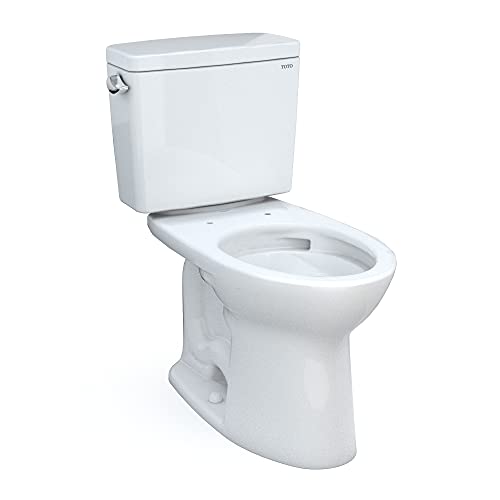
TOTO Drake
The standard rough-in default
4.7
Built for the 12 inch standard and also offered in 10 inch and 14 inch versions, the Drake pairs a 3 inch valve and G-Max flush with a 1000 gram MaP score at an efficient 1.28 GPF.
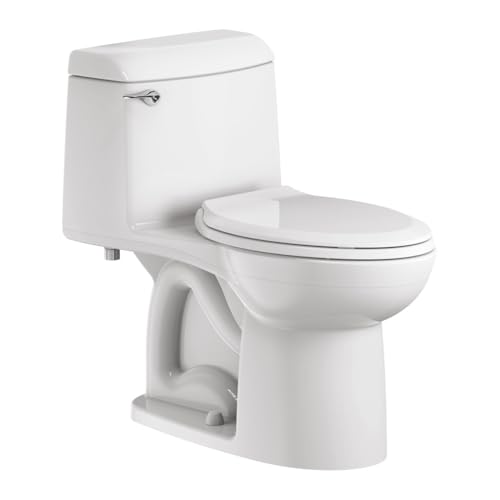
Available in a 10 inch rough-in version, the Cadet 3 keeps its large 3 inch valve and 1000 gram MaP score, so a compact bathroom does not mean a weak flush.
Offered in 12 inch plus 10 inch and 14 inch configurations, the Highline brings a reliable Class Five flush and comfort height across every rough-in, so the wider setback is covered.
If your rough-in is the standard 12 inches, stop worrying about fit entirely and buy on flush power, where the TOTO Drake's 1000 gram MaP score is hard to beat. If you have a 10 inch or 14 inch drain, do not settle for whatever your local store happens to stock: the major brands all publish strong models in those sizes, so you can still get a 1000 gram flusher with a 3 inch valve. The only real rule is to confirm the rough-in number in the specifications, not the model name, before you click buy.
Putting It All Together
The rough-in is the gate every toilet purchase has to pass through. It is the distance from the finished wall to the center of the floor drain bolts, and it comes in three common sizes: 10 inch for tight and older spaces, 12 inch as the modern standard found in most homes, and 14 inch for the wider setbacks in some older or custom builds. Measure to the wall and not the baseboard, round to the nearest standard size, and confirm that number before you shortlist a single model. Once fit is settled, the rest is a pleasure: at 12 inches you can chase any flush you want, and even at 10 or 14 inches the major brands offer strong, MaP-verified options. Match the rough-in first, then choose the toilet that gives you the strongest flush, the best water efficiency and the comfort your household wants.
The 12 inch rough-in is by far the most common size in modern homes and the standard manufacturers design around first. If your home was built or remodeled in recent decades, your rough-in is very likely 12 inches. This is why almost every toilet on the market, including every high-MaP flagship, is available in a 12 inch configuration. Always measure to confirm, but 12 inches is the safe assumption for most houses.
? How do I measure my toilet rough-in?
Measure from the finished wall behind the toilet to the center of the closet bolts at the base, or to the center of the bolt caps if the toilet is installed. Do not measure to the baseboard or trim. If there is no toilet, measure to the exact center of the closet flange in the floor. Round any odd reading to the nearest standard size: 10, 12 or 14 inches.
? Can I put a 12 inch toilet on a 10 inch rough-in?
No. A 12 inch toilet on a 10 inch rough-in will not have room for its tank against the wall, so the base cannot align with the flange and the toilet sits forward and unstable. You need a toilet specifically rated for a 10 inch rough-in. Many popular models, including the TOTO Drake and American Standard Cadet 3, are offered in 10 inch versions, so confirm the rough-in in the specifications before buying.
? Does rough-in affect flush power?
In most cases, no. The flush valve, trapway and bowl design are typically identical across the rough-in versions of a model, so a 10 inch Drake flushes like a 12 inch Drake. Rough-in is about fit and the position of the bowl relative to the wall, not how water moves. The rare exception is when a 10 inch model uses a smaller tank, so confirm the MaP score on the exact rough-in version you buy.
? What is the difference between rough-in and trapway?
The rough-in is the distance from the wall to the center of the floor drain, a fit measurement. The trapway is the internal S-shaped channel inside the toilet that carries waste from the bowl to the drain line, a performance feature. Rough-in decides whether the toilet fits your bathroom, while trapway width and glazing decide how well it resists clogs. They are unrelated specs that you confirm separately.
? What if my rough-in measures 11 or 13 inches?
Round to the nearest standard size. A reading of 11 inches almost always indicates a 12 inch rough-in that was measured to a baseboard instead of the wall, so re-measure to the finished wall surface. A genuine 13 inch reading usually rounds toward a 12 inch toilet with a small gap, or you can use a 14 inch rated model. Toilets are not made in 11 or 13 inch sizes, so the standard sizes are your only options.
? Can I use an offset flange to change my rough-in?
Yes, within limits. An offset closet flange can shift the effective drain position by an inch or two, letting a standard 12 inch toilet fit a 10 inch or 14 inch drain. It is a plumbing modification best done during a remodel or by a professional, and it should be a fallback rather than a first choice. The cleaner solution is almost always to buy a toilet rated for your measured rough-in.
? Are 10 inch rough-in toilets weaker flushers?
Not as a rule. Most 10 inch models share the same flush system as their 12 inch versions, so a TOTO Drake or American Standard Cadet 3 in 10 inch still posts a strong MaP score and uses the same large valve. The only thing to watch is the occasional smaller tank on a compact model, which is why we recommend confirming the MaP score and GPF on the specific 10 inch listing before buying.
? Do one-piece and two-piece toilets come in all rough-in sizes?
Both formats are most widely available in the standard 12 inch rough-in, and many are also offered in 10 inch and 14 inch. One-piece models tend to have slightly fewer non-standard rough-in options than two-piece, so if you have a 10 inch or 14 inch drain and want a one-piece, check availability carefully. Both styles work fine at any rough-in, the choice is about cleaning, weight and looks.
? Where exactly do I measure from on the wall?
Measure from the finished wall surface, the drywall, tile or wainscot, not from the baseboard, trim or any molding. The toilet base clears the trim and sits against the wall plane above it. Measuring to a half-inch baseboard instead of the wall is the single most common rough-in error and can push a true 12 inch rough-in to read incorrectly as 11.25 inches.
? Does rough-in affect what bowl shape I can choose?
No. Round and elongated bowls are both available across all three rough-in sizes, so a 10 inch or 14 inch rough-in does not force you into a particular bowl shape. Bowl shape is a separate comfort and space decision. In a tight bathroom that also has a 10 inch rough-in, a round bowl can help with front clearance, but that is about overall footprint, not the rough-in itself.
? Is rough-in the same as the toilet's footprint?
No. Rough-in is just the wall-to-drain distance. The footprint is the overall floor space the toilet occupies, including bowl depth and width. A complete fit check looks at rough-in plus side clearance (commonly around 15 inches from the centerline to any wall or fixture) and front clearance. Rough-in is the most critical single number, but the full footprint matters in tight bathrooms.
? Why does my new toilet sit away from the wall?
The usual cause is a rough-in mismatch where the toilet is rated for a smaller rough-in than your drain, for example a 10 inch toilet on a 12 inch rough-in, which leaves a two inch gap behind the tank. The toilet still installs and works, but the look is unfinished. To close the gap cleanly, replace it with a model rated for your actual rough-in, or in new work, set the drain to the toilet's rough-in.
? Can I tell my rough-in from the old toilet's model number?
Often yes. Most toilets have a model number stamped inside the tank, and searching that number in the manufacturer's published specifications will list the rough-in along with the GPF and MaP details. This is a reliable cross-check, especially when the model shipped in multiple rough-in versions, since the specific SKU usually identifies whether it was a 10, 12 or 14 inch unit. Still verify with a tape measure when possible.
? Which brands offer the most non-standard rough-in options?
TOTO, Kohler and American Standard publish the widest range of 10 inch and 14 inch rough-in models, including versions of the TOTO Drake and Entrada, the Kohler Highline and Cimarron, and the American Standard Cadet 3. Woodbridge, Swiss Madison and Gerber focus more on the standard 12 inch, with fewer non-standard options. For a 10 inch or 14 inch drain, start with the big three brands for the best selection.
? Does rough-in change the water usage or WaterSense rating?
No. Water usage in gallons per flush and EPA WaterSense certification are set by the flush system, not the rough-in. A 10 inch and 12 inch version of the same WaterSense model both use the rated 1.28 GPF and carry the same certification. Rough-in is purely a fit dimension and has no effect on efficiency, water bills or certification status.
? Should I choose my rough-in during a new build?
If you are building new or relocating the drain, choose a 12 inch rough-in. It is the standard, so it guarantees you and any future owner the widest possible toilet selection for decades, including the highest-MaP flushers and the broadest range of comfort-height and skirted designs. There is no practical reason to set a new drain to a non-standard 10 inch or 14 inch unless an existing constraint forces it.
Manufacturer published specifications (TOTO, Kohler, American Standard)
Our Verdict
Rough-in is the first measurement to get right, not the last. Measure from the finished wall to the center of the floor bolts, round to the nearest standard size, and confirm it before you shortlist a single toilet. Most homes are 12 inch, which unlocks the entire market, and the TOTO Drake is the standout there with a 1000 gram MaP score and a 3 inch valve. For a 10 inch drain the American Standard Cadet 3 keeps full flush power, and for 14 inch the Kohler Highline covers the wider setback. Confirm the rough-in in the specifications, not the model name, then check the current price on Amazon before you order.
N
Researched by Nadia Okafor
Nadia tracks EPA WaterSense certification, GPF and long-term water-saving performance, focusing on fixtures that cut water use without sacrificing flush power. All findings come from published efficiency data and verified owner reviews, not lab testing.
Updated August 2026 · Buying Guides
Keep reading
Related guides
Where Does Toilet Water Go After You Flush
Buying Guides
4.6
When you flush, where does it go? Follow toilet water from the bowl through the trap, drain, and stack to a septic…