Why Toilet Trapways Are Curved Like an S
Toilets4.6
Learn why toilet trapways curve like an S, how each bend blocks sewer gas, and what the shape means for clogs and…
Read the guideAn honest, spec-by-spec comparison of American Standard's two best-selling gravity toilets, the Champion 4 and the Cadet 3, using published MaP flush-test scores, EPA WaterSense listings, trapway and flush-valve dimensions, gallons-per-flush ratings and aggregated owner reviews, so you can decide which American Standard fits your bathroom, your clog history and your budget.
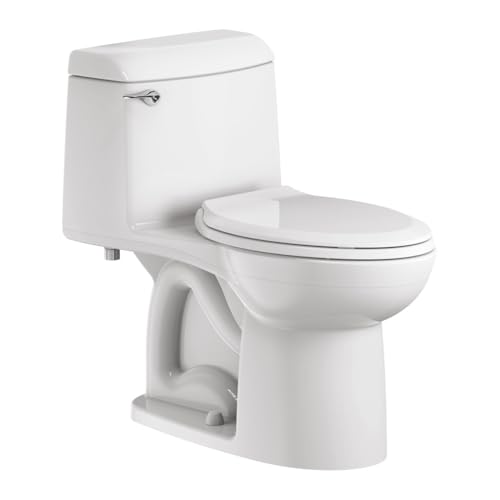
For raw flush power and clog resistance, the American Standard Champion 4 wins. Its oversized 4-inch flush valve and 2.375-inch fully glazed trapway clear bulk in one pass and post a 1,000-gram MaP score. Choose the Cadet 3 instead if you want a quieter, lighter, lower-cost toilet with cheaper universal parts for ordinary household use.
The American Standard Champion 4 and the Cadet 3 are the two toilets buyers cross-shop most often inside the American Standard lineup, and the reason is simple. Both are mainstream gravity-fed designs built for ordinary bathrooms, both are 1.28 or 1.6 gallon WaterSense-eligible models depending on the SKU, and both are stocked at nearly every big-box home-improvement store in the country. If you have narrowed your search to these two, you are not choosing between a good toilet and a weak one. You are choosing between American Standard's maximum-power clog fighter and its quieter, lighter, more affordable everyday workhorse.
The differences are real but specific. The Champion 4 is engineered around brute clearing force, with the widest trapway in its class and an oversized flush tower that dumps the entire tank in one fast surge. The Cadet 3 is engineered around balance, with a 3-inch flush valve, a clean siphonic flush and a lighter, simpler build that costs less and runs quieter. That single design philosophy ripples into flush strength, noise, weight, price and long-term parts. This guide compares them head to head using published manufacturer specifications, MaP (Maximum Performance) flush-test gram scores, EPA WaterSense listings, trapway and valve dimensions, bowl heights and shapes, and aggregated owner ratings. For the broadest cross-brand ranking of flush strength, the pillar guide to the best flushing toilets covers American Standard alongside TOTO, Kohler and the rest. This page stays focused on the choice between these two American Standard lines.
We do not test toilets in a lab. We compare manufacturer specifications, published MaP flush-test gram scores, EPA WaterSense listings, flush-valve and trapway dimensions, gallons-per-flush ratings, bowl heights and shapes, rough-in dimensions and aggregated owner ratings across major retailers. Where one model clearly suits a use case better, we say so plainly rather than calling a single universal winner.
A side-by-side look at the two models in their common comfort-height, elongated, two-piece configurations. Higher MaP grams means more waste cleared per flush, and a wider trapway passes more bulk before it catches. The tinted cell shows which model tends to lead on that row. Exact figures vary slightly by SKU, so confirm the spec sheet for the specific model number you buy.
| Spec | American Standard Champion 4 | American Standard Cadet 3 |
|---|---|---|
| Full flush MaP score | 1,000 g | 800 g |
| Flush valve diameter | 4 in tower | 3 in |
| Trapway size (glazed) | 2.375 in | 2.125 in |
| GPF options | 1.6 (and 1.28 on select SKUs) | 1.28 and 1.6 |
| Noise level | Louder, forceful surge | Quieter siphon |
| Bowl shape options | Round and elongated | Round and elongated |
| Height options | Standard and Right Height (comfort) | Standard and Right Height (comfort) |
| Weight and bulk | Heavier, larger tank | Lighter, slimmer |
| WaterSense certified | Yes (1.28 SKUs) | Yes (1.28 SKUs) |
| Typical owner rating | 4.5 | 4.4 |
Flushing power is measured most reliably by the independent MaP (Maximum Performance) test, which reports how many grams of solid waste a toilet clears in a single flush. The Champion 4 is built specifically to win this number. Its signature feature is an unusually large flush valve, a 4-inch tower-style opening that is roughly twice the area of a conventional 2-inch valve and bigger than the 3-inch valves used by most premium toilets. When you press the lever, that tower drops and dumps the entire tank into the bowl in a fast, forceful surge rather than a measured pour. The result is a 1,000-gram MaP score, the same headline ceiling posted by elite TOTO and Kohler models, and one of the strongest flushes you can buy at any price.
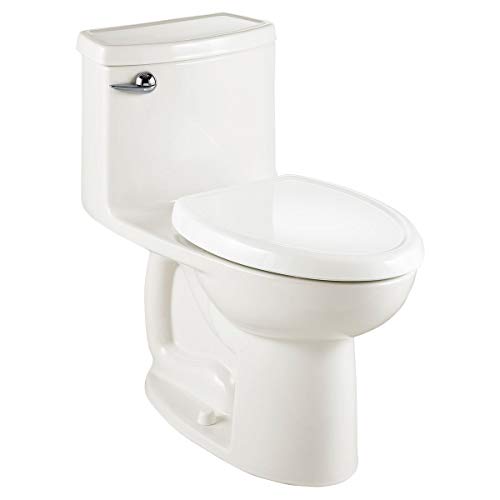
The Cadet 3 is no slouch, but it plays a different game. It uses a 3-inch flush valve feeding a clean siphonic flush, and in its common configurations it posts roughly an 800-gram MaP score. That is comfortably above the 350-gram WaterSense minimum and well past what an average household produces in one flush, so the Cadet 3 clears a normal load in a single push without complaint. The gap matters only at the extremes: a household that puts a genuinely heavy load on the toilet, or one fighting recurring clogs, gets real insurance from the Champion 4's extra 200 grams of margin. For ordinary daily use, both flush hard enough.
Clog resistance comes down to two things working together: how forcefully water moves through the bowl, and how wide and smooth the trapway is for waste to pass. The Champion 4 wins on both. Its 2.375-inch trapway is one of the largest passages on any residential toilet, wide enough that bulk which would catch in a narrower trap slides straight through, and it is fully glazed so waste does not snag on a rough ceramic surface on the way out. Pair that wide, slick passage with the 4-inch valve's powerful surge and you get a toilet that is genuinely hard to clog, which is exactly why the Champion 4 is a default recommendation for households that have fought recurring backups.
The Cadet 3 uses a 2.125-inch trapway, which is a normal, capable size for a mainstream toilet and handles ordinary household waste without trouble. It is fully glazed as well, so day to day the Cadet 3 rarely clogs in a typical home. The difference is margin, not basic competence. If your bathroom sees heavy use, serves a large family, or has a history of plunger sessions, the Champion 4's wider trapway is the safer bet. If clogs have never been an issue for you, the Cadet 3's trapway is perfectly adequate. Our guide to the best toilet for frequent clogs ranks the Champion 4 among the top gravity options for exactly this reason.
Both toilets carry American Standard flush-system branding, and the names alone do not tell you how strong the flush is or how clog-resistant the toilet will be. The MaP gram score and the trapway diameter do. A toilet rated 800 grams clears a heavy load with no fuss, and 1,000 grams is the practical ceiling. A 2.375-inch trapway passes noticeably more bulk than a 2.125-inch one. Buy on those two numbers, not the label.
Noise is the trade-off that comes with the Champion 4's power. Because its oversized tower valve dumps the entire tank into the bowl in one fast surge, the flush has a stronger, more audible whoosh than a conventional gravity toilet. It is nowhere near as loud as a Flushmate pressure-assisted unit, but owners who pay attention to sound do notice that the Champion 4 announces itself more than a quiet siphon. In a busy family bathroom or a basement utility bath, that is a non-issue. In a master bathroom that shares a wall with the bedroom, it can matter.
The Cadet 3's 3-inch valve releases water in a smoother, more controlled siphonic flush, so it runs noticeably quieter. For buyers who rank quiet operation high, that softer flush is a genuine advantage, and it is one of the reasons the Cadet 3 is so widely chosen for bedrooms, apartments and open-plan homes. Neither toilet is genuinely loud by pressure-assist standards, so this is a tiebreaker rather than a dealbreaker. If silence is your top priority across all brands, our roundup of the best quiet flush toilets leans toward measured siphonic flushers like the Cadet 3 over high-surge designs like the Champion 4.
On value, the Cadet 3 is usually the winner. It is one of American Standard's best-selling and most affordable mainstream models, it tends to cost less than a comparable Champion 4, and it still delivers a dependable 800-gram flush. For a rental, a guest bathroom, a powder room, or any situation where you want solid American Standard performance without paying for the maximum-power valve, the Cadet 3 is hard to beat on dollars-per-flush. Its lighter weight also makes it easier to carry and install, which matters if you are doing the swap yourself.
The Champion 4 costs more, and the premium buys you the 4-inch tower valve, the 1,000-gram MaP ceiling and the wide 2.375-inch trapway. For a primary bathroom, a heavy-use household, or a buyer who has fought clogs and wants the most clearing margin money can sensibly buy, many feel the step up is worth it. One thing to weigh on the Champion 4 specifically: its proprietary 4-inch flush valve and tower assembly are specialized parts, so when something inside the tank eventually needs service you replace an American Standard-specific component rather than a universal flapper from any hardware shelf. The Cadet 3's parts are simpler and cheaper to source. We never quote prices here because they shift constantly, so check the current price on Amazon for the exact model and configuration you are considering.
Most Champion 4 and Cadet 3 SKUs are built for a standard 12-inch rough-in, but both offer 10-inch and 14-inch versions for older homes. Measure from the finished wall behind the toilet to the center of the bolt caps at the floor before ordering. Also confirm the gallons-per-flush rating, since both lines are sold in 1.28-gallon WaterSense versions and older 1.6-gallon versions. This single pair of specs causes more returns than flush power ever will.
The MaP test was created to give buyers an objective, repeatable measure of flush strength instead of relying on marketing claims. It loads a toilet with a measured weight of test media and reports the maximum grams cleared in a single flush. WaterSense requires at least 350 grams to certify, which is the floor for an acceptable flush. In practice, anything from 600 grams upward handles a normal household with ease, 800 grams is genuinely strong, and 1,000 grams is the practical ceiling that the very best toilets reach. Higher numbers beyond 1,000 are not published because that is where the test tops out.
Against that scale, both of these American Standard toilets are strong performers. The Cadet 3's roughly 800-gram score clears a heavy load with margin to spare, and the Champion 4's 1,000-gram score sits at the very top. The gap between them is real but lives in the territory above what most households produce in a single flush. The honest takeaway is that you should buy the Champion 4 for its trapway and clog margin, not because the Cadet 3's 800 grams is somehow inadequate, because it is not.
If a buyer asks us to pick between these two without any other context, we start with the Cadet 3 and only move up to the Champion 4 if they can name a real reason. A normal family bathroom, a rental, a guest bath, a remodel where quiet matters, all of those point to the Cadet 3, which flushes plenty hard for less money and lighter weight. The moment someone says the words it clogs no matter what, or heavy daily use, that is when the Champion 4's wide 2.375-inch trapway and 4-inch valve earn their premium and their slightly louder flush.
On water use, the two lines are effectively matched when you compare like for like. American Standard sells both the Champion 4 and the Cadet 3 in WaterSense-certified 1.28-gallon configurations, which is 20 percent below the old 1.6-gallon federal maximum, and both also exist in legacy 1.6-gallon versions. WaterSense requires a toilet to use 1.28 gallons or less while clearing at least a 350-gram MaP load, and both of these models clear far more than that minimum, so you get the efficiency without sacrificing flush strength. Neither has a meaningful edge on the water bill in matched trim.
The one practical note is that the Champion 4 is most commonly stocked in 1.6-gallon form, since its whole identity is maximum power, while the Cadet 3 is very commonly sold as a 1.28-gallon WaterSense model. If a rebate or the lowest possible water use is your goal, the Cadet 3 is the easier model to find in efficient trim, though Champion 4 WaterSense SKUs do exist. Always check the GPF figure and the WaterSense label on the exact model number before you buy. For the full list of certified options across all brands, see our roundup of the best EPA WaterSense certified toilets.
Both toilets are offered in standard height and in American Standard's Right Height configuration, which puts the seat at roughly chair height (around 16.5 inches to the seat). Right Height bowls are easier to sit down on and stand up from, which is why they are the default recommendation for taller adults, older users and anyone with knee or hip concerns. Standard-height bowls sit lower and can suit households with young children. Because both lines offer both heights, your choice between Champion 4 and Cadet 3 does not lock you into one or the other; pick the height that fits the people using the bathroom.
Both also come in round-front (space-saving) and elongated (roomier) bowls, and both are designed for a standard 12-inch rough-in, with select SKUs available for 10-inch or 14-inch rough-ins in older homes. The clearest physical difference is bulk. The Champion 4's larger flush tower and the engineering needed to support its powerful flush make it a heavier, larger toilet with a bigger tank footprint. The Cadet 3 is lighter and slimmer, which makes it easier to handle during installation and a better fit for tighter bathrooms. If you are weighing one-piece versus two-piece in general, note that both lines appear in two-piece and one-piece configurations on certain SKUs, with the trade mostly about cleaning and price rather than flush performance.
Neither of these is the only American Standard worth knowing, and neither is your only option in its price range. Within American Standard, the Champion 4 sits at the powerful end and the Cadet 3 in the value middle, and the brand offers other lines around them. If you are open to looking beyond American Standard entirely, the same money buys you strong Kohler and TOTO options. Our Kohler vs American Standard comparison weighs American Standard's wide trapways and flush valves against Kohler's AquaPiston and Class Five systems, and the TOTO vs Kohler comparison covers how the two most popular premium brands stack up if you want to widen the field further.
It is also worth seeing how the same value-versus-power question plays out elsewhere. The Kohler Highline vs Cimarron comparison mirrors this matchup almost exactly: a dependable value flush against a stronger, better-sealed step up. And on the premium side, the TOTO Drake vs UltraMax II comparison shows how a two-piece and one-piece version of the same flush engine compare. The pattern across every brand is the same as it is here: decide how much flush margin and clog insurance you actually need, then pay for exactly that and no more. Beyond American Standard, brands like Woodbridge, Swiss Madison and Gerber also make capable gravity toilets worth a look if you want more options in the value tier.
The mistake we see most often with this pairing is a normal household buying the Champion 4 purely because it has the bigger flush number on paper, then living with the heavier weight and louder flush for a decade when the Cadet 3 would have served them perfectly. Flush power above 800 grams MaP is margin most homes never touch. Unless you can point to a real clog history or genuinely heavy use, buy the Cadet 3, save the difference, and put it toward a Right Height bowl or a slow-close seat. If clogs are your actual problem, though, the Champion 4 is one of the most reliable fixes on the market and absolutely worth it.
The Champion 4 is the right pick when flush power and clog resistance sit at the top of your list. Choose the Champion 4 if you want the strongest flush, since its 4-inch tower valve dumps the full tank in one surge and reaches a 1,000-gram MaP score. Choose it if you have fought recurring clogs, because its 2.375-inch fully glazed trapway is the widest in the class and passes bulk that would catch in a narrower trap. Choose it for a primary or heavy-use bathroom, a large family, or a home where a backed-up toilet has been a real and repeated headache. Accept in return a heavier toilet, a slightly louder flush and proprietary internal parts. The premium over the Cadet 3 buys genuine clog-fighting engineering.
Shop it here: check the current price on Amazon for the American Standard Champion 4.
The Cadet 3 is the right pick when value, quiet and easy handling matter most and your flushing needs are ordinary. Choose the Cadet 3 if you want a dependable, widely stocked toilet at a friendlier price, since it is one of American Standard's best-selling value models and its 3-inch valve and 800-gram flush clear a normal household load in one push. Choose it for rentals, guest bathrooms, powder rooms or quick replacements where you want a known-good American Standard without paying for the maximum-power valve, and where cheaper, more universal parts are easy to source. Choose it if a quieter flush and a lighter, easier-to-install toilet appeal to you. The Cadet 3 gives most buyers everything they need at the smarter price.
Shop it here: check the current price on Amazon for the American Standard Cadet 3.
Both toilets are dependable American Standard gravity designs that flush a normal load in one push and are stocked nearly everywhere. The Champion 4 is the power and clog-resistance champion: its 4-inch tower valve reaches a 1,000-gram MaP score and its wide 2.375-inch glazed trapway makes it one of the hardest toilets to clog at any price. The Cadet 3 is the smart value buy: an 800-gram flush that handles ordinary use for less money, in a lighter, quieter, easier-to-install body with cheaper parts. If you fight clogs or run a heavy-use bathroom, pay the premium for the Champion 4. If your needs are ordinary, the Cadet 3 delivers nearly everything for less. Neither choice is a mistake. Match the model to your clog history and rough-in, then check the current price on Amazon for the exact configuration before you buy.
Ready to shop? Check the current price on Amazon for the powerful American Standard Champion 4 or the value-focused American Standard Cadet 3.
The Champion 4 flushes stronger. Its oversized 4-inch tower valve dumps the entire tank into the bowl in one fast surge and reaches a 1,000-gram MaP flush-test score, the practical ceiling. The Cadet 3 uses a 3-inch valve and typically posts around 800 grams. Both clear an ordinary household load in a single flush, so the Cadet 3 is far from weak, but if you want the most clearing power the Champion 4 has the clear edge.
The Champion 4. It pairs a 2.375-inch fully glazed trapway, one of the widest on any residential toilet, with a 4-inch flush valve that drives bulk through with force. That combination makes it one of the hardest toilets to clog. The Cadet 3's 2.125-inch trapway is capable and handles normal household waste well, but it does not match the Champion 4's headroom on heavy loads. For a home with a clog history, the Champion 4 is the safer choice.
It depends on your bathroom. The Champion 4's premium buys the 4-inch tower valve, a 1,000-gram MaP score and the wide 2.375-inch trapway, which is real clog-fighting engineering. For a primary or heavy-use bathroom or a home that has fought clogs, many feel it is worth it. For a rental, guest bath or normal household, the Cadet 3's 800-gram flush is plenty and saves money. Check the current price on Amazon for both, since pricing shifts constantly.
The Cadet 3. Its 3-inch valve releases water in a smoother, more measured siphonic flush, so it runs softer. The Champion 4's 4-inch tower dumps the full tank almost instantly, producing a more forceful and noticeably louder rush. Neither is as loud as a pressure-assisted toilet, but for a bedroom-adjacent or quiet-sensitive bathroom, the Cadet 3 is the better pick on sound.
Both are available in EPA WaterSense-certified 1.28-gallon versions, which can qualify for local utility rebates and cut flush water about 20 percent versus a 1.6-gallon toilet. Both lines are also sold in older 1.6-gallon versions. The Cadet 3 is more commonly stocked in 1.28-gallon trim, while the Champion 4 is often sold at 1.6 gallons, so confirm the GPF rating on the exact SKU if efficiency matters.
In matched 1.28-gallon trim, yes, they use the same amount and there is no meaningful water-bill difference. The practical note is that the Champion 4 is most commonly sold as a 1.6-gallon model since its identity is maximum power, while the Cadet 3 is very commonly a 1.28-gallon WaterSense model. Check the GPF figure on the specific model number before buying.
The Champion 4 has a 2.375-inch fully glazed trapway, one of the widest on any residential toilet, which is why it passes bulk so well. The Cadet 3 has a 2.125-inch glazed trapway, a normal capable size for a mainstream toilet. The wider Champion 4 passage is the main reason it resists clogs better on heavy loads.
Yes. Both are offered in standard height and in American Standard's Right Height configuration, which puts the seat near chair height for easier sitting and standing. Neither model locks you into one height, so pick the option that suits the people using the bathroom. Right Height suits taller adults, older users and anyone with knee or hip concerns, while standard height can suit households with young children.
The Cadet 3 is generally easier. It is lighter and slimmer than the Champion 4, whose larger tank and flush tower add weight and bulk. Both use a standard 12-inch rough-in and a normal supply and waste connection, so the installation steps are the same. The difference is mostly handling weight during the lift and set, where the lighter Cadet 3 has the edge.
Somewhat. The Champion 4's 4-inch flush valve and tower assembly are proprietary American Standard parts, so when something inside the tank needs service you replace an American Standard-specific component rather than a universal flapper. The Cadet 3 uses simpler, more widely stocked parts. Both brands sell the correct kits, but the Cadet 3 is cheaper and easier to service over its life.
It depends on your priority. If quiet matters most and clogs have never been an issue, the Cadet 3's softer flush suits a bedroom-adjacent master bath well. If the master bath sees heavy use or you want the most clog insurance, the Champion 4's power is worth its slightly louder flush. Both come in Right Height elongated configurations that fit a primary bathroom nicely.
For most rentals the Cadet 3 wins on value, lighter weight and cheaper universal parts, which keeps maintenance simple and inexpensive. For a heavy-turnover rental that has suffered frequent clogs, the Champion 4's wide trapway reduces callbacks and can pay for itself. Match the model to the property's clog history rather than buying maximum power by default.
Yes. Both the Champion 4 and the Cadet 3 are offered in round-front bowls, which save a couple of inches of projection in tight spaces, and elongated bowls, which are roomier and the more popular choice for most bathrooms. Decide bowl shape based on your floor plan, since both models offer it either way.
Most Champion 4 and Cadet 3 SKUs are built for a standard 12-inch rough-in, the distance from the finished wall to the center of the floor drain. Both also offer 10-inch and 14-inch versions for older homes. Measure from the finished wall to the center of the bolt caps before ordering, since this single spec causes more returns than flush power ever does.
The Champion 4 competes with strong gravity models like the Kohler Cimarron and TOTO Drake at the powerful end, and its wide trapway makes it one of the best clog fighters in that group. The Cadet 3 competes with the Kohler Highline and TOTO Entrada as a value pick. Our Kohler vs American Standard and TOTO vs Kohler comparisons cover the cross-brand details if you want to widen your search.
Yes. The Cadet 3's roughly 800-gram MaP score clears a heavy normal load with margin to spare, which is well past what an average family produces in a single flush. The Champion 4 has more headroom, but the Cadet 3 is not a weak toilet. Unless your household has a real clog history or genuinely heavy use, the Cadet 3 flushes plenty hard for family duty.
Both are backed by American Standard's standard residential china warranty, which typically covers the ceramic body for a long term and the working mechanical parts for a shorter period. The exact terms can vary slightly by model and configuration, so check the warranty card for the specific SKU. Neither model has a meaningful warranty advantage over the other within the American Standard lineup.
Both lines are most commonly sold as two-piece toilets, with a separate tank and bowl, and certain SKUs are offered as one-piece designs for a sleeker, easier-to-clean silhouette. The choice between one and two piece is mostly about cleaning and price rather than flush performance, so it does not change which model flushes harder.
If you cannot point to a specific reason to go big, buy the Cadet 3. It flushes plenty hard for a normal home, costs less, runs quieter, weighs less and uses cheaper parts. Step up to the Champion 4 only if you have a real clog history, a heavy-use bathroom or simply want the most clearing margin available. That single question, do you fight clogs or not, settles the choice for most buyers.
The choice between the Champion 4 and the Cadet 3 comes down to one honest question: do you fight clogs or not. The Champion 4 is American Standard's power flagship, with a 4-inch tower valve that reaches a 1,000-gram MaP score and a 2.375-inch glazed trapway that is one of the widest and most clog-resistant on the market. If your household runs a heavy-use bathroom or has a real history of backups, it is one of the most reliable fixes you can buy and worth its premium, heavier weight and slightly louder flush. For everyone else, the Cadet 3 is the smarter purchase: an 800-gram flush that handles ordinary use easily, in a lighter, quieter, lower-cost body with cheaper, more universal parts. Buy on the MaP score and the trapway width, confirm your rough-in and GPF, then check the current price on Amazon for the exact configuration before you buy.
Learn why toilet trapways curve like an S, how each bend blocks sewer gas, and what the shape means for clogs and…
Read the guideAlmost every US toilet has a left-side handle. Learn the plumbing and mechanical reasons behind the layout and when it actually changes.
Read the guideHome toilets rely on tanks because household water lines lack the pressure that public flushometer systems use to flush straight from the…
Read the guide