Why Toilet Trapways Are Curved Like an S
Toilets4.6
Learn why toilet trapways curve like an S, how each bend blocks sewer gas, and what the shape means for clogs and…
Read the guideAn EPA WaterSense toilet must use 1.28 gallons per flush or less and still pass independent flush-performance testing, so the label is proof a toilet saves water without leaving you reaching for the handle a second time. We ranked the best WaterSense certified toilets by published MaP flush-test grams, rated gallons per flush, trapway design and the patterns across thousands of aggregated owner reviews, so you can cut water use, qualify for utility rebates and still clear the bowl in one flush.
The TOTO Drake II is the best EPA WaterSense certified toilet for most homes. It carries the WaterSense label at 1.28 gallons per flush yet still hits a full 1,000-gram MaP score through its Double Cyclone siphon, so you get the deepest water savings with zero loss of flush power. For the lowest real-world water use, the dual-flush TOTO Aquia IV drops to about 0.9 gallons on its light flush while keeping certification.
EPA WaterSense is the federal certification that tells you a toilet is genuinely water efficient, not just labeled that way. To earn the WaterSense label, a toilet has to do two things at once: use no more than 1.28 gallons per flush, which is 20 percent below the 1.6-gallon federal maximum for new toilets, and pass independent flush-performance testing that proves it still clears the bowl. That second requirement is what makes the label worth looking for. It rules out the weak, double-flushing low-flow toilets that gave water savings a bad name in the 1990s, because a toilet that needs two flushes to do the job uses more water than a thirsty older model, not less.
The payoff is real and measurable. A WaterSense toilet saves a typical household thousands of gallons a year compared with an older 3.5 or 1.6-gallon fixture, which shows up directly on the water bill. In many cities and states a WaterSense toilet also qualifies for a utility rebate that offsets part of the purchase, because reducing demand at the bowl is cheaper for a water utility than building new supply. We do not install or test these toilets ourselves. Instead we compare manufacturer specifications, independent MaP (Maximum Performance) flush-test grams, EPA WaterSense listings, trapway design and the patterns across thousands of verified owner reviews. Every model below carries the WaterSense label and still clears a normal household load in a single flush. If you want the broadest performance-first ranking across every flush type, start with our guide to the best flushing toilets.
Every toilet here had to carry a verified EPA WaterSense listing at 1.28 gallons per flush or less, and then prove it could clear the bowl in one flush rather than two. We ranked first on independent MaP flush-test grams, since that is the only number that measures real waste clearance instead of marketing claims, then on rated gallons per flush and dual-flush behavior, trapway design and glaze, and the weight of aggregated owner reviews. We weighted low water use and verified flush clearance together, because a water-efficient toilet only saves water if it works the first time. Most picks here rate 800 to 1,000 grams on MaP against the 350-gram residential pass threshold, and every one runs at 1.28 gallons or below, with several dual-flush models dropping under 1.0 gallon on a light flush. We do not take payment for placement, and where a model is excellent only for a narrow use case, we say so rather than calling it a universal winner. The table below summarizes how the picks compare on the numbers that decide a WaterSense purchase.
| Toilet | Best For | MaP | GPF | Rating | Check Price |
|---|---|---|---|---|---|
| TOTO Drake II | Most homes | 1000 g | 1.28 | 4.8 | Check price |
| TOTO UltraMax II | One-piece efficiency | 1000 g | 1.28 | 4.7 | Check price |
| TOTO Aquia IV | Lowest real-world water use | 800 g | 0.9 / 1.28 | 4.5 | Check price |
| Kohler Cimarron | Best value WaterSense | 1000 g | 1.28 | 4.6 | Check price |
| American Standard Cadet 3 | Reliable budget swap | 1000 g | 1.28 | 4.6 | Check price |
| Kohler Santa Rosa | Compact spaces | 1000 g | 1.28 | 4.6 | Check price |
| Woodbridge T-0019 | Modern dual-flush look | 800 g | 1.0 / 1.28 | 4.5 | Check price |
| Swiss Madison St. Tropez | Contemporary styling | 800 g | 0.95 / 1.28 | 4.4 | Check price |
| Gerber Avalanche | Trade-grade value | 1000 g | 1.28 | 4.4 | Check price |
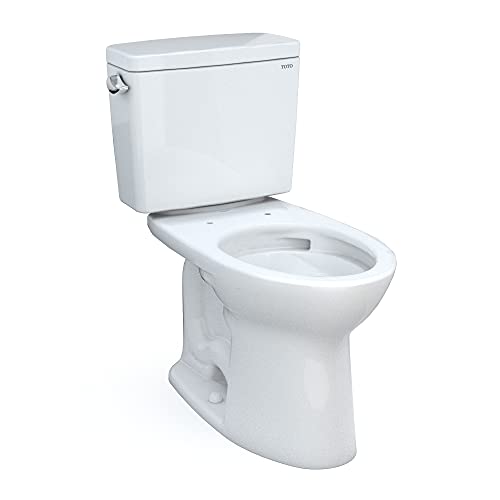
The Drake II is the WaterSense toilet we recommend to most buyers because it ends the trade-off the certification is supposed to prevent: it saves the most water while flushing as hard as any toilet on the market. It carries the EPA WaterSense label at 1.28 gallons per flush and still earns the full 1,000-gram MaP score, the best water-to-clearance ratio you can buy in a single-flush toilet.
The Drake II uses TOTO's Double Cyclone flush, which sends the 1.28-gallon tank through two angled nozzles instead of a ring of small rim holes, so the water swirls around the bowl and feeds a strong siphon. That engineering is exactly how it hits a 1,000-gram MaP score on so little water, and the fully glazed CeFiONtect trapway lets waste pass cleanly and keeps the bowl cleaner between washes, which also cuts the urge to flush twice and waste the savings.
Owner reviews are unusually consistent on low clog rates over long ownership, and parts are available everywhere. It is a two-piece without a skirt, so there is a tank-to-bowl seam and an exposed trapway to wipe around. For a buyer who wants the WaterSense label and a flush that never makes them reach for the handle again, this is the default pick.
If you want one safe WaterSense toilet and do not want to overthink it, buy the Drake II. A lot of certified low-flow toilets pass the test on paper and then disappoint in daily use, but this one delivers a genuine 1,000-gram flush on 1.28 gallons, so you get the rebate and the water savings without ever wondering whether it will clear the bowl.

The UltraMax II takes the Drake II's Double Cyclone flush and puts it in a sleek one-piece body with TOTO's CeFiONtect glaze. It carries the same EPA WaterSense label and the same 1,000-gram MaP score on 1.28 gallons, so you give up nothing on water savings or flush strength while gaining a seamless silhouette with no tank-to-bowl seam to scrub.
Because the tank and bowl are a single casting, there is no seam to trap grime, which is the main day-to-day advantage over the two-piece Drake II. The CeFiONtect glaze helps waste and mineral buildup slide away, so the bowl needs less scrubbing and is less likely to prompt a wasteful second flush, which keeps the water savings intact.
Owners rate it among the most reliable efficient toilets available, with the same low clog rate as its two-piece sibling. It costs more than the Drake II and, as a one-piece, it is heavy, so a helper is wise on installation day. For a quiet, powerful WaterSense flush in a low-maintenance body, it is the one-piece to beat.
If you have decided on a one-piece for the clean lines and easy cleaning, the UltraMax II is the obvious WaterSense choice. It is essentially a Drake II in a seamless body, so you keep the full 1,000-gram flush, the certification and the rebate eligibility, and only pay for the cosmetics and the missing seam.

The Aquia IV is the WaterSense pick when you want to push water use below even 1.28 gallons. It is a dual-flush toilet with two buttons on the tank: a light flush of about 0.9 gallons for liquid waste and a full flush of 1.28 gallons for solids. Because most flushes in a typical home are liquid only, its average gallons per flush in daily use lands well under any single-flush model here.
It uses TOTO's Dynamax Tornado dual-nozzle siphon and a glazed CeFiONtect bowl, so the full flush still clears a normal load cleanly at a published 800-gram MaP. The skirted body hides the trapway behind a smooth panel, so the base wipes clean in one pass and looks modern, which fits the efficiency-minded bathrooms it usually goes into.
The tradeoffs are a slightly lower full-flush MaP than the 1,000-gram leaders and the small habit of choosing the right button. For most homes neither matters much in practice, and the daily water saved is the highest here. It also features in our roundup of the best water saving toilets of 2026, where dual-flush behavior matters most.
If your goal is the absolute lowest water bill, the Aquia IV beats every single-flush toilet on this page because real households flush liquid far more often than solids. Accept the 800-gram full flush and the two-button habit, and you get the deepest practical savings the WaterSense program allows.

The Cimarron pairs the EPA WaterSense label with a strong 1.28-gallon flush and a more refined look than most value toilets. It uses Kohler's Class Five canister flush, which lifts a canister seal to release the whole tank through a large 3.25-inch opening rather than a small flapper, giving it the punch to reach a 1,000-gram MaP score at 1.28 gallons.
The canister flush seals better over time than a standard flapper, so it is less prone to the silent leaks that quietly waste water and undercut a low-flow toilet's whole purpose. It is a comfort-height elongated bowl that suits most adults, and the smoother base sides are easier to wipe than a fully contoured budget two-piece.
The canister flush is slightly more audible than a TOTO siphon, and the stock seat and trip lever feel basic. But for buyers who want dependable WaterSense performance and a cleaner look without a premium price, the Cimarron is the value standout, and it is a common choice for full remodels where looks matter alongside efficiency.
The Cimarron is the WaterSense toilet we recommend when budget is the deciding factor. You get a genuine 1,000-gram flush, the certification and the rebate eligibility for noticeably less than the premium TOTO models, and the canister valve's tight long-term seal means the water savings hold up instead of leaking away.

The Cadet 3 is American Standard's dependable everyday toilet, and it earns its WaterSense place by clearing the bowl hard at just 1.28 gallons. It uses a siphon flush fed by a wide 3-inch flush valve, larger than the 2-inch valves on many budget toilets, which gives a faster, stronger pull and a full 1,000-gram MaP score on certified water use.
The bowl has an EverClean antimicrobial surface that helps slow stains and odors between cleanings, which keeps the bowl looking clear and reduces nuisance reflushing that would erase the savings. It installs in a standard 12-inch rough-in and uses common parts, so repairs are cheap and quick, which is exactly what you want in a workhorse replacement.
It is a straightforward comfort-height two-piece without the premium glaze of a TOTO, and most complaints center on the basic stock seat rather than the toilet itself. But on pure WaterSense flush performance per dollar it is hard to beat. For a no-drama certified swap, it is a smart, affordable choice.
When a rental or a secondary bathroom needs a reliable certified toilet and budget is tight, the Cadet 3 is our go-to WaterSense pick. It flushes at the same 1,000-gram level as toilets costing far more, qualifies for the same rebates, and the only thing you really give up is the premium look.

The Santa Rosa brings a strong WaterSense flush to a compact one-piece body, with a shorter front-to-back footprint than a full elongated toilet while keeping a comfortable compact-elongated seat. It uses Kohler's AquaPiston canister flush, which releases water around the full 360 degrees of the bowl, so the 1.28-gallon tank scours evenly and reaches a 1,000-gram MaP score.
The one-piece skirted design hides the trapway contours and wipes clean in seconds, which suits a small bathroom where every surface is close to hand. The AquaPiston canister releases the full tank quickly for a strong, wide rinse, and the compact footprint installs in a standard 12-inch rough-in like the rest of this list.
The canister flush is slightly louder than a siphon, and as a one-piece it is heavy to set, so a helper is wise on installation day. But for a space-saving toilet that still carries the WaterSense label and flushes hard, the Santa Rosa is the standout, and it appears in our wider look at the best low flow toilets (1.28 GPF and under).
For a powder room or a tight half-bath where every inch counts, the Santa Rosa is the WaterSense toilet we point to. You keep the full 1,000-gram flush and the certification in a smaller footprint, and the skirted one-piece body is the easiest base on this list to keep clean in a cramped space.

The Woodbridge T-0019 is a skirted one-piece dual-flush toilet that delivers WaterSense water use and a clean modern shape for less than the premium brands. Its dual-flush button offers a light flush of about 1.0 gallon and a full flush of 1.28 gallons, both certified, with a siphon-jet bowl that pulls the contents down smoothly.
Owner reviews praise the soft-close seat included in the box, the easy-clean skirted body and the low water use. The dual-flush button drops most daily flushes to about 1.0 gallon, and the full flush still clears a typical household load in one pass at an 800-gram MaP, which is plenty for most homes.
The main tradeoffs are a lower full-flush MaP than the 1,000-gram leaders and a younger brand with less long-term parts history than TOTO or Kohler, so keep proof of purchase for warranty support. If you want a certified dual-flush one-piece with a contemporary look without a high price, it is a strong value option.
The T-0019 is the WaterSense buy for someone who wants the modern, skirted, dual-flush look without paying a premium-brand price. Go in knowing you are trading a marquee badge and the deepest parts network for the styling, the included seat and the dual-flush savings, which is a fair deal at this level.

The Swiss Madison St. Tropez is the WaterSense pick for buyers who want a sharp, contemporary one-piece without spending what a premium brand costs. It is a skirted dual-flush toilet with a low-profile tank, offering a light flush of about 0.95 gallons and a full flush of 1.28 gallons, both certified, with a glazed siphon-jet bowl.
The low-profile tank and skirted body give it a clean, almost European look that stands out in a modern bathroom, and the dual-flush button keeps everyday water use low. The 800-gram full-flush MaP is comfortably enough for a typical household, and the glazed bowl helps waste slide through so you rarely need a second flush.
As with other newer brands, the tradeoffs are a shorter parts and support history than TOTO or Kohler and a full-flush MaP below the top tier, so keep your documentation for warranty claims. For a design-forward certified toilet at a value price, it is a strong contender, and it also appears in our guide to the best eco friendly toilets for a greener bathroom.
The St. Tropez is the toilet we suggest when the look of the bathroom matters as much as the water savings. You get a genuinely modern, skirted, dual-flush certified body for a value price, and as long as you are comfortable with a newer brand, the 0.95-gallon light flush keeps daily use among the lowest here.
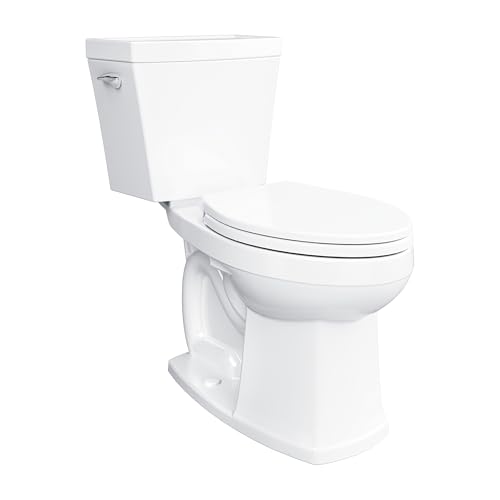
Gerber is a respected plumbing brand that does not get the consumer attention of TOTO or Kohler, which is exactly why the WaterSense Avalanche is a value find. It uses a gravity siphon-jet with a wide flush valve to reach a 1,000-gram MaP score on 1.28 gallons, matching the headline brands on raw clearance while carrying the certification.
The wide flush valve and well-shaped bowl give the Avalanche a strong, clean siphon flush that owners rate highly for both clearance and reliability. Because Gerber is more common in trade supply houses than big-box retail, parts and accessory selection can take slightly more searching, but the core WaterSense flush performance is genuinely top tier.
Build quality is solid and the price typically sits below the premium names, which makes it a quiet recommendation among plumbers who know the brand. The seat and supply line are sometimes sold separately, so check the listing before ordering. For a powerful certified flush without paying for a familiar badge, it deserves a serious look.
The Avalanche is the WaterSense toilet we mention to buyers who want to save money without buying something cheap. It is a trade brand with a real 1,000-gram flush and the EPA label, so you get pro-grade performance and rebate eligibility at a lower price, as long as you are comfortable sourcing it outside the big-box aisles.
Across this whole list, the WaterSense label only tells you the toilet uses 1.28 gallons or less and passed a test, so the number that actually separates the picks is the MaP score. Any single-flush model here rated at 1,000 grams will clear a typical household in one flush for years, so the real decision is body style, budget and whether you want dual-flush to squeeze out the last gallons. If you want one safe choice, the TOTO Drake II is the default; if the lowest water bill is the whole point, jump to the dual-flush Aquia IV instead.
The key insight is that strong flushing and low water use are not opposites anymore. The toilets above reach the same 1,000-gram MaP maximum as far thirstier older models, but do it through better bowl, jet and trapway engineering rather than more water. TOTO's siphon designs prize a quiet, clean rinse, Kohler's canister flushes release the tank fast for a more forceful pull, and a wide 3-inch valve like the Cadet 3's drives a faster flush. For the strongest flushers overall, see our ranking of the strongest flushing toilets of 2026.
The old worry, that a low-flow toilet flushes weakly and needs a second pull, is exactly what the WaterSense performance test was created to rule out. A certified toilet has to clear waste effectively to earn the label, so the modern WaterSense models on this list save water without the double-flushing that would erase those savings. Between a lower bill, possible rebates and the same flush power, there is little reason to choose a thirstier toilet for a typical home. For the wider water-saving picture, see our roundup of the best water saving toilets of 2026.
The savings scale with how many people use the toilet. For a household that flushes five or six times per person each day, moving from 1.6 to 1.28 gallons can save several thousand gallons a year, and a dual-flush model that drops to 0.9 gallons on a liquid flush saves even more because most flushes are liquid. Replacing a very old 3.5-gallon toilet with a WaterSense model can cut a single toilet's water use by more than half. If you want the math by water level, our explainer on 1.28 GPF vs 1.6 GPF toilets and which to choose breaks it down.
MaP (Maximum Performance) is an independent test that measures how many grams of solid waste a toilet clears in a single flush, against a 350-gram residential pass threshold. It matters even more for a WaterSense toilet than for a thirsty one, because the whole point of certification is saving water, and a weak flush that needs a second pull wastes more than a strong single flush. If a certified toilet does not publish a MaP score, treat that as a warning sign rather than assuming the flush is strong.
WaterSense narrows the field to genuinely efficient toilets, but a few measurable specs separate one that clears the bowl in a single flush from one that makes you flush twice and erase the savings. Understand these and you can buy with confidence.
The WaterSense label is the EPA certification for toilets that use 1.28 gallons or less and still pass independent flush-performance testing, so it is your guarantee the toilet saves water without sacrificing clearance. Look for the label on the listing or the box, and confirm the rated gallons per flush is 1.28 or lower. Then check your local water utility's website, because many cities and states offer a rebate for installing a WaterSense toilet that offsets part of the cost. Keep your receipt and the model's WaterSense documentation to claim it, since proof of certification is usually required.
A WaterSense toilet only saves water if it clears the bowl the first time. MaP measures how many grams of solid waste a toilet clears in one flush, and the certified models that reach 1,000 grams at 1.28 gallons, like the TOTO Drake II and American Standard Cadet 3, give you the rare combination of low water use and a flush that never makes you reach for the handle again. Treat 800 grams as the floor and 1,000 grams as ideal, especially if you have heavy use or a history of clogs.
A dual-flush WaterSense toilet adds a light flush of roughly 0.9 to 1.0 gallons for liquid waste, so its average daily water use drops below any single-flush model in a normal home. It is the bigger saver on paper. The tradeoff is that everyone in the house has to pick the right button, and dual-flush models tend to post a slightly lower full-flush MaP. If maximum savings matter most, choose dual-flush like the Aquia IV; if you want the simplest strong flush, a 1,000-gram single flush like the Drake II is hard to beat. Our guide to the best eco friendly toilets for a greener bathroom compares both approaches.
A water-saving toilet can quietly lose its savings if the flush valve leaks. A worn rubber flapper can let water seep from the tank into the bowl unnoticed, wasting gallons a day. Canister flush valves, like Kohler's Class Five and AquaPiston designs, seal across a wider surface and tend to hold tight far longer than a standard flapper, so the toilet keeps using only the 1.28 gallons it is rated for. If long-term efficiency matters to you, favor a canister-valve design and check the tank water level is set to the marked line after installation.
Even the best WaterSense toilet is useless if it does not fit your bathroom. Rough-in is the distance from the finished wall to the center of the floor-drain bolts, and most homes use 12 inches, though older houses sometimes have 10 or 14 inches. Comfort-height bowls sit around 16 to 17 inches off the floor and suit most adults and seniors, while standard height saves a little space. Decide between a one-piece, which has no seam to clean, and a two-piece, which is lighter and cheaper to ship. Confirm all of these before buying so your certified toilet installs cleanly the first time.
The mistake we see most often with efficient toilets is buying on the WaterSense badge alone and ignoring the MaP score. The label only proves the toilet passed a minimum test, not that it flushes like the leaders. Filter for a 1,000-gram MaP score in your rough-in, confirm the rebate with your water utility, and almost any toilet on this list will save water and clear the bowl quietly for well over a decade.
The TOTO Drake II is the best WaterSense toilet for most homes, carrying the certification at 1.28 gallons per flush while still hitting a full 1,000-gram MaP score through its Double Cyclone siphon. For the lowest real-world water use, the dual-flush TOTO Aquia IV drops to about 0.9 gallons on its light flush while keeping certification.
WaterSense is an EPA program that certifies toilets using 1.28 gallons per flush or less that also pass independent flush-performance testing. The label guarantees real water savings of about 20 percent below the 1.6-gallon federal maximum, and the performance requirement rules out the weak, double-flushing low-flow toilets of the past.
The best ones do. Modern bowl engineering, wider flush valves and glazed trapways let a 1.28-gallon certified toilet reach the same 1,000-gram MaP score as a thirsty older model. The TOTO Drake II, Kohler Cimarron and American Standard Cadet 3 all hit that 1,000-gram ceiling at 1.28 gallons, so they clear heavy loads in one flush.
A WaterSense toilet saves about 0.32 gallons per flush versus a 1.6-gallon model, which adds up to thousands of gallons a year for a household. Replacing a very old 3.5-gallon toilet can cut a single toilet's water use by more than half. Dual-flush WaterSense models save even more because most daily flushes use the light setting.
Often, yes. Many cities, states and water utilities offer rebates for installing an EPA WaterSense certified toilet, because reducing demand at the bowl is cheaper than building new supply. Check your water provider's website for current programs, and keep your receipt and the model's WaterSense documentation to claim the rebate.
Yes. To earn the WaterSense label, a toilet must use no more than 1.28 gallons per flush, which is 20 percent below the 1.6-gallon federal maximum for new toilets. Many dual-flush WaterSense models go further, using roughly 0.9 to 1.0 gallons on a light flush, which lowers their average daily water use even more.
It depends on your priority. A dual-flush WaterSense toilet like the Aquia IV saves more water overall because its light flush handles most daily use, but it asks everyone to pick the right button and posts a slightly lower full-flush MaP. A single-flush model like the Drake II gives one strong, simple 1,000-gram flush every time.
Aim for at least 800 grams, and 1,000 grams if you have heavy use or a history of clogs. A 600-gram score handles a typical household, but a higher score is important for an efficient toilet, since a weak flush that needs a second pull wastes more water than one strong certified flush would have used.
No. Every WaterSense toilet uses 1.28 gallons or less on a full flush, but dual-flush models add a lighter setting of roughly 0.9 to 1.0 gallons that lowers their average daily use. So while the full-flush limit is the same, real-world water use varies, with dual-flush models like the Aquia IV using the least over a typical day.
TOTO, Kohler and American Standard have the longest track records and deepest parts networks among WaterSense brands, which is why they lead this list. Woodbridge, Swiss Madison and Gerber offer strong value, with Gerber respected as a trade brand. For long-term reliability and easy repairs, the three major brands are the safest bets.
Not necessarily. WaterSense certification spans every price level, from budget models like the American Standard Cadet 3 to premium ones like the TOTO UltraMax II. Because many utilities offer rebates and the toilet lowers your water bill every month, a WaterSense model often costs less over its life than a thirstier toilet, even if the sticker price is similar.
A well-chosen one will not. The performance test behind the WaterSense label is meant to ensure the toilet clears waste effectively, and the certified models with a 1,000-gram MaP score and a wide, glazed trapway resist clogs as well as most homes ever need. Clog risk comes from a low MaP score, not from the WaterSense certification itself.
You can if the flush valve leaks. A worn flapper can let water seep silently from the tank into the bowl, wasting gallons a day. Canister flush valves like Kohler's Class Five seal longer, and setting the tank water level to the marked line keeps the toilet using only its rated 1.28 gallons. Check periodically for a running tank.
Not federally, though all new toilets sold in the United States must already meet the 1.6-gallon maximum. Some states, notably California and Texas, require new toilets to use 1.28 gallons or less, which effectively mandates WaterSense-level efficiency. Even where it is optional, choosing a certified model saves water and may qualify for a rebate.
Most WaterSense toilets are built for a standard 12-inch rough-in, the distance from the finished wall to the center of the floor-drain bolts. Older homes sometimes have 10-inch or 14-inch rough-ins, and brands like TOTO and Kohler offer popular models in those sizes. Always measure before buying to ensure a clean fit.
It depends on your priorities. A one-piece like the TOTO UltraMax II has no tank-to-bowl seam, so it is easier to clean and looks sleeker, but it is heavier and costs more. A two-piece like the Drake II is lighter, cheaper to ship and easier to install solo, with a seam that needs occasional wiping. Both can be fully WaterSense certified.
Yes. Gravity WaterSense toilets rely on the weight of water already in the tank rather than supply-line pressure, so they flush consistently even where household water pressure is low. This is an advantage over pressure-assisted toilets, which often need a minimum supply pressure of around 25 psi to charge properly.
Look for the WaterSense label on the product listing, packaging or specification sheet, and confirm the rated gallons per flush is 1.28 or lower. You can also search the EPA WaterSense product database at epa.gov/watersense to verify a specific model. Keeping that documentation is useful for claiming any local rebate.
For the deepest water savings with no compromise on flush strength, the TOTO Drake II is the WaterSense pick: a full 1,000-gram MaP score, a Double Cyclone siphon and a glazed trapway, all at 1.28 gallons per flush and certified for rebates. Choose the TOTO UltraMax II for the same flush in a seamless one-piece, the Kohler Cimarron for that 1,000-gram power at a friendlier price, or the dual-flush TOTO Aquia IV for the lowest real-world water use thanks to its 0.9-gallon light flush. Confirm your rough-in and bowl height, verify the WaterSense label and check your local rebate, then check the current price on Amazon.
Learn why toilet trapways curve like an S, how each bend blocks sewer gas, and what the shape means for clogs and…
Read the guideAlmost every US toilet has a left-side handle. Learn the plumbing and mechanical reasons behind the layout and when it actually changes.
Read the guideHome toilets rely on tanks because household water lines lack the pressure that public flushometer systems use to flush straight from the…
Read the guide