Why Toilet Trapways Are Curved Like an S
Toilets4.6
Learn why toilet trapways curve like an S, how each bend blocks sewer gas, and what the shape means for clogs and…
Read the guideA water saving toilet cuts your indoor water use at the single biggest source inside a home, the toilet, without leaving you flushing twice and erasing the savings. We ranked the best water saving toilets of 2026 by their real daily water draw in gallons per flush, their independent MaP flush-test gram scores, EPA WaterSense certification, flush-system and trapway design, and the patterns across thousands of aggregated owner reviews, so you can lower your water bill and still clear the bowl in a single push.
The best water saving toilet is the TOTO Drake II. It reaches the maximum 1000 gram MaP flush at just 1.28 gallons, the best water-to-clearance ratio of any single-flush toilet, so it saves water and never makes you flush twice. For the lowest real-world daily use, the TOTO Aquia IV dual flush drops to a 0.8 gallon light flush while still hitting the same 1000 gram score on its full flush, and the Kohler Cimarron is the best value, all EPA WaterSense certified.
A water saving toilet is simply a toilet engineered to do the same job with less water. The toilet is the largest single source of indoor water use in a typical home, accounting for roughly a quarter to a third of all water drawn inside the house, so it is also the place where a smart upgrade saves the most. The federal maximum for new toilets sold in the United States is 1.6 gallons per flush, but the toilets on this page use 1.28 gallons or less, the threshold the EPA set for its WaterSense label, and the dual-flush models drop to roughly 0.8 gallons on a light flush. For a household that flushes five or six times per person per day, that difference adds up to thousands of gallons a year and a visibly lower water bill.
We do not run our own flush trials. Instead we compare published manufacturer specifications, independent MaP (Maximum Performance) flush-test gram scores, EPA WaterSense certification, the rated gallons per flush, the flush-system and flush-valve design, and the patterns across thousands of verified owner reviews. For water saving toilets specifically, we weighted two numbers together above everything else: the gallons per flush, because that is the savings, and the MaP gram score, because a water saving toilet only saves water if it clears the bowl in one flush rather than two. A weak low-water toilet that needs a second flush uses more water than a thirsty old model, so verified flush clearance and low water use have to come as a pair. If you want the broadest performance-first ranking across every toilet type, see our pillar guide to the best flushing toilets.
Every pick here had to cut water use while still clearing solids in a single flush. We required EPA WaterSense certification, which means a verified 1.28 gallons or less on the full flush plus independent flush-performance testing, and we gave extra weight to dual-flush and sub-1.0 gallon models that push the daily average even lower. We required a strong MaP gram score, with our leading single-flush picks at the full 1000 grams and our dual-flush picks at 800 grams or more on the full flush, because a low-water toilet that double flushes is not a water saver at all. We looked hard at the flush mechanism, since a poorly sealing flapper or dual-flush valve is the most common cause of a silently running toilet that wastes more water than the design ever saves. We weighted independent MaP data, WaterSense status and aggregated owner reports about leaks, reliability and flush quality over any marketing language, and we do not accept payment for placement.
| Toilet | Best For | MaP | GPF | Rating | Check Price |
|---|---|---|---|---|---|
| TOTO Drake II | Best overall water saver | 1000 g | 1.28 | 4.8 | Check price |
| TOTO Aquia IV | Lowest daily water use | 1000 g | 0.8 / 1.28 | 4.7 | Check price |
| Kohler Cimarron | Best value | 1000 g | 1.28 | 4.6 | Check price |
| TOTO UltraMax II | Best one-piece water saver | 1000 g | 1.28 | 4.7 | Check price |
| American Standard Cadet 3 | Best reliable everyday saver | 1000 g | 1.28 | 4.6 | Check price |
| Woodbridge T-0019 | Best skirted dual flush | 1000 g | 1.0 / 1.28 | 4.5 | Check price |
| Swiss Madison St. Tropez | Lowest light flush, modern look | 800 g | 0.8 / 1.28 | 4.4 | Check price |
| Kohler Santa Rosa | Best compact water saver | 1000 g | 1.28 | 4.6 | Check price |
| Gerber Viper | Best contractor value saver | 800 g | 1.28 | 4.3 | Check price |
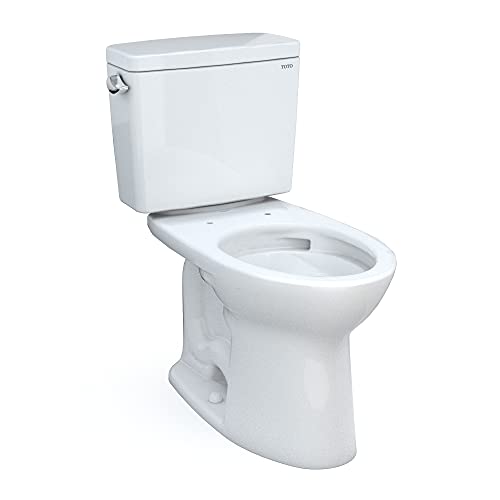
The Drake II is the toilet that ends the argument that saving water means a weak flush, reaching the full 1000 gram MaP score at just 1.28 gallons, the best water-to-clearance ratio you can buy in any single-flush toilet.
The Drake II uses TOTO's Double Cyclone flush, which sends the 1.28 gallon tank through two angled nozzles instead of a ring of small rim holes, so the water swirls around the bowl and feeds a strong siphon. That centrifugal action lets it hit the maximum 1000 gram MaP score at only 1.28 gallons, which means it clears a heavy household load in a single push and you never reach for the handle a second time. Because every double flush erases a low-water toilet's savings, that combination is exactly what makes the Drake II the best water saver on the market.
It pairs the flush with a fully glazed CeFiONtect trapway, so waste passes cleanly and the bowl stays cleaner between cleanings, which also reduces the urge to reflush. Owner reviews praise its reliability and consistent flush across years of use. The body is a comfort-height elongated two-piece, so there is a tank-to-bowl seam to wipe and the base is not skirted. For most households that want the deepest water savings with zero compromise on flush strength, this is the default choice and a frequent pick among the best low flow toilets at 1.28 GPF and under.
If you want to save water and you are not sure where to start, buy the Drake II. The 1000 gram MaP score at 1.28 gallons is the highest water-to-clearance ratio in any single-flush toilet, which means the savings are guaranteed because the bowl always clears on the first push. The only reasons to look elsewhere are if you want a dual flush for an even lower daily average, or a skirted base for faster cleaning.

The Aquia IV is the pick when you want to push water use below even 1.28 gallons, a dual flush toilet whose 0.8 gallon light flush handles the many liquid uses in a day and drops the household average to the lowest of any model here.
The Aquia IV uses TOTO's Dynamax Tornado flush, which feeds water through two angled nozzles to create a swirling rinse rather than dumping it down the front of the bowl. That motion lets the 1.28 gallon full flush reach a perfect 1000 gram MaP score, while the 0.8 gallon partial flush is among the lowest light flushes you can buy. Because most daily uses in a normal home are liquid only and trigger the small flush, the Aquia IV's average gallons per flush in real use lands well under any single-flush model on this list, which is why it earns the lowest daily water draw here without giving up any flush power.
It is a fully skirted two-piece with smooth sides and no exposed trapway contours, so the base wipes clean in one pass, and the CeFiONtect glaze keeps the bowl cleaner between wipes. The only real tradeoff is the small habit of choosing the right button, since the full-flush MaP score matches the 1000 gram leaders rather than trailing them. For the most water saved per day in a normal household, it is the standout, and it suits the same buyer as our roundup of the best eco friendly toilets for a greener bathroom.
Choose the Aquia IV when squeezing the water bill to its absolute minimum is the priority. Because liquid uses outnumber solids several to one, the 0.8 gallon light flush does most of the work and pulls the daily average below any single-flush toilet, even an efficient 1.28 gallon one, and the full flush still delivers a perfect 1000 gram MaP score when you need it. Just make sure everyone in the house will actually use the small button, since the savings depend on it.

The Cimarron pairs a strong 1.28 gallon flush with a more refined look than most value toilets, hitting the full 1000 gram MaP score at a friendlier price with the easiest nationwide parts support of any pick here.
The Cimarron uses Kohler's Class Five canister flush, which lifts a canister seal to release the whole tank through a large 3.25 inch opening rather than a small flapper. That fast, full release gives it the punch to reach a 1000 gram MaP score at 1.28 gallons, so it clears the bowl in one push and the water savings hold. The canister design also tends to seal better over time than a standard flapper valve, which matters for water saving, because a worn flapper is the most common silent leak that wastes hundreds of gallons and quietly undoes the savings.
It is a comfort-height elongated two-piece with the WaterSense label, and because Kohler is sold in every big-box store, replacement seals and the canister are easy to find locally for years. The canister flush is slightly more audible than a TOTO siphon, and the stock seat and trip lever feel basic, but for buyers who want dependable 1000 gram water saving and a cleaner look without a premium price, the Cimarron is the value standout.
The Cimarron is the water saver we point value shoppers to, because it gives you the same 1000 gram clearing as the premium picks at a friendlier price, plus a sealed canister valve from a brand whose parts sit on every hardware-store shelf. That valve quality matters for water savings specifically, since a leaking flapper is what most often turns an efficient toilet into a water waster.

The UltraMax II takes the Drake II's water-efficient Double Cyclone flush and puts it in a sleek one-piece body, delivering the same 1000 gram clearing at 1.28 gallons with no tank-to-bowl seam to scrub.
The UltraMax II carries the same 1000 gram MaP score at the same 1.28 gallons as the Drake II, so you give up nothing on water savings or flush strength while gaining a seamless silhouette. It uses TOTO's CeFiONtect glaze, which helps waste and mineral buildup slide away, keeping the bowl clear and reducing nuisance reflushing that would otherwise waste water. It is WaterSense certified and a frequent favorite where easy cleaning matters as much as efficiency.
This is the pick for buyers who want the deepest single-flush water savings, a low-maintenance bowl and a clean one-piece look in one package. It costs more than the two-piece Drake II, and as a one-piece it is heavy, so a helper is wise during installation. Owner reviews rate it among the most reliable efficient toilets available, with the smooth body cited again and again as a reason it stays cleaner between cleanings.
The UltraMax II is the water saver to buy when you want the Drake II's guaranteed 1000 gram clearing but prefer a seamless body that wipes clean in seconds. The flush and the savings are identical, so the choice between them comes down purely to whether you want a one-piece look and are willing to pay a little more and lift a heavier fixture during install.

The Cadet 3 is American Standard's reliable everyday toilet, and it earns its place by clearing the bowl hard at just 1.28 gallons with a wide flush valve and a clog-resistant glazed trapway, all WaterSense certified.
The Cadet 3 uses a siphon flush fed by a wide 3 inch flush valve, larger than the 2 inch valves on many budget toilets, which gives a faster, stronger pull. That combination reaches the full 1000 gram MaP score at 1.28 gallons, so it saves water while clearing heavy loads in one flush. The bowl has an EverClean antimicrobial surface that helps slow stains and odors between cleanings, which keeps the bowl looking clear and reduces the nuisance reflushing that wastes water.
It is a straightforward comfort-height two-piece without the premium glaze of a TOTO, but the ten-year limited warranty is among the longest in the category and signals confidence in the build. Owner reviews praise its dependable flush and easy parts availability. For a dependable water saving flush at a sensible price, it is an easy recommendation for most bathrooms, and it carries over from our list of toilets that never clog.
The Cadet 3 is the water saver we specify when reliability and warranty matter more than a premium finish. Its wide 3 inch valve and glazed trapway give it 1000 gram clearing at 1.28 gallons, so the savings are secure, and the ten-year warranty backs the build. It is the sensible, no-drama choice for a household that just wants an efficient toilet that works for years.

The T-0019 is the sleek skirted dual flush one-piece that built Woodbridge's reputation, offering a designer body, real dual-flush water savings and a top-tier full flush at a price well below the premium brands.
The T-0019 is a fully skirted one-piece with a dual-flush button plate, so the trapway hides behind a smooth side panel and the seamless body wipes clean in one pass. It uses a 1.0 gallon partial flush and a 1.28 gallon full flush, and the full flush posts a strong 1000 gram MaP score, so it trims daily water use on the many liquid flushes while still clearing heavy loads in one push. The soft-close seat is included, a genuine bonus at this price.
Owner reviews run deep and consistently praise a clean flush, a quiet refill and the upscale skirted shape. The tradeoff is that Woodbridge parts are less universal than TOTO or Kohler, so a repair may mean ordering a specific dual flush mechanism, and the brand sells under several similar model numbers, so confirm the exact number before ordering. For designer styling with real dual-flush water savings and a top full flush, it is a standout, and it appears again in our guide to the best EPA WaterSense certified toilets.
Pick the T-0019 when the bathroom is on display and you still want both dual-flush savings and a genuinely strong flush. The 1000 gram full flush is the highest among the dual-flush picks here, so solids clearance is never the worry, and the 1.0 gallon light flush trims the daily average. Just keep a spare flush mechanism on hand, since Woodbridge parts are less generic than the big-three brands.

The St. Tropez is the pick for the lowest possible water draw with modern styling, a sleek skirted one-piece whose dual flush light mode sips just 0.8 gallons at a price well below the premium brands.
The St. Tropez pairs a 0.8 gallon partial flush, among the lowest available anywhere, with a 1.28 gallon full flush that reaches an 800 gram MaP score, so it clears solids cleanly without pressing the button twice. Its appeal is the combination of that very low water use with a contemporary low-profile design and a fully skirted base that wipes clean in seconds. The soft-close seat and the button plate are included, which keeps the package complete out of the box.
Swiss Madison is a newer brand than the established names, so its long-term reliability record and parts depth are not as deep, and a few owners note the compact tank can refill a little slowly between flushes. Owner reviews are broadly positive on looks and flush strength, with the usual caution to confirm the bolt-down and supply connection on install. For a water-minded buyer who also wants a modern look for less, it is a strong value.
Choose the St. Tropez when squeezing the water bill is the priority and you like a clean modern shape. The 0.8 gallon partial flush is as low as the category goes, and the included soft-close seat and button plate make it a genuine value. Just go in knowing Swiss Madison is a younger brand, so order a spare flush mechanism if long-term parts availability matters to you.

The Santa Rosa brings a strong 1000 gram water saving flush to a compact one-piece body, fitting a shorter footprint into a small bathroom while keeping a comfortable compact-elongated seat.
The Santa Rosa uses Kohler's AquaPiston canister flush, which releases water around the full 360 degrees of the bowl rather than from one point, so the 1.28 gallon tank scours the bowl evenly and reaches the 1000 gram MaP score. That even rinse clears the bowl in one push, securing the water savings, and the canister design seals more reliably over time than a flapper, which prevents the silent tank leaks that waste water. It is WaterSense certified.
The one-piece skirted design hides the trapway contours and wipes clean in seconds, which suits a small bathroom where every surface is close to hand, and Kohler parts are easy to find locally for years. The canister flush is slightly louder than a siphon, and as a one-piece it is heavy to set, but for a space-saving toilet that still saves water and flushes hard, the Santa Rosa is the standout, and it features in our guide to the best eco friendly toilets for a greener bathroom.
The Santa Rosa is the water saver we recommend for a tight bathroom, because it packs 1000 gram clearing and a sealed canister valve into a compact skirted one-piece. The compact footprint never costs you flush power, so the savings hold, and the Kohler parts network means a worn seal years from now is a quick local fix rather than a special order.
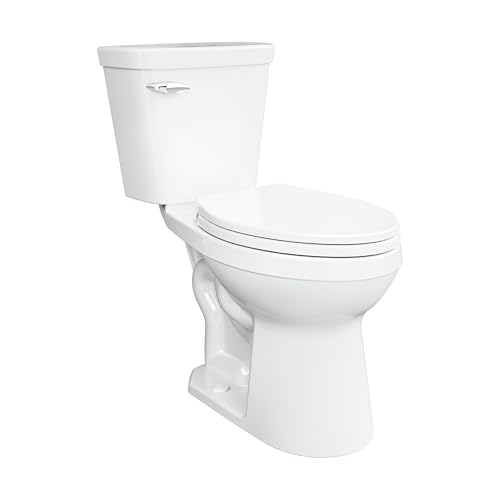
The Viper is Gerber's value water saver, a plumber favorite that delivers genuine 1.28 gallon savings and dependable clearing for one of the lowest prices in the category.
Despite its low price, the Viper posts an 800 gram MaP score on its 1.28 gallon flush with a wide trapway, so it resists clogs about as well as toilets that cost far more, while staying at the WaterSense 1.28 gallon level. For a hardworking or rental bathroom where water savings are the goal and budget is tight, that combination of strength and value is hard to beat, and the 800 gram score is enough to clear a normal household load in one flush.
Gerber is a long-time plumber favorite because its toilets are dependable and inexpensive to service, and the simple two-piece design installs with standard fittings. The 800 gram MaP is below the 1000 gram leaders, so it is not the strongest flush here, and the styling is plain with an exposed trapway. For raw water-saving value per dollar across several bathrooms, though, the Viper is the smart-money contractor choice, much like its siblings in our guide to the best low flow toilets at 1.28 GPF and under.
For a budget or rental water saver, the Viper is the one we trust. You get a dependable 800 gram flush at the WaterSense 1.28 gallon level for a price that makes outfitting several bathrooms easy, and Gerber's plumbing-trade pedigree means it holds up under heavy use. Accept the 800 gram MaP as the price of that value, since it still clears a normal load in one push.
If we had to cover almost every water saving situation with two toilets, we would keep the TOTO Drake II for the best blend of a guaranteed 1000 gram flush at 1.28 gallons, and the TOTO Aquia IV dual flush for any household that wants to push the daily average as low as possible with its 0.8 gallon light flush. That pairing covers both goals, a single strong flush that never wastes water on a second push and the lowest possible daily draw, and it sidesteps the silent-leak problem of cheap valves by sticking to well-engineered mechanisms from a major brand.
A water saving toilet succeeds or fails on two numbers: how low its gallons per flush goes, since that is the savings, and how strong its MaP flush is, since a weak low-water toilet that double flushes wastes more than it saves. The Drake II optimizes both, which is why it tops the list. If you want the lowest possible daily average, step to the dual-flush Aquia IV; if budget matters most, the Cimarron delivers the same 1000 gram clearing for less.
The savings depend on the toilet clearing the bowl in one flush and on the valve not leaking. A toilet that needs two flushes, or one with a worn flapper that trickles all day, can waste more water than the design ever saves. Choose a WaterSense model with a high MaP score and a reliable canister or quality valve, and the water reduction is substantial and lasting across a year.
Value for a water saver means strong savings plus a mechanism that will not leak or strand you on parts, since a leaking valve is the most common way an efficient toilet quietly becomes a water waster. A major-brand model with easy local parts is worth more than the lowest sticker price. The Cimarron hits that balance with 1000 gram clearing, while the Gerber Viper covers the tightest budgets and rental fleets.
Always read MaP and gallons per flush together. A low GPF paired with a weak flush is the worst of both worlds, because two flushes use more water than one strong flush. Target 1000 grams in a single-flush water saver like the Drake II or Cimarron, or at least 800 grams on the full flush of a dual-flush model, a bar the Aquia IV clears with a perfect 1000 grams. Every pick in our table meets that bar.
Buying a water saving toilet comes down to four checks that general toilet guides tend to gloss over: how low the gallons per flush goes, how strong the flush is on the MaP test, how reliable the flush valve is, and whether the body and fit suit your bathroom. Work through the sections below before you buy and you will land on a toilet that genuinely cuts your water use without leaking or forcing a second flush.
Gallons per flush, or GPF, is the headline number and the savings itself. The federal maximum for new toilets is 1.6 gallons, the EPA WaterSense threshold is 1.28 gallons or less, and dual-flush models drop to roughly 0.8 to 1.1 gallons on a light flush. Moving from 1.6 to 1.28 gallons cuts about 20 percent of the water used at the bowl, and a dual-flush toilet saves even more because most daily flushes are liquid only. If you want a deeper breakdown of how much you actually save and when each level makes sense, our explainer on 1.28 GPF vs 1.6 GPF toilets and which to choose walks through the math.
A water saving toilet only saves water if it clears the bowl the first time. MaP measures how many grams of solid waste a toilet clears in one flush. A score of 600 grams handles a typical home, 800 grams is strong, and 1000 grams is the practical ceiling and the best insurance against double flushing. The toilets that hit 1000 grams at 1.28 gallons, like the TOTO Drake II, Kohler Cimarron and American Standard Cadet 3, give you the rare combination of low water use and a flush that never makes you reach for the handle again, which is what truly saves water over a year.
The most common way an efficient toilet quietly becomes a water waster is a worn or poorly sealing flush valve. A failed flapper or dual-flush cartridge can trickle water from the tank into the bowl around the clock, a silent leak that wastes hundreds of gallons and erases every bit of the design's savings. Canister-style valves like Kohler's Class Five and AquaPiston seal more reliably over time than a flat rubber flapper, and a major-brand mechanism is far easier to replace when it eventually wears. Favor an established brand whose parts you can buy locally, because the valve, not the bowl, is what protects your water savings over the long run.
A single-flush water saver uses the same 1.28 gallons every time, which keeps operation simple and gives one strong, predictable flush. A dual-flush toilet adds a second light flush of roughly 0.8 to 1.1 gallons for liquid waste, so its average daily water use drops below any single-flush model in a normal household where most flushes are liquid. Dual flush is the bigger saver on paper, but it asks everyone in the house to pick the right button and tends to post a slightly lower full-flush MaP. If maximum savings matter most, choose dual flush like the Aquia IV. If you want the simplest strong flush, a 1000 gram single flush like the Drake II is hard to beat. Our broader guide to the best eco friendly toilets for a greener bathroom compares both approaches alongside materials and certifications.
Even the most efficient water saving toilet is useless if it does not fit. A skirted one-piece like the Woodbridge T-0019 or Kohler Santa Rosa wipes clean fastest and looks modern, while a two-piece like the Drake II costs less and is easier to maneuver during install. A comfort-height bowl around 17 to 19 inches suits most adults, while standard height saves a little space and works better for small children. You must also confirm your rough-in, the distance from the finished wall to the center of the floor bolts, which is usually 12 inches but can be 10 or 14 in older homes. Check all of these before buying so your water-saving toilet installs cleanly the first time. For the broadest fit and flush advice across the whole category, our pillar guide to the best flushing toilets goes deeper.
The mistake we see most often with water saving toilets is buying on the GPF number alone and ignoring the MaP score and valve quality. For a water saver, the order of priority is a low GPF, then a strong MaP flush of 800 grams or more so it clears in one push, then a reliable major-brand valve so it never develops a silent leak, then body style and fit. Get those right and a water saving toilet trims your bill for years without double flushing or trickling water away.
The TOTO Drake II is the best water saving toilet. It reaches the maximum 1000 gram MaP flush at just 1.28 gallons, the best water-to-clearance ratio of any single-flush toilet, so it saves water yet clears the bowl in one push and never forces a second flush. For the lowest daily average, the TOTO Aquia IV dual flush drops to a 0.8 gallon light flush while still matching that 1000 gram score on its full flush.
A water saving toilet uses 1.28 gallons per flush or less, the EPA WaterSense threshold and about 20 percent below the 1.6 gallon federal maximum for new toilets. Dual-flush models go further, using roughly 0.8 to 1.1 gallons on a light flush, so their average daily water use is even lower than a single-flush 1.28 gallon toilet.
Compared with a 1.6 gallon toilet, a 1.28 gallon model saves about 0.32 gallons per flush, which adds up to thousands of gallons a year for a household. A dual-flush toilet saves more, because most daily flushes are liquid and use the light 0.8 to 1.0 gallon setting. Lower water use at the bowl also means a lower water bill.
The best ones do. Modern bowl engineering, wider flush valves and glazed trapways let a 1.28 gallon toilet reach the same 1000 gram MaP score as a thirsty older model. The TOTO Drake II, TOTO UltraMax II, Kohler Cimarron and American Standard Cadet 3 all hit that 1000 gram ceiling at 1.28 gallons, so they clear heavy loads in one flush.
No, which is why a high MaP score matters as much as a low GPF. A 1.28 gallon toilet that clears the bowl in one flush, like the 1000 gram MaP models here, truly saves water. A weak low-water toilet that needs two flushes uses more than a 1.6 gallon model, so always pair a low GPF with a strong, verified MaP score.
The terms overlap. Low flow usually means 1.28 gallons or less, the WaterSense level, while water saving is the broader idea of using less water than the 1.6 gallon standard, including dual-flush models that drop to 0.8 gallons on a light flush. In practice, any WaterSense-certified toilet at 1.28 gallons or less is both a low flow and a water saving toilet.
Usually yes. Because most daily uses are liquid only and trigger the small 0.8 to 1.1 gallon partial flush, a dual-flush toilet's daily average drops below even an efficient 1.28 gallon single-flush model. The catch is that the savings depend on everyone using the small button, so a dual flush saves more only if the household adopts it.
Often, yes. Many cities, states and water utilities offer rebates for installing an EPA WaterSense certified toilet that uses 1.28 gallons or less, because it reduces demand on the local water supply. Check your water provider's website for current programs, and keep your receipt and the model's WaterSense documentation to claim it.
A good MaP score is 800 grams or higher, with 1000 grams the practical ceiling and the safest choice. The MaP test measures how many grams of solid waste a toilet clears in one flush, so a high score prevents the double flushing that would erase your savings. Pair that strong flush with a low GPF and the water reduction is real and lasting.
A running toilet almost always means the flush valve seal or flapper has failed, letting water trickle from the tank into the bowl. This silent leak wastes more water than the toilet ever saves, so it must be fixed promptly. Replace the flapper or flush valve seal, which is why a brand with easy parts availability and a sealed canister valve is worth choosing.
The best ones are. EPA WaterSense certifies toilets that use 1.28 gallons or less on the full flush while passing flush-performance standards, so the label verifies both efficiency and clearing. Every pick in this guide carries it. Some toilets are sold in both certified and non-certified versions, so confirm the gallons-per-flush figure on the listing before buying.
Not if you choose one with a strong MaP score. The early reputation for clogging came from weak 1990s low-flow toilets, but today's best water savers post 1000 gram MaP scores at 1.28 gallons, matching dedicated power toilets. Use a model with a glazed trapway like the TOTO Drake II or American Standard Cadet 3 and clogs are no more common than with a high-water toilet.
The dual-flush TOTO Aquia IV and Swiss Madison St. Tropez both use a 0.8 gallon partial flush, among the lowest light flushes available anywhere. That very low partial flush handles the many liquid-only uses in a typical day, pulling the household average below any single-flush model and giving the lowest real-world daily water use here, with the Aquia IV's full flush still reaching the maximum 1000 gram MaP score.
Both flush identically, so the choice is about cleaning, weight and budget. A one-piece like the TOTO UltraMax II has no tank-to-bowl seam, wipes clean fastest and often looks more modern, but it is heavier to install and usually costs more. A two-piece like the Drake II is lighter, cheaper and easier to maneuver, with a seam to wipe.
TOTO leads for flush quality and the lowest light flushes, Kohler offers the best value and easiest parts, and American Standard makes durable, long-warranty savers. Woodbridge and Swiss Madison offer modern skirted designs for less, while Gerber covers the contractor and rental budget. Choosing a major brand matters most for the flush valve's reliability and parts availability.
Most use a standard 12 inch rough-in, the distance from the finished wall to the center of the floor bolts, though 10 and 14 inch versions exist for older homes. Measure yours before buying, since the rough-in must match regardless of the flush system, and a skirted water saver in particular needs the correct fit to sit flush against the wall.
Yes. The toilet is the largest single source of indoor water use, so replacing an old high-volume model with a 1.28 gallon or dual-flush toilet noticeably reduces the household's total water draw and the bill that follows it. The savings grow with household size and are largest when replacing a pre-1994 toilet that used 3.5 gallons or more per flush.
Pick a model with a high MaP score so you never flush twice, use the partial flush for liquids on a dual-flush model, and check the flush valve regularly for a silent leak. If you see the bowl water moving or hear a trickle, replace the flapper or valve seal promptly. For more habits and fixes, see our guide on how to reduce toilet water use.
Yes, if the MaP score is high enough. A water saver with a 1000 gram MaP score, like the TOTO Drake II or American Standard Cadet 3, clears heavy solids in one push just like a dedicated power toilet. The key is to pick a model with a strong, verified flush rather than the lowest GPF with a weak flush behind it.
For water savings without weak flushing, the TOTO Drake II is the best water saving toilet, reaching the maximum 1000 gram MaP flush at just 1.28 gallons so you cut water use yet never press twice. Choose the TOTO Aquia IV dual flush for the lowest real-world daily average thanks to its 0.8 gallon light flush, which still delivers the same 1000 gram score on the full flush, the Kohler Cimarron for the same 1000 gram clearing at the best value, the TOTO UltraMax II for a seamless one-piece, the American Standard Cadet 3 for a reliable everyday saver with a ten-year warranty, and the Swiss Madison St. Tropez for the lowest light flush in a modern shape. Whatever you pick, read MaP and gallons per flush together, confirm the EPA WaterSense label, and insist on a reliable valve so the savings last for years.
Learn why toilet trapways curve like an S, how each bend blocks sewer gas, and what the shape means for clogs and…
Read the guideAlmost every US toilet has a left-side handle. Learn the plumbing and mechanical reasons behind the layout and when it actually changes.
Read the guideHome toilets rely on tanks because household water lines lack the pressure that public flushometer systems use to flush straight from the…
Read the guide