Quick Answer
To reduce toilet water use, first run a dye test to find silent flapper leaks, then fix or replace any leaking flush valve, since a single bad seal wastes more water than any flush ever saves. The largest lasting cut comes from replacing an old 3.5 to 5 gallon toilet with a WaterSense 1.28 gallon model like the TOTO Drake II, which trims toilet water by more than 60 percent per flush.
Toilets quietly dominate household water use. Inside a typical American home, the toilet is responsible for close to 30 percent of all indoor water, more than showers, laundry or the kitchen sink. That means the toilet is also where the biggest savings hide. The two ways to cut toilet water are simple to name but easy to overlook: stop the water you are wasting through leaks and inefficient old hardware, and lower the water you use on purpose every time you flush. A leaking flapper can silently drain hundreds of gallons a day, and an old 3.5 or 5 gallon toilet uses three to four times the water of a modern 1.28 gallon model on every single flush. Address both and a household can cut toilet water use in half or more.
We do not run our own flush trials. Instead we compare published manufacturer specifications, independent MaP (Maximum Performance) flush-test gram scores, EPA WaterSense certification, the flush volume in gallons per flush, the trapway and bowl glaze, and the patterns across thousands of verified owner reviews. For a water-saving guide that pulls together leak fixes, flush habits and replacement choices, the same numbers matter, because the worst thing you can do is buy a toilet that sips water but flushes so weakly that you push the lever twice. Two flushes of 1.28 gallons use more water than a single 1.6 gallon flush would. Every habit and product in this guide is judged on whether it cuts real water use without forcing that second flush. For the broadest performance-first ranking across every toilet type, see our pillar guide to the best flushing toilets.
Fix leaks before you change anything else. A silent flapper leak is the most common and most expensive form of wasted toilet water, and most homeowners never notice it because there is no drip you can hear or see. A worn flush valve can pass hundreds of gallons a day from the tank into the bowl, dwarfing the savings from any low flush volume. Put a few drops of food coloring in the tank, wait fifteen minutes without flushing, and if color appears in the bowl you have a leak to fix first. No other water-saving step matters until that seal is sound.
How much water does a toilet actually use?
To save water, you first need to know where it goes. A toilet manufactured before 1994 typically uses 3.5 gallons per flush, and some older models from the 1980s and earlier use a full 5 to 7 gallons. The federal Energy Policy Act capped new toilets at 1.6 gallons per flush starting in 1994, and the EPA WaterSense program later pushed the bar to 1.28 gallons or less. The arithmetic is dramatic. A household that flushes around 25 times a day uses about 87 gallons daily on a 3.5 gallon toilet, but only about 32 gallons on a 1.28 gallon model. That is a difference of roughly 55 gallons a day, or 20,000 gallons a year, on flushing alone.
The age of your toilet is the single biggest clue to how much water you are using. If you do not know the flush volume, lift the tank lid and look for a date stamp on the underside of the lid or inside the tank wall, usually printed in raised numbers. Many modern toilets also print the gallons per flush on the bowl behind the seat hinge or on the tank. If your toilet predates the mid 1990s, replacing it is the highest impact water-saving move available, and it pays for itself faster than almost any other home upgrade through lower bills and, in many areas, a utility rebate.
Step one: find and fix toilet leaks
Before buying anything, find out whether your toilet is leaking, because a leak can waste more water than your entire flush volume. Toilet leaks are usually silent and invisible, which is exactly why they go on for months. The fix is often a part that costs a few dollars and ten minutes of work, making leak repair the cheapest and most cost-effective water-saving step in this guide.
Run the dye test
The dye test takes five minutes and catches the most common toilet leak. Remove the tank lid, drop in about ten drops of food coloring or a dye tablet, and replace the lid. Do not flush. Wait fifteen to twenty minutes, then look in the bowl. If colored water has seeped into the bowl, your flapper or flush valve seal is leaking and letting tank water trickle through around the clock. A clear bowl means that seal is sound. Repeat the test on every toilet in the house, since a leak on a rarely-used guest bathroom toilet can run unnoticed for a very long time.
Replace a worn flapper or flush valve
If the dye test shows a leak, the culprit is almost always the rubber flapper or the flush valve seal at the bottom of the tank. Rubber flappers harden, warp and lose their seal over three to five years, especially in homes with chlorinated water or tank cleaning tablets, which accelerate the breakdown. Replacing a flapper is an inexpensive job that most homeowners can do in under fifteen minutes with no tools beyond your hands. For toilets with a canister flush valve, such as Kohler's AquaPiston or many TOTO models, the seal is more durable and easier to swap as a single piece. Buying a major brand matters here, because replacement seals for TOTO, Kohler and American Standard sit on every hardware-store shelf, while parts for obscure imports can be hard to source.
Check the fill valve and water level
A second, quieter leak happens at the overflow tube. If the fill valve is set too high or fails to shut off, water continuously runs into the overflow tube and down into the bowl, wasting water without ever triggering the flush. Look inside the tank: the water level should sit about half an inch to one inch below the top of the overflow tube. If water is spilling into the tube, lower the float or replace the fill valve. A modern fill valve is inexpensive, installs in minutes, and stops a slow waste that can otherwise run indefinitely.
A leaking toilet can waste 200 gallons a day or more, far more than the flush volume you are trying to save. The EPA estimates that household leaks waste nearly 10,000 gallons a year on average, and a worn toilet flapper is among the most common sources. That is why leak repair, not flush volume, is the first and highest-return water-saving step. Spend the five minutes on a dye test before you spend a dollar on anything else, and recheck every toilet once a year because flappers wear out on a schedule of their own.
Step two: reduce the water used on every flush
Once your toilets are leak-free, the next lever is the volume of water each flush uses. If you are not ready to replace the toilet, there are low-cost ways to trim the per-flush volume of an older high-gallon model, though each comes with trade-offs you should understand before trying it.
Adjust the flapper or fill level on an older toilet
On a pre-1994 toilet that uses 3.5 gallons or more, you can often reduce the volume slightly by lowering the water level in the tank. Bend or clip the float so the fill valve shuts off sooner, which sends less water into the bowl per flush. Go gradually and test the flush each time, because lower the level too far and the toilet will not clear solids in one push, which defeats the purpose by forcing a double flush. This trick works best on genuinely oversized older toilets that have water to spare, not on a 1.6 or 1.28 gallon model engineered for an exact volume.
Use a tank bank or displacement bag, not a brick
A tank bank, a small water-filled bag that hangs inside the tank, or a displacement device, takes up volume so the tank refills with less water after each flush, saving a fraction of a gallon per flush on an older toilet. Never use a brick for this. Bricks crumble over time, and the loose grit can damage the flush valve and clog the works. A purpose-made displacement bag is cheap, safe and removable. As with float adjustment, test the flush after installing one to make sure the toilet still clears the bowl in a single push, since a weak flush wipes out the savings.
Practice smart flushing habits
The cheapest water-saving step costs nothing: do not use the toilet as a wastebasket. Every tissue, cotton ball or cigarette butt flushed away triggers a full flush that would not otherwise have happened, wasting a gallon or more each time. Toss those items in a bin instead. If your home has a dual flush toilet, use the smaller half-flush button for liquid waste, which uses roughly 0.8 to 1.1 gallons instead of the full 1.28, dropping your household average meaningfully over a year. These habits cost nothing and, in a busy household, add up to thousands of gallons saved annually.
Editorial TakeTank tricks like float adjustment and displacement bags are worth doing on a genuinely old 3.5 to 5 gallon toilet, but treat them as a stopgap, not a solution. The moment a trimmed flush starts requiring a second push, you have lost the savings and then some. For any toilet older than the mid 1990s, the math overwhelmingly favors replacement over modification, because a modern 1.28 gallon WaterSense toilet cuts more than 60 percent of the water on every flush, never asks for a second push, and often qualifies for a utility rebate that offsets much of the cost.
Step three: replace an old toilet with a WaterSense model
The single largest and most permanent cut in toilet water use comes from replacing an old high-volume toilet with a modern WaterSense model. This is the step that turns a 3.5 or 5 gallon flush into a 1.28 gallon flush, every flush, for the life of the toilet. Because the toilet is the largest indoor water user in most homes, that swap alone can lower total household water use by a noticeable margin on the very next bill.
Understand what WaterSense and 1.28 GPF mean
The EPA WaterSense label is the simplest signal that a toilet truly saves water. It certifies that an independent body has verified the toilet uses 1.28 gallons per flush or less while still passing flush performance standards, so you are not trading clearing power for a low number. WaterSense toilets use at least 20 percent less water than the federal 1.6 gallon maximum and far less than any pre-1994 model. For a deeper look at how the volumes compare, see our breakdown of 1.28 GPF vs 1.6 GPF toilets and which to choose, and for models chosen specifically for this certification, our roundup of the best EPA WaterSense certified toilets.
Buy on the MaP score so you never double flush
The mistake that ruins water savings is buying on the gallons number alone. A toilet that sips 1.28 gallons but flushes weakly forces a second flush, and two flushes use more water than one strong flush would. The MaP (Maximum Performance) test measures how many grams of solid waste a toilet clears in a single flush. A reading of 600 grams handles a typical home, 800 grams is strong, and 1,000 grams is the practical ceiling. Choose a 1.28 gallon toilet with an 800 to 1,000 gram MaP score, like the TOTO Drake II or American Standard Cadet 3, and the low volume locks in real savings because the bowl clears every time on the first push.
Consider a dual flush for the lowest yearly average
If your goal is the lowest possible yearly water average rather than the lowest single-flush number, a dual flush toilet adds a partial flush near 0.8 gallons for the many liquid-only uses each day. Because most daily uses are liquid, that small flush pulls the household average well below a flat 1.28 gallon toilet. Models like the TOTO Aquia IV and Swiss Madison St. Tropez offer this two-button system. The catch is that everyone, including children and guests, has to actually use the small button for the savings to materialize, so a dual flush rewards a household that will adopt the habit. For a full comparison of efficient choices, see our guide to the best water saving toilets of 2026.
Make it easy
Top recommendations
Three WaterSense models that cut toilet water use without ever forcing a second flush. Each pairs a strong MaP flush with 1.28 GPF or lower water use, and each is widely stocked so any plumber can service it and parts stay cheap for years.
Best Overall
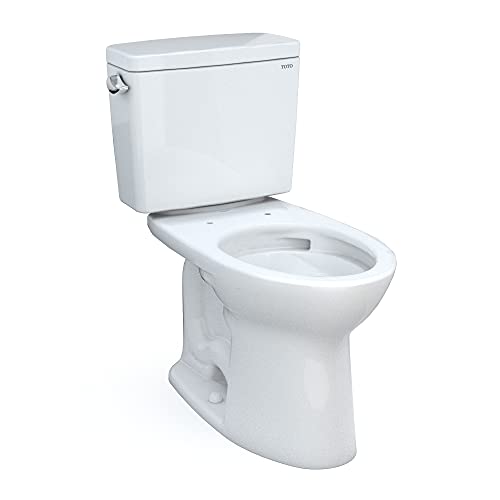
TOTO Drake II
The safe water-saving default
A 1,000 g MaP flush at 1.28 GPF, a dual-nozzle Tornado rinse and a glazed CeFiONtect trapway. It cuts water on every flush yet clears solids in one push, so the savings stick.
Check price on Amazon
Lowest Average
TOTO Aquia IV
Lowest yearly water use
A dual flush that sips 0.8 gallons on liquids and 1.28 on solids, with an 800 g full-flush MaP. Because most daily uses are liquid, it posts the lowest household average here.
Check price on Amazon
Best Value
Kohler Cimarron
Best value replacement
A 1,000 g MaP flush at 1.28 GPF from a reliable AquaPiston canister valve, with Kohler parts on every hardware-store shelf, so leaks stay cheap to fix and savings last.
Check price on Amazon
Step four: maintain your toilet to keep savings locked in
Saving water is not a one-time event. A toilet that is efficient today can quietly start wasting water as parts wear, so a little ongoing maintenance protects the savings you worked for. The good news is that toilet maintenance is among the easiest in the home, and most of it costs nothing but a few minutes of attention each year.
Recheck for leaks once a year
Flappers and flush valve seals wear out on their own schedule, usually every three to five years, and a toilet that passed a dye test two years ago can fail one today. Make the dye test an annual habit, perhaps tied to a date you will remember, and you will catch a new leak within months instead of after a year of waste. This single habit is the most reliable way to keep a water-efficient toilet actually efficient over its lifetime.
Keep the bowl and trapway clean
A clean, glazed trapway clears waste with less water than a stained or scaled one, so regular cleaning indirectly saves water by preserving flush performance. Toilets with a treated glaze, such as TOTO's CeFiONtect or American Standard's EverClean, resist buildup and need less scrubbing, but every toilet benefits from periodic cleaning of the bowl and the rim jets where mineral scale collects. Clogged rim jets weaken the rinse and can push some households toward a second flush, so keeping them clear protects both performance and water use.
Avoid tank tablets that destroy seals
In-tank cleaning tablets that bleach or chlorinate the water are convenient, but they accelerate the breakdown of rubber flappers and seals, which leads directly to the silent leaks this guide warns against. A flapper that should last five years can fail in one when it sits in chlorinated tank water around the clock. If you want a cleaner bowl, use in-bowl cleaners or drop-ins designed for the bowl rather than the tank, and your seals will last far longer, keeping leaks and wasted water at bay.
Editorial TakeIf we had to give one piece of water-saving advice that costs nothing, it would be this: stop using in-tank chlorine tablets and start running an annual dye test. Those two habits together prevent the most common and most expensive cause of wasted toilet water, the silent flapper leak, which routinely wastes more in a month than a full toilet replacement saves in a year of flushing. Hardware and habits both matter, but a leaking toilet undoes every other saving step, so guard the seal first and the flush volume second.
How much can I really save, and how fast?
It helps to ground the savings in real numbers. The two biggest levers, fixing a leak and replacing an old toilet, save on very different scales but both pay off quickly. A repaired flapper leak that was passing 200 gallons a day stops roughly 73,000 gallons of waste a year, and the part costs only a few dollars, so the payback is essentially immediate. Replacing a 3.5 gallon toilet with a 1.28 gallon WaterSense model saves around 20,000 gallons a year for a typical household, and with a utility rebate in many regions, the new toilet often pays for itself within a few years through lower water bills alone.
Stack the steps and the effect compounds. A household that fixes its leaks, replaces one old toilet, adopts the small dual-flush button and stops flushing trash can realistically cut toilet water use by more than half. Because the toilet is roughly 30 percent of all indoor water, that is a meaningful drop in the total household figure, visible on the next bill and every bill after. The order of priority is clear: leaks first because they are cheapest and largest, replacement second because it is permanent, then habits and maintenance to protect the gains.
Which step saves the most water?
Fixing a leaking toilet saves the most water, because a worn flapper can waste 200 gallons a day or more, which is far more than the flush volume itself. After leaks are fixed, replacing an old 3.5 to 5 gallon toilet with a 1.28 gallon WaterSense model is the largest permanent saving, cutting toilet water by more than 60 percent on every flush. Run a dye test first, then replace the oldest toilet.
The priority order is leaks, then replacement, then habits. A silent leak is the largest and cheapest waste to eliminate, often fixed with a few-dollar flapper in fifteen minutes. Replacing a pre-1994 toilet is the biggest permanent cut. Habits like the dual-flush button and not flushing trash protect and extend the savings but come last in raw impact.
Do low flow toilets actually save water if they flush weakly?
A low flow toilet only saves water if it clears the bowl in a single flush, because two weak flushes use more water than one strong flush would. The fix is to buy on the MaP score, not the gallons number. A 1.28 gallon toilet with an 800 to 1,000 gram MaP score, like the TOTO Drake II or Kohler Cimarron, clears solids in one push and locks in the savings.
The early 1.6 gallon toilets of the 1990s earned a bad reputation precisely because they flushed weakly and forced double flushing. Modern WaterSense toilets reach a 1,000 gram MaP score at just 1.28 gallons by using swirling jets and larger flush valves, so they match dedicated power toilets while using less water. Choose a high MaP score and the low volume becomes real, lasting savings. For models built around this balance, see our guide to the best low flow toilets at 1.28 GPF and under.
How do I know if my toilet is leaking?
Run a dye test. Put ten drops of food coloring in the tank, wait fifteen to twenty minutes without flushing, and check the bowl. If colored water appears in the bowl, the flapper or flush valve seal is leaking and wasting water around the clock. A clear bowl means the seal is sound. Repeat the test on every toilet once a year, since flappers wear out over three to five years.
Most toilet leaks are silent and invisible, which is why they run for months unnoticed. Besides the dye test, listen for a toilet that hisses or refills on its own when no one has flushed, both signs of a leaking flapper or fill valve. Catching a leak early with an annual dye test is the single most reliable way to keep a water-efficient toilet actually efficient.
Is it worth replacing an old toilet to save water?
Yes, replacing a pre-1994 toilet is one of the highest-return water upgrades in a home. An old 3.5 to 5 gallon toilet uses three to four times the water of a modern 1.28 gallon WaterSense model, saving roughly 20,000 gallons a year for a typical household. Many water utilities offer rebates for installing a WaterSense toilet, so the new toilet often pays for itself within a few years.
Check the date stamp under your tank lid. If the toilet predates the mid 1990s, it is using far more water than any habit or tank trick can offset, and replacement is the permanent fix. Pair a WaterSense 1.28 gallon model with a strong MaP score so it clears in one push, confirm your rough-in size, and the savings begin on the very next water bill.
What is a good MaP score for a water-saving toilet?
A good MaP score for a water-saving toilet is 800 grams or higher, with 1,000 grams being the practical ceiling and the safest choice. The MaP (Maximum Performance) test measures how many grams of solid waste a toilet clears in a single flush, so a high score at the low 1.28 gallon volume means the toilet never needs a second flush, which is what protects the water savings.
Always read the MaP score alongside the gallons number when buying a toilet to save water. A 1.28 gallon model with a 1,000 gram MaP, like the Drake II or Cimarron, locks in its savings, while a low-volume toilet with a weak MaP forces double flushing that erases them. A score of 600 grams handles a typical home, 800 grams is strong, and 1,000 grams is the ceiling.
Editorial TakeThe biggest mistake homeowners make when trying to save toilet water is jumping straight to a new toilet while ignoring a leak that is quietly wasting more than the new toilet will ever save. Work the steps in order: dye-test every toilet and fix any leak, then replace the oldest high-volume toilet with a WaterSense model chosen for an 800 to 1,000 gram MaP score, then adopt the no-trash and dual-flush habits, then maintain with an annual leak check and no in-tank chlorine tablets. Done in that order, a household routinely cuts toilet water use by more than half.
Sources
- EPA WaterSense, epa.gov/watersense
- MaP (Maximum Performance) flush testing, map-testing.com
- Manufacturer published specifications (TOTO, Kohler, American Standard)
Keep reading
Related guides
FAQ
Frequently asked questions
? How can I reduce toilet water use the fastest?
The fastest cut is fixing a leak, because a worn flapper can waste hundreds of gallons a day silently. Run a dye test on every toilet, replace any leaking flapper or flush valve seal, then replace your oldest high-volume toilet with a 1.28 gallon WaterSense model. Those two steps alone cut most of the wasted water in a typical home.
? How much water does a toilet use per flush?
It depends on the toilet's age. Models made before 1994 use 3.5 gallons or more, with some older toilets using 5 to 7 gallons. The federal maximum for new toilets is 1.6 gallons per flush, and EPA WaterSense toilets use 1.28 gallons or less. Replacing an old 3.5 gallon toilet with a 1.28 gallon model cuts per-flush water by more than 60 percent.
? How do I run a toilet dye test?
Remove the tank lid, drop in about ten drops of food coloring, and replace the lid without flushing. Wait fifteen to twenty minutes, then check the bowl. If colored water has seeped into the bowl, the flapper or flush valve seal is leaking and should be replaced. A clear bowl means the seal is sound. Repeat on every toilet once a year.
? Why is my toilet wasting water without me noticing?
The most common cause is a silent flapper leak, where a worn seal lets tank water trickle into the bowl around the clock with no sound and no visible drip. A fill valve set too high can also spill water into the overflow tube continuously. Both are invisible without a dye test or a careful look inside the tank, which is why they often run for months.
? How much water does a leaking toilet waste?
A leaking toilet can waste anywhere from a few gallons to more than 200 gallons a day, depending on how bad the seal is. The EPA estimates household leaks waste nearly 10,000 gallons a year on average, and toilet flappers are a leading source. That is why leak repair, not flush volume, is the highest-return water-saving step you can take.
? Can I make an old toilet use less water?
Somewhat. On a genuinely old 3.5 to 5 gallon toilet you can lower the tank water level by adjusting the float, or add a displacement bag, to trim a fraction of a gallon per flush. Test the flush after each change, because if it starts requiring a second push you have lost the savings. For pre-1994 toilets, replacement saves far more than any tank trick.
? Should I put a brick in my toilet tank?
No. Bricks crumble over time and the loose grit can damage the flush valve and seals, leading to leaks that waste more water than the brick ever saved. Use a purpose-made displacement bag or bottle instead, which is safe, cheap and removable. And always test the flush afterward to make sure the toilet still clears the bowl in a single push.
? What is a WaterSense toilet?
A WaterSense toilet is one certified by the EPA WaterSense program to use 1.28 gallons per flush or less while still passing independent flush performance standards. The label means the water savings have been verified without sacrificing clearing power, so you are not trading performance for the low number. WaterSense toilets use at least 20 percent less water than the 1.6 gallon federal maximum.
? Do dual flush toilets really save water?
Yes, when the household uses the small button. A dual flush toilet offers a partial flush near 0.8 to 1.1 gallons for liquid waste and a full 1.28 gallon flush for solids, so the daily average drops below a flat 1.28 gallon model. The savings only appear if everyone, including kids and guests, actually uses the smaller button for liquids.
? Is 1.28 GPF enough to flush properly?
Yes, when the toilet is well designed. A 1.28 gallon flush clears the bowl fully if the model uses an efficient swirling or large-valve flush and a glazed trapway. The TOTO Drake II, Kohler Cimarron and American Standard Cadet 3 all reach a 1,000 gram MaP score at 1.28 gallons, proving the low volume clears solids in one push. The MaP score matters more than the gallons number.
? How often should I check my toilet for leaks?
Once a year is a good rule, because flappers and flush valve seals wear out over three to five years on their own schedule. Tie the dye test to a date you will remember so a new leak gets caught within months instead of running unnoticed for a year. An annual check is the simplest way to keep a water-efficient toilet actually efficient.
? Do in-tank cleaning tablets damage my toilet?
Chlorine and bleach in-tank tablets accelerate the breakdown of rubber flappers and seals, which causes the silent leaks that waste large amounts of water. A flapper that should last five years can fail in one when it sits in chlorinated tank water. Use in-bowl cleaners instead if you want a cleaner bowl, and your seals will last far longer.
? Can I get a rebate for a water-saving toilet?
Often, yes. Many local water utilities and municipalities offer rebates when you replace an older toilet with an EPA WaterSense certified model, since it reduces demand on their water supply. The amount and rules vary by region, so check your water provider's website before buying and confirm the toilet carries the WaterSense label to be eligible.
? How do I know how old my toilet is?
Lift the tank lid and look on the underside or inside the tank wall for a date stamp, usually raised numbers showing the month and year of manufacture. Many toilets also print the gallons per flush on the bowl behind the seat hinge or on the tank. A toilet stamped before the mid 1990s is using far more water than a modern model and is the best candidate for replacement.
? Does flushing less often save much water?
It helps, but the bigger wins come from fixing leaks and lowering flush volume. The most reliable habit is to stop using the toilet as a wastebasket, since every tissue or cotton ball flushed triggers a full flush that would not otherwise happen. Combined with using the dual-flush small button for liquids, smart habits add up to thousands of gallons saved a year.
? Which toilet brands are best for saving water?
TOTO leads for flush quality and reaches a 1,000 gram MaP at 1.28 gallons, Kohler offers the best value and parts availability, and American Standard makes the strongest budget flush with its 3 inch valve. Woodbridge and Swiss Madison offer modern dual flush and skirted designs, while Gerber covers contractor and rental budgets. A major brand matters most for reliable seals and easy parts.
? Will a water-saving toilet clog more often?
Not if you choose one with a strong flush. The early weak 1.6 gallon toilets clogged often, but today's best 1.28 gallon models post 800 to 1,000 gram MaP scores, matching power toilets. Pick a model with a high MaP score and a glazed trapway, like the TOTO Drake II, and a water-saving toilet clogs no more often than an old high-volume one.
? How much can I save by replacing one old toilet?
Replacing a single 3.5 gallon toilet with a 1.28 gallon WaterSense model saves roughly 20,000 gallons a year for a typical household, and swapping a 5 gallon toilet saves even more. With a utility rebate in many regions, the new toilet often pays for itself within a few years through lower water bills, on top of the immediate environmental benefit.
? What water level should be in my toilet tank?
The water level should sit about half an inch to one inch below the top of the overflow tube. If water is spilling into the overflow tube, the fill valve is set too high or has failed, and water is running into the bowl continuously and wasting it. Lower the float or replace the fill valve to stop that slow, silent waste.
Our Verdict
The most effective way to reduce toilet water use is to work the steps in order of return: dye-test every toilet and fix any leaking flapper or flush valve first, since a silent leak wastes more than any flush volume; then replace your oldest 3.5 to 5 gallon toilet with a WaterSense 1.28 gallon model chosen for an 800 to 1,000 gram MaP score so it never forces a second flush. The TOTO Drake II is the safe overall choice, the dual flush TOTO Aquia IV posts the lowest yearly average, and the Kohler Cimarron is the best value with the easiest parts. Finish by adopting no-trash flushing and the dual-flush small button, run an annual leak check, and skip in-tank chlorine tablets that destroy seals. Done in that order, a household routinely cuts toilet water use by more than half.