Why Toilet Trapways Are Curved Like an S
Toilets4.6
Learn why toilet trapways curve like an S, how each bend blocks sewer gas, and what the shape means for clogs and…
Read the guideA no clog toilet is not a marketing claim, it is an engineering result. The toilets on this page rarely clog because they pair a wide glazed trapway with a fast flush valve and a maximum MaP flush score. We ranked the best no clog toilets of 2026 by comparing certified MaP flush-test data, gallons per flush, EPA WaterSense status, trapway design and the recurring clog themes across thousands of aggregated owner reviews, so you can buy once and stop plunging.
The best no clog toilet is the American Standard Champion 4, which combines a 2 3/8 inch fully glazed trapway, an oversized 4 inch flush valve and a maximum 1000 gram MaP score to swallow loads that stall other toilets. For the same clog-clearing power on an efficient 1.28 gallon WaterSense flush, the TOTO Drake is the smarter everyday pick.
Almost no clog is bad luck. A clog is physics, and the math is simple. Waste leaves a bowl cleanly only when the toilet moves enough water, fast enough, through a wide enough path. Nail all three and a single flush clears a heavy load. Miss any one and you are reaching for the plunger a couple of times a week. The toilets ranked below earn the no clog label because they are engineered to hit all three at once, and the independent test data proves it rather than a slogan on the box.
Three engineering details decide clog resistance more than anything else, and they are worth understanding before you spend a dollar. The first is the trapway, the S-shaped channel waste travels through on its way out of the bowl. A 2 1/8 inch trapway is standard, while a 2 3/8 inch fully glazed trapway is wide enough to pass a golf ball, which is roughly the test some makers advertise. The second is the flush valve, the opening at the bottom of the tank. A 3 inch valve dumps water far faster than the old 2 inch standard, and a 4 inch valve faster still, which is what creates the rush that pushes waste through. The third is bowl geometry and rinse design, which together build the siphon that drags everything down in one motion.
The single most useful number for buying a no clog toilet is the MaP score. MaP stands for Maximum Performance, an independent flush test run at map-testing.com that measures how many grams of solid waste a toilet clears in one flush. A score of 600 grams is workable, 800 grams is strong, and 1000 grams is about as powerful as a residential gravity toilet gets. Because the test is identical across brands, a 1000 gram MaP rating means the same thing on a budget American Standard as it does on a premium TOTO. For a genuinely clog-free experience you want a high MaP score and a wide trapway together, since one without the other still leaves gaps. This page sits inside our wider best flushing toilets coverage, which ranks the strongest all-round performers.
None of the rankings below come from testing in our own bathroom. They are built from published manufacturer specifications, certified MaP data, EPA WaterSense listings and the consistent clog-related themes that surface across thousands of verified owner reviews. We weigh raw flush power against trapway design, water efficiency, bowl height and long-term reliability, then explain honestly who each toilet is right for. Where two toilets tie on the numbers, the one with the better real-world clog record and stronger warranty wins.
| Toilet | Best For | MaP | GPF | Trapway | Rating | Check Price |
|---|---|---|---|---|---|---|
| American Standard Champion 4 | Best no clog overall | 1000 g | 1.6 | 2 3/8 in | 4.6 | Check price |
| TOTO Drake | No clog with efficiency | 1000 g | 1.28 | 2 1/8 in | 4.8 | Check price |
| Kohler Highline | Everyday reliability | 1000 g | 1.28 | 2 1/8 in | 4.7 | Check price |
| Gerber Avalanche | Contractor value | 1000 g | 1.28 | 2 1/8 in | 4.3 | Check price |
| Kohler Cimarron | Canister-fed power | 1000 g | 1.28 | 2 1/8 in | 4.5 | Check price |
| Woodbridge T-0001 | Modern one-piece | 1000 g | 1.28 | 2 1/8 in | 4.5 | Check price |
| TOTO UltraMax II | One-piece no clog | 800 g | 1.28 | 2 1/8 in | 4.7 | Check price |
| American Standard Cadet 3 | Budget no clog | 1000 g | 1.28 | 2 1/8 in | 4.4 | Check price |
| Gerber Viper | Lowest-cost no clog | 800 g | 1.28 | 2 1/8 in | 4.3 | Check price |
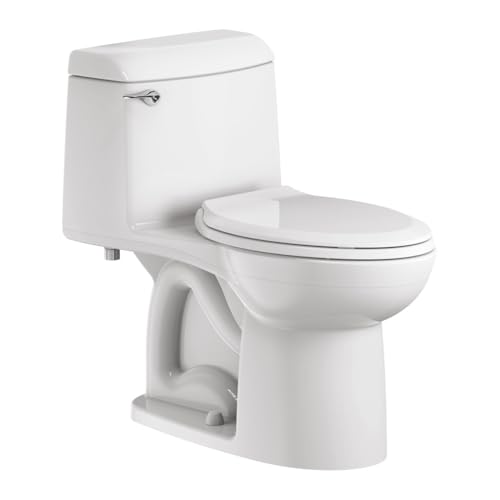
The Champion 4 is the toilet people buy when they are done plunging, and the engineering explains why: a 2 3/8 inch fully glazed trapway fed by a 4 inch flush valve is the widest, fastest path in this entire group.
American Standard markets the Champion 4 around its ability to pass a 2 1/4 inch ball, and that wide glazed path is exactly what clog-prone homes need. The oversized 4 inch valve empties the tank fast, building a powerful siphon that drags waste through in one continuous motion rather than letting it stall.
The honest trade-off is water use. At 1.6 gallons per flush it is not EPA WaterSense certified and uses more than the 1.28 gallon models below. Owner reviews rank clog resistance as its standout trait year after year, with the occasional note that the flush is loud and the footprint is large.
If your single goal is never to plunge again, the Champion 4 is the toilet to buy and accept the slightly higher water use. For homes that also want efficiency, drop to the 1.28 gallon TOTO Drake just below and you give up very little real-world clog resistance.
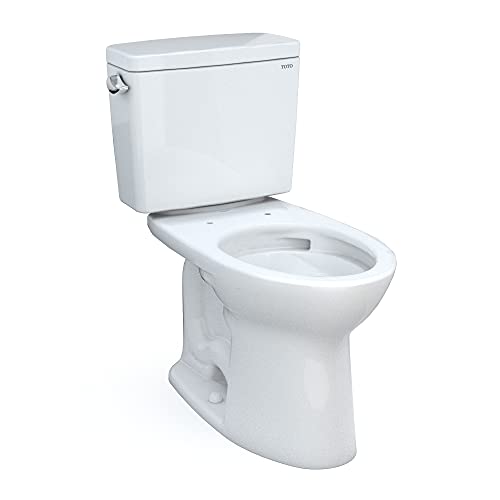
When someone complains about a weak, clogging toilet, the Drake is the model they tend to buy next, and it rarely disappoints them.
The Drake clears a maximum 1000 gram MaP score on just 1.28 gallons, which is the combination clog-prone homes should hunt for. Its G-Max siphon jet moves a large slug of water quickly, and aggregated owner feedback reports very few clogs across years of heavy daily use.
The flush is louder than the quietest gravity models, and the standard glaze is plain unless you step up to a CeFiONtect version. Even so, for one-flush authority on a WaterSense budget, it is the benchmark every other toilet on this list is measured against.
The Drake is our default recommendation for a no clog toilet with efficiency, because it matches the Champion 4 on MaP while using 0.32 gallons less per flush. The CeFiONtect glaze upgrade is worth it if you also want a bowl that wipes clean with almost no scrubbing.

The Highline is the toilet we recommend to most people because it nails the fundamentals of a no clog flush and almost never surprises you.
Kohler's Class Five flushing system clears the bowl with a strong, reliable rinse and posts a perfect 1000 gram MaP score at 1.28 gallons. Aggregated owner reviews point again and again to a single flush being enough for daily use, with clogs a rare complaint even in large households.
The standard 2 1/8 inch trapway is narrower than the Champion 4, so for the very heaviest loads it is a small step behind. For nearly every other home it is the easiest no clog toilet to live with and the simplest to find on a shelf.
Choose the Highline when you want strong clog resistance without overthinking the decision. It is the model we would put in a home we never wanted to think about again, and its comfort height suits most adults better than universal-height rivals.
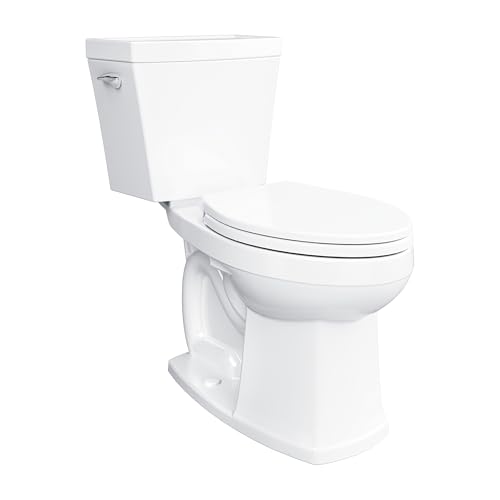
The Gerber Avalanche is a quietly excellent two-piece that flies under the radar because the brand spends little on marketing, yet it clears as much as toilets costing far more.
The Avalanche uses a wide, fully glazed trapway and a 3 inch flush valve to clear a maximum 1000 gram MaP load on 1.28 gallons. Contractors who fit dozens of toilets a year keep coming back to it for dependable, clog-free performance at a friendly position on the shelf.
It will not win a design award, and brand support is thinner than the big names, but the flush engineering is solid and the aggregated owner ratings reflect it. It is the kind of no clog toilet you fit once and forget about for a decade.
The Avalanche is the smart pick when you need maximum MaP clog resistance across several bathrooms without a premium outlay. The 3 inch valve and glazed trapway are why it punches so far above its position.

The Cimarron uses Kohler's AquaPiston canister, which releases water into the bowl from all sides rather than just the front, for a stronger and more even rinse than a typical flapper toilet.
The 3 inch canister opens fully on every flush and rarely leaks the way a flapper can, so the Cimarron delivers a maximum 1000 gram MaP score on an efficient 1.28 gallons. Owners report dependable, clog-free performance and a clean bowl rinse across years of use.
The canister seal will eventually need replacing, though that is a quick, inexpensive part. Otherwise the Cimarron is a strong, good-looking choice that balances no clog power, efficiency and traditional styling better than most.
The AquaPiston canister is the Cimarron's real advantage, giving a faster, fuller water release than a flapper. Choose it if you want a maximum MaP flush with classic looks, and budget for an occasional seal swap as routine maintenance.

The Woodbridge T-0001 delivers a sleek, skirted one-piece look with a strong siphon flush at a far friendlier position than the premium brands.
The skirted base hides the trapway for a clean, easy-to-wipe profile, and a soft-close seat is included in the box. Its dual-flush design pairs a maximum 1000 gram MaP full flush with a lighter 1.0 gallon flush for liquids, so it resists clogs while saving water day to day.
Brand support is smaller than TOTO or Kohler and the one-piece body is heavy to install. For a designer look with genuine flush power, though, it is an appealing no clog pick that owners rate well across thousands of reviews.
The T-0001 is the value play when you want a modern skirted one-piece with a strong full flush. Use the full 1.28 gallon button for solids and the design clears clogs as well as toilets costing far more.

The UltraMax II takes the proven TOTO flush engine and wraps it in a sleek, skirted one-piece body with the CeFiONtect glaze, so the bowl stays cleaner and clogs stay rare.
The Double Cyclone flush uses two nozzles instead of rim holes to rinse the bowl efficiently while staying notably quiet. Its 800 gram MaP score is a touch below the power picks, but the glaze keeps buildup from narrowing the path over time, which helps real-world no clog performance hold up for years.
The skirted one-piece body wipes clean in seconds and looks sharp in a modern bathroom, and owners praise how cleanly the bowl rinses. It costs more than the budget models, which is the predictable price of the glaze and styling.
Pick the UltraMax II when you want clog resistance plus a quiet, easy-clean bowl. The CeFiONtect glaze matters more for long-term clog prevention than its 800 gram MaP score might suggest, because a smooth bowl resists the buildup that narrows a trapway.

The Cadet 3 proves you do not have to spend a lot to get a genuinely strong, no clog flush in a clean-looking package.
The Cadet 3 posts a maximum 1000 gram MaP score, runs an efficient 1.28 gallons, and its EverClean surface resists the stains and odor-causing bacteria that plague cheaper bowls. Its 3 inch flush valve and glazed trapway keep clogs uncommon for the position.
Styling is plain and the seat is usually sold separately, which is how the cost stays low. On the numbers that actually decide a no clog flush, though, it competes directly with toilets costing far more.
The Cadet 3 is the obvious starting point for anyone who wants real clog resistance without overspending. Its 3 inch valve and maximum MaP score deliver power that belies its modest position on the shelf.
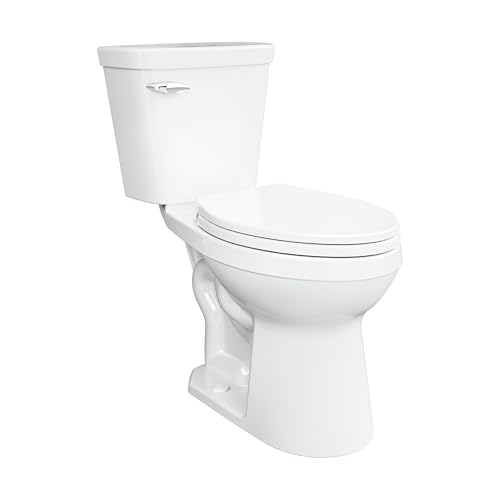
The Gerber Viper is the no-frills workhorse plumbers reach for when they want a dependable flush at the lowest sensible cost.
The Viper pairs a wide, fully glazed 2 1/8 inch trapway with a 3 inch flush valve to post a solid 800 gram MaP score on 1.28 gallons. That is enough power to clear normal daily waste in one flush, and plumbers report it as a reliable, low-callback choice for rentals.
It is not the strongest toilet here and the styling is utilitarian, but for the cost the clog resistance is genuinely good. For landlords filling several units, the Viper keeps the budget down without inviting plunger duty.
The Viper is the pick when cost is the deciding factor but you still refuse to install a toilet that clogs weekly. Its glazed trapway and 800 gram MaP score outperform most toilets in its price tier, which is why plumbers trust it for rentals.
Understanding why these nine toilets clog so rarely makes it far easier to shop with confidence. Four design details do almost all of the work, and the best no clog toilets get all four right at once rather than excelling at just one.
The trapway is the curved channel waste travels through after it leaves the bowl. A standard trapway is about 2 1/8 inches across, while the widest models such as the Champion 4 reach 2 3/8 inches and pass a larger ball. A fully glazed trapway, coated in the same slick ceramic finish as the bowl, lets waste slide rather than catch. Width plus glaze is the single biggest predictor of clog resistance, which is why we read it before any other spec.
The flush valve is the opening at the bottom of the tank that releases water into the bowl. The old standard was 2 inches, but most strong toilets now use a 3 inch valve, and a few like the Champion 4 use a 4 inch valve. A larger valve empties the tank faster, and that speed builds the powerful siphon that pulls waste down in one motion rather than letting it linger and stall.
MaP testing translates all of that engineering into one comparable number: grams of solid waste cleared per flush. For a no clog toilet, treat 1000 grams as your target and 800 grams as the floor. Because the test is identical for every brand, the MaP score cuts through marketing and lets you compare a budget Cadet 3 against a premium Drake on completely equal terms.
A larger water surface in the bowl catches waste cleanly and keeps the porcelain cleaner, while a well-designed rinse, whether a G-Max siphon jet, Double Cyclone nozzles or an AquaPiston canister, scrubs the bowl on every flush. A clean bowl with no buildup keeps the trapway at full width, which preserves the no clog performance over many years of daily use.
When you compare toilets, read the trapway width and flush valve size before anything else, then confirm the MaP score is 1000 grams. A wide glazed trapway fed by a 3 or 4 inch valve is the combination that genuinely prevents clogs, and no amount of marketing language substitutes for those two numbers on the spec sheet.
Even the best toilet on this page can clog if you give it an impossible job. Flushable wipes are the leading culprit, since they do not break down like toilet paper and snag in the trapway. Excessive paper in a single flush, dental floss, cotton products and anything fibrous will eventually cause a blockage no matter how wide the trapway is. A high MaP toilet buys you a large margin of safety, not total immunity.
If your home clogs constantly even after upgrading, the problem may be downstream in the drain line or vent stack rather than the toilet itself. A partially blocked main line or a poorly vented system starves the flush of the air it needs to siphon. In those cases a plumber inspecting the line solves what a new toilet cannot. For the heaviest household demands, our guide to the best toilet for heavy waste ranks the models built for maximum bulk flushing, and our roundup of toilets that never clog goes deeper on the clog-free designs.
Most toilets on this list are gravity-fed, relying on the weight of falling water to create a siphon. Gravity toilets are quiet, simple, cheap to repair and clog rarely when the MaP score and trapway are right. They are the correct default for the vast majority of homes that simply want a toilet that does not clog.
Pressure-assisted toilets store water in a sealed inner tank and release it under pressure, producing a forceful flush that clogs even less often. The trade-off is noise: a pressure-assisted flush is distinctly louder, the mechanism costs more to replace, and the experience can startle first-time users. For a busy commercial-style bathroom or a household that clogs no matter what, the extra force can be worth the noise, which is why we keep them in a separate ranking rather than mixing them into this gravity-focused list.
EPA WaterSense is a certification listed at epa.gov/watersense that a toilet uses 1.28 gallons per flush or less while still meeting strict flush-performance standards. A common worry is that a low-flow toilet must clog more often, but that is no longer true. Modern WaterSense toilets like the TOTO Drake, Kohler Highline and Gerber Avalanche post the same maximum 1000 gram MaP score that old 1.6 gallon toilets struggled to reach. The only toilet here that is not WaterSense certified is the 1.6 gallon Champion 4, and it earns that exception purely on raw clog resistance. For nearly every buyer, a WaterSense label plus a 1000 gram MaP score is the sweet spot of a no clog flush and a low water bill.
The best no clog toilet is the American Standard Champion 4, thanks to its 2 3/8 inch fully glazed trapway, 4 inch flush valve and maximum 1000 gram MaP score. For the same clog-clearing power on an efficient 1.28 gallon flush, the TOTO Drake is the strongest alternative.
No toilet is truly clog-proof, but a high-MaP model with a wide glazed trapway comes close. The Champion 4, TOTO Drake and Kohler Highline all clear a maximum 1000 gram MaP load, which is enough for most owners to retire the plunger for years.
The most clog-resistant design pairs a wide, fully glazed trapway of 2 3/8 inches with a large 3 or 4 inch flush valve and a 1000 gram MaP score. That combination moves the most water through the widest path, which clears waste in a single flush.
Aim for a MaP score of at least 800 grams, and ideally the full 1000 grams. A higher MaP score means more solid waste cleared per flush, which directly reduces double flushing and clogs. Pair it with a wide trapway for the best results.
Yes. A wider trapway, especially a fully glazed one at 2 3/8 inches, gives waste a larger and smoother path out of the bowl. The wider the channel, the less chance anything catches, which is why wide-trapway models clog far less often.
Yes. A larger flush valve, such as a 3 inch or 4 inch opening, empties the tank faster and builds a stronger siphon. That speed is what pulls waste through the trapway in one motion instead of letting it stall and clog.
Absolutely. The TOTO Drake, Kohler Highline and Gerber Avalanche all post maximum 1000 gram MaP scores on just 1.28 gallons. Modern engineering uses water more efficiently, so you no longer have to choose between a no clog flush and a low water bill.
Pressure-assisted toilets release water under pressure and tend to clog even less than gravity models. The trade-off is significantly more noise and a costlier mechanism to repair. For most homes a strong gravity toilet with a 1000 gram MaP score is the better balance.
If a new high-MaP toilet still clogs, the problem is often downstream: a partially blocked drain line or a poorly vented system starves the flush of air. Flushable wipes are another common cause. Have a plumber inspect the line if clogs persist after upgrading.
Not inherently. Clog resistance depends on trapway width, flush valve size and MaP score, not on whether the toilet is one or two pieces. One-piece models are simply easier to clean because they have no tank-to-bowl seam.
For homes that clog often, yes. The Champion 4 uses 1.6 gallons per flush rather than 1.28, but its 2 3/8 inch trapway and 4 inch valve give it the best clog resistance here. If efficiency matters more, the 1.28 gallon TOTO Drake is the close runner-up.
Never flush wipes labeled flushable, paper towels, cotton products, dental floss, hair or grease. None of these break down like toilet paper, and they will eventually clog even the widest trapway. Stick to waste and toilet paper for clog-free performance.
Not if you use it correctly. Use the full flush button for solid waste and the light flush only for liquids. A quality dual-flush toilet like the Woodbridge T-0001 posts a maximum MaP full flush, so solids clear cleanly when you select the right button.
A glazed trapway is coated with the same slick ceramic finish as the bowl, so waste slides through rather than catching on rough porcelain. Over years it also resists the mineral buildup that would otherwise narrow the channel and increase clogs.
Both lead the category. American Standard's Champion 4 has the widest trapway and best raw clog resistance, while TOTO's Drake matches its 1000 gram MaP score on less water. Choose American Standard for maximum clog resistance and TOTO for clog resistance with efficiency.
No. Modern EPA WaterSense toilets are engineered to clear the same waste on 1.28 gallons that old 1.6 gallon toilets cleared, and many post higher MaP scores than the toilets they replaced. A WaterSense label and a 1000 gram MaP score together mean strong, efficient, no clog performance.
The American Standard Cadet 3 is the best budget no clog toilet, posting a maximum 1000 gram MaP score with a 3 inch valve at a low cost. The Gerber Viper is the lowest-cost option with a solid 800 gram MaP score and a glazed trapway.
The porcelain body of a quality toilet can last 20 years or more, while internal parts like flappers, fill valves and canister seals may need replacing every few years. Choosing a brand with strong support such as TOTO, Kohler or American Standard makes those parts easy to find.
Swiss Madison toilets such as the St. Tropez offer modern styling and a dual-flush design at a friendly cost, but their MaP scores generally trail the 1000 gram leaders here. They are a reasonable choice for looks, though for pure no clog power the Drake or Champion 4 lead.
For a truly no clog toilet the American Standard Champion 4 wins, because its 2 3/8 inch fully glazed trapway and 4 inch flush valve pass more waste than anything else here, and its maximum 1000 gram MaP score proves it. If you want that clog-clearing power on an efficient 1.28 gallon WaterSense flush, the TOTO Drake is the smarter everyday choice, with the Kohler Highline close behind for reliability and the American Standard Cadet 3 as the budget pick. Whichever you choose, lead with the MaP score and trapway width, match your rough-in, and the plunger can finally go back in the cupboard for good.
Learn why toilet trapways curve like an S, how each bend blocks sewer gas, and what the shape means for clogs and…
Read the guideAlmost every US toilet has a left-side handle. Learn the plumbing and mechanical reasons behind the layout and when it actually changes.
Read the guideHome toilets rely on tanks because household water lines lack the pressure that public flushometer systems use to flush straight from the…
Read the guide