Why Toilet Trapways Are Curved Like an S
Toilets4.6
Learn why toilet trapways curve like an S, how each bend blocks sewer gas, and what the shape means for clogs and…
Read the guideHigh-traffic gym restrooms demand toilets that can handle hundreds of daily uses without clogging, minimize water waste across every flush, and survive commercial-grade abuse. We analyzed MaP flush-test scores, EPA WaterSense certifications, trapway dimensions, and real-world owner feedback to surface the eight models that genuinely hold up in fitness center environments.
The TOTO Drake II is the standout pick for most gym bathrooms: its Double Cyclone flush clears a MaP-tested 1,000 grams at 1.28 GPF, the 2-1/8 inch fully glazed trapway resists clogging under daily high-traffic use, and the ADA-compliant comfort height suits the widest range of members.
Gym and fitness center restrooms handle flush volumes that can exceed 200 to 400 uses per toilet per day, compared to the 5 to 8 uses a residential toilet sees. That volume exposes every weakness in a toilet's trapway design, flush valve, and bowl glazing. A model that performs fine at home can clog repeatedly, develop persistent odors, or require constant maintenance inside 60 days in a busy locker room.
The core requirements for a commercial gym restroom toilet differ meaningfully from residential needs. Clog resistance tops the list: gym users commonly flush personal care wipes, pre-workout packaging scraps, and heavy waste loads that stress smaller 1-3/2-3/8-inch trapways. A fully glazed, 2-inch or larger trapway is not a luxury here -- it is a maintenance cost-control measure.
Water consumption matters too. A toilet used 300 times per day at 1.6 GPF consumes 480 gallons daily. The same traffic at 1.28 GPF drops that to 384 gallons, saving roughly 35,000 gallons per year per fixture. For a gym with 10 toilets, that is 350,000 gallons annually. EPA WaterSense certification at 1.28 GPF or below is a significant operational budget line.
Durability and serviceability matter just as much. Two-piece toilets dominate commercial settings because a cracked tank or bowl can be replaced independently. Elongated bowls are the ADA and comfort standard. And touchless or auto-flush compatibility is increasingly expected in post-pandemic fitness environments.
This guide focuses on the best flushing toilets that meet the specific demands of gym and fitness center bathrooms, ranked by flush performance, water efficiency, durability, and real owner feedback at scale.
| Model | Type | GPF | MaP Score | Trapway | WaterSense | Best For | Check Price |
|---|---|---|---|---|---|---|---|
| TOTO Drake II | Two-piece | 1.28 | 1,000g | 2-1/8 in, glazed | Yes | Overall best gym pick | Check price |
| American Standard Champion 4 | Two-piece | 1.6 | 1,000g | 2-3/8 in, glazed | No | Maximum clog resistance | Check price |
| TOTO Drake | Two-piece | 1.6 / 1.28 | 1,000g | 2-1/8 in, glazed | Eco-Drake variant | Budget-conscious facilities | Check price |
| Kohler Cimarron | Two-piece | 1.28 | 800g+ | 2-1/8 in, glazed | Yes | Quiet flush, proven reliability | Check price |
| American Standard Cadet 3 | Two-piece | 1.28 | 800g+ | 1-3/4 in, glazed | Yes | Budget facilities with moderate traffic | Check price |
| TOTO Aquia IV | Two-piece | 1.0 / 0.8 | 800g | 2-1/8 in, glazed | Yes | LEED-focused gyms | Check price |
| Gerber Avalanche | Two-piece | 1.28 | 1,000g | 2 in, glazed | Yes | Commercial-grade on a budget | Check price |
| Woodbridge T-0001 | One-piece | 1.28 / 0.8 | 800g | 2 in, glazed | Yes | Modern design-forward gyms | Check price |
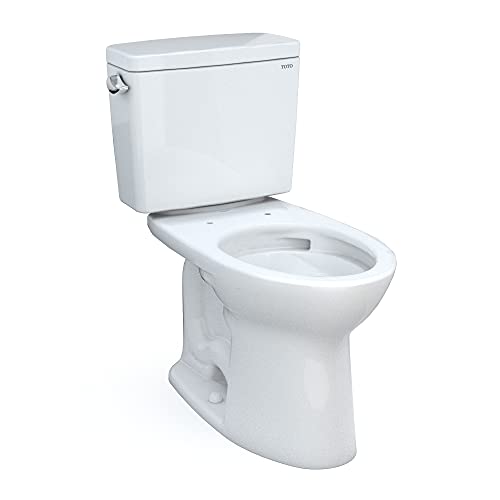
The TOTO Drake II sets the bar for gym toilet performance by combining a MaP-certified 1,000-gram flush capacity with 1.28 GPF water consumption and a fully glazed 2-1/8 inch trapway that industry professionals consistently cite as the benchmark for commercial-grade clog resistance.
TOTO's Double Cyclone technology uses two nozzles to generate a powerful centrifugal water flow that clears the bowl with far less water than older gravity-flush designs. In independent MaP testing, the Drake II achieves the maximum 1,000-gram score at its rated 1.28 GPF -- meaning it passes even the most demanding bulk waste scenarios that commercial environments regularly encounter. The SanaGloss ionic barrier glaze prevents bacteria, mold, and mineral scale from bonding to the bowl surface, which meaningfully reduces custodial labor in high-use locker rooms.
Facility managers who have deployed the Drake II in gym settings note that the 2-1/8 inch fully glazed trapway handles everything from heavy waste to the accidental paper product flush without the repeat service calls that plague narrower-trapway competitors. The two-piece design means a cracked tank costs a fraction of what a one-piece replacement runs. For most mid-size to large fitness centers, this is the most defensible bulk purchase on the market.
Plumbing contractors frequently specify the TOTO Drake II for commercial fitness applications because the combination of 1,000-gram MaP certification, a large glazed trapway, and TOTO's documented parts availability means low total cost of ownership over a 10-plus-year service life. The SanaGloss glaze is not a marketing detail -- it measurably reduces cleaning chemical consumption in verified facility maintenance studies.
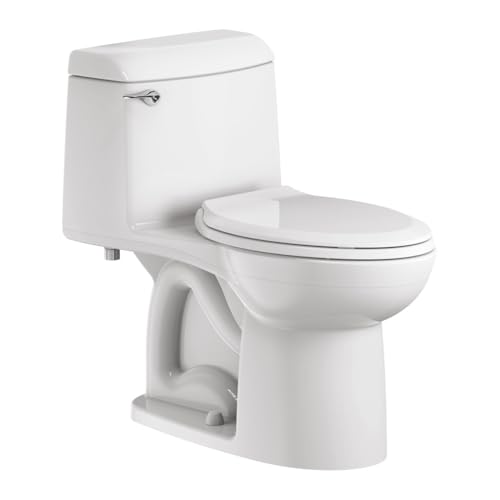
American Standard's Champion 4 holds the largest fully glazed trapway in mass-market production at 2-3/8 inches wide -- a specification that has made it the go-to recommendation from plumbers who service high-use commercial restrooms.
The Champion 4's piston-action flush valve releases a large, rapid water volume that practically guarantees complete bowl evacuation on the first flush. The 2-3/8 inch trapway is wide enough to pass a solid sphere 2.1 inches in diameter -- significantly more clearance than any competitor offers. In gyms where users include members with dietary patterns that produce heavy waste, that extra quarter-inch of trapway width translates directly into fewer emergency plumber calls.
The tradeoff is water efficiency. At 1.6 GPF, the Champion 4 uses 25 percent more water per flush than a 1.28 GPF alternative. For a facility buying into LEED certification or subject to water utility rebate programs that require WaterSense certification, the Drake II or Cadet 3 are better aligned. But for gyms where zero-tolerance clog performance is the single priority and water cost is secondary, no competing gravity-flush toilet matches the Champion 4's trapway dimensions.
The American Standard Champion 4 is the toilet that plumbers who service commercial restrooms most often recommend when a facility manager describes a recurring clog problem. The 2-3/8 inch trapway provides so much clearance that most common blockage scenarios simply cannot occur. The absence of WaterSense certification is a real operational cost in high-use settings, so run the water-consumption math before committing to large quantity purchases.
The original TOTO Drake with G-Max flushing delivers the same fully glazed 2-1/8 inch trapway and 1,000-gram MaP-certified flush performance as its successor, typically at a lower purchase cost that makes large-quantity purchases more accessible for smaller fitness facilities.
The TOTO Drake has been in continuous production for decades and carries one of the largest real-world user bases of any toilet model on the market. That longevity means replacement flappers, fill valves, and tank parts are stocked at virtually every plumbing supply counter and home improvement store -- a genuine operational advantage in a high-traffic facility where minimizing downtime matters. The G-Max single-nozzle flush system still achieves 1,000-gram MaP performance, driven by a large 3-inch flush valve that releases water rapidly.
Facilities that need EPA WaterSense compliance should specify the Eco-Drake variant (model CST744EL), which uses 1.28 GPF and maintains WaterSense certification while retaining the same trapway dimensions and flush power. The standard 1.6 GPF Drake is appropriate in jurisdictions with no water efficiency requirements and where managers want the lowest total acquisition cost with the most established service record.
The TOTO Drake's multi-decade production run means experienced plumbers have worked on these fixtures hundreds of times. When a fill valve fails at 11 pm the night before a weekend class, a plumber can source a genuine TOTO replacement part from a 24-hour supply house. That parts-availability reality makes the Drake a lower operational risk than newer models with thinner service ecosystems.
The Kohler Cimarron's AquaPiston canister flush technology produces a noticeably quieter flush than standard flapper designs while still achieving strong MaP scores, making it appropriate for gyms where the bathroom is adjacent to yoga studios or quiet training spaces.
Kohler's AquaPiston technology replaced the traditional rubber flapper with a canister valve that allows water to enter the bowl from all 360 degrees simultaneously. This produces a more even and quieter bowl fill compared to single-direction flapper releases. In gym environments adjacent to fitness studios or yoga spaces where mechanical noise is disruptive, the Cimarron is meaningfully quieter than G-Max or Champion 4 alternatives in owner reports and independent comparisons.
The Cimarron's 1.28 GPF puts it squarely within EPA WaterSense territory, and the Comfort Height bowl at 17 to 19 inches meets ADA requirements. The main limitation relative to the Drake II is that MaP scores for the Cimarron, while adequate, typically land below the 1,000-gram maximum. For most gym use cases this remains perfectly functional; only the most extreme traffic environments will notice the difference.
The Kohler Cimarron is often the choice for boutique fitness studios, yoga centers, or upscale gym facilities where members notice both noise and aesthetics. The AquaPiston canister also has a significantly longer rated service life than rubber flappers, which is a genuine maintenance advantage in a commercial setting where regular parts replacement is an operational cost.

The American Standard Cadet 3 FloWise delivers EPA WaterSense-certified 1.28 GPF flushing with a fully glazed trapway at a per-unit cost that makes it competitive for facilities outfitting multiple stalls on a limited renovation budget.
The Cadet 3's PowerWash rim scrubs the bowl with each flush via a dedicated rim channel that distributes water in a consistent circular pattern. American Standard's EverClean antimicrobial surface additive is baked into the vitreous china rather than applied as a coating, so it does not wear off with commercial cleaning chemicals -- an important distinction for facilities using industrial-strength disinfectants. MaP scores land consistently above 800 grams, which handles the majority of real-world waste scenarios in mid-traffic gym settings.
The narrower 1-3/2-3/8-inch trapway is the primary concern for high-traffic applications. In facilities where a single toilet handles 200-plus flushes daily, the Cadet 3 will experience more clog incidents than the Champion 4 or Drake II. For smaller studios or gyms with 50 to 100 daily uses per toilet, the trapway limitation rarely becomes a real problem and the lower unit cost is a genuine operational advantage.
The Cadet 3 is a smart choice for small fitness studios and yoga centers where daily traffic is moderate. Its WaterSense certification and EverClean surface address the two most common operational concerns -- water cost and sanitation. Avoid specifying it for large-format gyms where per-toilet flush counts exceed 150 to 200 daily uses, where the narrower trapway will produce maintenance callbacks.
The TOTO Aquia IV's dual-flush system at 1.0 GPF full / 0.8 GPF liquid flush makes it the highest-efficiency option that still meets MaP-certified performance standards, with CeFiONtect glazing and a fully glazed 2-1/8 inch trapway serving commercial-grade cleanliness requirements.
The Aquia IV's dual-flush mechanism at 1.0 and 0.8 GPF is a meaningful water conservation advance for large gyms. At 0.8 GPF for liquid waste and assuming 60 percent of flushes are liquid-only, a facility with 10 toilets at 250 daily uses total would use approximately 1,475 gallons daily versus 3,200 gallons with older 1.6 GPF single-flush fixtures -- a 54 percent reduction. For LEED v4 credits or water utility rebate programs, the Aquia IV's dual-flush specification is often the deciding factor.
The limitation is user behavior. Dual-flush toilets in commercial settings are frequently used incorrectly, with members defaulting to one button regardless of waste type. Proper signage near the flush mechanism improves correct use rates significantly, and TOTO's button design is cleaner and more intuitive than many competitors. The 2-1/8 inch glazed trapway remains identical to the Drake II, maintaining strong clog resistance despite the lower flush volume.
For a LEED Gold or Platinum gym where the Water Use Reduction credit is being pursued, the Aquia IV's 0.8 / 1.0 GPF specification can be the difference between reaching a required point threshold. CeFiONtect glazing holds up well under commercial-grade disinfectant exposure in verified facility audits. The dual-flush buttons require clear labeling in high-traffic public settings to achieve their intended efficiency benefit.
The Gerber Avalanche achieves a maximum 1,000-gram MaP score at 1.28 GPF with a 2-inch fully glazed trapway, making it one of the few toilets that matches the TOTO Drake II's core flush credentials at a lower price point -- a significant advantage for large-scale commercial gym installations.
Gerber is less prominent in the consumer retail channel but has a strong commercial contractor relationship, and the Avalanche's 1,000-gram MaP certification at 1.28 GPF is one of the genuinely impressive specifications in its price class. The 2-inch glazed trapway does not reach the Drake II's 2-1/8 inch clearance, but it outperforms the Cadet 3's 1-3/2-3/8-inch trapway in real-world clog resistance comparisons. For commercial projects where the contractor is sourcing directly through a distributor, Gerber's pricing and availability is often more favorable than TOTO or Kohler.
The primary drawback is parts sourcing at the retail level. If a night-shift maintenance worker needs a replacement flapper at midnight, local hardware store Gerber parts availability varies significantly by region -- less predictable than TOTO or American Standard. For facilities with a plumbing supply house account and a service contractor relationship, this concern is minimal. For self-managed smaller gyms, it is worth considering.
Gerber's commercial product line -- including the Avalanche -- is specified frequently by plumbing contractors on commercial renovation projects specifically because of the combination of 1,000g MaP performance, WaterSense compliance, and contractor-channel pricing. The brand's lower consumer visibility does not reflect its actual commercial installation base, which is substantial across North American fitness, hospitality, and education projects.
The Woodbridge T-0001 delivers a skirted one-piece design with dual-flush at 1.28 / 0.8 GPF and a 2-inch glazed trapway, bringing contemporary aesthetics to gym bathrooms where member experience and brand perception justify a premium over utilitarian alternatives.
Boutique fitness studios and premium gym brands have increasingly adopted the Woodbridge T-0001 as part of a deliberate bathroom design strategy. The fully skirted trapway eliminates the exposed S-bend that traditional two-piece toilets display, and the seamless one-piece body wipes clean in seconds without the tank-to-bowl crevice that collects grime in high-traffic settings. For member-facing bathrooms where cleanliness perception is part of the brand value, this design advantage is tangible.
The practical limitation for high-volume installations is the 800g MaP score and one-piece construction. In an extreme-traffic locker room, the Woodbridge is a higher maintenance risk than a Drake II or Champion 4. It is best deployed in premium training studios, member lounge bathrooms, or private studio spaces where daily flush counts are moderate and design quality is part of the facility's competitive positioning.
The Woodbridge T-0001 is not a high-traffic workhorse -- it is a design statement that also functions reliably within its rated specifications. For a premium yoga studio or private training facility investing in a cohesive member experience, the skirted design and contemporary silhouette genuinely differentiate the bathroom from standard commercial installations. Match it to the right traffic level and it performs well; overload it and maintenance costs rise.
For any gym bathroom toilet, a minimum MaP score of 800 grams is required, and 1,000 grams (the maximum MaP rating) is strongly recommended for facilities with more than 100 daily flushes per toilet. MaP testing uses soybean paste to simulate real waste loads in precisely measured quantities -- a 1,000-gram rating means the toilet consistently clears the maximum test load in a single flush across all ten test runs.
MaP (Maximum Performance) testing is the industry standard for independently verifying toilet flush performance. Developed by the Canadian Standards Association and administered at independent third-party labs, MaP tests load each toilet bowl with graduated amounts of a soybean paste medium that replicates the density and volume of human waste. The test is scored on whether the toilet achieves a complete single-flush evacuation at each increment, from 250 grams up to 1,000 grams.
A 1,000-gram MaP score does not mean the toilet is designed for 1,000-gram loads every flush -- it means the fixture passed the most demanding standard test scenario. In a gym context, the 1,000-gram certification provides meaningful safety margin against the real-world variability in waste volume, toilet paper quantity, and accidental foreign material that commercial bathrooms encounter daily.
Models scoring in the 800-gram range perform adequately for moderate traffic but may require more frequent plunging in extreme-use scenarios. For facilities planning per-toilet usage above 150 daily flushes, the 1,000-gram certified models -- TOTO Drake, TOTO Drake II, American Standard Champion 4, and Gerber Avalanche -- represent the appropriate specification tier.
MaP scores are freely searchable at map-testing.com, where you can look up any certified toilet model by manufacturer or MaP rating. Always verify a model's current MaP score directly from the official database rather than relying on manufacturer marketing language, which occasionally uses non-standard flush performance claims.
A gym toilet should use 1.28 GPF or less to qualify for EPA WaterSense certification and maximize water savings across hundreds of daily flushes. At 300 daily flushes, a 1.28 GPF toilet saves 96 gallons per day versus a 1.6 GPF model -- nearly 35,000 gallons annually per fixture.
EPA WaterSense certification requires a toilet to flush at 1.28 GPF or less while meeting minimum flush performance standards verified through independent testing. For commercial gym facilities, WaterSense-certified toilets often qualify for water utility rebate programs that can offset a significant portion of equipment purchase cost -- typically between $50 and $150 per unit in municipalities with active conservation programs.
The water math is compelling at commercial scale. A fitness center with 20 toilets averaging 200 flushes each daily generates 4,000 total flushes per day. At 1.6 GPF, that is 6,400 gallons daily. At 1.28 GPF, the same usage volume drops to 5,120 gallons daily. The 1,280-gallon daily saving amounts to roughly 467,000 gallons annually -- a material reduction for any facility with water utility costs as an operational line item.
The Aquia IV's dual-flush at 0.8/1.0 GPF pushes water savings further still. If a facility's usage mix is 50 percent liquid flushes (0.8 GPF) and 50 percent full flushes (1.0 GPF), the effective average GPF drops to 0.9. Applied to the same 4,000 daily flush scenario, that is 3,600 gallons daily versus 6,400 at 1.6 GPF -- a 44 percent reduction.
See our related guide on best dual flush toilets for a detailed comparison of dual-flush models at various efficiency tiers.
Two-piece toilets are generally better suited to commercial gym use because the tank and bowl can be replaced independently, reducing repair costs from a full-unit replacement to a single component swap. One-piece toilets offer easier exterior cleaning and a cleaner aesthetic but carry higher repair costs if a major component fails under heavy use.
The one-piece versus two-piece question in commercial settings comes down to total cost of ownership rather than aesthetics. Two-piece toilets dominate commercial gym installations for sound practical reasons. A tank chip or hairline crack -- which happens occasionally in facilities with shared cleaning equipment -- requires only a $80 to $150 tank replacement in a two-piece unit. The same damage to a one-piece toilet requires replacing the entire fixture, which can cost $300 to $600 or more installed.
Two-piece tanks also allow direct access to the fill valve, flapper, and flush valve without the tight clearances that some one-piece designs create. Maintenance staff can complete most repairs without specialized tools or extended bathroom downtime. For a high-traffic facility where every stall-hour of downtime has an impact on member experience, serviceability is a real operational advantage.
One-piece toilets do have a legitimate place in upscale gym environments. The skirted design eliminates the exposed trapway and tank-to-bowl gap that collects grime and requires extra cleaning time. For boutique studios where member experience is paramount and maintenance is handled by contracted professionals, the aesthetic and cleaning advantages of a one-piece can justify the higher replacement cost. The Woodbridge T-0001 is the most compelling one-piece option for gym applications, while the TOTO UltraMax II represents the premium one-piece tier for facilities with higher budgets.
For additional context on this comparison, see our guide on one-piece vs two-piece toilets.
A fully glazed trapway of at least 2 inches is the minimum recommended size for gym bathroom applications. The American Standard Champion 4's 2-3/8 inch trapway provides the widest clearance available in mass-market production, while TOTO Drake II's 2-1/8 inch glazed trapway balances clog resistance with water efficiency. Trapway glazing matters as much as size, since unglazed surfaces catch waste and accelerate clogs.
The trapway is the internal S-shaped passage that connects the toilet bowl to the drain pipe. Waste must pass through this channel on every flush, and its width is the primary physical determinant of clog frequency in any toilet. A narrower, unglazed trapway creates two clog pathways: physical restriction from bulk waste, and adhesion where waste material sticks to rough vitreous surfaces and accumulates until a blockage forms.
Fully glazed trapways apply the same smooth ionic-bonded glaze used on the bowl interior to the interior trapway passage. This reduces adhesion dramatically. In side-by-side comparisons, fully glazed 2-inch trapways outperform unglazed 2-inch trapways in clog resistance -- the glaze is not cosmetic, it is a functional surface property.
For gym facilities, the trapway specification hierarchy is: Champion 4 at 2-3/8 inches (maximum available) for extreme-traffic facilities; Drake II at 2-1/8 inches for the best balance of clog resistance and water efficiency; Gerber Avalanche at 2 inches as the budget-conscious middle tier; and Cadet 3 at 1-3/4 inches for light to moderate traffic only.
Do not install unglazed or partially glazed trapway toilets in commercial gym settings regardless of trapway diameter. The glazing specification should be confirmed in the manufacturer's published technical data sheet, not assumed from the product description alone.
Auto-flush sensors significantly reduce touchpoint contamination in high-use gym bathrooms and are strongly recommended for locker room facilities. The sensor retrofits available for TOTO Drake, Kohler Highline, and American Standard Cadet 3 allow touchless conversion without full fixture replacement, making auto-flush adoption accessible for existing installations.
Automatic flush sensors eliminate the toilet handle as a contamination touchpoint -- one of the highest-contact surfaces in any public restroom. Post-pandemic member expectations have shifted meaningfully toward touchless fixtures, and multiple gym operators have reported member satisfaction improvements after retrofitting auto-flush sensors on existing toilet installations.
Most commercial auto-flush conversions use battery-powered infrared sensors that mount to the standard flush valve and activate based on motion detection. These retrofit kits are compatible with the most popular gym toilet models including the TOTO Drake and Drake II, Kohler Cimarron and Highline, and American Standard Champion 4. Full-replacement commercial flush valve conversions are also available but require plumbing work and are appropriate only when replacing the fixture entirely.
The main limitation of auto-flush sensors in high-traffic gym settings is the double-flush problem. Sensor sensitivity calibration matters: too sensitive, and the toilet flushes multiple times per use, negating water savings. Too slow, and users activate the sensor manually before it fires, defeating the hygiene purpose. Most current sensors include adjustable sensitivity settings. Specifying sensors from established commercial brands with documented calibration options reduces post-installation complaints significantly.
For gyms considering touchless upgrades across all fixtures, see our guide on best touchless flush toilets for a full review of auto-flush compatible models.
Count the number of active members or daily visitors, estimate bathroom visit frequency (typically 1 to 2 visits per 2-hour session for gym members), and divide by the number of toilet stalls. This gives you daily flushes per toilet. Under 100 flushes daily: the Cadet 3 or Cimarron handles this range. 100 to 200 flushes: the TOTO Drake II or Gerber Avalanche is the appropriate tier. Above 200 flushes: specify the Champion 4 or Drake II for maximum clog resistance.
Check whether your local jurisdiction mandates WaterSense (1.28 GPF or below) for commercial new construction or renovation. Check whether your water utility offers rebates for WaterSense-certified fixtures. If LEED certification is a project goal, consult the specific water use reduction credit requirements -- the Aquia IV at 0.8/1.0 GPF dual-flush typically provides the highest point value.
Search the model name or manufacturer at map-testing.com to confirm the current published MaP score. Do not rely solely on manufacturer marketing claims. Specify a minimum 800-gram MaP score for any gym application, and 1,000 grams for high-volume installations.
ADA Standards for Accessible Design require toilet seat heights between 17 and 19 inches. Comfort Height models from TOTO, Kohler, and American Standard meet this requirement. Verify the specific model's seat height measurement in the manufacturer's technical specification sheet, as some "comfort height" labels in the industry are applied loosely.
Identify your local plumbing supply house and confirm parts availability for the brands you are specifying. For self-managed facilities, TOTO and American Standard offer the deepest retail parts ecosystems. For contractor-managed facilities, Gerber's commercial distribution channel often provides better pricing and availability through trade accounts.
TOTO is consistently the top-rated brand for high-traffic gym bathrooms based on MaP flush scores, fully glazed trapways, and documented commercial service reliability. American Standard is the strongest alternative when maximum trapway width is the priority, and Kohler is preferred in environments where quiet flush and contemporary design matter.
In high-traffic gym settings, flapper or flush valve inspection every 12 to 18 months is standard practice. Fill valves typically last 3 to 5 years under heavy use. Facilities that specify quality flush valves (TOTO's G-Max or Kohler's AquaPiston canister) tend to see longer service intervals than older flapper-based systems.
Residential models rated at 1,000-gram MaP and with fully glazed trapways perform adequately in most gym environments. Dedicated commercial-grade fixtures (flush valve toilets, pressure-assisted models) offer additional durability but at significantly higher cost. For facilities with under 300 daily flushes per toilet, residential-grade TOTO Drake II or Champion 4 models are widely used in commercial gym installations without performance issues.
EPA WaterSense is a voluntary certification program that labels toilets using 1.28 GPF or less that pass minimum performance standards. For a gym with 20 toilets averaging 200 daily flushes each, specifying WaterSense-certified models over 1.6 GPF alternatives saves approximately 300,000 to 400,000 gallons of water annually. Many water utilities offer rebate programs for WaterSense commercial installations that help offset equipment cost.
Gravity-flush toilets with 1,000-gram MaP ratings (TOTO Drake II, American Standard Champion 4) perform comparably to pressure-assist models for most gym applications at lower purchase and maintenance cost. Pressure-assist toilets are appropriate for gyms with chronically low water pressure (under 25 PSI) or where the plumbing is prone to slow drain clearance. See our guide on best pressure assisted toilets for model-specific comparisons.
Elongated bowls are standard for gym bathrooms because they meet ADA requirements more reliably and are more comfortable for adult users across a wide range of body types. Round bowls can be appropriate only where stall space is extremely constrained (under 30 inches of depth), but this is uncommon in commercial gym construction. All models on this list use elongated bowls.
Yes, battery-powered infrared auto-flush retrofit sensors are available for most major residential toilet models including TOTO Drake, Kohler Cimarron, and American Standard Champion 4. Installation typically takes under 30 minutes per fixture and requires no plumbing work. Adjust sensor sensitivity after installation to prevent double-flushing in high-traffic settings.
ADA Standards for Accessible Design require toilet seat heights between 17 and 19 inches measured from the floor to the top of the seat. All Comfort Height models from TOTO (17-1/4 inches without seat), Kohler (17 to 19 inches with Comfort Height designation), and American Standard (16-1/2 inches bowl, reaching 17 to 19 inches with a standard seat) meet this requirement. Always verify the installed seat height with the actual seat included or specified.
A single toilet flush at 3.5 GPF versus 1.28 GPF saves 2.22 gallons per flush. At 200 daily flushes, that is 444 gallons saved per day, or approximately 162,000 gallons per year -- per toilet. A gym with 10 toilets saves over 1.6 million gallons annually. At typical municipal water rates, the operational savings commonly offset the fixture upgrade cost within 18 to 36 months.
TOTO's CeFiONtect glaze (marketed as SanaGloss on some product lines) is an ionic barrier technology that prevents waste, bacteria, and mineral scale from bonding to the bowl surface at the molecular level. In high-use commercial settings, verified facility maintenance data shows measurably reduced cleaning chemical consumption and shorter cleaning times per fixture compared to standard vitreous china. The glaze adds cost at purchase but reduces ongoing custodial labor in high-traffic applications.
A fully glazed 1-3/2-3/8-inch trapway is the absolute minimum for a gym bathroom and only appropriate for light to moderate traffic. For facilities averaging over 100 daily flushes per toilet, a minimum 2-inch fully glazed trapway is recommended. Extreme-traffic facilities with 200-plus daily flushes per toilet should specify 2-1/8 inch (TOTO Drake II) or 2-3/8 inch (American Standard Champion 4) trapways to minimize service calls.
Dual-flush toilets achieve significant water savings in commercial gym settings, but require clear button labeling to ensure correct use. In facilities where signage is prominent and members are informed, dual-flush models like the TOTO Aquia IV and Woodbridge T-0001 achieve their intended efficiency. In facilities where signage is absent or ignored, members default to one button regardless of waste type, reducing the efficiency benefit but not eliminating it.
Residential toilets rated at 1,000-gram MaP with fully glazed trapways -- particularly the TOTO Drake II and American Standard Champion 4 -- are regularly installed in commercial gym settings and perform reliably under heavy traffic. The distinction is not residential versus commercial construction but specific performance specifications: MaP score, trapway dimensions, glazing quality, and flush valve durability.
Use pH-neutral or mildly acidic commercial toilet bowl cleaners on CeFiONtect or similar ionic glazes. Avoid bleach-based cleaners used repeatedly at high concentrations, which can gradually degrade ionic surface glazes over time. American Standard's EverClean surface is formulated to resist standard commercial disinfectants including quaternary ammonium compounds. Confirm your cleaning product's compatibility with the specific glaze technology used on your installed fixtures.
Standard commercial rough-in is 12 inches from the wall to the center of the drain. All models reviewed in this guide are available in 12-inch rough-in configurations. Older buildings occasionally have 10-inch or 14-inch rough-in dimensions -- verify the existing rough-in measurement before specifying replacement fixtures to avoid installation complications. See our guide on toilet rough-in measurement guide for step-by-step instructions.
Kohler toilets -- specifically the Cimarron and Highline models -- are widely used in commercial gym settings. Kohler's AquaPiston canister technology produces quieter flushes than comparable flapper-based systems and the canister design has a longer rated service life than rubber flappers. Kohler's national service network also provides commercial account support. MaP scores for Kohler's gym-appropriate models are typically in the 800-gram range rather than the 1,000-gram maximum, which is adequate for moderate-traffic applications.
TOTO offers a limited lifetime warranty on vitreous china (tank and bowl) and a one-year warranty on flushing mechanism components. American Standard offers similar limited lifetime china warranties. Kohler's limited lifetime warranty covers both the china and most flushing components. For commercial installations, confirm whether the manufacturer's warranty applies to commercial use specifically, as some residential limited lifetime warranties exclude commercial settings -- TOTO and American Standard both explicitly cover commercial applications in their warranty terms.
For any gym with over 100 daily flushes per toilet, the TOTO Drake II's 1,000-gram MaP score, 2-1/8 inch fully glazed trapway, Double Cyclone flush efficiency, and CeFiONtect glaze collectively reduce maintenance callbacks, cleaning labor, and water consumption enough to justify its premium over a basic gravity toilet within a typical two-to-three-year operational window.
For the majority of gym and fitness center bathrooms, the TOTO Drake II is the definitive specification: 1,000-gram MaP-certified flush power, 1.28 GPF EPA WaterSense efficiency, a 2-1/8 inch fully glazed trapway, and CeFiONtect glazing that measurably reduces cleaning burden in high-use settings. Facilities prioritizing absolute clog elimination should move to the American Standard Champion 4, while LEED-focused projects will find the TOTO Aquia IV's dual-flush specification more appropriate. Boutique and upscale studios have a compelling option in the Woodbridge T-0001 when design quality is part of the member experience investment. Every model on this list meets or exceeds the performance baseline that a commercial gym restroom demands.
Learn why toilet trapways curve like an S, how each bend blocks sewer gas, and what the shape means for clogs and…
Read the guideAlmost every US toilet has a left-side handle. Learn the plumbing and mechanical reasons behind the layout and when it actually changes.
Read the guideHome toilets rely on tanks because household water lines lack the pressure that public flushometer systems use to flush straight from the…
Read the guide