
Why Toilet Trapways Are Curved Like an S
Toilets4.6
Learn why toilet trapways curve like an S, how each bend blocks sewer gas, and what the shape means for clogs and…
Read the guideWhen toilet water creeps down instead of rushing away, something is restricting flow through the bowl or drain. This guide identifies every cause -- from a partially blocked trapway to a failing flapper -- and gives you step-by-step fixes ranked from quickest to most involved.
Toilet water going down slowly is most commonly caused by clogged rim jets reducing inlet flow, a low tank water level cutting flush volume, or a partial blockage in the trapway or drain line. Check the tank water level first, then clean rim jets with white vinegar, and plunge the bowl before calling a plumber. Most cases resolve with under $20 in supplies.
A healthy gravity-flush toilet should evacuate standing bowl water and solid waste in roughly 5 to 10 seconds of active drain time after the flush valve opens. When water inches down rather than swooshing away, the siphon action that normally clears the bowl is either starting too weakly or losing momentum mid-cycle. MaP (Maximum Performance) flush testing rates toilets by how many grams of solid waste they remove in a single 6-second flush event; sluggish drain performance typically corresponds to real-world MaP failures below the 350-gram minimum recommended for residential use.
Slow bowl drainage is distinct from the tank filling slowly after a flush. The symptom you are diagnosing here is the bowl itself: water lingers, swirls without urgency, or barely drops before the flush cycle ends. That pattern points to one of eight specific failure modes covered below. Understanding which one is causing your problem will save you from unnecessary parts purchases or a plumber call that is not yet warranted.
For context on what strong flushing looks like -- and which toilet models consistently earn top MaP scores -- see our guide to the best flushing toilets currently available.
| Cause | How Common | DIY Difficulty | Typical Fix Cost | Time Required |
|---|---|---|---|---|
| Clogged rim jets | Very High | Easy | Free to $5 | 20 to 40 minutes |
| Low tank water level | High | Easy | Free (adjustment) | 5 minutes |
| Worn or warped flapper | High | Easy | $5 to $15 | 15 to 20 minutes |
| Clogged siphon jet | Moderate-High | Easy | Free to $8 | 20 to 30 minutes |
| Partial trapway clog | Moderate | Moderate | $10 to $30 (auger) | 20 to 45 minutes |
| Blocked drain vent stack | Low-Moderate | Moderate | $0 to $150 | 30 to 120 minutes |
| Undersized or failed flush valve | Low | Moderate | $20 to $60 | 45 to 90 minutes |
| Main drain line buildup | Low | Hard (pro needed) | $150 to $500 | 1 to 4 hours |
Rim jets are small holes drilled around the underside of the toilet bowl rim that direct incoming flush water downward and in a spiral pattern, creating the centrifugal swirl that initiates siphon action. Calcium carbonate and magnesium deposits from hard water progressively plug these openings -- in areas with water hardness above 170 ppm, partial blockage can occur within 2 to 3 years without periodic cleaning. When enough jets are obstructed, the swirling flow that powers drainage weakens, bowl water moves sluggishly, and the siphon breaks early.
Cleaning rim jets is the highest-yield first step for slow bowl drainage, and it costs nothing if you have white vinegar at home. Here is the procedure used by plumbing professionals:
Hard water is the underlying driver behind rim jet clogs in most U.S. households. According to USGS data, more than 85 percent of the country has moderately hard to very hard water. Toilets from TOTO that feature CeFiONtect glaze -- including the Drake II and UltraMax II -- resist mineral adhesion on bowl surfaces, but the internal rim channel itself is not glazed, so periodic vinegar treatment remains necessary regardless of the toilet brand or glaze coating.
Gravity-flush toilets rely on the potential energy of a full tank of water -- typically 1.28 to 1.6 gallons -- dropping rapidly through the flush valve to create the hydraulic surge that initiates bowl siphon. When the tank water level is more than half an inch below the marked fill line (usually indicated on the inside of the tank or overflow tube), the flush delivers less volume and lower velocity. That reduced flow may not generate enough momentum to carry waste through the trapway, resulting in slow bowl drainage even when no physical clog exists.
Checking and correcting the tank water level is a 5-minute fix that requires no tools or parts:
Related reading: how to adjust toilet water level -- a full step-by-step guide with photos of every common fill valve type.
Yes. A flapper that closes too early -- due to warping, stiffening with age, or improper chain length -- cuts the flush short before full tank volume has transferred to the bowl. Standard flappers are rated for 3 to 5 years of service; rubber degradation accelerates with chloraminated municipal water, which is now used in roughly 70 percent of U.S. water systems. A flapper that should stay open for 5 to 7 seconds but closes in 2 to 3 seconds reduces effective flush volume by 40 to 60 percent, directly causing sluggish bowl drainage.
To diagnose a premature-closing flapper: flush and watch through the open tank. The flapper should lift fully, stay open while the tank drains, and lower only when the tank is nearly empty. If it drops early, the chain is too short or the flapper itself is waterlogged and heavy. If you see bubbles rising around the flapper seat while the tank is at rest, the flapper is leaking -- a separate but related problem that also reduces flush power.
Flapper replacement steps:
Chloraminated water is harder on rubber than older chlorine treatment because chloramines penetrate rubber compounds rather than bleaching the surface. If your flapper fails repeatedly within 2 years, consider upgrading to a Fluidmaster 501 PerforMAX (chloramine-resistant silicone) or the equivalent OEM part from TOTO or Kohler for your specific model. Persistent early failure on American Standard Champion 4 models is usually the tower flush valve sealing ring, not a flapper -- a different diagnosis and part altogether.
A partial trapway obstruction -- where material has lodged in the S-curve built into the toilet base but has not fully blocked flow -- allows liquid to pass while restricting the hydraulic rush needed to clear solids. This creates a characteristic symptom: the bowl drains slowly with a lazy swirl rather than the rapid drop of a clear trapway. Plunging restores full flow in most partial-clog cases; a closet auger (toilet auger) is needed when plunging fails after two or three firm attempts.
Plunging technique matters significantly. An accordion-style or flange plunger -- not a cup plunger -- is required to create sufficient pressure in a toilet trapway:
Related reading: how to plunge a toilet for the complete method, and how to snake a toilet if the auger is your next step.
Toilets with a fully glazed 2.125-inch trapway -- such as the TOTO Drake (CST744SL), TOTO UltraMax II, and American Standard Champion 4 -- resist partial clogs because waste passes through a larger, smoother channel. If you are dealing with recurring partial clogs on an older toilet with an unglazed 1.75-inch trapway, replacement with a wider-trapway model is a long-term solution worth considering.
The vent stack is a vertical pipe that connects your drain system to outside air, usually exiting through the roof. It prevents negative pressure (vacuum) from forming in drain lines as water flows through them. When the vent is partially blocked by debris, leaves, or a bird nest, draining water must fight against partial vacuum, which noticeably slows bowl drainage and often produces a gurgling sound from the toilet after flushing. A blocked vent is more likely if multiple drains in the house are slow simultaneously.
Diagnosing a vent issue: if the toilet drains slowly and you also hear gurgling in the toilet when the bathroom sink or bathtub drains, the vent is the likely culprit. You can often clear a partial vent blockage from the roof with a garden hose -- run water down the vent pipe to push debris into the main stack -- but working on a roof requires proper safety precautions. A plumber can clear vent blockages with a drain snake run down from the rooftop opening in 30 to 60 minutes.
See also: toilet gurgling after flush -- a companion guide that covers vent diagnosis in detail.
The flush valve -- the mechanism at the center of the tank that opens to release water into the bowl -- can slow drainage when the valve seat is corroded, the tower seal has deteriorated (on cartridge-style valves), or the valve opening diameter is too small to release water fast enough. Standard gravity-flush toilets use 2-inch or 3-inch flush valves; high-performance models like the American Standard Champion 4 use a 4-inch valve specifically to maximize flow rate. Replacing a flush valve is a moderate DIY repair requiring tank draining and a basin wrench, but it solves slow drainage permanently when the valve is the underlying cause.
A common but overlooked cause of slow bowl drainage in older Kohler Highline and Kohler Cimarron models is a corroded brass flush valve seat that no longer allows the flapper to fully open to its rated position. The fix is either resurfacing the seat with a valve seat cutter or, more practically, replacing the complete flush valve assembly. Kohler part #GP1138930 fits most Highline and Cimarron two-piece models and resolves this issue completely. TOTO Drake owners experiencing similar symptoms should inspect the fill valve and flush valve assembly as a paired replacement since TOTO uses a proprietary 3-inch tower valve in Drake-series tanks.
Work through this sequence in order. Most cases resolve within the first three steps without tools or parts.
Rim jet and siphon jet blockage from mineral scale is the most underdiagnosed cause of slow bowl drainage in the United States. Hard water -- defined by the EPA as water with more than 120 mg/L (or 7 grains per gallon) of dissolved calcium and magnesium -- covers the majority of U.S. households served by groundwater sources. In hard-water regions like the Southwest, Great Plains, and large portions of the Midwest, toilet rim jets can accumulate enough scale to measurably restrict water flow within 18 to 24 months of installation.
The EPA WaterSense program does not specifically rate toilets for hard-water performance, but manufacturers including TOTO, Kohler, and American Standard each publish maintenance guidance acknowledging that periodic descaling is required in hard-water areas. TOTO's CeFiONtect glaze (standard on the Drake II, UltraMax II, and Aquia IV) reduces adherence of mineral deposits to glazed bowl surfaces, but the internal rim channel -- where deposits accumulate most aggressively -- is unglazed in all toilet brands.
Prevention schedule:
Installing a whole-house water softener or a point-of-use treatment system eliminates mineral scaling and extends the life of fill valves and flappers as well. This is a larger investment but pays back across all water-using appliances.
Yes, significantly. Toilet trapway diameter, glazing, and flush valve size all influence how easily a toilet drains and how resistant it is to the causes of slow flow. Here is how the most common models compare:
| Model | Trapway Diameter | Flush Valve Size | GPF | MaP Score | Bowl Glaze | Check Price |
|---|---|---|---|---|---|---|
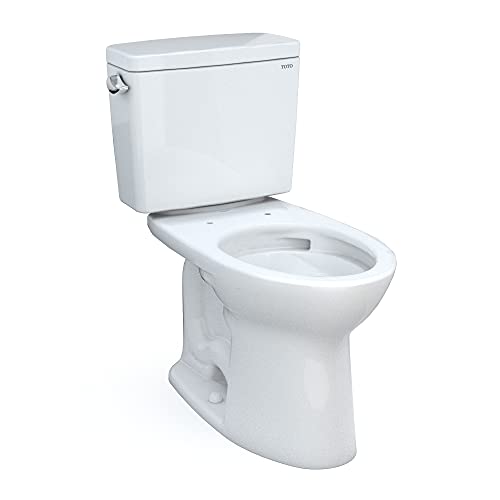
| TOTO Drake (CST744SL) | 2.125 in (fully glazed) | 3 in tower | 1.6 | 1,000 g (max) | Standard vitreous | Check price |
| TOTO UltraMax II | 2.125 in (fully glazed) | 3 in tower | 1.28 | 1,000 g (max) | CeFiONtect | Check price |
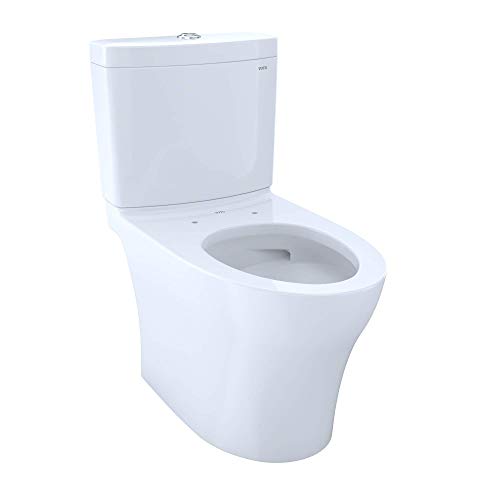
| TOTO Aquia IV | 2.125 in (fully glazed) | 3 in tower | 1.28 / 0.9 | 600 g (full flush) | CeFiONtect | Check price |
| Kohler Highline (K-3999) | 2 in | 2 in | 1.28 | 800 g | Standard vitreous | Check price |
| Kohler Cimarron (K-3609) | 2 in | 3 in | 1.28 | 1,000 g | Standard vitreous | Check price |
| American Standard Champion 4 | 2.375 in (fully glazed) | 4 in | 1.6 | 1,000 g (max) | EverClean | Check price |
| American Standard Cadet 3 | 2.125 in (fully glazed) | 3 in | 1.28 | 800 g | EverClean | Check price |
| Woodbridge T-0001 | 2 in | 3 in | 1.28 | 800 g | Standard vitreous | Check price |
| Gerber Viper | 2 in | 2 in | 1.28 | 600 g | Standard vitreous | Check price |
The American Standard Champion 4 holds the record for the largest residential trapway at 2.375 inches -- a full glazed channel that is 11 percent wider than the TOTO Drake's 2.125-inch trapway. This geometric difference directly reduces clog frequency and maintains faster drain rates as the toilet ages. The TOTO UltraMax II earns the top overall recommendation for drain reliability because it combines a 2.125-inch glazed trapway with CeFiONtect bowl coating and a proven 3-inch tower flush valve in a one-piece skirted design that eliminates the crevices where buildup hides.
MaP testing -- conducted at an independent laboratory using standardized soybean paste media -- is the most reliable published benchmark for real-world flush performance. A MaP score of 1,000 grams means the toilet cleared the maximum tested load in a single flush. Toilets scoring below 500 grams are statistically more likely to require multiple flushes or exhibit slow drainage when the user load approaches or exceeds their tested threshold. When evaluating a toilet replacement to resolve chronic slow-drain complaints, prioritize models with verified 800+ gram MaP scores.
The fixes above resolve the vast majority of slow-drain toilets. However, certain symptom patterns indicate a deeper issue in the drain line or vent system that requires professional diagnosis:
The most common causes are clogged rim jets from mineral scale, a tank water level set too low, a flapper that closes before the tank is empty, or a partial obstruction in the trapway. Start by checking the tank water level, then inspect the flapper cycle and clean the rim jets with white vinegar.
Yes. A partial clog -- a soft mass of waste, toilet paper, or a foreign object that narrows but does not seal the trapway -- allows liquid to flow through while restricting the rate of drainage. The toilet will appear to work but drain noticeably slower than normal. A few rounds of firm plunging usually resolves this.
Hold a small mirror under the toilet rim while shining a flashlight at an angle into the rim channel. You should see a row of small circular holes (usually 20 to 30 of them) around the underside of the rim. If any appear caked, partially filled, or discolored with white or brown buildup, they are restricting water flow and need descaling.
Hard water causes mineral scale to build up in rim jets, the siphon jet, and the internal rim channel over time, progressively reducing the volume and velocity of water entering the bowl during a flush. In areas with water hardness above 180 mg/L, this buildup can meaningfully slow drainage within 12 to 18 months without periodic vinegar treatment.
This pattern typically indicates either insufficient flush volume (tank water level too low or flapper closing too early) or a partial restriction in the rim jets, siphon jet, or trapway. A complete clog would prevent drainage entirely; the fact that water moves but slowly usually points to flow restriction rather than full blockage.
A running toilet caused by a leaking flapper allows tank water to leak into the bowl continuously, which keeps the water level in the bowl slightly elevated but does not itself cause slow drainage. However, if the same worn flapper also fails to open fully or close correctly during a flush cycle, it can reduce flush volume and contribute to sluggish drainage.
Use 1 to 2 cups of undiluted white vinegar (5% acidity). Pour it directly into the overflow tube inside the tank after plugging the siphon jet hole at the bottom of the bowl to dam the vinegar in the rim channel. Let it soak for a minimum of 60 minutes -- several hours or overnight for heavy buildup.
Observe the flush cycle from an open tank: the flapper should lift and remain fully open for 4 to 7 seconds (the full drain cycle). If the flapper does open fully but the bowl still drains slowly, the flush valve seat may be corroded or the valve opening may be undersized for the toilet's drain requirements. Replacing the complete flush valve assembly is the fix.
Modern EPA WaterSense certified 1.28 GPF toilets are engineered to clear waste efficiently with reduced water volume, and the best models achieve 1,000-gram MaP scores identical to older 1.6 GPF toilets. However, a 1.28 GPF toilet with worn components or partial mineral scale will drain noticeably slower than a new 1.6 GPF toilet, because the smaller volume provides less margin for flow restriction.
Intermittent slow flushing often indicates a flapper that is intermittently waterlogged and heavy (dropping early some flushes but not others), or a fill valve that occasionally fails to fully refill the tank to the proper level. The vinegar bottle dye test can confirm whether the flapper is leaking intermittently: add food coloring to the tank and check after 15 minutes without flushing -- color in the bowl confirms a slow leak.
The TOTO UltraMax II and American Standard Champion 4 are the top performers for drainage reliability. Both achieve 1,000-gram MaP scores -- the maximum tested load -- and feature fully glazed trapways that resist partial clogs. The Champion 4's 4-inch flush valve releases water faster than any other residential gravity-flush design.
Bleach does not dissolve calcium and magnesium carbonate scale, which is the mineral compound that clogs rim jets. Bleach is effective for disinfecting bowl surfaces and treating mold inside the tank, but for descaling rim jets specifically, white vinegar or a phosphoric-acid-based toilet bowl cleaner (CLR or Lime-A-Way) is required. Mixing bleach and vinegar produces toxic chlorine gas -- never use both together.
A blocked vent typically causes gurgling sounds from the toilet when nearby drains (sink, tub, or washing machine) are running, because negative pressure in the drain line pulls air through the toilet trap water seal. If multiple fixtures are slow simultaneously and you hear gurgling, a blocked vent is the likely cause. Check the rooftop vent opening for visible debris.
Not directly, but a slow-filling fill valve can contribute to slow drainage if the user attempts to flush before the tank reaches its full level. A fill valve that takes more than 3 minutes to refill after a flush is undersized, worn, or has sediment in the valve screen; cleaning or replacing it restores proper fill speed without necessarily addressing drain speed.
On a properly functioning gravity-flush toilet, the standing bowl water should evacuate within 5 to 10 seconds of the flush valve opening, and the bowl should be visibly clear of waste within the same window. The full cycle from handle press to refill complete takes 60 to 90 seconds total. If the bowl water is still moving after 15 seconds, drainage is below normal spec.
A failed or misaligned wax ring typically causes sewer gas odor, water leaking at the toilet base, or toilet rocking -- but it does not by itself slow bowl drainage, because the wax ring seals the space between the toilet flange and the toilet base rather than restricting the drain opening. However, a very badly misaligned ring could partially block the drain flange opening; this is rare and would usually present as a near-complete blockage rather than slow drainage.
Only call a plumber after exhausting the DIY sequence: tank water level adjustment, flapper inspection and replacement, rim jet and siphon jet cleaning, and trapway plunging and augering. If all these steps fail to improve drainage, or if multiple fixtures are slow simultaneously, a plumber with powered rooter equipment or a drain camera is the appropriate next step. Most partial trapway clogs respond to DIY plunging.
The siphon jet is an oval opening at the bottom-front of the toilet bowl, aimed directly at the drain hole. During a flush, a concentrated stream of water blasts through the siphon jet to initiate the siphon action that evacuates the bowl. If this jet is blocked by mineral scale, the siphon never fully establishes, and the bowl drains weakly or slowly even when the rim jets are clean.
For rim jet cleaning using the tank pour method, yes -- turn the supply valve off, flush to empty the tank, pour vinegar in the overflow tube, and let it soak. You do not need to turn off the water to plunge the bowl. However, flapper or fill valve replacement does require the supply valve to be closed; locate it behind the toilet at the base of the supply line and turn it clockwise until it stops.
In soft-water areas (below 60 mg/L hardness), annual cleaning is sufficient. In moderately hard to hard water areas (60 to 200+ mg/L), descale rim jets every 6 to 12 months with a white vinegar soak. Regular cleaning prevents the progressive buildup that eventually causes noticeable slow drainage and is far easier than removing heavily calcified deposits after years of neglect.
Toilet water going down slowly is almost always a DIY-fixable problem. Work through the diagnostic sequence from fastest to slowest: tank water level, flapper cycle, rim jet and siphon jet cleaning, and trapway plunging. Mineral scale in rim jets is the single most common cause and responds completely to a white vinegar soak in under an hour. If you have addressed all eight causes and drainage is still below normal, the restriction is downstream of the toilet in shared drain lines or venting -- at that point a licensed plumber with a camera scope is the right tool. For a long-term solution, upgrading to a toilet with a larger fully glazed trapway and a high-capacity flush valve (the TOTO UltraMax II and American Standard Champion 4 are the benchmarks) dramatically reduces the frequency of slow-drain episodes over the life of the toilet.
Learn why toilet trapways curve like an S, how each bend blocks sewer gas, and what the shape means for clogs and…
Read the guideAlmost every US toilet has a left-side handle. Learn the plumbing and mechanical reasons behind the layout and when it actually changes.
Read the guideHome toilets rely on tanks because household water lines lack the pressure that public flushometer systems use to flush straight from the…
Read the guide