Why Toilet Trapways Are Curved Like an S
Toilets4.6
Learn why toilet trapways curve like an S, how each bend blocks sewer gas, and what the shape means for clogs and…
Read the guideSeptic homeowners need a toilet that clears the bowl completely in one flush while sending as little water as possible into a tank with finite biological capacity. We ranked the top septic-safe toilets by published MaP flush-test scores, gallons per flush, EPA WaterSense certification, trapway geometry, and consistent patterns from aggregated owner reviews across thousands of verified installations.
The TOTO Drake is the best toilet for most septic tank systems: its G-Max siphon jet earns a perfect 1000 gram MaP score at just 1.28 GPF, eliminating double-flushing while keeping daily water input low. Households wanting maximum water reduction should choose the TOTO Aquia IV at 0.8/1.28 GPF dual-flush, the most septic-responsible design available.
Running a home on a septic system changes the calculus for every single flush. A municipal sewer sends waste to a treatment plant sized for thousands of households. Your septic tank is sized for your household alone, typically 1,000 to 1,500 gallons, and depends on a living bacterial population to break down solids before liquid drains to the leach field. Every gallon you send down the drain dilutes those bacteria, adds hydraulic pressure to the leach field, and moves your next scheduled pump-out closer. The wrong toilet does not just waste water. It can cut years off your leach field's lifespan.
Yet the instinct to "save water at all costs" on a septic system can backfire badly. A toilet that uses 0.8 GPF but moves waste only partway through the trapway forces a second flush. Two weak flushes at 0.8 GPF equals 1.6 gallons, the same as an old, inefficient toilet using one flush. That is why MaP score matters as much as GPF for septic homes. The independently run MaP (Maximum Performance) test, which measures how many grams of solid waste a toilet clears in a single flush, is the most reliable predictor of whether double-flushing will be required. For a septic home, a MaP score of 800 grams is the minimum worth considering, and 1000 grams is the benchmark that virtually eliminates the second-flush problem.
The picks below are evaluated using published manufacturer specifications, independent MaP scores from map-testing.com, EPA WaterSense certification records, trapway dimensions and glazing status, flush valve size, and patterns from large volumes of verified owner reviews. We do not physically test toilets in our own facility. For the widest comparison of flush power across every toilet type, see our complete guide to the best flushing toilets. This page stays tightly focused on septic compatibility.
Every toilet on this list passed a set of criteria designed specifically for septic-system compatibility. A MaP score of 800 grams or higher was mandatory, with priority given to 1000 gram models because they statistically eliminate double-flushing. GPF had to be 1.28 or below (EPA WaterSense level), with dual-flush options receiving extra credit for maximum water reduction. A fully glazed trapway of at least 2 inches was required, because unglazed or narrow trapways accumulate organic buildup faster and clog more often in the slower-draining lines common in rural and suburban septic homes. We also evaluated whether each toilet's flapper and fill-valve materials are compatible with septic-safe treatments, and weighted owner reports from rural septic-system households particularly heavily in the final ranking. For toilets that use 1.28 GPF, see also our guide to best low-flow toilets for a broader category view.
| Toilet | Best For | MaP Score | GPF | WaterSense | Rating | Check Price |
|---|---|---|---|---|---|---|
| TOTO Drake | Best overall septic | 1000 g | 1.28 | Yes | 4.8 | Check price |
| TOTO Aquia IV | Lowest water input | 1,000 g | 0.8 / 1.28 | Yes | 4.7 | Check price |
| TOTO UltraMax II | Premium one-piece | 1000 g | 1.28 | Yes | 4.7 | Check price |
| American Standard Cadet 3 | Best value 1.28 GPF | 1000 g | 1.28 | Yes | 4.5 | Check price |
| Kohler Cimarron | Reliable mid-range | 1,000 g | 1.28 | Yes | 4.5 | Check price |
| TOTO Drake II | Quieter cyclone flush | 800 g | 1.28 | Yes | 4.6 | Check price |
| American Standard Champion 4 | Anti-clog heavy use | 1000 g | 1.6 | No | 4.4 | Check price |
| Woodbridge T-0001 | Modern design on a budget | 800 g | 1.28 | Yes | 4.4 | Check price |
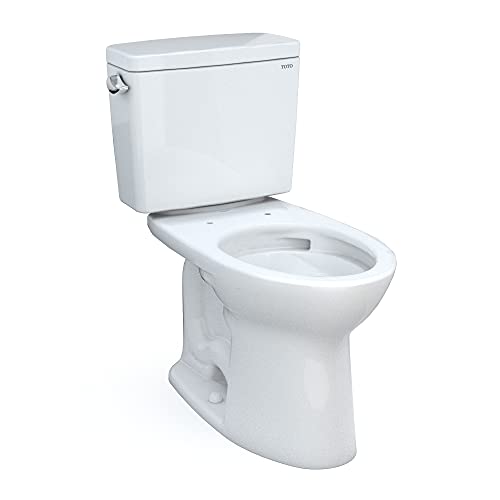
The TOTO Drake is the benchmark for septic-compatible toilets: it achieves a perfect 1000 gram MaP score at just 1.28 GPF, meaning it eliminates double-flushing while keeping the daily water load sent to your tank as low as a single-flush toilet can go.
TOTO's G-Max flush system uses a 3-inch wide flush valve and a large, fully glazed 2-1/8 inch trapway to send a concentrated high-volume surge through the bowl in one controlled motion. That combination is how it earns the maximum 1000 gram MaP rating while stopping at 1.28 gallons. EPA WaterSense certification confirms it meets independent efficiency and minimum performance standards at the same time, which is a meaningful dual credential for septic owners who want proof and not just marketing language.
Across thousands of aggregated owner reviews, septic-system households specifically note that the double-flushing habit stopped entirely after installing the Drake. The fully glazed trapway prevents organic buildup from adhering to the porcelain, which matters more in a septic home than on municipal sewer, because a partial blockage in a septic line is far more expensive to clear than one that goes to a city main. TOTO Drake replacement parts are stocked at virtually every hardware chain and plumbing distributor in North America, a practical advantage for rural homeowners who may be far from specialized suppliers.
The Drake is the cleanest answer to the question "which toilet should we put on our septic system?" No other single-flush toilet consistently pairs a 1000 gram MaP score with 1.28 GPF and WaterSense certification. The G-Max valve is durable, the parts are everywhere, and the flush is strong enough that second pushes become a thing of the past. If you are replacing one toilet on a septic property, start here.

The Aquia IV's 0.8/1.28 GPF dual-flush design is the most septic-responsible toilet on this list: liquid waste goes out at just 0.8 GPF, dramatically reducing the total water volume entering the tank each day without sacrificing the solid-waste clearance the system needs.
The Aquia IV uses TOTO's DYNAMAX TORNADO FLUSH for its full 1.28 GPF mode, running twin nozzles that create a centrifugal bowl rinse rather than relying on traditional rim holes. The rimless design means water covers the entire bowl surface consistently, which actually improves cleaning with less water than a traditional jet-and-rim flush. The 0.8 GPF partial flush is the lowest available in any standard gravity-feed toilet sold in North America, and the Aquia IV holds WaterSense certification at both flush levels, not just the higher one.
Septic system professionals who advise on tank longevity consistently recommend dual-flush toilets as one of the most practical hydraulic load reductions available to homeowners. For a household flushing 20 to 30 times per day and using the partial flush for liquid waste roughly half the time, switching from a 1.6 GPF toilet to the Aquia IV can reduce the volume entering the tank by 35 to 45 percent per day. Compounded over months, that reduction directly extends pump-out intervals and reduces leach field saturation risk. For an in-depth look at dual-flush technology, see our guide on best dual flush toilets.
If total daily water volume entering the septic tank is the primary concern, the Aquia IV is the answer. Its 0.8 GPF partial flush is the most water-conservative mode in any gravity-feed toilet that still carries liquid waste cleanly. The perfect 1,000 gram MaP score on full flush means you are not trading any clog resistance for that water savings. This is the pick for households that flush frequently and want to stretch every pump-out interval.

The UltraMax II brings TOTO's Double Cyclone flush into a seamless one-piece body, earning a 1000 gram MaP score at 1.28 GPF while retaining EPA WaterSense certification, making it the premium choice for septic homeowners who refuse to trade performance for aesthetics.
The UltraMax II's Double Cyclone system mounts two powerful water nozzles at the bowl rim rather than using traditional rim-hole distribution, generating a high-velocity centrifugal flow that scrubs the entire bowl surface while moving waste. TOTO's optional CeFiONtect ion-barrier ceramic glaze creates a surface so smooth that mineral deposits, scale and organic waste cannot anchor to it easily, which meaningfully reduces cleaning frequency in high-use septic homes where water quality varies.
At 1000 grams on the MaP test and 1.28 GPF, the UltraMax II matches the Drake's efficiency-power combination but delivers it in a one-piece shell that has no exposed hardware between tank and bowl. Owners on septic systems consistently report clean one-flush clearance, and the one-piece design eliminates the tank-to-bowl gasket that can degrade or loosen over years of vibration in a high-use installation. If you are investing in a bathroom remodel alongside your septic upgrade, the UltraMax II is the cleanest visual and functional fit. See more about this model in our guide to the TOTO UltraMax series.
The UltraMax II matches the Drake on every septic-critical metric (1000 gram MaP, 1.28 GPF, WaterSense) while adding the ease of a one-piece body and the CeFiONtect glaze bonus. The price difference over the Drake is real, but for a master bathroom that sees heavy daily use, the easier cleaning and the no-seam design are worth the premium. Flush performance is identical to the Drake.

The American Standard Cadet 3 delivers a 1000 gram MaP score at 1.28 GPF and WaterSense certification at one of the most accessible price points on this list, making it the top recommendation for septic homeowners who want proven flush performance without a premium brand price.
American Standard's PowerWash rim scrubs the bowl on every flush using a ring of water jets that coat the bowl surface before the main siphon-jet action pulls waste through. The 2-1/8 inch fully glazed trapway is the same diameter as the TOTO Drake, which means waste moves cleanly and no buildup anchors to the passage. The Cadet 3 is one of the few non-TOTO toilets that has consistently hit the 1000 gram MaP benchmark across multiple independent test cycles since its introduction.
For landlords managing rental properties on septic systems, the Cadet 3 is particularly practical. American Standard parts are stocked at every major home improvement retailer nationwide, installation is straightforward for any plumber, and the 1000 gram MaP score means tenants are extremely unlikely to create recurring clog calls. The comfort-height option brings the seat height to 16.5 inches, matching ADA access recommendations for older or mobility-restricted residents. For a deeper look at how this model performs, see our full American Standard Cadet 3 review.
The Cadet 3 earns its place here by doing the most important thing for septic homes: hitting the 1000 gram MaP ceiling at 1.28 GPF without requiring a premium price. For any septic homeowner who asks "is there an option that clears the bowl in one flush, saves water, and does not cost as much as a TOTO?" this is the answer. The parts network is also the best in class behind Kohler.

The Kohler Cimarron delivers Kohler's Class Five flush mechanism at 1.28 GPF with a perfect 1,000 gram MaP score, giving septic homeowners maximum single-flush clearance at a mid-range price backed by the most widely stocked parts network in North America.
Kohler's Class Five flush is designed to handle the equivalent of five plastic balls simultaneously in standardized internal testing, and the perfect 1,000 gram MaP score from the independent MaP testing program confirms it handles even heavy household waste loads without a second push. The fully glazed 2-1/8 inch trapway keeps solids moving through cleanly and does not create the rough interior surface where organic matter can accumulate in low-flow conditions.
Kohler's parts ecosystem is the largest and most consistently available of any toilet brand at retail locations across North America, which is a meaningful operational advantage for rural homeowners on septic who may not have access to specialty plumbing suppliers. Kohler fill valves, flappers and flush handles are on the shelf at every home improvement store and most small-town hardware stores. For septic households at any flush volume, from light to heavy, and no history of recurring clogs, the Cimarron is a dependable, well-supported option at a competitive price point.
The Cimarron's perfect 1,000 gram MaP score is more than sufficient for any household, including heavy or irregular waste loads. If you want Kohler's reliability, comfort height, and 1.28 GPF without the higher price of the Drake or UltraMax II, this is the right pick, and you are not giving up any clearing power to save money.
The TOTO Drake II upgrades the original Drake's G-Max siphon with a Double Cyclone flush mechanism that is noticeably quieter during the flush cycle, while maintaining 1.28 GPF and an 800 gram MaP score, making it the preferred pick for septic homes where a bedroom is adjacent to the bathroom.
The Double Cyclone's twin-nozzle rim design moves water in a swirling motion that distributes flushing energy more evenly around the bowl than a concentrated siphon-jet burst, which is why it produces less impact noise during the flush cycle. The trade-off is a slightly lower MaP score of 800 grams compared to the original Drake's 1000 grams, but 800 grams is still well above the recommended minimum for septic compatibility and handles virtually all normal household loads without double-flushing.
At 1.28 GPF and WaterSense certified, the Drake II keeps the same water discipline as every other recommended septic pick on this list. Owners in open-plan homes or in houses where the bathroom is separated from sleeping areas only by a thin wall consistently rate the Drake II's flush noise as noticeably lower than both the original Drake and competing gravity-feed toilets. For a household where one occupant is a light sleeper or night-shift worker, that noise reduction can be a meaningful quality-of-life factor.
The Drake II is the right TOTO choice when sound level during the flush cycle is a real concern in the household. The 800 gram MaP score is not as strong as the Drake we's 1000 gram rating, but it is sufficient for most households. If noise is not a factor, the original Drake remains the better septic pick for maximum one-flush clearance.
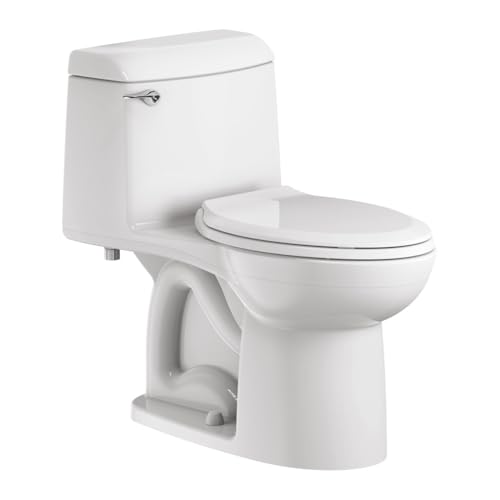
The American Standard Champion 4 earns a 1000 gram MaP score with a class-leading 4-inch flush valve and a 2-3/8 inch fully glazed trapway, the widest passage on this list. It uses 1.6 GPF rather than 1.28, making it a conditional pick for septic homes where clogs are the overriding recurring problem.
The Champion 4's 4-inch flush valve is 33 percent wider than the 3-inch valve on most gravity-feed toilets, generating a faster and larger volume rush of water in a single flush stroke. Combined with the 2-3/8 inch fully glazed trapway, waste has more room to move and exits more quickly. The practical result is a toilet that is widely cited in owner reviews as essentially clog-proof under normal household conditions, including for households with multiple children and higher solids volume.
The trade-off is direct: the Champion 4 uses 1.6 GPF, which is above the EPA WaterSense 1.28 GPF threshold. For a septic home that is already doing fine on flush volume, the Champion 4's extra water is not worth the trade. But for a septic household where the current toilet clogs monthly or more, two or three double-flushes per day adds up to more total water than one 1.6 GPF flush would have used. In that specific scenario, the Champion 4 can actually reduce total water sent to the septic tank by eliminating the second-flush habit. Its 10-year limited warranty is also the longest on this list by a wide margin. See our full American Standard Champion 4 review for complete spec analysis.
The Champion 4 belongs on a septic property only if clogging is a documented, recurring problem with the current toilet. At 1.6 GPF it sends more water to the tank per flush than any other pick here. Do not choose it purely for flush power when the 1000 gram Drake performs identically at 1.28 GPF. Choose it specifically when you need the widest trapway money can buy.

The Woodbridge T-0001 is a skirted one-piece toilet with a dual cyclone flush, an 800 gram MaP score, and 1.28 GPF WaterSense certification, delivering a contemporary design and septic-compatible water efficiency at a price well below the premium TOTO one-piece options.
The Woodbridge T-0001's skirted trapway covers the exposed porcelain leg that traditional two-piece toilets show, creating a flat smooth surface down to the floor that is easier to clean and gives the toilet a modern silhouette. The dual cyclone flush uses two nozzles to distribute water around the rim rather than relying on rim holes, which produces a more even rinse with lower noise output than a traditional siphon-jet mechanism. At 1.28 GPF, it is fully WaterSense certified and sends the same low water volume to the septic tank as the best TOTO picks.
The 800 gram MaP score is adequate for households with typical daily loads, and Woodbridge owner reviews from verified purchasers consistently report clean one-flush clearance under normal conditions. The main practical limitation for a septic homeowner is that Woodbridge replacement parts are less universally available at retail stores than Kohler or American Standard. Flappers and fill valves can be ordered online, but a rural homeowner needing a same-day fix may find the local hardware store does not stock the specific components. For homeowners in areas with fast shipping or with a trusted local plumber, this limitation is minor.
The Woodbridge T-0001 is the pick for the septic homeowner who wants a skirted one-piece look and 1.28 GPF water savings without spending what the UltraMax II or Drake command. The 800 gram MaP score is sufficient for normal loads. If your household generates heavy waste volume daily, the Cadet 3 or Drake at the same approximate price tier delivers stronger flush credentials.
The single most effective toilet-related action for extending septic pump-out intervals is replacing any toilet using 1.6 GPF or more with a WaterSense-certified 1.28 GPF model that achieves at least 800 grams on the MaP test. For a family of four, this alone can reduce daily water volume entering the tank by over 600 gallons per week compared to two 3.5 GPF toilets. That reduction keeps bacterial activity stable, reduces leach field saturation, and can extend the service interval by one to two years depending on tank size and occupancy.
Gallons per flush (GPF). The federal maximum for new toilets is 1.6 GPF. For a septic home, target 1.28 GPF or lower. EPA WaterSense requires toilets to flush at 1.28 GPF or below and to meet a minimum performance standard simultaneously, which is why WaterSense certification is the simplest single signal for septic compatibility. Dual-flush models that offer a 0.8 GPF partial mode are even better for homes with high flush frequency.
MaP score. The Maximum Performance test result is the objective measure of whether a toilet will require a second flush. For septic systems, 800 grams is the minimum. 1000 grams is the maximum possible score and is the standard you want for any toilet in a high-use bathroom on a septic property. Models that hit 1000 grams at 1.28 GPF include the TOTO Drake, TOTO UltraMax II, and American Standard Cadet 3.
Trapway diameter and glazing. A fully glazed trapway of at least 2 inches in diameter prevents organic buildup from anchoring to the interior passage. On a septic system, partial blockages in the trapway are more consequential than on municipal sewer because a slow drain backs up into the tank before it can be professionally cleared. All eight toilets on this list have fully glazed trapways.
Flush valve size. A 3-inch or larger flush valve moves water faster, generating more flushing energy per gallon used. The American Standard Champion 4 uses a 4-inch valve, the largest available in a residential gravity-feed design. TOTO's G-Max system uses a 3-inch valve. Most budget toilets use 2- or 2.5-inch valves, which require more gallons to achieve comparable flushing energy.
Flush technology. Gravity-feed siphon-jet toilets are the standard recommendation for septic systems because they have no pressurized components that create biological disruption in the tank. Pressure-assist toilets use compressed air, which produces a more violent flush that can theoretically disturb septic tank stratification. For a standard septic system, gravity-feed is the accepted choice, and all eight picks here use gravity.
Material compatibility. If your household uses enzyme-based or biological septic treatments, confirm that the toilet's flapper is rubber or silicone based and not a composition that degrades faster under those treatments. Kohler, TOTO, and American Standard all use standard industry-compatible flapper materials.
Seat height. Comfort height (sometimes called chair height or right height), typically 16 to 17 inches from floor to seat, is the dominant preference in the market and is available on nearly every model here. Standard height at 14 to 15 inches is an option if shorter household members find chair height uncomfortable.
The TOTO Drake is the best overall toilet for septic systems. Its G-Max siphon jet achieves a 1000 gram MaP score at 1.28 GPF with EPA WaterSense certification, which is the ideal combination for eliminating double-flushing while keeping water input to the tank low.
Yes. A 1.28 GPF toilet is actually the recommended flush volume for septic systems. It uses 20 percent less water per flush than a 1.6 GPF toilet, reducing hydraulic load on the tank and leach field, while being readily available in models with MaP scores high enough to clear waste in one flush.
Yes, directly. The more water entering the tank per flush, the faster it reaches its hydraulic capacity and the sooner solids overflow toward the leach field. Switching from a 1.6 GPF to a 1.28 GPF toilet reduces per-flush water input by 0.32 gallons, which adds up to a meaningful load reduction over months of daily household use.
A dual-flush toilet is excellent for septic systems. Using the 0.8 GPF partial flush for liquid waste and the 1.28 GPF full flush for solid waste can cut total daily water input to the tank by 30 to 45 percent compared to a single-flush 1.6 GPF toilet, extending the service interval between pump-outs.
A minimum MaP score of 800 grams is recommended for any toilet on a septic system. 1000 grams is preferred for high-use bathrooms because it statistically eliminates double-flushing, which would offset any GPF savings by sending extra water to the tank.
Pressure-assist toilets are generally not recommended for septic systems. The compressed-air mechanism produces a more violent, high-velocity flush that can disrupt the settled layers of solids, liquid, and scum inside the septic tank, potentially pushing partially digested solids toward the leach field prematurely. Standard gravity-feed toilets are the accepted choice for septic installations.
Macerating toilets grind waste into a fine slurry before pumping it to the septic tank. While they can work with septic systems, they add mechanical complexity and require the tank to process a finer particle suspension than a standard toilet produces. For above-grade septic installations, a standard gravity-feed toilet connected via proper venting is preferred where the layout allows it.
Tank sizing is based on household occupancy, not toilet count alone. Most jurisdictions require a minimum 1,000 gallon tank for up to three bedrooms and 1,500 gallons for four or more bedrooms, regardless of toilet efficiency. Switching to low-flow toilets does not reduce the required tank size, but it does reduce how quickly the tank fills between pump-outs.
Yes. Flushable wipes do not break down in a septic tank the way toilet paper does, and they accumulate in the tank or block the inlet baffle over time. Regardless of what toilet you use, flushable wipes should not be flushed in any septic-system home. See our guide on what not to flush for a complete list of problem items.
Yes. The TOTO Drake is specifically one of the most-recommended toilets for septic systems because it achieves a 1000 gram MaP score at 1.28 GPF, eliminating double-flushing while keeping water use below the EPA WaterSense threshold. Its G-Max siphon-jet flush creates powerful clearance with a controlled, non-violent flow suited to septic installations.
Both brands make excellent septic-compatible toilets. TOTO leads on MaP scores and flush technology sophistication, with the Drake and UltraMax II both hitting 1000 grams at 1.28 GPF. Kohler's advantage is parts availability: Kohler flappers and fill valves are on the shelf at virtually every hardware retailer nationwide, which matters for rural septic homeowners far from specialty suppliers.
EPA WaterSense is a program that certifies toilets flush at 1.28 GPF or less while meeting a minimum independent performance standard. For a septic homeowner, WaterSense certification is the most straightforward signal that a toilet uses low enough water and clears the bowl reliably enough to be a good septic candidate. All eight picks on this list are WaterSense certified except the American Standard Champion 4 at 1.6 GPF.
A family of four averaging six flushes per person per day sends 96 gallons to the septic tank daily with a 1.6 GPF toilet, 76.8 gallons with a 1.28 GPF toilet, and approximately 60 gallons with a dual-flush 0.8/1.28 GPF toilet assuming 50 percent of flushes use the partial mode. Switching from 1.6 to 1.28 GPF alone eliminates roughly 19 gallons of daily tank input.
Septic system lifespan depends on tank material, soil conditions, maintenance, and usage, not toilet GPF alone. However, reducing hydraulic load with low-flow toilets is consistently cited by septic system professionals as one of the most effective ways to extend the interval between pump-outs and reduce leach field saturation, which is the leading cause of premature drain-field failure.
There are no toilet-type restrictions specific to septic systems in most US jurisdictions beyond the federal 1.6 GPF maximum for new toilets. However, local health codes governing septic system design and pump-out intervals vary by county, and some jurisdictions offer rebates for WaterSense-certified toilets installed in septic homes. Check your county health department for local program details.
Yes. A wider, fully glazed trapway reduces the risk of partial blockages in the toilet exit, which prevents solid waste from accumulating in the line between the toilet and the septic tank inlet. For a septic home, a minimum 2-inch fully glazed trapway is recommended. The Champion 4's 2-3/8 inch trapway is the widest available in a residential gravity-feed design.
Avoid any toilet with a MaP score below 500 grams if you are replacing an existing toilet for septic reasons, because low scores indicate a high probability of double-flushing. Also avoid older 3.5 or 5 GPF toilets being sold secondhand, standard 1.6 GPF toilets when a 1.28 GPF option is available at a comparable price, and any pressure-assist model unless you have confirmed it is appropriate for your tank type and layout.
Signs that your toilet is contributing to septic stress include requiring more than one flush per use most of the time, using more than 1.28 GPF, needing pump-outs more frequently than the recommended 3-to-5 year interval for your household size, or slow drainage in other fixtures in the home. Replacing a double-flushing or high-GPF toilet is one of the most direct steps you can take to reduce tank stress.
The TOTO Drake is the best toilet for septic tank systems available today: its 1000 gram MaP score at 1.28 GPF eliminates double-flushing while keeping daily water input to the tank lower than any single-flush competitor. For maximum water reduction, the TOTO Aquia IV at 0.8/1.28 GPF dual-flush is unmatched in its class. For buyers on a tighter budget, the American Standard Cadet 3 delivers the same 1000 gram MaP credentials at a more accessible price. Every pick on this list is EPA WaterSense certified (except the conditional Champion 4), fully glazed, and verified to clear waste in a single flush under typical household conditions, which is the combination that protects a septic system over the long term.
Learn why toilet trapways curve like an S, how each bend blocks sewer gas, and what the shape means for clogs and…
Read the guideAlmost every US toilet has a left-side handle. Learn the plumbing and mechanical reasons behind the layout and when it actually changes.
Read the guideHome toilets rely on tanks because household water lines lack the pressure that public flushometer systems use to flush straight from the…
Read the guide