A toilet auger, also called a closet auger or toilet snake, is the one tool that clears stubborn clogs a plunger cannot touch: solid objects lodged in the trapway, deep paper jams, and blockages sitting well past the bowl outlet. This guide covers every step from choosing the right auger to running it correctly, pulling out what it finds, and testing the bowl afterward. It also explains when snaking is the right next step, which toilets resist clogs by design, and when a professional drain snake is the call.
Quick Answer
Feed a closet auger's curved tip into the drain opening, crank clockwise to push the cable through the trapway until you feel resistance, work the cable to break up or hook the clog, then retract slowly. The RIDGID 3 Foot Toilet Auger is the top value pick: its protective rubber boot prevents porcelain scratches and the cable reaches the full depth of any residential trapway.
A plunger clears the large majority of toilet clogs, but it stops working the moment the blockage is either too deep for pressure to reach or too solid to compress. That is when a closet auger becomes the right tool. A closet auger is specifically built for toilets: a rigid outer tube protects the porcelain while a flexible cable inside navigates the S-curve of the trapway to find and either break apart or physically retrieve whatever is blocking the drain.
The tool goes by several names. Plumbers call it a closet auger because a toilet is technically a "water closet." Hardware stores sometimes label the same tool a toilet auger or toilet snake. The principle is identical across all three names. The cable advances through the trapway under hand-cranked torque, either grinding through a soft clog or snagging a solid object so you can pull it back out. Unlike a flat drain snake, which is designed for sink and tub lines, a closet auger has a shaped housing that positions the cable tip at the correct angle to enter the bowl drain without scratching the bowl finish.
This guide draws on manufacturer specifications, plumbing industry guidance, and aggregated owner experience rather than in-house testing. The steps below reflect the sequence a professional plumber follows, adapted for the homeowner who wants a reliable fix without a service call.
Before you snake. If you have not plunged yet, plunge first. A flange plunger clears most toilet paper and waste clogs in under a minute and requires no special skill. Snake a toilet only when a thorough plunging session, 15 to 20 firm strokes with a proper seal, repeated two or three times, has not opened the drain. Augering a soft clog that a plunger would have cleared just adds an extra cleanup step.
What is a toilet auger and how is it different from a drain snake?
A toilet auger (closet auger) is a toilet-specific tool with a rigid guide tube, a protective rubber boot at the bend, and a hand-cranked flexible cable. The boot prevents porcelain scratches and positions the cable tip at the correct entry angle. A standard drain snake lacks these features, can scratch or chip a toilet bowl, and is designed for straight sink and tub drain lines rather than the S-curve of a trapway.
The defining features of a proper closet auger are the guide tube and the protective boot. The guide tube is a rigid shaft, typically 3 to 6 feet long on residential models, that holds the cable and directs it toward the drain outlet at the bottom of the bowl. At the curve where the tube bends toward the drain, a rubber sleeve or plastic boot protects the visible interior porcelain from being scored by the metal housing as you work. Without that boot, the metal tube will scratch the glaze.
The cable itself is a tightly wound spiral of steel, flexible enough to navigate the trapway curve but stiff enough to transmit hand-cranked torque to the clog. At the working tip, most closet augers have either a coiled spring end designed to snag soft clogs and objects, or an auger head that bores into compacted material. A standard drain snake or plumber's snake is a longer, thinner cable wound on a reel, designed for the relatively straight runs of sink P-traps and branch drains. It lacks the right tip geometry and housing to enter a toilet bowl cleanly without marking the porcelain.
Tool
Best Use
Cable Length
Porcelain Safe
Clog Type
Closet auger (toilet auger)
Toilet trapway clogs
3 to 6 ft
Yes (with boot)
Paper jams, solid objects, deep clogs
Flange plunger
Typical toilet clogs
N/A
Yes
Soft clogs, paper and waste
Drum auger / drain snake
Branch drain lines
25 to 50 ft
No (scratches bowl)
Main or branch blockages
Hand spinner / mini snake
Sink and tub drains
15 to 25 ft
No
Hair and grease clogs
Chemical drain cleaner
Not recommended for toilets
N/A
Risk of damage
Light organic clogs only
What do you need to snake a toilet?
To snake a toilet you need a closet auger with a protective rubber boot, rubber gloves, old towels or a drop cloth on the floor, a bucket for retrieving objects, and optionally a plastic bag over the auger housing to keep the cable clean during extraction. No special plumbing knowledge is required for a residential trapway clog.
Having everything at hand before you start avoids interruptions mid-job when the cable is inside the trapway. Here is a complete checklist.
Tools and supplies checklist
Closet auger with a rubber boot: a 3-foot residential model handles the full depth of any standard toilet trapway. A 6-foot model gives extra reach if you suspect the clog is past the trapway outlet.
Rubber gloves: thick kitchen or utility gloves protect your hands when the cable comes back out with debris.
Old towels or a drop cloth: lay them around the base of the toilet. The cable drips when you retract it.
Bucket: useful for lowering the bowl water level before you start, and for disposing of anything the auger retrieves.
Plastic bag (optional): slide it over the auger housing before you begin. When the cable retracts, debris stays inside the bag rather than splattering on the bowl or floor.
Flashlight or phone light: helpful for inspecting the drain opening before inserting the auger tip.
You do not need pipe wrenches, drain line access, or any special plumbing knowledge for a standard toilet trapway clog. The closet auger handles the full job without opening a wall or touching a drain line.
How do you snake a toilet step by step?
Pull the auger cable all the way up into the housing until the curved tip sits at the bottom of the guide tube. Place the tip into the drain opening and crank clockwise while pushing down gently. When you feel resistance, you have reached the clog. Continue cranking to break it up or hook it, then slowly retract the cable, plunge to flush loosened debris, and test with a flush. The whole process takes 5 to 10 minutes for a typical residential clog.
Follow the steps below in order for the cleanest, most effective result.
Step 1: Prepare the toilet and work area
Turn off the water supply by rotating the shutoff valve behind the toilet clockwise until it stops. Lift the tank lid and push the flapper firmly onto the flush valve seat so no water drains into the bowl. Lay towels around the base. If the bowl is nearly full, bail some water into a bucket so the water level sits a few inches below the drain opening. This prevents splashing when the cable goes in and when it comes back out.
Step 2: Retract the cable fully into the housing
Pull the auger handle upward to draw the flexible cable entirely into the guide tube. The curved tip of the cable should rest at the bottom of the tube housing, just above the boot. This starting position is important: a cable that hangs out before insertion will kink when you try to steer the tip into the drain opening and may scratch the bowl.
Step 3: Insert the auger tip into the drain opening
Hold the guide tube at a slight downward angle toward the drain, with the bent end pointing into the opening at the bottom of the bowl. Lower the housing boot into contact with the drain area. The boot or rubber sleeve should rest against the porcelain, protecting it. Do not force the metal tube directly against the bowl surface.
Step 4: Crank and advance the cable
Turn the handle clockwise while applying gentle downward pressure. The cable will feed out of the housing and begin to navigate the trapway curve. You will feel the cable move smoothly at first, then encounter a turn in the trapway, and finally hit resistance when it reaches the blockage. Keep cranking at a steady pace. Do not push hard or force the cable; let the rotation do the work. Forcing a stiff cable can cause it to coil back on itself inside the trapway.
Step 5: Work the blockage
Once you feel resistance, slow down and use a back-and-forth cranking motion to work the tip into the clog. If the clog is a soft paper or waste jam, the auger tip will break it apart and the resistance will ease as the debris clears through or compresses enough to let water pass. If the clog is a solid object, the coiled tip will snag it. You will feel the cable become harder to rotate or pull back slightly when it has hooked something. Do not try to push a solid object further into the drain; reverse the crank direction and retract it instead.
Step 6: Retract the cable slowly
Crank counterclockwise and pull the handle upward to draw the cable back into the housing. Go slowly. A sudden pull can dislodge debris and send it into the bowl water rather than onto the cable. As the cable comes out, it brings material with it. Have the bucket ready to receive whatever the auger retrieves, and be prepared for the cable to be wet and messy.
Step 7: Inspect and clean the cable
Examine the auger tip for whatever it retrieved: paper wads, small toys, cotton products, hygiene items, wipes. If you retrieved a solid object, check whether the drain now feels open. If the auger tip came back relatively clean but the bowl still does not drain, the clog may have been broken up enough to plunge clear, or a second auger pass may be needed.
Step 8: Plunge to clear loose debris
After retracting the auger, seat a flange plunger into the drain opening and give it 10 to 15 firm strokes. This pushes any loosened material on through and confirms the line is clear before you run a flush. Plunging after augering is a step many people skip, but it prevents partly cleared debris from re-blocking the line at the first flush.
Step 9: Test the drain
Open the shutoff valve and let the tank refill. Flush once and watch the bowl drain completely. The water should spiral away quickly and the bowl should refill to its normal level in about a minute. If the bowl drains slowly but not fully, the clog is partially clear; repeat the auger pass and plunge again. If the bowl backs up entirely, the blockage is not in the trapway and the auger cable cannot reach it. See the section on when to call a plumber below.
Editorial Take
The most common snaking mistake is retracting the cable too fast. A quick pull tears loose debris off the cable tip and drops it back into the bowl water rather than bringing it out of the toilet entirely. Retract slowly with a steady counter-clockwise crank and the cable brings its catch with it. Combined with a plunge pass afterward, this two-part retrieval is what separates a complete fix from a repeat clog three days later.
What can a toilet auger retrieve that a plunger cannot?
A toilet auger can retrieve solid objects lodged in the trapway that a plunger cannot dislodge: small toys, toothbrushes, bottle caps, cotton swabs, dental floss bundles, hygiene products, and thick wads of non-flushable wipes. It can also clear compacted paper jams sitting deep in the trapway outlet where plunger pressure cannot reach and break up calcium or mineral deposits that have narrowed the trapway over time.
Plunger pressure is hydraulic: it pushes water at the clog and relies on that force either compressing the blockage or popping it through. This works well on soft, water-absorbent material like toilet paper and most solid waste. It fails when the material is rigid, solid, or sitting deeper than the plunger pressure can effectively reach, which in a toilet is roughly at or just past the first trapway curve.
The table below shows what each tool handles and why, so you can decide which to reach for first without wasting time on the wrong approach.
Blockage Type
Plunger
Closet Auger
Notes
Toilet paper and waste
Usually works
Works
Try plunger first
Compacted paper jam (deep)
Often fails
Works
Auger breaks it up or retrieves it
Small toy or solid object
Fails
Works (hooks and retrieves)
Retrieve rather than push through
Non-flushable wipes bundle
Often fails
Works
Wipes do not break down
Hygiene product or cotton item
Fails
Works (snags and retrieves)
Common child-related clog
Branch drain or main line clog
Fails
Fails (cable too short)
Needs long drum snake or plumber
How many times should you run the auger if the first pass fails?
Run the auger a second time if the first pass brought debris out but the bowl is still slow to drain. If two full passes plus plunging between each do not clear the bowl, the blockage is likely beyond the trapway in the branch drain, and a longer plumber's snake or professional service is the correct next step rather than more auger passes.
One well-executed auger pass clears most toilet trapway clogs. The exception is a layered or densely compacted blockage, where the first pass breaks the surface but more material remains. In that case, a second pass immediately after the first is worth attempting, with a plunge in between to flush loosened debris through before the next auger run.
Signs that the auger is the wrong tool for what remains:
The bowl drains to half level and stops, suggesting the blockage is now just past the trapway outlet in the branch drain.
Multiple drains in the house are slow or gurgling at the same time, which points to a main-line blockage.
The cable feeds out fully (3 to 6 feet) without hitting any resistance, meaning the clog is further out than the auger can reach.
You have already retrieved a solid object but the bowl still will not drain, which means another blockage sits deeper in the line.
At that point, stop augering. You are not going to reach the clog with a closet auger, and repeated passes just waste time. The right call is either a longer drum drain snake (a 25-foot or 50-foot model) or a plumber. A toilet that keeps clogging repeatedly in the same location after clearing is also worth evaluating for bowl design, which is covered later in this guide.
What is the best toilet auger to buy?
The RIDGID 3 Foot Toilet Auger is the most consistently recommended residential closet auger for its protective boot, reliable cable construction, and reach that covers the full depth of any standard residential trapway. For heavier use or longer reach, the General Wire Spring Closet Auger and the Cobra Products 00412BL are strong alternatives. Avoid low-cost augers with thin wire cables that kink in the trapway.
Most homeowners only need one closet auger, and a good one lasts for years. The three recommendations below cover the most common residential needs. All follow the closet-auger design standard: rigid guide tube, protective boot, hand-crank handle, and a flexible cable with a coiled spring tip.
Best Overall
RIDGID 3 Foot Toilet Auger
Standard residential clogs
4.7
The RIDGID 3-footer hits the right balance of cable stiffness, boot protection and crank smoothness for the residential homeowner who needs an auger once or twice a year.
General Wire's 6-foot model extends past the trapway outlet into the branch connection, covering clogs that a 3-foot auger cannot reach in houses with longer trap-to-drain runs.
The Cobra Products auger covers basic trapway clogs at a low entry point, though its cable is thinner than the RIDGID and benefits from careful handling to avoid kinking under heavy torque.
Buy a closet auger before you need one. The average service call to clear a toilet clog costs far more than even a premium residential auger, and most toilet clogs happen at the least convenient time. A RIDGID 3-foot model stored in the bathroom closet next to a flange plunger puts 95 percent of toilet drain emergencies within reach of a 10-minute self-fix. The tool pays for itself the first time you use it.
Can you damage a toilet by snaking it?
Yes, using the wrong tool can damage a toilet. A standard metal drain snake without a protective boot will scratch the porcelain glaze inside the bowl and around the drain opening, leaving permanent marks and a surface that attracts stains. A closet auger with its rubber boot is designed to avoid this. The other risk is over-forcing the cable, which can chip porcelain at the drain outlet or kink the cable so it is difficult to retract.
The most common snaking damage is cosmetic: scratch marks on the inside of the bowl from a bare metal housing scraping against the porcelain glaze. These appear as grey or silver streaks and while they do not affect function, they are nearly impossible to remove and mar an otherwise clean toilet. Using a proper closet auger with its protective boot eliminates this risk because the rubber or plastic sleeve contacts the porcelain instead of metal.
Functional damage is rarer but possible. Forcing a stiff cable around the trapway bend can chip the porcelain at the outlet if the angle is off, or cause the cable to coil tightly inside the trapway, making it difficult to retract without pulling hard. To avoid this, always keep cable advancement slow and rely on cranking torque rather than pushing force. If the cable resists advancing, back it off slightly and try a slower crank rather than leaning on the housing.
A common error on older toilets with existing calcium or mineral scale buildup inside the trapway is mistaking mineral resistance for a blockage. If the cable hits resistance consistently at the same depth without retrieving anything and without the bowl draining differently, the trapway may be narrowed by mineral deposits. A commercial toilet bowl descaler product treats this over 24 to 48 hours and is a better approach than aggressive augering.
When should you call a plumber instead of snaking it yourself?
Call a plumber when multiple drains in the house are slow or backing up simultaneously (main-line blockage), when you have run the auger twice with thorough plunging and the toilet still will not drain, when you suspect a flushed object has passed beyond the trapway into the branch drain, or when the toilet is also rocking or leaking at the base, which points to a wax ring or flange issue rather than a clog.
A closet auger is the right tool for a blockage inside the toilet trapway, which runs from the bowl outlet to the point where the toilet connects to the branch drain line, typically 3 to 5 feet. Past that point you are in the branch drain, the main drain stack, or the main sewer line, and a 3-foot closet auger cannot reach it. Signs that the problem is further downstream:
Two or more drains, for example the toilet and a nearby tub, are slow or backing up at the same time.
Flushing the toilet causes gurgling in another drain, which means air is being displaced from a shared line.
The auger cable feeds out completely with minimal resistance but the toilet still will not drain after a flush.
The toilet overflows every few months even with careful flushing habits, pointing to a partial main-line obstruction from root intrusion or grease buildup.
A plumber with a long drum snake (50 feet or more) or a hydro-jet machine can address any of these scenarios. If the toilet is also rocking, leaking at the base, or showing water damage around the floor, address those issues alongside the drain problem since a failing wax ring or damaged flange requires toilet removal regardless. For guidance on a toilet not flushing properly even after clearing, see our diagnosis guide. If the flush itself has become weak, the toilet flush power guide covers restoring it without replacement.
Which toilets resist clogs so well that snaking is rarely needed?
Toilets with a MaP score of 800 grams or higher, a fully glazed trapway of 2 inches or wider, and a high-volume flush valve like TOTO's Double Cyclone or American Standard's EverClean system clear waste so thoroughly that clogs are rare. The TOTO Drake II (1,000 gram MaP), the American Standard Champion 4 (1,000 gram MaP), and the Kohler Highline (800-plus grams with AquaPiston) are the strongest clog-resistance performers at their respective price points.
If you are snaking the same toilet repeatedly, the problem is the toilet design, not bad luck. A toilet with a low MaP score, a narrow trapway, or weak flush engineering deposits waste and paper at the trapway curve on every marginal flush rather than clearing it. Over days of use that accumulates into a recurring clog. No amount of careful flushing or tool technique fixes a fundamentally underpowered bowl.
The three models below are the strongest clog-resistance performers based on published MaP data and verified owner experience. Each carries an EPA WaterSense certification for 1.28 GPF or less, so high clearing power comes without a water-use penalty. For a broader ranked list covering more budgets and bowl shapes, see the best flushing toilets guide.
1
Best Anti-Clog Overall
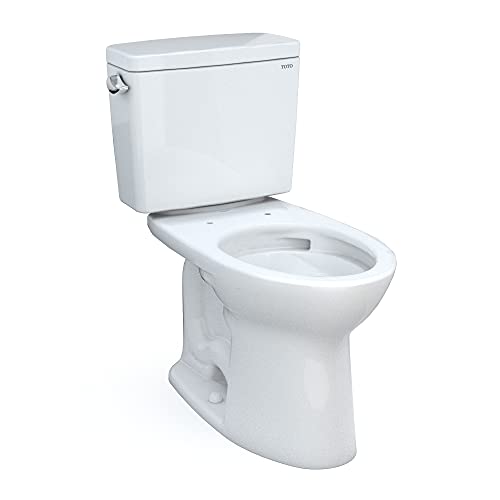
TOTO Drake II Two-Piece Toilet
4.8Maximum clog prevention
The TOTO Drake II achieves a published 1,000 gram MaP score, the highest tier in independent testing, which means it clears the equivalent of about 35 ounces of solid mass on a single 1.28 GPF flush.
Flush TypeDouble Cyclone
GPF1.28
MaP Score1,000 g
Bowl Height16.5 in (ADA)
Warranty1 year (parts)
Best For
Households with chronic clogging problems
High-traffic bathrooms used by multiple people daily
Anyone replacing a weak first-generation low-flow toilet
Not Ideal For
Very small bathrooms where two-piece bulk is a concern
Buyers seeking a sleek skirted or one-piece aesthetic
The Drake II's Double Cyclone flush generates two diagonal water streams that swirl around the rim rather than relying on traditional rim holes. This produces a more thorough bowl rinse and a stronger siphon draw than most gravity-fed designs. The wide, fully glazed trapway leaves no porous surfaces for debris to catch on, and aggregated owner reviews consistently highlight its clearing reliability over years of use.
TOTO's CeFiONtect glaze, an optional finish on some Drake II configurations, creates an ion-barrier surface that resists mold, mildew and debris adhesion inside the bowl. Compared to standard ceramic, CeFiONtect-glazed bowls report significantly less cleaning frequency and fewer instances of residue buildup at the waterline. The Drake II is EPA WaterSense certified at 1.28 GPF, saving roughly 12,000 gallons per year versus a 3.5 GPF toilet in a household of four.
Editorial Take
For a household that has plunged or snaked the same toilet more than twice in a year, the Drake II is the clearest upgrade path. Its 1,000 gram MaP certification is not marketing; it is a third-party lab measurement of actual solid waste cleared per flush. Once installed, most owners report never needing a plunger again on normal household use.
Bottom Line: The TOTO Drake II's 1,000 gram MaP score and Double Cyclone flush engine make it the single most reliable clog-prevention upgrade for a repeat-clog household.
2
Strongest Flush
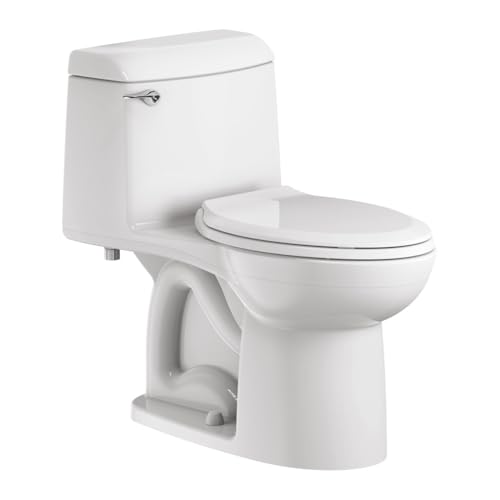
American Standard Champion 4 Two-Piece Toilet
4.6Wide trapway, heavy use
American Standard built the Champion 4 around a 2-3/8 inch wide fully glazed trapway, the widest in the residential gravity-flush segment, and a 4-inch flush valve that releases the tank faster than a standard 2-inch valve.
Flush TypeGravity, Champion Flush
GPF1.6
MaP Score1,000 g
Bowl Height16.5 in (ADA)
WarrantyLifetime limited
Best For
High-traffic family bathrooms needing raw clearing power
Anyone who has had a solid object lodge in a narrow trapway
Buyers who prefer a lifetime warranty on the toilet
Not Ideal For
Water-conservation priorities (1.6 GPF vs. 1.28 WaterSense models)
Minimalist or modern aesthetic preferences
The Champion 4's 2-3/8 inch trapway is nearly 20 percent wider than the 2-inch trapway found on most residential toilets. That extra diameter is what prevents solid objects from lodging in the first place: there is simply more room for material to pass through. American Standard's independent MaP score of 1,000 grams confirms it clears at the highest documented level for a gravity-flush design. The lifetime limited warranty on both vitreous china and flush performance is the best coverage in the residential toilet category.
The tradeoff is water use. At 1.6 GPF the Champion 4 exceeds the 1.28 GPF threshold for EPA WaterSense certification, so it uses more water per flush than the Drake II or Kohler Cimarron. In most households that delta is roughly 2,000 to 3,000 additional gallons per year versus a 1.28 GPF model, which matters in drought-prone regions or where sewer fees are volume-based. If water cost is a concern, the American Standard Cadet 3 at 1.28 GPF offers nearly the same trapway engineering with WaterSense compliance.
Editorial Take
The Champion 4's wide trapway is its real differentiator. If your clog history includes solid objects like wipes or foreign items, and not just paper jams, that extra trapway diameter is worth the 0.32 GPF premium over a 1.28 model. It is genuinely harder to clog by design, not just by flush volume.
Bottom Line: The Champion 4's 2-3/8 inch trapway and lifetime warranty make it the strongest-flushing and best-warranted option for households that want to eliminate recurring clogs for good.
3
Best Value Upgrade
Kohler Highline Classic Two-Piece Toilet
4.5Reliable value, WaterSense
Kohler's Highline pairs an AquaPiston canister flush valve, which opens 360 degrees for a faster, more powerful water release than a standard flapper, with EPA WaterSense certification at 1.28 GPF.
Flush TypeGravity, AquaPiston
GPF1.28
MaP Score800 g (typical)
Bowl Height15 in (standard)
Warranty1 year limited
Best For
Budget-conscious buyers who need a reliable daily performer
Rental properties, guest baths, and secondary bathrooms
Owners replacing a pre-2000 high-gallon toilet with a water-efficient model
Not Ideal For
Households with a documented solid-object clog history
Anyone who needs ADA comfort-height seating in this model tier
The AquaPiston flush valve opens from the center in all directions simultaneously, unlike a standard flapper that lifts from one edge. This design allows water to flow in from 360 degrees around the valve, releasing more volume in less time and generating a stronger initial siphon pull. Kohler engineers this valve with an internal coating that resists the common degradation issues that cause early-closing flappers to shorten the flush cycle and weaken clearing power over time.
At an 800-gram MaP score the Highline sits in the strong performer tier, clearing well above the 500 to 600 gram baseline typical of older toilets and early low-flow models. It is not at the 1,000 gram ceiling of the Drake II or Champion 4, but for typical household use with paper and waste only, it clears reliably and rarely needs intervention. If you want more options in the Kohler line that push closer to 1,000 grams, the Kohler Cimarron with Class Five flush technology steps up to the next performance level. For guidance on a weak flush fix if your current Kohler is underperforming, see our dedicated repair guide.
Editorial Take
The Highline is the best entry point for buyers replacing an old low-flow toilet that chronically clogs on paper alone. The AquaPiston's 360-degree opening is a genuine flush improvement over any standard flapper-valve toilet in the same price range, and the 1.28 GPF certification means lower water bills from day one. It is not the strongest toilet Kohler makes, but for typical use it ends the plunger-every-week problem reliably.
Bottom Line: The Kohler Highline's AquaPiston valve and 1.28 GPF WaterSense certification make it the most accessible upgrade from a chronically underperforming toilet without reaching for a premium budget.
Editorial Take
A household that has needed a closet auger more than twice in a year should take that as diagnostic information about the toilet, not just bad luck. Every snaking session has a real cost in time and mild clog risk. A replacement toilet with a 1,000 gram MaP score and a 2-inch or wider fully glazed trapway, models like the TOTO Drake II or American Standard Champion 4, eliminates that recurring cost entirely. The toilet pays for itself faster than most people expect, especially if you factor in the avoided plumber call.
How do you clean and store a toilet auger after use?
Rinse the cable thoroughly with hot water while cranking it in and out of the housing to clean debris from the full length. Spray with a bathroom disinfectant or diluted bleach solution, then retract the cable fully and allow it to air dry before storing. Store with the cable retracted to prevent the cable from developing a permanent kink set.
Cleaning the auger properly after each use prevents odor, cable corrosion, and the buildup that makes the next job harder. Here is the right sequence.
Cleaning after use
While still at the toilet or over the bucket, crank the cable in and out of the housing several times under running hot water from a detachable shower head or a pitcher, rinsing the full cable length as it passes through the housing.
Apply a spray disinfectant or a diluted bleach solution (one tablespoon of bleach per quart of water) along the cable and housing, and let it sit for 30 seconds before rinsing again.
Retract the cable fully into the housing and hang the auger upright or lay it horizontally to air dry. Do not store it with the cable partially extended; that creates a kink set that makes the cable harder to feed and retract on the next use.
Wipe down the guide tube and handle with a disinfectant wipe before storing.
Storage
Store the closet auger in a utility closet, under the bathroom sink, or in the garage. Many homeowners keep it in a large zip-lock bag or a plastic bag to contain any residual moisture and odor between uses. Do not store it next to the hot water heater or in a location where temperature swings are extreme, since this can affect the rubber boot flexibility over time.
Manufacturer published specifications (TOTO, Kohler, American Standard)
RIDGID Tool Company product documentation, ridgid.com
Plumbing code reference: International Plumbing Code (IPC) trapway and drain sizing standards
FAQ
Frequently asked questions
? What is snaking a toilet?
Snaking a toilet means feeding a flexible metal cable, housed in a closet auger tool, through the toilet's drain opening and into the trapway to physically break up or retrieve a clog that a plunger cannot clear. The cable is cranked by hand through the S-shaped trapway until it reaches and works on the blockage. The term "snaking" comes from the flexible, snake-like cable the tool uses.
? How do I know when to use an auger instead of a plunger?
Use a plunger first for any toilet clog. Switch to a closet auger when two to three rounds of thorough plunging, each with 15 to 20 firm strokes and a good seal, have not opened the drain. If you know a solid object was flushed, skip straight to the auger, since a plunger cannot retrieve a hard object and may only push it deeper into the trapway.
? Can I use a regular drain snake on a toilet?
You can, but you risk scratching or chipping the porcelain bowl because a regular drain snake does not have a protective boot at the bend. A closet auger is purpose-built for toilet use and its rubber boot prevents contact damage. If a drain snake is all you have, wrap the leading edge of its housing in electrical tape or cloth before inserting it, and proceed carefully.
? How far does a toilet auger reach?
A standard residential closet auger reaches 3 feet, which covers the full length of most toilet trapways. The typical residential toilet trapway runs 2.5 to 3.5 feet from the bowl outlet to the drain connection. A 6-foot auger extends into the branch drain connection for clogs that sit just past the trapway outlet. Anything deeper than 6 feet requires a full drum snake or professional service.
? What if the auger cable gets stuck in the toilet?
If the cable does not retract, reverse the crank direction and back it off slightly before trying to pull again. A stuck cable usually means it has coiled back on itself inside the trapway, which happens when you force the cable rather than cranking it through. If it truly will not retract, stop pulling hard: call a plumber, who can remove the toilet from its flange to access the trapway from both ends.
? Should I shut off the water before snaking a toilet?
Yes. Turn the shutoff valve behind the toilet clockwise before you begin and close the flapper inside the tank. This prevents any accidental flush from sending water through the trapway while the auger cable is inside, which could force debris back toward you or make the cable harder to control. Restore water and do a test flush only after the cable is fully retracted and cleaned.
? Is it better to push a clog through or pull it back out?
Pull solid objects back out whenever possible. Pushing a solid object, a toy, a wipe bundle, a hygiene product, further into the drain pushes it from the trapway into the branch drain, where it is harder to reach and more likely to cause a larger blockage in the main line. Break up soft paper clogs by cranking through them, but hook and retrieve any solid object rather than pushing it through.
? How do I know if the clog has been cleared?
After retracting the auger and plunging once, restore water supply, let the tank fill, and flush. A cleared toilet drains fully within about 15 to 20 seconds and refills to the normal water level. If the bowl drains slowly or backs up, the clog is partially or fully intact. A bowl that drains to half and stops typically has a partial blockage still in the trapway outlet or beginning of the branch drain.
? Can you snake a toilet without removing it?
Yes, for any clog in the trapway. A closet auger reaches through the bowl drain without removing the toilet from the floor flange. Toilet removal is only necessary if the auger cannot retrieve a solid object that is wedged too tightly to pull back or push through, or if the plumber needs to inspect or repair the drain flange underneath. Most toilet clogs are cleared without removal.
? How do I stop a toilet from clogging so often?
Chronic clogs trace back to weak flush power, a narrow trapway, or habits like flushing wipes and excessive paper. Confirm the tank water fills to the molded fill line, the flapper opens fully for a complete flush, and the rim jets are clear of mineral scale. Do not flush anything other than waste and toilet paper. If the toilet still clogs regularly after addressing those factors, the bowl's MaP score and trapway width are the limit and a replacement is the durable fix. The why your toilet keeps clogging guide covers every cause in detail.
? What MaP score should a toilet have to avoid needing a snake?
Aim for a MaP score of 800 grams or higher. Toilets in the 800 to 1,000 gram range clear full loads reliably on a single flush, leaving little behind to accumulate into a clog. Below 500 grams, clearing power drops enough that paper and waste can build up over repeated flushes and eventually block the trapway. The TOTO Drake II, American Standard Champion 4, and Gerber Avalanche all publish MaP scores of 1,000 grams.
? Will chemical drain cleaner work on a toilet clog?
Chemical drain cleaners are not recommended for toilet use. Most are formulated for grease and hair in sink traps and do not effectively dissolve the paper and solid waste that causes toilet clogs. They can also degrade the rubber flapper, seals and wax ring, damage older porcelain glaze, and create a chemical hazard if someone plunges after pouring them in. A closet auger is the safe and effective alternative.
? What is the trapway on a toilet?
The trapway is the S-shaped or P-shaped internal channel built into the toilet bowl that connects the drain outlet at the bottom of the bowl to the exit at the back of the toilet base where it meets the floor flange. Water and waste travel through the trapway during each flush, siphoned out by the rushing water column. The width and glaze of the trapway directly determine how likely the toilet is to clog.
? Is a toilet auger reusable?
Yes. A closet auger is reusable indefinitely with proper cleaning and storage. The cable is steel and the housing is durable plastic or metal. Rinse the cable thoroughly after each use, dry it fully before storing with the cable retracted, and check the rubber boot periodically for cracking or softening. A quality auger like the RIDGID 3-foot model handles years of use for an average household.
? How is a toilet auger different from a toilet snake?
The terms are used interchangeably for the same tool. A closet auger, toilet auger, and toilet snake all describe the same device: a rigid guide tube with a protective boot, a flexible cranked cable, and a coiled spring tip designed for use in a toilet trapway. The word "snake" comes from the cable's flexible snake-like movement through the drain. Some plumbers use "snake" for longer drum-reel tools and "auger" specifically for the short-handled closet version, but in a hardware store both names point to the same product category.
? Can a toilet auger clear a main sewer line clog?
No. A residential closet auger reaches only 3 to 6 feet and is designed for the toilet trapway. A main sewer line blockage requires a professional drum snake of 50 to 100 feet or a hydro-jet machine. If your toilet clog is accompanied by slow drains throughout the house or gurgling in multiple fixtures, that is a main-line issue beyond the reach of any closet auger and requires a licensed plumber.
? Why does my toilet gurgle after I snake it?
Gurgling after snaking usually means air is re-entering the drain line as water flows past the area where the clog was, which is normal for a day or two as the line normalizes. If gurgling persists or other drains also gurgle when you flush, the vent stack may be partially blocked, preventing air from entering the system above the waterline. A blocked vent creates a vacuum that pulls air up through the nearest trap, causing the gurgling sound. Clearing the roof vent access fixes this.
Manufacturer published specifications (TOTO, Kohler, American Standard)
RIDGID Tool Company product documentation, ridgid.com
International Plumbing Code (IPC) trapway and drain sizing standards
Our Verdict
A closet auger is the right tool when a plunger has failed: it reaches deep into the trapway, breaks up compacted paper jams, and retrieves solid objects a plunger can only push further in. The RIDGID 3 Foot Toilet Auger handles the vast majority of residential toilet trapway clogs. Shut off the water first, crank slowly, retract slowly, and plunge afterward to confirm the line is clear. If the same toilet needs snaking more than twice a year, the bowl design is the root cause: the TOTO Drake II, American Standard Champion 4, or Kohler Highline each deliver 800 to 1,000 gram MaP performance that all but eliminates repeat clogs on normal household use.
Derek researches plumbing specifications, installation requirements and parts availability, cross-checking manufacturer claims against owner-reported reliability. Rankings are based on documented data and real owner reports, never paid placement.
Updated August 2026 · Plumbing
Keep reading
Related guides
Best Toilet Flush Valve: How to Choose the Right One
Plumbing
4.6
Which is the best toilet flush valve? Compare 2-inch, 3-inch, adjustable, and canister flush valves by fit and flush power, plus how…