
Why Toilet Trapways Are Curved Like an S
Toilets4.6
Learn why toilet trapways curve like an S, how each bend blocks sewer gas, and what the shape means for clogs and…
Read the guideA dual flush toilet gives you two buttons, a small partial flush for liquids and a stronger full flush for solids, while a single flush toilet uses one fixed volume on every push. This comparison weighs both designs using EPA WaterSense data, published MaP flush-test gram scores, partial and full flush volumes in gallons per flush, valve reliability and the patterns across thousands of aggregated owner reviews, so you can decide which actually saves more water in your home without weak flushing or a second push.
For the lowest yearly water use, pick a dual flush toilet like the TOTO Aquia IV, whose 0.8 gallon partial flush pulls the daily average below a flat 1.28 gallon model. For the simplest, most dependable clear with no buttons to learn and fewer valve leaks, pick a strong single flush like the TOTO Drake II at a 1,000 gram MaP score. Dual flush wins on water; single flush wins on simplicity and reliability.
Almost every modern toilet sold in the United States falls into one of two flush camps. A single flush toilet has one lever or button and releases the same fixed volume of water, usually 1.28 or 1.6 gallons per flush, no matter what is in the bowl. A dual flush toilet has a split button plate and gives you a choice: a low partial flush, typically 0.8 to 1.1 gallons, for liquid waste, and a stronger full flush of 1.28 to 1.6 gallons for solids. Both designs are sold by every major brand, both can earn the EPA WaterSense label, and both can post a top 1,000 gram MaP flush score. The question is not which design is better in the abstract, but which one saves more water and causes fewer headaches in your specific household.
We do not run our own flush trials. Instead we compare published manufacturer specifications, EPA WaterSense certification, independent MaP (Maximum Performance) flush-test gram scores, partial and full flush volumes, valve and trapway design, and the patterns across thousands of verified owner reviews. For this comparison we focused on the differences that actually change your water bill and your day-to-day experience: the effective daily water average, the reliability of the flush mechanism, the strength of the clearing flush, and how each design behaves with children, guests and older drain lines. For the broadest performance-first ranking across every flush type, see our pillar guide to the best flushing toilets.
We judged the two designs on the metrics that matter rather than marketing claims. For water, we looked at the EPA WaterSense full-flush volume and the realistic blended daily average, since dual flush savings only appear when the partial flush is used. For performance, we required a strong clearing flush from both camps, with our reference single flush and dual full flush models posting 800 to 1,000 gram MaP scores. For reliability, we weighted the flush mechanism heavily, because the dual flush valve is the most common source of a silent running leak that can waste more water than the design ever saves. We also factored trapway design, owner-reported flush consistency, brand parts availability and warranty. We weight independent MaP data, WaterSense status and aggregated owner reports over any single claim, and we do not accept payment for placement.
| Spec | Dual Flush (e.g. TOTO Aquia IV) | Single Flush (e.g. TOTO Drake II) |
|---|---|---|
| Flush volume | 0.8 / 1.28 gal | 1.28 gal fixed |
| Effective daily average | Near 1.0 gal or less | 1.28 gal per use |
| Full-flush MaP (top models) | 800 to 1,000 g | 1,000 g |
| EPA WaterSense certified | Yes | Yes |
| Flush control | Two-button or split plate | Single lever or button |
| Valve reliability over time | More complex, leak-prone | Simpler, fewer leaks |
| Ease of use (kids, guests) | Buttons take learning | One push, no learning |
| Parts and repair | Brand-specific cartridge | Common flapper or canister |
| Best at solids in one push | 1,000 g full-flush models | 1,000 g MaP models |
| Typical owner rating (top models) | 4.7 | 4.7 |
If you have decided which design suits you, these are the three models we recommend first: the best dual flush, the best single flush, and the best value pick that splits the difference.
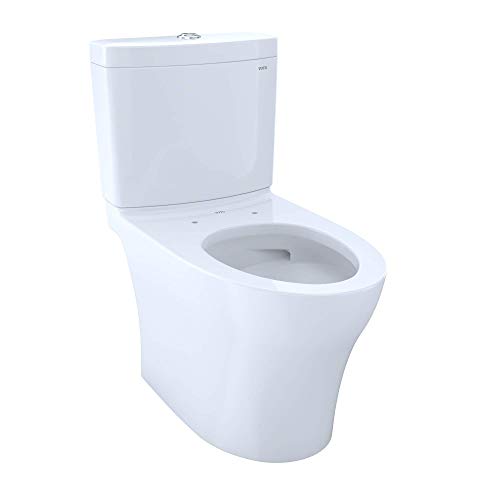
A 0.8 gallon partial flush and a 1.28 gallon Dynamax Tornado full flush rated at an 800 gram MaP score, so you save on liquids yet rarely press twice.
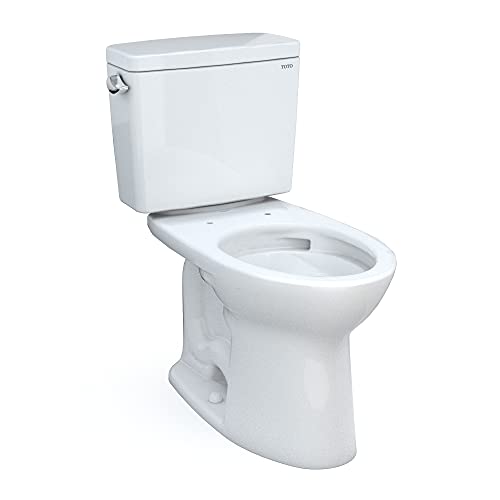
Check price on AmazonA fixed 1.28 gallon flush at a top 1,000 gram MaP score with the simple Double Cyclone system, so it clears solids every time with no buttons.
Check price on AmazonSold in single flush and dual flush versions, both with a sealed canister valve, a 1,000 gram MaP single-flush option and parts on every hardware shelf.
Check price on AmazonA single flush toilet is the design most people grew up with. One lever or button opens a flush valve that dumps a fixed volume of water, 1.28 gallons on a WaterSense model or 1.6 gallons on a standard one, into the bowl to start a siphon and carry waste down the trapway. There is nothing to choose and nothing to learn: every flush uses the same amount of water and delivers the same clearing power. The mechanism is simple, usually a flapper or a canister seal, which makes it cheap to buy, easy to repair and slow to develop leaks.
The strongest single flush toilets are the best clearers on the market. The TOTO Drake II and UltraMax II reach the maximum 1,000 gram MaP score on just 1.28 gallons through an oversized flush valve and a computer-shaped bowl, and the Kohler Highline and Cimarron, the American Standard Champion 4 and the Woodbridge T-0001 all clear heavy loads in one push. Because a single flush spends its full water budget on every use, it has more margin for solids than a dual flush partial flush, which is why a strong single flush almost never needs a second push. For a deeper look at fixed-volume efficiency, our comparison of 1.28 GPF vs 1.6 GPF toilets covers which single flush volume to choose.
A dual flush toilet replaces the single lever with a split button plate on top of the tank. The smaller button or half releases a low partial flush, usually 0.8 to 1.1 gallons, sized for liquid waste, while the larger button releases a stronger full flush of 1.28 to 1.6 gallons for solids. Because liquid-only uses outnumber solid uses several to one in a normal household, the partial flush is triggered far more often, which pulls the blended daily average below even an efficient single flush 1.28 gallon model. That averaging effect is the whole point of the design and the source of its water savings.
Modern dual flush toilets clear solids as well as single flush models when the full flush is strong. The TOTO Aquia IV uses the Dynamax Tornado swirl to reach a 1,000 gram MaP full flush, the American Standard H2Option and Woodbridge T-0019 hit a full 1,000 grams, and the Kohler San Souci and Highline dual flush use the sealed AquaPiston canister. The catch is complexity: the dual flush valve and button cartridge have more parts than a single flapper, and a poorly sealing one can trickle water continuously, a silent leak that wastes more than the partial flush ever saves. For the strongest models in this camp, see our roundup of the best dual flush toilets.
The honest framing is this: dual flush is a water-optimization play, single flush is a reliability-and-simplicity play. If your household will reliably press the small button and you keep an eye on the valve, dual flush gives you the lowest possible average. If you have kids, frequent guests, or you simply never want to think about your toilet again, a strong single flush at a 1,000 gram MaP score quietly does the job for decades with almost nothing to go wrong.
The catch is behavioral and mechanical. If guests and children press the full flush out of habit, or if a cheap dual flush valve develops a silent leak, the dual flush advantage shrinks or disappears. A disciplined household with a reliable dual flush valve saves real water year over year; an inconsistent one may do no better than a strong single flush.
For solids specifically, a strong single flush has a slight edge in consistency because it never relies on the user choosing the right button. A 1,000 gram single flush clears every time with zero thought. A dual flush matches it only when you press the full button for solids, which is why the full-flush MaP rating matters most on a dual flush model.
Choosing a major brand reduces the risk considerably. Canister-style valves like Kohler's AquaPiston seal more reliably over time than a flat flapper, and TOTO, Kohler and American Standard parts are easy to buy locally for years. If long-term, low-maintenance reliability is your priority, a single flush still holds the edge, but a well-built dual flush from a major brand narrows the gap.
Value depends on your water rates and habits. In a region with high water and sewer charges and a disciplined household, a dual flush pays back its premium through lower bills and possible utility rebates. Where water is cheap or the household will not adapt to buttons, a strong single flush is the smarter spend.
A dual flush toilet is the right pick when squeezing the water bill is the priority and your household will actually use the partial flush. Choose dual flush if you live somewhere with high water and sewer rates, since the blended daily average near 1.0 gallon or less per use beats a flat 1.28 gallon single flush over a year. Choose it if your water utility offers a rebate for WaterSense models, which most quality dual flush toilets qualify for. Choose it if you want the lowest possible footprint and you are comfortable checking the flush valve occasionally for a silent leak. And choose it if you like a clean, modern skirted body, since many dual flush models such as the Swiss Madison St. Tropez and Woodbridge T-0019 ship that way.
Strong dual flush models to look at include the TOTO Aquia IV (market-low 0.8 gallon partial flush, 1,000 gram full flush), the American Standard H2Option (1,000 gram full flush for clog-prone homes), the Kohler San Souci (best value, sealed canister valve) and the Swiss Madison St. Tropez (lowest light flush in a modern one-piece). For the most efficient options across the category, see our roundup of the best water saving toilets of 2026.
A single flush toilet earns its place when simplicity, reliability and consistent clearing matter more than wringing out the last gallon. Choose single flush if you have young children or frequent guests who will not adapt to a two-button plate, since one lever always does the right thing. Choose it if you want the fewest possible parts to fail and the cheapest, easiest repairs, since a flapper or canister is far simpler than a dual flush cartridge. Choose it if you want maximum confidence that solids clear in one push every time, which a 1,000 gram MaP single flush guarantees without relying on button choice. And choose a WaterSense 1.28 gallon single flush if you want solid water efficiency without the complexity of a dual flush valve.
Strong single flush models include the TOTO Drake II and UltraMax II (1,000 gram MaP, quiet, WaterSense), the Kohler Cimarron and Highline (reliable value), the American Standard Champion 4 (large trapway, clog resistance), the Woodbridge T-0001 (sleek one-piece) and the Gerber Viper or Avalanche for contractor value. For the most efficient fixed-volume picks, see our guide to the best low flow toilets at 1.28 GPF and under and the best EPA WaterSense certified toilets.
Both designs handle modern, properly sloped drain lines without trouble. The carry concern, whether enough water flows to move solids all the way to the main sewer, applies to any low-water toilet, dual or single. In older homes with cast-iron or low-slope drains, a single flush at 1.6 gallons or a dual flush used on the full mode provides more carrying volume than a habitual partial flush, so a household with a history of line clogs should favor the higher-volume mode regardless of design. For clearing in the bowl itself, the deciding factor is the MaP score and trapway design, not whether the toilet is dual or single flush.
Bowl cleanliness is a near-tie. Both camps offer glazed trapways and large water surfaces that reduce skid marks and odor. Where dual flush owners must stay alert is the silent valve leak, which not only wastes water but can leave the bowl perpetually moving; a single flush flapper, when it fails, usually announces itself with a louder refill. Either way, a glazed trapway and a generous water spot matter more for everyday cleanliness than the flush-button count.
If you are renovating one bathroom you will use daily and you care about the water bill, we lean dual flush, specifically the TOTO Aquia IV, and we tell people to check the valve once a year. If you are outfitting a rental, a guest bath, a family home with small kids, or any situation where you want zero thought and the lowest failure rate, we specify a strong single flush like the TOTO Drake II or Kohler Cimarron. Both are WaterSense; the choice is really about behavior and maintenance tolerance, not raw flush power.
Neither is universally better; it depends on your priorities. A dual flush toilet usually has the lower yearly water average because most uses trigger its small partial flush. A single flush toilet is simpler, more reliable and clears solids in one push with no buttons to learn. Choose dual flush to minimize water, or a strong single flush for simplicity and the fewest parts that can fail.
A dual flush toilet uses less water on average in most households. Its 0.8 to 1.1 gallon partial flush handles the many liquid-only uses, pulling the blended daily average below the flat 1.28 gallons a single flush uses on every push. The savings hold only if the household presses the partial button consistently and the dual flush valve does not develop a silent leak.
Not if you choose one with a strong full flush. Early dual flush models clogged because of weak full flushes, but today's best post 800 to 1,000 gram MaP scores on the full mode, matching strong single flush toilets. Use the full flush for solids and pick a glazed trapway, and a quality dual flush clogs no more often than a single flush model.
Generally yes. A single flush toilet has a simpler flapper or canister with fewer sealing surfaces, so it is slower to leak and cheaper to repair. A dual flush valve and button cartridge are more complex and the most common source of a silent running leak. Choosing a major brand with a sealed canister valve narrows the gap, but single flush still holds a reliability edge.
For solids in one push, a strong single flush is slightly more consistent because it never relies on the user choosing the right button. A 1,000 gram MaP single flush clears every time. A good dual flush full flush matches it at 800 to 1,000 grams, but only when you press the full button, so the full-flush MaP score matters most on a dual flush.
Both can be. EPA WaterSense certifies any toilet that uses 1.28 gallons or less on the full flush while passing flush performance standards, so strong single flush 1.28 models and most quality dual flush models both qualify. Look for the WaterSense label on the listing, and note that some toilets are sold in both certified and non-certified versions.
A single flush toilet is usually cheaper to buy and to maintain. Its simpler valve costs less and is easier to repair with common parts. A dual flush typically costs a little more and uses a brand-specific cartridge, though its lower water use can offset that over time through reduced bills and possible utility rebates if the household uses the partial flush.
A running dual flush toilet almost always means the seal on the dual flush valve or button cartridge has failed, letting water trickle from the tank into the bowl. Replace the flush valve seal or the whole cartridge, which is why buying a brand with easy parts availability matters. Left alone, this silent leak wastes more water than the dual flush design ever saves.
Often not, unless the children reliably learn the buttons. Kids and guests tend to press the full flush out of habit, which erases the partial-flush savings. For a busy family bathroom, a strong single flush at 1.28 gallons often saves more in practice because it always uses an efficient, fixed volume with no button choice required.
For both dual and single flush, a good MaP score is 800 grams or higher, with 1,000 grams the practical ceiling and the safest choice for clog-prone homes. On a dual flush, judge the full flush, not the partial flush. The MaP test measures how many grams of solid waste a flush clears in one push, so a high score prevents double flushing on either design.
Yes, for any WaterSense certified model. Many water utilities offer rebates when you replace an older toilet with a WaterSense model, and both single flush 1.28 gallon and most dual flush toilets qualify. The amount and rules vary by region, so check your water provider before buying and confirm the toilet carries the WaterSense label to be eligible.
Yes. Dual flush toilets use a split or two-button plate on top of the tank so you can choose the partial or full flush, while single flush toilets typically use a side lever or a single button. The dual flush buttons take guests a moment to learn but are essential to the water savings; some owners find the top plate harder to press than a lever.
TOTO leads both, with the Drake II as a top single flush and the Aquia IV as a top dual flush. Kohler offers strong value and parts on the Cimarron single flush and San Souci dual flush. American Standard makes powerful single flush models like the Champion 4 and a 1,000 gram dual flush in the H2Option. Woodbridge, Swiss Madison and Gerber cover modern and budget options in both camps.
No, the full flush for solids uses the same 1.28 to 1.6 gallons as a single flush. The savings come entirely from the partial flush on liquid uses, which are far more frequent. So a dual flush only saves water across the day because liquids outnumber solids, not because its solid-waste flush uses less than a single flush model.
No, installation is essentially the same. Both designs bolt to a standard 12 inch rough-in and connect to the same supply line, so the install steps do not differ. The only practical difference is mounting the button plate on the dual flush tank lid rather than attaching a side lever, which is a minor extra step during setup.
A single flush at 1.6 gallons, or a dual flush used on the full mode, suits an older home with cast-iron or low-slope drains better, because more water helps carry solids along the line. A habitual partial flush may leave too little water for poor drains. If you have a history of line clogs, favor the higher-volume option regardless of design.
It can come close. A WaterSense single flush uses a fixed 1.28 gallons, which is efficient, but a dual flush averages lower because its partial flush handles liquids at 0.8 to 1.1 gallons. So a single flush is efficient and consistent, while a dual flush edges it out on the daily average when the partial flush is used consistently.
Use the small partial flush for liquid waste rather than pressing the full flush out of habit, and check the dual flush valve regularly for a silent leak. If you see the bowl water moving or hear a trickle, replace the valve seal or cartridge promptly, since a leaking dual flush valve quietly wastes far more water than the two-button design ever saves.
Only if your household will adopt the buttons and you want the lowest possible water use. Replacing a working WaterSense single flush with a dual flush yields modest savings and adds a more leak-prone valve. The bigger water win is replacing an old 3.5 or 5 gallon toilet with either a strong single flush 1.28 or a dual flush model.
Dual flush wins on water, single flush wins on simplicity. If lowering your water bill is the priority and your household will reliably press the partial button, choose a dual flush like the TOTO Aquia IV, whose 0.8 gallon partial flush and 800 gram Tornado full flush deliver the lowest daily average with a clean single-flush clear. If you want the fewest parts to fail, the simplest one-push clear and zero buttons to teach kids and guests, choose a strong single flush like the TOTO Drake II or the value Kohler Cimarron, both WaterSense and both clearing at a top 1,000 gram MaP score. Whichever design you pick, buy on the full-flush MaP score and a reliable major-brand valve, and you will get years of efficient, one-flush performance.
Learn why toilet trapways curve like an S, how each bend blocks sewer gas, and what the shape means for clogs and…
Read the guideAlmost every US toilet has a left-side handle. Learn the plumbing and mechanical reasons behind the layout and when it actually changes.
Read the guideHome toilets rely on tanks because household water lines lack the pressure that public flushometer systems use to flush straight from the…
Read the guide