

Why Toilet Trapways Are Curved Like an S
Toilets4.6
Learn why toilet trapways curve like an S, how each bend blocks sewer gas, and what the shape means for clogs and…
Read the guideA toy, toothbrush, hygiene product or thick wipe lodged in the trapway behaves completely differently from a paper clog, and the wrong approach can push the object deeper or damage the porcelain. This guide covers every removal method in the exact order to try them, from a closet auger to pulling the toilet when nothing else works, along with how to tell whether you are dealing with a foreign object in the first place and which toilets are most vulnerable.
For a foreign object blocking a toilet drain, first attempt removal with a closet auger to hook and extract it. If that fails, try a wet-dry vacuum on the drain opening. When the object is irretrievable through the drain, removing and inverting the toilet is the definitive fix. Chemical drain cleaners will not help and can delay the real solution.
A foreign-object blockage feels like a regular clog at first. The toilet flushes, the bowl fills, the water drains slowly or not at all. But there is a tell: a soft clog almost always clears or at least shifts with persistent plunging, while a solid object sits fixed. If 20 minutes of firm plunging with a proper flange plunger produces no improvement at all, there is a very good chance something solid is lodged in the trapway or just below the drain outlet. The methods that clear it are fundamentally different from those that clear a paper clog, and getting the sequence wrong wastes time, risks pushing the object further, or damages an otherwise good toilet.
Everything on this site is grounded in published specifications, independent MaP (Maximum Performance) flush-test data, EPA WaterSense certification records, and consistent patterns from aggregated owner reviews. We do not physically test toilets or run plumbing procedures in a lab. What we can do is put the removal sequence in reliable order based on how trapway geometry actually works, which methods plumbers report as consistently effective, and what the design data from brands like TOTO, Kohler, American Standard, Woodbridge, Gerber and Swiss Madison tells us about how objects move, stop, and can be retrieved.
The distinction matters because foreign objects and paper clogs require completely different tools. A few diagnostic signs point strongly to a solid obstruction.
Zero response to plunging. Paper, waste and wipes respond to a flange plunger even if they do not fully clear on the first few strokes. A solid object, a toy, a bar of soap, a toothbrush, a bottle cap or a sanitary product, does not compress or break apart. If the plunger moves water in and out but the blockage stays absolutely fixed, something hard is in there.
A sudden blockage with no change in usage. If a toilet that was draining perfectly fine one day is completely blocked the next, and no one changed flushing habits, the most likely explanation is that something was dropped or flushed by accident. Bathrooms shared with young children are especially prone to toys, small plastic caps and bath accessories finding their way in.
Partial drain with a high-standing water level. Foreign objects rarely fill the trapway completely. Water can sometimes squeeze past, leaving the bowl draining very slowly and refilling to a level that stays higher than normal. This is a classic pattern for a partial obstruction from a wedged object rather than a complete soft-clog blockage.
Visible object at or near the drain. With a flashlight aimed into the drain opening at the bottom of the bowl, you can sometimes see a hard object sitting at the entrance to the trapway or lodged just inside it. If you can see it, retrieval is straightforward with the right tool.
| Symptom | Likely Cause | First Tool to Try |
|---|---|---|
| No movement after 20 plunging strokes | Solid foreign object | Closet auger (hook mode) |
| Partial drain, water stays high | Partial obstruction | Closet auger or wet-dry vac |
| Sudden blockage, no habit change | Dropped or flushed item | Flashlight inspection, then auger |
| Visible object in drain | Confirmed foreign object | Rubber gloves + direct retrieval |
| Bowl backs up gradually over days | Soft clog build-up | Flange plunger |
| Other drains slow at same time | Branch or main-line blockage | Long drain snake or plumber |
Knowing what you are likely dealing with shapes how you approach removal. Hard rigid items like toys and toothbrushes can usually be hooked with a closet auger. Soft but non-dissolving items like thick wipes and hygiene products form dense balls that resist augering but can sometimes be suctioned out with a wet-dry vacuum. Long fibrous items like dental floss, hair ties or thin fabric can wrap around the trapway curve and resist both hooking and suction. Each has a specific best approach.
| Object Type | Typical Location in Trapway | Best Removal Method | Risk if Pushed Deeper |
|---|---|---|---|
| Small hard toy / bottle cap | At trapway curve | Closet auger (hook and retrieve) | May pass to branch drain |
| Toothbrush | Wedged at curve | Closet auger or toilet removal | Lodges in branch drain |
| Bar of soap | At or just past curve | Hot water + auger | May dissolve with time |
| Wipes / hygiene products | Compressed at curve | Wet-dry vacuum or auger + retrieve | Expands, harder to remove |
| Fabric / clothing item | Snagged on curve | Auger (hook) or toilet removal | Collects further debris |
| Dental floss / hair tie | Wrapped at jet holes or curve | Manual retrieval, then auger | Traps paper, worsens clog |
The sequence below is ordered by how disruptive and physically demanding each step is. Work through it in order and stop the moment one method succeeds.
Turn the shutoff valve clockwise behind the toilet until it stops. This prevents accidental flushing, stops the tank from refilling, and keeps the bowl stable while you work. Lift the tank lid and push the flapper down for insurance. If the bowl is close to overflowing, bail some water into a bucket and lay old towels around the base.
Aim a bright flashlight into the drain hole at the bottom of the bowl and look for any visible object. If you can see it, put on rubber gloves and attempt direct manual retrieval before reaching for any tool. This works far more often than people expect, especially with objects that have not been flushed fully and are sitting at the entrance to the trapway rather than inside the curve.
A closet auger (also called a toilet auger) is the primary tool for foreign-object removal. It has a rigid outer tube, a rubber boot to protect the porcelain, a flexible cable and a crank handle. Critically, you want to use it in hook mode, not push mode. The goal is to hook the object and pull it back out of the drain, not to push it deeper. Feed the cable in slowly while cranking clockwise until you feel the resistance of the object. Then reverse direction and pull carefully while continuing to crank, which often hooks the cable around or through the object and draws it up. Pull the auger fully out and check the end of the cable for the retrieved item each time before reinserting.
The most common mistake with a closet auger and a foreign object is pushing too hard. When you feel resistance from a solid item, pushing harder just wedges it more firmly into the curve. The correct move is to stop advancing the cable the moment you feel firm resistance, reverse to attempt a hook, and pull back slowly. It can take four or five passes before the cable finds a good angle to hook the object. Patience here saves hours of work later.
A standard shop vacuum (wet-dry vacuum) set to liquid mode creates strong suction that can pull a partially lodged object out of the trapway when an auger cannot hook it. This works especially well for soft, dense objects like wadded wipes, hygiene products or small fabric items that an auger cable tends to slide past. Remove as much water from the bowl as possible by bailing first, then place the vacuum hose directly over the drain opening and create the best seal you can with a wet rag or a rubber cup around the hose tip. Run the vacuum for 20 to 30 seconds at a time and check the canister. Note that this method works through suction only and will not move hard objects like toys or toothbrushes reliably.
If the lodged item is a bar of soap or a hard wax-based item, pouring a gallon of hot (not boiling) water into the bowl and letting it sit for 30 to 45 minutes can soften and partially dissolve the obstruction enough for a follow-up auger pass or a flush to clear it. This step is worth trying before moving to toilet removal when the object is confirmed to be soap or a wax-based product. It will not help with plastic, fabric, or hygiene products.
When all through-the-drain methods fail, the definitive solution is to remove the toilet, invert it and push the object out from the exit side. This sounds daunting but is a straightforward plumbing job that takes 30 to 90 minutes. The process is covered in detail in the section below. It guarantees retrieval of any object, leaves the toilet and trapway undamaged, and is far less expensive than a plumber call if you are willing to do it yourself.
Chemical drain cleaners have no place in a foreign-object blockage. They cannot dissolve plastic, rubber, fabric or metal, and they create a bowl full of caustic liquid that you then have to work around with an auger or remove before pulling the toilet. They waste time and add hazard without contributing to the actual removal. Skip them entirely and go straight to the mechanical methods.
Toilet removal is the most reliable way to retrieve any object from the trapway. With the toilet inverted or laid on its side you have a straight shot through the drain outlet to push the object back toward the horn (the bottom opening) where you can grab it. Here is the complete procedure.
Adjustable wrench, utility knife, sponge and bucket, rubber gloves, new wax ring (pick one up before you start), new closet bolt nuts (optional but recommended), old newspaper or cardboard to set the toilet on, and a helper for lifting since a toilet weighs 60 to 120 pounds depending on the model.
1. Shut off the supply valve and flush. Turn the shutoff valve clockwise until it stops, then flush once to empty the tank as much as possible. Use a sponge to remove the remaining water from the tank and bowl. The goal is to lift a mostly empty toilet.
2. Disconnect the supply line. The braided line runs from the wall shut-off to the bottom of the tank. Unscrew the nut at the tank coupling counterclockwise by hand or with a wrench. Set the line aside.
3. Remove the tank if it is a two-piece toilet. Two-piece toilets have a separate tank bolted to the bowl with two or three bolts inside the tank. Unscrew those bolts and lift the tank straight up. Set it in a dry tub or on cardboard. One-piece toilets move as a single unit.
4. Remove the bolt caps and nuts at the base. Pop off the decorative plastic caps at the floor on each side of the base to expose the closet bolts. Use an adjustable wrench to unscrew the nuts counterclockwise. If they spin rather than loosen, hold the bolt head from inside the bowl flange with pliers while you turn the nut.
5. Cut the caulk bead. Many toilets are caulked at the base. Run a utility knife around the perimeter to cut through the caulk bead so the toilet lifts freely without tearing the flooring.
6. Rock the toilet free and lift it. Rock the bowl gently side to side to break the wax ring seal, then lift straight up. The closet bolts will slide out of the base slots as the toilet clears the flange. Carry the toilet to a tub, garage or outside area where you can invert it without damaging anything. Stuff a rag in the open flange in the floor to block sewer gas while you work.
7. Retrieve the object. With the toilet on its back or side, shine a flashlight through the trapway exit (the round opening at the bottom of the bowl that was sitting over the flange). You will almost always see the object now, or at least have a straight path to push it back toward the horn. Use a wooden dowel, a garden hose set to low pressure, or your gloved hand to push the object back through toward the drain outlet and retrieve it.
8. Inspect and reinstall. Inspect the trapway with a flashlight to confirm nothing else is lodged inside. Remove the old wax ring from both the toilet horn and the floor flange, scrape any residue, and press a new wax ring onto the horn. Lower the toilet carefully so the horn aligns with the flange and the bolt slots align with the closet bolts. Press down firmly and evenly to seat the wax ring. Hand-tighten the nuts alternating sides, then snug with a wrench. Do not overtighten or you will crack the base. Reconnect the supply line, open the shutoff valve, let the tank fill, and do a test flush.
This is why the removal sequence starts with a closet auger in hook-and-retrieve mode rather than a plunger. Plunging is the right tool for soft clogs because it transmits hydraulic force that breaks up compressible material. Against a hard object it does not break anything apart; it just applies force that can displace the object further down the line. Once a toy or toothbrush clears the trapway and enters the 3- or 4-inch branch drain, it is out of reach of a closet auger and requires a long drain machine to retrieve or push through to the main. The main lateral that exits the house to the municipal sewer or septic tank is the point of no return: an object that reaches there will almost certainly cause a main-line blockage that requires professional equipment to clear.
The practical implication: if you suspect a foreign object and the toilet appears to flush partially (water does leave the bowl even if slowly), stop flushing. Every flush sends water pressure down through the drain system and risks moving the object a stage further. The same applies to plunging once you have diagnosed a solid obstruction. Use the closet auger first, in hook mode, to attempt retrieval before applying any forward pressure.
A plumber sees this pattern frequently: a homeowner plunges vigorously for 30 minutes trying to force what they think is a paper clog, then calls for a service call. The diagnosis is a child's toy that started in the trapway but is now sitting in the branch drain 4 feet downstream. At that point the job is a full drain-machine run rather than a 10-minute auger job. If the clog shows zero response to a properly used flange plunger after 15 strokes, stop and switch to an auger immediately.
It is worth being clear about what toilet design can and cannot do. A wide, glazed trapway reduces soft clogs dramatically because there is more room for waste and paper to pass and the smooth glaze reduces friction. Toilets from TOTO, Kohler, American Standard and Gerber all publish trapway dimensions, and the difference between a 1.75-inch and a 2.125-inch fully glazed trapway is significant for day-to-day clog resistance.
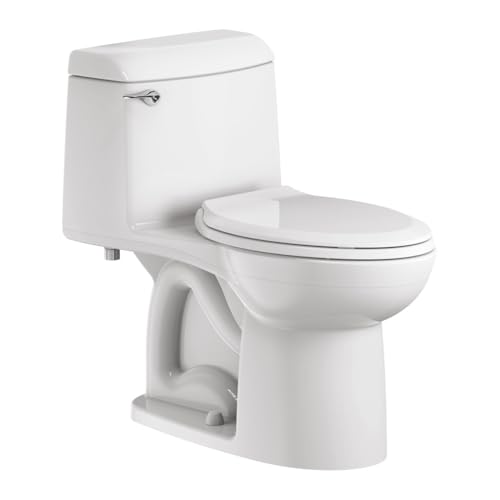
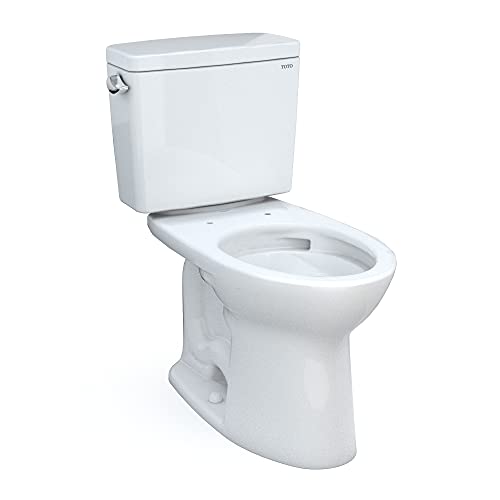
But trapway width does not protect against a solid foreign object. A TOTO Drake II with its fully glazed 2.125-inch trapway, or an American Standard Champion 4 with its 2.375-inch trapway (the widest in the mainstream market), will still capture a dropped toothbrush or a child's toy at the same trapway curve that stops every other toilet. The curve geometry is the constant: every gravity-flush toilet uses a siphon-jet trapway that curves upward and over before draining downward, and that upward curve is where solid objects sit and wedge regardless of width.
What a high-MaP toilet does differently is reduce the occurrence of soft clogs that might catch on top of a partially lodged object and turn a minor obstruction into a full blockage. The TOTO Drake (MaP 1000g), TOTO UltraMax II (MaP 1000g), Kohler Cimarron (MaP 1000g), and American Standard Champion 4 (MaP 1000g) all earn maximum MaP scores and clear bulk waste in a single flush, which minimizes the secondary debris accumulation around any obstruction. For households with children, where dropped-object blockages are most common, the combination of a high-MaP bowl and a wide fully-glazed trapway gives you the best chance that the problem remains manageable. See our guide to best flushing toilets for a full comparison of these models.
| Model | Trapway Size | MaP Score | Flush Type | Object Clog Risk | Check Price |
|---|---|---|---|---|---|
| American Standard Champion 4 | 2.375 in (largest available) | 1000g | Siphon jet | Low for soft, same as others for hard | Check price |
| TOTO Drake II | 2.125 in fully glazed | 1000g | Double-cyclone | Low for soft, same as others for hard | Check price |
| Kohler Cimarron | 2.125 in fully glazed | 1000g | Siphon jet | Low for soft, same as others for hard | Check price |
| TOTO UltraMax II | 2.125 in fully glazed | 1000g | Double-cyclone | Low for soft, same as others for hard | Check price |
| Woodbridge T-0001 | 2.125 in | 800g | Siphon jet | Moderate for soft, same for hard | Check price |
| Standard 1.6 GPF toilet | Under 2 in | Below 500g | Varies | Higher for soft, same for hard | Check price |
If your household has recurring foreign-object incidents from young children, the practical preventive measures are mechanical rather than toilet-related. A childproof toilet lock, a mesh basket or a habit of keeping the toilet lid closed and the bathroom door latched are more effective than any toilet design. Brands like Kohler and American Standard sell compatible soft-close seats that stay closed reliably, reducing the window for objects to be dropped in. Our guide to how to childproof a toilet covers the full range of options.
Most floor-mounted two-piece and one-piece toilet removals are within the skill range of a homeowner with basic tools and two hours. The situation changes in a few specific scenarios.
Object already in the branch drain. If you have confirmed the object is no longer in the trapway (the auger passes completely through without hitting resistance, and the toilet drains slowly rather than not at all) but drainage is still impaired, the object is downstream. Removing the toilet will not help at this point; you need a drain machine to reach further. A plumber with a powered cable machine can reach objects 20 to 30 feet into the branch drain. Retrieval is not always possible, but clearing the blockage is.
Wall-hung toilets. Wall-hung models from TOTO, Swiss Madison (the Saint Tropez and Ivy series) and Kohler (the Veil and Reach series) mount to a carrier frame inside the wall. The pan and trapway are still accessible, but the carrier and rough-in situation are different from a floor mount. If auger and vacuum methods do not clear a wall-hung toilet, consult a plumber familiar with wall-hung systems rather than attempting a full carrier disassembly. Our guide to wall-hung toilet pros and cons has more context on the access considerations for these models.
Corroded or broken floor bolts. If the toilet has not been removed in many years, the closet bolts and nuts may be corroded solid and impossible to remove with standard tools without breaking them. A plumber can cut corroded bolts with a reciprocating saw and replace the flange hardware as part of the reinstallation. Attempting to force corroded bolts loose without the right tools can crack the toilet base or damage the floor flange.
Suspected damage to the wax ring or floor flange. If you notice water or staining at the base of the toilet before you start, there may be an existing wax seal failure. This is worth a plumber inspection when you are already having the toilet off, since a damaged flange requires repair before reinstallation to avoid a sewage leak.
Prevention is straightforward once you know the sources. The categories below cover the most common causes and their practical fixes.
Young children. Children are responsible for the majority of hard-object toilet blockages. Toys, bath accessories, wipes, clothing items and anything else within reach of a curious child can end up in the bowl. The most reliable prevention is a childproof toilet lock that physically prevents the lid from being lifted without pressing both sides simultaneously. These install in minutes, cost very little, and work on virtually any toilet seat including soft-close seats from Kohler, TOTO and American Standard.
Counter and tank-top items. Toothbrushes, soap bars, razors, cosmetics containers and small personal care items kept on the back of the tank or on a counter near the toilet are a consistent source of dropped-object blockages. Storing these items in a drawer or medicine cabinet, or moving them to the opposite side of the sink, removes the risk entirely.
So-called flushable wipes. Wipes marketed as flushable do not break down in water the way toilet paper does. They form dense wads that can become lodged in the trapway, especially in toilets with a narrower passage. Independent testing by water utilities and the EPA consistently shows that marketed flushable wipes do not meet the flushability standards that toilet paper meets. Using standard toilet paper or switching to a bidet attachment eliminates this category of blockage. Our article on toilet clogs with toilet paper also covers how paper quantity and quality affect clog frequency.
Sanitary and hygiene products. Pads, tampons, applicators and similar products should never be flushed. They are designed to absorb water, which means they expand inside the trapway and become very difficult to remove without an auger or toilet removal. Providing a small covered bin in the bathroom eliminates any ambiguity about where these items should go.
This matters particularly with toilets that have a specialized glaze. TOTO's CeFiONtect glaze, applied to models like the Drake, Drake II, UltraMax II and Aquia IV, is engineered to resist waste adhesion and mineral deposits, and scratches in this surface reduce its effectiveness. Using a closet auger with the rubber-booted sleeve held against the drain opening protects the glaze during the retrieval process. The cable itself is inside the outer tube until it extends through the trapway where the porcelain is no longer in contact.
If you rent a plumber-grade drain machine with a larger, stiffer cable, be aware that those cables are not designed for toilet trapways and will scratch unprotected porcelain. Their appropriate use is for branch drains and main lines accessed through a floor cleanout, not through the toilet bowl. A standard consumer-grade closet auger is the right tool for the toilet itself.
A soft or smooth object usually does not damage the porcelain trapway. A sharp or rigid object like a metal razor or a broken piece of tile can chip or crack the vitreous china, which creates a rough surface that catches paper and debris and leads to chronic clogs. After retrieval, inspect the trapway with a flashlight for any visible cracks or chips.
A hard object can sit in the trapway indefinitely without causing additional damage, as long as no one forces additional material through by flushing repeatedly. The risk increases with time only if waste and paper accumulate around the object, compressing it further in. Remove it as soon as it is identified rather than waiting.
A straightened coat hanger can reach a few inches into the drain opening and may retrieve an object sitting right at the trapway entrance, but it cannot navigate the full trapway curve and the bare wire will scratch the porcelain. It is acceptable as a temporary first-pass tool when no auger is available, but wrap the tip with cloth tape to protect the bowl and do not force it around the curve.
No chemical drain cleaner dissolves plastic, rubber, fabric, metal or ceramic. They work only on organic material like hair and grease. Using a chemical cleaner on a foreign-object blockage fills the bowl with caustic liquid you then have to deal with before using any other method. Avoid them entirely in this situation.
After retrieval, run the closet auger through the trapway one more time with no resistance. Then open the supply valve, let the tank fill, and flush while watching the bowl. A toilet with a clear trapway drains in a single fast swirl with no hesitation and the bowl empties completely in under a minute. Any sluggishness suggests partial obstruction remains.
Slow drainage after removal usually means residual debris is still partly blocking the trapway, or the object left behind material that compressed around it. Run the auger through again to clear any remaining material, then flush two or three times. If drainage is still slow, the object may have been pushed into the branch drain rather than fully retrieved.
Small, smooth, soft items like small pieces of soap or a very small toy can occasionally pass through a wide trapway and clear into the drain. However, rigid items longer than about 3 inches, and anything wider than the trapway diameter (typically 1.75 to 2.375 inches depending on model), cannot pass. Counting on an object to clear on its own with additional flushing risks it moving into the branch drain where retrieval is much harder.
The American Standard Champion 4 has the widest mass-market trapway at 2.375 inches, which gives a slightly larger window for retrieval and lets some small objects pass without lodging. TOTO and Kohler offer fully glazed 2.125-inch trapways on their higher-end models. However, the trapway curve geometry is similar across all designs, so retrieval difficulty is more about the object's shape than the trapway width.
No. Keep the supply valve off and the bowl at a stable water level throughout the retrieval process. Turning the water on and attempting a test flush before the object is confirmed clear can force it further into the drain. Only restore water supply after you have confirmed the object is out, the auger passes completely through the trapway without resistance, and the bowl looks clear on inspection.
An object lodged in the toilet trapway affects only that toilet. If other drains in the house are also slow or backing up at the same time, the blockage is not in the trapway but further downstream in a shared branch drain or the main lateral. That is a plumber-level job requiring a drain machine, not a closet auger or toilet removal.
A childproof toilet lock that requires pressing both sides of the lid simultaneously to open is the most reliable physical barrier. Keeping bathroom doors latched, storing loose items off the toilet tank and counter, and establishing clear rules about what goes in the toilet are the behavioral side of the same prevention. The lock is the most effective single measure for children under 5.
Plumber service calls for a foreign-object retrieval typically run from around 100 to 300 dollars for an in-trapway removal with a closet auger. If the object has moved to the branch drain and requires a powered drain machine, costs rise to 200 to 500 dollars or more depending on access and how far downstream the object has traveled. Removing the toilet yourself costs only the price of a new wax ring (5 to 15 dollars).
Yes, with limitations. A wet-dry vacuum works on suction and can pull dense or soft objects from the upper part of the trapway, especially if you bail most of the bowl water first to reduce the water volume between the hose and the object. It is less reliable for hard objects with smooth surfaces that the suction cannot grip effectively. Always set the vacuum to wet mode before putting the hose near water.
Two-piece toilets are generally easier to remove because the tank lifts off the bowl separately, reducing the total weight you carry and maneuver. One-piece toilets have the tank and bowl as a single unit, which makes them heavier (often 90 to 120 pounds) and more awkward to carry outside or to a tub. The trapway retrieval procedure is identical once the toilet is off the floor, regardless of design.
Most toilet warranties from TOTO, Kohler, American Standard, Woodbridge, Gerber and Swiss Madison cover manufacturing defects in the vitreous china and flushing mechanism. They do not cover improper installation, but a properly reinstalled toilet with a new wax ring is not considered improper installation. Keep the original wax ring packaging and use a correctly sized replacement for your toilet model to avoid seal issues that could complicate a future warranty claim.
If the object has moved past the trapway into the branch drain, a plumber can access it from a floor cleanout or from a roof vent cleanout rather than through the toilet bowl. This approach is used when the object is confirmed to be downstream of the trapway. It does not require toilet removal but does require a powered drain machine and some knowledge of the drain layout.
Some smart toilets from TOTO and Kohler include auto-flush sensors that detect flush cycles and can alert if a flush does not complete normally, but no current residential smart toilet actively detects a foreign-object blockage or sends a specific blocked-drain alert. The detection is still entirely by observation: the bowl fills and does not drain after a flush.
Most floor-mounted toilets use a standard wax ring that fits a 3-inch or 4-inch drain flange, and standard rings are designed to fit both. If the finished floor is higher than the top of the flange due to tile or thick flooring added after original installation, use a wax ring with a plastic horn extension or stack two standard rings. Measure the gap between the toilet horn and the flange top before buying.
Yes. Skirted toilets like the TOTO Vespin II, Kohler San Raphael or Swiss Madison skirted one-piece models are removed the same way as standard floor-mount toilets, because the skirt is part of the vitreous china and does not change how the toilet connects to the floor flange. The only difference is that skirted models use concealed skirted mounting hardware rather than exposed closet bolts, so follow the specific mounting kit instructions for your model when reinstalling.
An old wax ring is standard household waste and can be placed in a sealed plastic bag and put in the trash. Wrap it thoroughly to contain any waste contamination. Do not attempt to clean and reuse it. The cost of a replacement ring is minimal and the seal integrity of a used wax ring is not reliable after it has been compressed once.
A foreign object blocking a toilet drain calls for a closet auger in hook-and-retrieve mode as the first mechanical tool, followed by a wet-dry vacuum for soft or dense objects, and toilet removal as the definitive fix when the object cannot be retrieved through the drain. The key discipline is to resist flushing repeatedly or plunging aggressively, both of which risk moving the object from the easy-to-reach trapway into the branch drain where retrieval requires professional equipment. Toilets with wide, fully glazed trapways from TOTO, Kohler and American Standard reduce everyday soft clogs but offer no structural protection against hard foreign objects at the trapway curve. Prevention through a closed toilet lid, childproof lid locks and proper disposal habits eliminates the majority of these incidents before they start. If the situation reaches the point of toilet removal, it is a manageable DIY task with basic tools and a new wax ring, and it guarantees recovery of any object from any trapway without damage to the fixture.
Learn why toilet trapways curve like an S, how each bend blocks sewer gas, and what the shape means for clogs and…
Read the guideAlmost every US toilet has a left-side handle. Learn the plumbing and mechanical reasons behind the layout and when it actually changes.
Read the guideHome toilets rely on tanks because household water lines lack the pressure that public flushometer systems use to flush straight from the…
Read the guide