

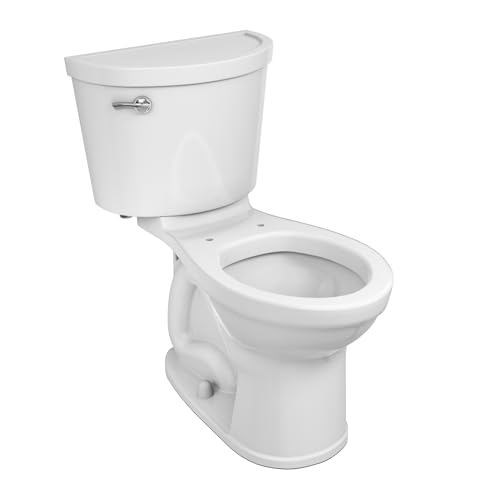


Best French Toilets (2026)
Toilets4.6
Refined, softly curved one-piece and skirted silhouettes with a polished, Parisian-elegant profile, paired with verified MaP flush scores rather than a stylist's…
Read the guideA step-by-step framework for measuring, calculating, and reducing exactly how many gallons your toilet flushes every year, with real numbers from EPA WaterSense data and published manufacturer specs.
Research updated June 2026.
A single pre-1994 toilet (3.5 GPF) used by one person flushes roughly 19,600 gallons per year. Switching to a 1.28 GPF EPA WaterSense model cuts that to about 7,168 gallons, saving over 12,000 gallons annually per person. Your actual number depends on flush rate, household size, and daily flush count.
According to EPA WaterSense data, toilets account for approximately 24 percent of all indoor household water use, making them the single largest consumer inside most homes. A household still running pre-1994 toilets rated at 3.5 GPF or higher can use 30 to 40 percent more water than a home equipped with current WaterSense-certified 1.28 GPF models. Upgrading just one toilet has a measurable impact on both the water bill and municipal demand.
Most homeowners have a rough sense that toilets use water, but few have ever calculated the actual annual volume flowing through their plumbing. This guide gives you the exact method, the published benchmarks, and a comparison across current toilet generations so you can make a data-driven decision about whether your existing toilet is costing more than a replacement would.
The calculation is simple arithmetic once you know three variables: your toilet’s gallons per flush (GPF), how many flushes per day your household generates, and the number of days in a year. The challenge is often identifying the correct GPF for an older toilet and estimating realistic flush frequency. Both are covered below.
The GPF (gallons per flush) rating for most toilets is stamped inside the tank lid or printed on a label near the water line inside the tank. If no label is visible, the manufacture date on the back of the bowl or inside the tank provides a reliable generation benchmark: pre-1982 toilets typically used 5 to 7 GPF, 1982 to 1994 models used 3.5 GPF, post-1994 federal-mandate toilets use 1.6 GPF, and current EPA WaterSense-certified models use 1.28 GPF or less.
Here are the quickest ways to confirm your current toilet’s GPF:
Plumbers and fixture specialists consistently note that homeowners underestimate how many toilets in their homes predate the 1994 Energy Policy Act mandate. If you moved into a house built before 1994 and the toilets were never replaced, you are almost certainly operating 3.5 GPF units. At five flushes per person per day, that is a 35 percent penalty versus a 1.28 GPF replacement over every single day of the year.
Multiply your toilet’s GPF by the average daily flushes per person (5 to 8 is the standard EPA estimate), then multiply by the number of people in the household, and finally by 365. The formula is: Annual Gallons = GPF x Daily Flushes Per Person x Household Size x 365. A 1.6 GPF toilet in a four-person household at 5 flushes per person equals 11,680 gallons per year.
Let’s walk through the complete calculation step by step.
Use one of the identification methods above. Record your toilet’s exact GPF. If you have a dual-flush toilet, calculate separate figures for the partial flush (typically 0.8 GPF) and the full flush (typically 1.28 GPF), then estimate a realistic split. Many dual-flush users report roughly 70 percent partial / 30 percent full, but actual behavior varies significantly by household.
The EPA uses an average of 5 flushes per person per day for residential water modeling. Studies by the American Water Works Association (AWWA) put the range between 5 and 8 flushes per person per day depending on age, diet, and fluid intake. Using 5 gives a conservative baseline; using 7 reflects more typical adult usage.
Annual Gallons = GPF x Daily Flushes Per Person x Household Members x 365
Example: 1.6 GPF x 5 flushes x 3 people x 365 days = 8,760 gallons per year.
Most municipal water bills report usage in hundred cubic feet (CCF) or gallons. One CCF equals 748 gallons. Cross-check your calculated toilet usage against total household consumption. Toilet use should be roughly 24 to 30 percent of total indoor use in most households.
Water auditors often find that guest bathrooms and basement bathrooms with older toilets are the invisible culprits in unexpectedly high bills. Running the calculation for every toilet in a multi-bathroom home frequently reveals that 60 to 70 percent of toilet water consumption is concentrated in one or two higher-use bathrooms, which helps prioritize which fixture to upgrade first for maximum impact.
Toilet water use has dropped dramatically across four regulatory generations: pre-1982 models used 5 to 7 GPF, 1982 to 1994 models used 3.5 GPF, post-1994 federally mandated toilets use 1.6 GPF, and current EPA WaterSense certified models use 1.28 GPF or less. A handful of ultra-high-efficiency models, including the TOTO Aquia IV dual-flush, offer a 0.8 GPF partial flush option that further reduces consumption when solid waste is not present.
The comparison table below shows annual consumption per person at 5 flushes per day across all major toilet generations and current models.
| Toilet Generation / Model | GPF | Annual Gallons (1 Person, 5 Flushes/Day) | Annual Gallons (4 People) | Est. Savings vs 3.5 GPF (4 People) | WaterSense |
|---|---|---|---|---|---|
| Pre-1982 toilet | 5.0 -- 7.0 | 9,125 -- 12,775 | 36,500 -- 51,100 | -- | No |
| 1982 to 1994 toilet | 3.5 | 6,388 | 25,550 | Baseline | No |
| Post-1994 federal standard | 1.6 | 2,920 | 11,680 | 13,870 saved | No |
| EPA WaterSense (e.g. TOTO Drake II, Kohler Cimarron) | 1.28 | 2,336 | 9,344 | 16,206 saved | Yes |
| Ultra-HET (e.g. Niagara Stealth) | 0.8 | 1,460 | 5,840 | 19,710 saved | Yes |
| TOTO Aquia IV dual-flush (avg) | 0.8 / 1.28 | ~1,800 (est.) | ~7,200 | ~18,350 saved | Yes |
Annual gallons calculated at 5 flushes per person per day x 365 days. Dual-flush averages assume 70% partial / 30% full flush split. Sources: EPA WaterSense, manufacturer published specs.
Switching from a 3.5 GPF toilet to a 1.28 GPF WaterSense-certified model saves approximately 4,052 gallons per person per year. At the U.S. average residential water rate of roughly $0.005 per gallon (combined water and sewer), a four-person household saves about $80 to $110 per year per replaced toilet. In drought-zone cities like Los Angeles or Phoenix where tiered pricing applies, savings often exceed $150 to $200 per toilet annually.
Water costs vary dramatically by region, which affects the payback period on a toilet upgrade. Here is how to calculate your specific savings:
For context, a TOTO Drake II (1.28 GPF, WaterSense certified) replacing a 3.5 GPF toilet in a four-person household at $0.006 per gallon combined would save roughly $97 per year. At a typical retail price for the Drake II, the payback period falls in the 3 to 4 year range for the toilet alone, before counting any available rebates.
Many water utilities in California, Texas, Colorado, and the Pacific Northwest offer direct rebates of $50 to $150 per WaterSense-certified toilet. Some programs, such as those administered by the Metropolitan Water District of Southern California, have historically offered rebates as high as $200 per unit. Checking your local utility’s rebate page before purchasing can cut the effective payback period in half or make the upgrade cost-neutral within the first year.
The most consistently recommended 1.28 GPF or lower toilets based on published MaP testing scores and aggregated owner review data are the TOTO Drake II (MaP 1,000g), TOTO UltraMax II (MaP 1,000g), Kohler Cimarron (MaP 1,000g), American Standard Champion 4 (MaP 1,000g at 1.6 GPF but available in 1.28 GPF variant), Gerber Avalanche (MaP 1,000g), and Woodbridge T-0001 (1.28 GPF, WaterSense). All achieve the maximum MaP flush score despite using less water than the 1994 federal standard.
For a thorough breakdown of top performers across different budgets and bowl shapes, see our best flushing toilets guide. Below are the models most relevant to a water audit upgrade context, with their key efficiency and performance data.
The TOTO Drake II is one of the most frequently cited toilets in water-efficiency discussions because it combines a 1.28 GPF rating with a MaP-certified 1,000 gram flush score, meaning it handles the maximum test load at one of the lowest flush volumes available. It carries EPA WaterSense certification and TOTO’s CEFIONTECT ion-barrier glaze, which reduces the frequency of cleaning and reduces the need for chemical bowl cleaners. Published specs show a 12-inch rough-in and elongated bowl, making it a direct replacement for the most common residential configuration. For homeowners replacing a 3.5 GPF toilet, the Drake II produces annual savings of roughly 4,052 gallons per person per year based on 5 flushes daily.
The TOTO Aquia IV is a dual-flush model with a 0.8 GPF partial flush and 1.28 GPF full flush, giving it the lowest effective average consumption among commonly available residential toilets when used as intended. EPA WaterSense certified. At an estimated 70/30 partial-to-full usage split, the average flush volume approaches approximately 0.9 GPF. For liquid-waste flushes, the 0.8 GPF figure represents an additional 37.5 percent reduction versus a standard WaterSense 1.28 GPF model. The Aquia IV carries a CEFIONTECT glaze and a 1,000g MaP certification on the full-flush cycle. It is particularly well suited to households focused on maximizing water savings without stepping into niche ultra-low-flow territory.
The Kohler Cimarron at 1.28 GPF earns a MaP score of 1,000g and is among the most widely stocked comfort-height elongated toilets at major home improvement retailers. Kohler’s AquaPiston flush canister delivers 360-degree water flow compared to a standard flapper, which contributes to a more complete bowl rinse per flush. WaterSense certified. Aggregated owner reviews consistently rate the Cimarron highly for flush reliability and ease of installation. The Cimarron is one of the most appropriate replacements for households coming off pre-1994 3.5 GPF toilets because of its nearly universal availability, standard rough-in compatibility, and established repair part ecosystem.
The American Standard Champion 4 is published with a 1.6 GPF rating but is available in a 1.28 GPF HET (high-efficiency toilet) variant. The 4-inch flush valve and 2 3/8-inch fully glazed trapway are the widest in American Standard’s residential lineup, contributing to a MaP 1,000g certification and a strong clog-resistance record in aggregated reviews. For households where flush performance on solid waste is the primary concern, the Champion 4 HET addresses the most common homeowner anxiety about low-flow toilets -- that they will require double-flushing, which negates water savings entirely. The Champion 4 HET demonstrates that 1.28 GPF can reliably move a 1,000g MaP test load without a second flush cycle.
The Woodbridge T-0001 is a one-piece skirted design at 1.28 GPF with EPA WaterSense certification and an elongated bowl. It is frequently cited in online reviews as a value-tier option that achieves WaterSense status without the premium pricing of TOTO or Kohler flagship models. Published MaP data places it in acceptable range for a residential single-bathroom household. The skirted trapway simplifies cleaning, which reduces the time spent on chemical cleaner use and the associated water rinse cycles. For renters upgrading a single bathroom or homeowners on a tighter budget, the Woodbridge T-0001 represents an accessible entry point into WaterSense performance.
The Gerber Avalanche is a two-piece elongated toilet rated at 1.28 GPF with a MaP 1,000g certification and EPA WaterSense status. Gerber is less widely recognized than TOTO or Kohler among homeowners but has a strong track record in the professional plumbing community. The Avalanche uses a 3-inch flush valve, a fully glazed trapway, and a large water surface area that reduces staining frequency. For homeowners running a multi-bathroom water audit and looking to replace older toilets across several rooms cost-efficiently, the Gerber Avalanche is a practical choice that delivers WaterSense and MaP 1,000g performance at a competitive price point.
A full home toilet water audit involves four steps: (1) identify the GPF of every toilet in the home using the tank lid or model number, (2) estimate per-toilet daily flush frequency based on which bathroom each household member uses most, (3) run the annual calculation for each fixture individually, and (4) prioritize replacements by starting with the highest-GPF toilet in the highest-use bathroom. Most four-person homes with two or three bathrooms find that 70 to 80 percent of annual toilet water use is concentrated in one or two primary bathrooms.
| Bathroom | Model / Generation | GPF | Est. Daily Users | Est. Flushes/Day | Annual Gallons | Priority |
|---|---|---|---|---|---|---|
| Master bath | Pre-1994 (unknown) | 3.5 | 2 | 10 | 12,775 | Replace first |
| Hall bath | Post-1994 (1.6 GPF) | 1.6 | 2 | 10 | 5,840 | Replace second |
| Guest / powder room | WaterSense (1.28 GPF) | 1.28 | 0.5 avg | 2 | 934 | Already efficient |
Example household with 4 people across 3 bathrooms. Actual flush counts will vary. Annual gallons = GPF x flushes/day x 365.
In this example, replacing only the master bath toilet with a 1.28 GPF model saves approximately 7,189 gallons per year. Replacing both the master bath and hall bath saves approximately 10,413 gallons per year combined. The guest bathroom is already efficient and has minimal use, so it is not a priority target.
A standard water audit must also account for toilet leaks, which the EPA estimates waste between 20 and 200 gallons per day per toilet when present. The dye tablet test -- dropping a dye tab or a few drops of food coloring into the tank and watching whether color appears in the bowl without flushing after 15 minutes -- is the standard detection method. A leaking flapper on a 1.6 GPF toilet can waste more water annually than simply using a 3.5 GPF toilet in good working order. See our guide on how to tell if your toilet is leaking for a complete walkthrough of the dye test and leak sources.
Water auditors and utility field inspectors routinely find that 20 to 30 percent of residential toilets have slow leaks that go undetected because the water drains silently from tank to bowl rather than dripping on the floor. At $0.006 per gallon combined water and sewer, a 50-gallon-per-day leak costs roughly $110 per year and completely negates the efficiency gain from an otherwise WaterSense-certified toilet. Running the dye test on every toilet during a home audit takes under five minutes per unit and is the highest-return step in the entire process.
For homes with dual-flush toilets -- common in newer builds and in households that have proactively upgraded -- the audit needs a usage-split estimate in addition to the two GPF values. If household members consistently press the full flush for liquid waste, the dual-flush advantage is lost. Published behavioral studies suggest that proper dual-flush button selection only occurs roughly 60 to 75 percent of the time without visual reminders. Adding a small label near the buttons explaining the button functions has been shown to improve correct usage rates. The TOTO Aquia IV, American Standard H2Option, and Kohler dual-flush models all benefit from this simple behavioral intervention.
For more on dual-flush economics, see our analysis of dual-flush water savings and whether dual-flush toilets are worth it.
MaP (Maximum Performance) testing measures how many grams of a simulated solid-waste medium a toilet can flush in a single cycle. Scores range from 250g to 1,000g, with 1,000g being the maximum certification level. The relevance to a water audit is significant: a toilet with a low MaP score in the 500 to 700g range will frequently require double-flushing in real household use, which eliminates the GPF savings on those events. A toilet rated 1.28 GPF but requiring a second flush 30 percent of the time has an effective average consumption closer to 1.66 GPF per waste event.
For this reason, the most water-efficient toilets for household use combine a low GPF with a high MaP score. The TOTO Drake, Drake II, and UltraMax II, Kohler Cimarron and Highline Arc, American Standard Champion 4 HET, and Gerber Avalanche all achieve the MaP 1,000g maximum at 1.28 GPF, making them the correct combination for a water audit upgrade. See our MaP score guide for a full explanation of how testing is conducted and what scores mean in practice.
Water supply and treatment is energy-intensive. The U.S. Department of Energy’s Office of Water Efficiency estimates that approximately 4 percent of U.S. electricity consumption goes to water supply and treatment infrastructure. At the household level, reducing toilet water consumption by 10,000 gallons per year translates to a reduction in embedded energy use equivalent to several kilowatt-hours annually, depending on local utility infrastructure type. While the carbon impact of toilet water use is small relative to heating, transportation, and appliance use, it is a meaningful component of a whole-home efficiency audit, particularly in regions where water is pumped long distances or treated to high purity standards.
At 5 flushes per day at 1.28 GPF, the average EPA WaterSense toilet uses 6.4 gallons per person per day. At the older 3.5 GPF standard, the same usage pattern produces 17.5 gallons per person per day. For a four-person household, that is 25.6 gallons per day on a modern efficient toilet versus 70 gallons per day on a pre-1994 model.
The EPA and American Water Works Association both cite 5 flushes per person per day as the standard residential estimate for adult users. Children and elderly users may flush slightly less frequently. In high-fluid-intake households or in homes with known gastrointestinal conditions among occupants, 7 to 8 flushes per person per day is a more realistic estimate for an accurate audit.
Yes, for toilets that achieve a MaP 1,000g score at 1.28 GPF. The flush performance of these models is equivalent to or better than most 1.6 GPF toilets because flush efficiency depends on valve design, trapway geometry, and bowl shape as much as volume. Models like the TOTO Drake II and Kohler Cimarron demonstrate this clearly in published MaP data.
Calculate annual gallons used (GPF x daily flushes x household size x 365), then multiply by your combined water-plus-sewer rate per gallon. Find your rate on your monthly water bill, which typically shows total consumption and total cost. Dividing total bill by total gallons gives your per-gallon rate including sewer charges.
Since 1994, the federal maximum is 1.6 GPF for residential toilets. Most toilets currently sold by major brands -- TOTO, Kohler, American Standard, Gerber, Woodbridge, Swiss Madison -- are rated at 1.28 GPF with EPA WaterSense certification, which is 20 percent below the federal standard. Some states including California and Texas have adopted stricter maximums at the state level.
A slow flapper leak, which is often silent and invisible, can waste 20 to 100 gallons per day, equivalent to 7,300 to 36,500 gallons per year. A large leak with visible water running continuously in the bowl can waste 200 or more gallons per day, exceeding 73,000 gallons annually. The EPA estimates that toilet leaks account for approximately 13 percent of total indoor residential water use nationally when leak rates are averaged across all households.
For liquid waste only, 0.8 GPF is consistently adequate based on user data from dual-flush toilet reviews. For solid waste, the Niagara Stealth (0.8 GPF single flush) achieves a MaP score in the 800 to 1,000g range depending on model variant, demonstrating that engineered systems can move solid waste reliably at very low volumes. However, most plumbing professionals and water agencies recommend pairing 0.8 GPF with a 1.28 GPF full-flush option in dual-flush form rather than a 0.8 GPF single-flush for all waste types in households with older drain lines.
EPA WaterSense is a voluntary labeling program that certifies products meeting a maximum 1.28 GPF rating and a minimum MaP flush performance threshold. To earn WaterSense certification, a toilet must be independently tested and verified to flush at least 350 grams of solid-waste medium in a single cycle, and it must not exceed 1.28 gallons per flush. The program is voluntary for manufacturers but required for many state rebate programs and green building certifications including LEED.
At the EPA’s 5-flush-per-day estimate, a single person using a 1.28 GPF WaterSense toilet uses approximately 2,336 gallons per year on toilet flushing alone. On a pre-1994 3.5 GPF toilet, the same flush frequency produces approximately 6,388 gallons per year. The difference of roughly 4,052 gallons represents the annual efficiency gain from a single-toilet upgrade in a one-person home.
Yes. California requires a maximum of 1.28 GPF for all new toilet installations. Texas requires 1.28 GPF for residential and commercial new construction in certain jurisdictions. New York City mandates 1.28 GPF in multi-family residential applications. Colorado and several other western states have adopted WaterSense-aligned 1.28 GPF requirements in state building codes. The federal 1.6 GPF maximum is a floor, not a ceiling, and states may and do adopt stricter requirements.
In a four-person household at average U.S. water rates ($0.005 to $0.007 per gallon combined), replacing a 3.5 GPF toilet with a 1.28 GPF WaterSense model saves $80 to $130 per year. At a mid-range toilet cost before installation, the payback period without rebates is approximately 3 to 6 years. With a $100 utility rebate, payback can drop to 2 to 3 years. In high-rate California or Phoenix tiered-pricing markets, payback can occur in under 2 years.
Silent leaks, an incorrectly set float, and a fill valve that does not shut off promptly can all cause a toilet to use significantly more water than its rated GPF. The water meter test -- noting your meter reading, not using any water for 30 minutes, then re-reading -- will reveal active consumption. Any change in the reading without water use indicates a running toilet or another leak. The dye tablet test specifically confirms whether the toilet flapper is sealing correctly.
GPF (gallons per flush) and LPF (liters per flush) are the same measurement expressed in different units. One gallon equals approximately 3.785 liters. A 1.28 GPF toilet is equivalent to approximately 4.85 LPF. Dual-flush toilets marketed internationally frequently display both: for example, 4.8/6.0 LPF, which corresponds to approximately 1.28/1.6 GPF.
Bowl shape (round vs. elongated) does not directly affect water consumption; GPF is determined by tank volume and flush valve design, not bowl geometry. However, elongated bowls typically have a larger water surface area, which improves the initial flush rinse coverage and can reduce the need for double-flushing in some cases. The water-efficiency question is most accurately answered by GPF rating and MaP score rather than bowl shape.
Yes. Lowering the fill valve float reduces the volume of water stored in the tank, which reduces the volume per flush. However, there is a minimum viable tank volume for effective flushing, and reducing below it typically causes incomplete flushes requiring a second cycle. For most 1.6 GPF toilets, the float is already set near the minimum functional level, so the adjustment window is small. On 3.5 GPF tanks, there may be meaningful savings from float adjustment -- typically 0.3 to 0.5 GPF -- without degrading flush performance.
A complete household water audit report should list each toilet by room, model/generation, GPF, estimated daily flush count per toilet, and calculated annual consumption. Add a leak assessment result (pass/fail via dye test), then total all fixtures. Cross-reference the toilet subtotal against your water bill to verify reasonableness. Toilets should account for roughly 24 to 28 percent of total indoor metered use; a higher percentage may indicate undetected leaks.
The Energy Policy Act of 1992 mandated a maximum of 1.6 GPF for all toilets manufactured for sale in the United States beginning January 1, 1994. Toilets installed before that date were not required to be replaced but were grandfathered under previous standards. The 1.6 GPF federal cap remains in effect today, with states having authority to impose stricter limits.
In a four-person home where one bathroom has a 3.5 GPF toilet, one has a 1.6 GPF model, and one already has a 1.28 GPF unit, replacing the two less efficient toilets with 1.28 GPF WaterSense models saves approximately 10,000 to 13,000 gallons per year at 5 flushes per person per day. Actual savings depend on which bathrooms each person uses and how flush frequency distributes across the household.
Pressure-assist toilets are not inherently more water-efficient than gravity-flush models -- both types are available at 1.28 GPF and both can earn WaterSense certification. The advantage of pressure-assist is flush power per gallon; the compressed air charge produces a more forceful flush that reduces double-flushing risk in older drain systems. In terms of raw GPF, leading gravity-flush models like the TOTO Drake II match or surpass most pressure-assist toilets at identical water use.
Some utility rebate programs require documentation that the existing toilet being replaced is rated at 1.6 GPF or higher. Conducting a pre-upgrade audit that records each toilet’s model, serial number, and GPF provides the documentation these programs require. Some programs, particularly in California, mandate a photo of the old toilet and the new toilet’s WaterSense certification label to process the rebate. Completing a written audit before replacing any fixture is best practice for rebate claim purposes.
A home toilet water audit is the fastest way to identify where household water consumption is concentrated and where the highest-return upgrade opportunities exist. The calculation is straightforward: GPF multiplied by daily flushes multiplied by household size multiplied by 365. For most homes, a single bathroom with a pre-1994 toilet accounts for 40 to 60 percent of all toilet water use in the house. Replacing that one fixture with a 1.28 GPF WaterSense-certified model -- the TOTO Drake II, Kohler Cimarron, Gerber Avalanche, or American Standard Champion 4 HET all achieve MaP 1,000g at that flow rate -- eliminates the single biggest water waste source in the home and typically pays back the investment within three to five years at standard water rates, or under two years in high-cost markets with utility rebates available.
How we rank & our data sources
We do not run physical lab tests. Rankings are built from published, verifiable data and real owner feedback, never paid placement.
Researched by Marcus Bell · Last updated June 28, 2026 · Our review method
Refined, softly curved one-piece and skirted silhouettes with a polished, Parisian-elegant profile, paired with verified MaP flush scores rather than a stylist's…
Read the guide
Clean, low-profile silhouettes with real MaP-verified flush performance and efficient dual-flush water use, sized for a minimalist Nordic bathroom without sacrificing function.
Read the guide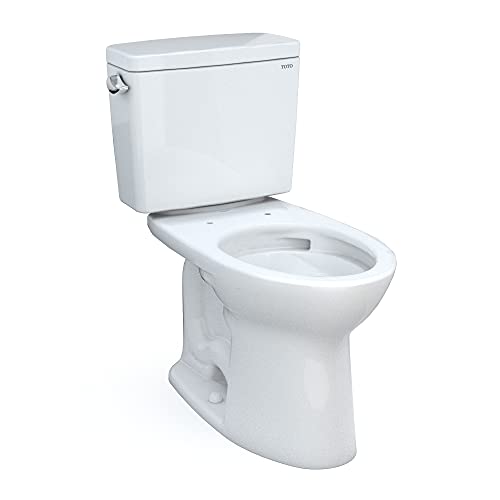
Classic two-piece toilets with tall tanks and elegant, understated proportions, the quiet country-house look that suits a traditional English bathroom without tipping…
Read the guide