
Where Does Toilet Water Go After You Flush
Buying Guides4.6
When you flush, where does it go? Follow toilet water from the bowl through the trap, drain, and stack to a septic…
Read the guideThe MaP (Maximum Performance) flush score is the only independent, standardized measurement that tells you how many grams of solid waste a toilet can clear in a single flush -- before you install it. This guide explains how MaP testing works, what the score tiers mean in practice, how scores interact with water efficiency, and which models from TOTO, Kohler, American Standard, Woodbridge, Swiss Madison and Gerber earn the numbers that actually predict clog-free performance.
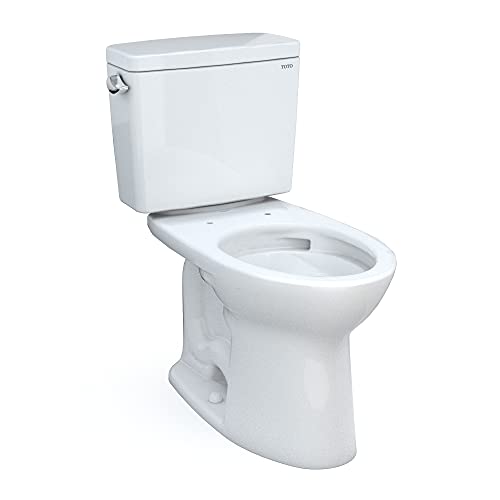
Target a MaP score of 800 grams or higher for any household bathroom. The TOTO Drake earns the maximum 1000-gram rating at a WaterSense-certified 1.28 GPF -- the strongest combination of flush power and water efficiency documented by independent testing -- making it the default recommendation for families who want to stop reaching for the plunger.
Toilet manufacturers print phrases like "powerful flush," "clog-free technology" and "maximum performance" on boxes and product pages without any obligation to back those claims with external data. The MaP (Maximum Performance) testing program exists to replace that marketing language with a single, comparable number derived from the same controlled laboratory protocol applied identically to every toilet that submits for testing -- whether it sells for $150 or $1,500.
Understanding MaP scores does not require a plumbing background. It requires knowing what the test measures, how the score tiers map to real-world performance, and how to cross-reference that number against the water-use rating (GPF) and EPA WaterSense certification status of any toilet you are considering. Those three data points together give you more reliable purchase intelligence than any showroom demo or box copy ever could. For the shortlist of models that score highest across all three measures, see our roundup of the best flushing toilets.
MaP (Maximum Performance) is a standardized, third-party toilet flush-testing program developed with input from water utility agencies in the United States and Canada. Each toilet is tested by flushing a precisely measured soybean-paste media -- formulated to approximate the density and cohesion of human waste -- and the score represents the maximum grams of media the toilet can reliably clear in a single flush, reported in 50-gram increments up to a ceiling of 1000 grams. The identical protocol is applied to every brand, at every price point, in certified labs, and the results are published publicly at map-testing.com.
The program was developed specifically because EPA WaterSense certification, which rewards low water use at 1.28 GPF or less, does not measure flush power. That gap created a market loophole where water-efficient toilets could pass federal thresholds while still flushing too weakly for household use. MaP fills that gap by independently verifying that a toilet can actually clear waste -- not just that it uses a small amount of water to attempt it.
The soybean-paste media used in MaP testing was selected after research into materials that closely replicate the viscosity and cohesion of human fecal matter without presenting biological hazards in a lab environment. The paste is precision-formed into measured balls of known weight and loaded into the toilet bowl. The flush is triggered once, and lab engineers document what clears the trap in that single flush cycle. The process is repeated multiple times per model to account for any variation between flushes, and the published score reflects the maximum grams the toilet consistently clears across those repeated test runs.
It is important to understand what MaP does not test. The program evaluates bowl-clearance performance -- whether waste exits the bowl and passes through the trapway. It does not test downstream drain-line performance. A toilet with a 1000-gram MaP score can still experience issues if the home's horizontal drain run is partially blocked, undersized, or has poor slope. For bowl-level clogging, which is where the overwhelming majority of residential toilet clogs originate, MaP scores are the most objective performance indicator available to consumers purchasing without lab access.
A MaP score of 350 grams meets the program's minimum residential threshold, but in practical household terms, a score below 500 grams means the toilet will clog frequently under normal use. Scores of 500 to 799 grams represent adequate to good performance for lighter-use bathrooms, while 800 to 999 grams is excellent for busy family bathrooms. A score of 1000 grams is the maximum the program awards and indicates the toilet can clear more waste in a single flush than the average household produces, making chronic clogging essentially impossible from a bowl-performance standpoint.
For a household with multiple occupants, older drain lines, or any history of repeated clogging, the practical recommendation is to set 800 grams as the minimum acceptable score and to prefer 1000 grams where budget allows. The real-world difference between a 500-gram toilet and a 1000-gram toilet is not marginal -- it is the difference between a toilet that needs weekly attention and one that requires no intervention for years.
| MaP Score Range | Performance Tier | Best Suited For | Clogging Risk |
|---|---|---|---|
| 350 to 499 g | Minimum passing | Single-occupant, infrequent use only | High in daily family use |
| 500 to 599 g | Adequate | Guest bathrooms with light traffic | Moderate under regular use |
| 600 to 799 g | Good | Households of 2 to 3 adults | Low to moderate |
| 800 to 999 g | Excellent | Active family bathrooms, rentals, ADA use | Very low |
| 1000 g | Maximum (Best) | All households, heavy-use environments | Lowest possible from bowl performance |
MaP score and gallons-per-flush (GPF) are independent measurements, and the gap between them is exactly what makes MaP testing useful. A toilet can use 1.6 gallons per flush and earn a mediocre MaP score if its bowl and trapway geometry are poorly designed, while a well-engineered toilet can use only 1.28 GPF and earn the maximum 1000-gram MaP rating because its flush mechanism is efficient rather than just voluminous. The TOTO Drake demonstrates this: it earns 1000 grams at 1.28 GPF, using 20 percent less water than the federal 1.6-gallon maximum while outflushing the majority of higher-water competitors.
When comparing toilets on performance, look for models that carry both EPA WaterSense certification (confirming 1.28 GPF or less) and a MaP score of 800 grams or higher. That pairing confirms both that the toilet saves water relative to the federal standard and that it delivers flush power independently verified to handle real household waste loads.
The federal maximum for new residential toilet installations in the United States was set at 1.6 gallons per flush by federal law in 1992. Before that law, many toilets used 3.5 gallons or more per flush, relying on sheer water volume to move waste. Modern low-flow toilets achieve equal or better performance through engineering: optimizing the angle of the trapway, increasing the diameter of the flush valve, shaping the rim wash pattern, and designing bowl geometry that accelerates siphon formation.
The practical consequence for buyers is that more water does not guarantee more flushing power. A mid-grade 1.6 GPF toilet from a decade ago might score 450 grams on MaP. A TOTO Drake at 1.28 GPF scores 1000 grams. The engineering quality of the bowl, not the volume of water delivered per flush, is what determines performance. To understand how water efficiency and flush power interact across different toilet types, our complete toilet buying guide covers each specification in detail alongside how they relate to one another.
The most reliable two-step purchase filter for any toilet is this: check the MaP database at map-testing.com before committing to any model, and pair that score with the GPF rating. A toilet with a strong MaP score and a 1.28 GPF WaterSense certification means the manufacturer figured out how to use less water while clearing more waste. That is the engineering achievement worth paying for, and it shows up in aggregated owner reviews as fewer plunger calls and lower water bills over the product's lifetime.
The TOTO Drake (G-Max flush, 1.28 GPF) and the American Standard Champion 4 (1.6 GPF) are the two toilets with the most consistently documented maximum MaP scores in the residential gravity category, both earning 1000 grams from independent testing. The TOTO Drake is the stronger engineering achievement because it reaches the MaP ceiling at 1.28 GPF rather than 1.6 GPF -- the same maximum performance using 20 percent less water. Other models that routinely earn 800 grams or higher include the TOTO Drake II, the TOTO UltraMax II (Tornado Flush), the Kohler Cimarron (AquaPiston), the Gerber Viper, the Gerber Avalanche and the Woodbridge T-0001.
Among pressure-assist designs, which use compressed air rather than gravity to drive the flush, scores tend to be even higher because of the mechanical force advantage. However, gravity-flush toilets like the Drake and Champion 4 achieve equivalent maximum scores at lower maintenance cost and noise levels, making gravity designs the more practical choice for most residential settings.
The toilet best suited to preventing clogs combines three physical characteristics: a MaP score of 800 grams or higher, a fully glazed trapway measuring at least 2 inches in diameter, and a flush valve of 3 inches or larger. The TOTO Drake satisfies all three criteria with a 1000-gram MaP score, a 2-1/8-inch fully glazed trapway, and a 3-inch flush valve, all at 1.28 GPF -- which is why it appears at the top of virtually every clog-resistance list based on published specifications. The American Standard Champion 4 adds a 4-inch wide flush valve and a 2-3/8-inch trapway -- the widest in the residential class -- making it the alternative for households where the absolute widest passage matters.
For one-piece designs, the TOTO UltraMax II (Tornado Flush) and the Woodbridge T-0001 both carry documented MaP scores above 800 grams with fully glazed trapways, making them solid clog-resistant choices in a skirted or seamless exterior. No toilet eliminates clogging entirely if the household's drain line has structural issues, but a high MaP score combined with a wide, fully glazed trapway is the combination that removes the bowl itself as the source of the problem.
The Gerber Viper delivers the strongest value ratio for its MaP score among independently tested residential toilets, earning an 800-gram MaP rating with EPA WaterSense certification at 1.28 GPF at a street price substantially below comparable TOTO and Kohler models. For buyers who need the 1000-gram ceiling at a lower total spend than the TOTO Drake, the American Standard Champion 4 reaches that maximum score, though at 1.6 GPF without WaterSense certification. Among one-piece skirted designs, the Woodbridge T-0001 delivers an 800-gram score in a modern form factor at prices that undercut comparable TOTO UltraMax II and Swiss Madison St. Tropez models significantly.
The value calculation depends on whether long-term water cost factors into the household's budget. A 1.28 GPF toilet saves roughly 4,000 to 6,000 gallons per year in a multi-person household compared to a 1.6 GPF alternative. In municipalities where water costs above $0.005 per gallon, that efficiency difference generates meaningful annual savings that close the initial price gap between a budget and premium model over a typical ten-year product lifespan.
Not all brands approach MaP performance the same way, and the patterns across the major players reveal engineering priorities that the marketing names obscure. Here is how each brand's lineup maps to MaP scores across their primary residential models.
TOTO's residential lineup is the most consistent performer in the MaP database across its full price range. The Drake (G-Max) earns 1000 grams at 1.28 GPF -- the gold standard combination. The Drake II (Double Cyclone) earns up to 1000 grams at 1.28 GPF and adds a quieter flush mechanism. The UltraMax II (Tornado Flush) also earns the maximum 1000 grams at 1.28 GPF, and its score is matched by its rimless bowl design that delivers superior rim coverage with every flush. The Aquia IV is TOTO's dual-flush line, also earning a perfect 1000 grams on its 1.28 GPF full-flush cycle. The Entrada, TOTO's entry-level model, earns scores in the 600-gram range -- respectable at its price tier but below TOTO's flagship performance. The Vespin II, a skirted two-piece design with a concealed trapway, earns scores around 800 to 1000 grams depending on configuration. TOTO's CeFiONtect glaze, available on many models as an upgrade, creates an ion-barrier ceramic surface that reduces waste and mineral adhesion -- a feature the MaP score does not capture but aggregated owner reviews consistently praise in hard-water households.
Kohler's primary flush mechanism is the AquaPiston canister, a full-diameter canister that opens 360 degrees around its circumference rather than lifting like a traditional flapper. Kohler claims this delivers 90 percent greater water contact area during the initial flush burst. The Cimarron with AquaPiston earns the maximum 1000 grams at 1.28 GPF, making it the closest Kohler equivalent to the TOTO Drake on pure MaP performance. The Highline earns scores in the 600 to 800-gram range depending on SKU. The Santa Rosa one-piece earns around 800 grams. The Memoirs earns comparable scores to the Highline. Kohler offers a limited lifetime warranty on the AquaPiston flush mechanism on the Cimarron, which is one of the stronger component warranties among major brands at this price tier.
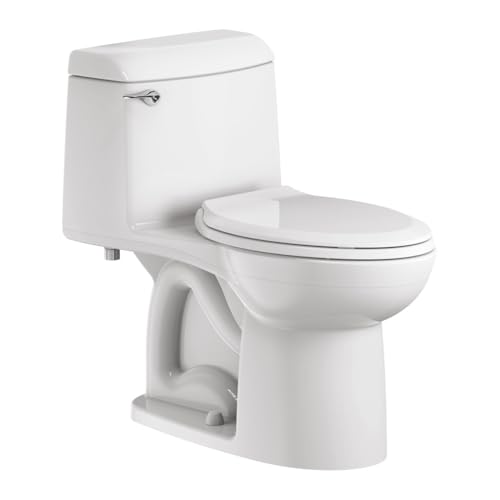
American Standard's Champion 4 name refers to its 4-inch diameter flush valve -- the largest in the standard residential class -- which enables the toilet to dump its full 1.6-gallon tank into the bowl in a near-instantaneous burst. The result is a 1000-gram MaP score and a 2-3/8-inch trapway, the widest in the residential gravity category. The tradeoff is that the Champion 4 uses 1.6 GPF, so it does not qualify for WaterSense certification. The Cadet 3 earns scores in the 600 to 800-gram range at 1.28 GPF with WaterSense certification, making it American Standard's value entry in the efficiency-focused bracket. American Standard offers a limited lifetime warranty on the Champion 4, covering the porcelain and working parts.
Gerber is one of the most underrepresented brands in consumer awareness despite consistently strong MaP scores relative to price. The Viper earns an 800-gram MaP score at 1.28 GPF with WaterSense certification. The Avalanche earns similar scores and adds ADA-compliant comfort height as a standard feature. Gerber's CleanCurve rim design reduces the horizontal ledge under the bowl rim where bacteria typically accumulate, improving hygiene without requiring a fully rimless bowl redesign. Plumbers who install dozens of toilets per year frequently cite Gerber by name as a reliable, low-return-service brand, which is a form of field validation that consumer marketing cannot replicate.
Woodbridge has grown market share by offering skirted one-piece designs at prices that undercut Swiss Madison and TOTO one-piece models. The T-0001 and T-0019 carry reported MaP scores around 800 grams at 1.28 GPF with WaterSense certification. The skirted exterior conceals the trapway behind a smooth base for easier exterior cleaning. Woodbridge's replacement-parts ecosystem is smaller and less established than TOTO, Kohler or American Standard, which is worth factoring into long-term maintenance planning. For a detailed comparison of how one-piece skirted designs differ from conventional exposed-trapway two-piece toilets, see our guide on one-piece vs two-piece toilets.
Swiss Madison focuses on wall-hung and floor-mounted designs with modern European aesthetics. The St. Tropez is the flagship model in its floor-mounted line, using a dual-flush 0.8/1.28 GPF mechanism with WaterSense certification. MaP scores for Swiss Madison models depend partly on the in-wall carrier system used with wall-hung configurations, making direct comparison harder than for floor-mount toilets. For floor-mounted St. Tropez installations, scores are generally in the 600 to 800-gram range. The modern skirted profile and dual-flush controls appeal to design-forward buyers, though the flush scores do not match the TOTO Drake or American Standard Champion 4 at the performance ceiling.
| Toilet Model | Best For | MaP Score | GPF | WaterSense | Rating | Check Price |
|---|---|---|---|---|---|---|
| TOTO Drake (G-Max) | Best overall clog resistance | 1000 g | 1.28 | Yes | 4.8 | Check price |
| TOTO Drake II | Quiet + 1000 g MaP | Up to 1000 g | 1.28 | Yes | 4.7 | Check price |
| American Standard Champion 4 | Widest valve + 1000 g | 1000 g | 1.6 | No | 4.6 | Check price |
| Kohler Cimarron (AquaPiston) | Design + MaP balance | Up to 1000 g | 1.28 | Yes | 4.6 | Check price |
| TOTO UltraMax II (Tornado Flush) | Rimless hygiene, one-piece | 1000 g | 1.28 | Yes | 4.7 | Check price |
| Gerber Viper | Best value per MaP score | 800 g | 1.28 | Yes | 4.4 | Check price |
| Gerber Avalanche | ADA + solid MaP | 800 g | 1.28 | Yes | 4.4 | Check price |
| Woodbridge T-0001 | Modern skirted + value | 800 g | 1.28 | Yes | 4.5 | Check price |
| Woodbridge T-0019 | One-piece minimalist | 800 g | 1.28 | Yes | 4.4 | Check price |
| Kohler Highline | Classic style, reliable | 600 to 800 g | 1.28 | Yes | 4.4 | Check price |
| American Standard Cadet 3 | Budget family toilet | 600 to 800 g | 1.28 | Yes | 4.3 | Check price |
| Swiss Madison St. Tropez | Modern dual-flush design | 600 to 800 g | 0.8 / 1.28 | Yes | 4.3 | Check price |
Every major toilet brand markets its flush technology under a proprietary name. TOTO uses G-Max, Double Cyclone, and Tornado Flush depending on the model series. Kohler uses AquaPiston and Revolution 360. American Standard uses Champion, ActiClean, and Right Height. Gerber uses CleanCurve and HET. These names describe genuine engineering differences -- the mechanism of water delivery into the bowl, the geometry of the rim wash, the valve opening size -- but they are not standardized across brands and do not produce a number you can compare from one manufacturer to another.
The MaP score translates all of those proprietary systems into a single, externally verified number using the same test. A G-Max flush and an AquaPiston flush compete on equal terms in the MaP lab. When a toilet has a bold proprietary flush name but a weak or absent MaP score, the flush name tells you nothing about actual performance. When a toilet earns a specific MaP gram rating, that rating tells you exactly what the technology achieved under the same conditions applied to every other submitted model.
There are features that MaP does not measure, and it is worth knowing them. The test measures bulk solid-waste clearance. It does not formally measure how thoroughly the rim wash rinses the bowl interior on each flush, how quiet the flush is, how quickly the bowl refills, or how well the bowl surface resists staining between cleanings. TOTO's CeFiONtect ceramic glaze and the rimless Tornado Flush design both deliver real advantages in bowl hygiene that a 1000-gram MaP score does not capture. For a comprehensive view of how flush mechanisms affect both performance and cleaning, see our complete toilet selection guide.
The MaP database is publicly accessible at map-testing.com at no cost. You can search by manufacturer name, product series name, or model catalog number. The database shows the MaP score alongside the specific flush volume tested, which is important because the same product family sometimes includes both 1.28 GPF and 1.6 GPF variants with different MaP scores. Always confirm you are looking at the MaP score for the GPF version you intend to purchase.
Marketing names are not unique in the MaP database. Searching for "Drake" will return multiple results. For accuracy, use the manufacturer's catalog number. TOTO lists the Drake under catalog numbers like CST744E (elongated, 1.28 GPF) or CST743E (the 1.6 GPF version, which carries a different score). Kohler's Cimarron appears under K-3609 and K-3887 depending on configuration. American Standard's Champion 4 is listed as 2034.014 (round) and 2021.014 (elongated). If you find the toilet you are considering on a retailer's site, the product detail page or spec sheet should list the manufacturer catalog number, and that is the search term to use in the MaP database.
Large home improvement retailers often carry toilets under store-exclusive model numbers that are manufactured by the same brands but carry different SKUs. In those cases, the MaP database may not list the retailer SKU directly. The approach is to identify the base model the retailer SKU corresponds to -- often listed in the product's specification sheet as the "equivalent" or "base" model -- and look up that number instead. If no connection to a listed model can be established and the retailer provides no MaP documentation, that is a signal to consider a model with publicly verifiable data instead.
A MaP lookup takes under two minutes and is the single most effective filter against buying a toilet that disappoints after installation. Unlike almost every other consumer appliance, a toilet is rarely returned after installation even when performance is unsatisfying, because the labor cost of removal and replacement makes it impractical. Two minutes at map-testing.com before ordering is the entire insurance policy against a decade of weak flushing and repeated clogging. Run the lookup. It is free, it is public, and it is the most reliable performance data available on any residential toilet sold in North America.
The MaP score measures what exits the bowl in a single flush, but the trapway -- the S-shaped passage through which waste exits the bowl into the drain line -- is the mechanical link between a high score and real-world clog resistance. A high MaP score without a wide, fully glazed trapway can still produce occasional clogs when waste volume is large or drain conditions are marginal.
Standard residential trapways measure 2 inches in diameter. The TOTO Drake uses a 2-1/8-inch fully glazed trapway -- the extra eighth of an inch reduces friction and lowers the probability of a solid lodging in transit. The American Standard Champion 4 uses a 2-3/8-inch fully glazed trapway, the widest in the standard residential category. Fully glazed means the interior surface of the trapway is coated with the same ceramic glaze as the bowl, which reduces the friction coefficient and makes waste transit smoother versus an unglazed concrete-finish interior.
Skirted toilets like the Woodbridge T-0001, TOTO Vespin II and Swiss Madison St. Tropez conceal the trapway behind a smooth flat base panel. The skirted exterior makes cleaning the outside of the toilet far easier -- no S-curve ceramic surface to scrub -- but uses the same internal trapway engineering as exposed designs. A skirted toilet with an 800-gram MaP score is not structurally different in flush performance from an exposed-trapway toilet with the same score. The difference is purely exterior. For guidance on choosing between skirted and exposed designs based on cleaning, installation and budget, see our guide on one-piece versus two-piece toilet designs.
EPA WaterSense is a voluntary certification program managed by the U.S. Environmental Protection Agency. To earn WaterSense certification, a toilet must use 1.28 gallons per flush or less and pass a minimum flush performance standard established by the program's protocols. Critically, WaterSense's performance standard is not the same as MaP testing. WaterSense verifies that the toilet can flush an adequate amount of waste, but the threshold it uses is significantly lower than the MaP program's performance ceiling. A toilet can carry a WaterSense label and still earn only a 500-gram MaP score.
The practical implication is that WaterSense certification alone does not guarantee strong flush performance. It guarantees that the toilet uses 1.28 GPF or less and passes a minimum adequacy threshold. For a buyer choosing between two WaterSense-certified toilets, the MaP score is still the variable that determines which one will actually outperform the other on a family bathroom's daily demands. The combination of WaterSense certification plus a MaP score of 800 grams or higher is the complete specification target: it confirms both water efficiency and verified flush power at the level the program was designed to validate.
Many municipalities and water utilities in the United States and Canada offer rebates for installing EPA WaterSense-certified toilets. These rebates can range from $25 to $200 depending on the program and the local utility. Replacing a pre-1994 toilet (which may have used 3.5 to 7 gallons per flush) with a WaterSense-certified 1.28 GPF model saves approximately 13,000 gallons of water per year in a household of four. That volume reduction is the driver behind utility rebate programs, and it makes the WaterSense certification financially meaningful beyond its labeling function. For more context on water efficiency across toilet types, our guide on round versus elongated toilet selection includes water use considerations by bowl type.
Based on published MaP scores, WaterSense status, trapway design, and aggregated owner review patterns, three toilets stand out as the clearest recommendations for distinct buyer situations.
The maximum 1000-gram MaP score at 1.28 GPF with WaterSense certification and a 2-1/8-inch fully glazed trapway. The benchmark for documented gravity flush performance.
Check price on AmazonAn 800-gram independently verified MaP score with WaterSense certification at 1.28 GPF at a price significantly below comparable TOTO and Kohler models. Consistently recommended by plumbing contractors.
Check price on AmazonAn 800-gram rated skirted one-piece design with dual-flush 0.8/1.28 GPF controls and WaterSense certification at a price that undercuts comparable TOTO UltraMax II and Swiss Madison models.
Check price on AmazonFor most buyers, the decision between these three picks reduces to one question: is budget the primary constraint or is it flush performance? If budget is flexible, the TOTO Drake's documented 1000-gram MaP score at WaterSense efficiency is the best-supported long-term purchase based on published data. If budget is the primary factor and 800 grams satisfies the household's performance needs -- which it will for most families without severe clogging history -- the Gerber Viper delivers independently verified performance at a price no other major-brand toilet matches at its score level.
MaP score is the most important single data point in a toilet purchase, but it does not operate in isolation. A toilet that scores 1000 grams but does not fit your bathroom's plumbing is useless. Here is how MaP data integrates with the rest of the purchase specification.
Before comparing models, set a minimum acceptable MaP score based on your bathroom's use pattern. A guest bath used occasionally by one or two people can function acceptably at 600 grams. A master bathroom used by a family of four every morning should start at 800 grams and go to 1000 grams if there is any history of clogging. Setting the floor first eliminates a significant portion of the market from consideration without requiring detailed comparison.
Rough-in is the distance from the finished back wall to the center of the floor drain. The standard is 12 inches, and the overwhelming majority of toilets are built for it. Homes built before 1970, and some tight layout renovations, use 10-inch rough-ins. A toilet purchased for a 12-inch rough-in will not seat against the wall in a 10-inch rough-in bathroom. Measure before you filter by MaP score. Our toilet buying guide includes a step-by-step rough-in measurement walkthrough alongside every other dimension that determines fit.
If your municipality offers rebates for WaterSense toilets, buying a 1.28 GPF model reduces net purchase cost and lowers ongoing water bills. If your home has a septic system, confirm with the system installer whether high-volume flushes at 1.6 GPF or lower-volume 1.28 GPF flushes are better for your specific tank and field configuration. Most modern septic systems handle 1.28 GPF well, but the question is worth asking if the system is older or undersized.
Elongated bowls project 28 to 31 inches from the wall and add approximately 2 inches of front-to-back length compared to round bowls. In a bathroom with 30 or more inches of clear space in front of the toilet, elongated is the more comfortable choice for adult users. In compact bathrooms where clearance to the door or vanity is tight, a round bowl recovers those 2 inches without affecting flush performance. MaP scores for round and elongated versions of the same model can differ slightly -- manufacturers sometimes publish separate scores by bowl shape. Check the score for the specific bowl shape you intend to buy. For a detailed comparison of both options, see our guide on round versus elongated toilets.
One-piece toilets have no seam between the tank and bowl, which simplifies exterior cleaning and gives a more modern visual profile. Two-piece toilets are lighter during installation (the tank and bowl ship and install separately), cheaper to purchase, and easier to repair since individual components can be replaced without sourcing the complete toilet unit. Flush performance across one-piece and two-piece designs at equivalent MaP scores is functionally the same. The decision reduces to cleaning preference, budget, and bathroom aesthetic. Bowl shape comparisons across both configurations are covered in detail in our guide on one-piece versus two-piece toilets.
Buyers who complete this four-step sequence -- MaP floor, rough-in measurement, GPF target, bowl shape -- before opening a product listing almost never have buyer's remorse on a toilet purchase. The sequence takes ten minutes including the MaP database lookup. The buyers who skip it and filter by price and aesthetics first are the ones who end up with a good-looking toilet that clogs weekly or a correctly priced model that does not fit the back wall. Specs first, then aesthetics. The toilet you forget about is the one that was bought with data.
MaP stands for Maximum Performance. It is the name of an independent third-party flush testing program developed with input from water utility agencies in the United States and Canada. The program measures how many grams of solid waste a toilet clears in a single flush and publishes results publicly at map-testing.com so consumers and plumbers can compare any listed model on equal terms.
A MaP score of 800 grams or higher is excellent for a busy household bathroom, and 1000 grams is the maximum the program awards. Scores of 600 to 799 grams are good for lighter-use bathrooms. For a family of three or more adults, target 800 grams as the minimum and prefer 1000 grams if there is any history of clogging in the household.
The maximum MaP score awarded by the program is 1000 grams. Several widely available residential toilets achieve this ceiling, including the TOTO Drake (G-Max, 1.28 GPF), the American Standard Champion 4 (1.6 GPF), and some configurations of the Kohler Cimarron (AquaPiston, 1.28 GPF).
Certified labs use a standardized soybean-paste media -- formulated to approximate the density and cohesion of human waste -- shaped into balls of precise measured weight. The balls are placed in the toilet bowl and the toilet is flushed once. Engineers document what clears the trap in that single flush. The test is repeated multiple times per model and the final score is the maximum grams consistently cleared across those runs.
Higher is better in terms of flush power and clog resistance. However, a household with light use and no clogging history does not necessarily need a 1000-gram toilet to function well. An 800-gram score covers most residential situations comfortably. The 1000-gram ceiling is the recommendation for households with heavy use, large waste volumes, or older drain lines where clearance power matters most.
Yes. The MaP database is publicly available at map-testing.com at no cost. Search by manufacturer name, model series name, or manufacturer catalog number. The database shows the MaP score alongside the specific flush volume (GPF) tested for that entry, so you can confirm the score corresponds to the exact configuration you plan to purchase.
No. Water volume and MaP score are independent. A well-engineered 1.28 GPF toilet can outperform a poorly designed 1.6 GPF toilet by hundreds of MaP grams. The TOTO Drake earns 1000 grams at 1.28 GPF while some 1.6 GPF models score well below 800 grams. Bowl geometry, flush valve diameter, trapway design, and water delivery velocity all influence MaP scores more directly than raw gallon volume.
Manufacturers pay a submission fee to enter the MaP program, but the testing is conducted by independent certified laboratories using a standardized protocol that does not allow manufacturers to influence the result. The protocol is identical for every submitted model regardless of brand or price tier, and results are published publicly whether the score is strong or weak. The fee covers lab time; it does not buy a favorable result.
The TOTO Drake with G-Max flush at 1.28 GPF earns a 1000-gram MaP score -- the maximum the program awards. This makes it the benchmark for gravity-flush residential performance because it achieves the MaP ceiling while using 20 percent less water than the federal 1.6-gallon maximum and carrying EPA WaterSense certification.
No. EPA WaterSense certification requires that a toilet use 1.28 GPF or less and pass WaterSense's own minimum performance protocol, which is a lower threshold than the MaP program's scoring range. A toilet can carry WaterSense certification with a relatively modest MaP score. WaterSense verifies water efficiency; MaP verifies flush power. A strong toilet satisfies both, but they are separate programs with separate standards.
The American Standard Champion 4 earns a 1000-gram MaP score -- the maximum -- but at 1.6 GPF rather than 1.28 GPF. It uses a 4-inch wide flush valve (the largest in the standard residential class) and a 2-3/8-inch fully glazed trapway. The tradeoff compared to the TOTO Drake is 25 percent more water per flush in exchange for the same maximum MaP score and the widest trapway available in this category.
Yes, scores can vary by bowl shape within the same product family. The elongated bowl's different interior geometry affects how the flush siphon forms and how waste interacts with the flush stream. Manufacturers often publish separate MaP scores for round and elongated versions. Always confirm the score for the exact bowl shape you plan to purchase, not just the product family average.
The Gerber Viper earns a documented MaP score of approximately 800 grams at 1.28 GPF with EPA WaterSense certification. For the specific model number you intend to purchase, confirm the current published score at map-testing.com, as scores can vary slightly between production runs and SKU variants within the same product family.
Dual-flush toilets have two flush volumes -- typically 0.8 GPF for liquids and 1.28 GPF for solids. MaP testing for dual-flush models is conducted at the full-flush setting (1.28 GPF), because that is the cycle used for solid waste clearance. The partial flush is not MaP-scored for solid performance since it is designed for liquid waste only. When evaluating a dual-flush toilet on MaP, confirm the score comes from the full-flush cycle.
The primary MaP protocol uses soybean-paste media to test solid waste clearance. The program has expanded certain test protocols to include optional paper-clearance assessments, but the widely published MaP gram score specifically refers to the solid-waste clearance test. A high MaP score is a strong indicator of overall flush power, and toilets that clear 1000 grams of solid media typically handle paper clearance without issue, but the score itself does not formally certify paper performance.
No. MaP testing is voluntary. Major brands including TOTO, Kohler, American Standard and Gerber routinely submit their primary residential lines. Some smaller or newer brands do not participate, which means no publicly verifiable third-party performance score exists for those models. When a toilet you are considering has no MaP listing, that absence is meaningful information and warrants consideration before purchasing based solely on manufacturer claims.
The TOTO Aquia IV is a dual-flush toilet (0.9 GPF / 1.28 GPF) with WaterSense certification. MaP testing on the full-flush cycle places the Aquia IV at a perfect 1,000-gram score. The Aquia IV still trades some convenience for the single-flush Drake's simplicity, but not flush power, and it adds the flexibility of the partial-flush option for liquid-only waste.
For a bathroom used regularly by two or more adults, a 500-gram MaP score is at the lower boundary of acceptable performance. At 500 grams, the toilet will handle light-to-moderate waste volumes without clogging, but heavy-use scenarios or above-average waste volumes are likely to result in occasional double-flushing or clogs. For family bathrooms, target 800 grams as the practical minimum to provide a meaningful margin against real-world use variation.
A fully glazed trapway means the interior surface of the waste passage through the ceramic body of the toilet is coated with the same ceramic glaze as the bowl interior. Glazing reduces the friction coefficient of the surface, which allows waste to slide through more smoothly and reduces the adhesion points where solid waste could lodge. An unglazed trapway has a rougher concrete-like interior that increases friction and clogging risk. All else being equal, a fully glazed trapway contributes to clog resistance beyond what the MaP score alone documents.
The MaP database at map-testing.com is updated periodically as manufacturers submit new models and as existing models are re-tested when production specifications change. It is not updated in real time, so there can be a lag between a product launch and its appearance in the database. If you are evaluating a newly released toilet that is not yet listed, the absence of a MaP score may reflect timing rather than a decision not to submit -- but in that case, waiting for the listing before purchasing is the lower-risk approach.
The MaP flush score is the most reliable objective measure consumers have for comparing toilet performance before installation. Set 800 grams as your minimum for any occupied bathroom, target 1000 grams for heavy use, and pair that score with EPA WaterSense certification at 1.28 GPF to confirm both flush power and water efficiency. The TOTO Drake earns 1000 grams at 1.28 GPF and remains the benchmark because independent data, not marketing language, says so. Two minutes at map-testing.com before you order is the most effective step in the entire toilet-buying process.
When you flush, where does it go? Follow toilet water from the bowl through the trap, drain, and stack to a septic…
Read the guideDo toilets need electricity to flush? Most do not. Learn which toilets use power, how a standard flush works, and how to…
Read the guideFind out how many gallons per flush an old toilet really uses, how to check your own tank, and how much water…
Read the guide