

Where Does Toilet Water Go After You Flush
Buying Guides4.6
When you flush, where does it go? Follow toilet water from the bowl through the trap, drain, and stack to a septic…
Read the guideMost toilets last 25 to 50 years, but the smart replacement window is usually the 20-year mark. Here is what the signs, science, and savings data actually say about when to swap yours out.
Most toilets have a mechanical lifespan of 25 to 50 years, but plumbers and the EPA generally recommend replacing any toilet manufactured before 2005 if it still uses 3.5 GPF or more. Persistent clogs, cracks, constant running, and rising water bills are the four clearest signals that replacement beats repair.
A modern toilet's porcelain bowl and tank can physically last 50 years or more under normal use. However, the flushing mechanism, wax ring, flapper, and fill valve typically need replacement every 5 to 15 years, and the efficiency of pre-2000 toilets is so poor that most plumbers recommend full unit replacement rather than ongoing repair after the 20-year mark.
The toilet is one of the most durable fixtures in any home, but durability and efficiency are two different things. The vitreous china that forms the bowl and tank can withstand decades of use without cracking or degrading under normal conditions. What fails first is almost always the mechanical internals: flappers, fill valves, flush valves, and the wax ring seal between the base and the floor flange.
The real question is not just "will it still flush" but "should it still flush." Toilets manufactured before 1994 commonly used 3.5 to 7 gallons per flush (GPF). Federal law capped new toilets at 1.6 GPF in 1994, and EPA WaterSense-certified models today must use 1.28 GPF or less while still clearing a 350-gram MaP (Maximum Performance) flush test threshold. That is nearly a 75 percent reduction in water use per flush compared to older units.
Plumbing industry guidance from sources such as the Plumbing-Heating-Cooling Contractors Association (PHCC) consistently places the practical replacement recommendation at 20 to 25 years. Beyond that window, the cost of parts, labor for multiple repairs, and ongoing high water bills tends to exceed the cost of a quality replacement within 3 to 5 years.
Here is a reference table showing how toilet technology and efficiency have shifted across manufacturing eras. If you know the approximate age of your toilet, this helps you benchmark its water consumption.
| Manufacturing Era | Typical GPF | Annual Water Use (3x/day) | EPA WaterSense Eligible? | Replacement Priority |
|---|---|---|---|---|
| Pre-1980 | 5.0 to 7.0 | ~25,000 to 38,000 gallons | No | High |
| 1980 to 1993 | 3.5 to 5.0 | ~19,000 to 27,000 gallons | No | High |
| 1994 to 2004 | 1.6 | ~8,700 gallons | No | Moderate |
| 2005 to 2015 | 1.28 to 1.6 | ~7,000 to 8,700 gallons | Some models | Low to Moderate |
| 2016 to Present | 1.0 to 1.28 | ~5,500 to 7,000 gallons | Yes (WaterSense) | Replace only if broken |
Annual water use estimates assume three flushes per day per person in a single-occupant household and 365 days per year. Multi-person households multiply accordingly.
The four most reliable replacement signals are: visible cracks in the porcelain bowl or tank, chronic clogs that return despite snaking and plunging, a constantly running toilet that persists after replacing the flapper and fill valve, and a water bill that has crept up without a change in household size. A wobbling toilet that re-appears after re-tightening the bolts often signals a failed floor flange, which requires professional assessment of whether the floor itself needs repair.
Surface crazing -- tiny hairline marks that do not penetrate the glaze -- is cosmetic only. Actual cracks in the bowl below the waterline or in the tank body are a different matter. Bowl cracks can leak water silently onto your subfloor, causing rot and mold that costs far more to remediate than a new toilet. If you see standing water on the floor near the base that is not explained by a loose wax ring, probe the outside of the bowl carefully for fractures. A crack discovered on the interior surface that extends through the porcelain wall is an immediate replacement indicator.
A single clog once or twice a year is normal, especially in households with children. If you are plunging monthly or the toilet backs up with modest waste loads, the issue is either a partial drain obstruction or a toilet with an undersized trapway. Many early-generation 1.6 GPF toilets from the mid-1990s had trapways as narrow as 1.75 inches, which provided inadequate flushing velocity. Modern toilets -- including the TOTO Drake and American Standard Champion 4 -- feature fully glazed 2.125-inch or larger trapways that dramatically reduce clogging incidents. Repeated clogs in an older toilet are a strong argument for replacement rather than repeated service calls.
A running toilet wastes between 200 and 1,000 gallons of water per day depending on the severity of the leak. The first step is always replacing the flapper ($5 to $15 part) and the fill valve ($10 to $25 part). If running continues after fresh replacements of both components, the issue may be a warped or deteriorated flush valve seat -- a condition that often makes full tank replacement more economical than repair, especially on older units where replacement parts are increasingly difficult to source.
A toilet that wobbles after you re-tighten the closet bolts typically indicates one of three things: a broken floor flange, rotted subfloor from a long-term wax ring leak, or a cracked base. A licensed plumber should inspect the floor flange. If the subfloor has water damage, the scope of the repair expands well beyond the toilet itself, but you will need a new toilet as part of the restoration regardless.
If your toilet predates 1994 and uses 3.5 GPF or more, a household of four people flushes roughly 15,000 to 38,000 additional gallons per year compared to a current WaterSense-certified model. The EPA estimates that replacing an old high-gallon toilet with a WaterSense model saves approximately 13,000 gallons per year for the average family. At a national average residential water rate of approximately $0.004 per gallon (including sewer), that translates to roughly $50 to $130 in annual savings per toilet. Depending on your local water rates -- which are substantially higher in cities like San Francisco, Atlanta, or Phoenix -- payback periods can be as short as two years.
A useful diagnostic is the "toilet age lookup" method: find the four-digit stamped date code inside the tank, typically on the back wall. Pre-1994 toilets almost always warrant replacement on efficiency grounds alone. Between 1994 and 2005, evaluate repair history. Post-2005 EPA WaterSense-labeled toilets are worth repairing unless structural damage exists.
The standard plumbing industry rule of thumb is: if a single repair costs more than 50 percent of a quality new toilet's price, replace the unit. For most residential toilets, that threshold is roughly $100 to $175 in parts and labor. If you are on your second or third repair within five years, cumulative costs almost always exceed replacement cost -- and a new unit resets both the mechanical and efficiency clock.
Individual repairs are almost always the right call for a toilet that is less than 10 years old and in otherwise good structural condition. A new flapper costs under $15. A complete fill valve replacement runs $10 to $30 for parts, with labor adding $75 to $150 in most U.S. markets. These repairs extend service life without significant capital outlay.
The math shifts for toilets older than 15 to 20 years, particularly those that are already inefficient. Consider a pre-1994 toilet that uses 3.5 GPF. Repairing it costs $150 in labor and parts. The toilet then continues consuming an extra 10,000-plus gallons per year compared to a WaterSense model. Over five years, you pay $150 for the repair plus $250 to $650 in excess water costs, for a total of $400 to $800 -- easily the cost of a mid-range replacement toilet (including installation) that would start saving water immediately.
| Scenario | Recommended Action | Typical Cost |
|---|---|---|
| Toilet under 10 years old, minor mechanical issue | Repair (flapper, fill valve, wax ring) | $15 to $200 |
| Toilet 10 to 20 years old, second or third repair | Evaluate: total repair cost vs new unit | Varies |
| Toilet pre-1994 (3.5+ GPF), any condition | Replace -- efficiency savings justify it | $150 to $800 installed |
| Cracked bowl or tank | Replace immediately | $150 to $800 installed |
| Toilet 20+ years old, multiple issues | Replace | $150 to $800 installed |
Installation costs vary widely by region and complexity. A straightforward swap of an existing toilet typically runs $100 to $250 in labor. If subfloor repair, flange replacement, or supply line upgrades are needed, that range expands to $300 to $600 or more.
According to EPA WaterSense data, replacing a pre-1994 toilet with a WaterSense-certified 1.28 GPF model saves the average family approximately 13,000 gallons of water per year. Households with multiple bathrooms or larger families see proportionally greater savings. In high-rate water markets, the annual dollar savings per toilet can exceed $200.
Water savings from toilet replacement are among the most well-documented efficiency gains in residential plumbing. The EPA WaterSense program has published consistent data showing that toilets account for nearly 30 percent of an average home's indoor water use. Replacing a 3.5 GPF toilet with a 1.28 GPF WaterSense model reduces per-flush consumption by 63 percent.
For a household of four people averaging five flushes each per day:
Some utilities offer rebates for installing WaterSense-certified toilets. Programs vary by state and municipality -- check the EPA WaterSense rebate finder at epa.gov/watersense for current offerings in your area. Several California water districts, for example, offer $75 to $200 per toilet for qualifying replacements, which can effectively pay for the fixture itself.
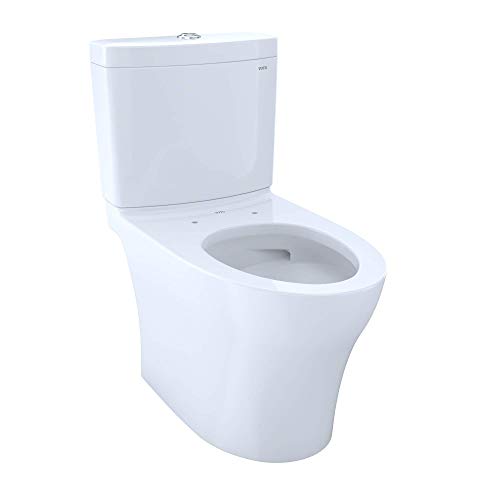
Dual-flush toilets, such as the TOTO Aquia IV (0.8 GPF liquid / 1.0 GPF solid) or the Woodbridge T-0001 (0.8/1.6 GPF), further extend water savings for households where partial flushes cover the majority of use cases. MaP testing confirms both models clear the 350-gram threshold at their full-flush setting, so performance is not compromised.
The three non-negotiable criteria for a replacement toilet are: EPA WaterSense certification (1.28 GPF or less), a MaP flush score of at least 500 grams (with 1,000 grams being premium performance), and a fully glazed trapway of at least 2 inches. Bowl height, rough-in distance, and one-piece vs two-piece are secondary preferences that affect comfort and installation fit.
MaP (Maximum Performance) testing is the gold standard for flush effectiveness. Conducted by an independent lab, MaP tests measure how many grams of solid waste a toilet can clear in a single flush. A score of 350 grams meets the minimum WaterSense threshold. Most quality residential toilets score 500 to 1,000 grams. The TOTO Drake II, TOTO UltraMax II, and American Standard Champion 4 all achieve 1,000-gram MaP scores -- the maximum -- while still meeting WaterSense water efficiency standards at 1.28 GPF. You can look up any toilet's MaP score at map-testing.com.
Before purchasing, measure the rough-in distance: the distance from the wall behind the toilet to the center of the floor drain. Standard rough-in is 12 inches. Older homes sometimes have 10-inch or 14-inch rough-ins. Most major manufacturers offer 10-inch and 14-inch variants of their popular models, but availability is more limited, so confirm this before ordering. Getting the rough-in wrong means returning the toilet and potentially delaying the project by a week or more.
Two-piece toilets (separate tank and bowl) are less expensive to manufacture, easier to ship, and simpler to repair since you can replace the tank or bowl independently. One-piece toilets have a more streamlined profile, are easier to clean around the junction between tank and bowl, and are generally lower to ship damage risk since there are no parts to connect on-site. One-piece models typically carry a $100 to $300 premium over comparable two-piece units. The Kohler Cimarron (two-piece) and the TOTO UltraMax II (one-piece) are frequently cited examples at opposite ends of this spectrum with equivalent flushing performance.
Standard bowl height is 14 to 15 inches from floor to seat. Comfort height or "ADA height" runs 16 to 18 inches, approximating the seat height of a standard chair. Most adults find comfort height easier on the knees and hips, particularly for those over 50. ADA-compliant models must have the seat between 17 and 19 inches when the seat is installed, and virtually all major brands now offer comfort-height variants -- the TOTO Drake and Kohler Highline both come in standard and comfort-height versions.
Aggregated owner reviews and industry data consistently place TOTO, Kohler, American Standard, and Gerber at the top for long-term reliability. TOTO's TORNADO FLUSH system and Kohler's AquaPiston canister valve have fewer mechanical failure points than traditional flapper-based flush systems. TOTO offers a one-year warranty on mechanical parts with a limited lifetime warranty on the vitreous china bowl. Kohler provides a limited lifetime warranty on all toilet models. American Standard covers materials and workmanship for one year with a lifetime warranty on the china. Woodbridge and Swiss Madison both offer one-year warranties but have shorter market track records than the major brands.
For a curated shortlist of top-performing models, see our best flushing toilets guide, which ranks models by MaP score, GPF, and verified owner satisfaction.
See also our related guides: best toilets for preventing clogs, WaterSense certified toilets, and how to install a toilet.
A basic toilet replacement is within reach for a confident DIYer with basic tools. The process involves shutting off the water supply, draining the tank and bowl, unbolting the old unit, swapping the wax ring and closet bolts, setting the new toilet, and reconnecting the supply line -- typically a 2 to 4 hour project. A plumber is needed if the floor flange is broken, the supply line is corroded, the subfloor has water damage, or you are rerouting the drain location.
The tools required are minimal: an adjustable wrench, a putty knife, rubber gloves, a sponge, and a bucket. Most hardware stores sell wax ring kits that include new closet bolts for under $15. The highest-risk step for most homeowners is lifting the old toilet (which can weigh 50 to 100 pounds for a two-piece unit) without cracking the porcelain or injuring themselves. One-piece toilets can weigh 80 to 120 pounds and generally benefit from a second person.
Even plumbers recommend inspecting the flange before committing to a DIY installation. A cracked or corroded flange can cause the new toilet to rock, break the wax seal prematurely, and create slow water damage to the subfloor -- exactly the problem you were trying to solve. Flange extenders and repair kits ($10 to $40) handle minor height issues without full replacement, but a broken or detached flange requires professional repair.
TOTO, Kohler, American Standard, and Gerber consistently lead independent reliability surveys and aggregated owner reviews. TOTO in particular has a documented track record of 25-plus-year service life on both its Drake and UltraMax series, with replacement parts widely available. American Standard's Champion 4 series is frequently cited by plumbers for its clog-resistant 2.3-inch glazed trapway and high MaP performance over many years of service.
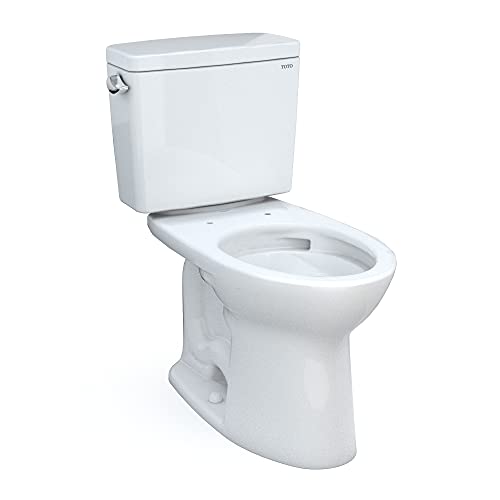
TOTO is a Japanese manufacturer with a strong foothold in North American residential and commercial plumbing. The TOTO Drake II (two-piece, 1.28 GPF, 1000g MaP) and TOTO UltraMax II (one-piece, 1.28 GPF, 1000g MaP) are the most frequently recommended models for longevity and efficiency. TOTO's CEFIONTECT glaze -- a patented ion barrier coating -- reduces particle adhesion to the bowl surface, which independently-validated lab tests show can reduce cleaning frequency and bowl staining over time. The TOTO Aquia IV adds dual-flush capability (0.8 / 1.0 GPF) for households that prioritize the lowest possible water use.
Kohler's Kohler Highline is one of the longest-tenured designs in residential plumbing -- widely installed in homes built since the 1970s and still produced in updated WaterSense-certified form. The Kohler Cimarron introduces the AquaPiston canister flush valve, which opens from all sides (360 degrees) rather than just the top, delivering a 90 percent more water-efficient flush path according to Kohler's published engineering data. Both carry Kohler's limited lifetime warranty on the china.
The American Standard Champion 4 is perhaps the most cited clog-resistant toilet in plumber forums and owner reviews. Its 2.3-inch fully glazed trapway is the largest in any standard residential toilet, and its 1000g MaP score reflects a 4-inch flush valve that generates substantial flushing velocity on 1.6 GPF. The American Standard Cadet 3 offers comparable technology in a slightly more compact form factor at 1.28 GPF, earning EPA WaterSense certification alongside its high MaP score.
Gerber is a professional-grade brand often specified in commercial and light commercial applications, with a growing residential presence. Gerber toilets are noted in the plumbing trade for above-average flange and fitting tolerances, and the brand carries a strong reputation among professional plumbers for straightforward installation and durable internals. Its Maxwell and Viper series are commonly stocked at plumbing supply houses rather than big-box retailers, which gives them less consumer name recognition despite their solid performance history.
Both brands have gained traction in the value and modern-design segments. The Woodbridge T-0001 is a one-piece dual-flush model with a skirted trapway design that appeals to modern bathroom aesthetics. Swiss Madison's wall-hung and one-piece options have attracted buyers looking for European-influenced styling. Neither brand has the decades-long installed base of TOTO, Kohler, American Standard, or Gerber, so long-term reliability data is more limited -- a consideration worth noting when planning a toilet you expect to last 20-plus years.
Remove the tank lid and look on the back inside wall of the tank. Most manufacturers stamp a four-digit date code (month and year) or a full date into the ceramic during the kiln process. The stamp might read something like "0395" for March 1995 or "MFG DATE: 06-2002." If no date is visible, your plumber or the manufacturer's customer service line can often identify the production year from the model number printed on the tank or bowl.
A toilet from 1994 or later that uses 1.6 GPF and has no structural damage is mechanically functional. Whether it is worth keeping depends on your repair history and water costs. A pre-1994 toilet using 3.5 GPF or more is almost always better replaced on water efficiency grounds alone, as the cumulative water savings over 5 to 10 years typically exceed the cost of a mid-range replacement.
A basic two-piece toilet (TOTO Drake, Kohler Highline, American Standard Cadet 3) ranges from roughly $120 to $350 for the fixture. Professional installation adds $100 to $250 for a standard swap. One-piece and specialty models cost more. Total installed cost for a quality residential replacement typically falls between $250 and $700, with premium or wall-hung units running higher.
The porcelain itself can last 50 years or more if it has no cracks and has been maintained with non-abrasive cleaners. The mechanical components -- flapper, fill valve, flush valve, wax ring -- require periodic replacement over that span. Whether keeping a 50-year-old toilet is advisable depends on efficiency (pre-1994 units waste substantial water) and whether replacement parts are still available, which becomes harder for vintage units.
For most households, a 1.28 GPF EPA WaterSense-certified toilet represents the best balance of efficiency and flush performance. Dual-flush models that offer 0.8 GPF for liquid and 1.0 to 1.28 GPF for solid waste push savings further. Avoid 1.0 GPF single-flush models unless they carry a MaP score of at least 500 grams, as very low single-flush GPF can compromise solid waste clearance.
Yes. A wax ring is a one-use seal. Any time a toilet is lifted off its floor flange -- even briefly -- the old wax ring must be discarded and a new one installed. Attempting to reuse a wax ring, even one that looks intact, risks an incomplete seal that allows sewer gas and water to leak at the base. New wax rings cost under $10 and should always be included in a toilet replacement or reinstallation.
MaP (Maximum Performance) testing is an independent laboratory protocol that measures how many grams of solid waste a toilet can clear in a single flush. Scores range from under 250 grams (poor) to 1,000 grams (maximum). The EPA WaterSense program requires a minimum of 350 grams to certify a toilet. Most quality residential toilets score 500 to 1,000 grams. Higher scores mean better clog resistance and more reliable single-flush performance. MaP scores are publicly searchable at map-testing.com.
Most flappers last 4 to 8 years. Chlorine in municipal water supplies degrades rubber over time, causing the flapper to become stiff or warped, which prevents a complete seal and causes the toilet to run. Flapper replacement is typically the first repair to try when a toilet runs continuously. Universal flappers (3-inch or 2-inch to match your flush valve) are widely available for under $15.
Comfort height (also called "chair height" or "ADA height") refers to a toilet bowl that positions the seat 17 to 19 inches from the floor when the seat is installed, compared to 14 to 15 inches for standard models. This approximates the height of a standard chair and is easier on the knees and hips for most adults. The ADA requires comfort height for accessible bathrooms, but many homeowners choose it as a general preference. Most major toilet lines now offer both heights.
If your toilet predates 1994 and uses 3.5 GPF or more, the answer is almost certainly yes. EPA data shows a family of four saves roughly 13,000 gallons per year by switching to a WaterSense model. In many U.S. cities, local utility rebates further offset the cost. Even without rebates, the payback period for a mid-range replacement toilet is typically 3 to 7 years purely on water savings, after which you continue saving for the life of the fixture.
A running toilet that leaks at the base (rather than internally) can saturate the wax ring seal and eventually penetrate the subfloor. However, internal tank leaks -- where water runs continuously from tank to bowl -- do not damage the floor directly. They do waste hundreds to thousands of gallons per day and significantly increase your water bill. Any visible water on the floor around the toilet base should be investigated immediately to rule out a failed wax ring or bowl crack.
The rough-in is the distance from the finished wall surface behind the toilet to the center of the drain outlet in the floor. Measure from the wall to the center of the two bolts at the toilet base (not the toilet itself). Standard is 12 inches. Some older homes have 10-inch or 14-inch rough-ins. Ordering a toilet with the wrong rough-in means it will either not fit or leave an awkward gap between the tank and the wall. Always measure before purchasing.
Fill the tank and bowl completely and add a few drops of food coloring to both separately. Wait 30 minutes without flushing. If coloring appears on the floor or outside the porcelain, you have a leak. For hairline cracks, dry the exterior of the bowl completely and run your hand along the surface below the waterline -- you may feel a slight seam or ridge where the crack has propagated. Any crack that penetrates the wall of the bowl is cause for immediate replacement.
Neither is universally better. One-piece toilets are easier to clean (no seam between tank and bowl), have a sleeker appearance, and are typically lower profile. Two-piece toilets are less expensive, easier to ship without breakage, and allow independent replacement of the tank or bowl. Flushing performance depends on the flush system design, not whether the toilet is one or two pieces. The TOTO UltraMax II (one-piece) and TOTO Drake II (two-piece) achieve identical 1000g MaP scores and 1.28 GPF efficiency.
The ADA requires that toilet seats in accessible bathrooms be between 17 and 19 inches from the finished floor with the seat installed. Comfort height or "ADA height" toilets from most major brands meet this requirement. If you are renovating a bathroom to be ADA-compliant, also verify grab bar placement, clearance dimensions around the toilet, and door width -- toilet height alone does not make a bathroom ADA-compliant. See our ADA toilet guide for full specifications.
Flappers: every 4 to 8 years. Fill valves: every 5 to 10 years. Supply lines: every 10 years (or immediately if braided stainless shows bulging or the connection has verdigris corrosion). Wax ring: every time the toilet is lifted. If you are replacing three or more internal components in a toilet older than 15 years, the cumulative cost often approaches the cost of a basic new toilet -- at which point replacement is more logical.
A skirted trapway toilet has a smooth outer surface that covers the S-curve drain path (trapway) that is normally visible on the outside of standard toilets. This design is easier to clean since there are no exposed ridges for grime to collect. The Woodbridge T-0001 and several Swiss Madison models use skirted trapway designs. Installation can require special mounting hardware since the standard closet bolt positioning may be obscured, but most skirted models include compatible mounting kits.
Dual-flush mechanisms have a more complex flush actuator (typically a push-button on top of the tank rather than a handle) and a different valve design than single-flush units. Early dual-flush designs had some durability concerns with cheaper valve materials. Modern dual-flush toilets from TOTO (Aquia IV), Kohler, and American Standard use improved components and have demonstrated reliable service. The Woodbridge T-0001's dual-flush system has accumulated a substantial body of owner reviews without notable valve failure complaints at typical usage levels.
Replace your toilet if it was manufactured before 1994, uses more than 1.6 GPF, shows visible porcelain cracks, or has required two or more mechanical repairs in the past five years. For a straightforward upgrade that combines 1000g MaP flush performance with EPA WaterSense water efficiency, the TOTO Drake II and American Standard Champion 4 represent the strongest long-term value in the two-piece category; the TOTO UltraMax II leads among one-piece options. Any replacement is a 20-to-30-year investment -- prioritize MaP score, trapway size, and brand warranty over visual features.
When you flush, where does it go? Follow toilet water from the bowl through the trap, drain, and stack to a septic…
Read the guideDo toilets need electricity to flush? Most do not. Learn which toilets use power, how a standard flush works, and how to…
Read the guideFind out how many gallons per flush an old toilet really uses, how to check your own tank, and how much water…
Read the guide