
Best French Toilets (2026)
Toilets4.6
Refined, softly curved one-piece and skirted silhouettes with a polished, Parisian-elegant profile, paired with verified MaP flush scores rather than a stylist's…
Read the guideUnderstanding the trap beneath your toilet determines how well it flushes, whether sewer gas enters your home, and which replacement models will fit your rough-in. Here is what every homeowner needs to know.
Research updated June 2026.
P-traps discharge horizontally through the wall and are the modern code-compliant standard in North America. S-traps discharge vertically through the floor and are prohibited by most current plumbing codes because they siphon dry and let sewer gas inside. Knowing which type you have shapes every toilet replacement decision you make.
A toilet trap is the curved section of the internal waterway that holds a standing pool of water after each flush. That water plug physically blocks sewer gases, including hydrogen sulfide and methane, from rising out of the drainpipe and into your bathroom. Without a functioning trap, every flush would leave an open channel between your living space and the municipal sewer or septic system.
Unlike sink traps, which are visible under the countertop, a toilet's trap is molded directly into the porcelain or vitreous china body of the fixture. It is part of the trapway, the entire internal passage from the bowl outlet to the waste outlet at the base or rear of the toilet.
Plumbers and manufacturers describe traps by the direction in which the waste outlet exits the toilet. The two configurations that matter most for homeowners are the P-trap (horizontal exit) and the S-trap (vertical exit). A third type, the D-trap or rear-exit trap, routes waste out through the back wall rather than the floor, but it is far less common in residential construction outside of Europe and parts of Asia.
Plumbing codes across the United States, Canada, and Australia have prohibited new S-trap installations for decades precisely because the shape creates a self-siphoning condition. When the slug of water from a powerful flush rushes through a vertical S configuration at high velocity, it pulls the trap water seal behind it, leaving the trap dry. A dry trap means sewer gas has a direct path into the room. Specifying or installing an S-trap toilet today in a new build or full renovation would fail inspection in virtually every North American jurisdiction.
A P-trap curves down and then back up before routing waste horizontally through the wall, forming a shape that roughly resembles the letter P rotated 90 degrees. An S-trap curves down, back up, and then down again through the floor, tracing an S shape in side profile. The key functional difference is that the P-trap's horizontal discharge line prevents siphonage from pulling the water seal out of the trap, while the S-trap's double-dip geometry is inherently prone to self-siphonage.
P-traps maintain their water seal reliably because the horizontal discharge pipe does not create the suction conditions that drain the seal. S-traps lose their seal after rapid or high-volume flushes, defeating the primary purpose of the trap entirely.
| Feature | P-Trap | S-Trap |
|---|---|---|
| Discharge direction | Horizontal (through wall) | Vertical (through floor) |
| Sewer gas seal reliability | Consistently reliable | Prone to siphoning dry |
| Code compliance (US/Canada) | Required by current codes | Prohibited in new installs |
| Rough-in measurement | Standard (10, 12, or 14 in) | Determined by floor flange position |
| Toilet model availability | All modern models | Legacy/specialty only |
| Flush performance | No compromise | Can lose water seal after flush |
| Typical installation era | 1970s to present | Pre-1970s (grandfathered) |
| Replacement toilet compatibility | All current brands | Requires adapter or re-plumb |
Trap geometry determines how smoothly waste and water accelerate through the internal waterway during a flush. A fully glazed, wide trapway with a smooth curve allows the siphon action initiated by gravity to pull waste cleanly in one pass. Tight bends, unglazed surfaces, or abrupt direction changes create friction and turbulence that interrupt the siphon and reduce flush completeness.
Modern P-trap toilets from TOTO, Kohler, American Standard, and Gerber are engineered so the trapway feeds directly into a horizontal discharge that supports rather than fights the hydraulic siphon. MaP (Maximum Performance) flush-test scores, which measure how many grams of solid waste a toilet can flush in a single attempt, correlate closely with trapway diameter and surface finish -- both of which are optimized in current P-trap designs.
MaP testing, conducted independently by Veritec Consulting and Koeller and Company, evaluates toilets using a standardized miso paste and soybean casing test media. Scores range from 0 to 1,000 grams per flush. A score of 350 g or above is considered passing, while scores of 800 g and above indicate exceptional clog resistance. Many top-rated toilets on the best flushing toilets list achieve perfect 1,000 g MaP scores precisely because their trapways are sized and finished to maximize hydraulic efficiency.
The TOTO Drake II (CST454CEFG), for example, carries a MaP score of 1,000 g at 1.28 GPF, enabled partly by a fully glazed 2-1/8-inch trapway that feeds cleanly into the P-trap discharge. The Kohler Cimarron (K-3609) also earns 1,000 g using a Class Six flushing system with a 3-inch flush valve feeding a fully glazed trapway. Neither would perform comparably if the trapway geometry forced water through a self-siphoning S configuration.
Trapway diameter is often cited as a key clog-resistance metric, and it is important, but trapway shape and surface finish matter equally. A 2-inch fully glazed trapway outperforms a 2.375-inch unglazed trapway in real-world clog resistance because solids glide through without adhesion points. When you see manufacturers list "fully glazed trapway" as a feature, they are advertising both the bowl interior coating and the internal passage -- a detail that directly affects long-term performance between cleaning cycles.
Look at the underside and rear of your toilet. If the waste outlet exits from the back of the base and connects to a drain pipe running through the wall, you have a rear-exit or wall-exit configuration that uses a P-trap internal geometry. If the waste outlet exits straight downward through the floor flange directly beneath the toilet, examine where the drainpipe goes in the wall cavity: a pipe that turns horizontal immediately after dropping through the floor suggests an S-trap conversion; a pipe that continues to a wall stub-out via a P-trap fitting is the modern code-compliant system.
In practice, if your home was built before 1970 and has never been replumbed, there is a real possibility an S-trap or an older configuration remains in place. If you notice a persistent faint sewer smell after flushing, especially when the toilet has not been used for several hours, a depleted trap seal is a likely cause worth investigating before assuming a wax ring failure.
Another practical identification method: pour a bucket of water into the bowl rapidly and observe whether the water level in the bowl drops lower than the normal standing level and takes more than a few seconds to stabilize. In a functioning P-trap toilet, the water level restores to a set point quickly after siphon action completes. In a siphoning S-trap, the level may drop below the normal waterline and remain low, leaving little or no trap seal.
For homeowners dealing with related issues such as sewer smell from the toilet or gurgling and bubbling when other fixtures drain, the trap configuration combined with vent stack condition should be among the first diagnostic checks.
Yes, but it typically requires adjusting or rerouting the drain configuration rather than simply dropping in a new toilet. Because modern toilets are all designed as floor-mount P-trap units with a standard wax ring connection to a floor flange, installing one over an original S-trap floor drain requires either repositioning the flange to match a P-trap compatible drain line path, installing a closet bend that transitions the floor drain to a horizontal run, or using a specialty offset flange if the rough-in dimension allows it.
In most cases a licensed plumber needs to open the subfloor or access the crawlspace to reroute the branch drain with a proper P-trap configuration and vent tie-in. This work varies significantly in cost depending on floor construction, access, and local labor rates -- but it eliminates the sewer gas risk permanently and opens up the full range of modern high-efficiency toilet options.
When planning a replacement, measure the rough-in distance first. The rough-in is the horizontal distance from the finished wall behind the toilet to the center of the floor drain flange bolts. Standard rough-ins are 12 inches, with 10-inch and 14-inch configurations common in older homes. Getting this measurement wrong before purchasing a replacement is one of the most common toilet installation mistakes homeowners make.
See the detailed guide on measuring toilet rough-in for step-by-step instructions, including how to measure correctly when the old toilet is still in place.
| Rough-In Size | Common Toilet Brands/Models | Notes |
|---|---|---|
| 12 inches (standard) | TOTO Drake II, Kohler Cimarron, American Standard Champion 4, Woodbridge T-0001 | Widest model selection; default for post-1950 construction |
| 10 inches | TOTO Entrada (10-in variant), Kohler Wellworth (10-in), American Standard Cadet 3 | Common in row houses and some older urban apartments |
| 14 inches | American Standard Cadet 3 (14-in), Kohler Highline (14-in spec) | Less common; found in some Midwest and Southern US construction |
EPA WaterSense certification is awarded to toilets that use 1.28 GPF or less and meet a minimum MaP score of 350 grams per single flush. Trapway design directly influences whether a toilet can achieve that MaP threshold at the low flow rate WaterSense requires, because at 1.28 GPF there is simply less water volume available to carry waste through the trap and down the drain. Toilets with large-diameter, fully glazed, optimally curved trapways achieve 800 to 1,000 g MaP scores at 1.28 GPF, while designs with narrower or less finished trapways may barely clear the 350 g minimum or fail altogether.
Manufacturers like TOTO, Kohler, American Standard, and Gerber engineer their WaterSense-certified lines with trapway geometry as a primary design variable, not an afterthought. The result is that the best water-saving toilets often flush more powerfully than older 3.5 GPF or 1.6 GPF models from the 1990s.
EPA WaterSense toilets save approximately 13,000 gallons of water per household per year compared to 3.5 GPF models, according to EPA published data. At 1.28 GPF, a household of four replacing two 3.5 GPF toilets can reduce toilet-related water use by nearly 60 percent annually. That efficiency is only achievable because modern trapway engineering allows low-volume flushes to perform reliably.
The Gerber Viper, for instance, is WaterSense certified at 1.28 GPF and earns a 1,000 g MaP score. The American Standard Vormax Plus is certified at 1.0 GPF and achieves 1,000 g MaP through a pressurized rim-flush system that depends on a precisely sized trapway to sustain the hydraulic pressure needed to clear the bowl completely.
Homeowners replacing an older 1.6 GPF or 3.5 GPF toilet often worry that switching to a 1.28 GPF WaterSense model will mean more frequent clogs. The data does not support that concern when you choose models with high MaP scores. The American Standard Champion 4, TOTO Drake II, Kohler Cimarron, and Woodbridge T-0001 each achieve 1,000 g MaP at or below 1.28 GPF, which means they flush more waste per gallon than nearly every older toilet they replace. The trapway is the reason: wider, smoother, better angled.
Trapway size is typically listed as the narrowest internal diameter of the passage, measured in inches. Most modern toilets fall between 1-3/4 inches and 2-3/8 inches. Here is what those sizes mean in practice:
For context on how trapway size interacts with overall clog performance, the toilet trap size guide covers specific model comparisons in detail.
Beyond P-trap vs S-trap, another trapway choice affects aesthetics and cleaning effort: whether the trapway is exposed or concealed behind a skirted base. A skirted trapway toilet -- such as the TOTO UltraMax II, Swiss Madison St. Tropez, or Woodbridge T-0001 -- wraps the exterior of the trap with porcelain, creating a smooth flat side profile that is far easier to clean around. An exposed trapway toilet shows the curved porcelain on the outside of the base.
Skirted designs have no functional advantage over exposed designs in terms of flushing performance or trap integrity -- the internal geometry is identical. The tradeoff is installation complexity: skirted toilets often require side-mount or concealed mounting hardware rather than the standard floor bolt caps, which makes precise rough-in alignment more critical and DIY installation somewhat more demanding.
The guide on skirted vs exposed trapway toilets covers that comparison in detail for homeowners choosing between aesthetics and installation simplicity.
When evaluating toilets, published MaP scores and manufacturer trapway specifications allow direct comparison. Below are notable models across the major brands, organized by trapway size and MaP performance:
| Model | Brand | Trapway Diameter | MaP Score | GPF | WaterSense |
|---|---|---|---|---|---|
| Champion 4 | American Standard | 2-3/8 in (fully glazed) | 1,000 g | 1.6 | No |
| Drake II (CST454CEFG) | TOTO | 2-1/8 in (fully glazed) | 1,000 g | 1.28 | Yes |
| UltraMax II | TOTO | 2-1/8 in (fully glazed) | 1,000 g | 1.28 | Yes |
| Cimarron (K-3609) | Kohler | 2 in (fully glazed) | 1,000 g | 1.28 | Yes |
| Cadet 3 | American Standard | 2-3/8 in (fully glazed) | 800 g | 1.28 | Yes |
| Aquia IV | TOTO | 2-1/8 in (fully glazed) | 900 g | 1.0/0.8 dual | Yes |
| Highline (K-78279) | Kohler | 2 in (fully glazed) | 900 g | 1.28 | Yes |
| T-0001 | Woodbridge | 2-1/8 in (fully glazed) | 1,000 g | 1.28 | Yes |
| St. Tropez (ST2049) | Swiss Madison | 2 in (fully glazed) | 800 g | 1.28 | Yes |
| Viper | Gerber | 2-1/8 in (fully glazed) | 1,000 g | 1.28 | Yes |
All models in the table above use a P-trap internal configuration discharging to a floor flange at a standard 12-inch rough-in (other rough-in variants are available for most). None are available as S-trap configurations because S-traps are not manufactured for current residential use in North America.
In a properly functioning P-trap toilet, the water seal is self-sustaining: every flush refills the trap to its designed level via the overflow from the bowl refill cycle. The seal only depletes in unusual circumstances, such as an extended period without flushing (several weeks in a vacation home or seasonal property), a fill valve that is not delivering sufficient water to refill the bowl to its marked waterline, or a cracked bowl that is slowly losing water.
When the seal depletes -- whether from an S-trap self-siphoning event or from evaporation in an unused fixture -- the symptom is an unmistakable rotten egg or sewage odor that intensifies when other drains in the house are used (because running water and flushing create pressure changes in the drain-waste-vent system that push sewer gases upward through any open pathway).
The fix is straightforward for a P-trap toilet: pour approximately one quart of water into the bowl to re-establish the seal. If the odor persists after refilling, the issue is more likely a dry floor drain nearby, a failed wax ring, or a venting deficiency rather than the toilet trap itself. The troubleshooting guide for toilet sewer smell walks through each scenario.
A trap only functions correctly when the drain-waste-vent (DWV) system provides adequate air supply behind the flowing waste. Without proper venting, the flush creates negative pressure behind the waste slug, which sucks air through the trap water seal -- effectively siphoning it dry even in a correctly installed P-trap toilet. This is why building codes require every trap to connect to a vent stack within a specified distance (typically 6 feet or less for a toilet, measured from trap weir to vent connection).
Common venting problems that mimic S-trap behavior in P-trap toilets include:
If you hear a toilet gurgle when a washing machine drains, or the toilet water level fluctuates when someone showers in an adjacent bathroom, these are signs of a venting issue rather than a trap type problem. The guide on toilet bubbling when shower drains explains the diagnosis in detail.
Once you have confirmed your home uses a standard P-trap floor-mount configuration with a 12-inch (or 10-inch or 14-inch) rough-in, the trap type question is resolved: all current production toilets will be compatible. Focus instead shifts to the factors that differentiate actual performance:
A toilet P-trap is the curved internal waterway within the toilet that holds a water seal after each flush. It directs waste horizontally into the wall drain and prevents sewer gases from entering the bathroom. In modern toilets the trap is molded into the porcelain body and is not a separate visible component.
An S-trap is an older trapway configuration where the internal waterway curves down, back up, and then straight down again through the floor. The S-shape is prone to self-siphonage, which depletes the water seal and allows sewer gas entry. S-traps are prohibited under modern US and Canadian plumbing codes.
Installing a new S-trap toilet is prohibited under current plumbing codes in the United States and Canada. Existing S-trap fixtures that were grandfathered in during older construction are generally not required to be replaced unless a renovation triggers a full plumbing inspection. However, the sewer gas risk makes replacement advisable.
Look at where the drainpipe exits the toilet base. If waste exits horizontally through the rear wall or through the floor and immediately turns horizontal in the wall cavity, it is a P-trap system. If the pipe exits the floor and continues straight down or curves in a double-dip S shape below the subfloor, it is an S-trap. Homes built before 1970 are most likely to have S-trap configurations.
Not directly without plumbing work. All modern toilets are P-trap designs that connect to a standard floor flange. If your current drain is an S-trap configuration, a plumber must reroute the drain to include a proper P-trap branch and vent connection before installing any new toilet.
Fully glazed trapway means the entire internal passage from the bowl inlet to the waste outlet is coated with the same vitreous china glaze as the bowl surface. The glaze creates an extremely smooth, low-friction surface that allows waste to slide through easily and prevents organic material and mineral deposits from adhering to the passage walls.
MaP (Maximum Performance) testing is an independent evaluation that measures how many grams of simulated solid waste a toilet can flush in a single attempt using a standardized test media. Scores range from 0 to 1,000 grams. Trapway diameter and surface finish are primary variables that determine MaP scores because they control how efficiently waste moves through the toilet during a flush.
A sewage odor after cleaning that is not explained by surface contamination usually indicates one of three things: the trap water seal has depleted (common in rarely used bathrooms), the wax ring seal at the floor flange is failing, or there is a venting issue causing negative pressure to siphon the trap dry. Pouring water into the bowl to refill the trap is the first diagnostic step.
Rough-in is the distance from the finished wall behind the toilet to the center of the drain flange bolts on the floor. Standard is 12 inches; 10-inch and 14-inch are common in older homes. Measure carefully with the old toilet still in place by measuring from the wall to one of the bolt caps at the toilet base center.
Wider helps, but trapway surface finish, flush valve size, rim jet design, and overall hydraulic engineering all contribute to flush performance. A 2-inch fully glazed trapway on a well-engineered toilet often outperforms a 2.375-inch unglazed trapway on a poorly designed model. Always cross-reference trapway specs with published MaP scores for an accurate picture.
The American Standard Champion 4 is marketed with a 2-3/8-inch fully glazed trapway, which is among the widest specifications published for a standard floor-mount residential toilet available in North America. The TOTO Drake, Drake II, UltraMax II, and Gerber Viper specify a 2-1/8-inch trapway, which is also well above the 2-inch standard found in most other models.
EPA WaterSense requires toilets to use 1.28 GPF or less AND score at least 350 grams on the MaP flush test. A well-designed trapway allows manufacturers to achieve 800 to 1,000 g MaP scores at 1.28 GPF or less, meeting both thresholds simultaneously. Toilets with narrow or unglazed trapways struggle to reach adequate MaP scores at low flow rates.
A skirted trapway toilet conceals the curved external profile of the trap behind a flat porcelain skirt that runs from the base of the tank to the floor. The internal trap geometry and function are identical to an exposed-trapway model; the difference is purely aesthetic and cleaning-related. Skirted designs eliminate the external curves that collect dust and require a brush to clean around.
Not if you choose a model with a high MaP score. Toilets like the TOTO Drake II, Kohler Cimarron, and Woodbridge T-0001 achieve 1,000 g MaP at 1.28 GPF, which means they flush more waste per gallon than most 1.6 GPF toilets sold in the 1990s and early 2000s. The key is selecting a WaterSense certified model with an 800 g or higher MaP score, not simply picking the lowest GPF available.
Evaporation is the primary cause. The water seal in an unused toilet trap evaporates over several weeks, especially in warm or dry climates. Before closing a vacation property for an extended period, pour a small amount of plumber's grease or mineral oil on top of the trap water in each toilet and floor drain. The oil layer floats on the water and dramatically slows evaporation, preserving the seal for months.
Yes. A blocked or undersized vent stack creates negative pressure behind the waste slug during a flush, which can siphon the trap water seal dry in a correctly installed P-trap toilet. The symptoms are the same as an S-trap failure: sewer odors, low bowl water level after flushing, and gurgling sounds. Clearing or repairing the vent stack resolves the issue without any trap modification.
All TOTO residential toilets sold in North America use a P-trap internal configuration with a standard floor-mount connection to a wax ring and floor flange. This includes the Drake, Drake II, UltraMax II, Aquia IV, Vespin II, Carlyle II, and all other current production models. TOTO's fully glazed SanaGloss and CeFiONtect coated trapways are applied to the internal P-trap passage to enhance flow characteristics.
The trapway is the complete internal passage from the bowl outlet to the waste discharge point at the base of the toilet. Trapway diameter refers specifically to the narrowest point of that passage, which is the effective limiting dimension for solid waste passage. A toilet may have a large bowl outlet but a narrow minimum diameter somewhere in the curved section that actually controls clog resistance.
That depends on the frequency of sewer odor, the age of the fixture, and your renovation plans. If the toilet functions without persistent odors, produces no siphonage symptoms, and is structurally sound, there is no immediate urgency. However, if the bathroom will be renovated or the floor opened for any reason, that is the ideal time to have a plumber properly convert the drain to a P-trap configuration and install a modern high-efficiency toilet.
TOTO, American Standard, Kohler, Gerber, Woodbridge, and Swiss Madison all publish trapway diameter specifications in their official product sheets and on their websites. These published specs, combined with independently verified MaP test scores available at map-testing.com, give buyers objective data to compare models without relying on marketing language alone.
P-trap toilets are the only code-compliant, reliably safe option for residential installation in North America, and every modern toilet sold by TOTO, Kohler, American Standard, Woodbridge, Swiss Madison, and Gerber uses this configuration. If your home has a legacy S-trap drain, rerouting it during any planned bathroom renovation is worthwhile both for safety and to unlock the full range of high-efficiency, high-MaP models available today. When choosing a replacement, prioritize a fully glazed trapway of 2 inches or wider, a MaP score of 800 g or above, and EPA WaterSense certification at 1.28 GPF -- the combination that delivers clog resistance and water savings without compromise.
How we rank & our data sources
We do not run physical lab tests. Rankings are built from published, verifiable data and real owner feedback, never paid placement.
Researched by Derek Whitman · Last updated April 16, 2026 · Our review method
Refined, softly curved one-piece and skirted silhouettes with a polished, Parisian-elegant profile, paired with verified MaP flush scores rather than a stylist's…
Read the guide
Clean, low-profile silhouettes with real MaP-verified flush performance and efficient dual-flush water use, sized for a minimalist Nordic bathroom without sacrificing function.
Read the guide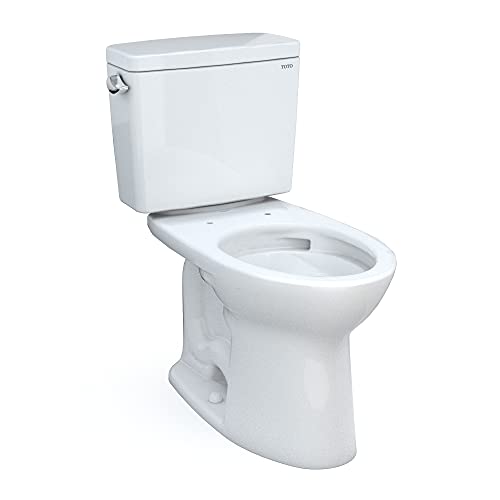
Classic two-piece toilets with tall tanks and elegant, understated proportions, the quiet country-house look that suits a traditional English bathroom without tipping…
Read the guide