

Best French Toilets (2026)
Toilets4.6
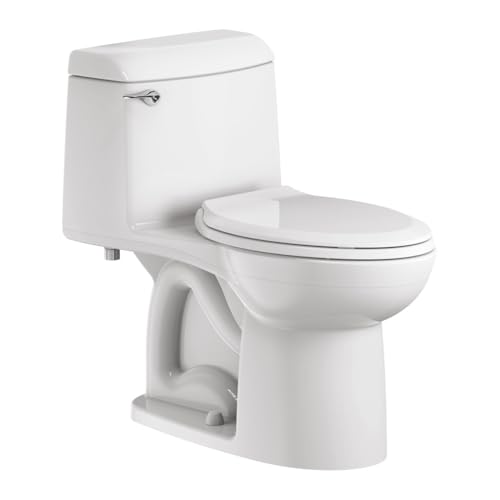
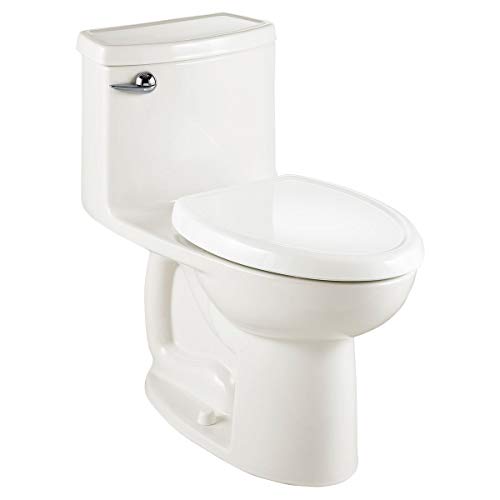
Refined, softly curved one-piece and skirted silhouettes with a polished, Parisian-elegant profile, paired with verified MaP flush scores rather than a stylist's…
Read the guideEvery flush adds up. Here are the actual gallon counts by toilet era, federal standard, and household size, plus what to do if your bathroom is draining your water bill.
Research updated June 2026.
A typical household toilet uses between 8 and 20 gallons of water per person per day depending on the toilet's GPF rating and flush frequency. Pre-1994 toilets use up to 3.5 GPF, federal-standard models use 1.6 GPF, and EPA WaterSense toilets cap at 1.28 GPF.
A toilet uses between 0.8 and 3.5 gallons per flush (GPF) depending on when it was manufactured and whether it carries an EPA WaterSense certification. Toilets made before 1994 typically used 3.5 GPF or more; the Energy Policy Act of 1992 set the federal maximum at 1.6 GPF for toilets sold after 1994; and EPA WaterSense-certified toilets must use no more than 1.28 GPF while still clearing a minimum 350-gram MaP score. High-efficiency models from TOTO (Aquia IV dual flush) and Gerber can go as low as 0.8 GPF on a half flush.
The number printed on the toilet lid or on the nameplate inside the tank tells you the GPF. If there is no label and the toilet predates 1994, assume 3.5 GPF. If a toilet installed in the 1980s or earlier lacks any labeling, 5 GPF was common before the 1992 federal mandate took effect.
| Era / Standard | Typical GPF | Gallons / Day (5 flushes) | Gallons / Year (single user) | Notes |
|---|---|---|---|---|
| Pre-1980 (vintage) | 5.0 GPF | 25 gal | 9,125 gal | Some models up to 7 GPF |
| 1980–1994 | 3.5 GPF | 17.5 gal | 6,388 gal | Most common in older homes |
| Federal Standard (post-1994) | 1.6 GPF | 8 gal | 2,920 gal | Energy Policy Act of 1992 |
| EPA WaterSense Certified | 1.28 GPF | 6.4 gal | 2,336 gal | Best balance of efficiency + MaP performance |
| High-Efficiency Dual Flush (half) | 0.8 GPF | 4–5 gal (mixed) | ~1,600 gal | Full flush typically 1.28–1.6 GPF |
Assumes 5 flushes per person per day, which aligns with the average reported in peer-reviewed plumbing research. The EPA estimates toilets account for nearly 30 percent of an average home's indoor water consumption, making them the single largest water user inside a house.
A family of four using a 1.6 GPF toilet at the average 5 flushes per person per day will consume roughly 32 gallons of water on toilet flushing alone each day, or about 11,680 gallons per year. Upgrading to 1.28 GPF WaterSense toilets cuts that figure to approximately 25.6 gallons per day and saves around 2,336 gallons per toilet per year according to EPA estimates. Dual-flush models used strategically can bring family-wide daily consumption below 20 gallons.
| Household Size | 3.5 GPF (pre-1994) | 1.6 GPF (standard) | 1.28 GPF (WaterSense) | 0.8/1.28 dual flush (avg) |
|---|---|---|---|---|
| 1 person | 17.5 gal/day | 8 gal/day | 6.4 gal/day | ~4.5 gal/day |
| 2 people | 35 gal/day | 16 gal/day | 12.8 gal/day | ~9 gal/day |
| 4 people | 70 gal/day | 32 gal/day | 25.6 gal/day | ~18 gal/day |
| 6 people | 105 gal/day | 48 gal/day | 38.4 gal/day | ~27 gal/day |
The EPA's WaterSense program has certified thousands of toilet models since it launched in 2006. The program requires third-party testing against both a maximum 1.28 GPF threshold and a minimum 350-gram MaP flush score. That dual requirement matters because early low-flow toilets of the 1990s often met the gallon limit but failed on waste removal, creating clog problems that soured consumers on water efficiency for years. Today's certified models have resolved that tension.
A running toilet can waste between 200 and 1,000 gallons of water per day depending on the severity of the leak, with a moderate flapper leak averaging roughly 200 gallons daily according to EPA data. A fully open fill valve can push that figure past 1,000 gallons per day, adding hundreds of dollars to an annual water bill. Even a "silent" leak detectable only with a dye test tablet can waste 30 to 50 gallons per day without any audible sound.
A failed or warped toilet flapper is the most common cause of a running toilet. The flapper seals the opening between the tank and the bowl; when it no longer forms a tight seal, water continuously trickles from the tank into the bowl and refills without any flush occurring. You can test for this with a few drops of food dye in the tank: if color appears in the bowl within 15 minutes without flushing, the flapper is leaking.
A fill valve stuck in the open position is a more severe form of running toilet. Water flows in continuously and exits through the overflow tube, bypassing the bowl entirely. This scenario can waste 1,000+ gallons per day and typically makes an audible hissing sound. Replacing a fill valve is a straightforward repair on most tank toilets, and quality replacement valves from brands like Fluidmaster cost under $15.
Toilet leaks are the most common source of hidden household water waste. The EPA estimates that a single household leak can waste nearly 10,000 gallons of water per year. Running toilets are responsible for a disproportionate share of that figure. Homeowners on metered municipal water should check their water bill for unexplained spikes, which often correlate with a silent toilet flapper leak rather than a visible pipe problem.
The EPA WaterSense standard at 1.28 GPF represents the sweet spot of water efficiency and flush performance, requiring certified toilets to clear at least 350 grams of waste per MaP testing protocol. Models like the TOTO Drake II (1.28 GPF, MaP score of 1,000 grams) and the American Standard Cadet 3 (1.28 GPF WaterSense) demonstrate that modern engineering can achieve maximum MaP scores far above the minimum threshold at this water volume. Going below 1.28 GPF to 0.8–1.0 GPF on dual-flush half-flush cycles is possible but typically requires the full-flush cycle of 1.28 or 1.6 GPF for solid waste removal.
MaP (Maximum Performance) testing is the independent benchmark that matters most when evaluating whether a low-flow toilet actually works. Conducted by the independent consortium map-testing.com, MaP tests measure the maximum weight of solid waste (in grams) a toilet can evacuate in a single flush. Scores range from 250 grams (minimum passing grade for most programs) to 1,000 grams (maximum reported score). For households concerned about clogs, look for any toilet scoring 600 grams or higher. The best models earn a perfect 1,000-gram score at 1.28 GPF.
| Model | GPF | MaP Score | WaterSense | Type | Check Price |
|---|---|---|---|---|---|
| TOTO Drake II | 1.28 | 1,000g | Yes | 2-piece gravity | Check price |
| TOTO UltraMax II | 1.28 | 1,000g | Yes | 1-piece gravity | Check price |
| American Standard Champion 4 | 1.6 | 1,000g | No | 2-piece gravity | Check price |
| American Standard Cadet 3 | 1.28 | 1,000g | Yes | 2-piece gravity | Check price |
| Kohler Highline | 1.28 | 1,000g | Yes | 2-piece gravity | Check price |
| Kohler Cimarron | 1.28 | 1,000g | Yes | 2-piece gravity | Check price |
| TOTO Aquia IV | 1.0 / 0.8 | 600g (full) | Yes | 2-piece dual flush | Check price |
| Woodbridge T-0001 | 1.28 / 0.8 | 800g | Yes | 1-piece dual flush | Check price |
| Gerber Avalanche | 1.28 | 1,000g | Yes | 2-piece gravity | Check price |
| Swiss Madison Sublime | 1.28 | 600g | Yes | 1-piece wall-hung | Check price |
Replacing a pre-1994 toilet (3.5 GPF) with an EPA WaterSense model (1.28 GPF) saves approximately 22,000 gallons of water per year for a family of four, according to EPA WaterSense program estimates. At the national average water rate of roughly $0.01 per gallon, that translates to around $220 in annual water savings per toilet. Upgrading from a 1.6 GPF model to a 1.28 GPF WaterSense toilet saves approximately 2,336 gallons per person per year.
The EPA's WaterSense rebate locator (epa.gov/watersense) lists utility-sponsored rebates available in many states and municipalities that can offset the upfront cost of a WaterSense toilet. Rebates ranging from $25 to $200 per toilet are common in water-stressed regions like the western United States, making the payback period on a replacement toilet as short as one to two years for households on metered water.
State and local utility rebates specifically target pre-1994 toilet replacements because the water savings are disproportionately large. A single 3.5 GPF toilet replaced with a 1.28 GPF WaterSense model frees up more water annually than many other conservation measures combined. Households with multiple older bathrooms should prioritize the highest-use toilets first, typically the master bathroom and any toilet shared by children.
Full toilet replacement delivers the largest water savings but is not always immediately feasible. Several lower-cost approaches can meaningfully reduce water consumption from an existing toilet:
None of these approaches matches the performance and reliability of replacing a pre-1994 toilet with a modern 1.28 GPF WaterSense model. If the toilet dates to the 1990s or earlier, replacement is almost always the better long-term investment. Read our guide to the best flushing toilets for top-rated models across every GPF tier.
Water rates vary substantially by region. The American Water Works Association reports that U.S. residential water rates range from roughly $0.003 per gallon in very low-cost regions to over $0.02 per gallon in high-cost cities. Using a midpoint of $0.01 per gallon:
| GPF Rating | Gallons / Year (family of 4) | Annual Cost (@$0.01/gal) | Savings vs 3.5 GPF |
|---|---|---|---|
| 3.5 GPF (pre-1994) | 25,550 gal | $255.50 | Baseline |
| 1.6 GPF (standard) | 11,680 gal | $116.80 | Save $138.70/yr |
| 1.28 GPF (WaterSense) | 9,344 gal | $93.44 | Save $162.06/yr |
| 0.8/1.28 dual flush | ~6,570 gal | ~$65.70 | Save ~$189.80/yr |
Note that these figures cover water only. Sewer charges, which are typically calculated as a percentage of water consumption, add roughly 50 to 100 percent to the effective cost of water. In cities where sewer rates equal or exceed water rates, the annual savings from upgrading a pre-1994 toilet can exceed $300 per toilet per year for a family of four.
The most water-efficient models currently on the market are concentrated in a few manufacturer families. For detailed rankings see our guides on best dual flush toilets, best low-flow toilets, and EPA WaterSense certified toilets.
TOTO leads the market on combining low water use with high MaP scores. The TOTO Drake and Drake II both carry EPA WaterSense certification at 1.28 GPF and achieve the maximum 1,000-gram MaP score through TOTO's Double Cyclone and Tornado Flush bowl-wash technologies. The TOTO Aquia IV dual flush goes further, offering a 0.8 GPF light flush that still achieves acceptable waste clearance on liquid waste. TOTO's G-Max and E-Max flushing systems also carry WaterSense certification and are available across dozens of bowl shapes and finish options.
Kohler's best-selling Highline and Cimarron lines both offer 1.28 GPF WaterSense models. The Kohler Class Five flushing system is rated at 1,000 grams MaP at 1.28 GPF. Kohler's Revolution 360 flushing technology, available in select Cimarron models, provides a full bowl wash while maintaining the 1.28 GPF water volume. The Kohler Wellworth and Highline Arc also carry WaterSense at 1.28 GPF and 800-gram MaP scores.
The American Standard Champion 4 is known for its 2.375-inch fully glazed trapway and achieves a 1,000-gram MaP score at 1.6 GPF, making it one of the most clog-resistant toilets available even without WaterSense certification. For water efficiency, the Cadet 3 at 1.28 GPF with WaterSense certification and a 1,000-gram MaP score is the better choice for conservation-focused buyers. The American Standard H2Option dual flush offers 1.0 / 0.5 GPF dual-flush capability.
The Woodbridge T-0001 is one of the most popular value-tier one-piece toilets and carries WaterSense certification at 1.28 GPF (full flush) with an 0.8 GPF half flush. Published MaP scores place it around 800 grams on full flush, adequate for most residential applications. The T-0001's skirted trapway design simplifies cleaning while the dual-flush mechanism provides meaningful water savings over full-flush single-flush models.
Swiss Madison targets the modern-design market with wall-hung and skirted one-piece toilets that carry WaterSense certification. Their Sublime and St. Tropez models use 1.28 GPF. Gerber's Avalanche series earns a 1,000-gram MaP score at 1.28 GPF and is distributed primarily through plumbing wholesalers, making it a popular choice for contractors seeking reliable high-efficiency performance at mid-range pricing.
For anyone managing water use in a rental property, read our guide on best toilets for rental properties which covers durability alongside GPF ratings.
Federal law in the United States currently mandates a maximum of 1.6 gallons per flush for all new toilets sold in the country. This limit was established by the Energy Policy Act of 1992 and took effect in 1994 for residences and 1997 for commercial facilities. Several states have enacted stricter standards:
Older toilets (pre-1994) are grandfathered and legal to continue using, but replacement with a WaterSense model at sale of home is required in some municipalities. Check local regulations if you are selling a home with pre-1994 toilets installed.
The national average across all installed toilets is approximately 1.6 gallons per flush, though older homes bring the real-world average up. New toilets sold today average closer to 1.28 GPF due to WaterSense adoption.
Research by the American Water Works Association and the Indoor Water Use in the United States study (DeOreo et al.) places average flush frequency at 5.05 flushes per person per day. Some studies report slightly higher frequencies of 6–7 in households with children.
Yes, when used correctly. Research suggests users select the light flush option for liquid waste roughly 75 percent of the time. At a 0.8 GPF light flush and 1.28 GPF full flush, a dual-flush toilet used in this pattern averages approximately 0.95 GPF per flush, a meaningful reduction over a 1.6 GPF single-flush model.
A moderate flapper leak wastes approximately 200 gallons per day, or 6,000 gallons per month. A severe leak with an open fill valve can waste 30,000 gallons per month. Even a slow drip silent leak can add 1,500 gallons monthly to consumption.
EPA WaterSense is a voluntary labeling program that certifies products meeting maximum water use limits (1.28 GPF for toilets) and minimum performance thresholds (350-gram MaP score). Products must be third-party tested to carry the WaterSense label.
GPF stands for gallons per flush. It is the primary efficiency metric for toilets, measuring the volume of water used with each flush cycle. Federal law caps GPF at 1.6 for all new toilets; EPA WaterSense limits GPF to 1.28.
Check the inside of the tank lid, the back of the tank (often stamped near the water line), or the toilet's model number label. You can look up the model number on the manufacturer website or on the MaP testing database at map-testing.com to find certified GPF ratings.
Yes, when the toilet is designed to take advantage of the full 1.28 GPF volume. TOTO, Kohler, American Standard, and Gerber all offer 1.28 GPF models that score 1,000 grams on MaP testing, the highest possible score. The key is bowl design and trapway geometry, not raw water volume alone.
A single 1.6 GPF toilet used by one person at 5 flushes per day uses 2,920 gallons per year. A 1.28 GPF WaterSense toilet under the same conditions uses 2,336 gallons annually, saving 584 gallons per person per year over the federal standard.
A properly functioning toilet uses zero water between flushes. If water consumption continues between flushes, the toilet has a leak, typically a failing flapper, worn fill valve seat, or a cracked flush valve. The dye test is the fastest way to confirm a silent leak.
MaP (Maximum Performance) is an independent third-party test that measures the maximum grams of solid waste a toilet clears per flush. It matters for water efficiency because it confirms a low-GPF toilet still removes waste effectively. A toilet with 1.28 GPF but only a 300-gram MaP score will cause clogs and double-flushing, negating the water savings.
Yes. The most effective methods are adjusting the fill valve float to lower the tank water level (10–20% savings), installing a fill cycle diverter, and fixing any leaks. These changes are free or very low cost. Full toilet replacement remains the most reliable path to maximum savings.
Replacing a 3.5 GPF toilet with a 1.28 GPF WaterSense model typically achieves payback in 2–5 years depending on local water rates and flush frequency. In high-rate municipalities, payback can occur in under 2 years. State and utility rebates shorten this timeline further.
Pressure-assist toilets do not inherently use less water than gravity toilets; both types are available at 1.28 GPF. Pressure-assist models use compressed air to accelerate flush action, which can reduce double-flushing in challenging drain configurations, but the GPF rating is set by the tank volume, not the flushing mechanism.
Toilets account for approximately 24–30 percent of total household indoor water use according to EPA and AWWA data, making them the largest single indoor use category. Showers are second at approximately 20 percent, faucets third at approximately 19 percent.
Not necessarily. "Low-flow" is an informal term that historically referred to 1.6 GPF toilets introduced in the 1990s. EPA WaterSense is a specific certification for toilets using 1.28 GPF or less that have also passed independent MaP performance testing. All WaterSense toilets are low-flow, but not all low-flow toilets are WaterSense certified.
There is no federal minimum GPF for toilets; manufacturers may produce toilets at any GPF below the federal 1.6 GPF ceiling. The lowest commonly available residential toilets use 0.8 GPF on the half-flush setting. Some composting and ultra-low-flush prototypes use under 0.5 GPF but are not mainstream products.
Smart toilets (integrated bidet seat, auto flush, heated seat) typically flush at 1.28 GPF and carry WaterSense certification. The bidet wash function uses approximately 0.01–0.04 gallons per use, a negligible water volume. Smart toilets do not inherently use more water for flushing than standard WaterSense models.
A non-leaking toilet uses zero water overnight. If your water meter shows consumption during hours when no one in the home is awake, a running toilet is the most probable cause. Check the meter reading before bed and again first thing in the morning to isolate toilet leaks from other possible sources.
TOTO and Kohler consistently rank at the top for water efficiency combined with flush performance. TOTO's Drake II and UltraMax II achieve 1,000-gram MaP scores at 1.28 GPF. Kohler's Highline and Cimarron match this at 1.28 GPF. For ultra-low dual-flush performance, TOTO's Aquia IV at 0.8/1.0 GPF and the Woodbridge T-0001 at 0.8/1.28 GPF are the leading mainstream options.
Toilet water use is one of the most controllable household water expenses. Homes with pre-1994 toilets stand to save over 22,000 gallons per year per toilet by switching to any EPA WaterSense model at 1.28 GPF. The TOTO Drake II, Kohler Highline, and American Standard Cadet 3 deliver 1,000-gram MaP performance at that volume, proving that water efficiency and flush reliability are no longer a trade-off. For households already on 1.6 GPF toilets, the upgrade to 1.28 GPF still saves nearly 2,400 gallons per person annually. The single highest-impact action for any homeowner is to first fix any running toilet, then consider replacing pre-1994 fixtures. Use the EPA WaterSense rebate locator to find local incentives that accelerate the payback.
How we rank & our data sources
We do not run physical lab tests. Rankings are built from published, verifiable data and real owner feedback, never paid placement.
Researched by Marcus Bell · Last updated June 28, 2026 · Our review method
Refined, softly curved one-piece and skirted silhouettes with a polished, Parisian-elegant profile, paired with verified MaP flush scores rather than a stylist's…
Read the guide
Clean, low-profile silhouettes with real MaP-verified flush performance and efficient dual-flush water use, sized for a minimalist Nordic bathroom without sacrificing function.
Read the guide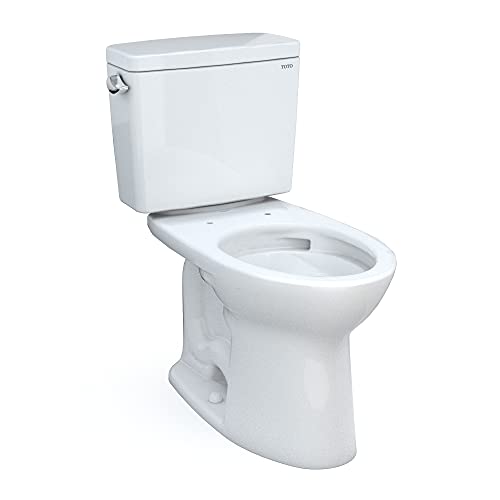
Classic two-piece toilets with tall tanks and elegant, understated proportions, the quiet country-house look that suits a traditional English bathroom without tipping…
Read the guide