Toilet Drainline Carry Explained
Toilets4.6
Drainline carry measures how far solid waste travels in a pipe after one flush. Learn what the MaP test measures and why…
Read the guideThe trapway is the S-shaped or P-shaped passage molded into the base of every toilet bowl that connects the bowl to the drainpipe. Its width -- specifically the diameter of the narrowest point -- determines whether waste clears on the first flush or lodges at the tightest bend. This guide explains every trapway dimension you will see on spec sheets, how published MaP flush-test data relates to trapway width, and which TOTO, Kohler, American Standard, Woodbridge, Swiss Madison and Gerber models use the widest, most clog-resistant passages, all drawn from manufacturer specifications, independent MaP testing and aggregated owner reviews.
The American Standard Champion 4 leads for clog resistance with a fully glazed 2-3/8 inch trapway that is the widest on the consumer market, backed by a 1000 g MaP score. For water-efficient homes, the TOTO Drake pairs a fully glazed 2-1/8 inch trapway with 1000 g MaP on just 1.28 GPF, offering the best balance of clearance and efficiency.
When a toilet clogs repeatedly and no obvious cause explains it, the trapway is almost always involved. It is the curved passage cast into the porcelain base that waste must travel through to reach the drain, and its narrowest interior diameter acts as the choke point of the entire system. A passage that is 1-3/4 inches wide gives waste very little room for error; one that is 2-3/8 inches wide is difficult to block under any normal household use. Yet most toilet shoppers compare tank color, seat height and price without ever looking at this single number.
This guide is built the way we approach every product on this site. We compare published manufacturer trapway dimensions against independent MaP (Maximum Performance) flush-test scores, EPA WaterSense certification status, and the recurring patterns across thousands of verified owner reviews rather than relying on any hands-on lab. By the end you will understand what the trapway does, what diameter and glazing status actually predict about clog frequency, and which specific models from TOTO, Kohler, American Standard, Woodbridge, Swiss Madison and Gerber have the widest, most clog-resistant passages. For the shortlist of the strongest flushers overall, see our roundup of the best flushing toilets.
The trapway is the curved internal passage molded into the base of a toilet bowl that connects the bowl to the floor drain. It holds a small amount of water at all times to block sewer gas, and its narrowest interior diameter determines the maximum size of solid waste that can pass without clogging. A wider, fully glazed trapway clears waste faster and resists blockages far better than a narrow or unglazed one.
Every toilet has a trapway, whether or not you can see it. On a skirted or concealed-trapway design like the Woodbridge T-0001, the outside of the passage is smooth and hidden inside the porcelain pedestal. On a traditional exposed trapway design like the TOTO Drake or the Kohler Highline, the looping curve of the passage is visible at the base of the bowl. The visual difference is purely aesthetic. What matters structurally is the interior diameter and whether the passage surface is glazed.
The trapway performs two jobs simultaneously. First, it acts as the siphon chamber. When water from the flush fills the bowl fast enough, it crests the top of the trapway curve and gravity pulls the contents of the bowl through in a continuous draw called the siphon. The faster and more completely the siphon forms, the more the bowl clears in one pull. A wider trapway lets the siphon form with less restriction, which is one reason MaP scores and trapway width tend to track together on high-performing models. Second, the standing water held in the U-bend of the trapway forms a seal against sewer gas that would otherwise back-fill the bathroom. Understanding both functions helps explain why trapway diameter is not a number to ignore when reading a spec sheet.
Standard residential toilet trapways range from about 1-3/4 inches to 2-3/8 inches in interior diameter. A 2 inch diameter is the practical baseline for clog resistance on most modern toilets, and anything below that falls short for busy households. The American Standard Champion 4 holds the widest consumer-market trapway at 2-3/8 inches, while most TOTO and Kohler high-performance models use a fully glazed 2-1/8 inch passage.
Trapway width is not standardized across the industry the way flush valve size or rough-in dimension is. Manufacturers have wide latitude to design the internal passage, and the result is a range from budget models that barely clear 1-3/4 inches to specialty clog-resistant designs with openings near 2-3/8 inches. The table below maps the common dimensions to what they mean in practice.
| Trapway Diameter | Typical Use Case | Clog Risk | Example Models | MaP Range |
|---|---|---|---|---|
| 1-3/4 inch | Budget, compact, older models | Higher | Entry-level imports | 300 to 600 g |
| 2 inch | Mid-range two-piece, most standard toilets | Moderate | Gerber Viper, Kohler Highline | 600 to 800 g |
| 2-1/8 inch | High-performance, fully glazed | Low | TOTO Drake, TOTO Drake II, Kohler Cimarron | 800 to 1000 g |
| 2-3/8 inch | Maximum clog resistance | Very Low | American Standard Champion 4 | 1000 g |
| Skirted (concealed) | Modern one-piece, varies by model | Model-dependent | Woodbridge T-0001, Swiss Madison St. Tropez | 600 to 1000 g |
The jump from 2 inches to 2-1/8 inches may appear negligible, but in cross-sectional area terms it represents a meaningful increase in the channel size. The jump from 2 inches to the Champion 4's 2-3/8 inches is larger still, which is why American Standard has built an entire product identity around that measurement. For households with heavy daily use, a large family or frequent clogging complaints, those fractions of an inch matter more than almost any other specification on the sheet.
A wider trapway reduces the chance of clogging but does not guarantee a stronger flush by itself. Flush strength depends on the flush valve size, water volume and bowl geometry working together with the trapway. A 2-1/8 inch fully glazed trapway on a TOTO Drake with a 3 inch G-Max valve scores 1000 g on the MaP test, matching the performance of models with even wider passages because the complete system is well-engineered.
Trapway diameter and flush strength are related but not the same thing. Trapway diameter sets the ceiling on what can physically pass through the toilet, while the flush system determines whether enough force is generated to push waste through that passage cleanly. You need both elements to be right. A very wide trapway fed by a weak flush valve can still leave behind residue that builds up over time and eventually causes a blockage. Conversely, a moderate trapway paired with a fast, high-volume flush that creates a strong siphon will clear nearly any normal household waste without difficulty.
This is why MaP scores are more predictive of real-world performance than trapway diameter alone. The MaP test standardizes the measurement by actually flushing a known quantity of solid waste through the complete toilet and measuring what clears. A TOTO Drake with its 2-1/8 inch fully glazed trapway and G-Max 3 inch flush valve achieves a perfect 1000 g score, meaning the system as a whole, not just the passage, is optimized. The same relationship shows up across Kohler's Cimarron and Gerber's Viper: the trapway width sets the potential, and the flush technology decides whether that potential is realized. Our detailed toilet buying guide covers how to weight these specifications against each other when comparing models.
A fully glazed trapway has the same smooth vitreous china finish on the inside of the passage that the bowl surface has. An unglazed passage has a rough, porous surface that waste and mineral deposits adhere to over time, gradually narrowing the effective width of the channel. Fully glazed trapways resist buildup, flush more cleanly and are significantly less likely to clog even at the same nominal diameter as an unglazed one.
Glazing is the ceramic coating baked onto porcelain during manufacturing that gives the inside of a toilet bowl its characteristic smooth, non-porous surface. When that same coating extends all the way through the trapway passage, waste slides through with minimal friction, mineral deposits have nowhere to grip, and the effective diameter of the channel stays close to the nominal manufacturer figure for the life of the toilet. When the trapway is left unglazed, the rough porcelain surface acts like very fine sandpaper for passing waste and minerals alike.
Unglazed trapways were common on older and budget designs. In a hard-water area, mineral scale can deposit on the rough inner surface over months and years, slowly shrinking the effective width. On a toilet with an already narrow 1-3/4 inch passage, that buildup can reduce clearing capacity noticeably within a few years. On a fully glazed 2-1/8 inch trapway, scale has little to grip, so the channel retains its size and slipperiness far longer. This is one reason the long-term clog resistance of a premium fully glazed design like the TOTO Drake outperforms many budget alternatives even when their nominal trapway dimensions look comparable on a spec sheet.
The American Standard Champion 4 combines a fully glazed trapway with its record-wide 2-3/8 inch diameter, which is the spec combination most associated with exceptional clog resistance in owner reviews. TOTO uses its proprietary SanaGloss and CeFiONtect ionized glazing on multiple models, which owners note keeps the bowl clean with less scrubbing. This glazing, whether applied to the bowl surface or the trapway interior, is part of why TOTO's flush performance holds up over years of use, not just at the moment of purchase. If you want more detail on how CeFiONtect glazing specifically works and which TOTO models carry it, our explainer on what CeFiONtect glaze is covers the technology and the models it appears on.
The American Standard Champion 4 has the widest fully glazed trapway of any mainstream residential toilet at 2-3/8 inches, and it pairs that with a 4 inch flush valve and a 1000 g MaP score. No other consumer-market gravity toilet published a wider certified trapway dimension as of mid-2026. For buyers who prioritize maximum clog resistance above water savings, the Champion 4 is the clear specification leader.
American Standard engineered the Champion 4 specifically around clog resistance, and the 2-3/8 inch fully glazed trapway is the centerpiece of that design. The brand has marketed the model with a "never clog" guarantee across a long product life, which is a significant claim for any consumer product. In aggregated owner reviews, the Champion 4 consistently earns the strongest marks for clog resistance of any widely available gravity toilet, with a notable pattern of households that switched to it specifically after repeated problems with other brands reporting a near-complete end to plunger use.
The tradeoff is water use. The Champion 4 operates at 1.6 GPF, which is the federal maximum and 25 percent more water per flush than a 1.28 GPF WaterSense model. Over a year of heavy use in a family of four, that difference adds up to several thousand gallons. Buyers who need maximum clog resistance and have reliable high water pressure tend to view that cost as worthwhile. Those who want a balance of strong flushing and water efficiency, and most households fall in this category, will find the TOTO Drake's 2-1/8 inch fully glazed trapway combined with its 1000 g MaP score and 1.28 GPF water use is a better overall package.
If chronic clogging is the primary complaint, measure your trapway options against each other using MaP score first and trapway diameter second, not the other way around. The reason is that a toilet with an excellent flush system can clear a fully glazed 2-1/8 inch passage just as effectively as a poorly flushed 2-3/8 inch one. When both specifications are strong, as they are on the American Standard Champion 4 and the TOTO Drake, that is when clog resistance becomes genuinely exceptional. A wide but unglazed trapway paired with a weak flush is often worse than a narrower but glazed and well-flushed alternative.
The models below represent the strongest combinations of trapway width, glazing quality, MaP score and overall flush design from published manufacturer data and independent MaP testing as of June 2026.
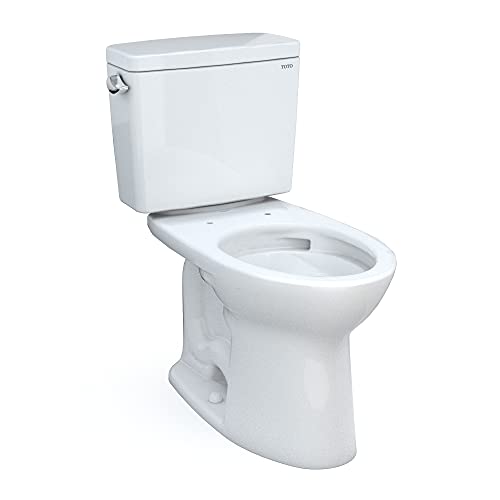
The TOTO Drake sets the standard that most competing designs are compared against: a fully glazed 2-1/8 inch trapway, a 3 inch G-Max flush valve and a perfect 1000 g MaP score on 1.28 gallons, the combination that makes it the most consistently recommended toilet on this site.
The G-Max system works by releasing a large volume of water through the 3 inch valve in a fast, low-center-of-gravity surge that fills the bowl from the bottom rather than cascading from the rim alone. That surge builds a powerful siphon, and the wide, glazed 2-1/8 inch trapway offers minimal resistance as the siphon pulls waste through. Owner reviews consistently note that the Drake almost never requires a second flush under normal household conditions.
TOTO offers the Drake in both standard and ADA-compliant comfort-height versions, with a choice of elongated and round bowls, and replacement parts, flappers and fill valves are stocked at virtually every plumbing supplier and large home improvement retailer in the country. The two-piece design means that if the tank is ever damaged, it can be replaced without buying an entirely new unit. For a deeper look at this specific model, our TOTO Drake review covers the full specification set, common owner feedback and how it compares to the Drake II.
The Drake remains the easiest single recommendation when someone asks which toilet they should buy. Not because it wins on every individual specification, but because it is the only model that simultaneously hits 1000 g MaP, 1.28 GPF WaterSense, a 2-1/8 inch fully glazed trapway and nearly universal parts availability at a reasonable price. That four-way combination is unique in the market.
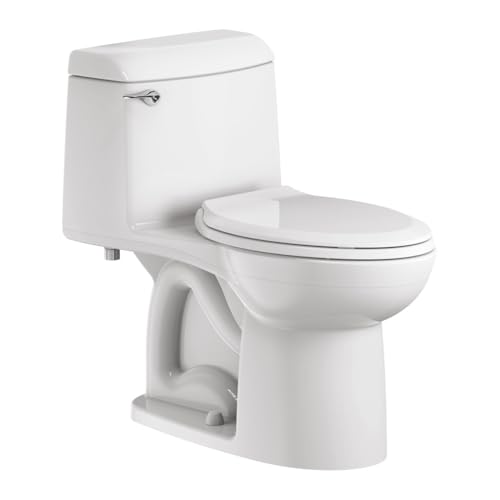
When clog prevention is the only priority and water use is a secondary concern, the Champion 4's 2-3/8 inch fully glazed trapway paired with a 4 inch flush valve and 1000 g MaP score is the specification leader on the consumer market by a clear margin.
The 4 inch flush valve is what allows the Champion 4 to move enough water fast enough to take full advantage of the 2-3/8 inch passage. The result is a flush that clears the bowl in a single, forceful pour that almost nothing can resist. Aggregated owner reviews reflect this: the most commonly cited reason for choosing the Champion 4 is a previous toilet that clogged too often, and the dominant pattern in follow-up reviews is that clogging problems resolved entirely after switching.
The 1.6 GPF figure means it does not qualify for EPA WaterSense certification, which matters if your local utility offers rebates tied to that label. Where clog resistance clearly outweighs water-saving incentives, the Champion 4's specification is difficult to match. Our comparison of the TOTO Drake versus the Champion 4 weighs the tradeoffs between the two dominant high-MaP designs in detail.
The Champion 4 is the right answer to a very specific question: which toilet is least likely to clog no matter what. If that is the question, the 2-3/8 inch trapway and 4 inch valve make the answer straightforward. But if the question is which toilet performs best across flush power, water efficiency and long-term reliability combined, the Drake edges it out because the Champion 4 uses 25 percent more water per flush to achieve the same 1000 g MaP result.

The UltraMax II brings TOTO's Double Cyclone flush technology and a fully glazed trapway into a seamless one-piece format, delivering the same 1000 g MaP performance as the Drake with the added benefit of having no tank-to-bowl seam to collect dust or leak.
TOTO's Double Cyclone system uses two nozzles to generate a cyclonic water flow around the bowl rather than relying solely on rim holes, which produces a thorough rinse of the bowl surface in addition to the flushing force. The 2-1/8 inch fully glazed trapway with CeFiONtect ionized glazing on eligible configurations resists buildup better than unglazed surfaces. Owner reviews place it among the highest-rated TOTO models on overall satisfaction, particularly for the cleaning ease that comes from the one-piece design.
The UltraMax II is heavier than the Drake and costs more, which are the two factors that steer buyers toward the two-piece when budget and installation ease are primary concerns. But if you want the best TOTO trapway and flush performance in a one-piece body, the UltraMax II is the pick. Our comparison of the TOTO Drake versus UltraMax II details every specification difference between the two.
The UltraMax II is the toilet for buyers who refuse to compromise between form and function. It delivers the same 1000 g MaP flush strength as the Drake and the same 2-1/8 inch glazed trapway in a sleeker one-piece shell. The price premium over the Drake is real but buys you a toilet that is genuinely easier to clean and looks better in a finished bathroom.

The Aquia IV uses dual-flush technology with a fully glazed trapway to deliver genuine water savings without sacrificing the clog resistance that makes it practical for daily family use.
The Aquia IV's TORNADO flush system uses a rimless bowl with two nozzles to generate a powerful spiral that cleans the entire inner surface and drives a full siphon on the 1.28 gallon full flush. The 800 g MaP score on full flush is below the Drake's maximum, but it represents genuine clearing power for all normal household waste. The skirted design hides the trapway, meaning the external shape gives no clue to its actual passage dimensions, but the fully glazed internal passage resists buildup in the same way as exposed-trapway designs.
For households primarily motivated by water efficiency, the dual-flush 0.9 GPF partial flush for liquids and 1.28 GPF full flush combination makes the Aquia IV one of the most efficient models on the WaterSense roster. The skirted profile also makes it easier to clean around the base. Our comparison of the UltraMax II versus Aquia IV covers the tradeoffs between performance focus and efficiency focus in TOTO's lineup.
The Aquia IV is the answer when a household wants to save water seriously without buying a model that clogs. The 800 g MaP on the full flush handles essentially all normal household waste, and the partial flush for liquid-only use is where the real water savings accumulate over a year. It is a more thoughtful design than most budget dual-flush alternatives, and the glazed skirted trapway holds up well in hard-water areas.

The Kohler Cimarron combines a 1000 g MaP score with WaterSense 1.28 GPF efficiency and a fully glazed trapway at a mid-range price that makes it one of the most competitive specifications-per-dollar options in Kohler's lineup.
Kohler's Class Five flush system is built around rapid water delivery through a large flush valve and a wide, fully glazed 2-1/8 inch trapway. In independent MaP testing, the Cimarron consistently reaches the 1000 g ceiling while using only 1.28 gallons, which puts it in the same performance tier as the TOTO Drake and UltraMax II. Owner reviews specifically praise its comfort height, which places the rim at around 16.5 inches for easier use by adults, and report a very low incidence of clogging under normal use.
For a full-length comparison between the two leading Kohler mid-range models, our guide to the Kohler Cimarron versus Highline covers where the two diverge on flush system design, bowl shape availability and price. The Cimarron tends to edge out the Highline on both flush performance and the ease of comfort-height configurations.
For buyers who want a name-brand performance toilet without spending for TOTO's premium pricing, the Cimarron is the clearest recommendation in Kohler's catalog. The 1000 g MaP and 2-1/8 inch glazed trapway match the Drake spec-for-spec at a price that frequently undercuts it. The lifetime china warranty is also a meaningful differentiator over TOTO's one-year limited coverage.

The Woodbridge T-0001 is the strongest modern-profile skirted toilet at its price tier, with a concealed trapway, dual-flush controls and a MaP score that makes it a realistic upgrade for design-focused bathrooms.
The T-0001's concealed trapway gives it the clean slab-sided silhouette that defines modern toilet design, and the dual flush button on top of the tank (not a handle) reinforces the contemporary look. The 800 g MaP on the full 1.6 gallon flush is adequate for the majority of household use but falls short of the 1000 g scores on TOTO and Kohler's top models. In aggregated owner reviews, satisfaction is high for the price range, with the design and ease of cleaning cited most often as reasons for recommendation.
The one-year limited warranty is shorter than Kohler's lifetime china coverage, and replacement parts are less universally stocked than TOTO or American Standard parts. For a design-first buyer who wants the skirted look at a moderate price, those are reasonable tradeoffs. Our review of the Woodbridge T-0001 covers its full specifications and the most common installation notes from owner reports.
The T-0001 occupies an important space in the market: it is the toilet that lets a renovation budget stretch further by delivering a high-design look without the premium price of TOTO's skirted designs. The 800 g MaP on the full flush is sufficient for normal use, and the concealed trapway eliminates the cleaning frustration of exposed-trapway designs. Just verify your plumber is familiar with concealed-trapway installation before committing.
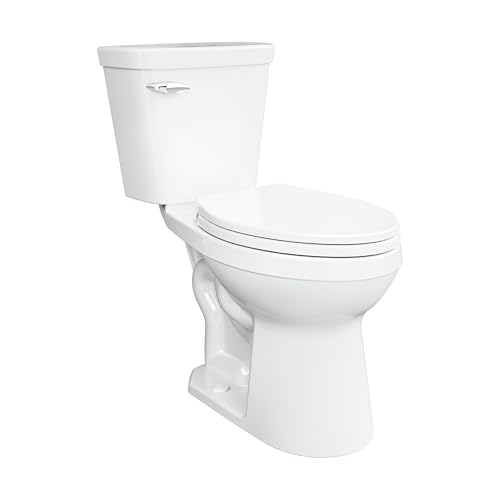
The Gerber Viper delivers a 1000 g MaP score and a fully glazed trapway at one of the lowest price points among certified high-performance gravity toilets, making it the standout choice for rental properties and budget-sensitive installations.
The Viper achieves its 1000 g MaP score through a combination of a well-designed gravity flush system and a fully glazed 2 inch trapway, which at that diameter is narrower than the Drake or Cimarron. The fully glazed surface compensates for the narrower passage by ensuring waste passes without friction or buildup. Owner reviews are consistent: the Viper flushes reliably and does not require a plunger under normal family use, which is the key promise for a rental-property purchase decision.
Gerber is a well-established professional plumbing brand that is more familiar to contractors than to retail consumers, which means parts and service support are well-established in the professional channel. For property managers or landlords outfitting multiple bathrooms, the combination of certified performance and lower unit cost makes the Viper a logical choice.
The Viper proves that a 1000 g MaP score does not require a premium brand or a wide trapway if the flush system is well-engineered. For rental properties, the value case is straightforward: certified clog resistance at lower initial cost means fewer service calls and lower long-term maintenance cost. The narrower 2 inch trapway compared to the Drake is a real specification gap, but the glazed surface and strong flush compensate for it in normal use.
The flush system and trapway size work together, and neither alone predicts real-world performance as well as the combination. In published MaP testing, several toilets with 2 inch trapways score 1000 g because their flush systems are highly effective, while some toilets with wider passages score below 800 g because their flush systems are underpowered. When the MaP score is available, use it as your primary filter and treat trapway diameter as a secondary confirming specification.
The MaP test captures the performance of the complete toilet system: bowl geometry, flush valve size, water volume, trapway diameter and glazing all contribute to the single gram score that comes out. That is exactly why MaP is more useful than looking at any single specification in isolation. A toilet with a 2-1/8 inch fully glazed trapway and a weak flush system will underperform a toilet with a 2 inch trapway driven by an excellent 3 inch flush valve, because the siphon never fully forms in the first case.
That said, trapway diameter remains a meaningful secondary filter. When two toilets post similar MaP scores, the wider and more completely glazed trapway is more forgiving of variation in water pressure, flush timing and the nature of what is being flushed. That margin matters in real households in a way that MaP testing under controlled conditions does not fully capture. The practical guideline is to filter first by MaP (800 g minimum, 1000 g preferred), then confirm the trapway is at least 2 inches and fully glazed, and you will have eliminated the toilets most likely to cause problems. For a full step-by-step comparison method, our guide to how to choose a toilet walks through every specification in order of importance.
The skirted or concealed design is purely external. A skirted trapway encloses the internal passage in a smooth porcelain shell that makes cleaning easier, but the interior passage dimensions are unchanged. Clog resistance depends on the interior diameter and glazing status, not on whether the outside of the passage is visible. A skirted toilet with a narrow, unglazed interior can clog more than an exposed-trapway design with a wide, glazed passage.
The visual difference between a skirted toilet and a traditional two-piece design is significant: on a skirted model like the Woodbridge T-0001 or the TOTO Aquia IV, the base forms a smooth rectangular slab with no exposed curving passage. On a traditional design like the TOTO Drake or the Kohler Highline, the trapway loop is visible on the outside of the base. Neither shape inherently clogs more or less. The interior is what matters.
The practical cleaning difference is real, though. An exposed trapway has ridges and curves on the outside that collect dust, require a brush to clean around and are harder to sanitize quickly. A skirted design wipes down in seconds. This is why modern bathroom renovations often favor skirted designs even at higher cost, but it is entirely an aesthetic and cleaning-convenience consideration. The clog-resistance specification to check is still the interior diameter and glazing status, which the manufacturer's spec sheet should list regardless of the external design. Our comparison of skirted versus exposed trapway toilets covers the full cleaning, installation and performance difference between the two formats.
One-piece and two-piece toilets can have identical trapway dimensions. The one-piece or two-piece construction describes how the tank and bowl are manufactured, not the internal waste passage. Both formats are available with wide, fully glazed trapways and high MaP scores. The TOTO Drake (two-piece) and TOTO UltraMax II (one-piece) share the same 2-1/8 inch fully glazed trapway and both hit 1000 g on MaP testing.
Many buyers assume that a one-piece toilet has a better or worse trapway than a two-piece alternative. In reality the trapway design is a function of the bowl, not of whether it is joined to the tank. TOTO's Drake and UltraMax II use the same bowl geometry and the same trapway specification; the UltraMax II simply has the tank cast into the body. The same pattern applies to Kohler: the two-piece Highline and the one-piece Santa Rosa are in the same performance tier with similar trapway dimensions.
What one-piece designs do offer is a simpler external shape and, in most cases, slightly lighter installation weight per section. They do not inherently improve the trapway. Buyers who care about clog resistance should check the trapway specification and MaP score directly for the specific model they are evaluating, regardless of whether it is one-piece or two-piece. For a full breakdown of the practical differences between the two construction types, see our guide to one-piece versus two-piece toilets.
After reviewing the published trapway specifications across the major brands, the clearest takeaway is that there are really two tiers that matter. First, 2 inch and below: adequate for light use but the models in this range are statistically more represented in clogging complaints in owner reviews. Second, 2-1/8 inch and above with full glazing: the tier where clogging essentially stops being a recurring topic in owner feedback. If you take nothing else from this guide, remember that 2-1/8 inch fully glazed is the practical floor for a clog-resistant toilet in a busy household, and the models that meet it are available from TOTO, Kohler, American Standard and Gerber at a range of price points. You do not have to buy the most expensive option to get there.
| Toilet | Trapway | Glazing | MaP | GPF | WaterSense | Check Price |
|---|---|---|---|---|---|---|
| American Standard Champion 4 | 2-3/8 in | Full | 1000 g | 1.6 | No | Check price |
| TOTO Drake | 2-1/8 in | Full | 1000 g | 1.28 | Yes | Check price |
| TOTO Drake II | 2-1/8 in | Full | 1000 g | 1.28 | Yes | Check price |
| TOTO UltraMax II | 2-1/8 in | Full | 1000 g | 1.28 | Yes | Check price |
| TOTO Aquia IV | Concealed glazed | Full | 800 g | 0.9/1.28 | Yes | Check price |
| TOTO Vespin II | 2-1/8 in | Full | 1000 g | 1.28 | Yes | Check price |
| Kohler Cimarron | 2-1/8 in | Full | 1000 g | 1.28 | Yes | Check price |
| Kohler Highline | 2 in | Full | 800 g | 1.28 | Yes | Check price |
| Kohler Santa Rosa | 2 in | Full | 800 g | 1.28 | Yes | Check price |
| American Standard Cadet 3 | 2-1/8 in | Full | 1000 g | 1.28 | Yes | Check price |
| Woodbridge T-0001 | Concealed glazed | Full | 800 g | 1.0/1.6 | Partial | Check price |
| Swiss Madison St. Tropez | Concealed glazed | Partial | 600 g | 1.1/1.6 | Partial | Check price |
| Gerber Viper | 2 in | Full | 1000 g | 1.28 | Yes | Check price |
| Gerber Avalanche | 2-1/8 in | Full | 1000 g | 1.28 | Yes | Check price |
The table above distills the published manufacturer specifications and available MaP test data for the most commonly purchased models. Models marked with full glazing have manufacturer-confirmed fully glazed trapway surfaces. "Concealed glazed" indicates a skirted design where the full interior passage dimensions are not separately listed but the manufacturer confirms glazing across the waste channel.
Trapway dimensions are rarely on the marketing page but are almost always in the detailed specification sheet or installation guide, which manufacturers publish on their websites and which retailers like Home Depot and Lowe's link from the product listing. Here is how to find the number reliably.
Step 1: Locate the model number. On a replacement buy, the model number is usually stamped inside the tank under the lid. On a new purchase, it is on the box and the product page.
Step 2: Find the spec sheet. Search the manufacturer's website for the model number plus "spec sheet" or "installation guide." TOTO, Kohler, American Standard and Gerber all publish PDF documents that include trapway diameter. Woodbridge and Swiss Madison sometimes list it under "passage size" or "outlet size."
Step 3: Look for glazing status. Some spec sheets say "fully glazed trapway" explicitly. Others omit it. If you cannot confirm glazing status from the spec sheet, contact the manufacturer's technical support line with the model number. For TOTO models, the presence of CeFiONtect in the model description confirms full glazing of the bowl and passage surfaces.
Step 4: Cross-reference with the MaP database. The MaP testing program at map-testing.com maintains a searchable database of tested models with their gram scores. A toilet listed at 800 g or higher on that database has passed an independent verification of its flushing performance, which is a useful confirmation that the manufacturer's trapway claims translate to real-world clearing ability.
Step 5: Check the rough-in. While you have the spec sheet open, confirm the rough-in dimension. This is the measurement from the finished wall to the center of the floor drain, and it must match your bathroom's existing plumbing. The most common value is 12 inches, but 10-inch and 14-inch variants exist. No amount of excellent trapway engineering helps if the toilet physically does not fit the drain location. For a step-by-step measurement guide, see our article on how to measure toilet rough-in.
A wide trapway reduces but does not eliminate clogs. Clogs with wide-trapway toilets typically result from non-flushable wipes or products being flushed, buildup in the drain stack below the toilet (not in the trapway itself), or insufficient water pressure creating a weak siphon that fails to clear the passage completely. If a wide-trapway toilet clogs repeatedly, the problem is almost always downstream of the bowl or related to flushing practices, not the toilet design.
Owners of American Standard Champion 4 and TOTO Drake toilets occasionally still report clogs, and the cause is almost never the trapway itself. The most common culprits are: thick paper products, flushable wipes (which are not truly flushable in the plumbing sense), cotton balls or other non-waste items introduced by household members, and partial blockages in the drain line below the floor that have nothing to do with the toilet. A partial drain-line blockage can cause even a 2-3/8 inch trapway to back up because the restriction is downstream.
Hard water areas present a second long-term risk. Even on a fully glazed trapway, mineral scale can deposit at the entry of the trap where water slows and the passage curves, gradually narrowing the effective opening. Periodic cleaning with a descaling product appropriate for porcelain toilets removes that buildup before it becomes a flow restriction. On an unglazed trapway, the same mineral deposits accumulate far faster because the rough surface provides more adhesion points. This is the long-run argument for choosing full glazing over a nominally identical unglazed trapway, even when the two look the same on a spec sheet at the point of purchase.
The trapway is the S-shaped or P-shaped internal passage molded into the base of a toilet bowl that connects the bowl to the floor drain. It holds water to block sewer gas and determines the maximum size of solid waste that can pass through the toilet without clogging.
Most residential toilets have a trapway between 1-3/4 and 2-3/8 inches in interior diameter. A 2 inch diameter is the practical baseline for modern toilets, and anything below that is considered narrow. The American Standard Champion 4 holds the widest consumer-market specification at 2-3/8 inches.
A 2-1/8 inch fully glazed trapway is the practical minimum for reliable clog resistance in a busy household. The widest available is the American Standard Champion 4 at 2-3/8 inches. For the best balance of width, glazing and flush power, the TOTO Drake's 2-1/8 inch fully glazed trapway paired with a 1000 g MaP score is the most commonly recommended specification.
A fully glazed trapway has the same smooth, non-porous vitreous china finish on the inside of the waste passage that coats the interior of the bowl. This surface resists waste adhesion and mineral buildup, keeping the effective passage width close to the nominal specification for the life of the toilet. An unglazed trapway has a rough surface that accumulates deposits over time.
Not necessarily. Flush strength depends on the flush system, flush valve size and bowl geometry working together with the trapway. A wide trapway reduces clog risk but does not automatically produce a stronger flush. The MaP score measures the complete system performance and is more predictive of real-world flushing than trapway width alone.
A MaP score of 800 grams or higher is good, and 1000 grams, which is the practical ceiling of the test, is excellent. A 1000 g score means the toilet cleared the test's maximum solid-waste load in a single flush. For busy family bathrooms, 1000 g is the target specification.
Yes. The TOTO Drake has a 2-1/8 inch fully glazed trapway, which places it in the top tier of clog-resistant gravity toilets. Combined with its G-Max 3 inch flush valve and 1000 g MaP score, the Drake's complete system is one of the most reliable for preventing clogs at 1.28 GPF.
The American Standard Champion 4 has a 2-3/8 inch fully glazed trapway, which is the widest certified dimension available on a mainstream residential gravity toilet as of mid-2026. It pairs this with a 4 inch flush valve and achieves a 1000 g MaP score on 1.6 gallons per flush.
No. A skirted or concealed-trapway design is purely cosmetic. The interior passage dimensions determine clog resistance, and skirted toilets can have wide, fully glazed internal channels. The external appearance does not affect how well the toilet clears waste.
The Kohler Cimarron has a 2-1/8 inch fully glazed trapway and achieves a 1000 g MaP score on 1.28 GPF with WaterSense certification. It is one of the strongest-performing trapway specifications in Kohler's mid-range lineup and matches the TOTO Drake on the key clog-resistance specifications.
No. The one-piece or two-piece construction describes how the tank and bowl are formed, not the trapway dimensions. The TOTO Drake (two-piece) and TOTO UltraMax II (one-piece) share the same 2-1/8 inch fully glazed trapway and both score 1000 g on MaP testing. Trapway quality depends on the specific bowl design, not on tank construction.
Check the manufacturer's published specification sheet or installation guide, which is usually available on the brand's website by searching for the model number plus "spec sheet." The trapway or passage diameter is listed there. Cross-reference with the MaP database at map-testing.com to confirm the flush performance score for that model.
Yes. In hard-water areas, mineral scale deposits on the inner surface of the trapway over time, gradually narrowing the effective passage width. A fully glazed trapway resists this buildup significantly better than an unglazed one. Periodic descaling with a porcelain-safe product helps maintain the channel's original diameter on any trapway surface.
When a wide-trapway toilet clogs, the cause is almost never the trapway itself. The most common reasons are non-flushable wipes or products being disposed through the toilet, blockages in the drain stack below the floor, or insufficient water pressure preventing a full siphon from forming. The toilet trapway is rarely the constraint in a repeat-clogging situation.
CeFiONtect is TOTO's proprietary ionized glazing technology applied to the bowl interior and, on many models, through the trapway passage. The smooth, ultra-fine surface created by CeFiONtect reduces the adhesion of waste, scale and bacteria compared to standard vitreous china glazing, keeping the passage cleaner over time. Not all TOTO models include CeFiONtect; check the model specification to confirm.
A 1-3/2-3/8-inch trapway is below the recommended minimum for a household with regular adult use. At that diameter, the passage is narrow enough that certain types of waste, paper volume and any buildup from hard water can cause blockages under normal use conditions. For a family bathroom, a minimum of 2 inches with full glazing is a more reliable specification target.
There is no direct link between trapway diameter and WaterSense certification. WaterSense certifies that a toilet uses 1.28 gallons per flush or less and passes a verified flush performance test. Many WaterSense toilets have wide, fully glazed trapways, including the TOTO Drake, TOTO UltraMax II and Kohler Cimarron, but the certification does not set any trapway dimension requirement.
The Gerber Viper is the strongest budget option with a fully glazed 2 inch trapway and a 1000 g MaP score on 1.28 GPF with WaterSense certification. The American Standard Cadet 3 also offers a 2-1/8 inch fully glazed trapway with 1000 g MaP at a price below the TOTO Drake and is widely available at major home improvement retailers.
The Swiss Madison St. Tropez uses a concealed skirted design, and its published interior passage specification is not as widely documented as TOTO or American Standard models. Its MaP performance tends to fall in the 600 gram range depending on configuration, which is lower than the 800 g minimum recommended for busy households. It is better suited for guest bathrooms with moderate use than for primary family bathrooms.
Trapway width and glazing quality are the two specifications most reliably linked to clog resistance, but they should always be read alongside the MaP score rather than in isolation. For most households, the TOTO Drake's 2-1/8 inch fully glazed trapway and 1000 g MaP on 1.28 gallons is the best overall specification package available. Buyers with chronic clogging history and no water-efficiency mandate should look at the American Standard Champion 4's 2-3/8 inch fully glazed trapway, the widest on the consumer market. Budget-conscious buyers get strong trapway performance from the Gerber Viper and American Standard Cadet 3. In every case: confirm the MaP score first, confirm full glazing second, and check the rough-in before purchasing anything.
Drainline carry measures how far solid waste travels in a pipe after one flush. Learn what the MaP test measures and why…
Read the guideToilet floor bolts spinning instead of tightening usually means a broken flange or stripped nut. Here is how to diagnose it and…
Read the guideShould tile run under the toilet or stop at the flange? Learn the right order, why it matters for leaks, and how…
Read the guide