
How to Replace All the Parts Inside a Toilet Tank
Toilets4.6
Learn how to rebuild a toilet tank with a full repair kit, from shutting off water to installing a new fill valve,…
Read the guideThe toilet is the single largest source of indoor water use in a typical home, drawing roughly a quarter to a third of every gallon used inside the house, so it is also where the biggest water savings live. This guide shows exactly how to save water with your toilet, from quick no-cost fixes like stopping a silent leak and adjusting the fill level, to choosing an EPA WaterSense certified 1.28 gallon or dual-flush model with a high MaP flush score so you never erase the savings with a second flush.
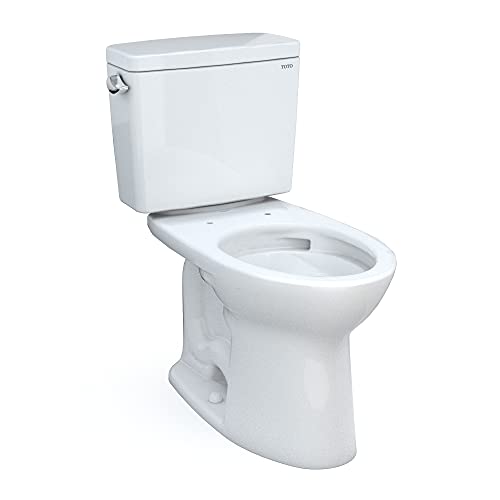
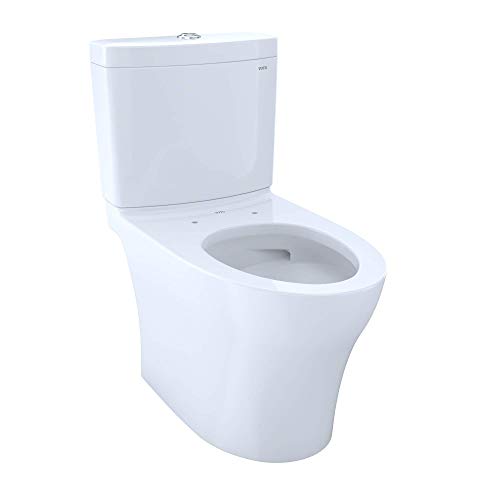
The fastest way to save water with your toilet is to fix any silent flapper leak first, then replace a pre-1994 high-volume toilet with an EPA WaterSense certified 1.28 gallon model. The best single upgrade is the TOTO Drake II, which clears a full 1000 gram MaP load at 1.28 gallons, so you save water without ever flushing twice. For the lowest daily average, choose the dual-flush TOTO Aquia IV at 0.8 gallons on a light flush.
Saving water with your toilet comes down to two separate jobs that people often blur together. The first job is to stop wasting the water you already have, which means finding and fixing silent leaks, setting the tank fill to the correct line, and using the right flush for the job. The second job is to draw less water on every flush, which means moving from a thirsty older toilet to a modern low-flow or dual-flush model that uses 1.28 gallons or less while still clearing the bowl in one push. Do both and a typical four-person household can cut thousands of gallons a year off its water bill, with no change in how the bathroom actually feels to use.
We do not run our own flush trials. Instead we compare published manufacturer specifications, independent MaP (Maximum Performance) flush-test gram scores, EPA WaterSense certification, the rated gallons per flush, the flush-system and flush-valve design, and the patterns across thousands of verified owner reviews. For saving water specifically, two numbers matter above all others and have to be read together: the gallons per flush, because that is the savings, and the MaP gram score, because a low-water toilet only saves water if it clears the bowl in one flush instead of two. A weak low-flow toilet that needs a double flush uses more water than the old model it replaced. If you want the broadest performance-first ranking across every toilet type, start with our pillar guide to the best flushing toilets.
To know how much water you can save, it helps to know where the standards sit. Before 1992 there was no federal limit, and toilets commonly used 3.5 gallons per flush, with some older models using 5 to 7 gallons. The Energy Policy Act of 1992 capped new toilets at 1.6 gallons per flush starting in 1994, which is still the legal maximum today. The EPA's voluntary WaterSense program goes further, certifying toilets that use 1.28 gallons or less while still passing independent flush-performance tests. Dual-flush toilets drop the light flush to roughly 0.8 to 1.1 gallons, which pulls the daily household average even lower because most flushes are liquid only.
The arithmetic is striking. If one person flushes six times a day, an old 3.5 gallon toilet draws about 21 gallons daily, while a 1.28 gallon WaterSense toilet draws about 7.7 gallons, a difference of more than 13 gallons per person per day. For a household of four, that is more than 19,000 gallons saved in a year from a single fixture change. Even moving from the 1.6 gallon standard to a 1.28 gallon WaterSense toilet saves about 0.32 gallons per flush, which still adds up to several thousand gallons a year for a busy household.
The single most overlooked source of toilet water waste is the silent leak. When the rubber flapper or the canister flush-valve seal wears out, water seeps from the tank into the bowl continuously, and because it makes little or no sound you may never notice it. A bad leak can waste anywhere from a few gallons to hundreds of gallons a day, which means a leaking 1.28 gallon toilet can quietly use more water than a working 3.5 gallon model. The food-coloring test takes two minutes and the replacement flapper costs only a few dollars, making this the highest-return water fix you can perform.
After leaks, the next free win is the tank fill level. Many fill valves are set higher than necessary, sending water straight over the overflow tube on every refill. Lower the float so the water line sits about one inch below the top of the overflow tube, which trims a small amount from every single flush at no cost. Avoid the old trick of dropping a brick in the tank, since bricks crumble and can damage the flush valve. If you want to displace water, use a sealed plastic bottle filled with water and gravel, placed away from the moving parts.
The right path depends on how old your toilet is. If your toilet was installed before 1994, it almost certainly uses 3.5 gallons per flush or more, and no flapper swap or fill adjustment can change the bowl and trap design that were built around that much water. For these toilets, replacement with a WaterSense model is the single largest water saving available in the bathroom, and many water utilities offer rebates that offset much of the cost. Check the date stamp molded inside the tank lid or behind the seat to estimate the age.
If you already have a 1.6 gallon toilet, the calculus shifts. A new 1.28 gallon WaterSense toilet saves only about 0.32 gallons per flush, so the payback period on replacement alone is long. In that case the smarter sequence is to fix any leak, adjust the fill level, and switch to the partial flush on a dual-flush model before buying a new fixture. The exception is if your current 1.6 gallon toilet flushes weakly and forces double flushing, because then you are already using 3.2 gallons on those flushes and a strong 1.28 gallon model with a high MaP score will both save water and end the second flush.
This is the heart of saving water with a new toilet, and it is where most buyers go wrong. It is tempting to chase the lowest possible gallons per flush, but a low GPF number is meaningless if the toilet cannot clear the bowl in one push. The MaP test, run by the independent Maximum Performance program, measures how many grams of solid waste a toilet removes in a single flush, on a scale up to 1000 grams. A toilet that posts 1000 grams at 1.28 gallons, like the TOTO Drake II, clears any realistic household load on the first try, so the water savings are real and permanent.
Read the two numbers as a pair. The savings live in the GPF, but they are only guaranteed by the MaP score. A 1.28 gallon toilet that scores 350 grams will frequently need a second flush, which means 2.56 gallons used, more than a single 1.6 gallon flush. The toilets that genuinely save water pair a 1.28 gallon or lower rating with a MaP score of 800 grams or higher, and the safest choice is the 1000 gram ceiling. For the deepest dive on the efficiency numbers, see our breakdown of the best low flow toilets at 1.28 GPF and under.
The myth that low-water means weak-flush is a holdover from the first generation of 1.6 gallon toilets in the mid-1990s. When the federal limit dropped from 3.5 to 1.6 gallons overnight, many manufacturers simply put less water in the same old bowls, which produced toilets that genuinely clogged and forced double flushing. That early failure scarred the category's reputation, but the engineering caught up years ago. Today's leaders move the same waste with far less water by redesigning the bowl and trap rather than just shrinking the tank.
The key advances are wider flush valves, which dump the tank into the bowl faster for a stronger siphon, and computer-modeled bowl and trapway shapes that use the water's momentum more efficiently. TOTO's Double Cyclone and Tornado systems, for example, send water through angled nozzles instead of a ring of small rim holes, creating a centrifugal scrub that clears the bowl with 1.28 gallons. Glazed trapways like TOTO's CeFiONtect and the glazed traps on Kohler and American Standard models let waste slide through without sticking. The result is that the strongest flushers on the market today are also among the most water-efficient.
If you decide a new fixture is the right move, these three cover the most common water-saving goals: the best all-around single-flush saver, the lowest daily average from a dual flush, and the best value. All three are EPA WaterSense certified at 1.28 gallons or less.
Hits the maximum 1000 gram MaP score at just 1.28 gallons using TOTO's Double Cyclone flush, the best water-to-clearance ratio in any single-flush toilet, so you save water and never flush twice.
Check price on AmazonA dual-flush 0.8 / 1.28 gallon toilet with the Dynamax Tornado wash and CeFiONtect glaze. The 0.8 gallon light flush handles most daily uses and drives the household average below any single-flush model.
Check price on AmazonA 1.28 gallon WaterSense toilet with a sealed canister flush valve and AquaPiston system that posts a 1000 gram MaP score. Kohler parts sit on every hardware-store shelf, which keeps leaks from undoing the savings.
Check price on AmazonIf you want one toilet that saves water with zero risk of a double flush, buy the Drake II and stop researching. The 1000 gram MaP score at 1.28 gallons is the highest water-to-clearance ratio you can buy in a single-flush toilet, so the savings are guaranteed by physics rather than by hoping the bowl clears. Reach for the Aquia IV only if you want the absolute lowest daily average and your household will reliably press the small button, and reach for the Cimarron when budget and easy parts availability matter most.
A dual-flush toilet gives you two buttons: a small partial flush for liquids, using roughly 0.8 to 1.1 gallons, and a full flush for solids, using 1.28 to 1.6 gallons. The savings come from the math of a normal day. In most households, liquid-only uses outnumber solid uses by a wide margin, so if the small button does most of the work the daily average can fall well below even an efficient single-flush 1.28 gallon toilet. The TOTO Aquia IV and Swiss Madison St. Tropez both reach a 0.8 gallon light flush, among the lowest available.
The catch, and it is a real one, is that the savings depend entirely on behavior. A dual-flush toilet only saves more water if everyone in the house actually uses the small button for liquids, which can be a hard habit to teach guests and children. If half the household defaults to the full flush every time, a dual-flush toilet ends up using about the same water as a good single-flush model while costing more to buy. Choose dual flush when you genuinely will use the partial setting, and choose a strong single-flush model when you want guaranteed savings with no behavior change required.
Beyond the hardware, a few simple habits compound your savings. Never use the toilet as a wastebasket, since flushing a tissue or cotton ball wastes a full flush of water on something the trash can handle for free. Keep an eye and ear on the tank for the trickle of a developing leak, and replace the flapper at the first sign rather than waiting. On a dual-flush toilet, make the small button the default. And if you are setting up a new bathroom from scratch, pair the efficient toilet with WaterSense faucets and showerheads so the whole room runs lean. For more on the certification that ties this together, see our guide to the best EPA WaterSense certified toilets.
The table below summarizes the main ways to cut toilet water use, from no-cost fixes to a full replacement, so you can match the effort to your situation.
| Approach | Best For | Typical Water Per Flush | Effort | Savings Potential |
|---|---|---|---|---|
| Fix a silent leak | Any home, do first | Stops constant waste | Very low | Highest return |
| Adjust fill / displace water | 1.6 gal toilets | Trims each flush | Very low | Modest |
| Use the partial flush | Dual-flush owners | 0.8 to 1.1 gal | Low (habit) | High |
| Replace with 1.28 GPF model | Pre-1994 toilets | 1.28 gal | Medium | Very high |
| Replace with dual-flush model | Lowest daily average | 0.8 / 1.28 gal | Medium | Highest if used right |
Choose the fix-first path if your toilet is from 1994 or later and already rated at 1.6 gallons. Run the food-coloring test, replace the flapper if it leaks, lower the fill level, and use the partial flush if you have one. These steps cost almost nothing and capture most of the easy savings without a new fixture.
Choose the replacement path if your toilet predates 1994, uses 3.5 gallons or more, or flushes so weakly that you regularly flush twice. In all three cases the old toilet is the problem, and a strong 1.28 gallon WaterSense model with a 1000 gram MaP score both cuts the per-flush draw and ends the double flushing. Many water utilities offer rebates that make the swap even more attractive.
The order of operations matters more than any single product. Spend ten minutes fixing leaks and setting the fill correctly first, because that is free and stops the largest hidden waste, then decide on replacement based on how old your toilet is. If you do replace, do not chase the lowest GPF number on the box. Buy the highest MaP score you can at 1.28 gallons or less, because the savings are only guaranteed when the bowl clears on the first push. A strong, efficient flush is what makes water savings permanent rather than a daily gamble.
It is worth restating the core principle because it is the one most buyers miss. Every double flush at 1.28 gallons uses 2.56 gallons, which is more than a single 1.6 gallon flush and far more than the savings you were chasing. The MaP gram score is what makes the savings real: a toilet that clears the bowl in one push at 1.28 gallons saves water on every use, for the life of the fixture.
The toilets that hit the 1000 gram MaP ceiling at 1.28 gallons, including the TOTO Drake, Drake II and UltraMax II, the Kohler Cimarron, and the American Standard Cadet 3, are the ones whose savings you can count on. Brands like Woodbridge, Swiss Madison and Gerber also field WaterSense models. Whichever brand you choose, confirm the WaterSense 1.28 gallon rating and a MaP score of 800 grams or higher, and your water savings are locked in. For a side-by-side on the two common ratings, see our comparison of 1.28 GPF vs 1.6 GPF toilets and which to choose.
The fastest way is to check for and fix a silent flapper leak, which can waste more water than any flush ever saves. Add a few drops of food coloring to the tank, wait fifteen minutes without flushing, and if color appears in the bowl, replace the flapper or flush-valve seal. The part costs only a few dollars and delivers the highest water return of any toilet fix.
A 1.28 gallon WaterSense toilet saves about 0.32 gallons per flush over the 1.6 gallon standard, and far more over an old 3.5 gallon model. For a household of four flushing several times a day each, switching from a pre-1994 toilet to a WaterSense model can save well over 15,000 gallons a year, which shows up directly on the water bill.
Replace it if the toilet predates 1994 and uses 3.5 gallons or more, because no repair can fix an old high-volume design. If you already have a 1.6 gallon toilet, fix leaks and adjust the fill first, since a new WaterSense model saves only about 0.32 gallons per flush over it. The exception is a weak 1.6 gallon toilet that forces double flushing, which is worth replacing.
The best ones do. Modern bowl engineering, wider 3-inch flush valves and glazed trapways let a 1.28 gallon toilet reach the maximum 1000 gram MaP score, matching dedicated power toilets. The TOTO Drake II, Kohler Cimarron and American Standard Cadet 3 all clear heavy loads in a single flush at 1.28 gallons, so the early clogging reputation no longer applies.
A good MaP score is 800 grams or higher, with 1000 grams the practical ceiling and the safest choice. The MaP test measures how many grams of solid waste a toilet clears in one flush, so a high score prevents the double flushing that would erase your water savings. Always pair a low GPF with a strong MaP score, because the two numbers only work together.
Because a low GPF alone does not save water if the toilet needs two flushes. Two flushes at 1.28 gallons use 2.56 gallons, more than a single 1.6 gallon flush, so a weak low-flow toilet can use more water than the model it replaced. Only a low GPF combined with a high MaP score guarantees the bowl clears on the first push and the savings are real.
Usually yes, but only if the household uses it correctly. Because most daily uses are liquid only and trigger the small 0.8 to 1.1 gallon partial flush, a dual-flush toilet's daily average drops below an efficient single-flush model. The savings disappear, though, if everyone defaults to the full flush, so a dual flush saves more only when the small button becomes the habit.
Often, yes. Many cities, states and water utilities offer rebates for installing an EPA WaterSense certified toilet that uses 1.28 gallons or less, because it reduces demand on the local water supply. Check your water provider's website for current programs, and keep your receipt and the model's WaterSense documentation so you can claim the rebate.
Use the food-coloring test. Put several drops of food coloring or a dye tablet into the tank, then wait about fifteen minutes without flushing. If colored water seeps into the bowl, the flapper or flush-valve seal is leaking and should be replaced. This silent leak can waste hundreds of gallons a day, so fixing it is the single most cost-effective water saving you can make.
No. Bricks crumble over time and can damage the flush valve or jam the moving parts, and modern low-flow toilets are already engineered for minimum water. If you want to displace a little water in an older tank, use a sealed plastic bottle filled with water and gravel placed away from the working parts, but a true low-flow replacement saves far more reliably.
The water line should sit about one inch below the top of the overflow tube. If it is higher, water spills constantly over the tube and down the drain, wasting a little on every refill. Adjust the float on the fill valve down until the level settles in that range, which trims water from every flush at no cost.
WaterSense is an EPA program that certifies toilets using 1.28 gallons or less per flush while passing independent flush-performance tests. The label matters because it verifies both efficiency and clearing power together, so a WaterSense toilet saves water without sacrificing the single-flush performance that protects those savings. Look for the WaterSense logo on the listing before you buy.
Check the date stamp molded inside the tank lid or on the porcelain behind the seat, which usually shows the year of manufacture. Toilets made before 1994 typically use 3.5 gallons per flush or more and are the best candidates for replacement. If the date is 1994 or later, the toilet is likely a 1.6 gallon model, in which case repairs and habits may save more than a swap.
Not if you choose one with a strong MaP score. The early clogging reputation came from weak 1990s low-flow toilets, but today's best water savers post 1000 gram MaP scores at 1.28 gallons. Models with a glazed trapway like the TOTO Drake II or American Standard Cadet 3 clear heavy loads as reliably as any high-water toilet, so clogs are no more common.
Dual-flush models reach the lowest real-world use. The TOTO Aquia IV and Swiss Madison St. Tropez both use a 0.8 gallon partial flush, among the lowest available, which handles the many liquid-only uses in a day and pulls the household average below any single-flush toilet. For the lowest daily average, choose a dual-flush model and use the small button consistently.
Yes. The toilet is the largest single source of indoor water use, so replacing an old high-volume model with a 1.28 gallon or dual-flush toilet noticeably reduces the household's total water draw and the bill that follows. The savings grow with household size and are largest when replacing a pre-1994 toilet that used 3.5 gallons or more per flush.
Yes, because every unnecessary flush wastes a full flush of water on something the trash can handle for free. Tissues, cotton balls and similar items should go in the wastebasket, not the toilet. Treating the toilet only for human waste and toilet paper avoids dozens of wasted flushes a week and also reduces the risk of clogs.
TOTO leads for flush quality and the lowest light flushes, Kohler offers strong value and the easiest parts availability, and American Standard makes durable, long-warranty efficient models. Woodbridge and Swiss Madison offer modern skirted WaterSense designs, while Gerber covers the budget and contractor end. The brand matters most for the flush valve's reliability, since a leaking valve is what most often undoes a toilet's water savings.
Fix leaks promptly, set the fill level about an inch below the overflow tube, use the partial flush on a dual-flush model, and never flush trash. If you replace the fixture, pick a 1.28 gallon WaterSense model with a 1000 gram MaP score so you never flush twice. For deeper picks, see our roundup of the best water saving toilets of 2026.
Saving water with your toilet is a two-step job. First stop the waste you already have by running the food-coloring leak test, fixing a worn flapper, and setting the tank fill an inch below the overflow tube, all of which cost almost nothing. Then, if your toilet predates 1994 or flushes weakly enough to force a second push, replace it with an EPA WaterSense certified 1.28 gallon model that posts a 1000 gram MaP score. The TOTO Drake II is the safest single upgrade because it guarantees a one-flush clear at 1.28 gallons, while the dual-flush TOTO Aquia IV reaches the lowest daily average for households that will use the small button. Buy for the low GPF and the high MaP score together, and the savings last for the life of the fixture.
Learn how to rebuild a toilet tank with a full repair kit, from shutting off water to installing a new fill valve,…
Read the guideLearn how to spot, cut out, and replace rotted subfloor around a toilet flange, from soft spots to a solid new base…
Read the guideToilet tank bolts spinning and rusted solid? Here is how plumbers cut, penetrate, or drill them out without cracking the tank or…
Read the guide