

Toilet Drainline Carry Explained
Toilets4.6
Drainline carry measures how far solid waste travels in a pipe after one flush. Learn what the MaP test measures and why…
Read the guideA modern toilet uses 1.6 gallons per flush at the federal maximum, or 1.28 gallons per flush if it carries the EPA WaterSense label, while older toilets from before the 1990s use 3.5 to as much as 7 gallons every flush. GPF, short for gallons per flush, is the single number that tells you how thirsty a toilet is, but it does not tell the whole story, because a weak toilet that needs two flushes burns more water than a strong one that clears in a single push. This guide explains exactly how much water a toilet uses per flush, per day and per year, what GPF means, how dual flush averages work, and how to read the GPF number against the independent MaP flush-test score so you cut your water bill without ever double flushing.
A new toilet uses 1.28 to 1.6 gallons per flush, while pre-1994 toilets use 3.5 to 7 gallons. The best low-water pick is the TOTO UltraMax II: it uses a flat 1.28 GPF yet earns a 1,000 gram MaP score, so it clears in one push and never wastes water on a second flush. For the lowest yearly average, the dual flush TOTO Aquia IV sips 0.8 gallons on liquids.
Every toilet is rated by a single water number called GPF, or gallons per flush. It is the amount of water the tank releases into the bowl each time you flush, and it is the figure that decides how much of your water bill the toilet is responsible for. The rest of this number's story is simple math: multiply the GPF by how many times the toilet is flushed, and you have the water it uses per day, per week and per year. Because the toilet is the single largest water user inside most homes, ahead of the shower and the washing machine, the GPF figure has a real and recurring effect on what you pay every month.
Federal law has capped new toilets sold in the United States at 1.6 gallons per flush since 1994, and the voluntary EPA WaterSense program pushes that ceiling lower, certifying only models that use 1.28 gallons per flush or less. Older toilets installed before that law are a different world: a toilet from the 1980s typically uses 3.5 gallons, and the oldest units from the 1970s and earlier can use 5 to 7 gallons on a single flush. That is why replacing a single old toilet is one of the largest water savings any household can make in a single afternoon. We do not run our own flush trials. Instead we compare published manufacturer GPF specifications, independent MaP (Maximum Performance) flush-test gram scores, EPA WaterSense certification, trapway and glaze design, and the patterns across thousands of aggregated owner reviews. For the broadest performance-first ranking across every toilet type, see our pillar guide to the best flushing toilets.
The amount of water a toilet uses depends almost entirely on when it was made, because the federal standard tightened in stages. The table below shows the typical GPF for each generation of toilet, so you can identify roughly how much water your current toilet uses by its age. If you do not know the manufacture date, lift the tank lid: many toilets stamp the date and the rated GPF on the inside of the tank wall or on the bowl behind the seat.
| Toilet era | Typical GPF | Standard | Water per 5 flushes/day |
|---|---|---|---|
| Pre-1980 (oldest) | 5 to 7 gal | None | 25 to 35 gallons |
| 1980 to 1993 | 3.5 gal | Voluntary | 17.5 gallons |
| 1994 to present (standard) | 1.6 gal | Federal max | 8 gallons |
| WaterSense (1994 to present) | 1.28 gal | EPA WaterSense | 6.4 gallons |
| High-efficiency / dual flush | 0.8 to 1.1 avg | WaterSense | 4 to 5.5 gallons |
The pattern is stark. A household that still runs a pre-1994 toilet uses two to four times as much water per flush as a modern WaterSense model. The single most effective water-saving change most homes can make is not a low-flow showerhead or a faucet aerator but swapping out an old 3.5 or 5 gallon toilet for a 1.28 gallon WaterSense model. For models chosen specifically for that low number, see our roundup of the best water saving toilets of 2026.
To estimate your own usage, multiply the toilet's GPF by the number of flushes per day, then by 365 for the yearly figure. A four-person household with a single 1.6 GPF toilet, flushing 20 times a day total, uses about 32 gallons a day and roughly 11,680 gallons a year on the toilet alone. Swap that toilet for a 1.28 GPF model and the same household drops to about 25.6 gallons a day and 9,344 gallons a year, a saving of more than 2,300 gallons annually. Replace an old 3.5 gallon toilet instead and the yearly saving climbs past 16,000 gallons. These figures are the reason the toilet is the first fixture to upgrade when a household wants to cut water use.
The simple formula is GPF multiplied by daily flushes multiplied by 365. The numbers below assume a typical five flushes per person per day, the figure the EPA uses, so you can scale them to your own household size. A single old 5 gallon toilet used five times a day burns 25 gallons daily and over 9,100 gallons a year by itself, which is why a single old toilet can quietly account for a large share of an indoor water bill.
GPF is printed on the spec sheet, the box, and usually stamped inside the tank or on the bowl of the toilet itself. It describes the full flush volume, the most water the toilet uses in one cycle. On a dual flush toilet there are two GPF numbers, a smaller partial flush for liquids and a larger full flush for solids, often listed as something like 0.8 / 1.28 GPF. Because the GPF is a maximum rather than an average, a dual flush toilet's real yearly water use sits well below its full-flush number, since most uses in a normal day trigger only the small partial flush.
If your goal is to use as little water as possible without sacrificing a clean single flush, these three toilets cover the main paths: the strongest single flush at the WaterSense limit, the lowest yearly average through dual flush, and the best value major-brand pick. Each one is verified to use 1.28 gallons per flush or less while still clearing the bowl in one push.
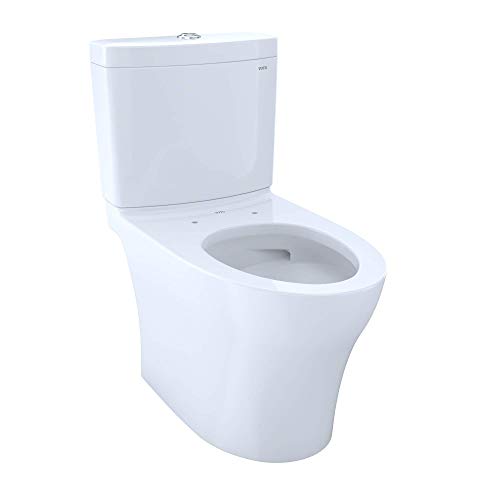
A flat 1.28 GPF flush that earns a 1,000 gram MaP score using TOTO's Double Cyclone swirl. It clears solids in one push, so you never waste water on a second flush.
Check price on AmazonA dual flush 0.8 / 1.28 GPF toilet with a Dynamax Tornado wash. The 0.8 gallon light flush handles most daily uses, pulling the yearly average well below any single flush model.
Check price on AmazonA 1.28 GPF toilet with a 1,000 gram MaP score from a sealed AquaPiston canister valve, plus nationwide Kohler parts so repairs stay cheap and a worn seal never strands you.
Check price on AmazonThe number on the box that everyone reads is GPF, but the number that decides whether a toilet actually saves water is its MaP score. We tell every water-minded buyer the same thing: pick a 1.28 GPF model with a MaP score of 800 grams or more, and you get the low water use of a WaterSense toilet with the clearing power of a power model. That combination is what stops the double flushing that quietly erased the savings of early low-water toilets. Buy clearing power first, enjoy the low GPF second.
Before 1994 there was no federal limit on toilet water use, so manufacturers simply used more water to guarantee the bowl cleared. The downside was obvious only later: those toilets waste enormous amounts of water for a job that modern engineering does with a fraction of the volume. Today's best toilets clear the same load using a quarter of the water because the flush itself is smarter, using centrifugal swirls like TOTO's Double Cyclone, all-around canister flows like Kohler's AquaPiston, or fast 3-inch valves like American Standard's. The result is that a 1.28 gallon toilet now matches the clearing power of an old 5 gallon model, which is why upgrading saves so much.
A well-designed low-water toilet clears the bowl as cleanly as any older high-volume model because the flush engineering matured. The reason early water-savers clogged was poor design, not the low water itself, and the industry fixed it with swirling flushes, larger flush valves and fully glazed trapways. Pick a 1.28 GPF model with an 800 to 1,000 gram MaP, like the UltraMax II or Cadet 3, and clogs are no more common than with a high-volume toilet. For models built specifically to handle tough loads on low water, see our guide to the best EPA WaterSense certified toilets.
GPF and MaP are two halves of the same decision. GPF tells you how much water the toilet uses; MaP tells you whether that water does the job in one push. A 1.28 GPF toilet with a 1,000 gram MaP, like the UltraMax II or Cimarron, locks in its savings, while a low-GPF toilet with a weak MaP forces double flushing that erases them. Always read the two numbers together. For a deeper look at how the GPF figures interact with flush strength, see our breakdown of 1.28 GPF vs 1.6 GPF toilets and which to choose.
Choosing a toilet by its water use comes down to four checks that general toilet guides tend to gloss over: what the GPF actually means for your bill, whether the model is genuinely WaterSense certified, how strong the flush is on the MaP test, and whether the flush valve will hold its seal so a silent leak does not undo every gallon you save. Work through the sections below before you buy and you will land on a toilet that genuinely cuts your water use without leaking or forcing a second flush.
Before you shop, find out how much water your existing toilet uses, because that number decides how much you stand to save. Lift the tank lid and look at the inside back wall or the underside of the lid, where many toilets stamp the GPF and the manufacture date. If there is no stamp, the date is often printed on the bowl behind the seat or under the tank lid. A toilet rated 3.5 or 5 gallons is an old model worth replacing immediately, while a 1.6 gallon toilet is a modern standard unit that a 1.28 gallon WaterSense upgrade still improves. Knowing the starting number turns the upgrade decision into simple math.
The EPA WaterSense label is the simplest way to know a toilet truly saves water. It means an independent body has verified the toilet uses 1.28 gallons or less while still passing flush performance standards, so you are not trading clearing power for the low number. WaterSense toilets use at least 20 percent less water than the federal 1.6 gallon maximum, and many local water utilities offer rebates when you replace an older toilet with a certified model, which can offset much of the purchase. Some toilets are sold in both a 1.6 and a 1.28 gallon version, so read the listing and pick the certified variant if savings is your goal. For models chosen specifically for the lowest GPF, see our roundup of the best low flow toilets at 1.28 GPF and under.
The number on the box that everyone notices is GPF, but the number that decides whether a low-water toilet actually saves water is its MaP score. MaP (Maximum Performance) is an independent test that measures how many grams of solid waste a toilet clears in a single flush. A reading of 600 grams handles a typical home, 800 grams is strong, and 1,000 grams is the practical ceiling. A 1.28 GPF toilet with a 1,000 gram MaP, like the UltraMax II or Cadet 3, clears solids in one push and locks in its savings, while a low-GPF toilet with a weak MaP forces a second flush. Two flushes of 1.28 gallons use more water than a single 1.6 gallon flush would, so buy clearing power first, then enjoy the low volume.
The quietest water waster in any bathroom is a leaking flush valve or flapper that lets water trickle from the tank into the bowl around the clock. A slow leak can waste hundreds of gallons a day, far more than any difference in GPF between two toilets ever saves. That is why a quality flush mechanism matters as much as the gallons-per-flush rating. Canister flush systems like Kohler's AquaPiston seal more reliably over time than a cheap rubber flapper, and an established brand's valve is easier to replace when it eventually wears. When you shop, weigh the durability of the flush mechanism alongside the GPF number, because the cheapest valve can quietly undo all of your savings.
Even the most water-efficient toilet is useless if it does not fit your bathroom. Rough-in is the distance from the finished wall to the center of the floor drain bolts, and most homes use 12 inches, though some older houses have a 10 or 14 inch rough-in. Comfort-height bowls sit around 17 to 19 inches off the floor and suit most adults, while standard height saves a little space. An elongated bowl is more comfortable for most people, while a round bowl fits a tighter room. Confirm all three before buying so your low-water toilet installs cleanly. For the broadest fit and flush advice across the whole category, our pillar guide to the best flushing toilets covers it in detail.
The mistake we see most often is buying a toilet on its GPF number alone and ignoring the MaP score and the valve. For water savings that actually last, the order of priority is a strong MaP score of 800 grams or more, then WaterSense certification, then a reliable major-brand flush mechanism, then body style and fit. Get those right and a 1.28 gallon toilet saves water for years without leaking or double flushing. And do not overlook the silent leak: a worn flapper trickling water all day wastes more than the gap between any two GPF ratings, so check it twice a year.
A dual flush toilet lists two GPF numbers, commonly 0.8 / 1.28 or 1.1 / 1.6, where the smaller number is the partial flush for liquids and the larger is the full flush for solids. The published water rating of a dual flush toilet is usually an effective average that assumes a real-world mix of partial and full flushes, often calculated as roughly one full flush for every two partial flushes. In practice, because most uses in a normal day are liquid only, the real average lands closer to the partial number, which is how a 0.8 / 1.28 GPF toilet ends up using well under 1 gallon per flush across a year. The catch is that the savings only materialize if everyone in the household, including children and guests, actually uses the small button rather than the large one out of habit.
A dual flush toilet wins on the yearly meter in a household where liquid-only uses dominate and everyone reliably presses the partial-flush button. It saves less, or nothing, in a household where habit or visiting guests trigger the full flush every time, because then it is just a 1.28 or 1.6 gallon toilet with an extra button. A strong single flush toilet at a flat 1.28 GPF sidesteps that behavioral risk entirely: it uses the same modest volume every time and clears the bowl with certainty. If you want the lowest possible average and trust your household to use the small button, choose dual flush. If you want guaranteed savings with no behavior to manage, choose a high-MaP single flush at 1.28 GPF. Woodbridge, Swiss Madison and Gerber all sell dual flush options, while TOTO and Kohler lead on the high-MaP single flush side.
A modern toilet uses 1.28 to 1.6 gallons per flush, with 1.6 gallons the federal maximum and 1.28 gallons the EPA WaterSense limit. Older toilets use far more: a 1980s model typically uses 3.5 gallons, and a pre-1980 toilet can use 5 to 7 gallons. Dual flush toilets average even lower because their partial flush for liquids can be as little as 0.8 gallons.
GPF stands for gallons per flush, the amount of water a toilet releases from its tank into the bowl on a single flush. It is the standard measure of toilet water efficiency. The federal maximum is 1.6 GPF, WaterSense certified toilets use 1.28 GPF or less, and dual flush toilets list two GPF numbers, one for the partial flush and one for the full flush.
An average person flushes about five times a day, so a 1.6 GPF toilet uses roughly 8 gallons per person daily, and a 1.28 GPF WaterSense toilet uses about 6.4 gallons. An old 3.5 gallon toilet uses about 17.5 gallons per person daily. Multiply by your household size to estimate your home's total daily toilet water use.
A 1.6 GPF toilet uses about 2,920 gallons per person per year, and a 1.28 GPF WaterSense toilet uses about 2,336 gallons. An older 3.5 gallon toilet uses over 6,300 gallons per person per year, and a 5 gallon toilet over 9,100. For a four-person home, the yearly toilet water use ranges from roughly 9,300 gallons on a WaterSense model to over 36,000 gallons on an old high-volume one.
Lift the tank lid and look at the inside back wall or the underside of the lid, where many toilets stamp the GPF rating and the manufacture date. The date is sometimes printed on the bowl behind the seat instead. A 3.5 or 5 gallon stamp means an old, thirsty toilet worth replacing, while 1.6 or 1.28 gallons indicates a modern unit.
1.6 gallons per flush is the federal maximum for new toilets, while 1.28 gallons is the lower WaterSense limit that saves at least 20 percent more water. A well-designed 1.28 GPF toilet clears the bowl just as well as a 1.6 GPF model because modern flush engineering matured, so choosing 1.28 GPF cuts water use with no real loss in performance.
Yes, when the toilet is well designed. A 1.28 gallon flush is plenty to clear the bowl if the model uses an efficient swirling or large-valve flush and a glazed trapway. The TOTO UltraMax II, American Standard Cadet 3 and Kohler Cimarron all reach a 1,000 gram MaP score at 1.28 gallons, proving the low volume clears solids fully. The GPF number matters less than the MaP score.
A lot. Replacing a 3.5 gallon toilet with a 1.28 gallon WaterSense model cuts that toilet's water use by more than 60 percent per flush, and swapping a 5 gallon toilet saves even more. For a typical household that adds up to thousands of gallons a year per toilet, which shows up directly on the water bill, often paying back the toilet within a couple of years.
Usually, yes, but only if the household uses the small button. A dual flush toilet offers a partial flush as low as 0.8 gallons for liquids and a full flush of 1.28 or 1.6 gallons for solids, so its yearly average lands well below a single flush model when most uses trigger the partial flush. If guests or habit always press the full flush, the savings disappear.
The most common cause is a leaking flush valve or flapper that lets water trickle from the tank into the bowl continuously, which can waste hundreds of gallons a day on top of the rated flush volume. A running fill valve or a misadjusted float can also overfill the tank. Check the flapper seal and listen for a constant hiss, since a silent leak wastes more than any GPF difference.
The lowest full-flush toilets use 1.0 GPF, and some are rated even lower, but the most common ultra-low option is a dual flush toilet with a 0.8 gallon partial flush, such as the TOTO Aquia IV or Swiss Madison St. Tropez. A handful of 0.8 GPF single-flush models exist as well. Always confirm a strong MaP score, since the lowest GPF only saves water if it still clears in one push.
Not necessarily. The GPF rating, not the tank size, determines water use, because the flush valve releases only the rated volume regardless of how much the tank holds. Some efficient toilets use a normal-looking tank but release just 1.28 gallons. Read the GPF stamp or spec sheet rather than judging by tank size, which can be misleading.
Often, yes. Many local water utilities and municipalities offer rebates when you replace an older toilet with an EPA WaterSense certified low-water model, since it reduces demand on their water supply. The amount and rules vary by region, so check your water provider's website before buying, and confirm the toilet carries the WaterSense label to be eligible.
Not if you choose one with a strong flush. The early 1.6 gallon toilets clogged because their flushes were weak, but today's best low-water toilets post 800 to 1,000 gram MaP scores at just 1.28 gallons, matching power toilets. Pick a model with a high MaP score and a glazed trapway, and a low-water toilet clogs no more often than a high-volume one.
TOTO leads for flush quality and reaches a 1,000 gram MaP at 1.28 gallons, Kohler offers the best value and parts availability, and American Standard makes the strongest budget flush with its 3 inch valve. Woodbridge and Swiss Madison offer modern skirted designs at low GPF, while Gerber covers the contractor and rental budget. A major brand matters most for the flush valve's reliability.
Yes, the toilet is typically the single largest user of water inside a home, ahead of the shower and the washing machine, accounting for a large share of indoor water use. That is why upgrading an old high-volume toilet to a 1.28 gallon WaterSense model is one of the most effective single water-saving changes a household can make.
It can, but the larger savings come from the toilet itself. Reducing unnecessary flushes helps, yet the difference between a 5 gallon old toilet and a 1.28 gallon WaterSense model is so large that the hardware upgrade dwarfs behavior changes. Combine a low-GPF, high-MaP toilet with sensible use and a leak-free valve for the full effect.
A good MaP score is 800 grams or higher, with 1,000 grams being the practical ceiling and the safest choice. The MaP test measures how many grams of solid waste the toilet clears in one flush, so a high score at a low GPF prevents the double flushing that would erase your water savings. Most top WaterSense toilets reach 1,000 grams at 1.28 gallons.
No. Older high-volume toilets relied on brute water volume rather than smart design, so a modern 1.28 gallon toilet with a 1,000 gram MaP clears the bowl just as well or better using a quarter of the water. The myth that old toilets flush stronger comes from the weak early water-savers of the 1990s, which today's engineered flushes have long since surpassed.
A new toilet uses 1.28 to 1.6 gallons per flush, while pre-1994 toilets use 3.5 to 7 gallons, so GPF is the number that decides how much of your water bill the toilet is responsible for. The smartest low-water choice is the TOTO UltraMax II, which uses a flat 1.28 GPF yet earns a 1,000 gram MaP score, clearing in one push so you never waste water on a second flush. Choose the dual flush TOTO Aquia IV for the lowest yearly average from its 0.8 gallon light flush, or the Kohler Cimarron for the best value and easiest parts. Read the GPF against the MaP score, confirm EPA WaterSense certification, keep the flush valve leak-free, and a modern toilet will cut your water use by thousands of gallons a year without ever forcing a second push.
Drainline carry measures how far solid waste travels in a pipe after one flush. Learn what the MaP test measures and why…
Read the guideToilet floor bolts spinning instead of tightening usually means a broken flange or stripped nut. Here is how to diagnose it and…
Read the guideShould tile run under the toilet or stop at the flange? Learn the right order, why it matters for leaks, and how…
Read the guide