Why Toilet Trapways Are Curved Like an S
Toilets4.6
Learn why toilet trapways curve like an S, how each bend blocks sewer gas, and what the shape means for clogs and…
Read the guideA high efficiency toilet (HET) is any toilet that uses 1.28 gallons per flush or less, which is at least 20 percent below the 1.6-gallon federal maximum, while still clearing the bowl in a single flush. The term covers single-flush, dual-flush and pressure-assisted designs, and the best ones earn the EPA WaterSense label and post a full 1,000-gram MaP flush score at the same time. This guide explains what HET means, where the 1.28-gallon number comes from, how high efficiency toilets save water and money, how MaP flush testing separates a strong HET from a weak one, and which certified models prove that low water use and a powerful flush now go together. We compare published manufacturer specifications, EPA WaterSense listings, independent MaP flush-test grams, trapway design and the patterns across thousands of aggregated owner reviews so you can buy a genuinely efficient toilet that never makes you flush twice.
A high efficiency toilet (HET) uses 1.28 gallons per flush or less, cutting water use about 20 percent below a standard 1.6-gallon toilet. The standout HET is the TOTO Drake II: it carries the WaterSense label at 1.28 gallons yet still posts a full 1,000-gram MaP flush score, proving high efficiency no longer means a weak flush or a second pull on the handle.
High efficiency toilet, almost always shortened to HET, is the industry term for a toilet that uses no more than 1.28 gallons of water per flush. That number is not arbitrary. It sits exactly 20 percent below the 1.6-gallon-per-flush ceiling that federal law has required on every new toilet sold in the United States since 1994, and 20 percent is the threshold the EPA chose for its WaterSense efficiency label. So in practice, "high efficiency toilet" and "1.28 GPF toilet" describe the same class of fixture, and the strongest members of that class also carry the blue WaterSense badge. The label is the certification, HET is the category, and 1.28 gallons is the number that defines both.
The word "efficiency" matters because it implies more than just using less water. A toilet that used 1.0 gallon but failed to clear the bowl would not be efficient at all, since a second flush would push real-world water use back above a 1.6-gallon model. True efficiency means doing the same job, clearing waste fully, with less water. That is why every serious high efficiency toilet pairs its low gallons-per-flush figure with a redesigned bowl, a wider or faster flush valve and a glazed trapway, rather than simply shrinking the tank on an old design. The first generation of low-flow toilets in the early 1990s skipped that engineering, flushed weakly and earned low-flow toilets a bad reputation that took a decade to repair. Modern HETs were built specifically to end that problem.
The payoff is measurable and lasting. Toilets are the single largest source of indoor water use in a typical home, so trimming every flush by even a third of a gallon compounds into thousands of gallons saved each year. According to EPA WaterSense figures, replacing older inefficient toilets with certified high efficiency models saves the average household a meaningful share of its indoor water, and those savings show up directly on the monthly bill. We do not install or test toilets ourselves. Instead we compare manufacturer specifications, independent MaP (Maximum Performance) flush-test grams, EPA WaterSense listings, trapway geometry and the patterns across thousands of verified owner reviews. If you want the broadest performance-first ranking across every flush type, start with our guide to the best flushing toilets, then come back here to understand the HET category itself.
To break the definition into its parts, an HET is defined first by water use. Any toilet rated at 1.28 gallons per flush (often written 1.28 GPF or 4.8 liters per flush) or lower qualifies as high efficiency. That includes ultra high efficiency models that go down to 0.8 gallon and dual-flush models whose light flush sits near 0.8 to 1.0 gallon. The second part of the definition, the part that separates a real HET from a token one, is performance. A high efficiency toilet has to clear waste in a single flush, because an efficient toilet that needs a second pull is not efficient at all.
The cleanest way to confirm both parts is the EPA WaterSense label. WaterSense certifies a toilet only if it uses 1.28 gallons or less and passes an independent flush-performance test, so every WaterSense toilet is an HET, and the label is publicly verifiable in a database at epa.gov/watersense. Not every HET carries the label, since certification is voluntary, but the labeled models are the ones with proven performance behind the efficiency claim. Vague marketing words like "eco," "green" or even "high efficiency" printed on a box without the WaterSense badge have no required testing behind them, so treat the certified models as the safe core of the category.
The history explains the number. The federal Energy Policy Act of 1992 capped new toilets at 1.6 gallons per flush starting in 1994, which made every legal new toilet a low-flow toilet by 1980s standards. When the EPA launched WaterSense in 2006 and applied it to toilets from 2007, it wanted a label that meant meaningfully better than the legal minimum, so it set the bar at a 20 percent reduction, which lands precisely at 1.28 gallons. Manufacturers adopted "high efficiency toilet" and the HET initialism to market models built to that 1.28-gallon level, and the terms stuck. Today the categories overlap almost perfectly: nearly every toilet sold as an HET is rated at 1.28 GPF, and nearly every WaterSense toilet is an HET.
It helps to keep three tiers straight. A standard toilet uses the legal maximum of 1.6 gallons. A high efficiency toilet uses 1.28 gallons or less, the WaterSense level. An ultra high efficiency toilet uses around 0.8 to 1.0 gallon, a smaller niche of certified models that save the most per flush but require an especially strong bowl design to keep clearing waste. For a side-by-side look at the two most common tiers, our explainer on 1.28 GPF vs 1.6 GPF toilets and which to choose walks through the annual water math.
The exact savings depend on what the HET replaces and how many people use it. Because toilets are the largest single source of indoor water use in most homes, even a small per-flush reduction compounds quickly across a year. Here is how the math works across the common standards.
| Toilet class | GPF | Status / era | Water vs HET | Notes |
|---|---|---|---|---|
| Pre-1994 standard | 3.5 - 7.0 | Legacy, pre-federal law | Uses far more | Biggest savings come from replacing these |
| Standard (1.6 GPF) | 1.6 | 1994 onward, still sold | +0.32 gal per flush | Legal but not high efficiency |
| High efficiency (1.28 GPF) | 1.28 | WaterSense, current best practice | Baseline HET | 20 percent below federal max, rebate eligible |
| Dual-flush HET | 0.8-1.0 / 1.28 | Certified, lowest daily use | Saves the most overall | Light flush handles most daily use |
| Ultra high efficiency | 0.8 | Certified, niche | Saves the most per flush | Fewer models, check MaP carefully |
To put numbers to it, a household that flushes about five times per person each day will, by switching from 1.6 to 1.28 gallons, save roughly 0.32 gallons on every one of those flushes. Across a year that adds up to thousands of gallons for a family of four, and the savings are dramatically larger when the toilet being replaced is a pre-1994 model using 3.5 gallons or more, where the per-flush difference is well over two gallons. Dual-flush HETs extend the savings further because most real-world flushes are liquid only, and the light flush on those models uses roughly 0.8 to 1.0 gallon, dragging average daily use below any single-flush model. For the wider efficiency picture, see our roundup of the best water saving toilets of 2026.
The key insight is that strong flushing and low water use stopped being opposites once manufacturers redesigned the bowl rather than just shrinking the tank. The leading HETs reach the same 1,000-gram MaP maximum as far thirstier older toilets, but they do it through better engineering instead of more water. TOTO's siphon designs, such as the Double Cyclone and Dynamax Tornado, prize a quiet, clean rinse that scours the whole bowl. Kohler's canister flushes, like Class Five and AquaPiston, release the full tank fast for a more forceful pull. A wide 3-inch flush valve, as on the American Standard Cadet 3, dumps the tank quickly for a faster, stronger flush than the 2-inch valves on cheap toilets. Pressure-assisted HETs from Gerber, such as the Avalanche, use compressed air to push water harder than gravity alone. Each is a different route to the same result: a 1.28-gallon flush that clears the bowl like a 1.6-gallon one used to. For the strongest flushers across every category, see our ranking of the best flushing toilets.
If you have decided a high efficiency toilet is right for you, these three models show what the HET category can deliver: low certified water use paired with a flush that never makes you reach for the handle twice. Each posts a strong published MaP score, so flush power is never the weak link.
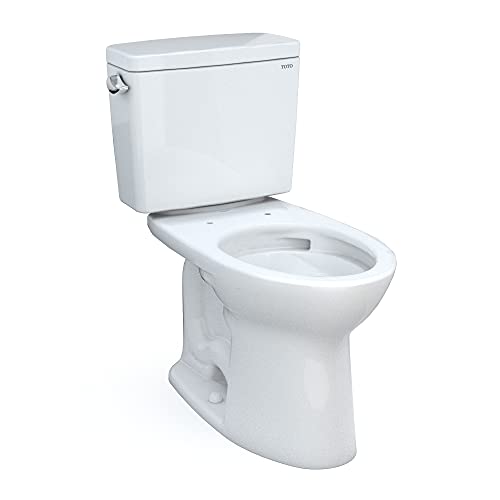
A high efficiency toilet that carries the WaterSense label at 1.28 GPF yet reaches a full 1,000-gram MaP score through its Double Cyclone siphon and CeFiONtect glazed trapway. The cleanest proof that efficient and powerful are no longer a trade-off.
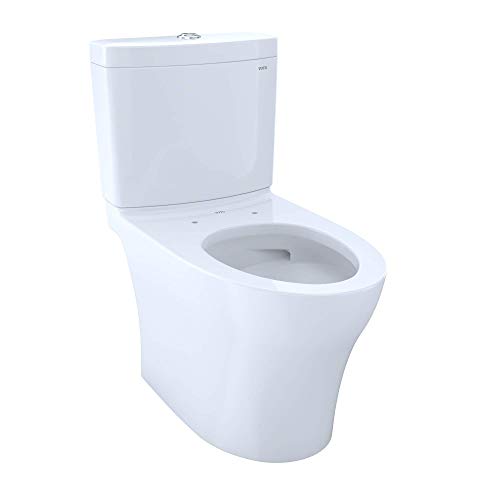
Check price on AmazonA dual-flush HET with a light flush near 0.9 gallon and a full flush of 1.28, both WaterSense rated. Its Dynamax Tornado wash and skirted body keep average daily use the lowest on this page.
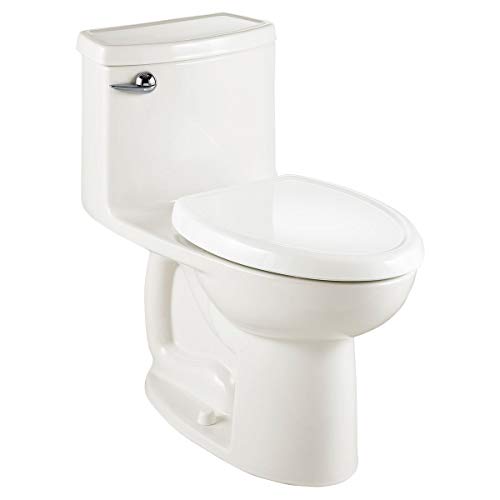
Check price on AmazonPairs the WaterSense label with a 1,000-gram MaP flush through a wide 3-inch flush valve and an EverClean glazed surface, delivering a fast, forceful high efficiency flush at the friendliest price on this list.
Check price on AmazonThe single most useful habit when shopping for a high efficiency toilet is to read the WaterSense label and the MaP score together, never one alone. The label only certifies that the toilet uses 1.28 gallons or less and cleared a minimum test, which is the floor, not the ceiling. Filter for a published 1,000-gram MaP score in your rough-in and you get both the deepest water savings and a flush that will clear the bowl in one pull for well over a decade. A 1.28-gallon HET that hides its MaP grams is one to skip.
MaP (Maximum Performance) is an independent test that publishes results at map-testing.com, and it measures how many grams of solid waste a toilet clears in a single flush against a 350-gram residential pass threshold. That threshold represents a realistic worst-case household load, so any score above it means the toilet should clear normal use in one flush. MaP matters even more for a high efficiency toilet than for a thirsty one, because the entire point of an HET is saving water, and a weak flush that needs a second pull wastes more than a strong single flush would have used, which defeats the purpose.
As a rule of thumb, treat 600 grams as fine for a light-use or guest bathroom, 800 grams as a strong everyday number, and 1,000 grams as the ceiling worth seeking if you have a large household, a history of clogs or simply never want to think about the handle twice. If a high efficiency toilet does not publish a MaP score at all, treat that silence as a warning sign rather than assuming the flush is strong. The leading HETs, like the TOTO Drake II, Kohler Cimarron and American Standard Cadet 3, publish a full 1,000-gram score at 1.28 gallons, which is the cleanest proof that efficiency and power coexist. For the very strongest single-flush performers, see our list of best EPA WaterSense certified toilets.
The old worry, that a low-flow toilet flushes weakly and needs a second pull, is exactly what the WaterSense performance test behind most HETs was created to rule out. A certified high efficiency toilet has to clear waste effectively to earn the label, so the modern models save water without the double-flushing that would erase those savings. Between a lower monthly bill, possible upfront rebates and identical flush power on the top models, there is little reason to choose a thirstier toilet for a typical home. The case is even stronger if you are replacing a pre-1994 toilet, where the water and cost savings are far larger. For models built around the lowest legal water level, see the best low flow toilets (1.28 GPF and under).
Many buyers compare a high efficiency toilet to a standard 1.6-gallon model on sticker price alone and stop there. That misses two recurring savings. First, a large share of United States water utilities offer a one-time rebate for installing a WaterSense-certified HET, which can offset a meaningful part of the purchase. Second, the toilet lowers your water bill every single month it is in service. Add the rebate and the ongoing bill savings together, and a high efficiency toilet frequently costs less over its life than a thirstier one, even when the two have a similar price on the shelf. Check your water provider's website for the current rebate, and keep your receipt and the WaterSense documentation to claim it.
It helps to separate two different rules. The federal Energy Policy Act has capped new toilets at 1.6 gallons per flush since 1994, so every legal new toilet in the country is already a low-flow toilet by 1990s standards. The high efficiency standard goes further, putting toilets at 1.28 gallons with verified performance through WaterSense. On top of those, a growing number of states have written the 1.28-gallon level into their own plumbing or efficiency codes, so in those states a new toilet effectively has to be high efficiency whether or not it carries the WaterSense badge. If you live in a water-stressed state, check your local code before buying, because a 1.6-gallon model may not be legal to install in new construction or a major remodel. Even where the law allows 1.6 gallons, the 1.28-gallon HET is almost always the smarter long-term choice.
The HET label narrows the field to genuinely efficient toilets, but a few measurable specs separate a high efficiency toilet that clears the bowl in a single flush from one that disappoints. Understand these and you can buy with confidence.
The gallons-per-flush figure is what defines a high efficiency toilet, so confirm the listing reads 1.28 GPF or lower, and look for the blue WaterSense logo on the listing, the box or the specification sheet. Because the label can be misrepresented in third-party listings, the surest check is to search the model number in the public product database at epa.gov/watersense. If the exact model appears there, the certification and the efficiency claim are genuine. Avoid relying on vague words like "eco," "green" or even "high efficiency" printed without a verifiable certification behind them.
A high efficiency toilet only saves water if it clears the bowl the first time. MaP measures how many grams of solid waste a toilet clears in one flush against a 350-gram residential pass threshold, and the HETs that reach 1,000 grams at 1.28 gallons, like the TOTO Drake II and American Standard Cadet 3, give you the rare combination of the lowest legal water use and a flush that never makes you reach for the handle again. Treat 800 grams as the floor for everyday use and 1,000 grams as ideal, especially for a large household or a history of clogs. A high efficiency toilet that hides its MaP score is one to skip.
Single-flush HETs give one strong 1.28-gallon flush every time, which is the simplest path to both savings and reliability. Dual-flush models like the TOTO Aquia IV add a light flush of roughly 0.8 to 1.0 gallon for liquid waste, so their average daily water use drops below any single-flush model in a normal home. The trade-off is that everyone in the house has to pick the right button, and dual-flush models often post a slightly lower full-flush MaP. If maximum savings is the goal, choose dual-flush; if you want the simplest strong flush, a 1,000-gram single flush like the Drake II is hard to beat.
A high efficiency toilet can quietly lose its savings if the flush valve leaks. A worn rubber flapper can let water seep from the tank into the bowl unnoticed, wasting gallons a day and silently undoing the whole point of an HET. Canister flush valves, such as Kohler's Class Five and AquaPiston designs on the Cimarron and Highline, seal across a wider surface and tend to hold tight far longer than a standard flapper, so the toilet keeps using only the 1.28 gallons it is rated for. If long-term efficiency matters to you, favor a canister-valve design, and after installation set the tank water level to the marked line and check periodically for a running tank.
Even the best high efficiency toilet is useless if it does not fit. Rough-in is the distance from the finished wall to the center of the floor-drain bolts, and most homes use 12 inches, though older houses sometimes have 10 or 14 inches. Comfort-height bowls sit around 16 to 17 inches off the floor and suit most adults and seniors, while standard height saves a little space. Decide between a one-piece like the TOTO UltraMax II, which has no tank-to-bowl seam to clean, and a two-piece like the Drake II, which is lighter and cheaper to ship. Value HETs from Woodbridge, such as the T-0001 and T-0019, and Swiss Madison's St. Tropez often bundle these features at a lower price, while Gerber's Viper and Avalanche are trusted in the trades. Confirm fit before buying so your HET installs cleanly the first time.
The mistake we see most often with high efficiency toilets is buying on the 1.28 GPF number or the WaterSense badge alone and ignoring the MaP score. The low gallons figure proves the toilet is efficient, not that it flushes like the leaders. Filter for a published 1,000-gram MaP score in your rough-in, verify the model in the EPA database, and confirm the rebate with your water utility before you buy. Do those three things and almost any HET will save water and clear the bowl quietly for well over a decade, which is exactly what high efficiency was supposed to mean.
HET stands for high efficiency toilet, the industry term for a toilet that uses 1.28 gallons per flush or less. That figure is 20 percent below the 1.6-gallon federal maximum for new toilets, which is the same threshold the EPA uses for its WaterSense label, so HET, 1.28 GPF toilet and WaterSense toilet largely describe the same class of fixture.
Nearly. Every WaterSense toilet is a high efficiency toilet because the label requires 1.28 gallons or less plus verified flush performance. Not every HET carries the label, since certification is voluntary, but the WaterSense models are the ones with proven testing behind the efficiency claim, which is why they form the safe core of the category.
An HET saves about 0.32 gallons per flush versus a standard 1.6-gallon model, which adds up to thousands of gallons a year for a typical household. Replacing a pre-1994 toilet that uses 3.5 gallons or more can cut a single toilet's water use by more than half, and dual-flush HETs save even more on daily use.
The best ones do, and often better. Modern bowl engineering, wider flush valves and glazed trapways let a 1.28-gallon HET reach the same 1,000-gram MaP score as a thirsty older model. The TOTO Drake II, Kohler Cimarron and American Standard Cadet 3 all hit that 1,000-gram ceiling at 1.28 gallons.
The TOTO Drake II is the best HET for most homes, carrying the WaterSense label at 1.28 gallons per flush while still hitting a full 1,000-gram MaP score through its Double Cyclone siphon. For the lowest real-world water use, the dual-flush TOTO Aquia IV drops to about 0.9 gallon on its light flush while keeping certification.
Aim for at least 800 grams, and 1,000 grams if you have heavy use or a history of clogs. A 600-gram score handles a typical household, but a higher score matters more for an HET, since a weak flush that needs a second pull wastes more water than one strong 1.28-gallon flush would have used.
Yes. A toilet must use no more than 1.28 gallons per flush to count as high efficiency, which is 20 percent below the 1.6-gallon federal maximum. Many dual-flush HETs go further, using roughly 0.8 to 1.0 gallon on a light flush, and ultra high efficiency models drop to around 0.8 gallon on every flush.
Often, yes. Many cities, states and water utilities offer rebates for installing a WaterSense-certified HET, because reducing demand at the bowl is cheaper than building new supply. Check your water provider's website for current programs, and keep your receipt and the model's WaterSense documentation to claim the rebate.
It depends on your priority. A dual-flush HET like the Aquia IV saves more water overall because its light flush handles most daily use, but it asks everyone to pick the right button and posts a slightly lower full-flush MaP. A single-flush model like the Drake II gives one strong, simple 1,000-gram flush every time.
TOTO, Kohler and American Standard have the longest track records and deepest parts networks among HET makers, which is why they lead most rankings. Woodbridge, Swiss Madison and Gerber offer strong value, with Gerber respected as a trade brand. For long-term reliability and easy repairs, the three major brands are the safest bets.
A well-chosen one will not. The performance test behind WaterSense is meant to ensure the toilet clears waste effectively, and HETs with a 1,000-gram MaP score and a wide, glazed trapway resist clogs as well as most homes ever need. Clog risk comes from a low MaP score, not from the low water use itself.
A high efficiency toilet uses 1.28 gallons per flush or less, the WaterSense level. An ultra high efficiency toilet goes lower, to around 0.8 to 1.0 gallon, saving more per flush. Ultra models are a smaller niche and need an especially strong bowl design to keep clearing waste, so check the MaP score carefully before buying one.
You can if the flush valve leaks. A worn flapper can let water seep silently from the tank into the bowl, wasting gallons a day. Canister flush valves like Kohler's Class Five seal longer, and setting the tank water level to the marked line keeps the toilet using only its rated 1.28 gallons. Check periodically for a running tank.
Not necessarily. HETs span every price level, from budget models like the American Standard Cadet 3 and Woodbridge T-0001 to premium ones like the TOTO UltraMax II. Because many utilities offer rebates and the toilet lowers your water bill every month, a high efficiency model often costs less over its life than a thirstier toilet, even if the sticker price is similar.
Most HETs are built for a standard 12-inch rough-in, the distance from the finished wall to the center of the floor-drain bolts. Older homes sometimes have 10-inch or 14-inch rough-ins, and brands like TOTO and Kohler offer popular models in those sizes. Always measure before buying to ensure a clean fit.
It depends on your priorities. A one-piece like the TOTO UltraMax II has no tank-to-bowl seam, so it is easier to clean and looks sleeker, but it is heavier and costs more. A two-piece like the Drake II is lighter, cheaper to ship and easier to install solo, with a seam that needs occasional wiping. Both can be fully WaterSense certified HETs.
Yes. Gravity HETs rely on the weight of water already in the tank rather than supply-line pressure, so they flush consistently even where household water pressure is low. This is an advantage over pressure-assisted HETs like the Gerber Avalanche, which often need a minimum supply pressure of around 25 psi to charge properly.
Check that the listing rates the toilet at 1.28 gallons per flush or lower, then look for the blue WaterSense label on the packaging or specification sheet. The surest check is to search the model number in the EPA WaterSense product database at epa.gov/watersense. Keep that documentation, since it is usually required to claim a local rebate.
HET certification is not federally required, but all new United States toilets must already meet the 1.6-gallon maximum. Several states, including California, Texas, Colorado and Georgia, mandate 1.28 gallons or less, which effectively requires high efficiency toilets in new construction and major remodels. Check your local plumbing code before buying.
A high efficiency toilet is the smart default for almost every home: it uses 1.28 gallons per flush or less, saves thousands of gallons a year, often qualifies for a rebate, and on the best models clears the bowl just as hard as a standard 1.6-gallon toilet. The 1.28 GPF rating and WaterSense label tell you the toilet is efficient and tested, but the MaP score tells you how strong the flush really is, so read them together. For one safe HET, the TOTO Drake II pairs the label with a full 1,000-gram MaP flush at 1.28 gallons. Choose the dual-flush TOTO Aquia IV for the lowest daily water use, or the American Standard Cadet 3 for that 1,000-gram power at a friendlier price. Verify the model in the EPA database, confirm your rough-in and your local rebate, then check the current price on Amazon.
Learn why toilet trapways curve like an S, how each bend blocks sewer gas, and what the shape means for clogs and…
Read the guideAlmost every US toilet has a left-side handle. Learn the plumbing and mechanical reasons behind the layout and when it actually changes.
Read the guideHome toilets rely on tanks because household water lines lack the pressure that public flushometer systems use to flush straight from the…
Read the guide