

Why Toilet Trapways Are Curved Like an S
Toilets4.6
Learn why toilet trapways curve like an S, how each bend blocks sewer gas, and what the shape means for clogs and…
Read the guideA clear-eyed look at the real costs, sanitation risks, flush performance gaps, and warranty differences so you can decide with confidence.
For most homeowners a new toilet is the better buy. Refurbished toilets can save money upfront, but hidden porcelain wear, missing MaP certifications, outdated GPF ratings, and zero warranty coverage typically eliminate any real savings once installation and early repairs are factored in.
The idea of buying a refurbished or used toilet sounds appealing on paper: pay a fraction of retail, divert a fixture from landfill, get the job done. The reality is more complicated. Unlike a refurbished laptop or appliance, a toilet is a sanitation device with porous internal surfaces, precision-machined valves, and flush geometry that degrades in ways that are invisible until the seat is already bolted to your floor.
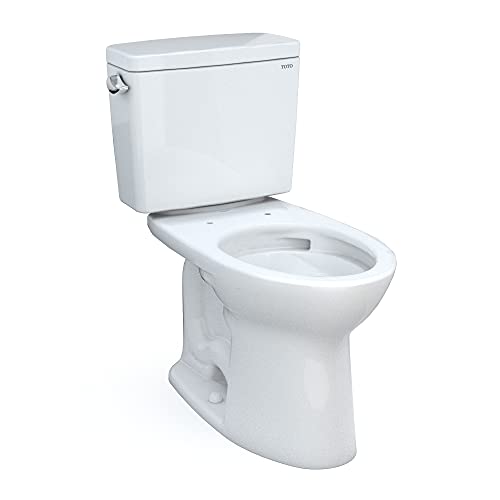
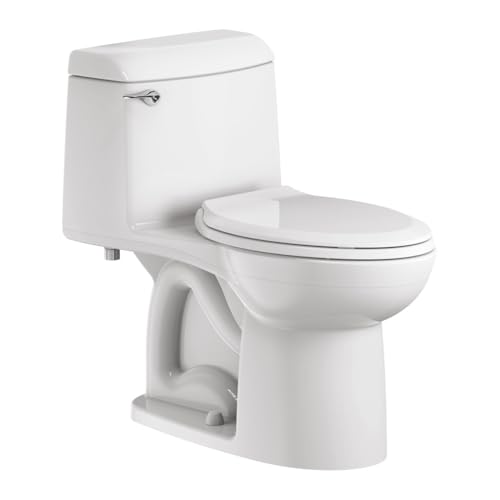
This guide walks through every angle of that decision: what "refurbished" actually means in the toilet industry, what the data says about flush performance loss over time, which scenarios make a used fixture defensible, and when spending a little more for a new TOTO Drake, Kohler Highline, or American Standard Cadet 3 is simply the smarter move.
In the toilet industry, "refurbished" has no standardized legal definition. It can mean anything from a completely unopened box return, to a floor display model, to a fixture that was removed from a hotel renovation, cleaned, fitted with a new flapper and fill valve, and relisted for sale. Unlike consumer electronics refurbishment programs run by the original manufacturer, toilet refurbishment is almost always done by third-party resellers, salvage companies, or individual sellers with no manufacturer oversight, no formal inspection checklist, and no re-testing against MaP flush standards.
The spectrum of what you might actually receive when buying a "refurbished" toilet includes:
A plumbing contractor who has handled hundreds of toilet swaps over a career will tell you the same thing: the problem with a used toilet is not what you can see but what you cannot. Mineral scale inside the siphon jet and rim holes silently chokes flush velocity over time. A toilet that "flushes fine" on a seller's inspection may fail to clear solid waste once the scale accumulates past a threshold. There is no quick visual test that catches this before installation.
MaP (Maximum Performance) flush testing evaluates how many grams of solid waste a toilet can clear in a single flush at its rated GPF. New toilets from leading brands routinely score 600 to 1,000 grams. Used toilets with scale buildup in the siphon jet and rim holes can lose 20 to 40 percent of effective flush velocity, dropping their practical performance well below their original MaP score without any change in the visible hardware. This degradation is irreversible without professional descaling or jet reaming, which adds cost and time to the purchase.
MaP testing is conducted by the independent Veritec Consulting and IAPMO Research and Testing laboratories on new fixtures under controlled conditions. When you purchase a refurbished toilet, you are not getting that MaP score. You are getting whatever the fixture can actually deliver on the day you install it, which may be substantially less.
Some of the most popular toilets on the market carry impressive MaP credentials when new:
| Model | Type | GPF | MaP Score (New) | EPA WaterSense | Warranty | Check Price |
|---|---|---|---|---|---|---|
| TOTO Drake II | Two-piece | 1.28 | 1,000 g | Yes | 1 year parts / limited lifetime | Check price |
| TOTO UltraMax II | One-piece | 1.28 | 1,000 g | Yes | 1 year parts / limited lifetime | Check price |
| Kohler Cimarron | Two-piece | 1.28 | 1,000 g | Yes | 1 year limited | Check price |
| American Standard Champion 4 | Two-piece | 1.6 | 1,000 g | No | Limited lifetime | Check price |
| American Standard Cadet 3 | Two-piece | 1.28 | 800 g | Yes | Limited lifetime | Check price |
| Kohler Highline | Two-piece | 1.28 | 800 g | Yes | 1 year limited | Check price |
| Woodbridge T-0001 | One-piece | 1.28 | 800 g | Yes | 5 year structural | Check price |
| Gerber Viper | Two-piece | 1.28 | 1,000 g | Yes | Limited lifetime | Check price |
| Swiss Madison Sublime | One-piece | 1.28 | 600 g | Yes | 1 year | Check price |
MaP scores shown above are for new, factory-certified fixtures. A refurbished version of any of these models carries no guarantee of achieving its original rating.
A refurbished toilet can be made hygienically safe for use if the porcelain glaze is fully intact, all internal components are replaced with new parts, and the wax ring and supply line are new. The sanitation concern is not the porcelain surface, which is non-porous when undamaged, but cracked or crazed glaze that allows bacteria to colonize below the surface, degraded internal rubber components that harbor biofilm, and mineral deposits in water channels that trap organic matter and resist standard cleaning.
Porcelain vitreous china is inherently non-porous at the glaze layer, which is why toilets can be cleaned and reused. The problem arises when:
A thorough refurbishment for sanitation purposes should include: complete replacement of the flapper, fill valve, flush valve seal, supply line, wax ring, tank bolts, seat bolts, and toilet seat. This part replacement alone can cost between $40 and $90 in materials, narrowing the cost advantage of a used fixture considerably.
From a public health standpoint, a properly cleaned toilet with intact glaze is safe to reuse. The standards organizations and health departments do not prohibit the sale of used toilets. What they do require is that any installed toilet meet current local plumbing code, which in most U.S. jurisdictions now mandates 1.6 GPF or less. If the used fixture predates the 1994 Energy Policy Act, it may be a 3.5 GPF or 5 GPF model, which is code-illegal in most states regardless of its condition.
The upfront price gap between a refurbished toilet and a new entry-level toilet is narrower than most buyers expect. Entry-level new two-piece toilets from American Standard, Kohler, and Gerber retail at competitive price points. Refurbished units may save a moderate amount initially, but replacement of internal components, professional installation of an uncertain fixture, and the higher risk of early failure typically close or reverse that gap within one to three years of use.
A realistic cost comparison needs to account for all variables:
| Cost Factor | New Toilet | Refurbished Toilet |
|---|---|---|
| Purchase price (entry-level) | Market retail | Often 20-40% below retail |
| Internal parts replacement | Not needed | Recommended: $40-$90 |
| Wax ring and supply line | Typically included or $15-$20 | Required: $15-$25 |
| Toilet seat (if missing) | Often included | Frequently not included: $20-$80 |
| Early repair probability | Low (warranty covers) | Higher (no warranty) |
| Water efficiency | Known GPF, EPA WaterSense certified | May be old high-GPF model |
| Warranty | Manufacturer warranty applies | None from manufacturer |
| Plumber callback risk | Low | Moderate to high |
The water efficiency factor deserves particular attention. If a used toilet is a pre-1994 model using 3.5 GPF, the annual water cost difference compared to a modern 1.28 GPF fixture can be substantial over years of use, especially for households in areas with tiered water rates. The EPA WaterSense program estimates that replacing a 3.5 GPF toilet with a WaterSense-certified 1.28 GPF model saves approximately 13,000 gallons of water per year for an average household. That ongoing saving helps offset the purchase price of a new fixture relatively quickly.
If you want to explore the full picture of what any toilet replacement saves over time, the best flushing toilets guide includes a detailed breakdown of efficiency ratings and long-term operating costs by model.
A refurbished toilet purchase makes sense in three specific scenarios: when the unit is a verified open-box return from a reputable retailer with intact packaging and no prior installation, when it is a recent discontinued model from a brand like TOTO, Kohler, or American Standard still well within its design lifespan, or when it is needed for a temporary or non-primary installation such as a guest house, storage building, or short-term rental where peak performance is not critical. In all other residential scenarios, a new entry-level toilet from an established brand offers better value when total cost of ownership is considered.
The scenarios that justify a used or refurbished toilet purchase can be broken down as follows:
Large home improvement retailers like Home Depot and Lowe's regularly sell open-box or customer-return fixtures at a discount. These items were never installed, are often in original packaging, and may carry the manufacturer's warranty if purchased within the return window. This category is the most defensible refurbished purchase and closest in risk profile to buying new.
A detached workshop, a converted shed bathroom, a rarely used basement toilet, or a seasonal vacation property may not need a brand-new premium fixture. If the used toilet is verified to flush correctly and the porcelain is intact, the lower usage load means any performance degradation from age will be minimal in practice.
Occasionally, a model like the TOTO Drake or Kohler Cimarron gets a mid-cycle discontinuation and appears on the secondary market in nearly new condition. If provenance can be verified, age is recent, and the fixture is from a brand known for durable vitreous china, the purchase may be reasonable. The key qualifier is verifiable provenance, not a seller's assertion.
ReStore locations and similar nonprofit building material resellers often have professionally assessed donated fixtures. Quality varies, but the staff at established ReStore locations can often provide more reliable condition information than a private seller, and purchases support community housing programs.
The single most important question to ask before buying any refurbished toilet is: can the seller document the fixture's installation history, age, and the last time internal components were replaced? If the answer to any part of that question is "we don't know," the due diligence required to make the purchase safe will likely consume more time and cost than simply buying a new entry-level model.
Before purchasing a used toilet, inspect the porcelain for cracks, crazing, and chips using natural light and close-range examination on the bowl interior, trapway exterior, and tank base. Flush the toilet if possible and time how long it takes the bowl to clear completely. Check the GPF rating stamped inside the tank lid, verify it meets current local code, and confirm the rough-in dimension matches your bathroom's floor drain position. Internal components should be treated as fully expendable regardless of their apparent condition.
Here is a practical pre-purchase checklist for any used toilet:
For context on what a high-quality new toilet looks like at inspection, the complete toilet buying guide covers all the technical specifications to evaluate before any purchase, new or used.
One underappreciated risk with refurbished and used toilets is rough-in mismatch. The rough-in dimension of your bathroom floor drain is fixed. If a used toilet's trap outlet center does not match, it will not install without expensive floor modification or an offset flange adapter, which itself adds cost and can compromise the seal. New toilets allow you to select the exact rough-in dimension needed. Used toilets require verifying this specification before purchase, which is not always possible when buying from photos or from a storage yard.
If you purchase a used toilet that is more than 10 years old, verify that replacement parts are still commercially available. Fill valves, flappers, flush valve seats, and trim kits are specific to each manufacturer and often to each product generation. A discontinued model may have limited aftermarket support, meaning a future repair becomes a full replacement anyway. Brands like TOTO, Kohler, American Standard, and Gerber maintain broad parts catalogs for their major lines, but this advantage applies to new purchases of current models, not to older used fixtures from any brand.
Understanding the full lifespan of toilet components helps contextualize this risk. The guide on how long toilets last explains expected service life for each internal component type and when replacement is indicated.
Yes, if the porcelain glaze is fully intact and all internal rubber and plastic components are replaced with new parts. The porcelain itself is non-porous when undamaged, making it cleanable and safe. The sanitation risk comes from cracked glaze, degraded internal components, and inaccessible mineral deposits in the trapway and siphon jet.
Upfront savings on a refurbished toilet compared to a new entry-level model typically range from minimal to moderate depending on the source. When you add the cost of new internal components, a new toilet seat if not included, a new supply line, wax ring, and account for the risk of early failure, the net saving is often much smaller than the purchase price gap suggests.
No. Manufacturer warranties are void once a toilet is resold by anyone other than the manufacturer or an authorized dealer. Third-party refurbishers may offer their own limited guarantee, but these vary widely and typically do not cover flush performance or porcelain integrity. A new toilet from TOTO, Kohler, or American Standard carries a manufacturer warranty covering manufacturing defects.
No. EPA WaterSense certification applies to the model design as tested by an accredited laboratory, not to individual units. A refurbished toilet from a WaterSense-certified model carries no certification of its own. Its actual water use may vary from the rated GPF if internal components are worn or the fill valve is not calibrated correctly.
MaP (Maximum Performance) testing is an independent lab protocol that measures how many grams of solid waste a toilet can flush reliably at its rated water volume. Scores are assigned to model designs, not to individual units. A used toilet carries the MaP score its model received when new, but its actual performance may be lower due to scale accumulation and component wear.
In most U.S. jurisdictions it is legal to install a used toilet as long as it meets current plumbing code water-use requirements. Most codes require 1.6 GPF or less, with some states and municipalities mandating 1.28 GPF or less. Toilets manufactured before 1994 that use 3.5 or 5.0 GPF are code-illegal to install in most U.S. states regardless of their physical condition.
Federal law under the 1994 Energy Policy Act set 1.6 GPF as the maximum for residential toilets. Several states including California, Texas, New York, and Georgia have adopted stricter limits of 1.28 GPF for new installations. A used toilet must meet the local GPF limit in effect at the time of installation. The GPF rating is stamped on the inside of the tank lid.
A properly cleaned refurbished toilet may look nearly identical to a new one from the outside. The differences are more likely internal: mineral scale on tank walls, slight staining in the siphon jet area, wear marks on the flapper seat, and minor glaze dulling from cleaning agent use. Under close inspection with natural light, crazing or micro-cracks may be visible on older fixtures.
At minimum: the flapper, fill valve, flush valve seal, wax ring, supply line, tank bolt rubber gaskets, and toilet seat. The toilet seat is a hygiene item that should never be reused from a previous owner regardless of apparent condition. A complete internal rebuild kit from brands like Fluidmaster or Korky typically costs between $20 and $50 and dramatically reduces performance risk.
Partial descaling is possible using products like CLR, muriatic acid dilutions, or specialty toilet bowl descalers. Rim holes can be cleared with a bent wire or small pick tool. The siphon jet at the bottom of the bowl can be partially treated. However, the deep interior of the trapway and the water distribution channels inside the rim are generally inaccessible to thorough chemical cleaning, meaning substantial scale buildup may be impossible to fully remove.
TOTO's CeFiONtect glaze is a nano-particle coating fired onto the porcelain surface that resists scale and bacterial adhesion more effectively than standard vitreous china. A used TOTO with intact CeFiONtect glaze will generally have less internal buildup than a comparably aged standard glazed toilet from another brand. However, CeFiONtect can be damaged by abrasive cleaners, so its condition on any specific used fixture is not guaranteed.
Diverting a toilet from landfill has real environmental benefit in terms of reducing manufacturing demand and avoiding disposal. However, if the refurbished fixture is an older high-GPF model, the additional water it consumes compared to a modern 1.28 GPF toilet can represent a far larger environmental impact over its service life than the manufacturing footprint of a new low-flow fixture. Environmental logic favors buying used only when the fixture has a current-standard GPF rating.
The porcelain shell of a well-maintained toilet can last 50 years or more. Internal components have shorter lifespans: flappers 3 to 5 years, fill valves 5 to 7 years, wax rings 20 to 30 years if undisturbed. When buying used, the age of internal components directly affects near-term maintenance cost. A 10-year-old toilet may still look perfect but be overdue for a complete internal rebuild regardless.
The rough-in dimension should be stamped or printed on the tank label inside the lid. You can also measure it directly: with the toilet assembled, measure from the floor to the center of the toilet's base outlet (the hole at the bottom that meets the flange). Compare this to your floor drain measurement, which is taken from the finished wall surface to the center of the floor drain opening.
If a refurbished TOTO Drake or Kohler Highline is a documented open-box or very lightly used return, it can be worth buying at an appropriate discount because these are well-engineered platforms with broad parts availability and strong OEM component support. If provenance is unclear or the unit has unknown prior installation history, the value proposition weakens considerably because you are paying a premium for a brand name without the guarantee of that brand's full performance potential.
Ask: How old is the toilet? Was it previously installed, and if so for how long? Has the fill valve or flapper been replaced? What is the GPF rating? Is the toilet seat included? Can you demonstrate a flush? Is the tank lid original? What is the return policy if it does not function correctly after installation? Any seller who cannot answer these questions clearly is a higher-risk source.
One-piece toilets have fewer external joints, which means fewer potential leak points on an older fixture. However, they are heavier, more expensive new, and more difficult to transport without damage. A chip or crack on a one-piece requires replacing the entire fixture, whereas a two-piece allows the tank and bowl to be replaced independently. For used purchases, two-piece construction is generally lower risk because you can more easily verify the bowl and tank separately.
Major red flags include: any crack at the bowl base or around the tank bolt holes, heavily stained bowl interior that has not been cleaned (indicates poor maintenance history), missing tank lid, no GPF marking inside the tank, heavy rust staining on tank walls, unknown age and use history, and a seller unwilling to allow a flush test. A toilet with any structural crack should be rejected immediately regardless of price.
If your current toilet has intact porcelain and no structural damage, repairing it with new internal components is almost always more cost-effective than buying a used replacement. A complete flapper, fill valve, and handle replacement can restore most toilets to reliable operation for under $50 in parts. The exception is a very old high-GPF toilet where the water savings from switching to a modern 1.28 GPF model justify the replacement cost.
The American Standard Cadet 3, Kohler Highline, and Gerber Viper consistently represent the best value at entry-level pricing when considering MaP flush performance, EPA WaterSense certification, parts availability, and manufacturer warranty. The TOTO Entrada is the lowest-priced TOTO-engineered option with the brand's build quality and CeFiONtect glaze. Any of these new fixtures outperforms most refurbished alternatives in total cost of ownership over a five-year period.
One of the strongest arguments against buying a used toilet is how accessible new, warranted toilets have become. You do not need to spend top dollar to get a reliable, EPA WaterSense-certified fixture with a documented MaP score. The best toilets under $300 guide covers options that hit 800 to 1,000 grams on MaP testing with 1.28 GPF ratings, full manufacturer warranties, and available replacement parts from national suppliers.
For rental properties, secondary bathrooms, and budget remodels, the best toilets for rental properties page identifies models that balance upfront cost against long-term durability, which is exactly the calculus that matters most when evaluating a used fixture versus a new one.
If the primary concern is water efficiency, replacing any old toilet with a modern 1.28 GPF WaterSense-certified model is the higher-impact choice. For a complete overview of what WaterSense certification actually means for performance and water savings, the EPA WaterSense guide explains the standards in detail.
For primary residential bathrooms, a new EPA WaterSense-certified toilet from a brand like TOTO, Kohler, American Standard, or Gerber is the right choice for the overwhelming majority of buyers. A new fixture delivers a documented MaP score, a manufacturer warranty, current-code water efficiency, and no unknown prior-use variables. Refurbished toilets make sense in a narrow set of circumstances: open-box retailer returns, low-use secondary installations, and verified lightly used recent-model fixtures where provenance is documentable. In any scenario, budget at minimum $40 to $90 for complete internal component replacement and verify GPF compliance with local code before committing to any used fixture.
Learn why toilet trapways curve like an S, how each bend blocks sewer gas, and what the shape means for clogs and…
Read the guideAlmost every US toilet has a left-side handle. Learn the plumbing and mechanical reasons behind the layout and when it actually changes.
Read the guideHome toilets rely on tanks because household water lines lack the pressure that public flushometer systems use to flush straight from the…
Read the guide