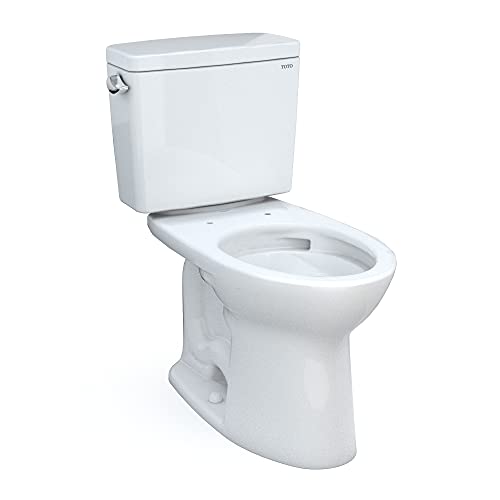
When people ask how long a toilet lasts, they are really asking two different questions at once. The first is how long the heavy porcelain body, the bowl and tank bolted to your floor, will keep working before you need to haul it to the curb. The second is how long before something goes wrong and it needs attention. Those answers are very different, and confusing the two is the single biggest reason people spend $400 replacing a toilet that needed a $14 flapper.
Everything here is built from published manufacturer specifications, independent MaP (Maximum Performance) flush-test data, EPA WaterSense certification records, and patterns across thousands of aggregated owner reviews. No in-house lab, no paid placements. If you have already decided a new toilet is the right call, our guide to the best flushing toilets ranks the top performers, and our complete Toilet Buying Guide (2026) walks every spec decision. Brands discussed throughout include TOTO, Kohler, American Standard, Woodbridge, Swiss Madison, and Gerber.
The core concept
Two clocks, not one
Think of a toilet as running two clocks simultaneously. The body clock measures the vitreous china bowl and tank, which last 15 to 30 years and often far longer. The parts clock measures the flapper, fill valve, flush valve, wax ring, and supply line, which fail every 4 to 10 years. The overwhelming majority of toilet problems are parts-clock failures, not body failures. A $12 flapper resets the clock. A new toilet does not need to.
How long the porcelain body actually lasts
The bowl and tank are vitreous china, a dense, non-porous ceramic fired at high temperature. Nothing in normal household use abrades it, corrodes it, or mechanically wears it out. Water flowing through the trapway does not erode it over years. Cleaning products do not etch it unless you use undiluted muriatic acid, which no one should. There is no moving part inside the ceramic itself to fatigue and crack. This is why toilets installed in the 1960s still flush today and why most major manufacturers do not even publish a lifespan figure for the body: it simply does not have one in the way a compressor or a motor does.
In practice, owners replace bodies for reasons that have little to do with wear. A bathroom remodel changes the aesthetic. A 1970s 3.5 or 5 GPF fixture gets swapped for a 1.28 GPF EPA WaterSense model to cut the water bill. A lid dropped from a counter height causes a hairline crack. Mineral scale in a hard-water home slowly fills the rim jets until cleaning no longer fully restores the flush. None of those are the ceramic wearing out. They are upgrades, accidents, or a hard-water maintenance issue. A realistic planning figure is 15 to 30 years before you choose to replace the body, with 50 years achievable and not uncommon in documented owner histories.
The internal parts that wear out, and when
Almost every complaint owners describe as "the toilet is dying" is one of a handful of rubber, plastic, or brass components reaching the end of its short service life. These parts sit in constant contact with water, the chlorine or chloramine in municipal tap supplies, and the minerals in well water. They are consumables, designed to be replaced, available at every hardware store for a few dollars, and swappable without specialized tools. Knowing the schedule turns an alarming drip or a phantom flush from a crisis into a 20-minute fix.
The flapper or flush seal
The flapper is the rubber disk that lifts to release tank water into the bowl during a flush, then drops to reseal and let the tank refill. It is the most common failure in any toilet and usually the first. Chlorinated water slowly oxidizes, hardens, and warps the rubber compound until it no longer seats cleanly against the flush valve seat. The symptom is the classic phantom or ghost flush: the tank cycles on its own every few minutes to replace the water slowly seeping into the bowl. Most flappers last 4 to 6 years, sometimes 3 years or less in heavily chlorinated municipal supplies or where in-tank bleach tablets are used. Replacement takes about 10 minutes and the part costs $5 to $15 at any hardware store.
The fill valve
The fill valve refills the tank after each flush and shuts off when the water reaches the target level. Over 5 to 7 years the internal diaphragm or seals stiffen, and the float arm or float cup mechanism drifts out of calibration. The typical symptoms are a tank that keeps running even after flushing stops, a steady hissing or whistling sound from the tank, or a noticeably slow refill that delays the next flush. Fill valves are nearly universal in sizing, inexpensive, and among the easiest internal parts to replace. A running or hissing toilet after the flapper checks out is almost always the fill valve.
The flush valve and canister
The flush valve is the tower or canister inside the tank that the flapper seals against. It can degrade on its own seat over 7 to 10 years, especially if the water is hard. A rough or pitted valve seat means a new flapper alone will not fully stop the leak: the flapper sits on a damaged surface and cannot seal. The fix is either a flush valve seat repair kit or a full valve replacement. Two-piece toilets make this moderately easy. One-piece models with skirted designs are more involved.
The wax ring
The wax ring seals the junction between the toilet horn and the closet flange, keeping water and sewer gas inside the drain line. A properly set ring installed on a solid, level flange can last 20 to 30 years without being touched. It fails when the toilet rocks (which flexes the seal with each use), when it dries out and finally loses its compression, or when it is disturbed during another repair. The symptom is water pooling at the base of the toilet after flushing, or a persistent sewer gas smell despite a clean bowl. A rocking toilet is the most reliable early warning: shim it before the seal breaks. Any time the toilet is pulled for any reason, the wax ring is replaced as a matter of course.
The supply line and tank hardware
The flexible braided stainless supply line running from the shutoff valve to the tank fill nipple is the easy part everyone forgets. The outer braid is stainless but the inner liner is rubber, and it degrades on the same schedule as other rubber parts, typically 5 to 8 years. Unlike a slow-leak flapper, a failed supply line can release a full water pressure stream under a bathroom cabinet. Replacing it on a schedule, whenever you have the shutoff closed for another repair, is extremely cheap insurance. Tank bolts and the rubber spud gasket between tank and bowl follow a 10 to 15 year schedule and announce their age with a slow drip at the bottom of the tank.
Worth knowing
A "20-year-old toilet" has usually had its guts replaced several times
A toilet that has flushed reliably for two decades has almost certainly had its flapper swapped three or four times, its fill valve replaced once or twice, and likely a new supply line. That is not a worn-out toilet. That is a normally maintained one. The porcelain underneath is the same age as the day it was installed and just as sound. Counting those internal repairs as the toilet "dying" is the most common reason people replace porcelain bodies that had another two decades of service left.
What actually shortens a toilet's life
While the porcelain body is extraordinarily durable, a handful of conditions genuinely accelerate wear on both the fixture and its parts. Knowing them lets you protect the toilet you have and choose a longer-lasting one when it is time to replace.
Hard water and mineral scale
Hard water is the most serious long-term threat to flush performance. Calcium and magnesium deposits build inside the rim jets, coat the trapway walls, and crust on the rubber parts in the tank. Over years this slowly chokes water flow until the flush weakens, the bowl rinse becomes uneven, and no amount of cleaning fully restores the original MaP-rated performance. The body is not damaged by scale, but the flush gradually degrades. A glazed trapway like TOTO's CeFiONtect or American Standard's EverClean surface resists buildup far longer than an unglazed one. Kohler's Cimarron and Highline models also offer smooth internal surfaces that slow scale accumulation. For households on well water or in areas with high mineral content, the complete guide to choosing a toilet covers the specifications that matter in hard-water conditions.
In-tank cleaning tablets
Bleach-based in-tank tablets are the single habit most likely to shorten the life of a toilet's internal parts. By sitting in the tank water, they maintain a high concentration of chlorine compounds in direct contact with the flapper, fill-valve seals, and all rubber gaskets at all times, rather than during occasional bowl cleanings. Flappers that would last 5 or 6 years on untreated water frequently fail within 18 months when a bleach tablet lives in the tank. The bowl looks clean while the guts quietly deteriorate. Cleaning the bowl directly, and keeping the tank water chemical-free, can double or triple the life of every rubber component inside the tank.
Movement, impact, and freezing
A toilet that rocks on an uneven floor or a loose closet flange flexes the wax ring seal with every sit-down, every flush, and every rise. Over time this works the seal loose and can stress the porcelain at the bolt points. A dropped tank lid, a heavy tool falling against the bowl, or a hard kick can cause hairline cracks in the ceramic. In unheated or unconditioned spaces, water left in the trap or tank can freeze, expand, and split the vitreous china in a way that cannot be repaired. These are the rare failures that genuinely end a body's life, and they are all preventable.
Editorial Take
The three habits that protect a toilet more than any brand decision: keep cleaning chemicals out of the tank, fix a rocking base immediately rather than letting it flex the wax seal for months, and descale the rim jets at least once a year in hard-water homes. Owner reviews consistently show that toilets sold with a 10-year glowing record, then suddenly failing around year 8, have almost always had in-tank bleach tablets running the whole time. Clean the bowl. Leave the tank water alone. The ceramic will outlast most of the appliances in your kitchen.
Repair or replace: how to decide
The honest default answer is almost always repair. Because the porcelain body lasts so long and the internal parts are so inexpensive, replacing components beats replacing the fixture in the vast majority of situations. There are only a handful of genuine cases where a new toilet is the smarter call.
Replace the body when the porcelain is cracked: a crack in tank or bowl will leak, and no sealant reliably holds under the thermal cycling and pressure of daily use. Replace when the flush is permanently weakened by mineral scale that descaling no longer restores, which is most common in hard-water homes with unglazed trapways after 15 or more years. Replace an old 3.5 or 5 GPF toilet to capture the water savings of a 1.28 GPF EPA WaterSense model, where the reduced water bill often pays back the fixture cost within a few years. And replace if replacement parts for a discontinued or obscure brand are genuinely unavailable, which is a strong argument for buying well-supported lines like TOTO, Kohler, American Standard, or Gerber. Our guide on the one-piece vs two-piece toilets comparison discusses how design choice affects long-term serviceability.
Quick tip
The 50% rule does not apply to toilets
For major appliances with motors and compressors, a common rule says to replace if repair costs more than half the new-unit price. Toilets break that rule completely. A $14 flapper on a sound 25-year-old toilet is always worth it. The body will outlast the replacement fixture you would have bought. Save replacement for a cracked body, a permanently dead flush, or a deliberate water-saving upgrade from a high-volume old model.
Why warranty length is a signal, not a lifespan countdown
Manufacturer warranties are routinely misread as the expected life of a toilet. They are not. A warranty is the period the maker guarantees against defects in materials and workmanship, and it is a useful confidence indicator, but the fixture almost always outlives it by decades. Most quality toilets carry a limited lifetime warranty on the vitreous china body and a one-year warranty on the mechanical and electronic parts, which maps precisely onto the two-clock reality: the porcelain is covered indefinitely, the wear parts for a short window.
Use the warranty as a tiebreaker between shortlisted models, not as a countdown. A lifetime china warranty from TOTO, Kohler, or American Standard signals that the manufacturer is confident the porcelain will last, and more practically it signals that replacement parts will remain available and stocked for many years, which is the real long-term insurance. A niche brand offering a five-year warranty may perform fine, but the question of whether its specific fill valve cartridge will still be available in 2038 is worth asking.
Top picks
Three toilets built for the longest service life
Each model was selected for a proven MaP flush score, a scale-resistant trapway design, EPA WaterSense certification, and a parts ecosystem with years of confirmed availability. These are not the cheapest options in any category, but they are the ones most likely to still be flushing well in 20 years without drama.
Longest Lasting
TOTO Drake II
Decades of low-maintenance service
A MaP score of 1000 grams at 1.28 GPF with the CeFiONtect ion-barrier glaze on the trapway that actively repels the mineral deposits responsible for most long-term flush degradation. TOTO parts are stocked at every major plumbing supplier. This is the standard recommendation from plumbers who think in 20-year windows.
Check price on Amazon
Best Value Longevity
American Standard Cadet 3
Long life at a practical price
A 1000-gram MaP rating at 1.28 GPF with American Standard's EverClean surface that inhibits bacteria and stain buildup, keeping the bowl cleaner between scrubbing and the flush channels less prone to scale. Parts are among the most widely stocked in the category at hardware stores and online.
Check price on Amazon
Heavy-Duty
Kohler Cimarron
Consistently strong flush over years
The Cimarron's AquaPiston canister flush valve uses a balanced water pressure design that is less susceptible to mineral buildup on the valve seat than a standard flapper, which extends the gap between fill-valve and flush-valve maintenance. At 1.28 GPF with a MaP score above 800 grams and a lifetime limited china warranty, it is built to outlast its guarantee by decades.
Check price on Amazon
Common questions
Exact questions people ask, answered directly
How Long Does the Average Toilet Last?
The average toilet lasts 15 to 30 years, and many serviceable units run 50 years or more because the vitreous china body does not corrode or abrade in normal household use. What fails on a shorter schedule are the inexpensive internal parts: flappers last 4 to 6 years, fill valves 5 to 7 years, and wax rings 20 to 30 years. Replacing those consumables as they age keeps the same porcelain body flushing for decades without a full fixture swap.
How Often Should You Replace a Toilet?
You rarely need to replace a toilet on any fixed schedule, because the body outlasts nearly every other reason to swap it. Replace it only when the porcelain cracks, when years of mineral scale permanently weaken the flush beyond what descaling can restore, when you want the water savings of a 1.28 GPF EPA WaterSense model to replace a 3.5 or 5 GPF older fixture, or when parts for a discontinued brand are no longer available. In virtually every other situation, a $10 to $25 internal part is the correct answer.
What Wears Out First on a Toilet?
The flapper, the rubber seal at the base of the tank that lifts during flushing and drops to reseal, wears out first, typically within 4 to 6 years. Chlorine in municipal tap water hardens and warps the rubber until it no longer seals cleanly, which causes the tank to slowly leak into the bowl and cycle on to refill, the classic phantom flush. The fill valve is usually the next component to degrade, around 5 to 7 years, followed by the braided supply line at 5 to 8 years.
Should I Repair or Replace My Toilet?
Repair in nearly every case, because the porcelain body lasts far longer than any of the cheap internal parts and replacing the whole fixture is rarely necessary. A new flapper fixes a phantom flush, a new fill valve fixes a running or hissing tank, and a new wax ring fixes a leak at the base, all for under $25 and 30 minutes. Replace the toilet only if the bowl or tank is cracked, the flush is permanently destroyed by mineral scale, or you are upgrading a 3.5 to 5 GPF old-generation toilet to save water.
Do More Expensive Toilets Last Longer?
Not dramatically in terms of the porcelain body, since all vitreous china is durable, but higher-tier models last more trouble-free years for two specific reasons: glazed trapways like TOTO's CeFiONtect and American Standard's EverClean resist the mineral scale that silently kills flush performance, and established brands like TOTO, Kohler, and American Standard keep replacement parts in wide circulation for 15 or more years. Longevity in practice comes more from trapway glaze quality and parts availability than from price alone.
How to make any toilet last longer
Getting 30 years out of a toilet is mostly about a few consistent habits. Stop putting cleaning tablets in the tank and clean the bowl directly instead, which protects every rubber and plastic part from chemical attack. In hard-water homes, descale the rim jets and any visible trapway buildup at least once a year so the flush stays strong and scale never reaches the depth that cleaning alone cannot remove. Fix a running toilet promptly when you hear it cycling on its own: a failed flapper is a $10 repair today and a worn valve seat, a more complex job, if you ignore it for two years. Shim a rocking toilet base immediately rather than letting it flex the wax seal over months. And when you do open the tank for any reason, replace aging supply lines and gaskets proactively. Our walkthrough on how to improve toilet flush power covers the descaling steps that restore an older bowl to its original MaP performance, and the round vs elongated toilet comparison discusses how bowl shape affects how often you need to clean.
Editorial Take
The most underrated longevity decision happens at purchase, not during ownership. Buying a mainstream, widely supported model from TOTO, Kohler, or American Standard means that in 2038, when the fill valve needs replacing for the second time, a compatible part costs $18 at any hardware store and takes 15 minutes to install. Boutique and off-brand toilets can perform beautifully for 8 years and then strand you with a cracked canister cartridge that is no longer manufactured. Parts availability is a longevity specification. It just does not appear on the spec sheet.
FAQ
Frequently asked questions about toilet lifespan
? How long does a toilet last on average?
A toilet lasts 15 to 30 years on average, with many running 50 years because the vitreous china body does not wear out in normal household use. The internal rubber and plastic components fail sooner, but they are cheap consumables that can be replaced without touching the porcelain body itself.
? What part of a toilet fails first?
The flapper, the rubber seal at the bottom of the tank, fails first and most often. Chlorine in tap water hardens and warps it within 4 to 6 years until water seeps past the seal and the tank keeps cycling. A new flapper costs $5 to $15 and takes about 10 minutes to install with no tools required.
? How long does a toilet flapper last?
A toilet flapper lasts 4 to 6 years under normal conditions. In homes with heavily chlorinated water or where in-tank bleach tablets are used, it may fail in 18 to 24 months. The symptom is a phantom or ghost flush where the tank refills on its own every few minutes. Replacing the flapper is the single most common toilet repair.
? How long does a fill valve last?
A toilet fill valve lasts 5 to 7 years before its internal seals stiffen and its float mechanism drifts out of calibration. The symptoms are a tank that runs continuously even after flushing stops, a hissing or whistling sound from the tank, or a noticeably slow refill. Fill valves are universal in fitting, inexpensive, and easy to replace as a DIY repair.
? How long does a wax ring last?
A wax ring can last 20 to 30 years if it is undisturbed and the toilet does not rock. It fails when the toilet moves, when the flange corrodes or sits too high or low, or when the wax finally loses its compression after many years. Water pooling at the base of the toilet or a sewer smell near the floor are the standard warning signs.
? When should I replace my toilet instead of repairing it?
Replace the toilet if the bowl or tank is cracked, since cracked vitreous china cannot be reliably patched and will leak. Also replace if the flush is permanently weakened by mineral scale that cleaning no longer restores, if you want to upgrade a high-volume 3.5 or 5 GPF older toilet for water savings, or if replacement parts for a discontinued brand are no longer available. In all other situations, an internal part repair is almost certainly the right answer.
? Does a cracked toilet need to be replaced?
Yes, always. A crack in the tank or bowl will leak, and no sealant, epoxy, or repair compound reliably holds under the thermal cycling and water pressure of daily use. Hairline cracks from dropped lids, hard impacts, or freezing will grow over time. A cracked body is the one genuine end-of-life condition for the porcelain itself.
? Why is my toilet flushing weakly after years of good service?
In an older toilet, the most common cause is mineral scale from hard water building up inside the rim jets and along the trapway walls, which chokes the water passages over time. Descaling with a toilet bowl cleaner containing hydrochloric acid or a dedicated calcium remover often restores the flush significantly. If repeated descaling no longer brings the flush back, the scale has advanced too far and a replacement with a glazed-trapway model makes sense.
? Do in-tank cleaning tablets shorten a toilet's life?
Yes, significantly. Bleach-based in-tank tablets maintain a high concentration of chlorine compounds in constant contact with the flapper, fill-valve seals, and all rubber gaskets inside the tank. Flappers that would last 5 or 6 years typically fail within 12 to 18 months when a bleach tablet is present. The bowl stays clean while the tank components quietly degrade. Clean the bowl directly and leave the tank water untreated.
? How long do one-piece toilets last compared to two-piece?
One-piece and two-piece toilets use the same vitreous china and last the same 15 to 30 or more years. The difference is that one-piece units have fewer seams and therefore slightly fewer potential leak points around the tank-to-bowl junction. However, one-piece toilets are harder and more expensive to repair if the tank or bowl cracks, since the unit must be replaced entirely rather than just the affected part.
? Does hard water reduce a toilet's lifespan?
Hard water does not damage the porcelain itself, but mineral scale slowly fills the rim jets and coats the trapway, weakening the flush over years. Toilets with ion-barrier glazed trapways like TOTO's CeFiONtect or American Standard's EverClean surface resist scale buildup significantly better. Regular descaling and a water softener extend the useful life of any toilet in a hard-water area.
? Is a toilet warranty the same as its expected lifespan?
No. A warranty is the period the manufacturer guarantees against defects in materials and workmanship, not a prediction of when the toilet will stop working. Quality toilets typically carry a limited lifetime warranty on the china and a one-year warranty on mechanical parts, but the body routinely outlasts that by decades. Use warranty length as a confidence signal and a tiebreaker between similar models, not as a lifespan estimate.
? How long do toilet seats last?
A standard toilet seat lasts 5 to 10 years, and a soft-close seat with integrated hinge mechanisms may need replacement sooner if the hinge mechanism wears. The seat surface can crack or discolor from age and cleaning products before the bowl itself shows any wear. Replacing the seat is a simple swap that costs $25 to $80 and has no connection to whether the toilet body needs replacement.
? Can a toilet really last 50 years?
Yes. The porcelain body of a quality toilet easily reaches 50 years because vitreous china does not corrode, abrade, or mechanically fail in normal use. Getting there simply means the internal parts, flappers, fill valves, supply lines, and wax rings, have been replaced several times along the way, which is routine maintenance and not evidence the toilet is failing. Many pre-1980s toilets still in service today bear this out.
? Should I replace an old high-volume toilet?
Not because it is failing, but because the water savings can make financial sense. A pre-1992 toilet typically uses 3.5 gallons per flush, and 1980s models often use 5. Replacing it with a 1.28 GPF EPA WaterSense certified toilet saves roughly 16,000 to 24,000 gallons per year per household, which frequently pays back the fixture and installation cost within two to three years on a normal water bill.
? Which toilet brands last the longest?
TOTO, Kohler, and American Standard lead in documented long-term reliability, primarily because they combine durable china with glazed trapways that resist scale and maintain wide parts availability for 15 or more years after a model launches. Gerber, including the Viper and Avalanche models, also carries a strong longevity reputation. Woodbridge and Swiss Madison offer attractive designs with solid warranties, though their parts ecosystems are less established in the long-tail replacement-parts market.
? Does an unused toilet deteriorate?
An idle toilet faces two specific risks. The wax ring can dry out over time if the toilet is never used, eventually losing its compression seal and allowing sewer gas to enter. The trap can also evaporate in a rarely used bathroom, releasing sewer gas from below. In unheated spaces, water left in the trap or tank through a freeze can crack the porcelain. Flush the toilet occasionally and protect it from freezing to keep an idle fixture sound.
? How can I tell if my toilet is at the end of its life?
The genuine end-of-life signs for the porcelain body are a visible crack in the tank or bowl, a permanent and irreversible decline in flush performance after thorough descaling, structural instability at the base that cannot be corrected at the flange, or the total unavailability of any replacement parts for the specific model. Running, phantom flushing, slow refilling, and leaking at the base are all parts-failure symptoms, not body-failure symptoms, and each has a cheap, fast repair.
? What MaP score should I look for in a replacement toilet?
MaP (Maximum Performance) testing measures how many grams of solid waste a toilet can clear in a single flush. A score of 500 to 600 grams is adequate for light use, 800 grams is solid for most households, and 1000 grams, the maximum MaP rating, means the toilet clears the heaviest loads in one flush every time. For a household replacing a toilet to reduce clogs and avoid second flushing, a 1000-gram MaP score at 1.28 GPF is the benchmark. The TOTO Drake, Kohler Highline, and American Standard Cadet 3 all achieve it.