

Why Toilet Trapways Are Curved Like an S
Toilets4.6
Learn why toilet trapways curve like an S, how each bend blocks sewer gas, and what the shape means for clogs and…
Read the guideA toilet paper clog is one of the most common plumbing problems homeowners face. This guide covers every proven method to clear the blockage fast, plus the toilet design upgrades that prevent it from ever happening again.
Most toilet paper clogs sit in the toilet trap and clear with hot water plus dish soap or a standard plunger in under ten minutes. If the blockage persists past two plunging sessions, a toilet auger reaches deeper. Upgrading to a toilet with a 2 3/8-inch fully glazed trapway and a MaP score above 800 grams eliminates most recurrences.
Toilet paper clogs form when a wad of paper exceeds the carrying capacity of the toilet's trapway or drain line. The trapway is the curved S- or P-shaped passage at the base of the bowl; its narrowest internal diameter determines how much material can pass in a single flush. Older, builder-grade toilets commonly have trapways as small as 1 7/8 inches, while premium models from TOTO, Kohler, and American Standard offer fully glazed 2 1/8- to 2 3/8-inch openings that are far less prone to blockage.
The problem compounds when:
Understanding the cause shapes the fix. A localized trap clog responds to hot water and a plunger. A clog deep in the drain line needs an auger. A toilet that clogs every few weeks is a design problem, not a user problem, and the long-term solution is a better fixture.
A toilet paper clog typically shows one clear symptom: the bowl fills with water after flushing and drains very slowly or not at all, but other fixtures in the bathroom drain normally. If multiple drains back up simultaneously, the blockage is in the main sewer line and requires a professional drain snake. A toilet paper clog confined to the trap also produces no sewage odor and no gurgling in adjacent drains.
Specific symptoms to look for:
If the tub gurgles while the toilet is slow, that signals a shared drain problem further downstream. For that scenario, see our guide on why your toilet bubbles when the shower drains.
Master plumbers consistently note that the shape of the paper matters as much as the quantity. A loosely crumpled handful of standard single-ply tissue breaks apart quickly in water, while a tightly folded stack of premium four-ply creates a near-impenetrable plug. If you habitually fold toilet paper rather than fold-and-scrunch, switching to a lower-ply brand or changing your folding habit can cut clogs dramatically without changing the toilet.
Start with the least invasive method first: add hot (not boiling) water and a few squirts of dish soap directly into the bowl, wait ten minutes, then attempt a single gentle flush. If that does not work, a flange plunger creates the suction needed to dislodge the paper wad from the trap. Reserve the toilet auger for blockages that survive two full rounds of plunging.
Follow these steps in order from simplest to most involved.
This approach works on fresh clogs where the paper has not yet compressed into a hard mass.
Success rate: Effective on roughly 60 percent of fresh toilet paper clogs based on aggregated plumbing technician reports. Less effective on older, compressed blockages.
A flange plunger, which has a rubber extension inside the cup that seals against the drain opening, delivers far more force than a standard flat cup plunger. If you do not own one, this is a worthwhile investment that costs under $15.
Never use a flat cup plunger on a toilet. It cannot form an effective seal over the angled drain opening and will tire you out without clearing the clog.
If two sessions with a plunger fail, a toilet auger (also called a closet auger) is the correct tool. Unlike a drain snake, a closet auger has a protective rubber sleeve that prevents scratching the porcelain, and its 3- to 6-foot cable reaches past the trap into the drain line.
A closet auger reaches most clogs in the toilet trap and the first two to three feet of drain pipe. If the clog is still present after augering, it is likely further down the drain stack and you should contact a licensed plumber. For more detail on this tool, read our dedicated guide on how to use a toilet auger.
Enzyme-based drain treatments contain biological cultures that digest organic matter, including paper. They are not suitable for acute clogs because they work over hours or days, but they are useful when the toilet drains slowly rather than being completely blocked.
Avoid chemical drain openers such as Drano or Liquid-Plumr in toilets. These products are formulated for sink drains and can damage wax rings, rubber flappers, and the glazed surface inside the bowl when left to sit. They also generate heat that can crack older porcelain.
Licensed plumbers note that a toilet auger handles the majority of paper clogs that a plunger misses, and it is worth renting or buying one before calling for a service visit. The rental cost at a hardware store is typically well under the call-out fee for a plumber. However, if you use the auger and feel the cable spinning freely past the clog point without resistance, that is a signal that the clog has broken free and you should flush before going further.
The only products designed to be safely flushed are human waste and single-ply or standard toilet paper. Flushable wipes, paper towels, facial tissues, cotton pads, feminine hygiene products, and dental floss all fail to disintegrate in water the way toilet paper is engineered to do. Even products marketed as "flushable wipes" have been found in independent tests to remain intact after 30 minutes in water, making them a leading cause of drain line blockages.
| Product | Flushable? | Disintegration Rate | Clog Risk |
|---|---|---|---|
| Standard single-ply toilet paper | Yes | Dissolves in under 30 seconds in water | Very Low |
| Standard 2-ply toilet paper | Yes (in moderation) | Dissolves in 30 to 90 seconds | Low |
| Quilted 3- and 4-ply toilet paper | Yes (small amounts) | Dissolves in 2 to 5 minutes | Moderate with large wads |
| "Flushable" wipes | No (despite labeling) | Remains intact 30+ minutes | High |
| Paper towels | No | Does not disintegrate | Very High |
| Facial tissues | No | Designed to stay intact when wet | High |
| Feminine hygiene products | No | Expands with moisture | Extremely High |
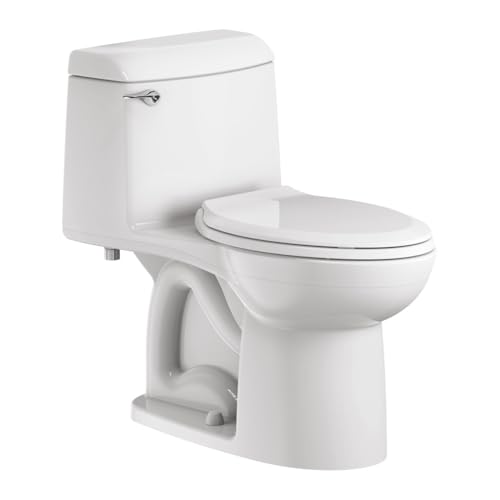
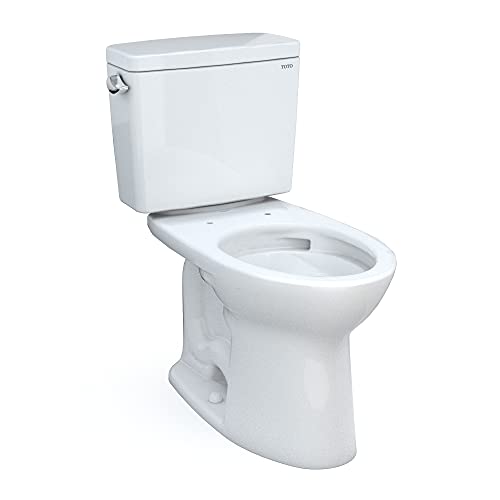
Toilets with a fully glazed, wide-diameter trapway and a MaP flush score of 800 grams or higher are the most clog-resistant designs available. The TOTO Drake II and UltraMax II feature TOTO's proprietary Double Cyclone flush system and a 2 1/8-inch fully glazed trapway that consistently earns MaP scores of 1,000 grams, the maximum rating. The American Standard Champion 4 uses a 4-inch accelerator flush valve and a 2 3/8-inch fully glazed trapway, the widest available in a standard-size toilet, and earns a MaP score of 1,000 grams as well.
When choosing a replacement toilet to reduce clogs, these are the specifications to prioritize:
For a full breakdown of the best options by category, see our guide to the best flushing toilets available today.
Among regularly cited clog-resistant models in aggregated owner review data, the American Standard Champion 4 stands out for households that routinely use thick toilet paper. Its 2 3/8-inch trapway is wider than anything in the TOTO or Kohler lineup, and American Standard backs this specific model with a limited lifetime warranty on the flushing system. The Kohler Cimarron with the AquaPiston canister valve is a strong alternative that also earns consistent MaP scores of 1,000 grams.
| Model | Trapway (inches) | Flush Valve | MaP Score | GPF | EPA WaterSense | Check Price |
|---|---|---|---|---|---|---|
| American Standard Champion 4 | 2 3/8 fully glazed | 4-inch Accelerator | 1,000 g | 1.6 | No | Check price |
| TOTO Drake II | 2 1/8 fully glazed | Double Cyclone | 1,000 g | 1.28 | Yes | Check price |
| TOTO UltraMax II | 2 1/8 fully glazed | Double Cyclone | 1,000 g | 1.28 | Yes | Check price |
| Kohler Cimarron | 2 1/8 fully glazed | AquaPiston Canister | 1,000 g | 1.28 | Yes | Check price |
| TOTO Aquia IV | 2 1/8 fully glazed | Dual Tornado Flush | 800 g | 0.8/1.0 dual flush | Yes | Check price |
| Woodbridge T-0001 | 2 1/8 fully glazed | Siphon Jet | 800 g | 1.28 | Yes | Check price |
| Gerber Viper | 2 1/8 fully glazed | Tower Flush Valve | 1,000 g | 1.28 | Yes | Check price |
The American Standard Champion 4's 2 3/8-inch trapway gives it an engineering advantage for households that tend to use large amounts of toilet paper. The TOTO Drake II and UltraMax II reach the same 1,000 g MaP score with a slightly narrower trapway by compensating with extremely forceful siphon-jet flush action. Both approaches work; the right choice depends on your household habits and whether water efficiency is a priority. Read our in-depth guide to toilets that clog with toilet paper for a deeper comparison.
This is a legitimate concern. The low-flush button on a dual-flush toilet typically delivers 0.8 to 1.0 GPF, which can be insufficient to move a large paper wad through the trap. TOTO's Aquia IV addresses this partly by using a Tornado Flush on both modes, and it earns a 1,000 g MaP score on the low flush. But in general, households with known clogging tendencies should use the full flush (the larger button) every time, or choose a single-flush 1.28 GPF model instead. For a detailed comparison, see our article on dual flush vs single flush toilets.
A fully glazed trapway has the same smooth ceramic coating on the inside of the passage as the visible exterior of the bowl. Budget toilets frequently leave the inside of the trapway unglazed, exposing rough, porous clay that toilet paper fibers catch on. Over dozens of flushes, this roughness accumulates a layer of paper and mineral scale that progressively narrows the effective diameter. TOTO's CeFiONtect glaze, applied to the full trapway interior, is particularly smooth and resists buildup. Kohler's vitreous china construction similarly results in a consistent glaze throughout the trapway.
Even a toilet with a wide trapway can develop buildup over time. These monthly habits significantly reduce clog frequency:
For households where toilet paper clogs are a recurring problem despite a capable toilet, the drain line slope is worth investigating. A plumber with a drain camera can confirm whether the pipe has settled below the 1/4-inch-per-foot slope needed for reliable waste transport. This is a structural fix but permanently solves chronic clogging.
Standard single-ply and two-ply toilet paper begins to break apart within 30 to 90 seconds of water exposure and largely dissolves within five minutes. Quilted three- and four-ply paper can take five to ten minutes. Adding dish soap and hot water speeds this process. If the clog does not clear within 15 minutes of adding hot water, move to a plunger.
No. Toilet paper clogs are always temporary because the paper eventually disintegrates in water. Even compressed wads that resist a plunger will dissolve given enough time and heat. However, leaving a clog unaddressed for days creates a risk of overflow if someone attempts to flush. Address it promptly with the methods above.
No. Boiling water (212 degrees Fahrenheit) can crack the porcelain bowl or damage the wax seal at the toilet base due to rapid thermal expansion. Use water that is hot to the touch, approximately 140 to 160 degrees Fahrenheit, which is effective at softening paper without damaging the fixture.
These chemical drain openers are not recommended for toilets. They contain sodium hydroxide or sulfuric acid that generates significant heat when it reacts with water, which can damage the rubber flapper, wax ring, and PVC drain lines. They are also largely ineffective on toilet paper because paper does not respond to chemical breakdown the same way grease does. A plunger or auger is the correct tool.
Weekly clogging despite normal paper usage almost always indicates one of four causes: a builder-grade toilet with a narrow, unglazed trapway; an undersized or partially stuck flush valve that limits water volume; a drain line that has lost adequate slope; or the use of ultra-premium multi-ply paper combined with a low-flow flush. Assess each factor in order. A toilet upgrade to a model with a 2 1/8-inch or larger fully glazed trapway and a MaP score of 1,000 grams resolves the first two causes.
A flange plunger, also called a toilet plunger or ball plunger, is designed specifically for toilet drains. The rubber flange extending from the inside of the cup seats into the drain opening and creates an airtight seal, allowing you to generate real suction. Flat cup plungers are designed for flat sink drains and rarely form an adequate seal over a toilet drain. Accordion plungers made of hard plastic also work but can scratch porcelain if used carelessly.
First, do not flush again. Lift the toilet tank lid and push the flapper down manually to stop additional water from entering the bowl, or turn the shut-off valve (located at the wall behind and below the toilet) clockwise until it closes. This prevents overflow. Then allow the bowl water level to drop before attempting any of the clearing methods described above.
Yes, meaningfully. Single-ply and two-ply standard-density papers dissolve in water within seconds and rarely cause clogs in otherwise functional toilets. Ultra-premium quilted four-ply papers take significantly longer to break apart. In independent tests comparing brands, premium brands like Charmin Ultra Strong showed much slower disintegration times than Scott 1000 or comparable one-ply products. For clog-prone toilets, switching to a thinner paper is one of the fastest and cheapest fixes available.
A simple toilet paper clog left untreated for a day or two is unlikely to damage the toilet itself. The greater risk is water damage if someone attempts to flush a fully blocked toilet and the bowl overflows. If the clog is deep in a PVC drain line and you use a metal drain snake aggressively, the snake can occasionally scratch the interior of older pipes, but this is not a realistic concern for paper clogs addressed promptly with the appropriate tools.
A genuine closet auger (not a standard drain snake) includes a rubber or vinyl sleeve over the cable at the point where it contacts the bowl. Position the sleeve so it rests against the drain opening, not against the porcelain bowl surface. Rotate the handle smoothly rather than forcing the cable down abruptly. Never use a metal drain snake without a protective sleeve in a toilet bowl, as it will scratch the glaze.
A new toilet that clogs suggests one of these issues: the model has a lower trapway diameter or flush power than expected, the drain line connecting to the toilet has insufficient slope or a partial obstruction, ultra-thick paper is being used in quantities that exceed the toilet's rated capacity, or the toilet was not installed with a properly functioning flapper that allows a full flush cycle. Review the model's published MaP score and trapway specifications, and verify that the flapper opens fully during a flush cycle.
After a complete flush cycle, the water level in the bowl should refill to the same level as before the flush, typically about halfway up the bowl. If the level is lower than normal after flushing, the flapper may not be sealing properly, reducing the water available for the next flush. A reduced post-flush water level indirectly increases clog risk because there is less water to soften and carry paper at the start of the next flush.
Yes, in most circumstances. Pressure-assisted toilets use compressed air stored in a vessel inside the tank to deliver a forceful, high-velocity flush. The American Standard Cadet 3 Flowise and Kohler Highline with Flushmate are examples that generate flushing force exceeding anything available from standard gravity-fed designs. The tradeoff is that pressure-assisted flush is noticeably louder, parts are more expensive to replace, and the technology requires a minimum water pressure of 20 to 80 psi at the supply line. For households where clogging is a persistent problem and the plumbing supplies adequate pressure, the upgrade is often worth it. See our guide to pressure-assisted toilets for details.
For a household that uses standard two-ply paper in normal amounts, any toilet with a MaP score of 500 grams or higher should perform without chronic clogging. For households with heavy users, thick paper preferences, or existing drain line issues, a score of 800 to 1,000 grams provides a meaningful safety margin. The maximum MaP score of 1,000 grams is achieved by multiple models from TOTO, Kohler, American Standard, and Gerber at price points ranging from budget to premium.
Keep a small wastebasket next to the toilet so guests who are unsure about the toilet's capacity have an alternative for excess paper. Post a discreet sign reminding guests to use modest amounts and to flush twice if needed. If your guest bathroom has an older toilet, upgrading to a model with a 2 1/8-inch or larger trapway and a MaP score above 800 grams is the most permanent solution. A plunger stored visibly in the bathroom also gives guests the means to self-resolve a minor clog before it becomes an emergency.
Indirectly, yes. A holder positioned far from the toilet encourages users to pull a longer strip of paper, increasing the wad size per use. A holder within easy reach tends to result in more modest paper usage. This is a minor factor compared to toilet design and paper thickness, but worth considering in bathroom layouts where clogging is already a concern.
The baking soda and vinegar combination produces a fizzing reaction that is largely cosmetic inside a toilet bowl filled with water. The chemical reaction is neutralized almost immediately upon contact with the standing water, generating carbon dioxide bubbles that do not exert meaningful pressure against a compacted paper clog. This method works for slow drains caused by mineral buildup, but it is not an effective tool for a mechanical toilet paper blockage. Stick with hot water and dish soap, followed by a plunger.
Call a plumber if: the toilet remains blocked after two rounds of plunging and augering; multiple drains in the home are backing up simultaneously (indicating a main sewer line issue); you can hear gurgling from distant drains when you flush; the toilet has overflowed and there is visible water damage; or you suspect a hard object rather than toilet paper has been flushed. A licensed plumber with a motorized drain snake or sewer camera can diagnose and resolve issues that DIY tools cannot reach.
CeFiONtect is TOTO's proprietary ultra-smooth glaze applied to both the visible bowl surfaces and the full interior of the trapway. Independent testing shows that the extremely low surface friction of CeFiONtect reduces the tendency of toilet paper fibers to catch and accumulate inside the trapway. Over time, this means fewer partial blockages and a cleaner flush with less water. It also makes the bowl significantly easier to keep clean visually, as waste slides off the glazed surface more readily. Most TOTO models from the Drake series onward include CeFiONtect as standard.
Most toilet paper clogs clear within ten minutes using hot water and dish soap or a flange plunger, and a toilet auger handles the remainder without a service call. If your toilet clogs more than once a month with normal paper use, the fixture is the problem, not you. A toilet with a 2 1/8-inch or larger fully glazed trapway and a MaP score of 1,000 grams, such as the American Standard Champion 4, TOTO Drake II, or Kohler Cimarron, removes chronic clogging as a household concern. Pair it with standard two-ply toilet paper and a twice-flush habit for heavy use, and the problem is effectively solved.
Learn why toilet trapways curve like an S, how each bend blocks sewer gas, and what the shape means for clogs and…
Read the guideAlmost every US toilet has a left-side handle. Learn the plumbing and mechanical reasons behind the layout and when it actually changes.
Read the guideHome toilets rely on tanks because household water lines lack the pressure that public flushometer systems use to flush straight from the…
Read the guide