
Why Toilet Trapways Are Curved Like an S
Toilets4.6
Learn why toilet trapways curve like an S, how each bend blocks sewer gas, and what the shape means for clogs and…
Read the guideDouble flushing means one handle press triggers two complete tank dumps back to back, clearing the bowl twice before the tank can even finish refilling. It is different from phantom flushing, where the toilet quietly refires on its own minutes later. Both waste water and both have fixable mechanical causes, almost always traced to the flapper, the chain, the flush valve, or a tank volume that is slightly off. This guide covers every cause in the order most likely to apply to your toilet, with the exact checks and repairs for each.
Toilet double flushing is almost always caused by a flapper that stays open too long, a lift chain that is too long, or a tank water level set above the overflow tube. Shorten the chain to about half an inch of slack, swap to a weighted or adjustable flapper, and lower the fill valve float until the water sits one inch below the overflow tube. These three free-to-cheap adjustments resolve roughly 90 percent of double flushing without calling a plumber.
Pushing the handle once and watching the bowl clear twice is one of the more surprising toilet problems because the toilet is, in a certain sense, working too well rather than failing. The bowl clears fine on the first flush. Then the tank, which should be refilling and sitting quietly, fires again without anyone touching anything. If you put your hand on the handle after flushing you might even feel it pull down slightly on its own as the second flush completes.
The underlying event is not mysterious once you understand the tank mechanism. Your toilet tank stores a fixed volume of water sealed at the bottom by a rubber or silicone flapper. When you press the handle, a chain lifts the flapper, the tank empties into the bowl through the flush valve, and the flapper drops back onto the valve seat to reseal. The fill valve then tops the tank back up. True double flushing means the flapper stays open past the moment it should have dropped, allowing the tank to empty a second time before the fill valve can catch up. The chain, the flapper buoyancy, the flapper size, and the tank water level are all factors in how quickly that flapper closes.
This is distinct from ghost flushing or phantom flushing, where the toilet hisses and briefly refills on its own minutes or hours after a real flush. Ghost flushing is a slow leak, usually a worn flapper sitting on the seat. Double flushing is a timing problem: the flapper closes late, or the flush valve empties so fast that a second wave comes through before the flapper drops. Both types waste water. Double flushing on a 1.28 GPF WaterSense toilet means every flush is actually consuming 2.56 GPF or more, erasing the efficiency gain entirely. On a 1.6 GPF toilet the waste is even larger. Understanding which type of double flushing you have points you to the right repair.
The four main causes of true double flushing are the lift chain, the flapper buoyancy, the flush valve size mismatch, and the fill level. They are listed here from most to least common, which is also the order to check them.
A lift chain that is too long is the single most common double flushing cause. When there is excessive slack, a loop of chain can drift under the flapper as it tries to close, physically propping the rubber disc off the valve seat and letting water continue to pour through. The flapper cannot seal until the chain loop clears or gets pulled back as the water level drops. In the meantime a second partial or complete flush of water flows into the bowl.
A flapper that is too buoyant floats in the tank water rather than sinking promptly when the handle is released. If the flapper rides high for longer than the tank takes to fully drain, a second flush happens before it seals. This is common when a replacement flapper is installed that does not match the flush valve size or tank design, or when someone replaces a three-inch flapper with a two-inch universal that floats differently. It also happens with older flappers made of material that has softened over years of water exposure and changed its buoyancy characteristics.
A tank water level set above the overflow tube is the third cause. When the fill valve float is adjusted too high, water never stops running into the overflow tube, and the effective tank volume is smaller than intended. On some toilet models this throws off the hydraulic timing in the flush cycle enough to keep the flapper afloat through what should be the closing moment, producing a second dump. It also independently creates phantom flushing through the bowl, so a water level that is too high often produces a combination of symptoms.
Finally, a flush valve seat that is damaged or scaled can interfere with flapper seating. If the flapper bounces off a rough valve seat instead of dropping cleanly, it may lift again on the rebounding water and allow a second partial flush. This is the least common cause but worth checking if the other three repairs have not solved it.
The timing is the easiest diagnostic. Stand at the toilet with the tank lid off and press the handle normally. Watch the flapper. If it lifts, drops, and then lifts again, or lifts and stays up through two tank drains, you have double flushing. If it drops cleanly and stays seated, the flush finished normally, and any second noise or refill that happens later is a ghost flush triggered by a slow leak.
The dye test confirms the ghost-flush diagnosis. Add food coloring to the tank water and do not flush. Wait twenty minutes. If the bowl water changes color without you flushing, water is leaking past the flapper from the tank, and the fill valve refiring to compensate is what you hear as the second flush. Clear bowl water means the leak is not at the flapper and you should look at the fill valve and overflow tube. If the tank lid is off and you can see water actively dribbling down the inside of the overflow tube, the fill valve float is set too high.
Some toilets exhibit both problems at once: a chain that causes true double flushing on every press, and a worn flapper that also leaks slowly and triggers phantom flushes between real flushes. Fixing both at the same time is the correct approach in that case, since each repair is inexpensive and fast.
Work through the repairs in order from fastest to most involved. Most double flushing is resolved before you reach the third step.
Turn off nothing, lift the tank lid, and look at the chain running from the handle arm to the top of the flapper. You want about half an inch of slack when the flapper is fully seated, just enough that the flapper can rest flat without being pulled by chain tension, but not so much that a loop of excess chain can drift under it. If there is more than about an inch of slack, the extra chain is the likely culprit.
Move the chain clip to a higher hole on the handle arm to take up slack. If the chain is genuinely too long and there are no more holes, use a spare S-hook or a zip tie to bundle the excess so it cannot fall under the flapper. Do not cut the chain during a first adjustment, since you may need to loosen it again if you overcorrect and find the flapper now cannot open far enough. Flush several times and watch the flapper. If it drops cleanly within a second of releasing the handle and no second flush follows, the chain was the cause and you are done.
If the chain looks correct but the flapper still stays up too long, the flapper itself is the problem. Remove it and check the brand and model stamped on it or on the flush valve tower, since the replacement must match not just the size (two-inch or three-inch) but also the closing speed. Bring the old flapper to the hardware store or look up the manufacturer's specific replacement part. Some toilets require proprietary flappers that seal reliably while generic universals of the same nominal size float too long and cause double flushing.
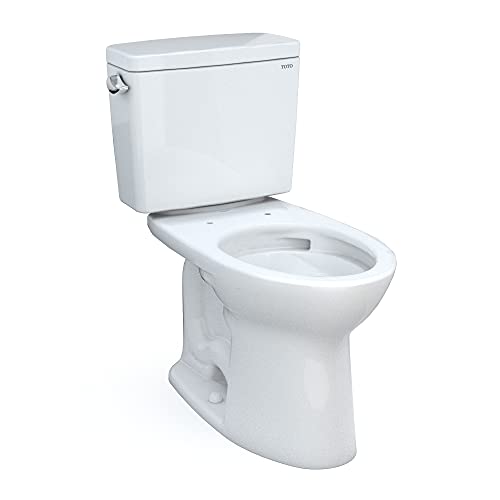
TOTO toilets, for example, use a proprietary flush valve and flapper design specifically engineered for controlled closing timing on the Drake, Drake II, and UltraMax II. Fitting a generic flapper on a TOTO often produces double flushing because the generic disc does not close at the same rate. Kohler Highline and Cimarron models are similarly sensitive to flapper compatibility. American Standard Champion 4 and Cadet 3 toilets have their own flapper geometry. Gerber Viper and Gerber Ultra Flush each use a specific valve design where the manufacturer-specified flapper is the only reliable replacement. Matching the flapper to the specific model is not optional if you want a lasting fix.
After fitting the new flapper, run the dye test to confirm the seal, then watch five complete flushes to confirm only one tank dump occurs per press.
Check the water level in the tank. The water surface should sit approximately one inch below the top of the overflow tube, which is the tall vertical pipe that rises from the center of the flush valve. If water is at the rim of the overflow tube or going over it, lower the float. On a ballcock-style fill valve there is an adjustment screw or bend the float arm down slightly. On a modern column fill valve, look for the adjustment clip, dial, or screw at the top of the float column and turn it to drop the shutoff level.
Lower in small increments, let the tank refill, and measure again. You are aiming for one inch of clearance. This adjustment is free, takes under two minutes, and simultaneously fixes overflow-tube ghost flushing if that was also happening.
If the first three steps have not solved the double flushing, remove the flapper and run a finger around the valve seat it rests on. Look for pitting, cracking, or a ring of mineral scale that prevents the flapper from sitting flat. Mineral buildup from hard water is common in areas served by well water or limestone-heavy municipal sources, and scale as thin as one millimeter is enough to hold the flapper fractionally open.
A fine nonabrasive scrub pad or a flush valve seat repair kit can resolve minor scaling. If the seat is cracked or pitted, a flush valve seat repair disc bonds a new smooth surface over it without removing the tank, and this often extends toilet life by several more years at very low cost. A cracked flush valve body requires replacing the entire flush valve assembly, which involves removing the tank from the bowl and is the largest repair on this list, though it is still a DIY job for most people comfortable with basic plumbing.
| Cause | Symptom | Fix | Parts cost | Time |
|---|---|---|---|---|
| Chain too long | Double flush every press, chain visible under flapper | Shorten chain to 0.5 in slack | Free | 2 min |
| Wrong or buoyant flapper | Flapper stays up more than 2 seconds after release | Replace with OEM-matched flapper | $5-$15 | 10 min |
| Fill level too high | Water near overflow tube rim, ghost flushing too | Lower fill valve float 1 in below overflow | Free | 5 min |
| Scaled flush valve seat | New flapper still leaks after dye test | Clean seat or fit seat repair disc | $5-$20 | 15 min |
| Cracked flush valve body | Persistent leak after seat cleaning | Replace full flush valve assembly | $15-$40 | 45-60 min |
| Worn fill valve | Tank never fully shuts off, constant trickle | Replace fill valve | $10-$30 | 15-20 min |
Most plumbers see lift chain length as the leading cause of double flushing, especially after a DIY flapper replacement where the homeowner reconnected the chain in a different hole. A chain too short strains the handle; a chain too long causes double flushing. When you are troubleshooting any flush timing problem, the chain is the fastest possible fix and should always be the first check before purchasing any parts. Adjust it, test five flushes, and then decide whether anything else needs attention.
There is a legitimate argument for replacing older high-GPF toilets while you have the tank open. A toilet manufactured before 2005 that uses 3.5 GPF, 5 GPF, or the older 1.6 GPF at a time when 1.28 GPF WaterSense models now flush equally well at 19 percent less water per flush, may have passed the point where a $15 flapper is the smartest investment. EPA WaterSense-certified models must pass MaP flush testing at 350 grams minimum, and many strong performers like the TOTO Drake II, TOTO Aquia IV, Kohler Highline, American Standard Champion 4, Woodbridge T-0001, and Swiss Madison St. Tropez score far higher than that threshold, often in the 800 to 1000 gram range.
That said, an otherwise functional toilet in good structural condition that simply needs a new flapper and chain adjustment does not need to be replaced. Fix it, confirm the seal with a dye test, and if the toilet consistently clears waste well after that, you are done. See our guide to the best flushing toilets if you do decide an upgrade makes sense, along with our article on how to improve toilet flush power for cases where the bowl clearing has also been weak.
If you are shopping for a replacement and want to eliminate the double flushing risk by design, certain toilet technologies handle this better than others.
TOTO's G-Max flush system, used on the Drake and Drake II, controls water flow through a tower-type flush valve with a specific closing sequence built into the valve geometry. The TOTO Drake II at 1.28 GPF achieves a MaP score consistently in the 800 to 1000 gram range and uses a flush valve that is not prone to the buoyancy-related double flushing common in generic gravity toilets. The Aquia IV dual-flush version offers 0.8/1.28 GPF and a similarly engineered flush valve. TOTO's Tornado Flush models, including the UltraMax II, use rim jets and a different hydraulic pattern entirely, with no exposed rim holes for scale to close off and a flush valve that is even less susceptible to double flushing.
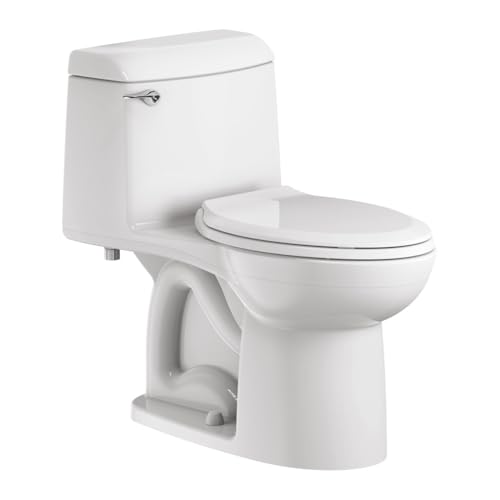
American Standard's Champion 4 uses a four-inch accelerator flush valve with a piston-style opening rather than a traditional buoyant flapper, which gives it exceptional water volume control. Its MaP score reaches 1000 grams on published testing. The Cadet 3, using a three-inch flush valve, is similarly reliable and posts MaP scores in the 800 gram range.
Kohler's Highline and Cimarron use Class Five and Class Six flush technology respectively, each with precisely engineered flush valves that are matched to their specific flappers. These perform well at 1.28 GPF with MaP scores in the 800 to 1000 gram range when fitted with the correct Kohler-specified flapper replacement parts.
Woodbridge T-0001 is a one-piece design with a flush valve and flapper integrated differently from a standard two-piece, and owner reviews consistently show it does not double flush under normal use. Swiss Madison St. Tropez uses a fully skirted one-piece design with a 1.28 GPF flush valve that owners report performs without double flushing when properly maintained. Gerber's Viper and Ultra Flush models use proprietary flush valve designs with their own matched flappers, and the brand's support resources specify exact replacement parts to maintain correct timing.
| Toilet model | Flush type | GPF | MaP score | WaterSense | Double flush risk | Check Price |
|---|---|---|---|---|---|---|
| TOTO Drake II | G-Max gravity | 1.28 | 800-1000g | Yes | Very low | Check price |
| TOTO UltraMax II | Tornado Flush | 1.28 | 1000g | Yes | Very low | Check price |
| American Standard Champion 4 | 4-in piston valve | 1.6 | 1000g | No | Low | Check price |
| American Standard Cadet 3 | 3-in gravity | 1.28 | 800g | Yes | Low | Check price |
| Kohler Cimarron | Class Six gravity | 1.28 | 800-1000g | Yes | Low | Check price |
| Kohler Highline | Class Five gravity | 1.28 | 800g | Yes | Low | Check price |
| Woodbridge T-0001 | Gravity siphon | 1.28 | 800g | Yes | Low | Check price |
| Swiss Madison St. Tropez | Gravity | 1.28 | 750-800g | Yes | Low | Check price |
| TOTO Aquia IV | Dual-flush gravity | 0.8/1.28 | 800-1000g | Yes | Low | Check price |
| Gerber Ultra Flush | Proprietary tower | 1.28 | 800g | Yes | Low | Check price |
When evaluating toilet designs for long-term reliability, the flush valve and flapper matching is the most underrated factor. A toilet with an advanced flush technology is only as reliable as its flapper closure timing. TOTO's proprietary G-Max and Tornado Flush valves close at a hydraulically controlled rate rather than relying on passive flapper weight, which is why TOTO units rarely present double flushing complaints in aggregated owner reviews. If you are choosing a replacement specifically to avoid ongoing repair cycles, prioritize toilets where the manufacturer specifies an exact replacement flapper part number rather than accepting "universal" flappers.
The EPA WaterSense program certifies toilets at 1.28 GPF precisely because they use 20 percent less water than the 1.6 GPF standard, saving the average family about 13,000 gallons per year compared to older 3.5 GPF models. A double-flushing WaterSense toilet eliminates that savings entirely and actually consumes 2.56 GPF per use, well above the standard toilet threshold. At municipal water rates, the extra cost adds up quickly on quarterly bills. Beyond the financial argument, the environmental case for fixing double flushing is straightforward: each gallon of treated drinking water wasted at a tap represents energy used in pumping, treating, and distributing that water, and MaP testing exists partly to ensure that low-GPF toilets actually flush fully on one cycle rather than requiring users to flush twice to clear the bowl.
If the toilet is double flushing because its flush power is genuinely insufficient (meaning one flush often fails to clear the bowl and the second is required to finish the job), that is a fundamentally different problem than a mechanical double flush caused by a chain or flapper. A toilet with a low MaP score that requires two flushes to clear solid waste needs either a flush valve upgrade or replacement with a higher-performance model. MaP scores below 500 grams are considered marginal for a family bathroom. TOTO, American Standard, Kohler, and Gerber all publish MaP scores for their current models, making it straightforward to compare clearing performance before purchasing.
For deeper guidance on the relationship between flush power and water efficiency, see our article on how to fix a weak toilet flush and our overview of what MaP scores mean.
| Toilet GPF | Flushes per day (1 person) | Extra gallons per day | Extra gallons per year | 4-person household per year |
|---|---|---|---|---|
| 0.8 GPF (dual flush liquid) | 8 | 6.4 | 2,336 | 9,344 |
| 1.28 GPF (WaterSense) | 8 | 10.24 | 3,738 | 14,950 |
| 1.6 GPF (standard) | 8 | 12.8 | 4,672 | 18,688 |
| 3.5 GPF (pre-1994) | 8 | 28 | 10,220 | 40,880 |
These figures assume one additional complete flush per press. A toilet that double flushes only on heavy-waste flushes, rather than every use, wastes proportionally less but the repair cost is still lower than the water cost over a year.
Some toilets show both issues simultaneously. The flapper is buoyant enough to cause a double flush on every press, and it is also worn enough to leak slowly between flushes and trigger ghost flushing. The fill valve then runs more often than it should. On a heavily used family bathroom this combination can double or triple the toilet's actual water consumption. Fixing both at the same time, a new correctly matched flapper and an adjusted chain, costs under $20 and stops both symptoms. Related issues like ghost flushing and a constantly running toilet are covered in their own guides if you need step-by-step walkthroughs.
No. Double flushing happens immediately after one handle press, with two complete or partial tank dumps in quick succession. Phantom flushing happens unprompted minutes or hours after a real flush, when a slow tank-to-bowl leak drops the water level far enough to trip the fill valve. The causes and repairs differ, though both often involve the flapper.
About half an inch of slack is the correct target. Enough that the flapper rests flat without being pulled by tension, but not so much that a loop of excess chain can drift under the flapper and hold it open. Adjust by moving the chain clip to a different hole on the handle arm, or bundle excess chain with an S-hook.
Yes. A flapper that floats too enthusiastically in the tank water stays up longer than the intended flush duration and allows a second drain before sealing. This is common when a generic universal flapper replaces a model-specific one, since different flappers are designed with different closing speeds. Using the manufacturer-specified replacement part for your toilet model eliminates this mismatch.
It can, if the water level is high enough to keep the flapper floating beyond its normal closing point. Lower the float until the water sits one inch below the top of the overflow tube and test several flushes. If the double flushing stops, the water level was the cause. If it continues, the chain or flapper is the issue.
Not necessarily. Bowl water level is set by the shape of the trapway exit, not by the tank. The tank water level is what matters for double flushing. Check the tank level relative to the overflow tube rather than the bowl water level when diagnosing this problem.
TOTO flush valves require TOTO-specific replacement flappers. A generic flapper on a TOTO G-Max flush valve typically closes too slowly or too quickly and disrupts the engineered flush timing. Remove the generic flapper and fit the TOTO-specified replacement part for your Drake model. The part number is printed on the flush valve tower or available from TOTO's website by entering your toilet model number.
Yes, though it is less common than chain and flapper issues. A crack in the flush valve body can prevent the flapper from seating flat, allowing water to escape past the valve in a way that disrupts the normal closing sequence. Inspect the valve seat surface closely after fixing the chain and replacing the flapper, especially if the double flushing continues after those repairs.
Lift the flapper and measure the diameter at its widest point. Most toilets use a two-inch flapper; toilets with high-performance flush valves often use a three-inch flapper. You can also check the manufacturer's model number stamped on the inside of the tank, look it up online, and find the exact replacement part number from the brand. Manufacturer-specified flappers always outperform universal versions in closing timing reliability.
Pressure-assist toilets are far less susceptible to double flushing because they use a pressurized vessel inside the tank rather than a gravity-fed flapper system. The flush is triggered and completed by the compressed air release, which is not subject to chain length or flapper buoyancy variables. They can develop other issues over time, but double flushing from a floating flapper is not among them.
Yes, the toilet is safe to use. The extra flushes are wasteful but not harmful to the toilet or the plumbing. The only risk is water waste adding to your bill, and in a ghost-flushing scenario, the remote possibility of an overflow if the fill valve itself also fails. Fix it as soon as convenient but it is not an emergency.
Intermittent double flushing often points to a chain that is borderline in length, sometimes slipping under the flapper and sometimes not depending on how it falls after each flush. It can also happen when a flapper is partially degraded and closes correctly when it seats perfectly but floats longer when it sits slightly off-center on the valve seat. Cleaning the valve seat and shortening the chain slightly usually resolves intermittent cases.
A partial clog can create conditions that look like double flushing. If the bowl drains slowly, the first flush volume may not clear fully, and a second manual flush is required. This is not true mechanical double flushing from the tank but rather the user pressing the handle a second time out of necessity. Check for a slow drain with water poured directly from a bucket: if it drains slowly, a clog rather than a tank timing problem is the cause.
Dual-flush toilets use a tower-style push-button flush valve rather than a flapper, and the closing sequence is mechanically different. They are generally not susceptible to the chain-and-flapper double flushing described here. If a dual-flush toilet seems to run twice, the issue is more often a worn tower seal that leaks, or a button that is sticking and releasing twice. See the manufacturer's service guide for tower seal replacements specific to your dual-flush valve.
Most rubber flappers last three to five years under normal use in chlorinated municipal water. Hard water with high mineral content, chloramines (used in some municipal systems instead of chlorine), and in-tank chemical cleaner tablets accelerate flapper degradation significantly and can shorten the lifespan to twelve to eighteen months. Silicone flappers last longer than rubber, often seven or more years, and are worth specifying when you replace a frequently failing rubber flapper.
Yes, indirectly. Chlorine and bleach tablets speed rubber flapper degradation by hardening and distorting the rubber. A distorted flapper does not seat flat, leading to both slow leaks and inconsistent closing timing, which can present as double flushing or ghost flushing. If you use in-tank tablets, switch to bowl-rim clips or external cleaner products, and inspect the flapper every year rather than every three to five years.
Occasionally. A stiff or sticky handle that does not return fully to the neutral position after flushing can hold tension on the chain slightly longer than intended, keeping the flapper up for an extra moment. Test by pressing the handle and releasing it fully, watching that it springs back completely. If it feels sluggish or does not return freely, clean or replace the handle. Handle replacement costs around $10 and installs in minutes.
Yes. Most toilet warranties cover tank internals for one to five years depending on the brand. TOTO offers a one-year warranty on mechanical parts and longer on the vitreous china. Kohler, American Standard, and Gerber offer similar coverage. Double flushing within the warranty period from a factory-original flapper or fill valve may be a warranty claim. Contact the manufacturer's customer service with the model number from inside the tank before buying replacement parts.
MaP (Maximum Performance) testing measures how many grams of solid waste a toilet clears in a single flush at its rated GPF. It does not specifically test for double flushing. However, toilets with high MaP scores, 800 grams and above, are engineered with sufficient hydraulic performance to clear fully in one flush, reducing any behavioral motivation to flush twice. Low MaP toilets may prompt users to flush a second time manually even when the tank internals are working correctly.
Yes. After making the repair, flush the toilet ten times in a row, watching the flapper carefully each time. If it drops and seals within one to two seconds of releasing the handle every single time, with no second dump of water following the main flush, the repair was successful. Also run the dye test to confirm no slow leak past the flapper exists. Both checks together give high confidence the repair held.
Yes, and this combination is more common than it sounds. A partially degraded flapper may close just slowly enough to cause double flushing on each press, while also leaking slightly when seated, causing the fill valve to run intermittently between flushes. Both symptoms disappear when the correct matched flapper is fitted and the chain is set to the proper slack. Replacing the flapper solves both problems in one repair.
Toilet double flushing is almost never a reason to replace the toilet. In the vast majority of cases, shortening the lift chain to half an inch of slack, fitting a manufacturer-matched flapper, and lowering the fill valve float until the water sits one inch below the overflow tube resolves the problem for under $20 and thirty minutes. These repairs also cut ongoing water waste, which on a double-flushing WaterSense toilet can reach nearly 4,000 extra gallons per person per year. If you work through all four repair steps and the toilet continues to flush twice, a new EPA WaterSense certified toilet from TOTO, Kohler, American Standard, Woodbridge, Swiss Madison, or Gerber with a proprietary flush valve will eliminate the problem by design, flush more powerfully, and start saving water from day one.
Learn why toilet trapways curve like an S, how each bend blocks sewer gas, and what the shape means for clogs and…
Read the guideAlmost every US toilet has a left-side handle. Learn the plumbing and mechanical reasons behind the layout and when it actually changes.
Read the guideHome toilets rely on tanks because household water lines lack the pressure that public flushometer systems use to flush straight from the…
Read the guide