

Why Toilet Trapways Are Curved Like an S
Toilets4.6
Learn why toilet trapways curve like an S, how each bend blocks sewer gas, and what the shape means for clogs and…
Read the guideFacial tissue and toilet paper look nearly identical, but their fiber engineering is worlds apart. Here is what actually happens inside your drain when you flush the wrong one, and which toilets handle it best if you already have.
Facial tissue is not designed to be flushed. Unlike toilet paper, which disintegrates in water within seconds, facial tissue is wet-strength engineered to hold together when damp. Flushing it regularly risks partial clogs in your trapway, sewer line buildup, and potential septic system damage over time.
Toilet paper is manufactured with short, untreated cellulose fibers that begin breaking apart within 20 to 30 seconds of water contact. Facial tissue, by contrast, contains wet-strength resins, typically polyamidoamine-epichlorohydrin (PAE) compounds, that bond the fibers together and prevent disintegration even after extended soaking. The result is a product that retains 20 to 40 percent of its dry tensile strength when saturated, according to tissue industry technical standards. That retained strength is exactly what creates drain hazards.
To the naked eye, a sheet of Kleenex and a sheet of Scott 1000 look nearly identical. Both are white, both are soft, and both are made primarily from wood pulp. The engineering divergence happens at the chemical treatment stage during manufacturing. Facial tissue manufacturers add wet-strength agents so the product survives contact with tears, mucus, and moisture without falling apart in the hand. That is a feature for a nose tissue. It is a liability for a sewage system.
The fiber length also differs. Premium toilet paper uses short-cut fibers that separate quickly when agitated in water. Many facial tissues are manufactured with longer fiber sheets or layered multi-ply constructions that resist the mechanical action of water turbulence. When your toilet flushes, the siphon action creates about 3 to 5 seconds of high-velocity water movement. Short-fiber toilet paper shreds completely in that window. Facial tissue often survives it largely intact and travels as a sheet into the trapway and drainpipe.
Plumbing engineers distinguish between "dispersible" products (toilet paper, certain single-ply tissue-grade papers) and "non-dispersible" products (facial tissue, paper towels, wipes). Dispersibility testing per INDA/EDANA guidelines measures how completely a product separates under 10 minutes of agitation. Toilet paper passes at near 100 percent fiber separation. Most facial tissue brands fail this test entirely, retaining sheet integrity well past the 10-minute threshold. That persistence is the root cause of drain accumulation in residential and municipal sewer systems.
Facial tissue sheets that survive the flush intact do not immediately block a drain. The problem is accumulation. Each sheet that passes through coats the interior of pipes with a thin fibrous layer. Over weeks and months, those layers combine with grease, mineral deposits from hard water, and other debris to form a compacted blockage. In a 3-inch residential drainpipe, the effective diameter can narrow by 30 to 50 percent before a clog becomes noticeable, at which point hydro-jetting or mechanical auger work is typically required.
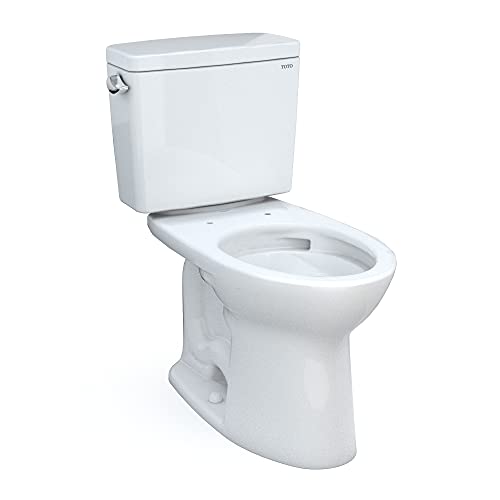
The physics of a toilet's trapway make facial tissue particularly problematic. The trapway is the curved S-shaped or P-shaped channel that runs from the bowl exit through the base of the toilet. On most standard toilets, the trapway passage narrows to approximately 2 to 2.5 inches at its tightest point. A full-size facial tissue sheet measures roughly 8.2 by 8.6 inches. Even if it folds during transit, it can partially bridge that narrow passage, especially if the flush is not forceful enough to push it completely through in one pull.
High-MaP-score toilets are more resistant to this effect. The TOTO Drake II (CST454CEFG) carries a MaP score of 1,000 grams, meaning it successfully flushed the maximum test payload during third-party MaP testing conducted at map-testing.com. The American Standard Champion 4 (2034.014) also achieves a 1,000-gram MaP score and features a 4-inch flush valve paired with a 2.375-inch glazed trapway that reduces surface friction. Toilets with larger trapways and more powerful flush mechanics are less likely to experience a single-flush clog from a stray facial tissue, but repeated flushing still accumulates residue.
| Property | Toilet Paper | Facial Tissue | Paper Towel |
|---|---|---|---|
| Wet-strength treatment | None (dispersible) | PAE resins added | High wet-strength |
| Disintegration time (water agitation) | 20 to 30 seconds | Does not fully disintegrate | Does not disintegrate |
| Fiber structure | Short-cut cellulose | Long-fiber multi-ply | Dense long fiber |
| Safe to flush? | Yes | No | No |
| Septic system safe? | Yes (single-ply preferred) | No | No |
| Risk to trapway | Minimal | Moderate (cumulative) | High (immediate) |
| Risk to sewer line | Minimal | Moderate (long-term) | High |
Septic tanks rely on anaerobic bacterial digestion to break down organic waste. The bacteria in a healthy septic tank can digest properly dispersed toilet paper within the tank's normal retention time of one to three days. Facial tissue, because of its wet-strength treatment, resists bacterial breakdown and accumulates in the tank's solid layer instead. Over time this accelerates the rate at which the tank fills with undigested solids, shortening pump-out intervals and potentially clogging the distribution pipes that lead to the leach field.
Homes on septic systems face a steeper risk from facial tissue flushing than homes connected to municipal sewer. In a municipal system, tissue that does not clog immediately may travel to a wastewater treatment plant where screening equipment removes it. In a private septic system, there is no such screening. Everything that enters the tank must either be digested by bacteria or pumped out by a professional.
The EPA's WaterSense program focuses primarily on water efficiency, but the agency's guidance on septic-safe products consistently recommends single-ply toilet paper labeled biodegradable and warns against flushing any tissue product not specifically manufactured for use as toilet paper. Septic system manufacturers including Infiltrator Water Technologies and Orenco Systems publish care guidelines that explicitly list facial tissue among prohibited flushable items, alongside wet wipes, cotton balls, and paper towels.
For households on septic systems, the toilet choice matters significantly. Toilets with a 1.28 GPF flush rate certified under EPA WaterSense deliver enough water volume and velocity to move waste efficiently while conserving water. The TOTO Aquia IV (CST447CEFG#01) dual-flush design offers 1.0 GPF for liquid waste and 1.28 GPF for solids, making it well-suited for septic applications where water balance in the tank is important. Using the correct flush volume for the waste type reduces strain on the entire system, but no flush volume makes facial tissue safe to flush.
Some manufacturers market specialty "flushable tissue" products, but these are distinct from standard facial tissue brands and must be verified against water utility or INDA/EDANA dispersibility standards before relying on the label. Standard Kleenex, Puffs, and store-brand facial tissues are not designed to be flushed. The key test: place a sheet in a jar of water and shake vigorously for 10 minutes. If the sheet remains mostly intact, it is not safe for drains.
The phrase "flushable" on a product label is not regulated by a single federal standard in the United States. The Federal Trade Commission has guidelines on deceptive marketing, and several class-action lawsuits have been filed against wet wipe brands over "flushable" claims, but no single agency certifies facial tissue as flushable. The most credible independent standard comes from INDA (Association of the Nonwoven Fabrics Industry) and EDANA, which jointly publish the GD4 Flushability Guidelines. Products that pass GD4 dispersibility testing can reasonably claim flushability. Standard facial tissue does not pass this test.
Some manufacturers have introduced "flushable facial tissue" variants that use modified fiber structures with reduced wet-strength treatment. Kimberly-Clark and Procter and Gamble have both explored these formulations in international markets. However, even partially reduced wet-strength tissue takes significantly longer to break down than toilet paper, and plumbing professionals and water utilities generally recommend against flushing any facial tissue product regardless of labeling unless it explicitly passes third-party dispersibility testing under GD4 or equivalent protocols.
Toilets with the highest MaP scores, largest trapway diameters, and strongest flush velocity are most resistant to single-event facial tissue clogs. Key models include the TOTO Drake II (1,000-gram MaP, 2.125-inch minimum trapway), American Standard Champion 4 (1,000-gram MaP, 2.375-inch trapway), and Kohler Cimarron with AquaPiston flush (1,000-gram MaP). None of these make facial tissue safe to flush habitually, but they are far less likely to clog from an occasional accidental flush than older low-power models.
If you live in a household where facial tissue occasionally ends up in the toilet by accident, common in homes with young children or elderly residents who confuse the products -- choosing a high-performance toilet significantly reduces the risk of a service call. The MaP (Maximum Performance) testing program, administered independently at map-testing.com, rates toilets on their ability to flush waste payloads measured in grams. A score of 1,000 grams represents the maximum payload tested and indicates exceptional flushing power.
Among the best flushing toilets on the market, the TOTO Drake (CST744SL) earns a 1,000-gram MaP score and uses TOTO's G-Max flushing system at 1.6 GPF. The TOTO UltraMax II (MS604114CEFG) also achieves 1,000 grams while consuming only 1.28 GPF. The Kohler Highline (K-3999) offers dependable performance at 1,000-gram MaP with a Class Five flushing technology. The American Standard Cadet 3 (2403.128) reaches 1,000 grams with a PowerWash rim and siphon jet. For homes with a history of clog issues, look at the best no-clog toilets and toilets with a fully glazed trapway for maximum waste evacuation.
| Model | MaP Score | GPF | Trapway | EPA WaterSense | Flush Type | Check Price |
|---|---|---|---|---|---|---|
| American Standard Champion 4 (2034.014) | 1,000 g | 1.6 | 2.375 in | No (1.6 GPF) | Gravity siphon | Check price |
| TOTO Drake II (CST454CEFG) | 1,000 g | 1.28 | 2.125 in | Yes | Double Cyclone | Check price |
| TOTO UltraMax II (MS604114CEFG) | 1,000 g | 1.28 | 2.125 in | Yes | Double Cyclone | Check price |
| Kohler Cimarron (K-6418) | 1,000 g | 1.28 | 2.125 in | Yes | AquaPiston | Check price |
| American Standard Cadet 3 (2403.128) | 1,000 g | 1.28 | 2.125 in | Yes | Siphon jet | Check price |
| Woodbridge T-0001 | 800 g | 1.28 | 2.125 in | Yes | Tornado | Check price |
| Swiss Madison Ivy (SM-1T254) | 800 g | 1.28 | 2 in | Yes | Siphon | Check price |
| Gerber Viper (28-888) | 1,000 g | 1.28 | 2.125 in | Yes | Siphon jet | Check price |
A single accidental flush of one or two sheets of facial tissue is unlikely to cause an immediate clog in a properly functioning toilet with a fully glazed trapway. The more significant risk comes from repeated flushing. If you have regularly flushed facial tissue for weeks or months, run two to three consecutive plain-water flushes to help clear any tissue that may be resting in the trapway, then stop the practice. If you notice slow draining, gurgling sounds, or incomplete flushes, call a plumber before a partial blockage becomes a full clog.
If you suspect a clog is forming, start with a toilet plunger using a flange plunger (not a cup plunger) placed over the drain opening with a full seal. Apply 10 to 15 firm plunge cycles before checking for drainage improvement. If the toilet drains after plunging, run two more flushes of plain water to confirm the passage is clear. If plunging does not resolve the issue, a toilet auger (also called a closet auger or snake) can reach 3 to 6 feet into the drain channel to break up soft blockages. Learn more about proper technique in the guide to how to unclog a toilet.
For homes with repeated facial tissue-related slow drains, a professional hydro-jetting service can clear the entire drain line of accumulated fiber and debris. Hydro-jetting uses pressurized water at 3,500 to 4,000 PSI to scour pipe walls and is more effective than augering for distributed accumulation rather than a localized blockage. This service typically costs between $300 and $500 for residential lines, depending on access and pipe length.
One of the most common calls plumbers receive involves slow-draining toilets attributed to "nothing unusual" being flushed. When scoped, the drain often reveals layers of facial tissue, wet wipes, and paper towel fibers accumulated over six to twelve months. Because no single event caused the problem, homeowners genuinely do not realize the issue until it is advanced. Establishing a household rule -- only toilet paper goes in the toilet -- prevents the vast majority of these service calls. Keep a lined waste bin next to every toilet for facial tissue, cotton pads, and other non-dispersibles.
The correct disposal method for facial tissue is a lined waste bin. Facial tissue is not recyclable in standard curbside paper recycling programs because the fibers are too short and the wet-strength treatment contaminates recycling streams. In composting, untreated facial tissue breaks down readily, but tissue that has been used with cleaning products or medications should go to landfill. Placing a covered waste bin with a foot pedal near each toilet makes proper disposal as convenient as flushing.
Many households have converted to small stainless steel or plastic bins with lids positioned within arm's reach of the toilet. Brands like simplehuman and Umbra produce narrow 2-to-4-liter bins that fit neatly beside a toilet base without consuming floor space. Bags rated for bathroom waste disposal (not kitchen compostable bags, which can leak) keep disposal clean and odor-controlled. Emptying daily or every two days prevents odor buildup from used tissue.
For households interested in sustainability, some brands of facial tissue are now manufactured without wet-strength additives and can be safely composted in a home compost pile. These products typically specify "no wet-strength treatment" or "fully biodegradable" on the packaging and have emerged particularly from European manufacturers responding to stricter regulations on flushable product labeling. Even these should not be flushed, but home composting is a legitimate eco-friendly alternative to landfill disposal. Check packaging carefully and do not confuse "biodegradable" with "flushable" -- the two claims have entirely different regulatory meanings.
If your goal is to reduce toilet paper waste and shift to a more hygienic option, a bidet attachment is the most practical alternative. Units like the Tushy 3.0, Luxe Bidet Neo 320, and Toto C200 Washlet reduce toilet paper use by 50 to 80 percent, and the cleaning is more thorough than paper alone. For a full comparison, see the guide to bidet vs toilet paper.
A single sheet is unlikely to cause an immediate clog in a modern high-MaP toilet, but the wet-strength fibers can accumulate in the trapway over time. One-time accidental flushes are low risk; regular flushing is not recommended regardless of sheet count.
Kleenex and similar facial tissue brands contain wet-strength resins that prevent the sheet from falling apart when wet. Toilet paper is engineered without these resins, so it disintegrates rapidly in water. They serve different purposes and are manufactured with fundamentally different chemistry.
Untreated cellulose in facial tissue will eventually break down over many hours to days in standing water, but standard wet-strength tissue can retain its structure for 10 minutes or longer under agitation -- far longer than the few seconds available during a toilet flush. The fibers may separate eventually, but not quickly enough to prevent accumulation in your drain system.
Using facial tissue for cleaning is acceptable in a pinch -- the material itself is safe for skin. The problem arises when that tissue is then flushed. If you run out of toilet paper, use facial tissue but dispose of it in a waste bin rather than flushing it.
The vast majority of mainstream facial tissue brands including Kleenex, Puffs, and store-brand equivalents use wet-strength resins as a core product feature. A small number of specialty "natural" or "compostable" facial tissue products omit these additives, but these are clearly labeled and uncommon in standard grocery store selections.
Single-ply toilet paper from brands like Scott 1000, Cottonelle Ultra, or Angel Soft dissolves fastest and is widely considered the most septic-safe option. Look for products labeled "septic-safe" or "rapid dissolving." Thicker 3-ply and 4-ply options take longer to break down and can strain older septic systems. See the guide on septic safe toilet paper for a full breakdown.
Yes. Although 1.28 GPF EPA WaterSense toilets deliver a faster, more concentrated flush than older 3.5 GPF models, the reduction in water volume means less total hydraulic force to push non-dispersible materials through the trapway. High-MaP 1.28 GPF toilets like the TOTO Drake II are well-engineered, but they are not immune to cumulative tissue buildup.
Signs include toilets that drain more slowly than usual, bowl water that rises higher than normal during a flush before receding, gurgling sounds from the drain after flushing, and a sense that the toilet needs multiple flushes to clear a normal waste load. These symptoms can also indicate other issues; a camera inspection by a plumber provides a definitive diagnosis.
Yes. Toilet paper formulated with short fibers and no wet-strength treatment dissolves most reliably. Charmin Ultra Soft and similar thick multi-ply brands are slower to dissolve than single-ply options and can contribute to partial clogs in older toilets with narrower trapways. For clog-prone toilets, single-ply tissue like Scott 1000 is the lowest-risk choice.
A 1,000-gram MaP score means the toilet successfully flushed a 1,000-gram simulated waste payload in standardized testing. This does not mean it cannot be clogged by non-dispersible materials. MaP testing uses media that breaks down; facial tissue does not. A 1,000-gram toilet handles accidental single-sheet flushes better than a low-MaP model, but regular tissue flushing will still cause problems over time.
Yes, and potentially worse. Products labeled "flushable wipes" have been the subject of numerous lawsuits and municipal sewer system complaints because they fail dispersibility testing at rates similar to or worse than facial tissue. Many water utilities explicitly list flushable wipes as a primary cause of fatberg formation in sewer mains. The same disposal rule applies: waste bin, not toilet.
Yes. A toilet auger (closet auger) with a 3-to-6-foot cable can break up soft tissue blockages located in the trapway or early section of the drain line. Rotate the auger clockwise while advancing to catch and pull back tissue material. For clogs further into the drain line, a professional snake or hydro-jetting service may be needed.
Bamboo toilet paper generally dissolves at a comparable rate to virgin wood-pulp toilet paper when manufactured without wet-strength additives. Some brands dissolve slightly faster. It is safe for standard toilets and septic systems and is a reasonable eco-friendly alternative. As with standard paper, verify no wet-strength treatment is used in the formulation.
This depends on the size of the trapway, water pressure, usage frequency, and what else travels through the drain. In typical household use, gradual accumulation over two to six months of daily flushing can reduce effective trapway diameter enough to cause noticeable slow draining. Full blockage timelines vary widely; some drains show symptoms within weeks, others withstand tissue flushing for longer before a triggering event creates a complete clog.
Keep a small covered waste bin within arm's reach for used facial tissue, cotton balls, cotton swabs, makeup remover pads, and any other non-flushable materials. A bin with a lid controls odor and keeps the space tidy. Standard toilet paper is the only paper product that belongs in the toilet itself.
The TOTO Aquia IV (CST447CEFG) achieves a MaP score of 1,000 grams on its 1.28 GPF full flush mode, making it one of the more clog-resistant dual-flush models available. Its 2.125-inch glazed trapway helps move material through efficiently. It is better equipped than low-MaP toilets to handle an occasional accidental tissue flush, but the dual 1.0/1.28 GPF design means selecting the correct flush mode is important -- always use the full flush when flushing solid waste.
No. Cotton does not dissolve in water. Cotton balls, cotton rounds, and cotton pads are among the most persistent drain-clogging materials because the fibers interlace into a dense mat that accumulates rapidly in the trapway. They cause clogs faster than facial tissue in most cases and should always be disposed of in a waste bin.
Pressure-assist toilets use compressed air in a sealed tank to deliver a more forceful flush than gravity-fed designs. This additional mechanical force does help push non-dispersible materials further down the drain line on the initial flush, reducing the risk of a trapway clog. However, it does not eliminate the risk of drain line accumulation further downstream. Pressure-assist toilets are noisier but among the most clog-resistant designs available for residential use.
For distributed buildup along a drain line, plumbers typically use hydro-jetting -- pressurized water at 3,500 to 4,000 PSI directed through the pipe to scour the interior walls. For localized blockages in the trapway or first few feet of drain, a manual auger or electric snake is often sufficient. In severe cases with long-standing buildup, hydro-jetting may be followed by a video inspection to confirm the line is clear.
Facial tissue is not designed to be flushed and poses real risks to your drains, trapway, and septic system through cumulative fiber buildup. Standard toilet paper -- ideally single-ply for septic systems -- is the only paper product engineered for safe flushing. If your household accidentally flushes tissue regularly, upgrading to a high-MaP toilet such as the TOTO Drake II, American Standard Champion 4, or Kohler Cimarron reduces clog risk. The safest long-term solution remains placing a waste bin next to the toilet and reserving the flush for products designed to disintegrate in water. Your plumber, your pipes, and your water bill will all benefit.
Learn why toilet trapways curve like an S, how each bend blocks sewer gas, and what the shape means for clogs and…
Read the guideAlmost every US toilet has a left-side handle. Learn the plumbing and mechanical reasons behind the layout and when it actually changes.
Read the guideHome toilets rely on tanks because household water lines lack the pressure that public flushometer systems use to flush straight from the…
Read the guide