
Why Toilet Trapways Are Curved Like an S
Toilets4.6
Learn why toilet trapways curve like an S, how each bend blocks sewer gas, and what the shape means for clogs and…
Read the guideDespite being labeled "flushable," wet wipes are one of the leading causes of residential toilet clogs and sewer blockages worldwide. This guide explains exactly why wipes cause clogs, how to clear a wipe-caused blockage fast, and which toilets handle the occasional wipe without backing up.
Flushable wipes clog toilets because they do not disintegrate in water the way toilet paper does. They stay intact, catch on the trapway or drain walls, and accumulate into blockages. Clear a fresh wipe clog with a plunger or toilet auger. Long-term, stop flushing all wipes and switch to a toilet with a wide trapway and a MaP score of 800 grams or higher.
The packaging says "flushable." The toilet says otherwise. If you have been flushing wet wipes labeled as safe for plumbing and your toilet keeps backing up, you are not alone, and you are not imagining the connection. Water utilities across the United States, Canada, the United Kingdom, and Australia have documented the same pattern for more than a decade: flushable wipes are a primary driver of residential sewer blockages and municipal fatbergs, despite the label claim.
The core problem is simple: toilet paper is engineered to fall apart in water within about 30 seconds. Wet wipes are engineered to stay together when wet. Those two design goals are fundamentally incompatible with a single label claim. This guide covers the science, the fix, and what to look for in a toilet if your household needs a bowl that is more resistant to clog-causing materials.
Toilet paper is made from cellulose fibers, the same base material as paper. When wet cellulose is agitated, the fibers separate quickly, producing a loose slurry that moves freely through a 3- or 4-inch drain pipe with minimal force. Standard toilet paper breaks apart in water in roughly 30 seconds under industry testing conditions. Even the thickest 3-ply bath tissue begins disintegrating within a few minutes.
Wet wipes are manufactured differently. Most are made from a blend of polyester, polypropylene, or viscose rayon fibers that are bonded together mechanically or thermally. These materials are chosen specifically for their wet strength. A wipe that falls apart when handled would not be useful as a cleaning product. The same property that makes a wipe durable enough to clean surfaces makes it dangerous to flush.
Several independent studies have quantified the difference. Research published by the Water Research Foundation in 2019 tested 101 products labeled as flushable using a standardized dispersibility protocol. The majority of wipes failed to disintegrate under test conditions that standard toilet paper passes easily. Consumer groups in the UK conducted similar tests and found that after 10 minutes of continuous agitation in water, most wipes retained more than 90 percent of their original tensile strength. Toilet paper, by contrast, had fully disintegrated by the 30-second mark in every test.
The Water Research Foundation's dispersibility testing protocol is widely regarded as the most rigorous independent standard for flushable products. When wipes are tested against this protocol rather than industry self-certification, the vast majority fail. Some manufacturers have reformulated to use shorter fiber lengths that partially address the problem, but independent retesting as of 2024 still shows most wipes hold together far longer than toilet paper at equivalent conditions.
Understanding where blockages form helps you both diagnose the problem and choose the right clearing method.
Every toilet has a trapway: the S- or P-shaped ceramic channel molded into the base of the bowl that creates the water seal and routes waste into the floor drain. The narrowest point of the trapway is called the throat, and in most residential toilets it measures between 2 and 2.375 inches in diameter. A wet wipe folded by the flush can wedge across this throat and catch subsequent flushes of toilet paper and waste until a full clog forms. This is the most common location for a fresh wipe clog, which is why a plunger is often effective: it creates the hydraulic force needed to push the wipe through the trapway throat and into the wider drain below.
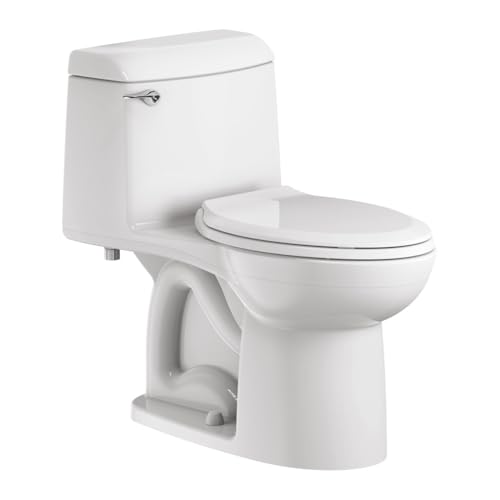
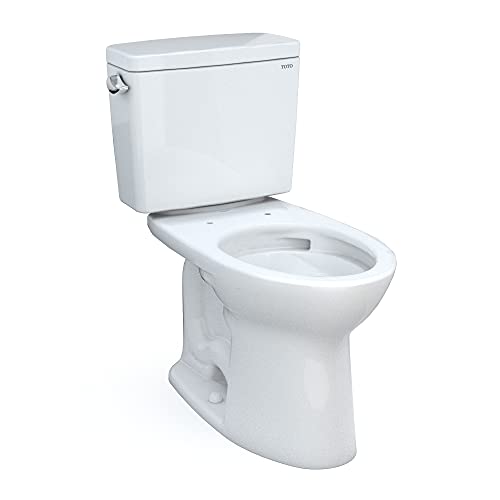
Toilets with wider trapways are more resistant to this type of blockage. The American Standard Champion 4 has a 4-inch flush valve and a wide trapway that American Standard markets specifically for clog resistance. The TOTO Drake II has a 3-inch flush valve and a glazed trapway with smooth ceramic coating that helps materials slide through without catching. Wider trapways do not make wipes safe to flush permanently, but they reduce the likelihood that a single wipe causes an immediate backup.
If the wipe makes it past the trapway, it enters the horizontal drain pipe beneath the floor, typically a 3- or 4-inch PVC or cast iron line that runs to the main stack. Wipes that travel through the trapway successfully can still accumulate in the drain pipe, especially at joints, elbows, and low-gradient sections where water velocity drops. A single wipe that makes it into the drain may not cause an immediate clog, but five to ten wipes can create a soft blockage that catches toilet paper and waste until the pipe is fully blocked. Clearing a mid-drain clog typically requires a toilet auger or drain snake, not just a plunger.
Wipes that travel past the household drain enter the main sewer line, where they combine with fats, oils, and grease poured down kitchen drains to form fatbergs. The London sewer system removed a 250-metric-ton fatberg from Whitechapel in 2017, composed primarily of wet wipes and cooking fat. New York City, Washington DC, and dozens of other major US cities have reported similar formations. Municipal utilities spend an estimated 441 million dollars per year in the United States alone clearing wipe-related sewer blockages, according to American Public Works Association data cited in a 2021 Rutgers University report. While fatbergs form in public infrastructure, the upstream cause is household flushing habits, and the costs are passed back to ratepayers through water and sewer fees.
The "flush and forget" assumption is the most dangerous part of flushable wipe marketing. Unlike toilet paper, a wipe that successfully passes through your toilet's trapway on a given flush does not simply disappear. It travels through your plumbing system until it reaches a restriction, a joint, or a grease accumulation, where it stops and begins collecting debris around it. The blockage you eventually deal with may be three flushes downstream, not one.
The method you use depends on where the blockage is located. Here is a step-by-step approach ordered from simplest to most involved.
| Method | Best For | Difficulty | Estimated Time | Success Rate (Wipe Clogs) |
|---|---|---|---|---|
| Flanged Plunger | Trapway blockage, single or few wipes | Easy | 5 to 10 min | High for fresh clogs |
| Toilet Auger (Closet Auger) | Trapway or near-drain blockage | Easy to moderate | 10 to 20 min | High for wipe retrieval |
| Dish soap + hot water | Partial blockage, soft material | Very easy | 15 to 30 min | Low to moderate |
| Drain snake (powered) | Mid-pipe blockage beyond auger reach | Moderate | 30 to 60 min | High for deeper clogs |
| Professional hydro-jetting | Accumulated wipes, grease buildup, fatbergs | Professional required | 1 to 2 hours | Very high |
If the toilet is backing up or at risk of overflowing, remove the tank lid and press down on the flapper valve to stop more water from entering the bowl. Then turn off the water supply valve behind the toilet (turn clockwise) to prevent any inadvertent flush from adding water. A bowl that is near the rim cannot accept plunger strokes without spilling, so wait for the water level to drop naturally if needed or scoop some out with a bucket before proceeding.
A flanged plunger, which has a rubber cup with a fold-out sleeve designed to seal the toilet drain opening, is significantly more effective than a cup plunger for toilet clogs. The seal matters more than the stroke force. Insert the plunger, ensure the flange is seated inside the drain opening, and push down slowly at first to expel air, then pull back sharply. Repeat 15 to 20 times with firm, controlled strokes. The hydraulic pressure created by the pull stroke is what dislodges most trapway blockages. Wipes in the trapway throat often respond well to plunging because the flexible material can be pushed through the wider section downstream.
If the water level drops after plunging, the blockage has cleared. Flush once with the supply valve still off to test water flow through the bowl, then restore water supply and do a full flush. If the bowl is still slow or backs up, move to the toilet auger.
A toilet auger (also called a closet auger) is a 3- to 6-foot flexible cable inside a protective sleeve with a crank handle. The sleeve protects the porcelain from scratches. Insert the end of the auger into the drain opening and crank the handle clockwise while pushing forward gently. The cable is designed to navigate the trapway curve. When you feel resistance, you have found the wipe. You can either try to break it up by rotating the cable or hook it and pull it out. Pulling the wipe out is preferable to pushing it deeper. Most wipe trapway blockages can be reached and cleared with a standard 6-foot toilet auger available at any hardware store.
For partial blockages where the bowl drains slowly rather than stopping completely, pour about half a cup of dish soap into the bowl and follow with a gallon of hot water from a bucket (hot but not boiling; boiling water can crack porcelain). Wait 15 to 20 minutes. The soap acts as a lubricant and the heat softens any grease or debris holding the wipe in place. This method works best as a complement to plunging rather than as a standalone fix for wipe clogs.
If plunging and augering fail to clear the blockage, the clog is likely deeper than the trapway or in the horizontal drain pipe where accumulated wipes have formed a larger mass. A powered drain snake can extend 25 to 50 feet and is rentable from most home improvement stores. For repeated or severe blockages, or if multiple fixtures in the bathroom are draining slowly at the same time (which suggests a main line problem), a professional plumber with a hydro-jetting system is the most reliable option. Hydro-jetting uses high-pressure water to break up and flush wipe accumulations that mechanical snakes cannot fully remove.
The "Fine to Flush" standard developed in the UK by Water UK and adopted by a handful of manufacturers sets a dispersibility threshold: a wipe must break into pieces under specified agitation conditions to earn the label. As of 2026, fewer than a dozen products globally have qualified for Fine to Flush certification, and many of these are hospital or institutional products rather than mass-market consumer wipes. If you see the Fine to Flush watermark (a toilet with a checkmark) on packaging and the manufacturer is a signatory to the Water UK scheme, those wipes have undergone third-party testing. Standard consumer "flushable" wipes from most brands have not.
Even Fine to Flush certified products carry a caveat: the testing is performed under controlled laboratory conditions with new plumbing at full water pressure. Older pipes, low-gradient drains, and toilets with weak flushes present more challenging real-world conditions. The water utility consensus across North America remains: when in doubt, throw it out.
Several major US municipalities including New York City, Washington DC, and Los Angeles have launched public campaigns specifically asking residents to stop flushing all wipes regardless of labeling. NYC DEP's "Only Flush the Three Ps" campaign (pee, poo, paper) has been running since 2015. The gap between what the wipe label says and what sewer maintenance data shows remains substantial, and the financial burden falls on utility ratepayers.
While no toilet makes wipes safe to flush regularly, a high-performing bowl with a strong flush and a wide clear pathway reduces the risk of a single wipe causing an immediate backup. If your household includes children who occasionally flush wipes, guests unfamiliar with your "no wipes" rule, or anyone who uses wipes for medical reasons, a clog-resistant toilet design provides a margin of error.
Key specifications to evaluate when choosing a clog-resistant toilet for households where wipe clogs are a recurring problem:
| Toilet Model | Flush Valve | Trapway | MaP Score | GPF | WaterSense | Check Price |
|---|---|---|---|---|---|---|
| American Standard Champion 4 | 4-inch | 2.375-inch glazed | 1000g | 1.6 | No (1.6 GPF) | Check price |
| TOTO Drake (CST744SL) | 3-inch | 2.125-inch glazed | 1000g | 1.6 | No (1.6 GPF) | Check price |
| TOTO UltraMax II (MS604114CEFG) | 3-inch | 2.125-inch glazed | 1000g | 1.28 | Yes | Check price |
| American Standard Cadet 3 | 3-inch | 2.125-inch glazed | 800g+ | 1.28 | Yes | Check price |
| Kohler Cimarron (K-6418) | 3-inch | 2.125-inch glazed | 1000g | 1.28 | Yes | Check price |
| Gerber Viper | 3-inch | 2.5-inch | 1000g | 1.6 | No (1.6 GPF) | Check price |
| TOTO Aquia IV (dual flush) | 3-inch | 2.125-inch glazed | 1000g (1.0 GPF) | 1.0/0.8 | Yes | Check price |
| Woodbridge T-0001 | 3-inch | 2.125-inch glazed | 800g | 1.28/1.0 | Yes | Check price |
For households where the best flushing toilets are a priority, the American Standard Champion 4 and TOTO Drake are consistently ranked among the top performers for clog resistance based on MaP scores and owner review aggregation. The Champion 4's 4-inch flush valve and 2.375-inch trapway combination is specifically engineered for large-volume clearing, which explains its appeal in households with frequent clog problems. See our complete guide to clog-free toilets for detailed comparisons.
Several common responses to a toilet clog make the problem worse or create new problems. Avoid these mistakes:
Products like Drano or Liquid-Plumr are formulated for sink and shower drains, which see grease and hair clogs. Toilet clogs caused by wipes are mechanical, not chemical: the wipe does not dissolve. Chemical drain cleaners have no ability to break down synthetic wipe fibers. Worse, these products contain sodium hydroxide (lye) or sulfuric acid in high concentrations, which can damage wax rings, degrade PVC pipe joints over time, and create hazardous splashback if you then try to plunge. They are not recommended for toilet use by any major plumbing association. For more on this topic, see our guide on whether Drano works on toilet clogs.
Multiple flushes add more water to an already-blocked bowl, which can cause it to overflow. Each additional flush also adds toilet paper and any residual waste to the blockage mass, making it larger and more difficult to clear. If the first flush does not clear the bowl, turn off the water supply valve and address the clog mechanically before running any more water.
A standard red rubber cup plunger is designed for flat-bottomed sink drains, not the curved toilet drain opening. Without the flanged extension that seals against the toilet drain's curved contour, a cup plunger creates a poor seal and poor hydraulic pressure. A flanged plunger (also called a toilet plunger or accordion plunger) is the correct tool and costs only a few dollars more than a basic cup plunger. If you do not have one, pushing the skirt of a cup plunger inward to form a makeshift flange can improve the seal somewhat.
Wire coat hangers, screwdrivers, and similar rigid objects will scratch and chip the porcelain glaze inside the trapway. Once the glaze is damaged, the rough surface catches material more easily and the toilet becomes permanently more prone to clogs. A toilet auger has a protective rubber sleeve precisely to prevent this. If you do not have an auger, a plunger is always safer than any improvised poking tool.
Plumbing professionals consistently report that the most common mistake they see after a wipe clog is the use of liquid drain cleaner. Not only does it fail to work on wipes, it frequently complicates the service call because the technician has to work with caustic chemicals already in the bowl. If chemical cleaner has been added to a clogged toilet, always disclose this to a plumber before they begin work.
The permanent solution is simple and costs nothing: stop flushing all wipes. Place a lidded wastebasket next to every toilet in the home and communicate a clear household rule. For households with children old enough to use wipes independently, a brief explanation of why wipes belong in the bin rather than the bowl is usually enough.
For households where wipes are used for medical hygiene reasons, adult incontinence care, or post-surgical cleaning, consider these alternatives:
If a household member periodically forgets or guests flush wipes despite signage, upgrading to a clog-resistant toilet provides a measure of protection. A toilet with a MaP score of 1000 grams and a wide, fully glazed trapway is far less likely to back up from a single wipe than a standard-efficiency toilet with a narrow passageway. Pairing a clog-resistant toilet with a bidet attachment reduces the household's reliance on wipes to near zero and effectively eliminates the problem entirely.
For guidance on other common clog causes and prevention strategies, see our full guide to toilet clog prevention.
The label "flushable" is a marketing claim, not a regulated standard in most countries. Independent testing by the Water Research Foundation and multiple consumer groups has shown that most flushable wipes do not disintegrate in water within any timeframe that prevents them from causing clogs. The UK's Water UK "Fine to Flush" scheme is the only independently certified standard, and fewer than a dozen consumer products worldwide qualify as of 2026.
Most flushable wipes retain more than 90 percent of their tensile strength after 10 minutes of agitation in water, compared to toilet paper which fully disintegrates within 30 to 60 seconds. In low-velocity drain sections where wipes sit without agitation, breakdown may take days or not occur at all before the wipe is incorporated into a blockage.
Yes, a single wipe can clog a toilet, especially if it becomes folded or bunched and wedges across the throat of a narrow trapway. It is more common for clogs to develop gradually as multiple wipes accumulate in the trapway or drain pipe over days or weeks of flushing, but a single wipe can cause an immediate backup in toilets with narrow or rough-surfaced trapways.
A flanged plunger used correctly is the fastest DIY method. Insert the plunger with the flange seated in the drain opening, pull back sharply 15 to 20 times to generate hydraulic suction, and check whether the water drains. If plunging does not work within 5 to 10 minutes, a toilet auger is the next step and will mechanically break up or retrieve the wipe.
No. Chemical drain cleaners such as Drano or Liquid-Plumr work by dissolving organic matter like grease and hair. Wet wipe fibers are synthetic (polyester or polypropylene) and are chemically resistant to the sodium hydroxide and sulfuric acid in drain cleaners. These products will not break down a wipe blockage and can damage pipe fittings and wax rings with repeated use.
No. Baking soda and vinegar produce a mild acid-base reaction that generates carbon dioxide bubbles. This reaction has no ability to break down synthetic wipe fibers. The fizzing effect can help loosen some organic deposits in slow drains, but it is not effective against a mechanical blockage caused by a wet wipe. Use a plunger or auger instead.
Yes. A standard 6-foot toilet auger (closet auger) is long enough to navigate the S-curve of the trapway and reach blockages in the first section of the drain pipe beyond it. The rotating cable can hook and retrieve a wipe or break it into smaller pieces that flush through. This is the most effective tool for wipe clogs that do not respond to plunging.
The American Standard Champion 4 has one of the widest residential toilet trapways available, rated at 2.375 inches in diameter, combined with a 4-inch flush valve. The Gerber Viper also features a wide 2.5-inch trapway. Both models achieve MaP scores of 1000 grams and are among the most commonly recommended toilets by plumbers for households prone to clogging.
Yes, indirectly. MaP (Maximum Performance) testing measures a toilet's ability to clear solid waste per flush. A toilet with a MaP score of 1000 grams generates enough flush force to move materials through the trapway more completely, which reduces the chance that a wipe gets wedged and catches additional material. It does not make wipes safe to flush, but it significantly reduces the likelihood of an immediate backup from a single wipe.
No. Baby wipes are among the worst materials to flush in terms of clog risk. They are made with heavy-duty nonwoven fabric designed for durability when wet, and they are typically thicker and stronger than standard "flushable" wet wipes. Baby wipes should always go in the trash, never the toilet.
"Septic-safe" is another unregulated marketing claim. Septic systems are particularly vulnerable to wipe accumulation because the solids tank depends on microbial breakdown of waste to function correctly. Synthetic wipe fibers do not break down biologically and accumulate in the septic tank, reducing capacity and requiring more frequent pumping. Some wipes marketed as septic-safe use shorter fiber lengths that may break down faster, but no independent certification body has verified these claims at the level of toilet paper disintegration rates.
Wipe clogs tend to cause a complete blockage quickly, with the bowl filling to near the rim after just one or two flushes. Toilet paper clogs usually develop more gradually, producing slow drainage before a full backup. If the blockage feels firm and does not respond to plunging within a few strokes, a wipe (or multiple wipes) is likely the cause. A toilet auger can confirm this by hooking the intact wipe for retrieval.
Chronic wipe flushing can cause gradual damage even when individual wipes pass through without clogging. Wipe fibers that catch on micro-roughness inside the trapway can create a surface for mineral deposits and waste to adhere to, narrowing the effective trapway diameter over time. In plastic-bodied toilets or older models with unglazed internal surfaces, this buildup accelerates. The risk is lower in toilets with fully glazed trapways, but it never reaches zero as long as wipes are being flushed.
Yes. A slow-draining toilet that is not fully blocked is a common sign of partial wipe accumulation either in the trapway or in the near-drain section of the horizontal drain pipe. Try plunging to dislodge any partial blockage, then run a toilet auger to check for accumulated material. If the drain speed improves after augering, wipes were likely the cause.
Most fresh wipe clogs located in the trapway can be cleared with a flanged plunger and a toilet auger, both available at hardware stores for under $30 combined. Call a plumber if: multiple flushes in the bathroom are draining slowly (suggesting a main line problem), the clog does not clear after plunging and augering, water backs up into other fixtures when you flush, or the toilet has backed up repeatedly in a short period suggesting accumulated wipe buildup in the drain system.
TOTO's Tornado Flush technology, used in models like the UltraMax II and Drake II, generates a centrifugal water flow that rinses the bowl walls effectively and produces a strong siphon through the trapway. The fully glazed trapways on TOTO models also reduce friction. While no toilet makes wipe flushing safe, TOTO's high-MaP designs are among the most likely to pass a single wipe without an immediate backup, based on 1000-gram MaP scores and owner review data.
A bidet attachment is the most effective long-term alternative. Non-electric bidet attachments install in 15 minutes, require no electricity, and provide water cleansing that most users find more thorough than wipe use. For situations where a bidet is not available, dampening a few squares of standard toilet paper with water achieves a similar cleaning effect without the clog risk. Dry disposal in a covered waste bin is the correct protocol when wipes must be used.
According to data cited in a 2021 Rutgers University report for the American Public Works Association, US municipalities spend an estimated 441 million dollars annually clearing wipe-related sewer blockages. In the UK, water utility companies have estimated similar annual costs of over 100 million pounds. These costs are ultimately passed to ratepayers through higher water and sewer bills.
Pressure-assist toilets generate more forceful flushes than standard gravity-fed models by using compressed air to expel water from the tank. This additional force can push a single wipe through the trapway more reliably. However, pressure-assist toilets are louder, more expensive, and their compressed-air tanks require periodic replacement. A high-MaP gravity-fed toilet with a wide trapway, like the American Standard Champion 4, achieves similar clog resistance at lower cost and with less noise.
Yes, substantially. Wet wipes combine with cooking fats, oils, and grease poured down kitchen drains to form fatbergs in sewer pipes, which can grow to hundreds of tons in large municipal systems. The Whitechapel fatberg removed from London's sewer system in 2017 weighed 250 metric tons and was composed primarily of wet wipes and solidified fat. Wipe-related fatbergs cause sewer backups, require expensive mechanical and manual removal, and have accelerated pipe degradation in older brick-lined sewer systems.
Flushable wipes clog toilets because the "flushable" label is a marketing claim unsupported by regulated dispersibility standards. The fix for an active clog is a flanged plunger or toilet auger. The permanent fix is to stop flushing all wipes and switch to a bidet attachment or standard toilet paper. If your household is prone to accidental wipe flushing, upgrading to a toilet with a MaP score of 1000 grams and a wide, fully glazed trapway, such as the American Standard Champion 4, TOTO Drake, or Kohler Cimarron, significantly reduces the risk of a backup from the occasional wipe. No toilet eliminates the risk entirely, but the combination of better hardware and better habits eliminates the problem for nearly every household.
Learn why toilet trapways curve like an S, how each bend blocks sewer gas, and what the shape means for clogs and…
Read the guideAlmost every US toilet has a left-side handle. Learn the plumbing and mechanical reasons behind the layout and when it actually changes.
Read the guideHome toilets rely on tanks because household water lines lack the pressure that public flushometer systems use to flush straight from the…
Read the guide