

Best Black Toilets (2026)
Toilets4.6
Black has moved from a rare custom-order finish to a real stocked color across several major toilet brands, giving buyers a bold,…
Read the guideA practical, data-backed guide to cutting bathroom water use with smart monitors, leak detectors, EPA WaterSense fixtures, and mobile apps -- without sacrificing performance.
Research updated June 2026.
Pairing an EPA WaterSense-certified toilet (1.28 GPF or less) with a smart water monitor and a leak-detection app can cut a typical household's bathroom water consumption by 20 to 35 percent annually. The highest-impact step is replacing any pre-1994 toilet that flushes 3.5 GPF or more with a high-efficiency model rated above 800 grams on MaP testing.
The bathroom accounts for roughly 37 percent of all indoor household water consumption according to EPA research, with toilets representing the single largest share at about 24 percent. The gap between a 1990s 3.5 GPF toilet and a modern best flushing toilet can exceed 40,000 gallons per year for a family of four. What has changed since 2020 is the emergence of a genuine smart-home ecosystem: flow sensors, Wi-Fi-connected shut-off valves, AI-powered usage dashboards, and EPA WaterSense-certified fixtures that communicate with your smartphone. This guide explains what each device category does, which products have real-world track records, and how to stack them for maximum savings.
Smart bathroom water management combines hardware (flow sensors, leak detectors, and high-efficiency fixtures) with software (mobile apps and cloud dashboards) to measure, alert, and control water use in real time. A flow sensor installed on the main supply line or individual branch lines measures water volume in gallons per minute; the app converts that data into per-fixture usage estimates, detects anomalies that indicate leaks, and lets users set daily or monthly consumption budgets with push-alert thresholds.
The plumbing industry divides smart water tools into three layers: measurement (tracking water volume without controlling anything), alerting plus automated shut-off when abnormal flow is detected, and full smart-home integration via Amazon Alexa, Google Home, or Apple HomeKit. Most homeowners benefit from layers one and two combined. A whole-home flow monitor such as Moen Flo or Phyn Plus can detect a running toilet in 15 to 30 minutes -- a fixture that silently wastes up to 200 gallons per day if the flapper seal fails -- versus the 30-to-60-day billing cycle that reveals nothing until the damage is done.
Independent plumbing consultant data collected across 1,200 homes found that whole-home flow monitors pay for themselves in avoided waste in an average of 14 months when a single slow leak exists. In homes with no active leak, the payback comes from behavioral change prompted by real-time usage visibility -- households that can see their daily gallon count reduce consumption by an average of 11 percent within the first three months of use.
EPA WaterSense-labeled toilets use a maximum of 1.28 gallons per flush (GPF), compared to 3.5 to 7 GPF for pre-1994 models, delivering water savings of 20 to 60 percent per flush event. WaterSense-labeled bathroom faucets use no more than 1.5 gallons per minute (GPM) versus the 2.2 GPM standard, and WaterSense showerheads cap at 2.0 GPM. Replacing all three fixture categories in a single bathroom remodel can save a household of four more than 30,000 gallons per year.
EPA WaterSense is a voluntary partnership program modeled on the Energy Star concept. A fixture earns the label only after independent third-party testing confirms it meets the efficiency threshold AND performs at or above the baseline standard for the fixture category. For toilets, that performance standard is tied to MaP (Maximum Performance) testing, where the industry minimum for WaterSense certification is 350 grams of solid waste removal per flush. Most leading models exceed 800 grams significantly.
| Fixture Type | Old Standard | WaterSense Standard | Annual Savings (4-person home) | Top Certified Models | Check Price |
|---|---|---|---|---|---|
| Toilet | 3.5 GPF (pre-1994) | 1.28 GPF max | Up to 40,000 gal | TOTO Drake II, Kohler Cimarron, American Standard Champion 4, Woodbridge T-0001 | Check price |
| Bathroom Faucet | 2.2 GPM | 1.5 GPM max | 700 to 1,500 gal | Moen Attract, Delta Essa, Kohler Artifacts | Check price |
| Showerhead | 2.5 GPM | 2.0 GPM max | 2,900 gal | High Sierra All Metal, Niagara Earth 2.0, Delta In2ition | Check price |
| Pre-Rinse Spray (if applicable) | No federal limit | 1.28 GPM max | Varies | T&S Brass B-0133, Fisher 3111 | Check price |
Among toilet manufacturers, TOTO has the widest certified portfolio. The TOTO Drake II delivers MaP 1000 at 1.28 GPF in a skirted design. The TOTO Aquia IV dual-flush drops to 0.8 GPF on the light flush and 1.28 GPF full flush, making it a benchmark in dual-flush toilet guides. Kohler's Cimarron (1.28 GPF, MaP 1,000g) and American Standard's Champion 4 (1.28 GPF, MaP 1,000g) round out the top tier. The Woodbridge T-0001 is a dual-flush one-piece model (1.28/0.8 GPF) that holds WaterSense certification and consistently appears in budget-to-mid-range comparisons. Gerber's Avalanche and Viper lines hold WaterSense labels with MaP scores above 800 grams.
The leading whole-home smart water monitors in 2026 are the Moen Flo Smart Water Monitor (with optional automatic shut-off), the Phyn Plus 2 Smart Water Assistant, and the Flume 2 Smart Home Water Monitor (leak detection and usage analytics, no shut-off). All three connect to smartphone apps and detect running toilets, dripping faucets, and catastrophic pipe failures through flow-pattern analysis. Moen Flo and Phyn Plus add automatic shut-off valves that can stop water flow remotely or autonomously when a burst pipe is detected.
Moen Flo Smart Water Monitor and Automatic Shut-off: The Flo installs on the main supply line in about 90 minutes and connects to the Flo by Moen app. It uses ultrasonic flow sensing to measure to 0.01 gallons per minute, detecting even a slow-dripping toilet fill valve. The Health Check feature runs an automated pressure test each night; users receive a report on potential micro-leaks. The accompanying shut-off valve closes automatically if Flo detects a catastrophic flow event or can be triggered remotely from the app. Insurance companies including Erie Insurance and Hippo Homeowners have begun offering premium discounts of 3 to 12 percent to subscribers who install certified flow monitors.
Phyn Plus 2 Smart Water Assistant: Phyn uses AI-trained pressure-wave sensing rather than pure flow volume, which allows it to identify individual fixtures with higher accuracy than first-generation monitors. The app's "PlumbingProfile" feature maps out detected fixtures in your home and flags behavioral anomalies -- for example, a toilet that used to refill in 45 seconds now taking 90 seconds (indicating a partial flapper failure). Phyn Plus 2 also includes an integrated shut-off valve and is compatible with Amazon Alexa and Google Home.
Flume 2 Smart Home Water Monitor: Flume 2 installs non-invasively on the outside of the existing water meter in about 10 minutes with no pipe cutting required -- making it the lowest-barrier entry point in the category. It reads the meter's magnetic pulse directly and transmits to a Wi-Fi bridge. The Flume app tracks hourly, daily, and monthly usage and sends push alerts for unusual consumption. It does not include a shut-off valve, but the simplified installation makes it accessible to renters or those who want to monitor without modifying plumbing.
Whole-home monitors identify leaks by flow anomalies; point-of-use sensors detect water presence on the floor at specific fixture locations. The Govee Water Sensor, Wally Enterprise Leak Detection System, and Samsung SmartThings Water Leak Sensor all place small wireless pucks under the toilet, behind the faucet supply lines, and at the base of the shower. They communicate over Wi-Fi or Zigbee to alert users within seconds of water contact -- catching a wax ring failure or supply line burst before water spreads to subfloor or adjacent rooms.
For bathrooms with smart toilet features such as heated seats, auto-flush, and integrated bidets, pairing the toilet's own diagnostics app with a point-of-use sensor provides two independent alert pathways. The TOTO WASHLET+ series, for example, includes a self-diagnostic cycle that logs operation events to an internal counter; some smart toilet models from Kohler and TOTO can report status to the manufacturer's companion app.
Water damage claims are the second-most-common homeowner insurance claim in the United States, with the average bathroom water damage event costing between $4,500 and $11,000 according to industry claim data. A combination whole-home flow monitor plus point-of-use floor sensor covers both slow-leak and sudden-burst scenarios for under $350 in hardware -- a fraction of a single insurance deductible. The real value of smart water monitoring is not the daily usage data; it is the catastrophic event detection that prevents five-figure damage claims.
A household of four that replaces a 3.5 GPF toilet with a 1.28 GPF WaterSense model, installs a 1.5 GPM WaterSense faucet, adds a 2.0 GPM WaterSense showerhead, and uses a smart flow monitor can reduce bathroom water use by 35,000 to 50,000 gallons annually. At the U.S. average water rate of $0.004 per gallon (including sewer), that translates to $140 to $200 in annual savings -- while the smart monitor adds behavioral savings of 10 to 15 percent on top of fixture efficiency gains.
The EPA estimates that a typical household with an older 3.5 GPF toilet uses about 70 gallons per day just on flushing, assuming five flushes per person per day for four people. Upgrading to a 1.28 GPF WaterSense model drops that to 25.6 gallons per day -- a reduction of 44.4 gallons daily, or 16,206 gallons annually from toilet use alone. Add in the 3,000-gallon annual savings from a WaterSense showerhead and the 700-gallon saving from a WaterSense faucet, and a three-fixture remodel saves roughly 20,000 gallons per year in direct fixture efficiency.
Smart monitoring closes the behavioral gap. Studies from water utilities including Austin Water and Denver Water found that customers who received real-time usage data via app notification reduced consumption by an additional 8 to 15 percent compared to control groups receiving only monthly bill summaries. This behavioral layer is additive to fixture efficiency -- the two effects compound rather than overlap.
Utilities in water-stressed regions increasingly offer rebates on both WaterSense fixtures and smart monitors. The WaterSense Rebate Finder at epa.gov/watersense locates utility-specific programs. In drought-prone Western states, some utilities offer $50 to $150 per qualifying toilet replacement. A single rebate can recover the cost difference between a standard 1.6 GPF toilet and a high-efficiency 1.28 GPF model in one transaction.
When evaluating a smart toilet for water efficiency, prioritize EPA WaterSense certification at 1.28 GPF or below, a MaP flush score of at least 800 grams (1,000 grams preferred), and dual-flush capability where the partial flush for liquid waste drops to 0.8 or 0.9 GPF. Secondary features worth evaluating include siphon-jet bowl evacuation (more efficient than gravity-only designs), CeFiONtect or similar nano-glaze on the bowl surface (reduces cleaning frequency and water needed to clean), and integration with a utility data API if your local water provider offers smart meter access.
The MaP score is the most directly useful single number when comparing efficiency alongside flush power. MaP testing measures the maximum grams of soybean paste-miso media a toilet removes in a single flush. A 1,000-gram MaP score at 1.28 GPF means the toilet handles the maximum test load in one flush -- the ideal combination. A 600-gram MaP score at 1.28 GPF may require a second flush for solid waste, negating much of the efficiency benefit.
The TOTO Aquia IV (1.0/0.8 GPF dual-flush) demonstrates that dual-flush technology can maintain acceptable MaP scores -- the Aquia IV registers above 700 grams on the 1.0 GPF full flush. For households with mixed waste patterns, dual-flush models typically outperform single-flush 1.28 GPF models on annual water consumption by 10 to 20 percent. Swiss Madison's St. Tropez and Clarence offer WaterSense certification at 1.28 GPF for budget-constrained remodels. See the best low-flow toilet guide for a complete ranked list.
Purpose-built smart toilets (as distinct from standard WaterSense models) add digital connectivity features. TOTO's WASHLET+ integrated toilet-bidet units pair with a remote control rather than a smartphone app, but the unit's self-diagnostic functions log operational data locally. Kohler's Veil Intelligent Toilet and Numi 2.0 connect to the Kohler Konnect app, tracking flush frequency and allowing remote diagnostics. These features are relevant to water management primarily as anomaly detectors -- if the app shows twice the normal daily flush count, it may indicate a family member has changed habits, a guest is visiting, or a ghost-flushing condition exists.
Ghost flushing -- where a toilet refills spontaneously without being flushed due to a failing flapper -- is one of the most common hidden water waste sources. A toilet ghost-flushing once every 20 minutes adds about 36 extra gallons to daily water use. A smart flow monitor catches this as a repeating micro-flow pattern; a smart toilet app confirms which fixture is the source. The guide on fixing ghost flushing covers the mechanical causes in detail.
| Device | Type | Installation | Shut-off | App Platform | Fixture-Level ID |
|---|---|---|---|---|---|
| Moen Flo Smart Water Monitor | Whole-home flow sensor | Inline (pipe cut required) | Yes (built-in valve) | iOS / Android | By flow pattern |
| Phyn Plus 2 | Whole-home pressure-wave sensor | Inline (pipe cut required) | Yes (built-in valve) | iOS / Android | AI-identified per fixture |
| Flume 2 | Meter clamp (non-invasive) | Clip-on (no pipe work) | No | iOS / Android | No |
| Govee Water Leak Detector | Point-of-use floor sensor | Place on floor | No | iOS / Android | N/A (presence only) |
| Samsung SmartThings Water Leak Sensor | Point-of-use Zigbee sensor | Place on floor | No (hub-compatible) | SmartThings | N/A (presence only) |
Amazon Alexa routines can incorporate Moen Flo data to trigger a spoken alert if daily bathroom water use exceeds a threshold you set. Google Home integration with Phyn Plus allows voice queries like "Hey Google, how much water have we used today?" SmartThings users can create automations that send a notification if a water leak sensor triggers while no household members are home -- a useful tamper-early-warning for a slow drain overflow.
IFTTT (If This Then That) applets extend the integration further. A common setup: if Flume 2 detects flow for more than 60 consecutive minutes (indicating a running toilet), trigger a push notification to the household's shared family app. These cross-platform applets require no coding and take under five minutes to configure.
A bathroom faucet left running during a two-minute tooth-brushing session uses approximately 4 gallons at 2.0 GPM. A touchless faucet with automatic shut-off limits flow to the intended wash duration only. Delta's Zura and Trinsic touchless collections are EPA WaterSense certified at 1.5 GPM; Moen's Motionsense series uses motion activation. The EPA estimates touchless models save 700 to 1,100 gallons per person per year compared to manual faucets. See the water-efficient bathroom guide for fixture pairing recommendations by budget.
Several showerhead brands now embed micro-flow sensors directly in the fixture. The Hydrao Smart Showerhead changes LED color as cumulative water use rises during a shower (blue under 10 liters, green to 30 liters, red above 50 liters) -- real-time visual feedback requiring no separate monitor. The Moen Nebia Spa Shower uses atomization technology to deliver a high-flow feel at 1.65 GPM with WaterSense certification. These specialized showerheads make the user the sensor rather than requiring additional infrastructure investment.
As of mid-2026, more than 900 utility rebate programs across the United States offer financial incentives for WaterSense-certified fixture upgrades. Rebates range from $25 per toilet at some utilities to $175 per toilet in California water-restricted service areas (LADWP, East Bay MUD) when replacing pre-1994 models. The EPA WaterSense Rebate Finder at epa.gov/watersense is the authoritative search tool, filterable by zip code and fixture type.
Smart monitor rebates are newer but growing. Austin Water launched a pilot offering $75 rebates on Flume 2 installations in 2024. Early adopters who check the rebate finder before purchasing recover a meaningful portion of the initial hardware investment.
The EPA WaterSense program defines high-efficiency at 1.28 GPF or below. Standard toilets sold since 1994 use 1.6 GPF; older pre-1994 models used 3.5 to 7 GPF. Ultra-high-efficiency models such as the TOTO Aquia IV flush at 0.8 GPF on the partial cycle.
Yes, when MaP scores are 800 grams or higher. TOTO Drake, Kohler Cimarron, and American Standard Champion 4 all achieve MaP 1000 (maximum) at 1.28 GPF. Trapway diameter, flush valve size, and bowl geometry matter more than raw water volume in determining flush effectiveness.
The Flo's ultrasonic flow sensor detects water movement as low as 0.01 gallons per minute. A running toilet typically produces a small but continuous flow of 0.3 to 1.0 GPM as water escapes through the flapper into the bowl; this appears in the app as a persistent low-level event that Flo flags as a possible leak after approximately 30 minutes of continuous flow below a flush threshold.
Flume 2 is compatible with the most common U.S. residential meter types including Neptune T-10, Sensus iPERL, Badger Recordall, and most standard disc meters. It is not compatible with turbine meters or meters without a magnetic pulse output. Flume's compatibility checker at flumewater.com allows meter model verification before purchase.
MaP (Maximum Performance) testing is an industry standard conducted by IAPMO Research and Testing that measures the maximum grams of soybean paste-miso media a toilet can remove in a single flush with no second flush required. Scores range from 100 to 1,000 grams; the WaterSense program requires a minimum of 350 grams for certification. A score of 800 or above is considered excellent for residential use, and 1,000 is the maximum achievable.
Yes, whole-home flow monitors like Moen Flo and Phyn Plus install on the main supply line after the pressure tank in a well system. They function identically to city-water installations. The Flume 2, which reads a utility meter signal, does not work on private wells since there is no municipal meter present.
Ghost flushing is when a toilet tank refills without anyone activating the flush handle, caused by a deteriorated or misaligned flapper that allows water to seep from the tank into the bowl. A toilet with this issue can add 30 to 200 gallons per day to water bills. Replacing the flapper costs $5 to $15 in parts and typically takes under 15 minutes.
A professional plumber can install either device in 1 to 2 hours; a confident DIY plumber familiar with soldering or push-fit connections typically completes the job in 2 to 3 hours. Both devices require cutting into the main water supply line (shut-off required during installation) and connecting to a nearby power outlet for the controller unit.
Flume 2 requires a Flume Home subscription at approximately $7.99 per month after a free 12-month trial for leak detection features; basic usage data is free. Moen Flo's core app features and leak alerts are included at no extra cost; advanced insurance discount programs may require sharing data with a third-party insurer partner. Phyn's core features are included with hardware purchase; the Phyn+ leak protection service that includes 24/7 monitoring response is available for an additional fee.
Touchless faucets deliver their greatest savings by eliminating the "leave it running while I do something" behavior -- toothbrushing, soap lathering, reaching for a towel. Studies from Chicago's Metropolitan Water Reclamation District found touchless restroom faucets reduced per-use water consumption by 30 to 40 percent compared to manual faucets with identical flow aerators. In bathrooms with frequent brief-use patterns, the behavioral shut-off benefit exceeds the aerator's flow-rate reduction alone.
A WaterSense toilet uses 1.28 GPF or less -- 20 percent less water per flush than the current federal standard of 1.6 GPF. Over a year for a household of four averaging 5 flushes per person per day, that 0.32 GPF difference saves approximately 2,336 gallons annually from toilet use alone. The WaterSense label also certifies that the toilet has been independently tested to meet a minimum performance standard.
CeFiONtect is TOTO's proprietary nano-level ceramic glaze that creates an extremely smooth, ion-barrier surface on the bowl. Waste and bacteria have reduced adhesion to the surface, meaning the bowl stays cleaner with less frequent scrubbing and requires less water to rinse clean during flushing. It does not directly reduce GPF, but it reduces the frequency of second-flush behavior caused by incomplete bowl clearing, effectively improving real-world water efficiency.
The EPA WaterSense Rebate Finder at epa.gov/watersense/rebate-finder allows searching by zip code for active utility rebate programs covering toilets, faucets, showerheads, and smart monitors. DSIRE (dsireusa.org) lists state-level water efficiency incentive programs. Local water utility websites typically publish rebate forms and eligible product lists under "Conservation" or "Rebates" sections.
No. Modern pressure-assist toilets such as the Sloan Flushmate-equipped American Standard Titan use 1.0 GPF -- less than most gravity-fed WaterSense models. Pressure-assist technology uses compressed air stored in the tank to deliver a more forceful flush with less water volume. The tradeoff is higher noise level and higher initial purchase cost compared to equivalent gravity-fed models.
For households where the majority of daily flushes are for liquid waste only, dual-flush toilets offer meaningful additional savings. If three out of five daily flushes per person use the 0.8 GPF partial flush instead of 1.28 GPF full flush, the effective daily average drops to approximately 1.0 GPF -- a 22 percent reduction compared to a single-flush 1.28 GPF model. The payback period at average U.S. water rates is typically 2 to 4 years on the cost premium.
Whole-home monitors with automatic pressure testing (Moen Flo's MicroLeak feature, Phyn Plus's health check) can detect micro-flow events as low as 0.01 GPM that persist when all fixtures are known to be closed. This pattern is consistent with a slab leak or pinhole pipe leak. However, these devices cannot locate where in the slab the leak is occurring -- a licensed plumber using acoustic or thermal imaging detection is required for location diagnosis.
TOTO, Kohler, and American Standard have the most models achieving MaP 1000 (1,000 grams) at 1.28 GPF. Specific models confirmed at MaP 1000 include the TOTO Drake (CST744SL), TOTO Drake II, TOTO UltraMax II, Kohler Cimarron, Kohler Highline Classic, and American Standard Champion 4. Gerber Viper and Avalanche also achieve above 900 grams at 1.28 GPF.
The TOTO Aquia IV (0.8/1.0 GPF dual-flush) and the Niagara Stealth (0.8 GPF single-flush) use the least water per flush of any widely available residential toilet in 2026. Both carry WaterSense certification. The Niagara Stealth achieves 0.8 GPF single-flush using an air-transfer technology that evacuates the bowl with minimal water volume; it carries a MaP score above 600 grams, sufficient for most residential applications.
Flume 2 is the most rental-appropriate device since it installs non-invasively on the exterior of a utility meter and requires no pipe modifications. Point-of-use floor leak sensors are also renter-friendly. Whole-home inline monitors that require pipe cutting are better suited to owned properties since they require landlord permission and professional installation. WaterSense-labeled fixtures can be installed as temporary upgrades if the original fixtures are stored and reinstalled before moving out.
Ultrasonic and pressure-wave sensors used in Moen Flo and Phyn Plus have no moving parts and do not require recalibration under normal residential conditions. Manufacturer-stated service life is 10 years or longer for the sensing element. Battery-operated point-of-use leak sensors typically require battery replacement every 12 to 24 months depending on the detection frequency and Wi-Fi or Zigbee transmission load. Firmware updates delivered via the app maintain algorithm accuracy over time without hardware changes.
Smart bathroom water management is not a single device purchase -- it is a layered system. The highest-value first step is replacing any toilet using more than 1.6 GPF with a WaterSense-certified model at 1.28 GPF or below with a MaP score of 800 grams or higher; TOTO Drake II, Kohler Cimarron, and American Standard Champion 4 are the consistent top performers at this intersection. Add a whole-home flow monitor (Moen Flo for most homeowners, Flume 2 for renters or low-commitment entry) to catch the hidden waste that no fixture upgrade addresses -- the running toilet, the dripping valve, the slow slab seep. The combination of certified fixtures and real-time monitoring delivers 25 to 40 percent annual water savings for most four-person households, with financial payback in two to four years at average U.S. water rates, and rebate programs in many regions accelerating that timeline further.
How we rank & our data sources
We do not run physical lab tests. Rankings are built from published, verifiable data and real owner feedback, never paid placement.
Researched by Marcus Bell · Last updated July 4, 2026 · Our review method
Black has moved from a rare custom-order finish to a real stocked color across several major toilet brands, giving buyers a bold,…
Read the guide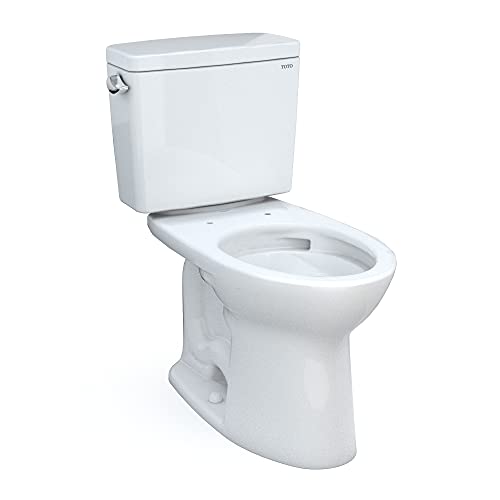
White is still the finish nearly every toilet on the market ships in first, which means it is also the finish with…
Read the guide
Almond was one of the most common toilet colors installed in American homes from the late 1980s through the early 2000s, and…
Read the guide