

Why Toilet Trapways Are Curved Like an S
Toilets4.6
Learn why toilet trapways curve like an S, how each bend blocks sewer gas, and what the shape means for clogs and…
Read the guideA complete, data-backed walkthrough covering system sizing, storage tanks, filtration, code compliance, and the real water and cost savings you can expect when you redirect rooftop runoff to your toilet.
A properly sized rainwater harvesting system paired with an EPA WaterSense toilet using 1.28 GPF or less can offset 20 to 40 percent of a household's municipal water consumption. Most residential setups pay back their installation cost in 5 to 12 years, depending on local rainfall and water rates.
Rainwater harvesting for toilet flushing is the practice of collecting precipitation from rooftop surfaces, routing it through a filtration system, and storing it in a cistern so it can be pumped to toilet fill valves in place of treated municipal water. Toilets are the single largest indoor water user in most homes, accounting for roughly 24 to 30 percent of total household consumption according to EPA WaterSense data, making them the most logical end-use for non-potable harvested rainwater. The water does not need to meet drinking-water standards for this application, which simplifies treatment requirements and reduces system cost.
Toilet flushing does not require clean, treated, chemically balanced drinking water. Every time you flush with potable tap water, you are using a resource that required energy-intensive treatment to make safe to drink -- and then sending it straight to the sewer. Rainwater harvesting captures precipitation before it hits the ground, filters out debris and particulates, stores the water in a sealed tank, and delivers it to your toilet on demand.
In regions with moderate to high annual rainfall, a well-designed system can supply enough water to flush toilets year-round with very little or no municipal top-up. In drier climates, a dual-supply design automatically switches to mains water when the tank runs low, ensuring uninterrupted service.
The approach is increasingly recognized in green-building certification programs including LEED, WELL, and the Living Building Challenge. Several U.S. states -- including Texas, Colorado (which legalized residential collection in 2016), Arizona, and Hawaii -- now offer rebates or streamlined permitting for indoor rainwater reuse systems. Australia mandates rainwater connection for toilet flushing in certain new residential construction under the National Construction Code.
A household of four with a 1,500-square-foot roof in a city receiving 40 inches of annual rainfall can theoretically collect up to 37,000 gallons per year, well above the roughly 14,000 to 20,000 gallons per year that same household uses for toilet flushing alone. Real-world collection efficiency accounts for losses from evaporation, first-flush diversion, and roof runoff coefficient, typically reducing usable yield to 60 to 80 percent of theoretical maximum. Switching to EPA WaterSense certified toilets rated at 1.28 GPF simultaneously reduces the demand your harvested supply must meet.
The math behind rainwater potential starts with a simple formula:
Annual Yield (gallons) = Roof Area (sq ft) x Annual Rainfall (inches) x 0.623 x Runoff Coefficient x Collection Efficiency
Runoff coefficients range from 0.75 for rough asphalt shingles to 0.95 for metal standing-seam roofs. Collection efficiency after first-flush diversion typically lands at 0.80 to 0.90. Using a 1,000-square-foot collection area (not the entire roof, just the area drained to your downspouts feeding the tank), 35 inches of rainfall, a 0.85 runoff coefficient, and 0.85 collection efficiency:
1,000 x 35 x 0.623 x 0.85 x 0.85 = approximately 15,700 gallons per year
The average American household flushes about 18.5 gallons per person per day total (EPA data), of which roughly 27 percent is toilets -- so about 5 gallons per person per day. A family of four needs roughly 7,300 gallons per year for toilets if using a 1.0 GPF model, or 9,100 gallons per year at 1.28 GPF. In the example above, harvested rainwater comfortably covers all toilet flushing demand with surplus.
The biggest mistake homeowners make is sizing the tank to theoretical annual yield rather than seasonal demand. In many U.S. climates, summer is both the driest season and the period of highest landscape irrigation demand. Size your cistern to bridge at least 60 to 90 days of toilet flushing without any rainfall input, then treat anything beyond that as a bonus surplus you can direct to irrigation.
A complete residential rainwater harvesting system for toilet flushing requires six primary components: a collection surface (typically the roof), gutters and downspouts, a first-flush diverter to remove the most contaminated initial runoff, a storage tank or cistern, a sediment and filtration system, and a pump with a pressure tank to deliver water at sufficient pressure to toilet fill valves. An automatic mains-water backup inlet is strongly recommended to maintain service during dry spells, and some jurisdictions require it by code to prevent the system from going negative pressure and creating a cross-connection contamination risk.
Not all roof materials are equally suitable. Metal roofs (galvanized steel, aluminum, painted steel) produce the cleanest runoff with the highest collection efficiency. Asphalt shingles are acceptable but contribute slightly higher particulate loads and trace organic compounds. Cedar shake, treated wood, and roofs with lead flashing are not recommended for indoor non-potable reuse without additional treatment. Clay and concrete tile are generally acceptable.
Measure your effective collection area using your home's footprint projected onto a horizontal plane -- the actual slope of the roof does not affect the volume of rain hitting it, only the surface area. Most residential projects use one to three downspouts as collection points, with 4-inch diameter PVC as the standard conveyance pipe.
The first 0.02 to 0.04 inches of rainfall washes accumulated dust, bird droppings, pollen, and atmospheric pollutants off your roof. A first-flush diverter automatically diverts this contaminated initial flow to a separate pipe or the ground, then routes the cleaner subsequent runoff to your storage tank. The diverter chamber should hold approximately one gallon per 100 square feet of collection area, so a 1,000-square-foot section needs a 10-gallon diverter. Units from Rain Harvesting Supplies and Wisy Vortex are widely used in residential applications.
This is the most visible and often most expensive component. Tank sizing depends on your collection yield, your toilet flushing demand, and how many dry-day buffer you want. Common residential options include:
| Tank Type | Typical Capacity | Location | Approximate Cost | Notes |
|---|---|---|---|---|
| Polyethylene cistern (above-grade) | 500 to 5,000 gal | Outdoors, covered | $400 to $2,500 | Most cost-effective; opaque = algae control |
| Underground cistern (polyethylene or fiberglass) | 1,000 to 10,000 gal | Below grade | $2,000 to $8,000 + excavation | Best for cold climates; gravity-feeds basement systems |
| IBC tote (repurposed food-grade) | 275 to 330 gal each | Garage, basement | $100 to $300 each | Budget option; manifold multiple units for larger storage |
| Corrugated galvanized tank | 1,500 to 20,000 gal | Outdoors | $800 to $5,000 | Durable; requires food-grade liner |
| Bladder tank (under-slab or crawl space) | 500 to 3,000 gal | Below floor | $1,500 to $4,000 | Ideal when space is limited; flexible form factor |
A practical rule of thumb for toilet-only non-potable systems: size your tank to hold 30 to 60 days of toilet demand plus a 10 to 20 percent buffer. For a family of four using 1.28 GPF toilets flushing roughly 25 gallons per day combined, a 60-day buffer requires 1,500 to 1,800 gallons of storage. Most residential systems land in the 1,000 to 2,500 gallon range.
Rainwater for toilet flushing needs to be filtered enough to protect pump impellers and prevent sediment buildup in the toilet's fill valve and trapway. A three-stage approach covers most situations:
UV disinfection is not required for toilet flushing applications under most U.S. plumbing codes, but some states and local jurisdictions mandate it for any indoor non-potable reuse. Check with your local authority having jurisdiction (AHJ) before finalizing your design.
Toilet fill valves require water pressure of 20 to 80 PSI, with 30 to 60 PSI being the functional sweet spot. A submersible pump mounted inside the cistern or a centrifugal pump on the tank outlet is paired with a small pressure tank (2 to 4 gallons for residential) to maintain steady pressure and prevent the pump from short-cycling on every flush.
For a 1,000 to 2,500 gallon cistern serving two to three toilets, a 1/2 HP shallow-well jet pump or a submersible pump rated for 10 to 15 GPM at 50 PSI is typically adequate. Pump brands commonly specified in green-building projects include Grundfos, Goulds Water Technology, and Franklin Electric.
Run a dedicated pipe loop for the rainwater system from the cistern to each toilet -- never tee it into the potable supply lines. Use purple pipe (ASTM D2466 or D2665) and purple fixtures per IAPMO and most state plumbing codes for non-potable systems. Purple is the universal color code for reclaimed and non-potable water; it prevents accidental cross-connection during future plumbing work.
A float-operated solenoid valve or a dedicated controller (Rainbank, Stormsaver, or equivalent) monitors tank level and automatically opens the mains water supply when the cistern drops below a set level -- typically 10 to 15 percent capacity. The backup inlet must include a backflow preventer (ASSE 1013 reduced-pressure principle assembly in most jurisdictions) to protect the potable supply from any possible contamination from the non-potable system.
Rainwater harvesting legality varies widely by state and sometimes by county or municipality. As of 2026, rainwater collection is legal in all 50 states, but indoor non-potable reuse for toilet flushing is regulated separately and is explicitly permitted in approximately 30 to 35 states, with others requiring a variance or pilot program approval. Texas, Colorado, Arizona, Oregon, New Mexico, Hawaii, and most southeastern states have established permitting pathways; California allows it under specific gray-water and harvested rainwater codes. Always verify current regulations with your local building department before installation.
The legal landscape has shifted dramatically since 2010. Key regulatory developments homeowners should know:
The plumbing code that governs your jurisdiction (UPC, IPC, or a state-specific code) will specify pipe color requirements, backflow prevention mandates, inspection points, and signage. The 2021 International Plumbing Code (IPC) includes a dedicated section (Chapter 13) for non-potable water systems including rainwater harvesting, which many states are adopting on a rolling basis.
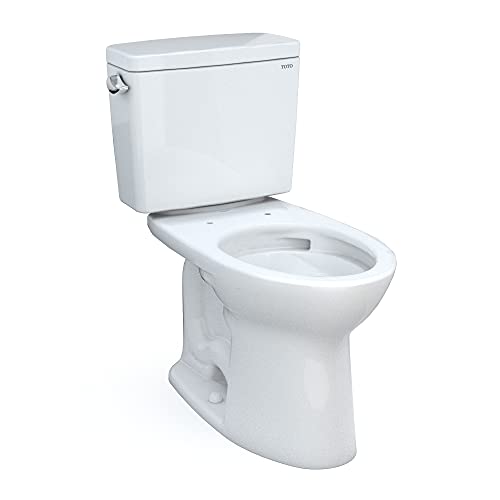
EPA WaterSense certified toilets using 1.28 GPF or less are the best match for rainwater harvesting because they reduce daily demand on your cistern, extending the number of dry days the system can sustain without mains backup. Toilets with large trapways and proven clog resistance -- such as the TOTO Drake II, TOTO UltraMax II, and American Standard Champion 4 -- are particularly important in rainwater applications because harvested water may contain trace sediment that could compound flushing issues in toilets with marginal hydraulic performance. MaP flush scores of 800 grams or higher are strongly recommended.
Since rainwater is essentially mineral-free (much lower hardness than most municipal supplies), it is actually gentler on ceramic surfaces and flush valves than hard tap water. Homeowners in hard-water areas who switch to harvested rainwater for flushing often report a significant reduction in calcium scaling inside the toilet bowl and tank -- a maintenance benefit that is rarely mentioned in payback calculations but is real.
The lower mineral content does mean the water is slightly more corrosive to unprotected metal, so look for toilets with plastic or stainless internal hardware rather than zinc or brass fill valves if longevity is a priority. Most major brands have addressed this, but it is worth noting for older retrofit installations.
Here is how leading toilet models compare in the context of a rainwater harvesting application:
| Model | GPF | MaP Score | WaterSense | Trapway Diameter | Best For Rainwater Use | Check Price |
|---|---|---|---|---|---|---|
| TOTO Drake II (CST454CEFG) | 1.28 | 1,000 g | Yes | 2-1/8 in | Top pick -- maximum MaP, proven fill valve | Check price |
| TOTO UltraMax II (MS604114CEFG) | 1.28 | 1,000 g | Yes | 2-1/8 in | One-piece; easier to clean in hard-use systems | Check price |
| American Standard Champion 4 (2034314.020) | 1.6 | 1,000 g | No | 2-3/8 in | Largest trapway available; best clog resistance | Check price |
| TOTO Aquia IV (CST446CEMFG) | 1.0 / 0.8 | 800 g (full) / 500 g (reduced) | Yes | 2-1/8 in | Lowest demand on cistern; dual-flush flexibility | Check price |
| Kohler Cimarron (K-6418) | 1.28 | 1,000 g | Yes | 2-1/8 in | Reliable AquaPiston canister flush; wide service network | Check price |
| American Standard Cadet 3 (2403.128) | 1.28 | 1,000 g | Yes | 2-1/8 in | Budget-friendly WaterSense option with strong MaP | Check price |
| Woodbridge T-0001 | 1.28 / 0.8 | 800 g | Yes | 2 in | One-piece skirted design; good for modern bathrooms | Check price |
For a deeper look at overall flushing performance across all these models, the best flushing toilets guide covers MaP scores, trap geometry, and flush valve mechanics in detail. If your household generates significant waste loads, also review our guide on toilets for heavy waste before pairing one with a rainwater system -- you want maximum hydraulic performance since you cannot control sediment levels in harvested water with the same precision as municipal supply.
A complete residential rainwater-to-toilet system with a 1,500-gallon polyethylene cistern, first-flush diverter, three-stage filtration, 1/2 HP pump, pressure tank, plumbing, and mains backup typically costs between $3,500 and $8,000 installed in the United States. At an average U.S. municipal water rate of $0.004 to $0.008 per gallon (combined water and sewer charges), saving 15,000 gallons per year produces roughly $60 to $120 in annual savings, yielding a simple payback of 30 to 100 years without rebates. With utility rebates (which can offset 20 to 50 percent of system cost), rising water rates, or in high-rate urban markets like San Francisco or Los Angeles, payback compresses to 10 to 20 years.
It is important to be honest about the financial case: in most of the United States, water is still relatively cheap, and a toilet-only rainwater system will not pay for itself quickly on utility savings alone. The stronger case rests on a combination of factors:
For homes on well water with high pumping costs, the economics shift favorably: replacing well-water toilet flushing with harvested rainwater reduces pump run time and well drawdown.
Combining a rainwater harvesting system with an upgrade to EPA WaterSense certified 1.28 GPF toilets produces a compound benefit. The toilet upgrade alone saves 20 to 60 percent of toilet water compared to a 1990s-era 3.5 GPF fixture. Then the rainwater system covers that reduced demand without touching the municipal supply. Running both strategies simultaneously is the fastest path to near-zero potable water consumption for non-potable end uses in the home.
Yes. Toilet flushing is a non-potable application, meaning the water does not need to meet drinking-water standards. Filtered rainwater with basic sediment removal is accepted by most U.S. plumbing codes for this use. UV disinfection may be required in some jurisdictions; check with your local building authority.
No. The toilet's fill valve responds to water pressure, not water source. As long as harvested rainwater is delivered at 20 to 80 PSI (the same range as municipal supply), the toilet operates identically. The main difference you may notice over time is less mineral scaling inside the tank and bowl, since rainwater has very low mineral content.
A family of four flushing EPA WaterSense toilets (1.28 GPF) uses roughly 20 to 30 gallons per day for flushing combined. A 1,500-gallon cistern provides a 50 to 75 day buffer -- enough to bridge most dry spells in moderate climates. In regions with a distinct dry season of 90 or more days, size up to 2,500 to 3,000 gallons or plan on frequent mains top-up.
Yes, and connecting all toilets maximizes your daily demand offset. Each additional toilet requires a dedicated non-potable supply line run from the cistern pump loop. The pump must be sized to handle simultaneous demand if two toilets might fill at the same time, which typically requires 10 to 15 GPM at operating pressure.
A properly designed system includes an automatic mains backup that opens a solenoid valve to admit potable water into the cistern when the level drops below a preset threshold. Toilets continue to function without any user action. The transition is invisible to household occupants, and the system reverts to rainwater automatically when the tank refills after the next rain event.
In most jurisdictions, yes to both. Connecting a non-potable system to internal plumbing fixtures requires a licensed plumber under standard building codes. A permit is required in most U.S. municipalities; this triggers an inspection that verifies proper backflow prevention and pipe identification, which protects you and future occupants from accidental cross-connection. Operating without a permit can void homeowner's insurance coverage for any related water damage.
Use a fully opaque (black or dark-colored) tank -- no light means no photosynthesis. Keep the tank sealed with a fitted lid and screen all vents with fine mesh (1 to 2 mm) to exclude insects while allowing pressure equalization. An annual tank inspection and occasional cleanout with a mild chlorine solution (one tablespoon of unscented bleach per 50 gallons of tank volume, left for 24 hours then rinsed) prevents biological growth.
Properly filtered rainwater is less corrosive to rubber and plastic components than many municipal supplies and far gentler than well water with iron or hydrogen sulfide. The biggest risk is sediment from inadequate filtration, which can lodge under the flapper and cause continuous running. Maintaining your outlet cartridge filter on schedule (every 3 to 6 months) prevents this issue.
As a general threshold, locations with fewer than 20 inches of annual rainfall will struggle to offset more than a fraction of toilet demand without very large cisterns. The system still adds value in these regions as a stormwater management tool, but the water-saving payback is limited. Locations with 30 or more inches of annual rainfall distributed reasonably through the year are strong candidates for a toilet-only rainwater system.
Standard 55-gallon rain barrels are too small for toilet flushing. At 20 to 30 gallons per day of household toilet use, a single rain barrel is depleted in one to two days. You would need to manifold 20 or more barrels together to approach a useful storage volume, at which point a purpose-built 1,000-gallon polyethylene cistern is more practical and cost-effective.
Potentially yes. An increasing number of municipalities charge stormwater utility fees based on impervious surface area. Some -- including cities in Texas, Oregon, North Carolina, and Maryland -- offer credit or rebate programs for demonstrated on-site retention. Contact your local stormwater utility office with your system specifications and cistern size to inquire about available credits.
Keep all tank openings sealed and screened with 1 mm or finer mesh that mosquitoes cannot penetrate. A properly sealed cistern with screened overflow and vent openings provides a complete barrier. Never leave a tank open-topped. If you suspect access, a mosquito dunk (BTi -- Bacillus thuringiensis israelensis) placed in the tank is approved for use in non-potable water storage and is harmless to humans and pets.
IAPMO (International Association of Plumbing and Mechanical Officials) and most jurisdictions adopting the IPC or UPC require purple pipe for non-potable water distribution inside structures. Purple CPVC or purple-identified PVC with purple tape at intervals is the standard. All fixtures must also carry signage reading "Non-Potable Water -- Do Not Drink" at each connection point.
Above-ground cisterns must be insulated or kept in conditioned space (garage, basement) in climates where temperatures drop below 32 degrees F. Underground cisterns below the frost line are naturally protected. The pump and pressure tank should always be in a heated space. Pipes between the cistern and the house must be insulated or buried below frost depth. Some homeowners in very cold climates winterize the outdoor collection portion while maintaining the cistern and pump indoors for year-round toilet service from stored water.
Yes, with an important caveat. Pressure-assist toilets like the Flushmate-equipped models require a minimum of 20 PSI at the fill valve, and some recommend 30 to 40 PSI for optimal performance. Your rainwater pump and pressure tank must be sized to deliver at least 25 PSI consistently. Standard gravity-feed toilets (which includes most TOTO, Kohler, and American Standard models) are generally more forgiving of minor pressure fluctuations from a pump system.
Yes, provided the existing cistern is large enough to serve both outdoor irrigation and indoor toilet demand, and the existing pump delivers adequate pressure. The indoor expansion requires running purple pipe from the pump into the structure, installing a backflow preventer at the entry point, and adding a code-compliant mains backup if one does not exist. Many homeowners start with outdoor irrigation systems and add the indoor connection as a second phase.
EPA WaterSense certifies end-use fixtures (toilets, faucets, showerheads) and irrigation controllers, not entire collection systems. However, using WaterSense certified 1.28 GPF toilets in conjunction with a rainwater harvesting system maximizes both sides of the equation: you collect the same amount of rain but need less of it per flush, extending your dry-day coverage and reducing how often the mains backup activates.
MaP (Maximum Performance) testing uses a standardized soybean paste medium delivered in a controlled lab environment using potable water. There is no separate MaP testing protocol for harvested water. However, toilets that achieve 800 to 1,000 grams on the standard MaP protocol have sufficient hydraulic energy reserve to handle trace sediment that may survive filtration in a rainwater system. Choose models with MaP scores of 800 grams or higher for rainwater applications.
The inlet mesh screen should be inspected after every major storm and cleaned monthly. The vortex or calmed-inlet filter at the tank requires cleaning two to four times per year depending on tree cover and dust load in your area. The outlet sediment cartridge filter (50 to 100 micron) should be replaced every 3 to 6 months. The pump inlet strainer should be inspected annually. Total annual maintenance time is typically 2 to 4 hours for a homeowner comfortable with basic DIY tasks.
Most major toilet warranties (TOTO's limited lifetime warranty, Kohler's one-year warranty, American Standard's limited lifetime warranty on vitreous china) cover manufacturing defects and do not specify the water source as a condition. However, warranty terms are not written with rainwater use in mind, and a manufacturer could theoretically argue that damage from sediment-laden water falls outside coverage. Document your filtration setup and filter maintenance logs -- this provides evidence that you took reasonable precautions if a warranty claim ever arises.
The following sequence is a general guide for a new-construction or major-retrofit installation. Always obtain permits and engage a licensed plumber for the indoor plumbing connection.
Identify which downspouts drain the cleanest, largest section of your roof -- ideally asphalt shingle or metal, away from HVAC exhaust and chimney flashing. Use your local municipality's rainfall data or the NOAA precipitation frequency tool to determine your 10-year average annual rainfall. Calculate your theoretical yield using the formula above. If yield exceeds 12 months of toilet demand, you can reduce cistern size; if yield barely covers demand, plan for more frequent mains backup.
Above-grade tanks outdoors are the simplest and least expensive option. The tank must be within reasonable pipe distance of the collection downspouts and also within reach of the pump output line running into the house. Underground installation eliminates aesthetic concerns and provides freeze protection but adds excavation cost and requires a more powerful pump to lift water out of the ground. Basement or crawl-space installation (with a smaller above-grade collection box feeding by gravity) is a good middle ground for cold climates.
Cut the downspout and install the first-flush diverter following the manufacturer's instructions. Run 4-inch PVC from the diverter outlet to the tank inlet. Slope all conveyance pipes at a minimum of 1/4 inch per foot toward the tank to prevent standing water. Screen the tank inlet with 100 to 200 micron stainless mesh.
Set the tank on a stable, level base (compacted gravel or concrete pad for above-grade installations). Connect the inlet pipe, install the overflow pipe (sized to match your maximum roof runoff rate -- typically 4 to 6 inch), and install the screened vent. The overflow should drain to a vegetated area, bioswale, or storm drain -- not back against the foundation.
Mount the pump in a protected, accessible location. Install the outlet cartridge filter housing between the pump and the house supply line. Connect the pressure tank. Wire the pump to a dedicated circuit with GFCI protection (required when pump is near water).
This is the licensed-plumber step. Purple pipe runs from the pump outlet through the structure to each toilet's supply shut-off valve. A code-compliant backflow preventer is installed where the line enters the conditioned space. The mains backup solenoid is installed on the cistern with its own backflow prevention. Required signage is posted at each toilet.
Fill the cistern with water (either initial rainwater or temporary mains fill for testing). Start the pump and check pressure at each toilet supply valve (target 35 to 50 PSI). Flush each toilet 10 times and inspect for leaks at all fittings. Verify the mains backup activates correctly when tank level is lowered manually. Verify the backflow preventer passes its functional test per ASSE 1013 requirements.
For guidance on what to look for in the toilet performance itself once your system is running, see our article on how to improve toilet flush power -- many of the same hydraulic principles apply when diagnosing weak flush caused by supply pressure issues rather than the toilet itself.
Commission the system in stages. Get the cistern filling reliably before connecting the indoor plumbing. Test the pump at full rated pressure with no indoor connections before tying into the toilet supply lines. Finding a pressure issue at the pump is a 20-minute fix; finding it after the walls are closed is a major problem. Document every pressure reading during commissioning -- your inspector will likely ask for it.
A simple annual maintenance schedule prevents the most common failure modes: clogged filters, failed pump seals, and degraded backflow preventers.
| Task | Frequency | Time Required | Skill Level |
|---|---|---|---|
| Clean roof gutter screens | After each major storm / seasonally | 30 to 60 min | DIY |
| Clear first-flush diverter | Monthly in leaf season / quarterly otherwise | 10 to 15 min | DIY |
| Rinse inlet vortex filter | Quarterly | 15 to 20 min | DIY |
| Replace outlet cartridge filter | Every 3 to 6 months | 10 min | DIY |
| Inspect tank interior / clean if needed | Annually | 1 to 2 hrs | DIY |
| Test mains backup solenoid | Annually | 20 min | DIY |
| Test and certify backflow preventer | Annually (most jurisdictions require certified tester) | 30 to 60 min | Licensed tester |
| Inspect pump seals and impeller | Every 3 to 5 years | 1 to 2 hrs | Plumber or experienced DIY |
Backflow preventer testing is the one maintenance item that is non-negotiable in almost every U.S. jurisdiction that permits non-potable reuse systems. Annual certification by a licensed cross-connection control specialist is required to maintain permit compliance. The fee is typically $50 to $150 per inspection.
For related efficiency improvements beyond the toilet itself, our guide on how to save water with toilets covers fill valve upgrades, flapper selection, and leak detection methods that complement a rainwater harvesting setup. And if you are evaluating the overall water efficiency of different toilet designs for this type of application, the dual flush water savings breakdown shows exactly how 0.8 GPF reduced flushes compound over the course of a year.
Rainwater harvesting for toilet flushing is a technically sound, code-permittable strategy that meaningfully reduces potable water consumption in most U.S. climates. The strongest case is made by pairing the system with EPA WaterSense certified 1.28 GPF toilets -- specifically models like the TOTO Drake II or American Standard Cadet 3 that score 1,000 grams on MaP testing and deliver reliable flushing with lower daily demand on your cistern. The financial payback period is modest on water savings alone, but the combination of stormwater management benefits, rising water rates, available rebates, and reduced mineral scaling makes it a worthwhile long-term investment for homeowners committed to water efficiency. Follow local permitting requirements, use purple pipe, install an ASSE 1013 backflow preventer, and commission the pump at rated pressure before opening the indoor supply lines.
Learn why toilet trapways curve like an S, how each bend blocks sewer gas, and what the shape means for clogs and…
Read the guideAlmost every US toilet has a left-side handle. Learn the plumbing and mechanical reasons behind the layout and when it actually changes.
Read the guideHome toilets rely on tanks because household water lines lack the pressure that public flushometer systems use to flush straight from the…
Read the guide