Common Bidets Problems and How to Fix Them (2026)
Bidets4.6
Step-by-step fixes for the bidet problems reported most often, from a unit that won't spray and weak water pressure to a seat…
Read the guideA data-backed look at which cleaning method wins on hygiene, plumbing safety, environmental impact, and long-term cost, so you can stop guessing and make an informed switch.
Bidets clean more thoroughly than flushable wet wipes, use only 0.06 to 0.12 gallons of water per use, and pay for themselves within 6 to 18 months. Wet wipes market themselves as flushable but consistently fail independent dispersibility tests, causing blockages in residential trapways and municipal sewer systems worldwide.
The debate between bidets and flushable wet wipes has moved well beyond personal preference. Plumbers, wastewater engineers, municipal utilities, and environmental researchers have collected substantial evidence on both sides. This guide organizes that evidence so you can weigh cleanliness, plumbing safety, environmental footprint, and household economics in one place.
Bidets spray a controlled stream of water to remove waste from the perineal area. Flushable wet wipes use pre-moistened nonwoven fabric that you wipe with and then discard by flushing. Both methods claim superiority, but the data behind each claim varies significantly in quality and objectivity. The manufacturers of wet wipes have an obvious financial stake in the "flushable" designation; plumbers and wastewater utilities have equally strong institutional interests in discrediting them. We have tried to find the most independently verified numbers available.
There is no legally binding standard that a wet wipe must meet before being labeled "flushable" in the United States. The term refers to the physical act of passing through a toilet's trap -- not to whether the wipe breaks apart safely in sewer pipes. The Association of the Nonwoven Fabrics Industry (INDA) published voluntary Flushability Assessment Guidelines (GD4), but wastewater utilities argue these tests do not replicate real-world pipe and pump conditions. A 2019 Canadian Water and Wastewater Association study found that in independent lab simulations, zero of 101 "flushable" wet wipe products passed all dispersibility criteria.
Multiple peer-reviewed studies, including a 2016 study published in the Journal of Wound, Ostomy and Continence Nursing, found that water-based cleansing significantly reduces bacterial contamination on perianal skin compared to dry tissue or pre-moistened wipes. Bidets wash waste away with running water rather than smearing it with cloth, which medical professionals note is the approach used in clinical wound care. Dermatologists also observe that repeated friction from wipes can compromise the skin barrier over time, making fissures and irritation more likely.
Yes, consistently. The New York City Department of Environmental Protection reported spending over $18 million annually on "ragging" -- the process of removing wipe-based blockages from pumping stations -- before the city passed legislation restricting the "flushable" label in 2015. London's Thames Water has documented fatbergs weighing over 100 tonnes that are largely composed of wet wipes bonded with cooking grease. Even at the household level, MaP flush-test data shows that wipes routinely require multiple flushes and create partial blockages in 2-inch drain lines, the most common pipe diameter in residential construction.
A bidet attachment costs between $30 and $70 for a non-electric model (such as the Luxe Bidet Neo 320 or Tushy 3.0) and adds roughly $0.50 to $1.50 per year to your water bill based on 0.06 to 0.12 gallons per use at typical utility rates. Flushable wet wipes cost between $3 and $7 per 72-count pack; a household using four to eight wipes per day spends $60 to $180 per year on wipes alone, before accounting for plumber fees when clogs occur. A mid-range bidet seat such as the Bio Bidet BB-600 or Brondell Swash typically pays for itself within 12 to 18 months for a two-person household.
By virtually every environmental metric studied, bidets outperform wet wipes. Wet wipes are manufactured from polypropylene or polyester nonwoven fabric -- materials that do not biodegrade in sewer systems and persist as microplastics in waterways. A 2021 University of Plymouth study identified wet wipes as the third most common item found on UK riverbanks. Bidets do consume water, but manufacturing one metric tonne of wet wipes requires approximately 17,000 liters of production water versus the roughly 1,500 liters a typical household would use in a bidet over the same period. EPA WaterSense certified fixtures, including many smart toilet models, are designed to minimize overall bathroom water consumption.
| Factor | Bidet (Non-Electric) | Bidet Seat (Electric) | Flushable Wet Wipes |
|---|---|---|---|
| Hygiene | High -- water removal | Highest -- warm water + dryer | Moderate -- friction-based |
| Sewer Safety | No concern | No concern | Documented clog risk |
| Annual Cost (per person) | ~$1 (water only) | ~$3 to $6 (water + electric) | $60 to $180 (product only) |
| Upfront Cost | $30 to $100 | $150 to $700+ | $0 (none required) |
| Toilet Paper Still Needed | Minimal (pat dry) | Optional with dryer | Often used in combination |
| Skin Irritation Risk | Low | Low | Moderate (fragrance/friction) |
| Environmental Footprint | Low | Low to moderate (electricity) | High (plastic fiber, production water) |
| EPA WaterSense Compatible | Yes (with WaterSense toilet) | Yes | Not applicable |
| Septic System Safe | Yes | Yes | No (per most septic guidelines) |
| Travel Friendly | No | No | Yes |
| Mainstream Adoption | Growing rapidly in North America | Standard in Japan, South Korea | Widespread in North America |
One of the most consequential differences between bidets and wet wipes involves what happens after flushing. Bidet water exits through the existing toilet's water system -- the same drain that handles toilet paper and waste. There is no new material introduced to the drain line.
Wet wipes are a different matter. The INDA guidelines require a wipe to disperse when rotated at a specific speed in a defined volume of water for a set number of cycles. Wastewater engineers have pointed out that this test does not replicate low-flow drain conditions, partial blockages, grease coating on older pipes, or the cumulative effect of multiple wipes over time. In real residential testing, 3-inch trapways on toilets such as the American Standard Champion 4 pass wipes through their bowls with sufficient water volume, but the wipes typically remain intact in the 4-inch and 3-inch drain lines beyond the toilet where flow velocity drops. This is where clogs develop, often out of sight and out of mind until water begins backing up.
Plumbers frequently report that "flushable" wipes are among the top three causes of residential drain blockages, alongside tree root intrusion and grease buildup. The distinction between "passes through a toilet" and "safe for your drain line and municipal system" is critical and is not communicated clearly on product packaging. Homeowners with older homes (pre-1980 cast iron or clay tile drain lines) face meaningfully higher risk from consistent wipe use than those with modern 4-inch PVC lines.
Dermatologists increasingly discuss what they call "wipe dermatitis" -- a pattern of perianal irritation caused by repeated mechanical friction and chemical exposure from preservatives in wet wipes. Common preservatives include methylisothiazolinone (MI) and methylchloroisothiazolinone (MCI), both classified as contact allergens by the American Contact Dermatitis Society. Fragrances added to many wet wipes are also among the most common contact allergens in dermatology patch testing.
Bidets eliminate friction from the cleaning equation entirely. The water pressure on non-electric models typically ranges from 0.5 to 1.5 bar, which is sufficient to clean without abrading skin. Electric bidet seats from manufacturers such as TOTO (which makes the WASHLET S550e and C200), Brondell, and Bio Bidet allow pressure adjustment and often include a warm-water wash that further reduces any risk of discomfort. For people managing hemorrhoids, post-surgical recovery, Crohn's disease, or fissures, dermatologists and gastroenterologists frequently recommend bidets as a first-line recommendation over any wipe product.
Research from the American Journal of Gastroenterology and clinical guidance from colorectal surgeons consistently supports water-based cleaning for patients with perianal conditions. The warm-water posterior wash feature available on TOTO WASHLET seats and similar products from Brondell and Bio Bidet is specifically beneficial for post-operative care and chronic inflammatory bowel conditions. Cool-water bidets can achieve similar results but may require a brief adjustment period in colder climates.
A common objection to bidets is water use. This is a valid consideration in drought-affected regions, but the data must be framed correctly. A non-electric bidet attachment uses roughly 0.06 to 0.12 gallons (0.23 to 0.45 liters) per use. At two uses per day for one person, that is approximately 22 to 44 gallons of water per year dedicated to bidet use.
Manufacturing one kilogram of nonwoven fabric -- roughly the weight used in 500 to 600 wet wipes -- consumes between 20 and 35 liters of water in the fiber production stage alone, not counting dyeing, finishing, or packaging. A person using 4 wipes per day consumes roughly 1,460 wipes annually, which represents a manufacturing water cost of approximately 60 to 100 liters. Added to this is the water used in responding to sewer blockages and wastewater treatment of microplastic-contaminated effluent. The net comparison favors bidets in water footprint analysis by a wide margin, even without accounting for the EPA WaterSense program's broader goals for water conservation in bathrooms.
Toilets paired with bidet seats from brands like TOTO (TOTO Aquia IV, TOTO Drake II) or Kohler (Karing, Veil) are designed as integrated water-efficient systems. Flushing platforms that carry EPA WaterSense certification at 1.28 GPF or lower are compatible with all bidet seat or attachment products since the bidet water supply draws from the toilet's cold-water supply line at a separate pressure entirely from the flush valve.
To make the economics concrete, consider a household of two adults using wet wipes as a regular cleaning supplement to toilet paper:
For households interested in electric bidet seats, the economics shift slightly at the front end. The Bio Bidet BB-600 or Brondell Swash 1400 carry upfront costs of $150 to $400. Electricity consumption for an electric seat averages 0.5 to 1.5 kWh per day (mostly from the seat heater), adding $20 to $60 per year to the electric bill. Even so, the break-even point against wet wipes generally arrives within 18 to 30 months for two-person households.
The economic case for bidet adoption accelerates significantly in larger households. A family of four using wet wipes regularly can spend $250 to $400 per year on product alone. A single $50 bidet attachment connected to a shared toilet eliminates that recurring cost within three to four months. The non-electric models from Luxe Bidet, Tushy, and Kohler require no professional installation and fit virtually all standard two-piece and one-piece toilet designs, including the Kohler Cimarron, American Standard Cadet 3, and Woodbridge T-0001.
Homeowners on private septic systems face heightened risk from wet wipes. Septic tanks separate solids from liquid effluent through anaerobic bacterial digestion. Nonwoven fabric from wipes does not degrade in an anaerobic environment and accumulates in the tank's solid layer, shortening the pump cycle interval. The National Onsite Wastewater Recycling Association (NOWRA) explicitly recommends against flushing any wet wipes in septic-served homes. Bidets pose no additional septic risk -- the small amount of additional water reaches the drain field as gray water no different from sink or shower drainage.
This guide would be incomplete without acknowledging the use cases where wet wipes remain practical. Travel, camping, and situations where a fixed water source is unavailable make wipes genuinely useful. Portable bidet bottles (also called travel bidets) address some of these scenarios but require carrying a refillable bottle. For medical applications such as incontinence care in non-ambulatory patients, hospital-grade skin-barrier wipes are specifically formulated and are NOT labeled flushable -- they are always discarded in the trash, not flushed, a distinction that matters enormously.
The problem with consumer flushable wet wipes is not that the product category is useless -- it is that the "flushable" label creates a false sense of sewer-safety that independent testing has not validated. If you use wipes for travel or convenience situations and dispose of them in a waste bin rather than flushing, you eliminate the plumbing risk entirely while retaining the convenience benefit.
Not all bidets require expensive installation or an electrician. The market now covers a wide range of price points and complexity levels:
Non-electric attachments ($25 to $80): The Luxe Bidet Neo 320, Tushy Classic 3.0, and Kohler C3 Bidet Seat attachments install in under 15 minutes using only a screwdriver. They connect to the toilet's cold-water supply line and use water pressure from the home's plumbing to generate the wash stream. These are the most economical entry point and work on virtually all two-piece toilets including the American Standard Cadet 3 and TOTO Drake.
Non-electric handheld bidet sprayers ($15 to $40): A T-valve splitter and handheld spray head allow targeted directional rinsing. Common in South Asian and Middle Eastern households. More flexible than fixed attachments but require some manual coordination.
Electric bidet seats ($150 to $500): The Bio Bidet BB-600, Brondell Swash 300, Bio Bidet Slim One, and Clean Sense DIB-1500R add heated seats, warm water wash, adjustable pressure, and dryers. These require a standard 120V GFCI outlet within reach of the toilet. Compatible with elongated and round bowl toilets including the Kohler Highline, TOTO Aquia IV, and American Standard Champion 4.
Smart toilet systems ($600 to $3,000+): TOTO WASHLET+ toilets (TOTO UltraMax II with WASHLET, TOTO Nexus with WASHLET), Kohler Veil, and Swiss Madison Ivy integrate bidet functionality directly into the toilet unit. MaP flush-test scores for TOTO's integrated systems run at 1,000 grams, the highest certification level available, meaning the toilet platform itself handles solid waste with maximum efficiency while the integrated WASHLET handles cleaning.
For recommendations on the full range of bidet products, see our best bidet toilet seats and best bidet attachments guides, and our article on bidet seat vs smart toilet if you are considering a full integrated system.
The broader context of toilet performance matters here as well. If you are evaluating a bidet for a home with an older, low-performing toilet, pairing it with a new high-efficiency model is worth considering. Our full guide to best flushing toilets covers the highest MaP-rated models across every major brand, and our dedicated guide to how to use a bidet walks through the learning curve for first-time users.
By the strictest definition -- they can physically pass through a toilet bowl -- yes. But independent dispersibility tests conducted by wastewater utilities in the United States, Canada, and the United Kingdom consistently find that they do not break apart in sewer pipes the way toilet paper does. Most plumbing professionals and municipal utilities advise against flushing them.
A standard non-electric bidet attachment uses approximately 0.06 to 0.12 gallons (about 0.25 to 0.45 liters) per use, depending on the duration of the wash cycle. Electric bidet seats with adjustable pressure use a similar range. This is a fraction of the 1.28 gallons used by an EPA WaterSense certified toilet flush.
Not entirely for most users with non-electric bidets. Most people still use a small amount of toilet paper to pat dry after the wash. Electric bidet seats with built-in warm-air dryers can reduce toilet paper use to near zero if desired, though the drying cycle takes 30 to 90 seconds.
Yes. Nonwoven fabric does not biodegrade in the anaerobic environment of a septic tank. It accumulates in the solid waste layer, accelerating the frequency of required pump-outs. NOWRA recommends that septic system users never flush any wet wipe products, including those labeled flushable.
Most standard two-piece and one-piece toilets with a 7/8-inch cold-water supply line accept bidet attachments without modification. This includes the TOTO Drake, TOTO Drake II, Kohler Cimarron, Kohler Highline, American Standard Cadet 3, American Standard Champion 4, and Woodbridge T-0001. Skirted toilets with concealed trapways may require a different mounting bracket.
When properly maintained, bidets are hygienic. The nozzle on most non-electric attachments is retracted and covered during flushing and only extends during the wash cycle. Electric seats from TOTO, Brondell, and Bio Bidet include self-cleaning nozzle cycles using UV sterilization or electrolyzed water. Shared bidet use in households carries no more bacterial risk than a shared toilet seat.
The skin-sensitivity concern applies at all ages, but children's skin is thinner and more reactive. Pediatric dermatologists note that preservatives like methylisothiazolinone are more likely to cause contact dermatitis in young children. From a plumbing standpoint, children flushing wipes unsupervised is a documented cause of household drain blockages.
Yes. Colorectal surgeons frequently recommend bidets for hemorrhoid patients because they eliminate the mechanical friction that exacerbates inflamed tissue. The gentle water stream cleans without aggravating. Cold-water bidets provide some mild topical relief; warm-water bidets from TOTO's WASHLET line or Brondell's Swash series are more comfortable for extended use.
A bidet attachment installs between the existing toilet seat and the toilet rim and adds wash functionality while keeping the original seat. A bidet seat replaces the entire toilet seat with a new unit that incorporates both a seat and bidet nozzle assembly, often including heating elements, dryers, and pressure controls in electric models.
Yes. Most bidet attachments and seats are available in both round and elongated versions. Round bowl compatible models include the Tushy Classic 3.0, Luxe Bidet Neo 320, and Bio Bidet Slim One. When purchasing, verify whether the product specifies round or elongated, as they are not interchangeable.
Non-electric bidet attachments typically install in 10 to 15 minutes using only a screwdriver. The process involves turning off the toilet's water supply, removing the toilet seat, positioning the bidet plate on the toilet rim, reinstalling the seat, and connecting the bidet's T-valve to the water supply line. No plumber is required. Our full bidet installation guide covers each step in detail.
Non-electric bidets supply only cold water, which can be uncomfortable in cold climates during winter months. Electric bidet seats solve this with adjustable water temperature. Some older homes lack a GFCI outlet near the toilet, requiring an electrician to install one before an electric seat can be used. First-time users also report a brief learning curve in adjusting spray angle and pressure.
Fatbergs are large masses of congealed grease, fat, and nonbiodegradable solids that form in sewer pipes. Wet wipes are among the primary structural components of fatbergs because nonwoven fabric catches on pipe walls and accumulates. Thames Water in London, New York City DEP, and Sydney Water have all documented fatbergs composed predominantly of flushed wet wipes combined with cooking grease from drain lines.
Bidets are commonly recommended during pregnancy for comfort and hygiene. As the abdomen grows, reaching for toilet paper becomes increasingly difficult. The TOTO WASHLET and similar electric seats with rear and front wash functions are specifically mentioned in obstetric patient education materials from several hospital systems as a practical aid during the third trimester and postpartum recovery period.
Most "flushable" wet wipes are made from polypropylene or polyester nonwoven fabrics -- synthetic polymers that are technically plastics. Plant-fiber wet wipes made from wood pulp do exist and biodegrade more rapidly, but they represent a small minority of the market and are not the products most commonly labeled "flushable." Plant-based options that disperse quickly in water are sometimes marketed as truly flushable, but independent verification of these claims remains limited.
Non-electric bidet attachments typically last 5 to 10 years with minimal maintenance. The primary wear components are the T-valve washer and the nozzle O-ring, both of which are inexpensive to replace. Electric bidet seats from established brands carry 1 to 3 year warranties and have average service lives of 8 to 12 years based on aggregated owner reports.
Yes. A bidet attachment connects to the same cold-water supply line that fills the toilet tank, via a T-valve splitter. It does not connect to the toilet's drain or flush valve. The water used by the bidet is fresh from the supply line, not water from the toilet tank or bowl.
Bidet adoption in North America has grown significantly since 2020. Market research from Allied Market Research projects the North American bidet market to grow at a compound annual rate of 8 to 10 percent through 2028. The COVID-19 toilet paper shortage of 2020 drove a spike in bidet attachment sales that has continued as a sustained trend. Japan and South Korea report bidet adoption rates above 80 percent in residential households.
High-performance toilets such as the American Standard Champion 4 (3.5-inch trapway) or the TOTO Drake II will pass wet wipes through the bowl during a flush due to their generous trapway diameter and high flush velocity. The clog risk is not at the toilet bowl itself but in the 3- and 4-inch drain lines downstream, where flow velocity drops and wipes accumulate over time.
Bidets are the superior choice across every meaningful dimension -- hygiene, long-term cost, plumbing safety, skin health, and environmental impact. A $40 to $60 non-electric bidet attachment is the most cost-effective first step for most households, offering genuine cleanliness improvements over wet wipes while eliminating the documented risks to drain lines, septic systems, and municipal sewer infrastructure. Flushable wet wipes are a convenience product with a label that independent data does not support; if you use them, dispose of them in the trash rather than the toilet. For households ready to invest further, electric bidet seats from TOTO, Brondell, or Bio Bidet deliver exceptional comfort and near-complete elimination of toilet paper use.
Step-by-step fixes for the bidet problems reported most often, from a unit that won't spray and weak water pressure to a seat…
Read the guideA step-by-step framework for picking the right bidet type, features, and fit based on your toilet, your bathroom's electrical access, and how…
Read the guide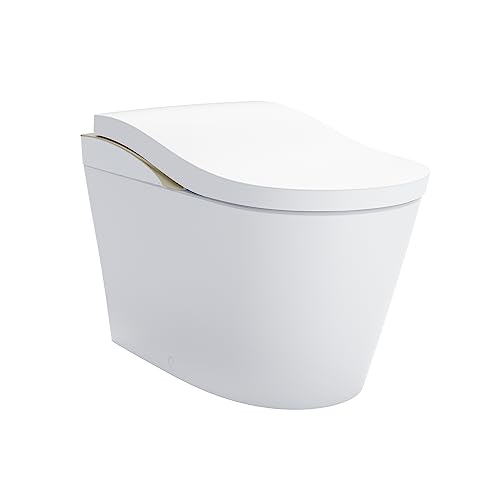
A luxury bidet is judged on a different set of criteria than a standard seat: automatic lid function, a full remote-controlled preset…
Read the guide