Common Bidets Problems and How to Fix Them (2026)
Bidets4.6
Step-by-step fixes for the bidet problems reported most often, from a unit that won't spray and weak water pressure to a seat…
Read the guideBidets are standard in Japan, South Korea, and most of Europe, yet many North American households have never tried one. This step-by-step guide covers every bidet type, exactly how to operate each one, hygiene best practices, and what to realistically expect from your first use.
Position yourself over the bidet nozzle, activate the wash function at low pressure, cleanse for 20 to 60 seconds, then pat dry with a small towel or toilet paper. Modern bidet seats make the process entirely hands-free and hygienic. Total water use per wash is roughly 0.1 gallons, a fraction of what manufacturing a single sheet of toilet paper requires.
There are five main bidet types: standalone bidet fixtures, bidet toilet seats (electric and non-electric), handheld bidet sprayers, integrated smart toilets, and travel bidets. Standalone bidets require a separate plumbing fixture, while bidet seats and sprayers retrofit onto any existing toilet in under 30 minutes.
For most first-time users, a non-electric bidet attachment such as the Tushy 3.0 or a basic electric seat offers the lowest barrier to entry. Smart toilets from TOTO (the WASHLET+ line) and Kohler (the Karing C3) deliver the most features but cost significantly more.
Understanding the category differences helps you choose a product that matches your bathroom setup, budget, and comfort level.
A standalone bidet is a separate porcelain or ceramic basin installed next to the toilet. Common in European and South American bathrooms, these require dedicated hot and cold water supply lines and a dedicated drain. They offer excellent water pressure control and separate-use hygiene but demand significant bathroom space and a licensed plumber for installation.
Electric bidet seats, sometimes called washlets, replace your standard toilet seat and connect to the cold water supply line and a nearby grounded outlet. Leading models include the TOTO S500e WASHLET, the TOTO C200, and the Kohler Karing. These offer heated water, adjustable pressure, seat warming, and air drying, often with a remote control or side panel. Most fit elongated or round bowls from any brand, including Kohler Highline, American Standard Champion 4, or Woodbridge T-0001.
Non-electric attachments slide between the toilet seat and bowl, tapping into the existing fill valve supply. No outlet is required. Water is cold unless you run a separate hot water connection from the sink supply. The Tushy 3.0 and Luxe Bidet Neo 320 are popular examples, both installable in under 15 minutes. Pressure is controlled mechanically via a side knob.
A handheld sprayer, sometimes called a shattaf or Muslim shower, mounts on the wall beside the toilet and connects to the fill valve line with a T-adapter. You hold the sprayer yourself and direct the stream manually. These are the most affordable option, widely used across Asia and the Middle East, and give the most precise directional control.
Smart toilets combine a high-efficiency toilet bowl with a built-in bidet seat. TOTO's Aquia IV WASHLET+ pairing, the Kohler Veil Intelligent toilet, and the American Standard Studio S smart toilet are top examples. These eliminate the gap between seat and bowl (reducing cleaning effort) and often feature auto-flush, deodorizers, and night lights. Because the bidet system is factory-integrated, spray alignment and pressure tuning are optimized for the specific bowl shape.
Portable squeeze-bottle or battery-powered bidets let you maintain bidet hygiene on the road. They hold roughly 10 to 16 oz of water and deliver a pressurized stream through a nozzle tip. Useful for hospital stays, camping, or international travel where fixed bidets are unavailable.
| Type | Install Difficulty | Heated Water | Air Dry | Approx. Cost Range | Best For |
|---|---|---|---|---|---|
| Standalone fixture | High (plumber needed) | Yes (with mixing valve) | No | $300 - $800+ | Full bathroom renovations |
| Electric bidet seat | Low (DIY, 20 min) | Yes (instant or tank) | Yes | $150 - $900+ | Best all-around first bidet |
| Non-electric attachment | Very low (DIY, 10 min) | No (cold only or sink hookup) | No | $25 - $100 | Budget-conscious beginners |
| Handheld sprayer | Low (DIY, 15 min) | No | No | $20 - $60 | Manual control preference |
| Integrated smart toilet | Medium (plumber for toilet) | Yes | Yes | $800 - $4,000+ | Full replacement or new build |
| Travel bidet | None | Pre-fill with warm water | No | $10 - $40 | Travel and portability |
Finish using the toilet, then move to the standalone bidet and straddle it facing the faucet or away from it, depending on the fixture design. Turn on the water slowly and adjust the temperature before directing it toward the area you are cleaning. After 20 to 40 seconds, turn off the water and pat dry with the small towel provided or clean toilet paper.
Most standalone bidets in hotels and European homes are designed to be used facing the faucet for front cleansing or facing away for posterior cleansing. Drying cloths dedicated to the bidet should be washed after each use or after one day at most.
Many first-time users feel uncertain about which direction to face when using a standalone bidet. The answer depends on what area you are washing:
Hygiene researchers note that bidets reduce fecal coliform contamination of hands by up to 80 percent compared to dry wiping alone, according to a study published in the Journal of Water and Health. The key variable is using adequate water flow, not maximum pressure. A gentle to moderate stream cleans effectively without irritating sensitive tissue.
Sit on the bidet seat as you normally would on a toilet. After use, press the "Rear" or "Wash" button on the side panel or remote. The nozzle extends automatically and begins spraying. Adjust pressure and position using the controls, then press "Stop" and either air dry using the dryer function or pat dry with toilet paper.
On models like the TOTO C200 or S500e, the spray position can be moved forward or backward by 1 to 2 inches to suit your anatomy, and the water temperature is preset via the remote control before your session begins. Most users find a low-to-medium pressure setting at 98 to 104 degrees Fahrenheit comfortable.
Electric bidet seats are the most user-friendly bidet type for North American first-timers because most functions are automated. Here is a detailed walk-through:
Most electric seats have a setup mode or memory function. Before sitting, set your preferred water temperature (typically warm is one notch above ambient), seat temperature if the seat is heated, and nozzle position. Save these as a user preset if the unit supports it. The TOTO S500e and Kohler Karing allow two or three user profiles on a single remote.
Electric bidet seats use a proximity or pressure sensor to confirm occupancy before the nozzle activates. If you hover slightly or sit at the seat's front edge, the sensor may not register and the wash function will not activate. Sit fully rearward as you normally would on the toilet.
Press "Rear" for posterior cleaning or "Front" (also labeled "Bidet" or "Feminine") for anterior cleaning. The nozzle self-cleans with a pre-rinse, extends from beneath the seat, and begins spraying. The first second or two may feel startling simply because the sensation is new, not because of excessive pressure.
Most remotes and panels have five pressure levels. Level 1 or 2 is recommended for new users and is sufficient for thorough cleaning. Nozzle position controls move the spray point forward or backward in small increments. Women often move the nozzle slightly forward for optimal coverage. Men typically find the default rear position adequate.
Many mid-range and premium seats offer oscillating wash (the nozzle moves back and forth slowly) or pulsating wash (pressure cycles on and off). Oscillating mode is useful for thorough posterior cleaning. Pulsating mode can relieve discomfort associated with hemorrhoids or postpartum sensitivity.
Press "Dry" if your seat includes an air dryer. Most air dryers require 30 to 90 seconds for full drying. If you prefer toilet paper, one or two sheets are enough to pat dry after washing, a dramatic reduction compared to dry wiping alone. This reduction is the primary environmental case for bidets: the average American uses 100 rolls of toilet paper per year, each roll requiring 37 gallons of water to manufacture.
After each use, the nozzle retracts and runs a rinse cycle automatically on TOTO and most Kohler seats. Do not manually touch the nozzle during or after this cycle. Periodic manual cleaning of the nozzle is still recommended (see the maintenance section below).
TOTO's ewater+ system on the S500e and SW3056 series electrolyzes tap water to create a mild hypochlorous acid solution that coats the bowl and wand before and after each use. This materially reduces bacterial buildup without adding chemicals. Independent lab testing cited in TOTO's product documentation shows a greater than 99.9 percent reduction in bacteria on the wand after the ewater+ cycle completes.
After toilet use, turn the pressure knob on the side of the attachment slowly from zero toward higher pressure until the water stream is comfortable. Direct your body slightly forward or backward to align with the fixed nozzle position, hold for 20 to 40 seconds, then close the valve and dry normally. Non-electric attachments have a fixed nozzle position, so body repositioning replaces the nozzle-adjustment feature found on electric seats.
Cold-water-only attachments feel noticeably cold in winter months. Some users find this invigorating; others connect a dual-inlet model to the sink's hot water supply to add warmth. Allow a few seconds for the cold water sitting in the supply line to flush through before full use.
Non-electric bidet attachments are the most affordable entry point and install without tools on most two-piece toilets. Operation is straightforward:
Pick up the sprayer with your dominant hand, point it at the area you want to clean, then squeeze the trigger or handle slowly to start the water flow. Hold the sprayer 4 to 8 inches from your body and maintain gentle trigger pressure for 20 to 40 seconds. Release the trigger fully to stop flow, then dry as usual.
The main learning curve with handheld sprayers is managing splash, especially at higher pressure. A slow squeeze-and-aim approach, practiced for the first few sessions, eliminates most accidental splashing. The toilet lid can also be partially lowered as a splash guard while still leaving enough clearance to use the sprayer.
Handheld bidet sprayers require the most manual dexterity of any bidet type but offer the most precise directional control. Key technique points:
Bidets are clinically recommended for people with hemorrhoids, anal fissures, post-surgical recovery, Crohn's disease, irritable bowel syndrome, limited mobility, and postpartum recovery because water cleansing reduces friction and irritation compared to dry wiping. A 2011 study in the journal Diseases of the Colon and Rectum found no adverse effects on anal function from regular bidet use among patients recovering from hemorrhoidectomy.
For the general population, bidets reduce residual fecal matter more effectively than toilet paper, lower the risk of urinary tract infections in women by reducing cross-contamination, and are gentler on skin prone to irritation or sensitivity. They also significantly reduce household toilet paper consumption, with some families reporting a greater than 75 percent reduction.
Beyond the practical how-to mechanics, understanding the evidence behind bidet hygiene helps first-timers commit to the habit change. Key findings from published research and manufacturer data:
Repeated dry wiping increases friction on already-inflamed tissue. Warm water bidet washing with low pressure is the standard post-bowel-movement care protocol in Japanese coloproctology, where bidet adoption exceeds 80 percent of households according to the Japan Sanitary Equipment Industry Association (2022 survey data). Several gastroenterologists in the United States now recommend bidet use to patients with chronic hemorrhoid symptoms as a first-line lifestyle intervention.
Front wash or "feminine wash" on electric seats directs a gentle stream anteriorly to clean the vulvar area. The recommended direction for wiping, front to back, is built into the spray geometry of properly designed bidet seats to minimize E. coli cross-contamination. Models like the Kohler Karing and TOTO S500e have dedicated feminine wash modes with a separate, adjustable-pressure nozzle specifically positioned for this use case.
For users who cannot fully reach or who experience pain during standard wiping, bidets are a meaningful independence and dignity aid. Occupational therapists frequently recommend electric bidet seats for post-stroke recovery and for elderly users with arthritis. The air-dry feature eliminates the need to wipe at all. Kohler's Karing and TOTO's S300e/S500e are commonly cited in eldercare contexts for their intuitive remote controls and reliable sensor-activated operation.
The American Forest and Paper Association estimates that the United States consumes approximately 141 rolls of toilet paper per person per year, among the highest rates globally. Each roll requires approximately 37 gallons of water and 1.5 pounds of wood to produce. A bidet, by contrast, uses roughly 0.1 gallons per wash. A two-person household switching to a bidet and using minimal drying tissue can save an estimated 500 to 600 gallons of embedded production water per year while also eliminating chlorine bleach from the wastewater stream.
Plumbers and hygiene consultants point out that bidet use reduces the volume of toilet paper flushed, directly lowering clog frequency. Toilets with strong siphon-jet flush systems, such as those achieving 1000-gram MaP scores (the TOTO Drake II and American Standard Champion 4 both score 1000g), handle the small amounts of drying tissue used post-bidet with no difficulty. For more on choosing the right toilet to pair with a bidet, see our guide to the best flushing toilets.
Clean the bidet nozzle manually once per week by extending it (use the nozzle-clean mode most electric seats offer), then wiping with a soft cloth dampened with a mild bathroom cleaner or diluted white vinegar. Never use bleach, abrasive scrubbers, or spray cleaner directly into the nozzle opening. Clean the seat exterior with a damp cloth and mild soap.
For hard water areas, descaling the nozzle tip every one to three months with a vinegar-soaked cloth prevents mineral buildup that would otherwise narrow or deflect the spray stream. The seat body, lid, and remote can be wiped with a standard bathroom surface cleaner, but avoid soaking electronic components or the seat's underside wiring harness.
Proper maintenance extends bidet life substantially. The Brondell Swash 1400 and TOTO S500e both carry two-year manufacturer warranties, and with routine care, most electric seats last eight to twelve years.
Treat a standalone bidet the same as a toilet bowl: use a mild bathroom cleaner and a soft brush or sponge weekly. Avoid bleach-based cleaners in chromium-plated faucets, as chlorine accelerates corrosion. Flush the faucet for 30 seconds before use after any period of non-use to clear standing water from the supply line.
Common first-use issues and their solutions:
Plumbing professionals note that the most common bidet installation mistake is failing to check toilet bowl compatibility before purchasing a bidet seat. Round bowls require a round-seat bidet; elongated bowls require an elongated-seat model. Measure your bowl from the seat bolt holes to the front rim tip: 16 to 17 inches indicates round, 18 to 19.5 inches indicates elongated. Most TOTO Drake, Drake II, and American Standard Cadet 3 models come in both configurations, but the bidet seat model number suffix (typically "R" or "E") indicates which shape it fits.
North American travelers frequently encounter bidets in European hotels and are unsure of the protocol. The core rules are simple:
Whether you are pairing a bidet seat with an existing toilet or looking for a standalone smart toilet, the following products have strong published specifications and positive aggregated owner feedback. None of these prices or discounts are guaranteed; verify current pricing at the links below.
The S500e is TOTO's flagship bidet seat, combining an instant-heating water system, ewater+ electrolytic nozzle sanitation, five-level pressure adjustment, oscillating and pulsating wash modes, rear and front wash, a heated seat, and an auto-open/close lid into one unit that pairs with any elongated or round TOTO bowl or third-party bowl.
The S500e suits households seeking a permanent, high-comfort bidet installation with minimal daily maintenance. Its ewater+ sanitation cycle runs automatically before and after each use, which owner reviews consistently cite as a key factor in long-term satisfaction.
Compatibility with both TOTO's WASHLET+ toilet lineup (Aquia IV, Drake II, UltraMax II) and non-TOTO bowls makes it broadly usable without a toilet replacement. Check that your toilet bowl is elongated and that a grounded outlet is accessible before ordering.
TOTO's instant heating system avoids the energy draw of a constantly heated tank bidet. Published power consumption for the S500e at standby is approximately 4.8 watts versus 18 to 25 watts for older tank-style heated-water seats, a meaningful difference over an annual cycle.
The C200 delivers TOTO's core WASHLET experience, including rear and front wash, five pressure levels, heated seat, air drying, and a side-arm panel control, without the instant-heating tank of the S500e. Instead it uses a small reservoir heater that maintains a supply of warm water.
For most single or two-person households, the C200's warm water tank is sufficient: the tank holds enough warm water for two to three full wash cycles before reheating is needed, which takes roughly 60 seconds. High-frequency use scenarios (families of four or more with a single bathroom) may benefit from upgrading to the instant-heat S500e instead.
The C200 is a top recommendation for users who want to try an electric bidet without the premium of the S500e. It ships with a standard elongated-seat profile fitting most Kohler, American Standard, Woodbridge, and TOTO two-piece and one-piece bowls with standard oval front profiles.
Aggregated owner reviews for the C200 consistently highlight the side-arm panel as a usability advantage over remote-only models: there is no remote to misplace, and the controls are immediately accessible without looking away from the task.
The Tushy 3.0 is a non-electric cold-water attachment that installs in under 10 minutes on most standard two-piece toilets. The updated 3.0 version features an improved pressure dial with finer control increments, a retractable nozzle guard, and a slimmer profile that seats standard toilet seat hardware with less gap than earlier versions.
For renters or anyone wanting to try bidet cleansing before committing to a full electric seat, the Tushy 3.0 removes nearly all friction from getting started. The installation requires no tools beyond those included in the box and can be reversed completely in under five minutes.
The cold-water experience is the primary compromise. In winter, the first seconds of water contact from a cold supply line can be jarring. One adaptation: run a small amount of warm water into the bowl before activating the bidet stream to preheat the supply line slightly. Alternatively, the Tushy Spa dual-inlet version taps into the sink supply for warm water at a modest additional cost.
The Tushy 3.0's retractable nozzle guard addresses the most legitimate sanitation concern about non-electric bidet attachments: nozzle exposure to bowl splash during flushing. The guard physically covers the nozzle tip when the dial is at zero, which meaningfully reduces contamination risk compared to permanently exposed nozzle designs.
Not all toilets work seamlessly with all bidet seats. Key compatibility factors include bowl shape, bowl length, seat hole spacing, and available outlet proximity.
Most electric bidet seats are designed for standard North American two-bolt seat mounting (5.5-inch spread). Verify your toilet's bolt spacing if you own a European import or an unusual design. Bowl shapes in North America are almost universally either round (16 to 17 inches front-to-back) or elongated (18 to 19.5 inches). Confirm this measurement before ordering.
Toilets with skirted or fully concealed trapways, such as the Woodbridge T-0001, Swiss Madison Ivy, or TOTO UltraMax II, have sloped or smooth undersides that can make it harder to access the supply line connection point. Verify the location of the fill valve inlet on your specific toilet before purchasing a T-adapter bidet kit.
For a deeper look at pairing decisions and the highest-performing toilet models across multiple flush technologies, see our guide to the best flushing toilets, our best bidet toilet seats roundup, and our comparison of bidet seats versus smart toilets.
No pre-wiping is required or expected. The bidet is designed to replace wiping, not supplement it. If you use toilet paper at all, it is used after the bidet wash to pat dry, not before.
Most users wash for 20 to 60 seconds. Air drying on an electric seat adds another 30 to 90 seconds. The total bidet routine takes roughly 1 to 2 minutes, comparable to a thorough toilet-paper wipe session.
Yes. Bidet water comes directly from the municipal cold water supply line, the same water that flows to your sink and shower. It is not recirculated toilet water. The supply line splits before the water ever touches the toilet bowl.
A bidet used and maintained correctly does not spread bacteria. Studies show water washing reduces fecal bacteria on skin more effectively than dry wiping. The risk of contamination comes from an unclean nozzle, which is why weekly nozzle cleaning is important. Electric seats with self-cleaning nozzle cycles (TOTO ewater+) reduce this risk further.
Yes. Warm water at low pressure reduces friction and irritation on inflamed hemorrhoidal tissue. Many colorectal surgeons recommend bidet use during hemorrhoid flare-ups and post-surgical recovery. Cold water is not recommended for hemorrhoids; use a warm-water electric seat or pre-warm the water supply if using a non-electric attachment.
Yes, with supervision for young children. Electric bidet seats can be set to the lowest pressure and warmest safe temperature for child use. Many parents report that children adapt quickly and prefer bidet cleansing to toilet paper. Keep the pressure at level 1 for children under 8.
A typical bidet wash uses 0.1 to 0.2 gallons of water. A toilet flush uses 1.28 to 1.6 gallons (EPA WaterSense certified models) or up to 3.5 gallons for older pre-1992 toilets. The bidet water use is negligible compared to manufacturing toilet paper, which requires approximately 37 gallons per roll.
Yes. Bidet seats and non-electric attachments are designed for DIY installation. Most require removing the existing toilet seat, installing a T-adapter on the fill valve supply line, and mounting the seat. No soldering or special tools are needed. Total time is 15 to 30 minutes. Only standalone bidet fixtures require a licensed plumber.
Washlet is TOTO's brand name for their electric bidet seat line, introduced in Japan in 1980. In common usage, washlet has become a generic term in Japan for any electric bidet seat. Outside Japan, "bidet seat" and "washlet" are used interchangeably in product marketing, though only TOTO's own products are officially called WASHLET.
Bidets are broadly considered more sanitary than toilet paper alone by hygiene researchers. Water physically removes fecal matter, bacteria, and residue. The key is maintaining a clean nozzle. A nozzle cleaned weekly and equipped with a self-cleaning cycle is hygienic for daily use.
Most electric bidet seats and non-electric attachments work on one-piece toilets. The main consideration is supply line access: some one-piece designs (especially skirted models) have the supply line tucked inside the skirting, making T-adapter installation more complex. Verify access before purchasing. Most Woodbridge T-0001, Swiss Madison, and American Standard one-piece models are bidet-seat compatible.
Feminine wash (also labeled "Front" or "Bidet" on some controls) uses a separate nozzle position or adjusted spray angle aimed anteriorly for vulvar cleansing. The pressure is typically lower than the rear wash setting. TOTO, Kohler, and Brondell all include dedicated feminine wash on their mid-range and premium electric seats.
Yes, and many OBGYNs recommend them. A gentle warm-water wash reduces irritation and the risk of bacterial contamination during pregnancy and postpartum recovery. Avoid high-pressure settings. Many maternity hospitals in Japan and South Korea provide bidet-equipped toilets in every room.
Non-electric bidet seats and attachments do not require electricity. They use water pressure alone. Electric bidet seats require a standard grounded 120V outlet (in North America) within approximately 4 feet of the toilet for the power cord. If no outlet is nearby, an electrician can install one; the cost is typically modest for a bathroom outlet addition.
In summer months, cold supply water ranges from 55 to 65 degrees Fahrenheit in most North American climates. In winter, supply water can be 40 to 50 degrees Fahrenheit in cold regions. Most users adapt after the first few uses. If cold water is a significant concern, choose a dual-inlet non-electric model (Tushy Spa, Luxe Neo 320) that connects to both cold and hot supply lines for warm water without electricity.
Most bidet seats are designed for standard North American oval bowl profiles. Unusual bowl shapes, such as very short round bowls under 15 inches, D-shaped bowls on some wall-hung toilets, or bowls with very steep front curves, may not be compatible with standard bidet seat mounting hardware. Measure your bowl length and check the manufacturer's compatibility list before ordering.
Bidet use after colorectal surgery is generally encouraged by surgeons, but always follow your physician's specific post-operative instructions. A warm-water, low-pressure wash typically begins within one to two days of surgery and reduces trauma compared to toilet paper. Confirm with your care team before first post-surgical use.
Standby consumption for modern electric bidet seats ranges from 3 to 8 watts for instant-heat models and 18 to 25 watts for tank-heater models. In active use, the water heater draws 900 to 1,400 watts for 20 to 60 seconds per wash cycle. Annual electricity cost for a typical household using a bidet twice per day averages $5 to $15, depending on local electricity rates and seat model.
Posterior wash (labeled "Rear" on most controls) activates the rear-positioned nozzle to spray water upward and slightly forward toward the anal region. This is the primary cleansing function of any bidet and the one used most frequently. Pressure and position adjustments let you fine-tune the stream to your anatomy.
Using a bidet is straightforward regardless of which type you choose: position correctly, activate a low to medium water pressure for 20 to 60 seconds, and pat dry. For North American first-timers, a non-electric attachment like the Tushy 3.0 removes the cost and installation barrier while an electric seat like the TOTO C200 or S500e delivers the full warm-water, air-dry experience that has made bidets the standard across much of the world. Either path reduces toilet paper dependence, is gentler on sensitive skin, and pays for itself within months in paper savings alone.
Step-by-step fixes for the bidet problems reported most often, from a unit that won't spray and weak water pressure to a seat…
Read the guideA step-by-step framework for picking the right bidet type, features, and fit based on your toilet, your bathroom's electrical access, and how…
Read the guide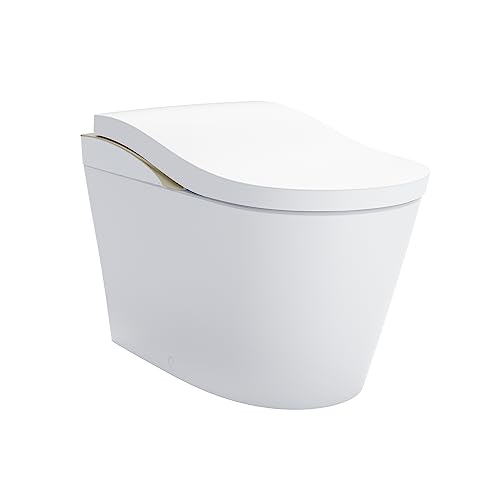
A luxury bidet is judged on a different set of criteria than a standard seat: automatic lid function, a full remote-controlled preset…
Read the guide