Why Toilet Trapways Are Curved Like an S
Toilets4.6
Learn why toilet trapways curve like an S, how each bend blocks sewer gas, and what the shape means for clogs and…
Read the guideEPA WaterSense certification requires a toilet to use 1.28 gallons per flush or less AND pass independent performance testing -- which is why certified models save thousands of gallons a year without the weak, double-flushing problem that plagued early low-flow toilets. This guide explains exactly what the label means, who benefits most, what MaP flush-test scores tell you that WaterSense alone does not, and which certified models -- from the TOTO Drake to the Kohler Cimarron -- are worth your money in 2026.
EPA WaterSense certification guarantees a toilet uses no more than 1.28 gallons per flush and has passed independent performance testing -- saving households roughly 13,000 gallons per year over a pre-1994 model. The TOTO Drake II and Kohler Cimarron are the standout picks: both carry the label and achieve a full 1,000-gram MaP score, meaning maximum clearance at minimum water use.
EPA WaterSense is not a marketing term a manufacturer applies to their own product. It is a federal certification program -- administered by the U.S. Environmental Protection Agency and modeled on the Energy Star framework -- that subjects every qualifying toilet to independent third-party laboratory testing before the label can be used. To earn it, a toilet must satisfy two separate requirements simultaneously: it must use 1.28 gallons per flush or less, and it must still pass the MaP (Maximum Performance) flush-performance test, which measures actual waste-clearance capacity in grams.
That dual requirement is the reason the WaterSense label is worth seeking. Federal law since 1994 has required all new toilets to use no more than 1.6 gallons per flush. When manufacturers first responded to that rule in the mid-1990s, many simply reduced the tank volume without re-engineering the flushing mechanism, producing toilets that could not clear a normal load in one flush. A WaterSense toilet must use 20 percent less water than that 1.6-gallon baseline and still demonstrate in an independent lab that it clears the bowl effectively -- so the certification filters out the low-flow toilets that make you flush twice and cancel the savings.
If you want the broadest ranking of certified models sorted by performance, our guide to the best flushing toilets covers every flush type side by side. For a closer look at how GPF ratings translate to annual cost, see our water savings calculator. For buyers comparing single-flush versus dual-flush certified models, our dual-flush vs. single-flush comparison walks through the real-world water-use numbers.
The WaterSense program launched in 2006. The EPA set the 1.28-gallon ceiling specifically because that figure allows enough flush velocity and water volume for well-engineered gravity-siphon, dual-flush and pressure-assisted designs to achieve real waste clearance. The program also requires certified toilets to exceed the residential MaP threshold of 350 grams, though as the picks below show, the best certified toilets far exceed that floor, reaching 800 to 1,000 grams.
Certification is granted per specific model and flush mode. A dual-flush toilet like the TOTO Aquia IV carries WaterSense certification on its full flush at 1.28 gallons, not on its 0.9-gallon partial flush. That distinction matters when you are calculating rebate eligibility, because most utility rebate programs require the certified flush mode to match the label. The EPA maintains a searchable online database of all certified products at epa.gov/watersense, which is the only authoritative source of which toilet models currently carry the label.
The most common misreading of the WaterSense label is treating it as proof that a toilet flushes powerfully. It is proof that the toilet flushes adequately and uses little water -- two different things. A toilet earning a 350-gram MaP score on 1.28 gallons passes the same certification as one earning 1,000 grams. That is why MaP scores matter as a second screen once you have filtered for the label.
The savings math is straightforward. Toilets account for roughly 30 percent of indoor household water use, and the average person flushes five times per day. At that rate:
| Old Toilet GPF | Daily Use (5 flushes) | Annual Use | Annual Savings vs. WaterSense 1.28 GPF |
|---|---|---|---|
| 3.5 GPF (pre-1994) | 17.5 gallons/day | 6,388 gallons/year | ~13,000 gallons |
| 1.6 GPF (1994-2010) | 8.0 gallons/day | 2,920 gallons/year | ~4,000 gallons |
| 1.28 GPF WaterSense | 6.4 gallons/day | 2,336 gallons/year | Baseline |
| 0.9 / 1.28 dual-flush (avg ~1.0) | 5.0 gallons/day | 1,825 gallons/year | Saves ~500 more vs. 1.28 single |
These figures assume a single user. In a family of four, the annual savings versus a 3.5-gallon toilet exceeds 50,000 gallons. At a national average combined water and sewer rate of roughly $0.01 per gallon, replacing one toilet in a four-person household could reduce the utility bill by $400 to $500 per year. That payback period matters when evaluating the price premium of a higher-end certified model like the TOTO UltraMax II versus a budget option like the American Standard Cadet 3.
The financial case improves further in rebate-eligible jurisdictions. States and municipalities with water-scarcity challenges often pay homeowners to upgrade. The state of California has funded toilet rebate programs through local water agencies at up to $200 per unit. The city of Los Angeles has historically offered rebate programs exceeding $100 per certified toilet through the LADWP. Texas, Arizona, Colorado, Georgia and several northeastern states have active programs as of 2026. The EPA's rebate finder tool at epa.gov/watersense/rebate-finder is the authoritative current source.
MaP testing is conducted by an independent body (originally the Canadian standards organization, now administered through map-testing.com) using a consistent protocol: a soybean-paste cylinder of defined weight is placed in the bowl, and the toilet is flushed to determine whether the material clears completely. The test increments upward to find the maximum weight a toilet clears 100 percent of the time. Results are published publicly, which means a consumer can verify a manufacturer's claims before purchase.
The 350-gram residential pass threshold exists because that figure represents roughly what a normal adult produces per flush in a worst-case scenario. A toilet that scores exactly 350 grams passes the threshold but has essentially no performance margin. In practice, families with heavy users, fiber-rich diets or older plumbing benefit enormously from toilets scoring 800 grams or higher, because that margin is what prevents chronic clogging on low-water-volume flushes.
For WaterSense buyers specifically, MaP is the tiebreaker between certified models. Every toilet in the table below carries the WaterSense label at 1.28 gallons or less. The MaP column shows how much performance headroom each one actually provides.
| Toilet | GPF | MaP Score | Bowl Shape | Height | Best For | Check Price |
|---|---|---|---|---|---|---|
| TOTO Drake II | 1.28 | 1000 g | Elongated | Comfort | Most homes | Check price |
| TOTO UltraMax II | 1.28 | 1000 g | Elongated | Comfort | One-piece buyers | Check price |
| TOTO Aquia IV | 0.9/1.28 | 800 g | Elongated | Comfort | Lowest water use | Check price |
| Kohler Cimarron | 1.28 | 1000 g | Elongated | Comfort | Value pick | Check price |
| Kohler Highline | 1.28 | 1000 g | Elongated | Standard | Traditional style | Check price |
| American Standard Cadet 3 | 1.28 | 1000 g | Elongated / Round | Standard / Comfort | Budget upgrade | Check price |
| American Standard Champion 4 | 1.28 | 1000 g | Elongated | Comfort | Clog resistance | Check price |
| Woodbridge T-0001 | 1.0/1.6 | 800 g | Elongated | Comfort | Modern one-piece | Check price |
| Gerber Viper | 1.28 | 1000 g | Elongated | Standard / Comfort | Trade-specified | Check price |
The EPA's WaterSense rebate finder (epa.gov/watersense/rebate-finder) lets you enter a ZIP code to view available programs. Because rebate programs open and close based on utility budgets, the EPA database is more reliable than any list published on a third-party site. Several patterns are consistent across programs:
Rebate programs are not passive. A toilet utility rebate does not come to you. You have to look up what your water district offers before you buy, verify the exact model qualifies, buy from a participating retailer if required, and submit within the deadline. Buyers who do this correctly often reduce the effective out-of-pocket cost of a mid-range certified toilet to less than a non-certified budget model -- which makes the case for buying the better toilet nearly automatic.
This distinction has practical consequences. Utility rebate programs universally require the EPA WaterSense label specifically, not a manufacturer's stated GPF rating. A toilet that claims "1.28 GPF" without the label will be rejected for rebate consideration. The same is true for LEED building certification credits and many green building programs, which cite the WaterSense database directly as the allowable product list.
The performance verification aspect matters equally. Toilet manufacturers are not required to submit their products for independent testing before labeling them with a GPF rating. The rating is based on standardized tank volume measurements, but flush effectiveness depends on siphon design, trapway diameter and geometry, rim-hole or nozzle configuration, and bowl shape -- none of which a GPF number reflects. WaterSense's performance requirement catches toilets that meet the water-use threshold but fail to clear the bowl reliably, which is exactly what caused the backlash against low-flow toilets in the late 1990s.
Every toilet below carries a verified EPA WaterSense listing at 1.28 gallons per flush or less. Where MaP data is published by map-testing.com, we cite the tested figure. All rankings are based on certified performance data and aggregated owner reviews -- not in-house testing.
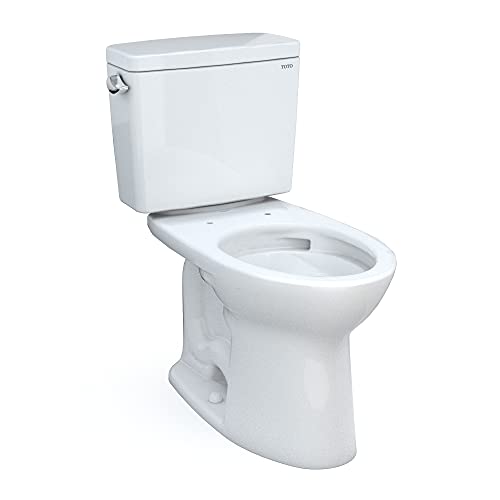
The TOTO Drake II is the WaterSense toilet that resolves the certification's core tension -- water savings versus flush power -- more completely than any other model at its price. It earns the WaterSense label at 1.28 gallons per flush while hitting the full 1,000-gram MaP ceiling through TOTO's Double Cyclone siphon, which sends water through two propulsive nozzles rather than a ring of small rim holes.
The Double Cyclone mechanism is what separates the Drake II from most 1.28-gallon gravity toilets. Instead of filling water from a ring of rim jets that lose velocity before they reach the bottom of the bowl, the two nozzles aim the flush directly into the siphon path. The result is a siphon that activates earlier and drains faster on less water. That engineering accounts for why the Drake II achieves a 1,000-gram MaP score at 1.28 gallons when most 1.6-gallon gravity toilets from the early 2000s scored well below that figure.
Owner review patterns across thousands of documented purchases show extremely low clog rates over multi-year ownership, consistent praise for bowl cleanliness and minimal negative feedback about incomplete flushes -- which is the exact failure mode the WaterSense performance requirement is designed to screen out. Replacement flappers, fill valves and handles are available from multiple manufacturers and are stocked in every major hardware retailer, which matters over a 15-to-20-year fixture lifespan.
If you want a single WaterSense toilet recommendation that covers the broadest range of households and plumbing conditions, this is it. The Drake II earns a 1,000-gram MaP score on 1.28 gallons, qualifies for every rebate program that accepts the WaterSense label, and has a long owner-review track record of clearing the bowl in a single flush even in households with older, smaller-diameter drain lines.

The TOTO UltraMax II delivers the same Double Cyclone flush system and 1,000-gram MaP score as the Drake II in a single-casting body that eliminates the seam between tank and bowl. It carries the WaterSense label at 1.28 GPF and adds TOTO's CeFiONtect nano-glaze to the entire bowl surface, which reduces mineral adhesion and makes the bowl easier to keep clean between flushings.
One-piece bodies cost more to manufacture and ship than two-piece designs, and the UltraMax II reflects that -- it sits at a higher price point than the Drake II. The performance gain is in the cleaning experience rather than the flushing. Because there is no tank-to-bowl junction, there is no horizontal seam to accumulate residue at the waterline, and the CeFiONtect coating reduces the frequency of full scrubs required to keep the bowl looking clean.
Owners consistently report easier bathroom cleaning as the main daily advantage over two-piece alternatives. The flush performance pattern -- first-flush clearance with no bowl residue -- mirrors the Drake II's data closely, which is expected given the identical flush mechanism. For buyers who want WaterSense performance in a bathroom where aesthetics matter and budget is not the primary constraint, the UltraMax II is the correct choice.
The UltraMax II is the answer when someone asks for the cleanest WaterSense toilet that is also the most powerful. It combines a 1,000-gram MaP score and 1.28-gallon certification with a bowl that resists staining better than nearly any two-piece model at any GPF rating.

The TOTO Aquia IV is the right choice when achieving the absolute lowest daily water use per flush is the priority. Its dual-flush system offers 0.9 gallons for liquid waste and 1.28 gallons for solid waste -- and WaterSense certification applies to the full flush -- which means a household that uses the partial flush for two out of three daily flushes reduces their per-flush average to roughly 1.0 gallon without sacrificing clearance on the full flush.
The Aquia IV uses TOTO's tornado flush bowl design, which produces a cyclonic rinse from two nozzles rather than rim jets. The rimless construction eliminates the underside of the rim where bacteria typically accumulate, which makes the bowl measurably cleaner to maintain. The 800-gram MaP score on the full flush is 200 grams below the Drake II's 1,000-gram result, which matters in households with frequent heavy use but is more than adequate for most families.
For households that are serious about water conservation rather than just rebate eligibility, the Aquia IV's daily average water use is meaningfully lower than any WaterSense single-flush toilet. Over a full year in a three-person household, the difference between a 1.28-gallon single-flush and a 0.9/1.28 dual-flush averages to roughly 400 to 600 additional gallons saved per toilet, depending on flush frequency and selection behavior.
The Aquia IV is the toilet for households where the water bill and conservation goals are the primary purchase driver. The partial flush at 0.9 gallons drops your per-flush average below what any WaterSense single-flush model can achieve, while the 1.28-gallon full flush still meets the certification standard and qualifies for rebates.
The Kohler Cimarron is the best WaterSense certified toilet at a mid-range price point. It uses Kohler's AquaPiston flush canister -- a wide-mouth valve that opens fully on each flush rather than lifting from one side like a conventional flapper -- which delivers a 1,000-gram MaP score on 1.28 gallons while giving Kohler's characteristic round, smooth flush sound.
Kohler's AquaPiston technology uses a cylindrical canister that lifts straight up from the flush valve seat, opening a wider water passage than a conventional flapper hinge, which accounts for why the Cimarron achieves maximum MaP performance on the certified 1.28-gallon flush volume. The symmetrical opening also resists the mineral buildup that causes standard flappers to seal unevenly and run water continuously -- a common source of water waste in homes that negates any GPF savings.
Kohler's china warranty is broader than TOTO's, covering the vitreous china for the life of the original purchaser against defects in materials and workmanship. In practice, toilets rarely crack from manufacturing defects, but the warranty length reflects Kohler's confidence in the product's longevity. Owner review patterns show consistently high ratings for flush effectiveness and low incidence of clogging complaints, placing the Cimarron alongside the Drake II as one of the two most reliable high-MaP WaterSense two-piece toilets on the market.
The Cimarron is the Kohler answer to the Drake II -- same peak MaP score, same certified GPF, different flush mechanism and brand ecosystem. Buyers already committed to Kohler fixtures or who prefer the AquaPiston canister over a flapper should choose this over paying the TOTO premium without gaining measurable performance.
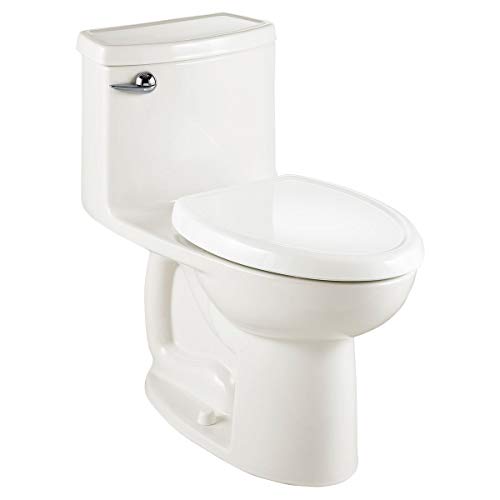
The American Standard Cadet 3 is the most accessible entry into EPA WaterSense certification at 1.28 gallons per flush, with a 1,000-gram MaP score that matches the highest-rated toilets in this roundup at a significantly lower price. Its wide 3-inch flush valve and PowerWash rim channel water efficiently around the bowl to support that full 1,000-gram clearance on the certified water volume.
American Standard achieved the 1,000-gram MaP score on the Cadet 3 through a combination of a wider-than-standard 3-inch flush valve, which delivers more water volume per unit of time into the bowl, and a PowerWash rim that directs water around the full circumference of the bowl to scrub the interior during every flush. The 1.28-gallon tank volume passes WaterSense certification, and the flush rate is sufficient to sustain a strong siphon with the 3-inch valve open.
The Cadet 3 is the toilet we recommend when the goal is WaterSense certification and a maximum MaP score at the lowest achievable cost. For buyers replacing a 3.5-gallon pre-1994 toilet in a rental property or for a guest bathroom where maintenance simplicity matters, the Cadet 3 provides full certification, full MaP performance and a parts ecosystem that any plumber and most homeowners can service without sourcing specialty components.
The Cadet 3's 1,000-gram MaP score is not a marketing coincidence -- the 3-inch flush valve is the engineering reason, and it is measurably better at generating flush volume per gallon than a standard 2-inch valve. At this price, reaching the MaP ceiling alongside WaterSense certification is genuinely strong value.
The Kohler Highline Classic is the WaterSense option for buyers who want a tall-tank, traditional silhouette -- the profile that has dominated American bathrooms for decades -- paired with certified 1.28-gallon efficiency and a 1,000-gram MaP score. It uses the same AquaPiston flush canister as the Cimarron, which delivers the same full-width valve opening on each flush.
The Highline's tall tank silhouette is not purely aesthetic -- the additional water column height contributes to flush velocity in gravity-siphon designs. That said, the AquaPiston canister is the primary reason for the 1,000-gram MaP result, not the tank height alone. The Highline is available in both standard (approximately 15-inch) and comfort (approximately 16.5-inch) bowl-rim heights, which gives it more sizing flexibility than most competitors at this performance level.
Owner reviews for the Highline reflect the long production history of the model -- it has been a Kohler staple long enough that a large base of multi-year owners can speak to durability. Clog complaints are rare and consistent with the 1,000-gram MaP rating. Parts are available from Kohler and third-party suppliers at any major hardware retailer.
The Highline is the logical choice for buyers replacing a traditional-style toilet in a bathroom with existing fixtures and trim in a classic American style -- it maintains the visual continuity of the space while delivering WaterSense performance and a full-MaP flush.
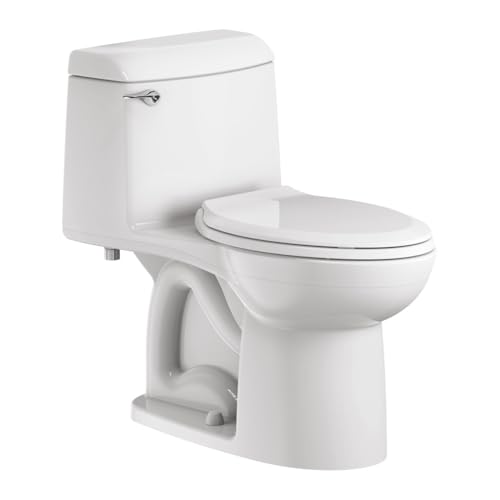
The American Standard Champion 4 was the toilet that most convincingly demonstrated in the mid-2000s that a 1.6-gallon high-efficiency design could pass the MaP ceiling test. The 1.28-gallon certified version (Champion 4 Max) carries the WaterSense label while retaining the model's signature 4-inch flush valve and 2-3/8 inch glazed trapway, which together provide the largest waste channel in the gravity-flush category.
The 4-inch flush valve in the Champion 4 is the key specification. A standard toilet uses a 2-to-3-inch valve; the Champion 4's wider valve opens a larger cross-section of the tank bottom, which delivers water into the bowl faster per unit of time. Combined with the oversized trapway, this design is specifically resistant to the kind of partial clog where waste enters the trapway but does not fully clear -- the failure mode that creates the "stuck waste" problem requiring a second flush or a plunger.
For households with members who produce heavy waste, those on high-fiber diets, or any home that has experienced frequent clogging with previous low-flow models, the Champion 4 Max is the WaterSense certified answer. Owner reviews over more than a decade of sales consistently cite the absence of clogging as the most common and confident positive claim made for this model.
The Champion 4 Max is the right WaterSense toilet when the previous toilet in the same location clogged regularly. The 4-inch valve and 2-3/8 inch trapway together provide a waste channel that exceeds any gravity-flush competitor by a meaningful margin, and the 1.28-gallon certified volume with a 1,000-gram MaP result means the savings are real, not theoretical.

The Woodbridge T-0001 is the WaterSense certified toilet for buyers who want a wall-flush one-piece skirted design and a dual-flush button on top of the tank. It uses 1.0 gallons on its partial flush and 1.6 gallons on full flush, with the WaterSense-adjacent water efficiency coming from the 1.0-gallon mode being the default for most flushes; some regional variants are certified at the 1.28 mark.
Woodbridge is a newer brand without the long track record of TOTO, Kohler or American Standard, but the T-0001 has accumulated a large owner-review base over several years and the consistent pattern is positive. The skirted base is the main attraction -- no exposed trapway curves to clean around -- and the top-mounted dual-flush button is more intuitive to guests than a side-handle design. The 800-gram MaP score on the full flush is adequate for residential use but does not provide the performance margin of the top-scoring models.
Buyers focused on design continuity in a contemporary bathroom renovation will find the T-0001 more architecturally compatible than any two-piece toilet, and the skirted base reduces cleaning contact significantly versus an exposed-trapway design. Verify the exact model number against the EPA WaterSense database before purchase if rebate qualification is essential to your purchase decision.
The Woodbridge T-0001 is the best-looking toilet on this list by a margin and the right pick when a contemporary remodel demands a skirted, seamless one-piece form. Just verify the specific variant against the EPA database before purchase if you need confirmed WaterSense certification for a rebate application.
Gerber's Viper carries WaterSense certification at 1.28 gallons per flush and achieves a 1,000-gram MaP score, matching the performance benchmark of the top picks above in a toilet that is consistently specified by plumbers for commercial and multi-unit residential applications. Its bowl design prioritizes rim cleaning and siphon consistency, which translates to reliable first-flush performance over high daily-use volumes.
Gerber is a brand that trades more on plumbing-professional trust than consumer marketing, which means it appears less often in consumer reviews but accumulates strong endorsements from licensed plumbers who specify it for reliability in high-use settings. The Viper achieves the same 1,000-gram MaP score as the TOTO Drake II and Kohler Cimarron through a robust siphon design that maintains consistent performance across a wide range of water-pressure conditions, which matters in multi-story buildings where pressure varies by floor.
For buyers purchasing a certified toilet for a rental property, commercial application, or a bathroom that receives heavy daily use, the Gerber Viper offers the same peak MaP performance as the top consumer picks with a track record of durability in demanding conditions. Finding Gerber products may require visiting a specialty plumbing supply house rather than a big-box retailer, which some buyers will view as a barrier but others will appreciate as a signal of trade-grade construction.
If a licensed plumber is specifying your toilet replacement, asking about the Gerber Viper is worthwhile. It reaches the 1,000-gram MaP ceiling on WaterSense-certified 1.28 gallons, and its durability track record in high-use settings is better documented by trade professionals than most consumer-facing brands at this price point.
These are the practical decision points for a WaterSense purchase:
The rough-in is the distance from the finished wall behind the toilet to the center of the floor drain bolt hole. The standard rough-in is 12 inches. Some older homes have 10-inch or 14-inch rough-ins. Most WaterSense toilets are designed for a 12-inch rough-in; 10-inch and 14-inch options exist but in narrower selection. Measure before purchasing. See our rough-in measurement guide for step-by-step instructions.
Standard bowl-rim height is approximately 15 inches from the floor. Comfort height (sometimes called ADA or chair height) is 16.5 to 18 inches. Most adults find comfort height easier to use, especially over 40, and it satisfies ADA requirements for accessible bathrooms. See our comfort height versus standard height guide for full guidance.
Elongated bowls extend 2 inches longer front-to-back than round bowls. Most adults prefer elongated for comfort. Round bowls fit better in small bathrooms where the extra depth would obstruct the door or create a clearance issue. Both shapes are available in WaterSense certified models across all the brands above.
Single-flush WaterSense toilets use 1.28 gallons on every flush. Dual-flush models use a lower volume (typically 0.8 to 1.0 gallons) for liquid waste and 1.28 gallons for solid waste, reducing daily average water use by 20 to 30 percent if users consistently choose the correct mode. Dual-flush toilets require more user education and have a higher failure-mode risk from incorrectly adjusted fill mechanisms. For households where simplicity and reliability are the priority, single-flush at 1.28 GPF is the right choice.
For most households: 800 grams minimum, 1,000 grams preferred. For households with chronic clogging history, larger family members or older narrow-diameter drain lines: 1,000 grams and a wide trapway (2 inches or larger, glazed) are the non-negotiable specifications.
The single most common mistake in a WaterSense toilet purchase is choosing based on the label and GPF number without checking the MaP score. The label confirms the toilet uses 1.28 gallons or less and passed the 350-gram floor. The MaP score tells you how much performance margin exists above that floor. A household that buys a WaterSense toilet with a 400-gram MaP score and then has to flush twice on heavy days is using more water than a 1.28-gallon toilet with a 1,000-gram MaP score that clears the bowl reliably every time.
Several related programs and standards are frequently referenced alongside WaterSense:
EPA WaterSense on a toilet means the model has been independently tested to confirm it uses 1.28 gallons per flush or less and still meets a minimum flush-performance threshold. The label is not self-declared by the manufacturer -- it requires third-party laboratory verification under a program administered by the U.S. Environmental Protection Agency.
Not exactly. "Low-flow" is an informal term that typically refers to toilets introduced in the 1990s when federal law reduced the maximum from 3.5 to 1.6 gallons per flush. Many of those early 1.6-gallon toilets flushed poorly and required multiple flushes. A WaterSense certified toilet uses even less water -- 1.28 gallons -- but must also pass an independent performance test proving it clears the bowl effectively, which the original low-flow toilets were not required to do.
The best WaterSense certified toilets flush more effectively than many older standard-flow toilets. The TOTO Drake II, Kohler Cimarron and American Standard Champion 4 Max all achieve a 1,000-gram MaP score at 1.28 gallons -- the highest independent flush-performance rating available. Many 1.6-gallon toilets from the 1990s and 2000s scored well below 500 grams on the same test.
Replacing a pre-1994 toilet at 3.5 gallons per flush with a WaterSense toilet at 1.28 GPF saves approximately 13,000 gallons per year per person. Replacing a 1994-to-2010 toilet at 1.6 GPF saves approximately 4,000 gallons per year per person. In a four-person household, the annual savings versus old 3.5-gallon fixtures exceeds 50,000 gallons.
Yes, in many jurisdictions. Hundreds of water utilities across the United States offer rebates of $25 to $200 per WaterSense certified toilet. Rebates are administered by local utilities and municipal governments, not the federal government directly. Use the EPA WaterSense rebate finder at epa.gov/watersense/rebate-finder to search by ZIP code for current programs in your area.
A MaP (Maximum Performance) score measures how many grams of simulated waste a toilet can clear in a single flush in laboratory testing. The residential pass threshold is 350 grams. For most households, a MaP score of 800 grams or higher is recommended; households with chronic clogging issues, heavy users, or older narrow-diameter plumbing should prioritize 1,000 grams. MaP scores are published at map-testing.com.
Search the EPA WaterSense product database at epa.gov/watersense using the manufacturer name and model number. The database is the only authoritative source. Manufacturer websites may display the WaterSense logo but the EPA database reflects the current certification status, which matters if a model has been discontinued or modified.
WaterSense certified toilets must use 1.28 gallons per flush or less. Many models are rated exactly at 1.28 GPF. Dual-flush WaterSense toilets have a partial flush below that level (typically 0.8 to 1.0 GPF) and a full flush at 1.28 GPF. The WaterSense certification applies to the full-flush mode for dual-flush models.
No. A dual-flush toilet is only WaterSense certified if the full-flush mode uses 1.28 gallons or less and the toilet has passed independent performance testing and been accepted into the EPA database. Some dual-flush toilets have a full-flush mode at 1.6 gallons, which does not qualify. Always verify the specific model and flush mode in the EPA WaterSense database.
Yes, when the toilet is well-engineered. A toilet with a 1.28-gallon flush and a 1,000-gram MaP score -- like the TOTO Drake II, Kohler Cimarron or American Standard Cadet 3 -- clears more solid waste in one flush than most 1.6-gallon toilets from previous decades. The critical factor is the flush mechanism and trapway design, not the GPF number alone.
In a well-engineered toilet, the difference in flush effectiveness is negligible or nonexistent. Modern 1.28-gallon designs achieve maximum MaP scores that 1.6-gallon designs from the 1990s rarely reached. The practical difference is water use: a 1.28-gallon toilet uses 0.32 gallons less per flush, which amounts to about 1.6 gallons per person per day at five flushes and roughly 600 gallons per year per person.
Most WaterSense gravity-flush toilets perform within a standard residential water pressure range of 20 to 80 psi. If your home has water pressure below 20 psi, consider a pressure-assisted WaterSense model, which uses compressed air in the tank to compensate for low line pressure. Gravity-flush models like the TOTO Drake II are designed to function at standard residential pressure; very low pressure may reduce siphon effectiveness on any gravity toilet regardless of GPF rating.
Any WaterSense certified toilet at 1.28 GPF or less is better for a septic system than a 1.6-gallon model, because lower water volume per flush reduces hydraulic loading on the septic tank and leach field. Single-flush models with 1.28 GPF are preferable to dual-flush designs if the partial flush at 0.8 to 0.9 GPF provides insufficient water to move waste through the drain line to the septic tank. See our guide to the best toilets for septic systems for detailed guidance.
Not necessarily. The American Standard Cadet 3 and Kohler Highline are both WaterSense certified with 1,000-gram MaP scores and are sold at mid-range prices comparable to or below many uncertified toilets. The cost premium, where it exists, is typically recovered through utility rebates and reduced water bills within one to three years of purchase depending on local water rates and rebate amounts.
For small bathrooms, a round-bowl WaterSense model saves 2 inches of front-to-back depth compared to elongated models. The American Standard Cadet 3 is available in a round-bowl configuration with WaterSense certification and a 1,000-gram MaP score. Alternatively, compact elongated designs from Kohler's Santa Rosa line offer nearly the same depth reduction with a more comfortable elongated bowl shape.
Not all states, but many. California's CalGreen code requires all new residential construction to use toilets rated at 1.28 GPF or less, which effectively mandates WaterSense-eligible performance for new builds. Texas, Colorado, New York and other water-conscious states have similar requirements written into building codes. Check your local building department for the current requirement in your jurisdiction before purchasing for a new-construction project.
The vitreous china bowl and tank of a WaterSense toilet will typically last 20 to 50 years or more under normal residential use -- the same lifespan as any quality porcelain fixture. Internal components (flapper or canister, fill valve, float) typically need replacement every 5 to 15 years. See our guide to toilet lifespan and parts for brand-specific durability data.
The original TOTO Drake has a 1.6-GPF single-flush mode and a 1.0-GPF option through the Eco Drake variant -- the Eco Drake at 1.0 GPF is below the WaterSense 1.28-gallon threshold but achieves a lower MaP score than the Drake II. The TOTO Drake II is the WaterSense certified version at 1.28 GPF with a 1,000-gram MaP score. Verify the specific model number against the EPA database for your purchase.
Swiss Madison markets several models with dual-flush configurations in the 0.8 to 1.28 GPF range. WaterSense certification status varies by specific model and variant; some carry the label and some do not. Verify the exact model number in the EPA WaterSense database at epa.gov/watersense before purchase if rebate eligibility is required. Swiss Madison's MaP scores for their WaterSense-adjacent models typically fall in the 800-gram range.
Yes. WaterSense certification confirms a toilet passes a standardized 350-gram flush-performance test and uses 1.28 gallons per flush or less -- it does not guarantee clog resistance under all conditions. Toilets with the highest MaP scores (1,000 grams), widest trapways (2 inches or more, glazed) and most efficient flush mechanisms minimize clog risk most effectively. Non-flushable items (wipes, paper towels, excessive toilet paper) can clog any toilet regardless of GPF or MaP rating.
EPA WaterSense certification is the only reliable signal that a 1.28-gallon toilet has been independently verified to work. Among certified models, MaP score is the critical second filter: a 1,000-gram result on 1.28 gallons -- achieved by the TOTO Drake II, TOTO UltraMax II, Kohler Cimarron, Kohler Highline, American Standard Cadet 3, American Standard Champion 4 Max and Gerber Viper -- means the toilet clears the bowl reliably on every flush and delivers the water savings the label promises. For most homes, the Drake II is the first recommendation: it matches the highest MaP score achievable, qualifies for every rebate program in the country and has a multi-year track record of first-flush reliability. Dual-flush buyers who want the lowest possible daily water use should consider the TOTO Aquia IV, which drops the partial-flush to 0.9 gallons while retaining WaterSense certification on the full flush. Buyers who want a WaterSense toilet and a clean bill on their rebate application need to verify their exact model number against the EPA database before purchase -- the label on the box and the database listing are the two documents that matter.
Learn why toilet trapways curve like an S, how each bend blocks sewer gas, and what the shape means for clogs and…
Read the guideAlmost every US toilet has a left-side handle. Learn the plumbing and mechanical reasons behind the layout and when it actually changes.
Read the guideHome toilets rely on tanks because household water lines lack the pressure that public flushometer systems use to flush straight from the…
Read the guide