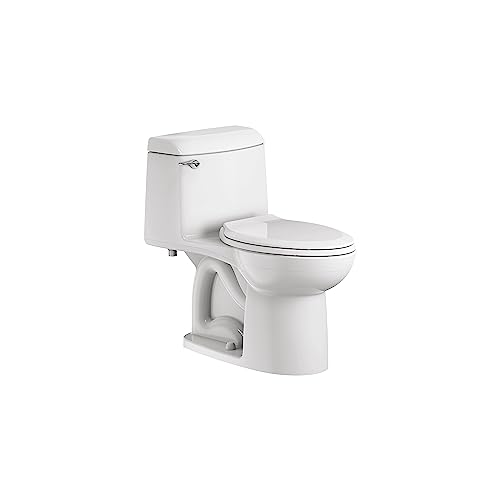


Why Toilet Trapways Are Curved Like an S
Toilets4.6
Learn why toilet trapways curve like an S, how each bend blocks sewer gas, and what the shape means for clogs and…
Read the guideFederal tax credits, state utility rebates, and local programs that put real cash back in your pocket when you upgrade to an EPA WaterSense-certified toilet. Updated June 2026.
In 2026, most homeowners can recover $25 to $200 per toilet through utility rebates, state programs, or municipal incentives when upgrading to an EPA WaterSense model using 1.28 GPF or less. Some California and Colorado programs stack multiple rebates, pushing the total above $300 on qualifying high-efficiency dual-flush models.
Replacing an old 3.5 GPF or 1.6 GPF toilet with a WaterSense-certified model that flushes at 1.28 GPF or lower is one of the fastest-payback home upgrades available. The toilet itself costs less than it did five years ago, water rates have risen, and the rebate landscape has expanded considerably since 2023. If you navigate the programs correctly, you may offset 20 to 60 percent of the purchase price before a single flush.
This guide explains every rebate category, how to qualify, which toilet models are most likely to be covered, and exactly how to file claims. We draw on published EPA data, utility program databases, and publicly available state program documentation.
The EPA WaterSense program itself does not issue rebates directly; it certifies toilets that use no more than 1.28 gallons per flush (GPF) and meet minimum flush performance standards. Rebates are offered by utilities, municipalities, and state water agencies that use the WaterSense certification as their eligibility benchmark. Any homeowner, landlord, or small-business owner served by a participating utility who installs a WaterSense-labeled toilet can typically apply.
Since the WaterSense label was introduced in 2006, more than 4.5 billion gallons of water have been saved daily across the United States, according to EPA estimates. Utilities pass a portion of those savings back to customers because deferred infrastructure investment is worth more than the rebate cost. That economic logic is why rebate programs continue to grow even as toilet prices fall.
The certification process requires third-party laboratory verification. A toilet must clear at least 350 grams of solid waste per flush under the MaP (Maximum Performance) testing protocol and use no more than 1.28 GPF. Many WaterSense toilets perform well above 350 grams; the TOTO Drake II, for instance, achieves a MaP score of 1,000 grams at 1.28 GPF, which is the maximum measurable score.
Water resource managers at major utilities consistently note that toilet replacement rebates achieve a lower cost-per-gallon-saved than almost any other residential conservation measure. The administrative overhead is low, customer participation is high, and the water savings are permanent for the life of the fixture. That is why even utilities in water-rich states have adopted rebate programs modeled on those in drought-affected regions.
Rebate amounts in 2026 range from $25 at smaller municipal utilities to $200 per toilet at major California water districts, with some stacked programs reaching $300 or more when a federal or state credit is combined with a local utility rebate. The national average for a single-toilet residential rebate is approximately $75 to $100 based on published utility program schedules.
Here is a breakdown of what you can realistically expect by rebate category:
| Rebate Type | Typical Range | Maximum per Household | Who Offers It | Key Requirement |
|---|---|---|---|---|
| State Water Agency (CA, CO, TX) | $75 to $200 | $600 (3 toilets) | Metropolitan Water District, Denver Water, SAWS | WaterSense label, 1.28 GPF or less |
| Local Municipal Utility | $25 to $100 | $300 (3 toilets) | City utility departments | WaterSense label, receipt required |
| Investor-Owned Utility | $50 to $150 | $450 (3 toilets) | Southern California Edison, Arizona PSE | WaterSense, account holder in service area |
| High-Efficiency Bonus | +$25 to +$75 | Varies | Select CA and CO districts | Dual flush, 0.8/1.0 GPF or 0.8/1.28 GPF |
| Low-Income Supplemental | $100 to $300 | Full replacement cost | State weatherization programs | Income qualification, pre-inspection |
Note that most programs apply only to replacing existing toilets, not to new construction. You typically must show that the toilet being replaced used more than 1.6 GPF. If your home was built before 1994 and still has original plumbing, you likely qualify automatically, since pre-Energy Policy Act fixtures used 3.5 to 7 gallons per flush.
California, Colorado, Texas, Arizona, and Washington lead the country in toilet rebate generosity and program availability in 2026. California's Metropolitan Water District and many regional water agencies offer $75 to $200 per toilet, and the state's own WaterSense promotion grants supplement local programs. Colorado's Denver Water has maintained a $75 per unit rebate continuously since 2018 and expanded it to cover multi-unit buildings in 2025.
California: The Metropolitan Water District of Southern California offers up to $200 per toilet for high-efficiency models and has a separate tiered rebate for ultra-low-flush (ULF) models at 0.8 GPF. EBMUD (East Bay Municipal Utility District) provides $100 per toilet with no household cap on the number of units. The California Energy Commission does not offer a separate toilet rebate, but several California utilities stack a state infrastructure credit that adds $25 per qualifying unit. You can search for your specific water agency's program at savemywater.org, the statewide conservation rebate portal.
Colorado: Denver Water's rebate stands at $75 per toilet in 2026, applicable to residential customers replacing toilets that flush at more than 1.6 GPF. Colorado Springs Utilities offers $50. The Colorado Water Conservation Board provides supplemental grants to utilities that run conservation programs, which means some smaller Front Range utilities offer rebates they would not otherwise fund independently.
Texas: San Antonio Water System (SAWS) has one of the longest-running toilet rebate programs in the United States, offering $100 per toilet for WaterSense models. Austin Water offers $100 for single-flush and $150 for dual-flush WaterSense toilets. Dallas Water Utilities provides $75 per unit. In 2025, the Texas Water Development Board expanded low-income fixture replacement grants, which can cover the full cost of a WaterSense toilet plus labor for qualifying households.
Arizona: Salt River Project and Arizona Public Service both include toilet rebates in their conservation bundles. The Tucson Water rebate is $75 per toilet for WaterSense models. Phoenix Water Services has run an intermittent rebate program that was active through early 2026; check the current program status directly with the city.
Washington: Tacoma Public Utilities offers $50 per toilet. Seattle Public Utilities offers $75 for dual-flush WaterSense models. For a full list of Washington programs, see our detailed Washington toilet rebate guide.
Other states with active programs: Georgia (Atlanta watershed programs), Nevada (Southern Nevada Water Authority at $100 per toilet), Florida (Tampa Bay Water), and Oregon (Portland Water Bureau). The EPA's WaterSense rebate finder at epa.gov/watersense/rebate-finder is the most current reference for national program availability.
Utility program managers note that toilet rebate budgets are often exhausted before the program year ends, particularly in California and Texas. Filing your rebate claim within 30 days of purchase substantially increases the likelihood of approval. Some programs, including SAWS, operate on a first-come, first-served basis with annual funding caps.
A standard residential toilet replacement does not qualify for the federal Residential Clean Energy Credit or the Energy Efficient Home Improvement Credit (Section 25C) under the Inflation Reduction Act, because those credits are limited to energy-related improvements such as insulation, heat pumps, windows, and biomass stoves. However, toilets installed as part of a qualifying low-income weatherization project may be covered by federal Weatherization Assistance Program (WAP) funding administered by the Department of Energy.
This is one of the most common misconceptions about toilet rebates. The Inflation Reduction Act of 2022 expanded home improvement tax credits significantly but did not extend them to plumbing fixtures. The 30 percent credit available for certain energy upgrades does not cover WaterSense toilets, regardless of how efficient they are.
What does exist at the federal level is the WaterSense program's network of partnering utilities, many of which receive EPA grants to fund their local rebate programs. So while the federal government does not issue a check directly to homeowners for toilet replacements, it subsidizes many of the utility programs that do. The practical effect is that federal money flows through state and local programs rather than arriving as a direct tax credit.
If your household qualifies for the Weatherization Assistance Program (income at or below 200 percent of the federal poverty level), a WAP energy auditor may recommend and fund toilet replacement as part of a broader water-energy efficiency package. In climates where water heating is a significant energy cost, reducing hot water toilet-flushing events can qualify the toilet as an energy conservation measure under program guidelines.
The standard process involves four steps: verify your utility's active program, purchase a WaterSense-labeled toilet and keep all receipts, complete the rebate application form (usually available on the utility's website), and submit the form with a copy of your receipt and the toilet's WaterSense label or model number within the program's claim window, typically 60 to 90 days from purchase. Processing times range from 4 to 12 weeks.
Here is the complete step-by-step process to maximize your rebate:
Step 1 - Find your program. Go to epa.gov/watersense/rebate-finder. Enter your ZIP code to see all active programs in your service area. Note the rebate amounts, claim windows, and whether the program requires pre-approval before purchase (rare but not unheard of in California).
Step 2 - Confirm eligible models. Most programs accept any EPA WaterSense-certified toilet. The WaterSense product search at epa.gov/watersense/product-search lets you filter by toilet type and confirm certification. Specific programs may restrict eligibility to certain model categories; for example, some California programs require dual-flush or HET (high-efficiency toilet) designation.
Step 3 - Purchase the toilet. Keep your itemized purchase receipt. If you buy from a big-box retailer, request an itemized receipt that clearly shows the model number and price. Online receipts from Home Depot, Lowe's, or Amazon print cleanly for rebate documentation. Keep the packaging or photograph the WaterSense label on the box; some programs require a photo of the label itself.
Step 4 - Remove and dispose of the old toilet properly. Some programs require proof of old toilet disposal to prevent people from flipping rebates on uncollected toilets. Options include taking a photo with the toilet removed and visibly no longer functional, or using a utility-sponsored pick-up event if one is offered. Denver Water, for example, has run free bulk toilet disposal events in coordination with local construction haulers.
Step 5 - Complete the rebate application. Most programs offer an online portal. You will need: your utility account number, your address, the toilet brand and model number, the GPF rating, and the purchase date and price. Attach scans of your receipt and the WaterSense label photo. Some utilities also ask for the plumber's license number if professional installation was used.
Step 6 - Track your claim. Most programs issue a confirmation number. Processing times vary from 4 weeks (SAWS) to 12 weeks (some California regional districts). Rebates are typically issued as a credit on your next water bill or as a mailed check. If you have not received anything after 12 weeks, contact the program directly with your claim number.
If you are upgrading multiple bathrooms, submit a separate rebate line item for each toilet rather than lumping them into one claim, as some programs process per-unit approvals and rejecting one does not automatically reject others.
| Document | Required By Most Programs | Notes |
|---|---|---|
| Purchase receipt (itemized) | Yes | Must show model number and price |
| WaterSense label photo | Often | From box or EPA product page |
| Utility account number | Yes | Found on your water bill |
| Old toilet proof of disposal | Some programs | Photo or haul-away receipt |
| Installation proof (if required) | Rarely | Plumber receipt or permit number |
Any EPA WaterSense-certified toilet qualifies for programs using the WaterSense standard as the eligibility criterion. That said, certain models appear frequently in utility rebate program guides because they combine strong rebate eligibility with high MaP scores and proven reliability. These are the models most commonly approved in rebate programs across the country in 2026.
For a comprehensive comparison of high-performance WaterSense options, see our best flushing toilets guide, which evaluates MaP scores, GPF ratings, and owner satisfaction together.
TOTO Drake II (CST454CEFG): One of the most widely installed WaterSense toilets in the United States. Flushes at 1.28 GPF with a MaP score of 1,000 grams. The Tornado Flush system uses a 3-inch flush valve and a wide water surface area that minimizes streak marks. Approved by every major rebate program that accepts the WaterSense standard. Available in elongated and round configurations. The Aquia IV is TOTO's flagship dual-flush offering at 0.8/1.28 GPF, which qualifies for high-efficiency bonus tiers in California programs.
Check price on Amazon
Kohler Cimarron (K-6418): Flushes at 1.28 GPF with a MaP score of 1,000 grams. Kohler's AquaPiston flush canister delivers a 360-degree water flow pattern, reducing clogs on high-use installations. Elongated, comfort-height design is suitable for ADA accessibility compliance when paired with a grab bar. Widely stocked at Home Depot and Lowe's, making post-purchase receipt documentation straightforward.
Check price on Amazon
American Standard Champion 4 (2034314.020): Uses 1.28 GPF and achieves a 1,000-gram MaP score. The Champion 4 features a 4-inch piston action accelerator flush valve, the largest flush valve in the residential market, and a fully glazed 2-3/8-inch trapway that American Standard claims is the widest available. This model is frequently specified in landlord and rental property rebate applications because its clog resistance reduces maintenance call-outs. See our full American Standard Champion 4 review for more detail.
Check price on Amazon
Kohler Highline (K-3999): An entry-level WaterSense toilet at 1.28 GPF with a MaP score of 800 grams. It is the most widely installed toilet model in new residential construction in the United States, which makes it a common rebate choice because contractors can purchase in bulk. Its modest MaP score means it performs adequately for average household use but may not match the Drake II or Champion 4 on demanding applications.
Check price on Amazon
Woodbridge T-0001: A one-piece elongated toilet at 1.28 GPF. WaterSense certified and MaP tested at 800 grams. The skirted trapway design with a concealed base is popular for bathroom renovation projects where aesthetics are a priority alongside water efficiency. The dual-flush variant (T-0001 DF) at 0.8/1.28 GPF qualifies for high-efficiency tier bonuses in California programs.
Check price on Amazon
American Standard Cadet 3 (2383.516): Flushes at 1.28 GPF with a MaP score of 1,000 grams. The FloWise technology uses a pressure-assisted valve mechanism that delivers consistent flush power without the noise associated with traditional pressure-assist tanks. Compact dimensions make it suitable for smaller bathrooms. It is one of the most commonly submitted models in East Coast utility rebate applications, particularly in states like Florida and Georgia. Read our American Standard Cadet 3 review for the full breakdown.
Check price on Amazon
Gerber Viper (21-302): A round-bowl single-flush toilet at 1.28 GPF with a MaP score of 1,000 grams. Gerber is often overlooked in consumer guides but is a plumber favorite for its reliable flush valve and simple parts availability. The Viper qualifies for all WaterSense-based rebate programs and is frequently specified in low-income fixture replacement programs due to its lower retail price point relative to TOTO or Kohler equivalents.
Check price on Amazon
Swiss Madison Ivy (SM-1T254): A wall-hung toilet with a concealed in-wall tank carrier system that flushes at 1.0/1.6 GPF (dual-flush). The dual-flush configuration qualifies for high-efficiency bonus tiers in California programs when the low-flush setting is at or below 1.0 GPF. Wall-hung installation creates a completely skirted look and simplifies floor cleaning, which is why this model appears in luxury bathroom remodel rebate submissions. The wall carrier system requires professional installation, which some programs allow as an added eligible cost.
Check price on Amazon
Plumbing supply professionals note that WaterSense certification alone does not guarantee a strong flush. Always cross-reference the MaP score before selecting a toilet for rebate submission. A toilet scoring below 600 grams may qualify for the rebate but create drain maintenance problems that outweigh the rebate value over a 10-year service life. The TOTO Drake II and American Standard Champion 4 represent the highest MaP scores available in the WaterSense category.
The EPA estimates that a WaterSense toilet saves an average of 13,000 gallons per year compared to a standard 3.5 GPF toilet installed before 1994. Compared to a more recent 1.6 GPF toilet, the savings are approximately 4,000 gallons per year for a household of four flushing five times per person per day.
At the national average water rate of $0.010 per gallon (including sewer charges, which typically equal or exceed the water charge), 13,000 gallons saved per year translates to approximately $130 in annual utility cost reduction. At the 4,000-gallon-per-year savings compared to a 1.6 GPF toilet, the annual savings are approximately $40 to $80 depending on your local water and sewer rates. California and Arizona water rates can be two to three times the national average in certain tiered pricing structures, making the savings higher in those markets.
For the full toilet water savings calculation based on your household size and local rates, see our interactive calculator guide.
The payback period on a rebate-assisted toilet upgrade is typically 18 to 36 months for a 1.6 GPF to 1.28 GPF replacement, and 4 to 8 years for a 1.28 GPF to 1.28 GPF same-efficiency replacement (where rebates still apply if upgrading model quality). The shorter payback makes a strong case for acting while rebate programs are funded. See also: replacing an old toilet: total savings analysis.
Yes. Several programs offer tiered rebates that reward lower-flush-rate models. The TOTO Aquia IV, for instance, is a dual-flush toilet using 0.8 GPF on liquid waste and 1.28 GPF on solid waste. In California's Metropolitan Water District service area, this model can qualify for a base WaterSense rebate plus an HET (high-efficiency toilet) bonus, resulting in a combined rebate of up to $275 depending on the specific member agency.
Ultra-high-efficiency toilets (UHET) that use no more than 1.1 GPF per single flush or 0.8/1.28 GPF in dual-flush configuration may qualify for supplemental program tiers in California, Colorado, Nevada, and Texas. The rebate database at epa.gov/watersense/rebate-finder flags which programs offer these enhanced tiers.
The Niagara Stealth at 0.8 GPF single-flush also qualifies for UHET tiers where they exist. However, the Stealth's MaP score is lower than the Drake II or Champion 4, which should factor into your purchasing decision alongside the enhanced rebate amount.
Most programs allow retroactive claims if the purchase date falls within the claim window, typically 60 to 90 days before the application date. If you installed a WaterSense toilet within the past 90 days, check your utility's program for retroactive eligibility. Claims for installations older than 90 days are almost never accepted.
The vast majority of utility rebate programs do not require professional installation. DIY installation is accepted as long as the toilet is the qualifying model and the purchase receipt is provided. A small number of California programs require a licensed contractor only for commercial or multi-unit building applications.
Yes, in most program areas. The rebate is tied to the service address, not the property ownership structure. Landlords with multiple rental units in a utility's service area can claim rebates for each unit, subject to the per-address or per-account cap. The rebate check or bill credit typically goes to the account holder of record at the service address.
A WaterSense label means the toilet has been independently tested and confirmed to use 1.28 GPF or less and to clear at least 350 grams of solid waste in the MaP testing protocol. The EPA approves the certification; a private accredited testing lab performs the actual performance tests. No self-certification is permitted.
Nearly all WaterSense-based rebate programs accept 1.28 GPF as the threshold. A small number of programs in drought-critical areas have tightened their requirement to 1.1 GPF or dual-flush configurations. Always verify the specific GPF threshold in the program terms before purchasing.
Processing times range from 4 to 12 weeks depending on the program. SAWS in San Antonio historically processes in 4 to 6 weeks. California regional districts often take 8 to 12 weeks due to higher application volume. Programs that issue bill credits are generally faster than those that mail checks.
No. Almost all residential toilet rebate programs are restricted to replacement of existing pre-1.28 GPF fixtures. New construction projects are excluded because the code already mandates WaterSense-compliant fixtures in most jurisdictions; no incremental water savings are being created by installing a compliant toilet in new construction.
Yes. Most utility rebate programs operate on an annual budget allocation. Programs in California, Texas, and Nevada routinely exhaust their annual funding before the end of the fiscal year, especially in the first and second quarters when post-holiday renovation projects peak. File your claim as soon as possible after purchase.
Yes. The TOTO Aquia IV is a dual-flush toilet rated at 0.8 GPF (liquid) and 1.28 GPF (solid), giving it a combined average of approximately 1.0 GPF, which qualifies as a high-efficiency toilet (HET) or ultra-high-efficiency toilet (UHET) depending on the program's definition. California's Metropolitan Water District and several Texas programs offer enhanced rebates for this category.
Some programs extend rebates or grants to composting toilets in off-grid or septic-reduction contexts, but these are rare and administered differently from standard WaterSense programs. The EPA's WaterSense program does not certify composting toilets. If you are in a septic management area, contact your county health department rather than your water utility for composting toilet incentives.
Most programs allow rebates for two to three toilets per residential account. Some California programs allow up to five per account if the household has multiple bathrooms. Commercial and multi-unit programs typically cap at a higher per-account number. Review the per-account limit in your utility's terms before purchasing multiple units.
If no rebate is available through your water utility, check whether your city or county offers a separate conservation incentive, and whether your state water resources agency has a low-income or drought-response program. Even without a rebate, replacing a 3.5 GPF toilet with a 1.28 GPF WaterSense model saves enough on your water bill to repay the cost within three to five years at current water rates.
Yes. The American Standard Cadet 3 at 1.28 GPF is EPA WaterSense certified and achieves a MaP score of 1,000 grams. It qualifies for every WaterSense-based rebate program in the country. It is one of the most commonly submitted models in utility rebate databases due to its wide availability and competitive price.
Yes, most programs do not require that the replaced toilet be a pre-1994 high-water-use model. Any replacement of a non-WaterSense toilet with a WaterSense-certified model qualifies, including 1.6 GPF to 1.28 GPF upgrades. Some programs specify only that the existing toilet uses more than 1.28 GPF, which includes all standard 1.6 GPF models.
Yes, if your utility offers multiple fixture rebates, you can stack them on the same rebate application or submit them separately. Many conservation program applications have a single form with checkboxes for toilets, showerheads, faucet aerators, and clothes washers. Claiming all eligible items in a bathroom renovation substantially increases the total rebate value.
Use the EPA's WaterSense product search at epa.gov/watersense/product-search to look up your toilet model number and print the certification page. Most rebate programs accept this printout in place of a physical label photo. The model number is usually stamped inside the toilet tank, on the back wall of the tank near the waterline.
Yes. Many utility programs have separate commercial track applications for hotels, motels, and multi-unit dwellings. Commercial rebate amounts are often higher per toilet than residential amounts because the water savings per fixture are proportionally larger given higher flush frequency. SAWS in San Antonio, for example, offers commercial toilet rebates at $150 per unit versus the residential $100.
Most programs allow one resubmission with corrected documentation. The most common rejection reasons are missing model numbers, unclear receipt images, a toilet GPF that does not meet program thresholds, or an expired claim window. Contact the program administrator within five business days of a rejection notice to understand the specific deficiency and whether resubmission is possible.
Gerber periodically runs manufacturer mail-in rebates through retail partners, typically in the $20 to $50 range. These are separate from utility rebates and can be stacked with them. Check Gerber's promotional page at gerber-us.com and your purchase retailer's current promotion calendar at the time of purchase. Manufacturer rebates are not available year-round and are typically seasonal promotions.
The TOTO Neorest series includes WaterSense-certified models that flush at 1.0 GPF or less. The Neorest 750H, for example, is WaterSense certified and qualifies for utility rebates on the toilet portion. However, the bidet functionality and electronic components are not rebate-eligible water conservation features; the rebate applies solely to the flush water savings. Check whether your utility caps the rebate at the toilet value or the full unit price.
Toilet rebates in 2026 are real, accessible, and underused. The combination of EPA WaterSense certification, state utility programs, and in some cases tiered high-efficiency bonuses means most homeowners can recover $75 to $200 per toilet. Pair that with $40 to $130 in annual water bill savings and the upgrade pays for itself within two to four years. The TOTO Drake II at 1.28 GPF with a 1,000-gram MaP score and the American Standard Champion 4 with its industry-leading trapway size represent the strongest combination of rebate eligibility and flush performance. Act before your utility's rebate budget runs out for 2026 by checking epa.gov/watersense/rebate-finder with your ZIP code today.
Learn why toilet trapways curve like an S, how each bend blocks sewer gas, and what the shape means for clogs and…
Read the guideAlmost every US toilet has a left-side handle. Learn the plumbing and mechanical reasons behind the layout and when it actually changes.
Read the guideHome toilets rely on tanks because household water lines lack the pressure that public flushometer systems use to flush straight from the…
Read the guide