

Why Toilet Trapways Are Curved Like an S
Toilets4.6
Learn why toilet trapways curve like an S, how each bend blocks sewer gas, and what the shape means for clogs and…
Read the guideColorado water utilities are offering cash rebates of $50 to $150 per toilet to households replacing old 3.5 GPF models with EPA WaterSense certified toilets at 1.28 GPF or less. This guide covers every active program, eligibility rules, required documentation, and the exact models that qualify.
Most Colorado water districts offer $50 to $150 per toilet when you replace a pre-1994 model with an EPA WaterSense certified toilet at 1.28 GPF or less. Denver Water, Aurora Water, and Colorado Springs Utilities all have active 2026 programs. Apply online after purchase with your receipt and model number; rebate checks typically arrive in six to eight weeks.
Colorado faces chronic water scarcity worsened by drought cycles and a Front Range population projected to reach 5.8 million by 2050 per the Colorado Water Conservation Board. Toilets account for roughly 30 percent of indoor household water use, making them the largest single residential consumption category. By subsidizing efficient replacements, utilities avoid the cost of new water treatment infrastructure at $2,000 to $4,000 per acre-foot, so a $100 rebate is an extraordinarily cheap investment relative to what it defers.
Colorado's 2015 Water Plan set a statewide demand-savings target of 400,000 acre-feet by 2050. Residential toilet replacement is a direct tactic within that framework: swapping a 3.5 GPF pre-1994 toilet for a 1.28 GPF EPA WaterSense model saves approximately 4,000 gallons per person per year. Across tens of thousands of homes, the aggregate impact is measurable at the reservoir level. That financial incentive structure is why every major Front Range utility has maintained toilet rebates since at least 2015, and why 2026 programs are generally better funded than prior years following drought-response allocations by the Colorado legislature.
The largest active programs as of mid-2026 include Denver Water (up to $100 per toilet), Aurora Water (up to $100), Colorado Springs Utilities (up to $75), Fort Collins Utilities (up to $100), and Pueblo Board of Water Works (up to $50). Additional programs exist through Centennial Water and Sanitation District, Loveland Water and Power, and Westminster Utilities. Rebate amounts and availability change as funding depletes, so confirm directly with your utility before purchasing.
| Utility / District | Rebate Amount | Max Toilets | GPF Required | WaterSense | Application |
|---|---|---|---|---|---|
| Denver Water | $100 per toilet | 3 per account | 1.28 GPF or less | Yes | Online portal |
| Aurora Water | $100 per toilet | 2 per account | 1.28 GPF or less | Yes | Online portal |
| Colorado Springs Utilities | $75 per toilet | 3 per account | 1.28 GPF or less | Yes | Online or mail |
| Fort Collins Utilities | $100 per toilet | 4 per account | 1.28 GPF or less | Yes | Online portal |
| Pueblo Board of Water Works | $50 per toilet | 2 per account | 1.28 GPF or less | Yes | Mail-in form |
| Centennial Water & Sanitation | $75 per toilet | 2 per account | 1.28 GPF or less | Yes | Online portal |
| Loveland Water & Power | $50 per toilet | 2 per account | 1.28 GPF or less | Yes | Online or in-person |
| Westminster Utilities | $75 per toilet | 2 per account | 1.28 GPF or less | Yes | Online portal |
Colorado Water Conservation Board staff have noted that toilet rebate programs deliver among the highest cost-effectiveness ratios of any residential conservation measure, with utilities routinely recovering $6 to $12 in deferred infrastructure costs for every $1 paid out. The programs are also self-sustaining demand generators: households that participate in one rebate are significantly more likely to seek out additional efficiency incentives.
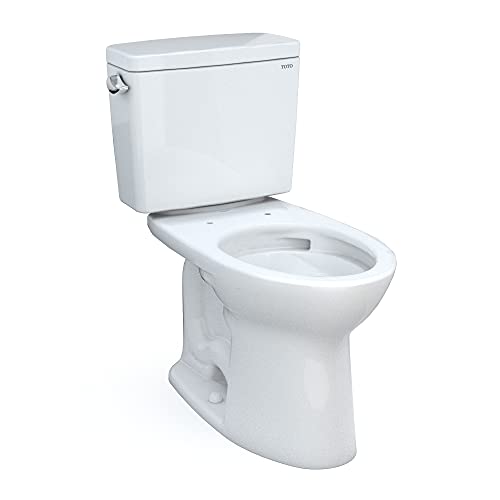
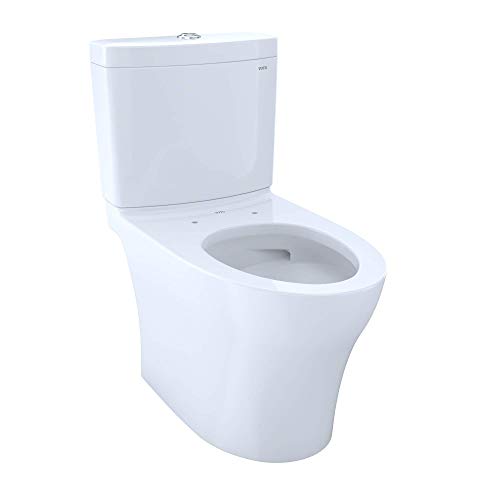
All Colorado utility toilet rebate programs require EPA WaterSense certification, meaning the toilet must flush at 1.28 GPF or less and pass independent MaP testing at a minimum 350 gram score. Popular qualifying models include the TOTO Drake II (1.28 GPF, MaP 1,000g), TOTO Aquia IV dual-flush (0.9/1.28 GPF, MaP 1,000g), Kohler Cimarron (1.28 GPF, MaP 1,000g), Kohler Highline Arc (1.28 GPF, MaP 1,000g), American Standard Cadet 3 FloWise (1.28 GPF, MaP 800g), and the Woodbridge T-0001 (1.28 GPF). Always verify the exact model number in the EPA WaterSense product database before purchasing.
The EPA WaterSense label is not automatically applied to every low-GPF toilet. Manufacturers must pay for third-party certification testing and submit to EPA program requirements. This means some 1.28 GPF models sold at hardware stores may not carry the WaterSense label even though they use the correct water volume. Programs require the label, not just the GPF rating. The simplest verification method is to search the EPA WaterSense product database by brand and model number at epa.gov/watersense before you buy. MaP testing, conducted by an independent Canadian-American testing consortium, measures how many grams of solid waste a toilet can flush in a single pass. For a rebate purchase, choosing a model with 500g or higher gives both rebate qualification and meaningfully better real-world performance than the minimum threshold requires. See our guide to the best flushing toilets for full model rankings.
| Model | Brand | GPF | MaP Score | WaterSense | Type | Check Price |
|---|---|---|---|---|---|---|
| TOTO Drake II | TOTO | 1.28 | 1,000g | Yes | Two-piece | Check price |
| TOTO UltraMax II | TOTO | 1.28 | 1,000g | Yes | One-piece | Check price |
| TOTO Aquia IV | TOTO | 0.9/1.28 | 1,000g | Yes | Dual-flush | Check price |
| Kohler Cimarron | Kohler | 1.28 | 1,000g | Yes | Two-piece | Check price |
| Kohler Highline Arc | Kohler | 1.28 | 1,000g | Yes | Two-piece | Check price |
| American Standard Cadet 3 FloWise | American Standard | 1.28 | 800g | Yes | Two-piece | Check price |
| Woodbridge T-0001 | Woodbridge | 1.28 | 800g | Yes | One-piece | Check price |
| Gerber Viper | Gerber | 1.28 | 1,000g | Yes | Two-piece | Check price |
| Swiss Madison St. Tropez | Swiss Madison | 1.28 | 600g | Yes | One-piece | Check price |
The standard process is: verify your utility offers a current rebate and check the qualifying toilet list; purchase a WaterSense certified toilet at 1.28 GPF or less and retain the itemized receipt; install the toilet; locate the model number on the toilet itself (typically inside the tank); and submit your online rebate application with receipt, model number, and installation address within 90 days of purchase. Most programs mail a check within six to eight weeks.
Visit your utility's conservation or rebate page directly. Programs often pause mid-year when their annual budget is exhausted, then restart in January. For Denver Water, go to denverwater.org/conservation and look for a notice confirming applications are accepted. If the program is paused, subscribe to email notifications and wait for the reset.
Use the product search at epa.gov/watersense to confirm the exact model number carries a current WaterSense certification. Some utilities also maintain their own approved product lists. If your chosen model is WaterSense certified but not on the utility's list, contact their conservation department directly. Most utilities add qualifying models within a few business days upon request. Keep a screenshot of the WaterSense listing with your records.
Buy from any retailer, online or in-store. The itemized receipt must show the store name, purchase date, full product name, model number, and amount paid. A credit card statement alone is not sufficient. After installation, locate the model number on a sticker or molded marking inside the tank lid or on the toilet base. For TOTO models it is cast into the inside rear wall of the tank; for Kohler, stamped near the fill valve. Photograph the installed toilet and the model number label if your utility requires images.
Most programs accept applications through the utility's online customer portal. Upload your receipt and documentation, enter the model number, confirm your mailing address, and save the confirmation number. Fort Collins Utilities has a 60-day window; some smaller district programs allow up to 180 days. Always apply as soon as installation is complete. Processing takes four to twelve weeks depending on the utility. If your check has not arrived after the stated window plus two weeks, call the conservation department with your confirmation number.
The most common denial reason across Colorado programs is a model number mismatch between the receipt and the WaterSense database. Manufacturers frequently sell the same toilet under different model numbers by color finish or retailer. Cross-reference the exact model number on your receipt against the EPA database before submitting. If they differ, call the utility's rebate line for guidance before uploading documents.
A household of four replacing a 3.5 GPF pre-1994 toilet with a 1.28 GPF model saves approximately 19,000 gallons per year based on five flushes per person per day. At Denver Water's 2026 blended residential rate of approximately $4.80 per 1,000 gallons, that translates to roughly $91 in annual water cost savings. Combined with a $100 rebate, the net cost of a mid-range efficient toilet is typically recovered within 12 to 18 months of installation.
| Old Toilet GPF | New Toilet GPF | Annual Savings (4 people) | Water Cost Savings / Year* | Approx. ROI with $100 Rebate |
|---|---|---|---|---|
| 3.5 GPF (pre-1994) | 1.28 GPF | ~19,000 gallons | ~$91 | 0.5 to 1 year |
| 1.6 GPF (1994-2010) | 1.28 GPF | ~5,600 gallons | ~$27 | 4 to 6 years |
| 1.6 GPF (1994-2010) | 0.8 GPF (ultra-HET) | ~14,600 gallons | ~$70 | 2 to 3 years |
| 3.5 GPF (pre-1994) | 0.8 GPF (ultra-HET) | ~24,800 gallons | ~$119 | Under 1 year |
*Based on approximate Denver Water 2026 blended residential rate. Rates vary by utility and tier.
Colorado's tiered pricing structure amplifies these savings further. Denver Water and Fort Collins both apply progressive tier pricing where usage above certain thresholds is billed at higher rates. Reducing indoor water use through toilet replacement can shift a household from a higher-cost tier to a lower one, generating savings beyond what simple per-gallon arithmetic suggests. For more details on water efficiency metrics, see our WaterSense toilets explained guide and our overview of best water saving toilets.
Yes. Denver Water's bill assistance program includes a free toilet replacement component for qualifying low-income customers, separate from the standard rebate. Aurora Water partners with Mile High United Way for free toilet installation for households at 80 percent of area median income or below. Colorado Springs Utilities offers an income-qualified rebate enhancement that doubles the standard amount to $150 per toilet. Contact your utility's customer assistance line to ask about income-qualified conservation programs, as these are often not prominently listed on the standard rebate page.
Multi-unit residential and commercial property owners should ask about commercial rebate pathways. Denver Water's commercial efficiency program offers up to $200 per toilet for multi-unit properties with no per-account unit cap equivalent to the residential limit. Income-qualified programs often have separate budget allocations tied to state and federal assistance funds, so they may remain open even when the standard residential program is temporarily paused. Calling 211 Colorado will connect you to a statewide service coordinator who can identify all available water and energy efficiency assistance programs in your county. For ADA accessibility considerations alongside water efficiency, see our ADA compliant toilet guide.
The TOTO Drake II consistently earns the highest MaP score of 1,000g at 1.28 GPF and is the most widely approved model across every Colorado utility rebate approved product list, making it the default recommendation for households that want the best possible performance from a qualifying toilet.
TOTO's Double Cyclone mechanism uses two nozzles to generate centrifugal rinsing action rather than relying on rim holes that can accumulate mineral deposits over time, particularly in Colorado's hard-water Front Range communities. Confirm the model suffix contains "EF" or "E" to ensure you have the 1.28 GPF E-Max tank rather than an older 1.6 GPF version. Full details in our TOTO Drake II review.
Among all toilets at the 1.28 GPF threshold, the TOTO Drake II offers the best combination of flushing reliability, bowl cleanliness, and long-term parts availability. For a toilet used daily for 20 to 30 years, the higher initial purchase cost relative to budget WaterSense alternatives is easily recovered by lower maintenance and cleaning frequency.
The TOTO Aquia IV qualifies for Colorado rebates through its 1.28 GPF full-flush cycle and delivers deeper annual savings than single-flush 1.28 GPF models because the 0.9 GPF partial flush is used for the majority of daily flushes, bringing the effective household average well below 1.1 GPF.
For Colorado households replacing a pre-1994 toilet and wanting to maximize combined rebate value and long-term water savings, the Aquia IV delivers the best outcome of any qualifying model. A household of four that uses the partial flush for liquid waste can achieve an effective average of approximately 1.0 to 1.05 GPF, pushing annual water savings above what the standard 1.28 GPF comparison tables show. The skirted design, with the trapway enclosed behind a smooth base, also makes floor cleaning substantially easier than traditional exposed-trapway two-piece toilets.
The Aquia IV is the dual-flush model to recommend when water savings are the primary goal and the household is willing to develop the habit of using the partial flush for liquid waste. The skirted base is a meaningful secondary benefit in households where bathroom floor cleaning is a regular concern.
The Kohler Cimarron at 1.28 GPF achieves a 1,000g MaP score through its AquaPiston canister valve and is stocked at Home Depot and Lowe's locations across the Front Range, making it the most accessible high-performance rebate-qualifying toilet for households that need a same-day solution.
The AquaPiston canister opens 360 degrees at the start of each flush rather than lifting from a single pivot point like a traditional flapper, creating a larger water opening that contributes to the Cimarron's 1,000g MaP performance at 1.28 GPF. Owner reviews aggregated across major retailers confirm reliable single-flush clearance under normal household conditions. For households in Colorado's hard-water communities, the Cimarron's easier in-store parts availability relative to specialty TOTO configurations is a practical long-term advantage. Full specifications in our Kohler Cimarron review.
The Kohler Cimarron is the right choice when you want a 1,000g MaP rebate-qualifying toilet available today at a local store without special ordering. Its AquaPiston canister avoids the flapper deterioration that affects traditional two-piece toilets after five to ten years, making it a solid long-term maintenance choice.
Denver Water and Fort Collins Utilities both offer up to $100 per toilet for standard residential accounts in 2026. Income-qualified programs through Colorado Springs Utilities can reach $150 per toilet. Denver Water's commercial pathway can reach $200 per toilet for multi-unit properties. No standard Colorado residential program currently exceeds $100 per toilet per unit.
All programs require 1.28 GPF or less with EPA WaterSense certification. Dual-flush models where the full-flush cycle is 1.28 GPF or less, such as the TOTO Aquia IV at 0.9/1.28 GPF, also qualify. A standard 1.6 GPF toilet does not qualify even if it is a newer model, unless it specifically carries WaterSense certification at 1.28 GPF.
The TOTO Drake II (model numbers with "EF" or "E" suffix indicating Tornado Flush) is rated at 1.28 GPF with EPA WaterSense certification and a 1,000g MaP score, qualifying it for all Colorado utility programs. The original TOTO Drake is sold in both 1.6 GPF and 1.28 GPF versions, so confirm you are purchasing the 1.28 GPF variant by checking for the WaterSense certification in the EPA product database.
The standard Champion 4 is rated at 1.6 GPF and does not carry WaterSense certification, so it does not qualify. American Standard offers a Champion 4 HET (High Efficiency Toilet) variant at 1.28 GPF with WaterSense certification. Verify the model number in the EPA WaterSense database before purchasing. The HET suffix must be present for the model to qualify.
No. Most Colorado utility rebate programs accept DIY installations. You do not need to provide a plumber's license or invoice. Some programs ask you to sign a declaration confirming the old toilet was removed and the new one installed, but professional installation is not required. Check your specific utility's terms for any variation.
Some utilities allow renters to apply if the renter pays the water bill directly rather than through rent. Denver Water permits applications from the named water account holder, which can be a tenant. Aurora Water also requires the application to come from the account holder of record. If your landlord pays the water bill, coordinate with them to apply or ask them to purchase and install the toilet and share the rebate.
Yes. Programs do not restrict purchase location. Online retailers including Amazon, Home Depot's website, and plumbing supply sites all qualify as long as the itemized receipt shows the retailer name, purchase date, model number, and price. Save the order confirmation email and packing slip, as these are the most reliable documentation for online purchases.
Most Colorado utilities have a correction or resubmission process. Common denial reasons include a model number mismatch, missing receipt information, or submission after the deadline. Contact the utility's conservation department with your confirmation number and ask what specific documentation was missing. In most cases you can resubmit a corrected application within 30 days. If the toilet is not WaterSense certified, the denial is typically final.
Processing times range from four to twelve weeks depending on the utility. Denver Water and Aurora Water both target a six-week window. Pueblo Board of Water Works and smaller district programs may take up to twelve weeks. If your check has not arrived after the stated window plus two weeks, contact the conservation team with your application confirmation number.
Yes. Denver Water offers free toilet replacement for qualifying low-income customers. Aurora Water partners with Mile High United Way for free installation for households at 80 percent of area median income or below. Colorado Springs Utilities doubles the rebate to $150 for income-qualified applicants. Contact your utility's customer assistance line or call 211 Colorado to identify all available programs in your county.
Yes, within the per-account caps. Denver Water allows up to three toilets per account per year. Fort Collins allows up to four. Aurora Water limits rebates to two per account. If your home has more toilets than the cap, you may be able to replace additional ones in a subsequent year when the program resets its annual funding.
Old toilets cannot go in standard curbside recycling. Options include a concrete or construction debris recycling facility (porcelain is accepted as fill aggregate), donation to a Habitat for Humanity ReStore if the toilet still functions, or large-item pickup through your municipality's solid waste department. Denver and Aurora both hold periodic large-item collection events where old toilets are accepted at no charge.
Smart toilets and integrated bidet units that carry EPA WaterSense certification at 1.28 GPF or less qualify for the same rebate amount as standard toilets. The rebate amount does not scale with the toilet's retail value, so a qualifying smart toilet receives the same $75 to $100 as a basic two-piece model. The rebate is still worthwhile to claim even if it represents a smaller fraction of the total purchase cost.
The model number is typically stamped or molded into the inside of the tank lid or tank walls, visible when you remove the lid. It may also appear on a sticker on the toilet base or on the original box. For TOTO models, look for cast markings on the inside rear wall of the tank. For Kohler models, check near the fill valve. If you cannot locate it on the toilet itself, search the manufacturer's website using the product name to retrieve the official model number for your receipt documentation.
Yes. Most Colorado utilities have commercial water efficiency rebate pathways with higher per-toilet amounts and no per-account unit caps equivalent to the residential program. Denver Water's commercial program offers up to $200 per toilet for multi-unit residential and commercial buildings. Apply through the commercial services or water efficiency department rather than the standard residential portal, and ask whether pre-approval is required before purchase.
Colorado's 2026 toilet rebate programs offer a genuine financial incentive worth $50 to $150 per unit for replacing old high-GPF toilets with EPA WaterSense certified models at 1.28 GPF or less. Denver Water, Aurora Water, and Fort Collins Utilities lead with $100 rebates, while income-qualified programs through Colorado Springs Utilities and others can reach $150 or free replacement. The application process is straightforward: verify program status, purchase a qualifying toilet, photograph the installation, and submit documentation within 90 days. Among qualifying models, the TOTO Drake II delivers the highest flush performance at 1.28 GPF, the TOTO Aquia IV maximizes annual water savings through its dual-flush design, and the Kohler Cimarron is the most accessible same-day in-store option across the Front Range. For any household still running a pre-1994 toilet, the combination of rebate value and reduced water bills makes replacement one of the highest-return efficiency investments currently available in Colorado.
Learn why toilet trapways curve like an S, how each bend blocks sewer gas, and what the shape means for clogs and…
Read the guideAlmost every US toilet has a left-side handle. Learn the plumbing and mechanical reasons behind the layout and when it actually changes.
Read the guideHome toilets rely on tanks because household water lines lack the pressure that public flushometer systems use to flush straight from the…
Read the guide