

Toilet Drainline Carry Explained
Toilets4.6
Drainline carry measures how far solid waste travels in a pipe after one flush. Learn what the MaP test measures and why…
Read the guideThe trapway is the curved internal passage that moves waste from the bowl to your drain line. Its diameter, shape, and finish determine whether your toilet clogs once a year or once a week. This guide covers every dimension and design choice backed by manufacturer specifications and MaP flush-testing data.
A fully glazed, 2-3/8-inch minimum trapway paired with a siphonic flush action moves solid waste most reliably. Models from TOTO, Kohler, and American Standard with MaP scores of 800 grams or higher and EPA WaterSense certification represent the strongest combination of clog resistance and water efficiency available today.
A toilet trapway is the S-shaped or P-shaped internal channel molded into the porcelain base of a toilet. It holds a standing water seal that blocks sewer gases from entering your bathroom while simultaneously creating the siphon action that pulls waste out of the bowl during a flush. Every toilet sold in North America has one; the size, glaze, and geometry of that channel determine how well the toilet performs over years of daily use.
Most homeowners never think about the trapway until the toilet clogs. At that point they call a plumber, pay $150 to $300 for a service call, and wonder why the new toilet they bought five years ago keeps blocking on normal use. The answer is almost always in the trapway specification buried in the product listing.
Plumbing codes in the United States require a minimum trapway diameter of 1-1/2 inches for residential water closets, but that floor is far lower than what the best-performing toilets actually deliver. The gap between the code minimum and what leading manufacturers build is wide enough to make a measurable difference in real households.
Plumbing engineers at fixture manufacturers consistently point to trapway diameter as the single most underappreciated specification when consumers select a toilet. A fully glazed 2-3/8-inch trapway paired with a properly sized flush valve and tank volume is what separates a toilet that handles a family of five without incident from one that requires a plunger every few weeks.
A larger trapway diameter reduces the chance that solid waste, compressed toilet paper, or accidental items will catch on the narrowest point of the passage and create a blockage. MaP (Maximum Performance) flush testing, which measures how many grams of solid waste a toilet can evacuate in a single flush, consistently shows that toilets with 2-1/4-inch or wider fully glazed trapways achieve higher MaP scores than models with narrower passages at the same water volume. The correlation is not perfect because flush valve size and tank geometry also matter, but trapway diameter is one of the most reliable predictors of clog resistance.
MaP testing uses soybean paste media in standard configurations of 250 grams, 500 grams, 800 grams, and 1,000 grams. A toilet that passes the 800-gram threshold is considered "high-performing" by the testing program. Nearly every model on the best flushing toilets list achieves at least 800 grams, and the majority of those models share one design trait: a trapway opening of at least 2 inches at its narrowest point.
Below is a comparison of trapway specifications across several widely sold models:
| Model | Trapway Diameter | Trapway Type | Fully Glazed | MaP Score | GPF | Check Price |
|---|---|---|---|---|---|---|
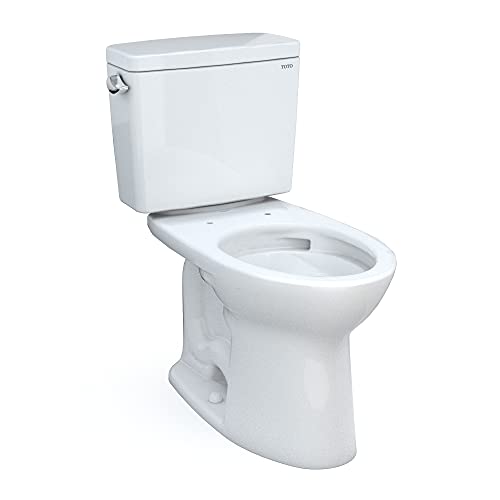
| TOTO Drake II (CST454CEFG) | 2-1/8 in | Siphonic, exposed | Yes | 1,000 g | 1.28 | Check price |
| TOTO UltraMax II (MS604114CEFG) | 2-1/8 in | Siphonic, skirted | Yes | 1,000 g | 1.28 | Check price |
| American Standard Champion 4 (2034.014) | 2-3/8 in | Siphonic, exposed | Yes | 1,000 g | 1.6 | Check price |
| American Standard Cadet 3 (2403.128) | 2-1/8 in | Siphonic, exposed | Yes | 800 g | 1.28 | Check price |
| Kohler Highline (K-3999) | 2-1/8 in | Siphonic, exposed | Yes | 1,000 g | 1.28 | Check price |
| Kohler Cimarron (K-6418) | 2-1/8 in | Siphonic, exposed | Yes | 1,000 g | 1.28 | Check price |
| TOTO Aquia IV (CWT447247MFG) | 2-1/8 in | Siphonic, dual-flush | Yes | 600 g (0.8 GPF) / 1,000 g (1.28 GPF) | 0.8 / 1.28 | Check price |
| Woodbridge T-0001 | 2-1/8 in | Siphonic, skirted | Yes | 800 g | 1.28 | Check price |
| Gerber Maxwell (GWS21518) | 2 in | Siphonic, exposed | Yes | 800 g | 1.28 | Check price |
| Swiss Madison Ivy (SM-1T254) | 2 in | Siphonic, concealed | Yes (CE Certified) | 500 g | 1.28 | Check price |
The American Standard Champion 4 holds the record for the widest fully glazed trapway in the mainstream residential market at 2-3/8 inches. American Standard markets this as their "Never Clog" specification, and owner reviews across major retail platforms consistently reflect fewer clog incidents compared with narrower-trapway alternatives. The trade-off is water use: the Champion 4 flushes at 1.6 GPF rather than the 1.28 GPF that most high-efficiency models use. See our guide to large trapway toilets for a full ranking.
A siphonic trapway creates a vacuum-like siphon action during the flush that pulls waste out of the bowl at high velocity, leaving the bowl cleaner with less water. A washdown trapway uses gravity and a large volume of water flowing over the rim to push waste out without relying on siphon pressure. Siphonic designs dominate North American residential toilets because they deliver a quieter, more thorough evacuation at lower water volumes; washdown designs are common in Europe and parts of Asia where different drain configurations exist.
The shape difference is visible: siphonic trapways have a taller, narrower S-curve that builds siphon pressure as water rises and then drops through the passage. Washdown trapways have a shorter, wider P-shape that opens nearly at the base of the bowl. Because the washdown passage is wider, it rarely clogs with solid waste, but it requires more water per flush to function and leaves a smaller water surface area in the bowl, which means more visible staining over time.
In North America, all six major brands covered in this guide (TOTO, Kohler, American Standard, Woodbridge, Swiss Madison, and Gerber) use siphonic trapway geometry for their residential product lines. Some TOTO commercial and wall-hung models use washdown geometry matched to specific drain configurations, but those are outside the scope of this residential guide.
Siphonic trapways work because the water column inside the curved passage acts like a pipe within a pipe. When the flush valve opens and water fills the trapway, the descending side of the S-curve becomes longer than the ascending side, which triggers siphon action. That siphon actively pulls waste rather than just pushing it, which explains why siphonic toilets can achieve 1,000-gram MaP scores using only 1.28 gallons of water per flush.
A fully glazed trapway means the manufacturer has applied a smooth ceramic glaze to the entire interior surface of the waste passage, not just the sections visible from outside the toilet. Unglazed porcelain is microscopically rough, which gives waste, paper fibers, and mineral deposits a surface to grip and accumulate over time. A full glaze reduces friction through the passage, accelerates flush velocity, and makes the trapway significantly easier to clear with a plunger on the rare occasions when a partial blockage does occur.
Fully glazed trapways have been standard on premium toilet lines since the early 2000s, but they are still not universal in the budget segment. TOTO's product specification sheets explicitly list "fully glazed trapway" as a feature on the Drake, Drake II, UltraMax II, and Aquia IV lines. American Standard uses the same language for the Champion 4 and Cadet 3. Kohler applies glazing to the full trapway on the Highline and Cimarron. Budget-segment toilets below certain price points may list "glazed" without specifying whether that glaze extends through the full interior of the passage.
TOTO goes a step further on most of its residential line with CeFiONtect, a proprietary ion-barrier glaze that creates an ultra-smooth, non-porous surface at the molecular level. The company publishes test data showing that CeFiONtect-coated surfaces repel waste and reduce the bacterial adhesion rate compared with standard glaze. Kohler offers a similar technology called CleanCoat on select models. American Standard uses EverClean, an antimicrobial surface treatment that inhibits mold, mildew, and bacterial growth on coated surfaces. You can read more about glaze technologies in our CeFiONtect glaze explainer.
Yes. A wider, more smoothly glazed trapway allows the water column to flow with less turbulence, which reduces the characteristic gurgle and suction noise that siphonic toilets produce at the end of a flush cycle. Skirted or concealed trapway designs, where the exterior porcelain shroud surrounds the S-curve, add a secondary acoustic damping effect by containing sound within the shroud rather than radiating it outward from the exposed porcelain curves.
Noise matters more to some households than others, but it is a significant consideration for master bathrooms adjacent to bedrooms, home offices with thin walls, or households with light sleepers. The TOTO UltraMax II, which uses a skirted design that hides the trapway behind smooth exterior porcelain, consistently receives owner comments about its quieter flush signature compared with the exposed-trapway TOTO Drake despite both toilets using identical flush mechanisms. Woodbridge and Swiss Madison, which both build skirted one-piece designs, receive similar feedback. See our best quiet flush toilets ranking for a noise-focused comparison.
An exposed trapway shows the S-curve bumps and indentations on the exterior of the toilet base, which are visible and collect dust and grime in the crevices. A concealed or skirted trapway wraps the entire base in a smooth porcelain panel that hides the curve, making the toilet easier to clean around the outside and giving it a more modern appearance. The internal dimensions and flush performance are independent of whether the exterior is skirted; a skirted design can have either a wide or narrow internal passage depending on the model specification.
The cleaning argument for concealed trapways is practical, not cosmetic. Exposed trapway toilets have 6 to 8 inches of curved exterior surface with multiple ridges and grooves at floor level. Bacteria, hair, and soap scum accumulate in those grooves and require a narrow brush or rag to remove. A skirted toilet has a flat or gently curved exterior that can be wiped with a single pass of a cloth. Households that prioritize bathroom hygiene increasingly favor skirted designs for this reason. Our skirted vs. exposed trapway comparison covers both design and cleaning tradeoffs in detail.
| Feature | Exposed Trapway | Concealed / Skirted Trapway |
|---|---|---|
| Exterior cleaning | Requires narrow brush, multiple passes | Single wipe of flat surface |
| Aesthetic | Traditional, visible curves | Modern, streamlined |
| Flush noise | Slightly louder (sound radiates from porcelain) | Slightly quieter (shroud dampens sound) |
| Internal passage size | Independent of exterior style | Independent of exterior style |
| Price premium | None (most common style) | Typically $50 to $150 more |
| Installation complexity | Standard | Same; check bolt access before purchase |
| Typical brands | TOTO Drake, Kohler Highline, Gerber Viper | TOTO UltraMax II, Woodbridge T-0001, Swiss Madison Ivy |
Look for three data points in a toilet's specification sheet: the trapway diameter listed in inches (not millimeters unless you convert), whether the manufacturer explicitly states the glaze extends through the full interior of the passage, and the MaP score from independent flush testing. A trapway diameter of 2 inches or larger combined with a "fully glazed" statement and a MaP score of 800 grams or above is the baseline combination for a clog-resistant toilet that will perform reliably in a family household.
Manufacturer specification pages, available on brand websites, typically list trapway size under "specifications" or "dimensions." The MaP score is not always on the product page but is searchable on the official MaP testing database at map-testing.com by entering the brand and model number. EPA WaterSense certification, which requires a maximum of 1.28 GPF and minimum 350-gram MaP performance per flush, can be confirmed at epa.gov/watersense.
One common source of confusion is the difference between the trapway opening diameter and the trapway passage diameter. Some manufacturers list the opening at the entry to the trapway (the hole visible at the bottom of the bowl), which may be larger than the narrowest point inside the curved passage. The narrowest point governs clog behavior. When a specification sheet lists only one trapway number, it is safest to assume that number refers to the minimum diameter inside the full passage, but you can confirm by checking the MaP score as an independent performance proxy.
The specification sheet is your primary tool, but MaP scores function as the real-world verification of everything the spec says. A toilet that lists a 2-1/2-3/8-inch fully glazed trapway and achieves 1,000 grams on MaP testing has independently confirmed that the design works as advertised. When a toilet with similar claims scores only 500 grams on the same test, something in the trapway geometry, flush valve timing, or tank volume is limiting real-world performance regardless of what the spec sheet states.
Trapway dimensions correlate loosely with toilet type and price tier. Understanding those patterns helps narrow the field before you read individual specifications.
Two-piece toilets (separate tank and bowl) dominate the mainstream market and cover the full range of trapway sizes. Budget two-piece models at the lower end of the market often use 1-3/4-inch to 2-inch trapways with partial glazing. Mid-range and premium two-piece models including the TOTO Drake II, Kohler Highline, Kohler Cimarron, and American Standard Cadet 3 consistently deliver 2-1/8-inch fully glazed trapways. The American Standard Champion 4 is the outlier at 2-3/8 inches. Two-piece toilets are also easier to repair because tank components are accessible without removing the entire unit.
One-piece toilets integrate the tank and bowl into a single molded unit. This design creates a continuous interior cavity that makes it easier for manufacturers to build a wider trapway passage without structural compromise at the junction between tank and bowl. The TOTO UltraMax II, which is a one-piece version of the Drake II mechanism, shares the same 2-1/8-inch fully glazed trapway specification. Woodbridge T-0001 achieves 2-1/8 inches in a one-piece skirted format. One-piece toilets typically cost more and weigh more (80 to 110 pounds for most models versus 50 to 70 pounds for the bowl alone in a two-piece set), which affects shipping and installation logistics.
Wall-hung toilets mount to a carrier frame inside the wall and position the bowl above the floor with no base contact. The trapway in wall-hung models connects directly to a horizontal drain outlet in the wall rather than a floor drain, which eliminates the tall S-curve geometry of floor-mounted siphonic designs. Wall-hung toilets typically use washdown flush mechanisms with wider, shorter trapway passages. TOTO, Kohler, and Swiss Madison all offer wall-hung models, but the absence of floor-contact siphonic geometry means these toilets behave differently from conventional residential models and should be evaluated against different benchmarks.
Toilets designed for small bathrooms and corner installations frequently compromise trapway size to fit a reduced footprint. A shorter tank depth forces a more compressed trapway curve, which often results in a narrower passage or a tighter bend angle that increases clog risk. If a small bathroom is your application, prioritize trapway diameter and MaP score even more carefully than you would for a standard installation, because space-saving models with compromised trapways become a persistent maintenance problem. Our guide to the best toilets for small bathrooms identifies which compact models maintain adequate trapway specifications.
A fully glazed trapway requires significantly less maintenance than an unglazed one, but no surface is completely self-maintaining. Hard water minerals, particularly calcium carbonate and magnesium, gradually deposit on interior surfaces including the trapway passage over months and years of use. These deposits narrow the effective diameter of the passage and can eventually reduce flush performance or create a surface that catches waste more easily.
Preventive maintenance for the trapway is simple: add a cup of white vinegar to the toilet bowl and allow it to sit for one hour before flushing, once per month. The mild acidity dissolves early-stage calcium deposits without damaging the porcelain glaze. For more advanced mineral buildup visible at the trapway entry or on the siphon jet at the base of the bowl, a pumice stone used carefully on the porcelain surface or a commercial limescale remover left in the bowl overnight will dissolve deposits that vinegar cannot reach.
Chemical drain cleaners like Drano are not recommended for toilet trapways. These products are formulated for P-trap configurations in sinks and are not effective at the water volumes present in a toilet trap. More importantly, some formulations can damage the wax ring seal at the floor flange over time. If the trapway itself is fully blocked rather than simply restricted, a closet auger (toilet snake) with a 3-foot to 6-foot reach is the correct tool. A standard drain snake without a toilet-specific head will scratch the porcelain glaze inside the trapway and create a rougher surface that catches waste more easily going forward.
Households with young children should treat the largest available trapway as a priority specification rather than a premium upgrade. Children flush objects. A 2-3/8-inch trapway like the one on the American Standard Champion 4 will pass many accidental flushes that a 2-inch trapway will not. Combined with a 1,000-gram MaP score and a tank designed to fill completely before releasing, the Champion 4 specification was built with exactly this use case in mind according to American Standard's published product documentation.
Homes on septic systems benefit from toilets that move waste efficiently with lower water volumes because excess water volume overloads the septic tank and disrupts the bacterial balance that processes solids. A 1.28 GPF model with a 2-1/8-inch fully glazed trapway and a MaP score of 800 grams or higher achieves the right balance: enough water volume to clear the trapway completely while conserving the total water load on the septic tank. EPA WaterSense certified models are often recommended by septic system installers for this reason. Our septic-safe toilet guide covers this scenario in depth.
Short-term rental properties, home offices with multiple users, and in-law suites with frequent occupancy all benefit from the widest, most durable trapway available. The TOTO Drake II and American Standard Champion 4 are both rated for residential and light commercial use in published specifications. Both achieve 1,000-gram MaP scores and use fully glazed trapways. The Drake II at 1.28 GPF will lower water bills over thousands of flushes compared with the Champion 4 at 1.6 GPF, but either model will outperform any narrow-trapway budget alternative in clog frequency.
The six major brands covered on this site each approach trapway design with slightly different priorities:
TOTO uses a consistent 2-1/8-inch fully glazed trapway across its residential two-piece and one-piece lines (Drake, Drake II, UltraMax II, Aquia IV) paired with CeFiONtect glaze. TOTO's Double Cyclone and Tornado Flush systems use the trapway passage in combination with rim-mounted water jets that increase rotational flow velocity, which means the effective cleaning action is higher than the trapway diameter alone suggests. MaP scores of 1,000 grams are the norm rather than the exception across this line.
Kohler maintains 2-1/8-inch fully glazed trapways on the Highline, Cimarron, Memoirs, and Corbelle. The Class Five flush valve, which Kohler uses across most residential models, opens fully to release the tank volume in a single powerful surge rather than a graduated release, which maximizes the pressure available to push water through the trapway passage. Kohler's AquaPiston fill valve design also ensures the tank refills to a consistent level on every flush, which matters because inconsistent tank volumes create inconsistent trapway pressure.
American Standard differentiates on trapway size more aggressively than any other major brand. The Champion 4 at 2-3/8 inches is the benchmark for raw passage width. The Cadet 3 at 2-1/8 inches represents American Standard's high-efficiency tier. Both use fully glazed trapways and EverClean antimicrobial surface treatment. American Standard's PowerWash rim scrubbing system uses directional rim jets to supplement the trapway siphon with additional bowl cleaning action per flush.
Woodbridge builds one-piece and two-piece skirted designs with 2-1/8-inch trapways. The T-0001, their flagship one-piece model, is widely referenced in owner reviews for its clean siphonic flush performance at 1.28 GPF. Woodbridge does not publish CeFiONtect-equivalent glaze branding, but product specifications confirm fully glazed trapways across their residential line.
Swiss Madison produces modern European-influenced designs with concealed trapways. Their specifications list 2-inch trapways on most residential models. MaP scores for Swiss Madison toilets average around 500 grams to 800 grams depending on the specific model, which places them in the adequate but not exceptional performance category for solid waste evacuation. Swiss Madison designs prioritize aesthetics and the skirted profile; buyers who need maximum clog resistance should confirm the specific MaP score before purchasing.
Gerber has built a strong reputation among plumbers for durable, consistently performing trapway geometry. The Gerber Viper and Maxwell models use 2-inch fully glazed trapways that achieve reliable 800-gram MaP scores. Gerber's Avalanche Flush technology uses a wide 3-inch flush valve (compared to the standard 2-inch valve on many competitors) to release tank water faster, which creates stronger siphon action through the trapway passage even though the trapway diameter itself is not the widest in the market.
A minimum of 2-1/8 inches is the standard on quality residential toilets from major brands. The American Standard Champion 4 at 2-3/8 inches is the widest available on a mainstream residential model. For most households, 2-1/8 inches with full glazing and a MaP score of 800 grams or higher is sufficient.
It means the manufacturer has applied smooth ceramic glaze to the entire interior surface of the waste passage from bowl exit to drain outlet, including the curved sections inside the base that are not visible from outside the toilet. Unglazed sections create friction that accumulates waste and increases clog frequency.
Yes. The skirted exterior panel is purely a cosmetic shroud that wraps the visible exterior of the base. It has no effect on the internal passage diameter. A TOTO UltraMax II (skirted) and TOTO Drake II (exposed) share identical 2-1/8-inch trapway specifications because they use the same internal bowl casting with different exterior porcelain finishing.
The International Plumbing Code sets a minimum trapway diameter of 1-1/2 inches for water closets. This code floor has not changed in recent editions. Most toilets from major brands substantially exceed this minimum, with the market standard currently at 2 to 2-3/8 inches for residential models.
MaP (Maximum Performance) testing measures how many grams of waste media a toilet evacuates per flush. A wider, fully glazed trapway reduces internal resistance, which allows the siphon to develop more quickly and pull larger waste loads through the passage. However, trapway diameter is not the only variable: flush valve size, tank volume, rim jet configuration, and water pressure all interact with trapway geometry to produce the final MaP result.
You cannot directly reach the interior of the trapway with a brush, but you can treat it chemically. Monthly white vinegar soaks (one cup left in the bowl for one hour before flushing) dissolve early calcium and mineral deposits before they narrow the effective passage diameter. A closet auger is the correct tool for a physical partial blockage inside the trapway passage.
The American Standard Champion 4 (model 2034.014) specifies a 2-3/8-inch fully glazed trapway, which is the widest published dimension among mainstream residential toilets from major brands. It achieves a 1,000-gram MaP score and uses 1.6 GPF.
A 2-inch fully glazed trapway is adequate for most households under normal use conditions. Toilets with 2-inch trapways and 800-gram or higher MaP scores, such as the Gerber Maxwell and Gerber Viper, handle typical residential waste loads reliably. The 2-1/8-inch standard provides additional margin for occasional thick toilet paper use, households with children, or high-frequency use scenarios.
A toilet trapway serves the same function as a sink P-trap (it holds a water seal to block sewer gases) but is molded directly into the porcelain of the toilet base rather than being a separate fitting installed under the bowl. A sink P-trap is removable and replaceable. A toilet trapway is a permanent part of the fixture and cannot be replaced without replacing the entire toilet bowl.
Yes. The geometry of the S-curve determines where the water line sits inside the trapway between flushes. This standing water column is the sewer gas seal. A properly sized trapway holds at least a 2-inch deep water seal at its lowest point when the toilet is at rest, which meets the minimum depth requirement in most building codes. Toilets with improperly shaped trapways can evaporate their seal faster in dry climates, which allows sewer odor to enter the bathroom.
The bump visible at the rear base of a standard toilet is the exterior of the S-curve trapway passage. It is a structural feature of the porcelain casting and indicates an exposed (non-skirted) trapway design. It contains no serviceable components and is simply the shape required to route the passage from bowl to floor outlet at the correct angle.
Not necessarily. Dual-flush designs like the TOTO Aquia IV maintain the same 2-1/8-inch fully glazed trapway as TOTO's single-flush models. The dual-flush mechanism controls water volume released from the tank; it does not change the trapway dimensions. However, the low-flush (0.8 GPF) cycle on some dual-flush models produces less hydraulic pressure through the trapway, which is why MaP scores for the low-flush cycle are lower than for the full-flush cycle on the same toilet.
Rough-in distance (the measurement from the finished wall to the center of the floor drain) is a separate specification from trapway diameter. Standard residential rough-in is 12 inches, with 10-inch and 14-inch rough-ins used in some older and custom homes. Toilets are manufactured in different rough-in configurations, but the trapway diameter specification for a given model is typically the same across rough-in variants of that model.
The swirling motion is produced by rim jets (small holes under the toilet rim) that direct water tangentially into the bowl at an angle rather than straight down. This creates rotational flow that simultaneously cleans the bowl walls and accelerates the development of the siphon in the trapway passage. TOTO's Tornado Flush uses two large nozzles instead of multiple small holes to create a stronger rotational pattern with less mineral clogging risk at the jets.
The siphon jet is a single large opening at the front bottom of the bowl that directs a concentrated stream of water directly into the trapway entry during a flush. This direct jet accelerates the initial water entry into the trapway passage, which triggers the siphon action faster than rim jets alone could achieve. Calcium deposits on the siphon jet reduce this effect and can noticeably weaken flush performance even when the trapway itself is clear.
The porcelain trapway itself is effectively permanent under normal residential use. Porcelain does not corrode, rust, or degrade chemically in a typical residential water environment. The trapway will last the full lifespan of the toilet, which manufacturers estimate at 50 years or more for the porcelain components. Trapway problems are almost always caused by mineral buildup, foreign object lodgment, or (rarely) a crack in the porcelain casting from physical impact.
A toilet trapway can crack if the toilet base is dropped, struck by a heavy object, or subjected to severe temperature shock (such as freezing). Because the trapway is inside the porcelain casting, a crack in this area typically causes a slow leak at the base rather than visible external cracking. A toilet with a cracked trapway must be replaced; there is no field repair option for porcelain cracks in the waste passage.
TOTO's CeFiONtect glaze is applied to all interior surfaces of the toilet that come into contact with water during a flush, including the trapway passage. TOTO explicitly states in its product literature that CeFiONtect is applied at the factory as part of the porcelain firing process, which means it coats the full interior of the casting including the curved sections inside the base that cannot be reached after manufacture. This is one of the technical differentiators that separates TOTO's factory glaze process from applied aftermarket coatings.
Household supply pressure affects how quickly the toilet tank fills between flushes, but it does not directly affect trapway performance during a flush. The flush is powered by gravity-fed tank water, not supply pressure. However, very low supply pressure (below 20 PSI) can result in incomplete tank fills on short-cycle flushes, which reduces the water volume available to create siphon action through the trapway and can produce weak or incomplete evacuations.
The TOTO Drake II (CST454CEFG), UltraMax II (MS604114CEFG), and Aquia IV (CWT447247MFG) are the flagship residential models with fully glazed 2-1/8-inch trapways, CeFiONtect coating, and 1,000-gram MaP scores (on the full-flush cycle for the Aquia IV). All three carry EPA WaterSense certification at 1.28 GPF. The Drake II is a two-piece model, the UltraMax II is a one-piece skirted version using the same mechanism, and the Aquia IV is a dual-flush wall-mounted or floor-mounted option for water conservation applications.
Trapway size, glaze quality, and flush mechanism work together as a system rather than independent variables. For most households, a toilet with a 2-1/8-inch fully glazed trapway, a 1,000-gram MaP score, and EPA WaterSense certification at 1.28 GPF provides the best balance of clog resistance and water efficiency. The TOTO Drake II and Kohler Highline represent this specification at the mid-range price point. The American Standard Champion 4 at 2-3/8 inches is the right choice for households with young children or a history of frequent clogs regardless of what toilet they are replacing. Concealed trapway designs from TOTO UltraMax II and Woodbridge T-0001 add cleaning convenience for households that prioritize bathroom hygiene. Match your trapway specification to your household's actual use pattern, verify with independent MaP data, and the choice becomes straightforward.
Drainline carry measures how far solid waste travels in a pipe after one flush. Learn what the MaP test measures and why…
Read the guideToilet floor bolts spinning instead of tightening usually means a broken flange or stripped nut. Here is how to diagnose it and…
Read the guideShould tile run under the toilet or stop at the flange? Learn the right order, why it matters for leaks, and how…
Read the guide