

Why Toilet Trapways Are Curved Like an S
Toilets4.6
Learn why toilet trapways curve like an S, how each bend blocks sewer gas, and what the shape means for clogs and…
Read the guideHow toilet paper ply, fiber content, and dissolve speed interact with your trapway, flush volume, and plumbing to create--or prevent--stubborn clogs.
Yes, ultra-thick or slow-dissolving toilet paper can cause clogs, especially in low-GPF toilets with narrow trapways. Premium 3-ply and ultra-soft brands dissolve up to 60% slower than standard 1-ply. Choosing septic-safe, fast-dissolving paper and a toilet with a large trapway dramatically reduces risk.
Walk down any grocery store paper goods aisle and the marketing gets aggressive: "ultra-soft," "3-ply luxury," "quilted comfort." Those features feel good at the moment of use but create a real risk downstream--literally--in your toilet trap and drain lines.
Toilet paper clog risk is a function of four variables working together: how fast the paper dissolves, how much paper is used per flush, how much water your toilet delivers per flush (GPF), and how large your toilet's trapway passage is. When any one of these tips in the wrong direction, repeated use builds up a partial blockage that eventually becomes a full one.
This guide breaks down the science of toilet paper dissolution, the specs that matter for clog-prone toilets, and what toilet paper manufacturers and plumbing engineers actually say about the problem.
Yes, according to dissolution testing and plumber-reported clog causes. Thicker multi-ply papers, especially those marketed as "ultra-soft" or "quilted," absorb water more slowly and take longer to break apart in water than standard 1-ply or rapid-dissolve brands. The gap is significant: independent water utility dissolution studies have found that premium 3-ply bath tissue can require 30 to 60 seconds or longer to begin substantial breakdown, while standard 1-ply often starts disintegrating in under 10 seconds.
Thickness alone is not the whole picture. The fiber blend, the embossing pattern, and whether the paper is "wet-strength" treated all affect how quickly a sheet falls apart once submerged. Some ultra-thick brands use a small amount of wet-strength resin to prevent tearing during use--the same resin that slows breakdown in the drain.
The 2-ply vs. 3-ply debate gets oversimplified. A well-formulated 2-ply septic-safe brand can dissolve faster than a cheap single-ply that uses dense, slow-dissolving fiber. The label "septic-safe" is a better proxy for fast dissolution than ply count alone, because septic systems are far more sensitive to slow-dissolving solids than municipal sewer lines.
Plumbing engineers note that the "per-flush clog event" is rarely caused by a single sheet of paper. Instead, partial clogs accumulate over dozens of flushes as fibers catch on scale deposits, partial obstructions, or the sharp edges inside older cast-iron drain lines. Switching to fast-dissolving paper reduces the rate of accumulation and buys more time between service calls, even in systems already prone to buildup.
Rapid-dissolve or RV-rated toilet papers consistently outperform standard home brands in shake-flask dissolution tests. Among mainstream brands, Scott 1000 and Angel Soft have shown faster disintegration rates in multiple independent city utility studies than Charmin Ultra Soft or Cottonelle Ultra ComfortCare. The fastest dissolving papers are labeled "septic-safe," "rapid-dissolving," or "RV/marine safe."
| Toilet Paper Type | Typical Ply | Dissolution Speed | Septic-Safe | Clog Risk |
|---|---|---|---|---|
| RV / Marine Rapid-Dissolve | 1-ply | Very Fast (under 10 sec) | Yes | Very Low |
| Scott 1000 / Standard 1-Ply | 1-ply | Fast (10-20 sec) | Yes | Low |
| Angel Soft / Mid-Grade 2-Ply | 2-ply | Moderate (20-40 sec) | Partial | Low-Medium |
| Charmin Ultra Strong 2-Ply | 2-ply | Slow (40-60+ sec) | No | Medium |
| Ultra-Soft 3-Ply Quilted | 3-ply | Very Slow (60+ sec) | No | High |
| Flushable Wipes (non-dispersible) | N/A | Very Slow or None | No | Very High |
Note: dissolution times are approximate ranges based on published utility and academic studies using standard shake-flask tests. Actual performance varies by water temperature, flow turbulence, and usage amount.
A wider trapway passage and higher MaP flush score together reduce clog risk when using thick toilet paper. Look for a fully glazed trapway of at least 2 inches in diameter--ideally 2.125 inches or wider--and a MaP flush score of 800 grams or above. Higher flush scores mean the toilet reliably moves solid waste in a single pass, reducing the chance of paper accumulating around an incomplete flush.
The MaP (Maximum Performance) flush-testing program, administered independently, uses standardized soybean paste to simulate waste loads. Scores run from 0 to 1,000 grams. A toilet rated at 1,000g MaP has passed the program's highest benchmark, meaning it can reliably flush that load in a single event at its rated GPF. Toilets rated 500g or below are far more likely to leave residual solids that mix with slow-dissolving paper to form clogs.
You can look up individual toilet MaP scores at map-testing.com. Most top-selling models from TOTO, Kohler, American Standard, Woodbridge, Swiss Madison, and Gerber publish their MaP scores.
Plumbers commonly see thick-paper clogs form at two predictable spots: inside the toilet trap itself (the S-curve under the bowl), and at the first 90-degree fitting in the branch drain line. A toilet with a fully glazed, wide trapway makes the trap portion far less likely to snag fiber accumulation. The branch drain fitting is a structural issue, not a toilet issue--but switching to fast-dissolve paper addresses both locations simultaneously.
Yes, low-GPF toilets are statistically more prone to clogs when paired with thick, slow-dissolving paper because there is less water volume to hydrate, disperse, and push solids through the drain. A 1.28 GPF toilet relies on precise engineering--flush valve timing, bowl geometry, and trapway hydraulics--to compensate for lower water volume. When slow-dissolving paper is added, the margin for error shrinks significantly.
The EPA WaterSense program certifies toilets that use 1.28 GPF or less AND meet flush performance requirements. WaterSense labeling means the toilet has passed independent performance testing, so it delivers an effective flush at that water volume. This matters because not all 1.28 GPF toilets are created equal: some use hydraulic engineering to produce strong bowl wash and siphon action, while others simply restrict water and leave performance to chance.
If you have a WaterSense-certified toilet with a high MaP score and still experience frequent clogs, the problem is almost certainly the toilet paper, not the toilet. The solution there is clear.
Compare that situation to an older 3.5 GPF pre-1994 toilet that clogs regularly. Those toilets use far more water per flush, so paper buildup is usually caused by a slow or corroded drain line, a venting issue, or paper accumulating around an existing partial blockage rather than the paper brand itself.
A simple jar test can reveal your toilet paper's dissolution speed. Place a few sheets of your current paper in a jar of water, seal it, and shake vigorously for 10 seconds. If the paper has mostly disintegrated, it is drain-friendly. If large intact pieces remain, it dissolves slowly and is a higher clog risk. Repeat with a fast-dissolving brand to see the difference directly.
Water utilities in several regions have used this exact method--often called the shake flask or mason jar test--in public education campaigns to help residents understand what happens between their flush and the treatment plant. The visual difference between a dissolving sheet and a sheet that remains mostly intact after agitation is often startling.
Beyond the jar test, you can monitor your toilet's behavior over two to four weeks while switching paper brands. Keep consistent usage amounts and note how often you need to use a plunger. Most households that switch from ultra-thick brands to septic-safe or 1-ply options report a noticeable reduction in near-clog events within the first month.
The jar test is not perfectly accurate because toilet drain conditions--water temperature, turbulence, chemical environment--differ from a mason jar. But it is directionally reliable and far better than guessing. Fast-dissolve papers will visibly break apart almost immediately. Papers with wet-strength treatment will remain largely intact for 30 seconds or more of vigorous shaking.
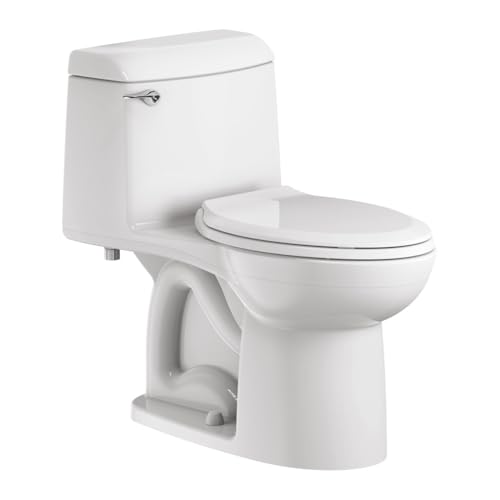
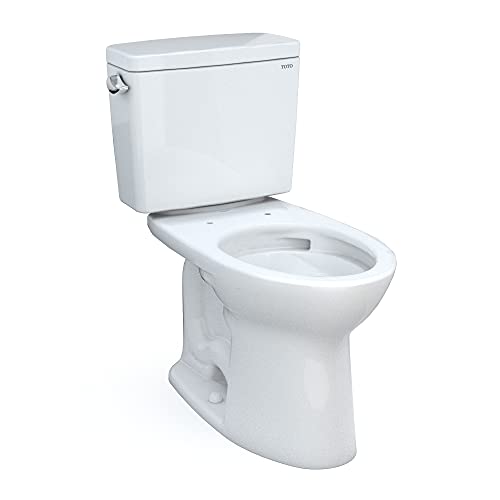
Toilets with 1,000g MaP scores, fully glazed trapways of 2.125 inches or wider, and powerful siphon or tornado-flush systems handle thick toilet paper better than low-scoring or narrow-trapway models. The American Standard Champion 4 and TOTO Drake II are frequently cited by plumbers as top performers for clog resistance in households that use premium paper brands.
Here is how the key models stack up based on published specifications and MaP testing data:
| Toilet Model | MaP Score | Trapway | GPF | WaterSense | Clog Resistance | Check Price |
|---|---|---|---|---|---|---|
| American Standard Champion 4 | 1,000g | 2.375 in. glazed | 1.6 | No | Excellent | Check price |
| TOTO Drake II | 1,000g | 2.125 in. glazed | 1.28 | Yes | Excellent | Check price |
| TOTO UltraMax II | 1,000g | 2.125 in. glazed | 1.28 | Yes | Excellent | Check price |
| Kohler Cimarron | 1,000g | 2 in. glazed | 1.28 | Yes | Very Good | Check price |
| American Standard Cadet 3 | 800g | 2.125 in. glazed | 1.28 | Yes | Very Good | Check price |
| Woodbridge T-0001 | 800g | 2.125 in. glazed | 1.28 | Yes | Good | Check price |
| Gerber Viper | 1,000g | 2 in. glazed | 1.28 | Yes | Very Good | Check price |
| TOTO Aquia IV | 800g | 2.125 in. glazed | 1.0/0.8 dual | Yes | Good (liquid)/Very Good (solid) | Check price |
| Kohler Highline | 1,000g | 2 in. glazed | 1.28 | Yes | Very Good | Check price |
The American Standard Champion 4's 2.375-inch trapway is the widest available in a residential floor-mounted toilet from a major brand. This is one reason it consistently earns top recommendations for households with children who use excessive paper or for homes with older drain lines that catch debris more easily. You can learn more on our best flushing toilets guide.
TOTO's Drake II and UltraMax II use TOTO's Double Cyclone (now Tornado Flush on newer models) technology, which creates a powerful centrifugal water action inside the bowl rather than relying on rim holes. This produces a stronger, more consistent bowl wash that helps carry paper solids into the trap without leaving residual fibers near the trap entrance.
The Kohler Cimarron and Highline use an AquaPiston flush valve that allows water to enter the bowl from 360 degrees rather than a single direction, improving flush uniformity and paper clearance.
Slow-dissolving thick toilet paper accumulates in the septic tank's solid layer faster than it can be broken down by the tank's bacteria. Over time, this increases the frequency of required pump-outs and can allow undissolved fibers to migrate to the drain field, where they clog the soil's absorption pores and potentially cause drain field failure--one of the most expensive residential plumbing repairs, often running $5,000 to $20,000 or more.
Septic system advice from the EPA and state environmental agencies is consistent: use only toilet paper specifically labeled as septic-safe. The bacteria colonies that process waste in septic tanks work continuously but are not capable of rapidly breaking down wet-strength-treated tissue. The fibers accumulate in the scum layer faster than they decompose.
For households on septic systems, this concern dwarfs the in-toilet clog risk. The toilet itself may flush fine for months or years while the septic tank fills with undissolved fiber. The damage is invisible until the system backs up or drain field inspection reveals the problem.
RV toilet paper--the fastest-dissolving category--is the gold standard for septic safety. Some households find the texture too thin for everyday use. A better middle ground is Scott 1000, which the National Association of Home Builders and multiple septic service associations have cited as a mainline brand with good dissolution characteristics and septic compatibility.
Yes, most toilet paper clogs can be cleared with a flange plunger or toilet auger without professional help. A flange plunger--which has an additional rubber flap designed to seal inside the toilet trap opening--is significantly more effective than a cup plunger on toilet clogs. For deeper clogs that do not respond to plunging, a 3-foot or 6-foot toilet auger (closet auger) reaches further into the trap and drain line to break up or retrieve the obstruction.
The step-by-step approach for a fresh paper clog:
See our detailed guide on how to unclog a toilet and our round-up of the best toilet plungers for product recommendations.
Plumbers emphasize one critical mistake homeowners make: flushing multiple times when the toilet is slow to drain. Each additional flush adds water volume and more paper to a partial clog. The mass grows rapidly. The moment a flush drains slowly, stop flushing and address the clog immediately. Overflow prevention is cheaper than cleanup.
Nothing except human waste and toilet paper should go down a toilet. "Flushable" wipes, facial tissue, paper towels, cotton balls, dental floss, and any product not specifically designed to disintegrate in water are common clog sources. Flushable wipes are especially problematic because they carry an industry-applied label that does not match actual dissolution performance--municipal water utilities have documented that flushable wipes arrive at treatment plants largely intact.
Consumer reports and municipal water authority surveys consistently rank flushable wipes as the leading cause of sewer main blockages known as "fatbergs"--combined masses of wipes, grease, and other non-dispersibles. These form in sewer mains but start with individual household flushes.
Facial tissue (Kleenex-type products) is another common household mistake. Facial tissue is manufactured with wet-strength treatment specifically to prevent it from falling apart when wet--the exact opposite of what you want in a drain. A few sheets of facial tissue can bind with other partial blockages far more effectively than standard toilet paper.
See our complete guide on what not to flush for a full list and explanations of why each item is problematic.
Older plumbing--cast iron, early PVC from the 1980s, or clay drain tile--typically has rougher interior surfaces, smaller diameters (some older lines run at 3 inches versus the modern 4-inch standard), and more scale or root intrusion that catches passing material. Thick, slow-dissolving toilet paper accumulates on these irregular surfaces far faster than in smooth modern PVC drain lines, making paper choice significantly more important in homes with older plumbing.
Homes built before 1980 that have not had drain line replacement are particularly vulnerable. The combination of aged pipes, lower water-use habits from older toilet designs, and the shift to thicker commercial paper brands has driven an increase in drain service calls in older housing stock, according to plumbing trade associations.
If you live in a pre-1980 home and experience recurring clogs, the solution is typically two-pronged: switch to a fast-dissolving paper brand AND schedule a video drain inspection to assess the actual condition of your drain lines. Root intrusion or scale buildup may require professional treatment regardless of paper brand.
For additional help with recurring clog problems, see our guide on why your toilet keeps clogging and toilet clog prevention strategies.
No, "septic safe" is not a federally regulated term in the United States. Manufacturers self-certify the label based on their own testing, and there is no mandatory government standard or third-party verification program for toilet paper septic compatibility. The best available proxies are independent dissolution tests, state extension service recommendations, and the testing that accompanies RV/marine certification, which requires genuinely rapid disintegration for use in low-volume holding tanks.
This lack of regulation means the label is a useful signal but not a guarantee. A paper claiming to be "septic safe" may dissolve adequately but still slower than a product not carrying that label. The jar test described earlier in this guide remains the most practical way to verify dissolution performance for any specific product.
The National Sanitation Foundation (NSF) has proposed standards for dispersibility of flushable products, and the International Water Services Flushability Group (IWSFG) has published flushability standards adopted in several countries. These standards are voluntary and primarily focused on wipes rather than toilet paper, but they represent the direction of industry movement toward objective verification.
Standard 2-ply toilet paper is unlikely to clog a properly functioning toilet when used in normal amounts. The risk increases with 2-ply brands that use wet-strength treatment for a softer feel, which also slows dissolution. Using large amounts per flush or having an existing partial blockage in the drain line are more likely contributing factors than 2-ply paper alone.
Three-ply toilet paper is generally safe to flush in small quantities if your toilet has a strong flush and your drain lines are in good condition. However, 3-ply papers consistently dissolve more slowly than 1-ply or 2-ply options. In homes with low-GPF toilets, older plumbing, or septic systems, 3-ply paper represents a meaningfully higher clog and accumulation risk.
Multiple independent dissolution studies have found that Charmin Ultra Soft and Charmin Ultra Strong dissolve significantly more slowly than standard 1-ply papers. Water utilities in cities including Pittsburgh, Portland, and others have cited Charmin as one of the slower-dissolving mainstream brands in their public outreach campaigns. Charmin is not uniquely dangerous but is among the higher-risk mainstream options for drain accumulation.
For homes with pre-1980 plumbing, plumbers generally recommend Scott 1000 or any paper labeled as RV-safe or septic-safe. These dissolve rapidly and leave less residual fiber to catch on rough pipe interiors, scale deposits, or root intrusions. Avoid ultra-thick, quilted, or multi-ply brands until drain line condition has been assessed and any partial blockages cleared.
Charmin's own website and packaging have included septic-safe claims, but independent testing consistently shows it dissolves more slowly than competing brands marketed specifically for septic use. For households on septic systems, choosing a faster-dissolving alternative is a lower-risk approach. The primary concern is long-term solid layer accumulation in the tank rather than immediate drain line clogs.
There is no universal threshold because it depends on the toilet's GPF, MaP score, and trapway diameter. As a general guideline, plumbers suggest flushing no more than two to three times the amount you can hold comfortably in one hand per flush. For thick paper brands, smaller amounts per flush or flushing twice before wiping is complete reduces risk significantly.
Yes, bidet attachments and bidet seats significantly reduce toilet paper use--some users report 70% to 90% reductions. Less paper per flush means fewer fibers in the drain line per use event, which measurably reduces accumulation-based clog risk over time. Bidet seats from brands like TOTO (Washlet) also eliminate the need for pre-wet wipes, removing one of the most common non-dispersible clog causes.
The American Standard Champion 4 features a 2.375-inch fully glazed trapway, the largest available in a standard floor-mounted residential toilet from a major brand. The larger the trapway opening, the less likely any given piece of paper or solid material is to catch and accumulate. This is the primary reason the Champion 4 is commonly recommended by plumbers for households with chronic clog problems or users who prefer premium thick paper.
Yes. Warmer water accelerates the breakdown of paper fibers. Most residential toilet water is near room temperature, typically 60 to 70 degrees Fahrenheit, which is adequate for standard dissolve-rate papers. Cold water from uninsulated supply lines in winter months can slow dissolution enough to make a borderline situation worse. This is one reason clogs are slightly more common in cold-climate homes during winter months.
No, despite their labeling. Multiple municipal water authorities, the Water Environment Federation, and consumer protection organizations in several countries have found that products marketed as flushable wipes do not disintegrate in water quickly enough to be safe for residential plumbing or sewer systems. They arrive at treatment plants largely intact and contribute disproportionately to sewer blockages. Flushable wipes should be disposed of in a trash bin, not the toilet.
MaP (Maximum Performance) flush testing is an independent program that evaluates how many grams of simulated waste a toilet can flush in a single event at its rated GPF. Scores run from 0 to 1,000 grams. For clog-prone households or those using thicker paper, look for toilets rated 800g MaP or higher. A 1,000g MaP rating is the top benchmark and indicates the toilet can handle the maximum standardized waste load reliably.
Yes. Water pressure at the supply line does not directly control flush power. Flush performance is determined by the toilet's tank volume, flush valve design, bowl geometry, and trapway hydraulics. A toilet with good incoming water pressure but a narrow trapway or low MaP score can still clog with thick paper. Conversely, a well-designed 1.28 GPF toilet can outperform a poorly designed 1.6 GPF model on clog resistance.
Colored or printed toilet paper is rare today due to concerns about dyes in wastewater, but the dye content in colored tissue can marginally slow dissolution compared to undyed paper. The far more significant factor is fiber type, ply count, and wet-strength treatment. Most modern toilet papers are uncolored, making dye a non-issue in practice for the overwhelming majority of users.
Toilets in well-maintained plumbing with appropriate paper use typically never need preventive snaking. In homes with older plumbing, documented root intrusion, or residents who use thick paper brands regularly, a plumber may recommend a video inspection every three to five years to assess buildup. Preventive mechanical drain treatment is generally only warranted after a clog history has been established or a camera inspection identifies partial obstruction.
Indirectly, yes. A worn or poorly fitting flapper reduces the amount of water released per flush, lowering effective GPF and flush velocity. This reduced water volume is less effective at moving paper solids through the trap and into the drain line, allowing partial accumulation over multiple flushes. Replacing a worn flapper restores the designed flush volume and often resolves slow-dissolving paper clogs without any other intervention.
Recycled content toilet paper typically uses shorter fiber lengths than virgin pulp papers, which can actually improve dissolution speed. However, some recycled papers add wet-strength agents to compensate for the weaker fiber structure, partially offsetting the benefit. The dissolution rate of the final product matters more than the raw material source. Look for a specific septic-safe label and verify with the jar test if in doubt.
Enzymatic drain maintenance products--which introduce bacteria that digest organic matter--can reduce the accumulation rate of paper fibers, grease, and soap scum in drain lines. They are not a substitute for proper paper selection or a plunger for active clogs, but monthly enzymatic treatment can help maintain flow in older drain lines prone to gradual narrowing. These products are generally safe for septic systems and work best as a preventive maintenance measure, not a reactive one.
The TOTO Drake II carries a 1,000g MaP score and a 2.125-inch fully glazed trapway, placing it among the top performers for clog resistance while using only 1.28 GPF. Its Double Cyclone flush technology creates strong centrifugal bowl wash that moves solids efficiently. Published owner reviews from aggregated retail and plumbing supplier sources consistently rate it well for clog resistance, though no toilet eliminates risk when excessive amounts of thick paper are used per flush.
Start with toilet paper, as it is the lowest-cost intervention. Switch to a fast-dissolving brand, reduce the amount used per flush, and verify the behavior improves over four to six weeks. If clogs continue with appropriate paper and usage amounts, assess the toilet's MaP score and trapway diameter. If your toilet scores below 800g MaP or has a trapway under 2 inches, upgrading to a higher-performing model is a sound investment. If the toilet performs well on paper but clogs persist, schedule a drain line inspection.
Swiss Madison models such as the St. Tropez and Ivy typically feature a 2.125-inch glazed trapway and 1.28 GPF. MaP scores for Swiss Madison vary by model--some reach 800g, while others score lower. They perform adequately with fast-dissolving paper under normal usage conditions. For households specifically prioritizing clog resistance as the primary criterion, models from TOTO, American Standard, and Gerber with confirmed 1,000g MaP ratings provide a more documented performance baseline.
Thick, slow-dissolving toilet paper is a genuine and measurable contributor to household drain clogs, particularly in low-GPF toilets, older plumbing, and septic systems. The fix is straightforward: switch to a septic-safe or fast-dissolving paper brand, moderate the amount used per flush, and pair your plumbing with a toilet carrying a high MaP score and a wide, fully glazed trapway. Models like the American Standard Champion 4, TOTO Drake II, TOTO UltraMax II, Kohler Cimarron, and Gerber Viper provide the strongest combination of flush performance and clog resistance available at mainstream residential price points. The jar test costs nothing and takes under a minute--run it on your current paper brand to see exactly where you stand before spending a dollar on anything else.
Learn why toilet trapways curve like an S, how each bend blocks sewer gas, and what the shape means for clogs and…
Read the guideAlmost every US toilet has a left-side handle. Learn the plumbing and mechanical reasons behind the layout and when it actually changes.
Read the guideHome toilets rely on tanks because household water lines lack the pressure that public flushometer systems use to flush straight from the…
Read the guide