
Toilet Tank Loose and Wobbly? How to Tighten It
Toilets4.6
A loose toilet tank usually means worn tank bolts. Here is how to check, tighten, and fix a wobbly tank without cracking…
Read the guideEvery component inside your tank and bowl has a specific job. Understanding how they interact tells you why clogs happen, why flushes go weak, and which design choices actually matter when you shop for a new toilet.
A toilet works by releasing stored tank water through a flush valve, which creates a siphon in the trapway that pulls waste out of the bowl. Gravity-fed designs rely on water volume and drop height; pressure-assisted models add compressed air to the equation. The fill valve then refills the tank to the correct level, ready for the next flush.
Before tracing the path of a single flush, it helps to name every part and understand what it contributes. A standard gravity-flush toilet has six structural components that must work together in the correct sequence.
| Component | Location | Primary Function | Failure Mode |
|---|---|---|---|
| Flush Valve (Flapper) | Tank bottom | Releases stored water into bowl | Running toilet if seal fails |
| Fill Valve | Tank left side | Refills tank after flush | Slow fill or constant hissing |
| Float | Attached to fill valve | Signals when to stop refilling | Overflow if stuck low; low water if stuck high |
| Overflow Tube | Center of tank | Safety relief if water rises too high | Phantom flush if flapper leaks water past it |
| Trapway | Inside the porcelain base | Creates and sustains the siphon | Clogs if passage diameter is too narrow |
| Rim Jets / Siphon Jet | Under rim and bowl floor | Direct water to initiate siphon | Weak flush if jets clog with mineral scale |
Understanding each component's failure mode is arguably as valuable as knowing what it does when healthy. Most toilet repairs come back to one of these six parts.
When you press the handle, a lift chain pulls the flapper off the flush valve seat, releasing several gallons of water into the bowl in about three to four seconds. That sudden rush of water fills the trapway, creates a full siphon, and atmospheric pressure on the surface of the bowl water pushes waste through the trap and into the drain. Once the tank empties, the flapper drops, the fill valve opens, and the tank refills to the set water level -- typically marked by a line inside the tank.
Let's break this into four distinct phases:
Pressing the handle (or pushing a dual-flush button) lifts the flapper or tower flush valve through a lift chain or lever arm. Some modern toilets from TOTO and Kohler use a tower-style flush valve that rises straight up rather than hinging open, which allows a larger valve opening and a faster water release rate. The TOTO Drake uses a 3-inch flush valve compared to the 2-inch valves found on many older toilets -- that 56% increase in opening area significantly speeds the initial surge.
Water exits the tank through the flush valve opening and enters the bowl through two channels. The majority flows down through the rim, emerging from dozens of angled rim jets that create a circular swirling current. A secondary channel directs a concentrated stream through the siphon jet, a small port in the floor of the bowl aimed directly at the trapway entrance. This siphon jet stream is critical -- it jumpstarts the siphon effect by packing water tightly into the trapway opening before the rim flow even finishes circulating.
The siphon jet accounts for roughly 30 to 40 percent of flush effectiveness in most gravity toilets. When mineral deposits block this port, flush power drops dramatically even though the toilet appears to be flushing normally. Cleaning the siphon jet port with a bent wire or commercial descaler typically restores most of the lost performance without any part replacement.
A siphon is a self-sustaining flow created when a liquid fills a curved pipe completely and atmospheric pressure on the inlet side pushes fluid over the curve and down the outlet side. In a toilet, the trapway forms that curved pipe. Once water completely fills the trap, pressure imbalance drives the contents of the bowl through at high speed. You hear this as the characteristic gurgling sound at the end of a flush -- that sound is air breaking the siphon once the bowl empties. The siphon lasts for only two to four seconds but does the actual work of waste removal.
Once the tank empties, the flapper drops back onto the valve seat. The float, which was riding near the top of the tank water, now sits near the bottom. This low float position opens the fill valve, which meters water in through a small internal port. Water refills both the tank and the bowl simultaneously -- tank water rises in the tank, while a small fill tube directs a portion of the incoming water down the overflow tube to top off the bowl water level. When the float reaches the preset cutoff height (typically marked inside the tank), the fill valve shuts. On a properly tuned toilet, this cycle takes 60 to 90 seconds.
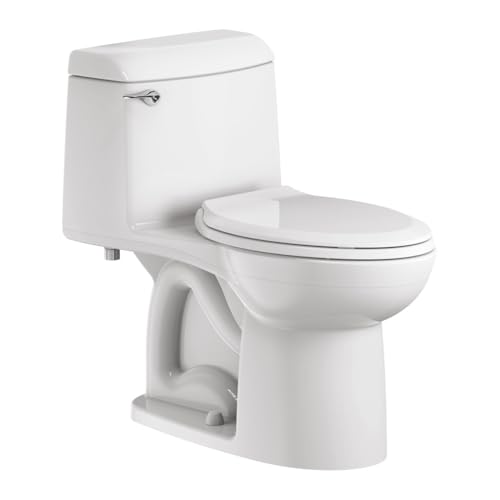
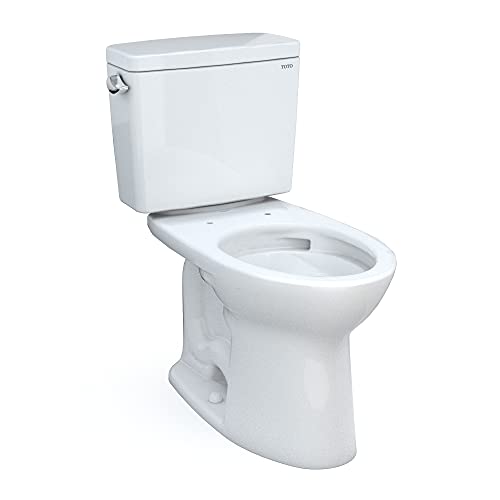
The trapway is the S-shaped or P-shaped internal passage cast into the porcelain base of the toilet that connects the bowl to the floor drain. Its narrowest internal diameter -- the "minimum passage" -- determines what can pass through without clogging. Most gravity toilets have a minimum trapway passage of 2 inches; high-performance models like the American Standard Champion 4 advertise a 2 3/8-inch fully glazed trapway, and the TOTO Drake II uses a 2 1/8-inch passage with a fully skirted glaze.
Trapway geometry affects two things: clog resistance and siphon strength. A wider trapway allows more solid material to pass, reducing clog frequency. However, a wider trapway must compensate with higher water velocity to sustain the siphon. This is why the Champion 4 pairs its large trapway with a large 4-inch flush valve -- the bigger valve dumps water faster, keeping velocity high enough to complete the siphon even through the wider passage.
Glazing matters as much as diameter. A fully glazed trapway has a smooth vitreous china finish all the way through the passage. Waste and paper slide through with minimal friction. Unglazed sections create micro-ridges where paper fibers catch, and partial clogs build up over months of use. When comparing toilets, look for "fully glazed trapway" in the specifications, not just trapway diameter alone.
| Model | Trapway Diameter | Flush Valve Size | MaP Score | Glaze | Check Price |
|---|---|---|---|---|---|
| American Standard Champion 4 | 2 3/8 in | 4 in | 1,000 g | Fully glazed | Check price |
| TOTO Drake II | 2 1/8 in | 3 in | 1,000 g | Fully glazed | Check price |
| Kohler Cimarron | 2 1/8 in | 3 in | 800 g | Fully glazed | Check price |
| Gerber Viper | 2 1/8 in | 3 in | 1,000 g | Fully glazed | Check price |
| Woodbridge T-0001 | 2 1/8 in | 3 in | 800 g | Fully glazed | Check price |
A pressure-assisted toilet replaces the gravity tank with a sealed vessel inside the tank that traps air as water enters under supply line pressure. When flushed, the compressed air forces water out at significantly higher velocity than gravity alone can produce. This results in a louder, more forceful flush that typically clears the bowl with 0.8 to 1.0 GPF rather than the 1.28 to 1.6 GPF required by most gravity models.
The key component in a pressure-assisted system is the pressure vessel, supplied by Flushmate in most U.S. toilets. Water enters the vessel through a standard supply connection, and as the vessel fills, it compresses the trapped air pocket above the water line. System pressure typically builds to between 15 and 25 psi, depending on incoming supply line pressure.
When you push the flush actuator, a pressure-relief valve releases, and the compressed air drives water out of the vessel at high velocity through the flush valve opening into the bowl. Because the water arrives with more kinetic energy than gravity provides, the siphon initiates faster and more completely. Bowls empty faster and waste transport through the drain line is more positive.
The tradeoffs are real. Pressure-assisted toilets are noticeably louder than gravity models -- the flush produces a distinctive whooshing bang that can be heard clearly in adjacent rooms. They cost more to purchase and the Flushmate vessel is the primary replacement part when the system ages, typically running $60 to $100. Supply line pressure must remain above 20 psi for reliable operation; homes with low water pressure may find pressure-assisted flush consistency disappointing.
Pressure-assisted technology makes the most sense in commercial or high-traffic residential settings where consistent waste removal with minimal water is a priority. For standard residential use, high-performing gravity models like the TOTO Drake or American Standard Champion 4 achieve MaP 1,000 g scores at 1.28 GPF without the noise penalty or the mechanical complexity of a pressure vessel. The choice comes down to supply line pressure at the installation site and personal tolerance for flush noise.
Maximum Performance (MaP) testing is an independent third-party protocol that measures how many grams of simulated solid waste a toilet can clear in a single flush. The test uses a soybean paste and paper mixture applied in increasing increments until the toilet fails to completely evacuate the bowl. Scores run from 250 g to 1,000 g, with 600 g considered the minimum acceptable for residential use and 800 g or above recommended for families. The 1,000 g rating is the maximum tested and indicates the toilet passed every increment without failure.
MaP testing was developed jointly by the EPA, water utilities, and the toilet industry as an objective measure of flush performance separate from marketing claims. Results are publicly available at the MaP testing database at map-testing.com. As of 2026, more than 5,000 toilet models have been tested.
What the score does not tell you is equally important. MaP tests a single flush. It does not measure how often the toilet clogs with real-world use, how well it handles toilet paper specifically, or how the flush performance degrades over time as jets accumulate mineral deposits. Aggregated owner reviews on high-MaP toilets often show fewer clog complaints, but the correlation is not perfect. A 1,000 g score at 1.28 GPF means the toilet is efficient and powerful; it does not mean it is incapable of clogging under all conditions.
Dual-flush toilets use two separate flush options -- typically 0.8 GPF for liquid waste and 1.28 GPF for solid waste -- controlled by a dual-button actuator or a split handle. Internally, both options use the same trapway and bowl, but the flush valve opens for a shorter or longer duration depending on which button is pressed. The shorter (partial) flush releases only enough water to clear liquid waste and toilet paper without initiating a full siphon; the longer (full) flush delivers a complete siphon cycle.
The TOTO Aquia IV is the most widely cited dual-flush model in the residential market. It uses TOTO's proprietary Dynamax Tornado flushing technology, which pairs a dual-nozzle rim flush with a 360-degree cyclonic bowl rinse instead of individual rim jets. This reduces the number of ports that can clog with mineral deposits while distributing water more evenly around the bowl surface. The Aquia IV achieves WaterSense certification at a combined average of 1.0 GPF, calculated using the 1:2 partial-to-full flush ratio specified by EPA testing protocols.
A common concern with dual-flush toilets is partial-flush insufficiency. If a household primarily uses the partial flush for solid waste, clogs become more frequent because the reduced water volume does not consistently complete the siphon. This misuse pattern is more common in homes where adults assume the partial flush is sufficient for all uses. The practical guidance from most plumbers is to always use the full flush for solid waste and reserve the partial flush strictly for liquid waste and light paper disposal.
The fill valve is a flow-control device that opens when the float drops below the preset cutoff level and closes when the float reaches that level. Modern fill valves use a float cup that travels up and down the fill valve shaft, replacing the older ballcock design with an external ball float on an arm. The cutoff level is adjustable -- turning a screw or sliding the float cup up or down changes the water level in the tank, which directly affects flush volume and power.
The water level inside the tank should sit approximately one inch below the top of the overflow tube. If water rises above the overflow tube, it drains silently into the bowl and down the drain, wasting water continuously. If the water level is set too low, the toilet has less stored volume to drive the flush, and siphon performance degrades. Many weak-flush complaints that do not involve any mechanical failure trace back to a float set below the correct level, often because a plumber or homeowner adjusted it incorrectly during a previous repair.
The fill tube -- a small flexible tube clipped to the overflow tube -- is responsible for refilling the bowl to its correct level after each flush. If this tube becomes disconnected or kinked, the tank refills but the bowl water level stays low. A low bowl water level shortens the effective column of water available to the siphon, reducing both flush force and waste clearing efficiency.
Before diagnosing any flush problem as requiring parts replacement, check three things in order: the float level against the tank fill line, the fill tube position and connection to the overflow tube, and the siphon jet for mineral blockage. These three free or near-free checks resolve the majority of residential flush complaints. Part replacement typically becomes necessary only when the flapper wears out -- a common occurrence after two to four years depending on water chemistry in the area.
Siphonic toilets, dominant in North America, use a deep trapway and the siphon effect to evacuate the bowl. Washdown toilets, common in Europe and Asia, use a direct water thrust to push waste over a shorter, steeper trapway without relying on siphon action. Siphonic designs hold more water in the bowl surface (better odor control and stain resistance) but require more water to initiate the siphon. Washdown designs use less water per flush but expose more of the bowl surface above the waterline.
Most toilets sold in the United States are siphonic. The North American plumbing standard calls for a 3- or 4-inch drain line with a 1/4-inch slope per foot, which is ideal for the longer, curved trapway geometry siphonic toilets require. European washdown toilets often have a smaller footprint, a shallower bowl, and a less pronounced trap curve -- characteristics that can make them incompatible with North American rough-in distances and drain slope specifications.
Some TOTO models sold in the United States incorporate washdown-influenced rim technology (the Tornado Flush) while retaining a siphonic trapway, capturing some of the reduced-jet-clogging benefit of washdown designs without abandoning the deep water surface North American consumers expect.
The original federal flush standard set in 1994 limited toilets to 1.6 gallons per flush (GPF). Before that, toilets commonly used 3.5, 5, or even 7 GPF. The 1994 limit forced manufacturers to redesign trapways, bowl geometry, and flush valve sizing to maintain acceptable performance with significantly less water.
EPA WaterSense certification, launched in 2006, tightened the requirement to 1.28 GPF or less while requiring the toilet to achieve a minimum 350 g MaP score. As of 2026, WaterSense-certified toilets must demonstrate both water efficiency and minimum flush performance in third-party testing before earning the certification label. The EPA estimates that replacing a pre-1994 toilet with a WaterSense model saves approximately 13,000 gallons of water per year per household.
The most efficient certified models push below 1.0 GPF. The Kohler Highline Arc Comfort Height achieves certification at 1.1 GPF. The TOTO Aquia IV dual-flush model averages below 1.0 GPF in combined use. The Swiss Madison Ivy uses 1.1 GPF in its single-flush configuration. These ultra-low-flow designs rely on larger flush valves, optimized trapway geometry, and advanced rim jet patterns to maintain cleaning performance at volumes once considered insufficient for reliable siphon initiation.
For a detailed comparison of the most water-efficient certified options, see our guide to EPA WaterSense toilets.
| Era / Standard | GPF Limit | Notes |
|---|---|---|
| Pre-1980 standard | 5.0 -- 7.0 | No federal limits; older cast-iron trapways |
| 1980s low-flow efforts | 3.5 | Voluntary reductions; inconsistent performance |
| 1994 Federal Standard | 1.6 | Early models had clog issues due to inadequate redesign |
| EPA WaterSense (2006+) | 1.28 | Requires third-party MaP testing; 350 g minimum |
| Current high-efficiency leaders | 0.8 -- 1.1 | Dual-flush averages; pressure-assist single-flush |
Clogs occur when the mass or volume of material in the bowl exceeds the carrying capacity of the flush. Three factors determine carrying capacity: water volume delivered per flush, water velocity through the trapway, and trapway diameter. A toilet can fail on any one of these dimensions even if the other two are adequate.
Mineral-scaled siphon jets reduce water velocity. A low float setting reduces volume. An aging flapper that does not open fully reduces the speed of the initial surge. Any of these can push a toilet below its functional clog threshold even if it passed a 1,000 g MaP test when new. Regular descaling of rim jets and the siphon jet port, combined with maintaining the correct water level, keeps most gravity toilets performing near their tested specification.
Design choices that reduce clog frequency in the long run include: fully glazed trapways, large-diameter flush valves (3 inches or larger), oversized siphon jet openings, and rimless or semi-rimless bowl designs that make jet cleaning accessible. Rimless toilets from European brands eliminate the under-rim channel where traditional jet holes accumulate scale, directing water instead through a single or dual open channel that can be wiped clean easily.
For specific models optimized for clog resistance, see our best no-clog toilets guide and our roundup of best flushing toilets across all budget ranges.
Smart toilets and combination toilet-bidet units retain the same fundamental flush mechanism -- tank, flush valve, trapway, siphon -- but layer electronic controls over the basic hydraulics. The flush actuator becomes a sensor or button on a remote or side panel. Some models add an automatic flush triggered by the seat sensor detecting that the user has stood up.
TOTO's Neorest series integrates their Tornado Flush technology (the same dual-nozzle cyclonic system used in the Aquia IV) with a Washlet seat and automatic flushing. Kohler's Numi smart toilet uses a touchscreen controller and voice activation while retaining Kohler's standard gravity flush mechanism internally. The tank size, GPF rating, and trapway specifications of smart toilets follow the same parameters as conventional models in the same brand lineup -- the electronic features sit on top of the hydraulics, not in place of them.
The main mechanical addition in many smart toilets is an instant-heat or tankless water heater for the bidet seat function, which is entirely separate from the flush circuit. A water supply T-fitting typically powers both the toilet fill valve and the bidet seat heater from a single shut-off valve under the tank.
For buyers considering this category, our best flushing smart toilets guide covers the top-performing models with full flush specification data.
With a clear picture of how the mechanism works, most toilet problems map directly to a specific component or adjustment. The diagnostic path below covers the most common complaints:
Weak flush, bowl does not empty fully: Check float level first (raise it if below the fill line). Inspect siphon jet port for mineral blockage. Verify the flapper opens completely when the handle is pressed -- a worn chain that is too short can limit flapper travel. If all three are normal, the flush valve seat may be warped and preventing a full-speed water release.
Toilet runs continuously: The flapper is the most common cause. Lift the flapper with your hand -- if the running stops, the flapper seat is leaking. Check the flapper for calcium deposits along the seal surface. If the flapper is clean and the running continues, the float may be set too high, allowing water to flow constantly over the overflow tube.
Phantom flushing (tank refills by itself): A flapper that leaks slowly allows tank water to drop below the float cutoff, triggering a short fill cycle. Add a few drops of food coloring to the tank water -- if color appears in the bowl without flushing, the flapper has a slow leak.
Toilet takes longer than 90 seconds to refill: Check the shut-off valve position (should be fully open). Inspect the fill valve screen for sediment blockage -- a small mesh screen at the base of the fill valve clogs with hard water deposits and restricts flow rate. Remove the fill valve cap (most brands allow a quarter-turn removal) and clean the screen under running water.
Gurgling sound after flushing: Gurgling from the bowl immediately after flushing is normal -- it is air breaking the siphon. Gurgling that continues for more than a few seconds, or gurgling that comes from other drains while this toilet is flushed, indicates a venting issue in the drain stack, not a toilet mechanism problem.
The combination of flush valve size, water volume (GPF), trapway diameter, and siphon jet placement determines flush power. A 3-inch or 4-inch flush valve releases water faster than a 2-inch valve, creating a more forceful surge. Fully glazed, wider trapways reduce friction. The siphon jet port placement and size determines how quickly the siphon initiates. MaP test scores give you an objective comparison across all these variables.
Modern toilets certified under EPA WaterSense use 1.28 GPF or less. Dual-flush models use 0.8 GPF on the partial setting and 1.28 GPF on the full setting. Pressure-assisted models may operate at 0.8 to 1.0 GPF. Pre-1994 toilets use 3.5 to 7.0 GPF. Check the toilet's label on the tank underside or inside the tank lid for the exact GPF rating.
The MaP testing protocol uses a maximum score of 1,000 g. For a family of four or more, a score of 800 g or higher is recommended. A score of 600 g is the practical minimum for adult use. Single-occupant households can function adequately with a 500 g score. TOTO Drake, Drake II, UltraMax II, American Standard Champion 4, and Gerber Viper all achieve 1,000 g scores.
Slow fill is most often caused by a partially closed shut-off valve, a clogged fill valve screen, or low supply line water pressure. Check that the shut-off valve under the tank is fully counterclockwise (open). Remove the fill valve cap and rinse the screen under a faucet. If pressure in the house is generally low, a pressure-boosting solution at the main line may be needed.
Yes. Raise the float to the maximum fill line to increase water volume. Clean the rim jets and siphon jet port with a descaling product or a flexible bottle brush to restore flow rate. If the flapper is more than three years old, replace it -- stiffened rubber seals do not open as fully as a new flapper, reducing water release speed. These three steps restore most gravity toilets to near-original flush performance.
A 3-inch flush valve has a 125% larger opening area than a 2-inch valve. This larger opening allows water to exit the tank faster, creating a more powerful surge into the bowl. Most toilets manufactured before 2005 used 2-inch valves. Modern high-performance models from TOTO, American Standard, and Kohler use 3-inch or 4-inch valves, which is one of the primary reasons newer designs flush more effectively even at lower GPF.
To earn EPA WaterSense certification, a toilet must use 1.28 GPF or less and achieve a minimum MaP flush test score of 350 g. The testing must be conducted by an independent laboratory, and the toilet manufacturer must submit documentation to the EPA. The certification is model-specific -- a brand can have WaterSense models and non-WaterSense models in the same lineup.
Noise during flushing comes from several sources. Water rushing through a narrow supply line or a partially closed shut-off valve creates a high-pitched whine. The siphon breaking at the end of the flush produces the familiar gurgling sound. Pressure-assisted toilets are inherently louder than gravity models due to the compressed-air release. Vibration in loose tank bolts or a worn ballcock-style fill valve can also generate rattling or banging sounds.
Dual-flush toilets save water because liquid waste removal requires far less water than solid waste removal. By using 0.8 GPF for liquid flushes and reserving 1.28 GPF for solid waste, a household using the buttons correctly can reduce average water consumption per flush to below 1.0 GPF. The EPA calculates dual-flush averages using a 1:2 partial-to-full ratio, matching typical household use patterns. Actual savings depend on how consistently users select the appropriate button.
The trapway is the internal S-shaped or P-shaped passage inside the porcelain base that connects the bowl to the floor drain and creates the siphon. The specification to look for is minimum passage diameter, listed in toilet specifications. A 2-inch minimum passage is standard; 2 1/8 inches is better; 2 3/8 inches (as in the American Standard Champion 4) is among the largest available in consumer gravity toilets. Larger passages reduce clog frequency in high-use households.
Rubber flappers typically last two to four years in areas with hard water or chlorinated municipal water, and up to five years in softer water conditions. A failing flapper causes the toilet to run continuously or ghost-flush (refill by itself without being flushed). The dye test -- food coloring in the tank -- confirms a leaking flapper in minutes. Replacement flappers cost $5 to $15 and require no tools beyond lifting the tank lid.
Low bowl water level is almost always caused by the fill tube being disconnected from the overflow tube. The fill tube must direct refill water down the overflow tube into the bowl after each flush. If this tube pops off, tank water rises to the correct level but bowl water stays low. Check that the fill tube is clipped to the overflow tube with its outlet pointing down into the tube. Other causes include a cracked bowl (rare) or a partially blocked siphon jet that allows slow water seepage.
The internal mechanism -- fill valve, flapper, overflow tube, float -- is functionally identical between one-piece and two-piece toilets from the same manufacturer. The difference is structural: one-piece toilets have the tank and bowl fused in a single cast unit, while two-piece toilets connect them with bolts and a tank-to-bowl gasket. Two-piece toilets are easier to ship and replace separately if damaged. One-piece designs eliminate the tank-to-bowl joint, removing one potential leak point.
Ghost flushing (also called phantom flushing) is when a toilet refills by itself without being flushed. The cause is almost always a slow flapper leak. Water seeps past the worn flapper seal into the bowl, the tank level drops below the float cutoff, and the fill valve activates to refill the tank. This cycle can repeat every 15 minutes or every few hours depending on the leak rate. A leaking flapper wastes an estimated 30 to 500 gallons of water per day, depending on severity.
TOTO's Tornado Flush uses two nozzles positioned at opposite sides of the bowl rim to create a 360-degree cyclonic water flow rather than relying on dozens of individual rim jets. This centrifugal pattern cleans more of the bowl surface with each flush while using less water. Because there are only two nozzle ports instead of many small holes, there are fewer points for mineral deposits to block. The technology is used in the Aquia IV, Nexus, Vespin II, and several other TOTO models at both 1.28 GPF and dual-flush configurations.
You can lower the float setting to reduce water volume per flush, but this typically degrades flush performance and increases clog frequency. Flapper replacement with an adjustable-volume flapper (such as a Fluidmaster Flusher Saver) can reduce volume to approximately 1.28 GPF on some 1.6 GPF models, but performance depends on the specific trapway geometry. The more reliable path to water savings is replacing the toilet with a WaterSense-certified model, which is designed from the bowl up to flush effectively at lower volume.
Siphonic toilets create negative pressure in the trapway to pull waste out of the bowl through a deep, curved passage. This results in a large water surface in the bowl and a quieter, more thorough rinse. Washdown toilets use a direct water thrust to push waste over a shorter, steeper trap without a full siphon. Washdown designs are simpler mechanically and use less water but expose more bowl surface above the waterline. Siphonic designs dominate the North American market; washdown is common in Europe and Asia.
Toilet height (standard vs. comfort height) affects user ergonomics, not the flush mechanism itself. The trapway geometry, GPF rating, and flush valve design are independent of whether the toilet sits at 14 to 15 inches (standard) or 16 to 18 inches (comfort height). Both configurations use the same internal parts and produce the same siphon dynamics. Comfort height toilets are sometimes described in specifications as ADA-compliant height or chair-height toilets.
Rimless toilets eliminate the traditional under-rim channel and its associated jet holes. Instead, water enters the bowl through one or two open channels at the top of the bowl rim and flows in a directed sheet around the interior surface. The open rim design makes the distribution channel fully visible and accessible for cleaning, which is its main hygiene advantage. Flush performance depends on the specific channel geometry -- well-designed rimless toilets match the cleaning coverage of traditional multi-jet designs.
The fill valve is the component on the left side of the tank that controls water entry after each flush. Signs that it needs replacing include a hissing sound that continues after the tank is full, a squealing noise during fill, very slow tank refill even with a fully open shut-off valve, or water that continues to run into the bowl through the overflow tube. Fill valves cost $10 to $25 and replacement is a standard DIY repair requiring only a wrench and about 15 minutes.
A toilet's flushing power comes down to four mechanical factors working together: flush valve size, water volume, trapway geometry, and siphon jet velocity. Most weak-flush and clog problems trace back to one of these four elements being out of spec -- often through mineral scale buildup or a low float setting rather than a broken part. For buyers, the combination of a MaP score of 800 g or higher, a fully glazed 2 1/8-inch or larger trapway, and a 3-inch or 4-inch flush valve identifies the models that will deliver consistent performance over years of use. Consult our best flushing toilets guide for top-rated options across every budget and configuration.
A loose toilet tank usually means worn tank bolts. Here is how to check, tighten, and fix a wobbly tank without cracking…
Read the guideWater stains on the ceiling under an upstairs bathroom point to a specific toilet leak source. Here is how to find it…
Read the guideFloat ball vs float cup fill valves explained: how each shuts off water, why float cups are the modern standard, and which…
Read the guide