

Best Scandinavian Toilets (2026)
Toilets4.6
Clean, low-profile silhouettes with real MaP-verified flush performance and efficient dual-flush water use, sized for a minimalist Nordic bathroom without sacrificing function.
Read the guideThat deep gurgling sound you hear after flushing your toilet is your plumbing system signaling a pressure imbalance. Understanding exactly whether it is a vent problem or a drain clog -- and which one -- determines whether you need a $0 fix on your roof or a call to a plumber. This guide walks you through the complete diagnostic process.
Research updated June 2026.
Drain gurgling after a toilet flush is caused by air pressure imbalance in the drain-waste-vent system. A blocked vent stack is the most common cause in isolated single-toilet cases; a partial drain clog is the next most likely. If multiple fixtures gurgle simultaneously, a main sewer line obstruction is the culprit and requires professional attention.
Every residential plumbing system has three interconnected networks: drain pipes that carry wastewater away, waste pipes that connect to the main sewer line, and vent pipes that allow air into the system to maintain neutral pressure. When the vent cannot supply air fast enough to replace the water leaving during a flush, negative pressure develops in the drain pipe, and that pressure pulls air backward through the toilet trap -- the standing-water curve at the bottom of the bowl -- producing the characteristic gurgling sound.
The physics are straightforward. When you flush, several gallons of water drop rapidly through the trap and into the drain branch pipe. That water has to displace the air already in the pipe. Under normal operating conditions, replacement air enters through the vent stack on the roof, allowing smooth laminar flow. When the vent is blocked or restricted, the draining water creates a partial vacuum. The easiest route for air to equalize that vacuum is through the toilet trap itself -- air bubbles up through the standing water and you hear gurgling.
The same pressure effect happens with a drain clog. A partial obstruction in the drain line does not stop flow entirely but forces draining water to squeeze past the restriction. The turbulence and reduced pipe cross-section creates chaotic air movement that registers as gurgling both during and immediately after a flush.
These two causes -- vent restriction and drain clog -- are distinct problems with different locations in the plumbing system, different diagnostic tests, and different fixes. Distinguishing between them before you start troubleshooting saves significant time and prevents the mistake of snaking a clean drain when the real problem is on your roof.
A useful rule of thumb from drain professionals: if the gurgling lasts for more than two seconds after the bowl finishes draining, the pressure source is likely in the vent, not the drain. A clog typically causes gurgling during the drain cycle itself. A vent restriction creates a "finish gurgle" as the final water clears the trap and the pressure differential is largest.
The most reliable way to distinguish a vent problem from a drain clog is to observe the drain speed and the timing of the gurgle. A clog typically slows the drain and causes gurgling during the flush cycle; a vent blockage usually produces gurgling after the bowl empties while the drain speed remains relatively normal. Running water from another fixture and watching whether that triggers the gurgle also identifies shared-drain pressure issues distinct from either cause.
Use the following diagnostic sequence to identify the cause before spending time or money on a fix:
Flush the toilet and observe the drain cycle. A healthy toilet tank holds 1.28 to 1.6 gallons and should empty the bowl completely within 6 to 8 seconds. If the bowl drains noticeably slowly -- taking 12 or more seconds, or leaving a large amount of water that slowly recedes after the main flush -- a partial drain clog is the primary suspect. If the bowl drains at normal speed and gurgling only occurs at the tail end of the drain cycle, shift your suspicion to the vent stack.
Note exactly when the gurgling occurs relative to the flush. Gurgling that starts during the flush and accompanies the drain cycle points to a clog creating turbulence as water forces past a restriction. Gurgling that starts after the bowl empties -- a residual "sucking" bubbling as the trap equilibrates -- is the signature of vent-side negative pressure. In some cases you will hear both patterns, indicating a partial clog that is also restricting vent airflow in the branch.
Run the sink in the same bathroom at full flow for 30 seconds while watching the toilet. Run the shower for one minute and observe the toilet. If these actions trigger gurgling in the toilet -- or cause the toilet to gurgle while the nearby fixture drains -- you have a shared drain line issue with a blockage downstream from the point where the fixtures converge. This is distinct from both a toilet-specific clog and a vent blockage, and it requires clearing the shared drain branch or main line rather than working at the toilet fixture itself.
With safe roof access, have a helper flush the toilet while you hold your hand near (not over) the vent pipe outlet on the roof. You should feel a slight positive pressure pulse as displaced air exits. If you feel a strong suction instead, or if you hear a hissing or whistling at the vent outlet during the flush, the vent is restricted. No airflow at all during a flush confirms a complete vent blockage. Shining a flashlight down the vent pipe opening is the next step to identify what is causing the restriction.
| Symptom Pattern | Most Likely Cause | Confirm With | Fix Location |
|---|---|---|---|
| Gurgling after bowl empties, normal drain speed | Blocked vent stack | Roof vent airflow test | Roof vent pipe |
| Gurgling during drain, slow bowl empty | Partial drain clog | Drain speed timing | Toilet drain branch |
| Gurgling when shower or sink drains | Shared drain blockage | Cross-fixture test | Shared drain branch or main line |
| Multiple toilets gurgle simultaneously | Main sewer line obstruction | Main cleanout inspection | Main sewer line (professional) |
| Gurgling + rocking toilet + odor at base | Failing wax ring | Physical inspection of base | Wax ring and floor flange |
| Gurgling + slow drains throughout home + odor | Septic tank at capacity | Tank inspection | Septic tank (professional pump-out) |
The clearest signs of a blocked plumbing vent stack are: gurgling sounds that occur after the toilet bowl finishes draining rather than during it, a "finish suck" sound at the end of a flush, gurgling in a single toilet while all other fixtures drain normally, and in winter, intermittent gurgling that worsens in freezing temperatures. Roof vent pipes that are undersized (under 2 inches in diameter) or that have accumulated debris are the most common culprits.
Vent stack blockages are the leading cause of isolated toilet gurgling -- meaning gurgling that occurs at one fixture without affecting any other drains in the house. The vent pipe serves every drain fixture on its branch, so a blockage in the main vent stack will eventually affect multiple fixtures, but in the early stages it tends to manifest first at the fixture with the highest water volume per flush -- which is the toilet.
The most common vent stack obstructions by frequency:
Vent stack blockages from leaves and debris peak in late October and early November in temperate climates. If your toilet starts gurgling in the fall after a windy day or a rainstorm, check the vent stack first before spending any time on the drain. A 10-minute roof inspection can confirm or rule out the most common cause in seconds.
Clearing a vent stack requires safe roof access. Do not attempt this without proper footwear, roof anchor equipment if the pitch is steep, or a helper to stabilize a ladder. The steps are:
If the vent pipe is ice-blocked, the only safe approach is to wait for warmer temperatures unless you have access to warm air from the attic side that can thaw the pipe without creating steam hazards. Pouring hot water into an ice-blocked vent can cause thermal shock in PVC or ABS pipes in cold conditions. A licensed plumber can use purpose-built warm-air clearing equipment if the blockage persists through an extended cold snap.
Drain-related gurgling is distinguished from vent-related gurgling by the timing and the drain speed. A clog causes gurgling during the flush cycle as water forces past the obstruction, typically accompanied by a visibly slower bowl drain. The bowl may take 12 or more seconds to empty, or water may rise temporarily in the bowl before receding. A blocked vent, by contrast, does not slow the drain speed appreciably -- it creates a finish gurgle as the last water clears the trap.
Partial drain clogs are the second most common cause of toilet gurgling. Unlike a full clog that prevents draining entirely, a partial obstruction allows flushing to complete but creates the back-pressure and turbulence that sounds like gurgling. The obstruction is most frequently located in the toilet's built-in trap, the 4-inch horizontal drain branch that connects the toilet to the main stack, or at a wye fitting where the toilet drain joins the main drain line.
The materials most commonly responsible for partial drain clogs that cause gurgling:
Step 1 -- Flanged plunger: A standard flat cup plunger generates diffuse suction and is poorly suited to toilet clogs. Use a flanged plunger, where the rubber has a forward-projecting ring designed to seat inside the toilet drain opening. With the flanged portion inserted into the drain, push down slowly to create a water seal, then pull up sharply. Repeat 10 to 12 times and flush to test. This is effective against soft clogs in the trap and immediate drain area.
Step 2 -- Toilet auger (closet auger): A toilet auger is a 3-foot or 6-foot flexible cable housed in a protective rubber sleeve that prevents scratching the porcelain bowl. Feed the cable into the drain, turn the handle clockwise to advance the spiral tip, and work it past the trap bend. When the tip engages an obstruction, continue rotating to either break it up or hook and retrieve it. A 3-foot auger reaches into the drain branch beyond the toilet trap; a 6-foot model extends further into the horizontal branch.
Step 3 -- Main line cleanout snake: If augering through the toilet does not resolve the gurgling, access the main drain cleanout -- the capped Y-fitting on the 4-inch main drain pipe, usually in a basement, crawl space, or along an exterior wall. Run a power drain snake (1/2-inch cable, 50 to 75 feet) through the cleanout to clear obstructions in the main drain branch beyond the reach of a standard toilet auger.
Do not use chemical drain cleaners on a toilet gurgling problem. They do not penetrate solid blockages effectively and can damage older pipes, rubber toilet components, and wax rings. The active ingredients in liquid drain cleaners are caustic (sodium hydroxide) or acid-based (sulfuric acid) compounds that sit in the drain and generate heat -- in a toilet where the bowl is full, that heat can crack porcelain.
| Tool | Best For | Reach | Skill Level |
|---|---|---|---|
| Flanged plunger | Soft clogs in toilet trap | In-trap only | Beginner |
| 3-foot toilet auger | Clogs in trap and immediate drain branch | 3 feet past trap | Beginner |
| 6-foot toilet auger | Clogs deeper in drain branch | 6 feet past trap | Beginner-Intermediate |
| 50-foot power snake (via cleanout) | Main drain branch and shared line blockages | Up to 50 feet | Intermediate |
| Hydro-jetting (professional) | Scale buildup, root intrusion, grease accumulation | Full line | Professional |
Yes, and this combination is more common than either cause alone. A partial drain clog slows flow through the drain branch, which also reduces the velocity of air flowing through the vent. Over time, the restricted airflow can allow condensation and debris to accumulate in the vent, creating a secondary vent restriction. In these cases, clearing only the drain or only the vent may reduce but not fully eliminate gurgling -- both must be addressed for a complete fix.
The dual-cause scenario is particularly common in homes that have experienced recurring minor gurgling that was ignored for months. A partial clog begins the cycle: it slows drain flow slightly, creates minor negative pressure in the vent branch, and begins a feedback loop. The restricted vent allows condensation to deposit and accumulate at the vent bend, while the partial drain clog traps additional debris on each subsequent flush. When the homeowner notices gurgling, both causes have developed to the point where they mutually reinforce each other.
The fix in a dual-cause situation requires a specific sequence:
If you clear only the drain and gurgling persists, do not assume the drain was not actually the problem -- the vent restriction may still be contributing independently. Similarly, clearing only the vent and leaving a partial drain clog will leave the toilet vulnerable to full clog and continued gurgling.
Drain gurgling that affects multiple fixtures simultaneously, that occurs spontaneously without any water running, or that is accompanied by sewage odor or visible sewage backup indicates a serious plumbing problem requiring professional attention. A main sewer line obstruction from tree root intrusion, a collapsed pipe, or extreme grease accumulation cannot be resolved with DIY tools and will worsen until a complete backup occurs if not addressed.
The following situations all represent conditions where a licensed plumber or drain specialist should be called:
Main sewer line problems in homes older than 40 years are frequently caused by tree root intrusion rather than solid blockages. Roots enter through hairline cracks or separated joints in clay or cast iron sewer pipes and grow incrementally, catching toilet paper and debris with each flush. A plumber's snake may break through the root mass and clear the line temporarily, but without root treatment or pipe repair, the problem returns within months. A video sewer inspection is the only reliable way to differentiate a root problem from a recoverable soft-material blockage.
While gurgling is a drain and vent system issue rather than a toilet model issue, the toilet you use directly affects how much residual material stays in the drain line after each flush. Toilets with high MaP (Maximum Performance) scores -- published by the testing network at map-testing.com -- clear waste more completely on each flush, reducing the accumulation of partial blockages that trigger gurgling over time.
MaP testing uses a standardized protocol where 50 to 1,000 grams of soybean paste (as a waste simulant) is flushed and the remaining material is weighed. A score of 1,000 grams means the toilet clears 1,000 grams completely in a single flush -- the maximum rating. Toilets scoring below 500 grams leave a higher percentage of solid material in the trap and drain on each flush, increasing long-term clog risk.
| Model | MaP Score (g) | Trapway (in) | GPF | EPA WaterSense | Flush System | Check Price |
|---|---|---|---|---|---|---|
| TOTO Drake II (CST454CEFG) | 1,000 | 2.0 fully glazed | 1.28 | Yes | G-Max siphon | Check price |
| TOTO UltraMax II (MS604114CEFG) | 1,000 | 2.0 fully glazed | 1.28 | Yes | Tornado Flush | Check price |
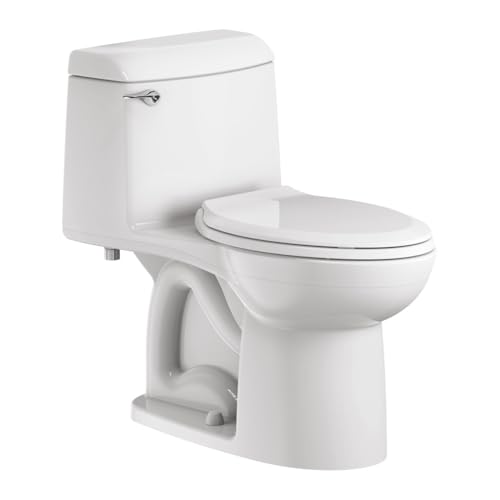
| American Standard Champion 4 | 1,000 | 2.375 fully glazed | 1.6 | No | Piston action | Check price |
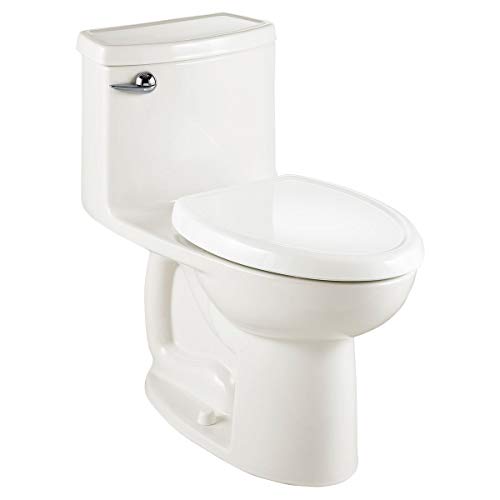
| American Standard Cadet 3 | 1,000 | 2.125 fully glazed | 1.28 | Yes | Siphon action | Check price |
| Kohler Cimarron (K-6418) | 1,000 | Class Five engine | 1.28 | Yes | Class Five | Check price |
| Kohler Highline (K-3493) | 1,000 | Class Five engine | 1.28 | Yes | Class Five | Check price |
| Woodbridge T-0001 | 800+ | 2.0 fully glazed | 1.28 | Yes | Siphon jet | Check price |
| TOTO Aquia IV Dual Flush | 600 (0.8G) / 1,000 (1.28G) | 2.0 fully glazed | 0.8 / 1.28 | Yes | Tornado Flush | Check price |
| Gerber Viper (21-302) | 1,000 | 2.0 fully glazed | 1.28 | Yes | Siphon jet | Check price |
| Swiss Madison Sublime II | 800+ | 2.0 fully glazed | 1.28 | Yes | Single flush siphon | Check price |
The American Standard Champion 4 has the largest trapway of any major production toilet at 2.375 inches. Its fully glazed interior surface reduces friction and the tendency for waste to adhere to the trapway walls -- a key factor in long-term clog resistance. If you are replacing a toilet in a home with a history of gurgling from partial clogs, a model with a 2-inch or larger fully glazed trapway and a MaP score of 800 or higher is the most protective choice. See our complete best flushing toilets guide for ranked options with full MaP data and water efficiency ratings.
TOTO's Cefiontect glaze is a factory-applied ionic barrier coating that creates a hydrophilic (water-attracting) surface on the trapway interior. This surface allows waste to pass through with reduced adhesion, which in turn reduces the accumulation of organic matter that creates partial clogs. The TOTO Drake II, TOTO UltraMax II, and TOTO Aquia IV all feature this coating in models designated with a "G" suffix in the model number (for example, CST454CEFG rather than CST454CEF). Kohler's Class Five flush system achieves a similar result through a different approach: a specifically engineered flush valve and bowl geometry that maximizes flush velocity through the trapway to prevent partial clogs.
An air admittance valve (AAV), also known by the brand name Studor vent, is a mechanical one-way valve that installs in the drain system to supply air on demand without requiring a traditional roof vent extension. AAVs open when negative pressure (suction) develops in the drain pipe, allowing air to enter and equalize pressure, then close when pressure equalizes or turns positive to prevent sewer gas from escaping.
AAVs are approved under most current model plumbing codes, including the International Plumbing Code (IPC) Section 918, as a supplement to conventional venting. They are particularly useful for island sinks, basement toilets, additions where extending venting to the roof is not practical, and in older homes where the existing vent stack cannot easily be cleared or replaced. They are not a code-approved replacement for the main vent stack in most jurisdictions, but they can be installed on individual fixture branches where traditional venting is impractical.
For a toilet that gurgles due to vent restrictions on a branch line -- rather than the main stack -- an AAV installed on the toilet drain branch can resolve the issue without requiring roof work. Check local plumbing codes before installation, and note that AAVs have a recommended service life of 20 to 30 years before the internal seal may degrade and require replacement.
Related issues that homeowners often research alongside drain gurgling include why a toilet bubbles when the shower drains (shared drain pressure), a toilet that drains slowly but is not clogged (vent-side suction causing slow drain without blockage), and a sewer smell coming from the toilet (dry trap or wax ring failure allowing gas infiltration). Each shares the same root cause -- a disruption in drain-waste-vent pressure balance -- but has a distinct diagnostic pathway.
The most effective prevention strategy combines annual vent maintenance with consistent flushing habits:
For readers dealing with a slow drain that has not yet progressed to gurgling, our guide on why your toilet is flushing slowly covers the early-stage diagnosis and fixes before the problem worsens. If the issue has already progressed to incomplete flushing, how to make a toilet flush stronger covers fill valve adjustment and flush valve sizing that restore full flush power.
Homes built in the 1960s through 1980s frequently have 3-inch drain branches where modern code requires 4-inch pipe for toilet connections. The undersized pipe creates inherently higher resistance and is more prone to partial clogs, even with perfect flushing habits. If your home consistently has gurgling issues despite clean vents and disciplined flushing, have a plumber assess the drain branch pipe size -- upsizing from 3 inches to 4 inches is a significant improvement in long-term drain performance and is far less disruptive than emergency service during a full backup.
Drain gurgling after a toilet flush is caused by negative air pressure in the drain-waste-vent system. When the toilet flushes, water rushes through the drain, displacing air. If the vent stack is blocked or the drain is partially clogged, that displaced air cannot escape normally and instead forces backward through the toilet's water trap, creating a gurgling or bubbling sound.
The timing of the gurgle is the key diagnostic clue. If gurgling occurs during the drain cycle and the bowl drains slowly, a clog is the most likely cause. If gurgling occurs after the bowl finishes emptying -- a finish gurgle or suction sound -- and drain speed is normal, the vent stack is the primary suspect. Running another fixture and watching whether it triggers gurgling in the toilet indicates a shared drain issue.
The fastest fix for isolated single-toilet gurgling is to check and clear the vent stack from the roof. If the gurgling is accompanied by slow draining, use a flanged plunger first, then a toilet auger if needed. In most cases, one of these two actions -- clearing the vent or augering the drain -- resolves isolated post-flush gurgling within an hour.
Normal drain speed with post-flush gurgling is the classic signature of a blocked vent stack rather than a drain clog. A clog restricts flow and slows the drain; a vent blockage creates pressure imbalance without restricting the drain pipe itself. The gurgling is the air equalizing through the path of least resistance -- the toilet trap -- rather than through the vent.
Yes. A partial vent restriction may only manifest as gurgling under specific conditions -- when the toilet is flushed with a full tank at maximum flow rate, or when conditions in the vent pipe change (such as a bird sitting in the opening, or temperature-related condensation reducing the effective opening diameter). Intermittent gurgling that comes and goes is often a partial rather than complete vent restriction.
In most cases, yes -- isolated gurgling from a vent or minor clog does not prevent the toilet from functioning. However, if gurgling is accompanied by slow drains throughout the house, sewage odor, or any sign of sewage backup, stop using all drains and call a plumber immediately. A main line backup can overflow at the lowest drain point in the home if usage continues.
Rarely and only if the blockage was temporary -- a leaf that dislodges from the vent, for example. In almost all cases, the underlying cause (vent debris, partial drain clog, root intrusion, aging wax ring) will persist or worsen without intervention. Gurgling that disappears for a week and then returns is still an active problem that needs diagnosis and repair.
A single gurgling toilet while all other fixtures are normal almost always indicates an issue specific to that fixture's branch: either the branch vent is blocked at a point before it connects to the main vent stack, or there is a partial clog in the drain branch between that toilet and the main drain line. Because the blockage is localized, it has not yet affected fixtures on other branches.
Not necessarily, but it is a possibility for homes on septic. If gurgling is accompanied by slow drains throughout the house, sewage odor, or wet spots in the yard near the drain field, these are strong indicators of a septic issue -- either a full tank or a failing drain field. Single-toilet gurgling without other symptoms is more likely a vent or localized drain issue even in septic-served homes.
Yes. Tree root intrusion into older clay or cast iron sewer pipes creates a partial obstruction that causes gurgling, slow drains, and recurring clogs. Roots grow slowly but progressively, and the problem typically worsens over time. If a plumber's snake clears the line but gurgling returns within weeks, root intrusion should be confirmed with a video sewer inspection before the next clearing attempt.
Toilets with the highest MaP flush scores and largest fully glazed trapways provide the best clog resistance. The American Standard Champion 4 has the industry's largest trapway at 2.375 inches and a 1,000-gram MaP score. The TOTO Drake II and TOTO UltraMax II both score 1,000 grams with 2-inch fully glazed Cefiontect trapways. The Kohler Cimarron and American Standard Cadet 3 also score 1,000 grams with 1.28 GPF and EPA WaterSense certification.
A plunger generates suction and pressure to dislodge soft obstructions within reach of the toilet trap -- roughly the first 12 to 18 inches of the drain. A toilet auger is a flexible cable that physically reaches 3 to 6 feet beyond the trap into the drain branch, allowing it to break up or retrieve clogs that a plunger cannot reach. For gurgling caused by a partial clog, try the plunger first; if gurgling persists, move to the auger.
An air admittance valve (AAV) is a mechanical one-way valve that installs on a drain branch to supply air when negative pressure develops, equalizing pressure without requiring a roof vent extension. It can resolve gurgling caused by vent restrictions on individual branch lines. AAVs are approved under most current plumbing codes as a supplement to conventional venting, and they are a practical fix when the vent stack is difficult to access or extend.
A full flush on a dual-flush toilet uses more water -- typically 1.28 GPF compared to 0.8 GPF for a liquid flush -- and creates a larger pressure wave in the drain pipe. If the vent or drain has a marginal restriction that barely causes a pressure imbalance at 0.8 GPF, it may only produce audible gurgling at the higher 1.28 GPF flow rate. This is actually a useful diagnostic clue: it confirms the restriction exists but is not yet severe.
EPA WaterSense certification confirms a toilet uses 1.28 GPF or less while meeting minimum flush performance standards. It does not directly address gurgling. However, WaterSense-certified toilets with high MaP scores (800 grams or higher) achieve efficient clearing at lower water volumes, reducing the residual waste left in the drain that contributes to partial clogs. The MaP score is a more useful predictor of clog resistance and gurgling prevention than the WaterSense certification alone.
Do not pour boiling water into a porcelain toilet bowl. The sudden temperature change can crack the porcelain, particularly in older toilets or in cold climates where the toilet bowl is at ambient temperature. Very hot tap water -- from a kettle cooled slightly after boiling, or from the hot tap at maximum temperature -- is safe and can help dissolve soft organic buildup in the trap, but it will not resolve a hard clog or a vent blockage.
If gurgling only occurs when the toilet is flushed with a large amount of toilet paper, it indicates a borderline restriction in the trap or drain branch -- one that handles normal loads without issue but becomes a partial clog when paper volume is high. This is an early warning sign of accumulating buildup in the drain. Address it with an auger before the restriction progresses to the point of causing gurgling on every flush regardless of paper load.
A failed or deteriorated wax ring allows air to enter and exit around the toilet base during flushing rather than routing all air movement through the proper drain and vent path. This uncontrolled air movement contributes to pressure imbalances in the trap and creates gurgling. More importantly, a failed wax ring also allows sewer gas to escape into the bathroom at floor level, making it a health and safety issue beyond just the gurgling symptom.
For homes less than 25 years old with plastic (PVC or ABS) sewer lines and no large trees near the sewer path, inspection only when symptoms develop is reasonable. For homes over 25 years old, especially those with clay or cast iron sewer pipes and mature trees near the sewer line, a video inspection every 3 to 5 years is a reasonable preventive measure -- less than the cost of one emergency sewage backup cleanup.
If gurgling persists after you have cleared both the vent stack and the drain branch, the problem is deeper in the system. The next step is opening the main cleanout and snaking the main drain line. If that does not resolve it, a professional video sewer inspection is the most efficient next step -- it identifies root intrusion, pipe offsets, sags, or structural defects that cannot be diagnosed or resolved with standard tools.
Drain gurgling after a toilet flush is a pressure problem in the drain-waste-vent system, not a toilet malfunction. In isolated single-toilet cases, a blocked vent stack is the most likely cause and the vent should be checked first. If gurgling is accompanied by slow draining, move to plunging and augering the drain branch before going to the roof. For gurgling that affects multiple fixtures simultaneously, main sewer line obstruction requires professional service -- a video inspection is the most direct path to an accurate diagnosis. Choosing a high-MaP toilet from established brands like TOTO, American Standard, Kohler, or Gerber with a fully glazed trapway provides long-term protection by clearing waste completely on every flush and minimizing the partial blockage buildup that causes recurring gurgling over time.
How we rank & our data sources
We do not run physical lab tests. Rankings are built from published, verifiable data and real owner feedback, never paid placement.
Researched by Derek Whitman · Last updated June 28, 2026 · Our review method
Clean, low-profile silhouettes with real MaP-verified flush performance and efficient dual-flush water use, sized for a minimalist Nordic bathroom without sacrificing function.
Read the guide
Classic two-piece toilets with tall tanks and elegant, understated proportions, the quiet country-house look that suits a traditional English bathroom without tipping…
Read the guide
Clean-lined skirted and one-piece toilets with simple geometry and low profiles that suit a broad East Asian-influenced bathroom, backed by real verified…
Read the guide