A strong flush is not magic, it is physics. The flush gets its strength from a fast, full slug of water leaving the tank, rinsing cleanly through the rim and siphon jets, and forming a tight siphon in the trapway that grabs the bowl contents and pulls them down in one motion. When a flush feels weak, one link in that chain has degraded. The chain is short, and every link is something you can inspect with the tank lid off and a flashlight. That is the entire reason most weak flushes get fixed without a plumber and without a new toilet.
We research toilets the way an engineer would compare them on paper, not by tearing them apart in a lab. For this guide that means leaning on the published specs that predict flush strength, independent MaP (Maximum Performance) flush-test data, EPA WaterSense efficiency ratings, and the repair patterns that show up again and again across aggregated owner reviews and plumbing resources. The fixes below run from free adjustments, to cheap part swaps, to the upgrade path for when the bowl itself is simply underpowered.
Start here. Pull the tank lid and watch a single flush from the top. A strong toilet dumps the tank fast, the bowl water rises then drops with a firm gurgle as the siphon catches, and the bowl refills clean. Note what fails: does the tank empty fully, does the bowl barely move, does it drain sluggishly afterward? That one observation points you straight to the right fix below and saves you from swapping parts you do not need.
What actually makes a toilet flush stronger?
A toilet flushes stronger when more water leaves the tank faster, enters the bowl cleanly through unblocked rim and siphon jets, and the trapway geometry forms a tight siphon. A weak flush almost always traces to a low tank level, scaled-over jets, or a worn flapper that closes early, long before the toilet design itself is to blame.
Those three factors tell you exactly where to look. The tank is the energy source: it has to fill to the correct level and then dump that water quickly through a fully open flush valve. The rim jets and siphon jet are the delivery system: water must rinse forcefully around the rim and shoot from the jet at the front base of the bowl. The bowl and trapway geometry, which you cannot change without replacing the toilet, decides how readily that water forms the clearing siphon. The first two are adjustable and cleanable, so they are where you start. The third is a buying decision, so it is where you finish. Work the fixes in that order and you tackle everything controllable before spending real money.
The 7 fixes that make a toilet flush stronger
These are arranged from free, to cheap, to replacement, which is also the order in which they are most likely to be the actual cause. Most weak flushes are solved before you reach fix four, so resist the urge to skip ahead to buying a new toilet.
Fix 1: Raise the tank water level
The flush is driven by the weight and volume of water falling out of the tank, so a tank that is not filling to its designed line will flush weakly no matter how good the toilet is. A low tank level is the single most common reason a flush loses strength, and it is the easiest thing to correct, which is why it goes first.
Lift the lid and find the overflow tube, the open vertical pipe in the center of the tank. The water should sit about one inch below the top of that tube, and most tanks also carry a molded fill line on the back inside wall. If the water is sitting an inch or two low, you are flushing with a fraction of the designed volume, which produces a soft, incomplete push on its own. To raise it, adjust the fill valve: on a modern column valve, pinch the clip and slide the float cup up, or turn the top adjustment screw clockwise. On an older ballcock with a float ball on an arm, bend the arm gently upward. Adjust in small steps, flush, and recheck until the water settles roughly an inch below the overflow.
Tip. If you raise the float and water keeps trickling into the overflow tube and the valve never shuts off, you have set it too high or the valve is worn. Lower it slightly so the water stops just below the overflow. A fill valve that will not shut off cleanly is a cheap part well worth replacing while the tank is already open.
Fix 2: Clear the rim jets and siphon jet
This is the fix people almost never think to check, and in hard-water homes it is often the real reason a flush faded over months or years. Water enters the bowl through a ring of small holes under the rim, called the rim jets, and on most toilets through one larger hole at the front base of the bowl, the siphon jet. Mineral scale slowly narrows or plugs these openings, so even with a full tank the water dribbles in weakly instead of rinsing hard and driving the siphon.
The classic tell is a flush where the tank empties with plenty of force but the bowl water only swirls lazily or runs down one side. Shut off the water, flush the bowl empty, and use a small mirror to inspect the rim holes. To dissolve the scale, warm white vinegar and pour it down the overflow tube so it runs through the rim channel, then let it sit several hours or overnight. Use a stiff wire or a small Allen key to ream out every rim hole and the siphon jet, breaking up the softened deposits. Turn the water back on and flush a few times to flush the debris through. A bowl that has rinsed weakly for years can return to near-new strength from this one cleaning, and it costs nothing.
Avoid this mistake. Do not pour strong acid drain cleaner into the rim channel or trapway to clear scale. It can attack the glaze and internal porcelain over time, and it actually does a worse job than vinegar plus a wire at the specific blocked holes. Patience with vinegar and mechanical poking beats harsh chemicals every time here.
Fix 3: Replace or adjust a worn flapper
The flapper is the rubber seal at the bottom of the tank that lifts on a flush and reseals afterward. For a strong flush it has to stay open long enough for the full tank to dump. As flappers age they warp, stiffen, or become waterlogged, and they drop closed a moment too early, releasing only part of the tank. The result is a short, weak push even though the tank was full. A flapper that no longer seals fully causes the reverse problem too: a slow leak that drains the tank between flushes, so the next flush starts low.
Watch a flush with the lid off. If the flapper falls before the tank finishes draining, it is closing early and starving the flush. Check the chain first, since it should carry about a half inch of slack when the flapper is closed so the handle can lift it fully. If the flapper edge is chalky, stiff, or visibly warped, replace it. Flappers are an inexpensive universal part and the swap takes a few minutes with no tools. If yours has an adjustable dial for open duration, set it so the flapper holds open until the tank is nearly empty.
Fix 4: Open the supply valve fully and clean the fill valve
Flush strength can be choked off at the wall. The shutoff valve behind the toilet is sometimes left only partly open after maintenance, which slows the refill and can leave the next flush short on water. Make sure it is turned fully counterclockwise to the open position, and check the supply line for kinks while you are down there. If the tank takes a very long time to refill, the fill valve or its inlet screen may be partly clogged with sediment, which is a cheap clean or swap. A fully open supply valve and a clean fill valve guarantee the tank always reaches its designed level between flushes, which directly protects flush strength on back-to-back flushes during busy mornings.
Fix 5: Clear a partial drain clog or a blocked vent
If the tank delivers a strong slug, the jets are clear, but the bowl still fills up and drains slowly, the restriction is downstream of the toilet. A partial clog in the trapway or drain line slows the flow so waste crawls away instead of being pulled through in one decisive siphon. A flange plunger used with firm, sealed strokes clears many of these, and a closet auger reaches further without scratching the bowl. There is also a commonly missed cause: a blocked vent. Every drain system has a vent stack through the roof that lets air into the pipes so the siphon can form, and if it is blocked by leaves, a nest, or ice, the flush gurgles and feels weak even when nothing is clogged inside the toilet. If several fixtures run sluggish at once, suspect the vent rather than the toilet. For recurring blockages, see our guide on why your toilet keeps clogging and how to fix it.
Fix 6: Upgrade the flush valve or add a pressure-assist conversion
If the toilet is mechanically sound but simply moves water lazily, the flush valve opening may be too small. The flush valve is the hole the flapper covers, and a wider valve dumps the tank faster, which builds a stronger siphon. Some older toilets use a 2-inch valve where a 3-inch valve would clear far better, and on certain models a larger flush valve with a matching flapper can be retrofitted. For a more decisive jump, a tank conversion kit that adds pressure-assist force exists for some bowls, though compatibility is narrow and the result is noticeably louder. These are intermediate moves between a free repair and a full replacement, and they make sense mainly when the bowl geometry is good but the water delivery is slow.
Fix 7: Replace the toilet with a high-MaP model
If you have worked every fix above and the flush is still soft, the bowl design is the ceiling. An older 3.5 GPF or first-generation 1.6 GPF model with a narrow trapway and a low MaP score never flushed strongly, and no repair turns a poorly engineered bowl into a powerful one. The lasting fix is a modern high-MaP toilet, and a good one flushes far harder while using less water. The spec that predicts flush strength is the MaP score, which independently measures how many grams of solid waste a toilet clears in one flush. Aim for 800 grams or higher, pair it with a wide trapway of 2 inches or more, glazed if possible, and a WaterSense 1.28 GPF rating. Our full ranked list is in the roundup of the best flushing toilets.
Editorial Take
The highest-return move on this entire list is cleaning the rim jets, and it is the one nearly everyone skips. We see the same weak-flush story repeatedly: the owner already swapped the flapper and even the whole fill valve, yet the water still slides down one side of the bowl because the rim channel is half-choked with scale. Do the vinegar-and-wire treatment before you spend a dollar on parts. If you live in a hard-water area, put it on a yearly calendar reminder and you will likely never need fixes six or seven.
A quick fix-it order to follow
Working in the right order saves time and stops you from replacing parts that were never the problem. Here is the sequence that resolves the large majority of weak flushes, from free to replacement.
If the flush is still weak after step five and the toilet is an older low-flow design, jump to the upgrade. For a parallel diagnostic walkthrough on flush repairs before you decide, our companion guide on how to improve toilet flush power with seven proven fixes covers the same ground from a slightly different angle, and if the toilet will not flush at all rather than just weakly, see how to fix a toilet that is not flushing properly.
Which toilet has the strongest flush?
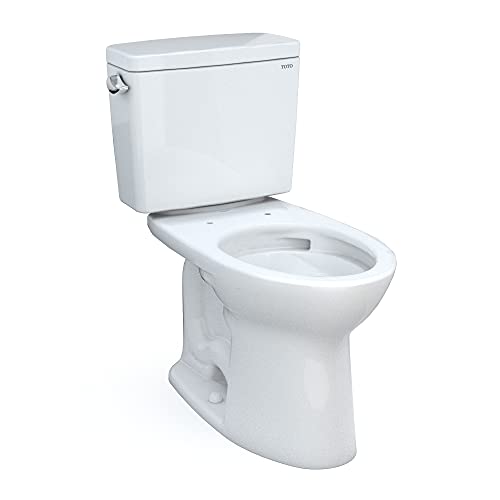
The TOTO Drake has one of the strongest flushes available, clearing a full 1,000 grams on independent MaP testing at just 1.28 GPF. Its 3-inch flush valve and wide glazed trapway move water fast and resist clogs, which makes it the default upgrade recommendation when an older toilet flushes weakly and repairs no longer help.
If repairs do not restore your flush, these three models pair high independent MaP scores with efficient water use and deep, positive owner track records, which makes them safe upgrades from a tired, weak-flushing toilet. Each one leads on a slightly different priority, so match the pick to what matters most in your bathroom.
Strongest Flush
TOTO Drake
High MaP score and wide trapway for daily use
A top-tier 1,000 gram MaP score, a 3-inch flush valve and a fully glazed trapway make the Drake a powerful, reliable upgrade with an easy-to-source parts ecosystem at 1.28 GPF.
Check price on Amazon
Best Clog Resistance
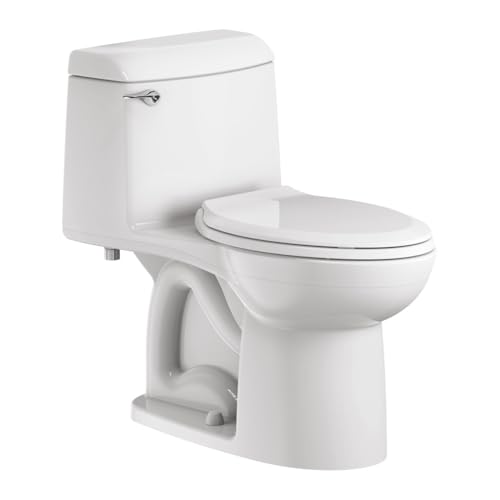
American Standard Champion 4
Oversized valve and trapway that resist clogs
An oversized flush valve and a wide trapway move a lot of water fast, which makes the Champion 4 a strong pick when weak flushing has been paired with frequent clogs.
Check price on Amazon
Best Value Upgrade
Kohler Cimarron
Strong Class Five flush at an accessible price
Kohler's Class Five flush engine moves water with real force at 1.28 GPF, and the Cimarron pairs that clearing power with a clean comfort-height bowl that suits most family bathrooms.
Check price on Amazon
How the strongest replacement toilets compare
If you are choosing a replacement specifically to end weak flushing, the table below compares the leading high-power options on the specs that actually predict clearing strength. The Drake is marked as the overall winner for raw flush power and value together.
What is a good MaP score for a strong flush?
A good MaP score for a strong flush is 800 grams or higher, with 1,000 grams sitting at the top of the scale and being the target for busy family bathrooms. Scores under about 350 grams indicate a weak flush with rising clog risk. MaP testing independently measures how many grams of solid waste a toilet clears in a single flush.
MaP testing, run by the Maximum Performance program, is the most reliable public indicator of real flush strength because it uses a standardized waste-clearing test rather than marketing claims. When you shop, treat the MaP number the way you would treat a horsepower figure, because it is the closest thing to an objective performance rating a toilet has. A 1.28 GPF model that scores 1,000 grams clears as much as the best older 1.6 GPF toilets while using a fifth less water per flush, which is why modern high-MaP toilets are both stronger and more efficient at once. For a deeper look at how those numbers translate into real-world performance, our ranking of the best toilet for frequent clogs sorts models specifically on clearing power.
Can you make a low-flow toilet flush stronger without replacing it?
Yes, in most cases. A low-flow toilet that flushes weakly can usually be made stronger by raising the tank water level, cleaning the rim jets and siphon jet, and fitting a fresh flapper. Those steps restore the toilet to its designed performance. They cannot exceed the bowl's original engineering, so a genuinely underpowered design still needs replacement.
The key distinction is between a toilet that has drifted below its own design and one that was never powerful to begin with. The fixes in this guide bring a toilet back up to how it left the factory, no further. If that factory performance was already weak, which is common with first-generation 1.6 GPF toilets from the 1990s, the ceiling is low and an upgrade is the only real answer. A quick way to tell is to look up the model's MaP score: if it tested under 500 grams when new, no amount of cleaning makes it a strong flusher. For the full diagnostic on a persistently soft flush, our weak toilet flush fix guide covers each cause in order.
Editorial Take
Our honest advice on the upgrade decision is to weigh the age and MaP score of your current toilet against the cost of repeated repairs. If your toilet is a pre-2000 low-flow model and you are already buying a flapper and a fill valve, you are spending money to keep a fundamentally weak bowl alive. At that point the smarter move is a high-MaP 1.28 GPF replacement such as the Drake or UltraMax II, which costs more once but ends the weak-flush problem permanently and lowers your water bill at the same time.
Putting it all together
Making a toilet flush stronger is a process of elimination, and the order matters. Confirm the tank fills to an inch below the overflow, clean the rim and siphon jets with vinegar and a wire, fit a fresh flapper, open the supply valve fully, and rule out a partial clog or blocked vent. Those five steps restore the large majority of weak flushes for free or a few dollars. If the flush is still soft after all of that, the bowl design is the limit, and a modern high-MaP toilet from TOTO, Kohler, American Standard, Woodbridge, Swiss Madison, or Gerber is the lasting fix.
Keep reading
Related guides
FAQ
Frequently asked questions
? How do I make my toilet flush stronger fast?
Raise the tank water level to one inch below the overflow tube. It takes two minutes, costs nothing, and is the most common reason a flush goes weak. If that does not fully fix it, clean the rim jets and siphon jet with white vinegar next, since that is the second most common cause and also free.
? Why is my toilet flush suddenly weak?
A sudden change usually points to the tank, not the bowl. Check the water level first, because a fill valve that drifted out of adjustment or a flapper that began leaking lowers the tank level and weakens the flush right away. If the level is fine, look for a flapper closing early or a partial clog. A flush that weakened slowly over months is more often mineral buildup in the rim jets.
? How do I clean clogged rim jets on a toilet?
Turn off the water and empty the bowl, then warm white vinegar and pour it down the overflow tube so it runs through the rim channel, and let it sit several hours or overnight. Use a stiff wire or small Allen key to gently ream out each rim hole and the siphon jet at the bottom of the bowl. Turn the water back on and flush a few times to clear the loosened scale. Avoid harsh acid cleaners, which can damage the glaze.
? What should the water level be in a toilet tank?
The water should sit roughly one inch below the top of the overflow tube, the open vertical pipe in the center of the tank. Most tanks also have a molded fill line on the inside back wall. If the water is below that mark, raise it by adjusting the float on the fill valve, since a low level is the leading cause of weak flush power.
? Can a bad flapper cause a weak flush?
Yes. A flapper that is warped, stiff, or waterlogged falls closed too early and only lets part of the tank empty, which produces a short, weak flush. A flapper that no longer seals fully also drains the tank slowly between flushes, so the next flush starts low. Check that the chain has about a half inch of slack and replace the flapper if its edge is chalky or stiff. It is an inexpensive, tool-free repair.
? Does a bigger flush valve really make a toilet flush stronger?
Yes. The flush valve is the opening the flapper covers, and a wider valve, such as a 3-inch instead of a 2-inch, dumps the tank water faster, which builds a stronger siphon. Many of the strongest modern toilets, including the TOTO Drake, use a 3-inch flush valve for exactly this reason. On some toilets a larger valve and matching flapper can be retrofitted.
? Will adding a brick or bottle to the tank make the flush stronger?
No, it does the opposite. Displacing tank water with a brick or bottle reduces the volume available for the flush, which weakens it. That old water-saving trick only suits a toilet that already overflushes, and even then a modern low-flow toilet is the better solution. To make the flush stronger you want the tank at its full designed level, not less.
? Can a clogged vent pipe cause a weak flush?
Yes. The vent stack that runs through the roof lets air into the drain so a siphon can form. If it is blocked by leaves, a nest, or ice, the flush gurgles and feels weak even when nothing is clogged inside the toilet. A clue is several fixtures draining slowly at once or a glugging sound. Clearing the vent restores normal flow.
? How often should I clean toilet rim jets in a hard-water home?
Once a year is a good schedule in hard-water areas, and more often if you notice the bowl rinse weakening or water running down only one side. Regular vinegar treatment prevents scale from building up enough to choke the jets, which keeps the flush at full strength and often spares you from more involved repairs later.
? Is a pressure-assist toilet stronger than a gravity toilet?
Generally yes for raw force. Pressure-assist toilets use trapped air to push water with more energy, which clears the bowl forcefully and resists clogs. The tradeoff is a louder flush and pricier internal parts. For most homes a high-MaP gravity toilet like the TOTO Drake or Kohler Cimarron delivers strong, quiet performance that is easier to live with and repair.
? What MaP score should I look for to fix a weak flush?
Aim for at least 800 grams, with 1,000 grams being the top of the scale and the target for a busy family bathroom. MaP testing independently measures grams of waste cleared per flush, so it is the most reliable public indicator of real flush strength. A 1.28 GPF model scoring 1,000 grams clears as much as the best older 1.6 GPF toilets while saving water.
? Does WaterSense certification mean a weaker flush?
No. EPA WaterSense certifies toilets that use 1.28 GPF or less and still meet a minimum flush-performance standard, so a WaterSense toilet must clear waste effectively to earn the label. Many of the strongest toilets sold today, including the TOTO Drake and UltraMax II, are WaterSense certified and score 1,000 grams on MaP. Efficiency and power are no longer a tradeoff.
? Why does my toilet flush strong sometimes and weak other times?
Inconsistent flush power usually points to the fill valve not refilling the tank fully between flushes, often after a quick double flush, or a flapper that occasionally hangs or seals early. A slow supply valve can also leave the tank short on the next flush. Confirm a fast, full refill to its designed level and check the flapper and chain for consistent operation.
? Can hard water permanently weaken a toilet flush?
It weakens the flush by clogging the rim jets and siphon jet, but the effect is usually reversible. A vinegar soak and mechanical cleaning of the jets restores the flow in most cases. Severe, long-neglected scale can occasionally block jets so thoroughly that cleaning only partly helps, but that is uncommon, and it is still worth trying before considering a replacement.
? When should I replace a weak-flushing toilet instead of fixing it?
Replace it when you have confirmed a full tank level, cleared the rim and siphon jets, fitted a fresh flapper, opened the supply valve, and ruled out a partial clog or vent block, and the flush is still soft. That points to a weak bowl design, often an older low-MaP model. Upgrade to a toilet rating 800 grams or higher on MaP with a wide trapway and a WaterSense 1.28 GPF rating for a lasting fix.
? Which brands make the strongest-flushing toilets?
TOTO leads on independent MaP scores with the Drake, Drake II, and UltraMax II all reaching 1,000 grams. American Standard's Champion 4 and Kohler's Class Five models also flush powerfully, while Woodbridge, Swiss Madison, and Gerber offer strong 1.28 GPF options at more accessible prices. Compare the published MaP score and trapway width within any brand rather than assuming a brand name guarantees power.
? Will a fresh wax ring or tighter bolts make the flush stronger?
Not directly. A wax ring and floor bolts seal the toilet to the drain and prevent leaks, but they do not affect how forcefully water moves through the bowl. If your flush is weak, focus on the tank level, the rim and siphon jets, and the flapper. Replace the wax ring only if you see water at the base or remove the toilet for other work.
? Does the flush handle or lever affect flush strength?
Indirectly, yes. A handle with a broken or stretched linkage may not lift the flapper fully or hold it open long enough, which cuts the flush short. If the handle feels loose, sticks, or has to be held down for a complete flush, replace the lever and reset the chain slack to about a half inch. It is a cheap part and a fast fix that restores a full-length flush.
Sources
- EPA WaterSense, epa.gov/watersense
- MaP (Maximum Performance) flush testing, map-testing.com
- Manufacturer published specifications (TOTO, Kohler, American Standard)
Our Verdict
You can make most toilets flush stronger for free in under an hour. Work the seven fixes in order: tank water level, rim and siphon jet cleaning, the flapper and chain, the supply and fill valve, a partial clog or blocked vent, a larger flush valve, and only then a replacement. When the bowl design is the real limit, a high-MaP upgrade like the TOTO Drake at 1,000 grams and 1.28 GPF ends the problem permanently while cutting water use. Confirm the rough-in matches yours and check the current price on Amazon before you order.