
How Often Should You Clean a Toilet?
Cleaning & Maintenance4.6
Clean a toilet fully once a week, wipe the handle and seat with a disinfecting cloth two to three times between weekly…
Read the guideThe toilet tank sits out of sight and out of mind until the flush goes weak, the bowl develops a mystery ring, or a faint mildew smell fills the bathroom. Inside that porcelain box, hard water deposits a chalky crust on the walls and inside the fill-valve outlet and rim jets, mold and bacteria colonize the standing water, and rust from well water stains everything orange. This complete guide covers exactly how to clean a toilet tank safely, which cleaner is right for which build-up, how to restore flush power by clearing clogged jets, how often to repeat the job, and the one rule that keeps the rubber flapper and seals intact through every cleaning.
Shut off the water, flush the tank empty, fill it to the water line with plain white vinegar, and let it soak for at least four hours (overnight for hard-water build-up). Vinegar dissolves mineral scale and kills mold while staying completely safe for the rubber flapper, fill-valve seals and gaskets that concentrated bleach degrades. Drain it, scrub with a soft brush, clear the fill-valve outlet to restore flush power, turn the water back on, and flush twice to rinse.
Cleaning a toilet tank comes down to one idea that decides whether you help the fixture or quietly break it: the tank is full of working rubber and plastic parts the bowl is not. The flapper, the fill-valve seals, the flush-valve gasket and the tank-to-bowl gasket all contact whatever you pour in. Get the chemistry wrong by leaving concentrated bleach to soak overnight, and you trade a clean tank for a hardened flapper that leaks a week later, the classic running toilet that wastes water around the clock. The right method uses the gentlest cleaner that can do the job, gives it enough dwell time to dissolve the build-up, and keeps harsh cleaners off the seals.
This guide compares published manufacturer safety data, the active ingredient in each cleaner and the build-up it targets, EPA WaterSense water-efficiency guidance, whether each formula is labeled safe for rubber and plastic plumbing seals, and plumber recommendations gathered from aggregated owner reviews. We do not run our own cleaning trials and we do not accept payment for placement. For the fixtures this routine keeps flushing at full strength, see our pillar guide to the best flushing toilets.
| Product | Best For | Type | Seal Safe | Rating |
|---|---|---|---|---|
| White Distilled Vinegar | Routine scale and mold | Mild acid soak | Yes, fully safe | 4.8 |
| CLR Calcium Lime Rust | Heavy mineral crust | Acid blend | Diluted, brief only | 4.6 |
| Iron OUT Rust Remover | Well-water rust and iron | Iron dissolver | As directed | 4.6 |
| Baking Soda | Gentle scrub after soak | Mild abrasive | Yes, fully safe | 4.7 |
| Clorox Bleach (diluted) | Stubborn mold only | Disinfectant | Diluted, brief only | 4.7 |
| OXO Deep Clean Brush Set | Corners and valves | Soft brush pair | N/A | 4.7 |
| MR.SIGA Reusable Gloves | Hand protection | Waterproof gloves | N/A | 4.6 |
The routine is built around one long soak, so the hands-on work is short and the chemistry does the heavy lifting. Empty the tank first, get the vinegar onto the walls and parts, then let it dwell while you do something else. The order below produces a genuinely clean tank that flushes stronger, not a surface wipe that leaves scale on the rim jets.
The single most damaging mistake in tank cleaning is pouring concentrated bleach in and walking away. It kills the mold, but it also stiffens the rubber flapper and degrades the fill-valve seals, and within a few weeks the toilet is running and nobody connects it to the cleaning. Plain white vinegar is the right default by a wide margin: mild enough to soak safely for hours against every rubber part, strong enough to dissolve hard-water scale and kill mold, and completely safe for a septic system. Use bleach only heavily diluted, only on mold vinegar missed, and only briefly. That one rule protects more toilets than any other single piece of tank-cleaning advice.
The reason vinegar works so well in a tank is that acetic acid attacks the calcium and lime in scale precisely the way stronger acids do, just more slowly. That slower action is actually the advantage, because a vinegar soak can sit against the rubber flapper for eight hours without hardening it, whereas a concentrated acid like muriatic acid or undiluted CLR can degrade the same rubber in minutes. The EPA WaterSense program notes that a properly sealed flapper can leak as much as 200 gallons per day if it fails to close; a vinegar-safe cleaning routine is part of protecting that seal. For the full comparison of bowl versus tank cleaners, see our guide to the best toilet bowl cleaners of 2026.
Toilet manufacturers engineer a specific gallons-per-flush (GPF) flow rate to achieve effective bowl clearing. The TOTO Drake, one of the highest-rated 1.28 GPF toilets in MaP flush testing, achieves its 1,000-gram MaP score because water reaches the bowl quickly and at the right pressure. Scale clogging the rim jets changes that flow timing, reducing the volume reaching the bowl in the critical first seconds of the flush. Clearing those jets can restore MaP-level performance without replacing any parts. The fix is covered in detail in our guide on how to improve toilet flush power.
Bleach attacks natural rubber and certain synthetic rubber compounds through a process called oxidative degradation. The flapper in a TOTO Drake, a Kohler Highline, an American Standard Champion 4 or any other toilet is typically made from chloramine-resistant but still bleach-sensitive rubber. Continuous low-level bleach exposure from an in-tank tablet slowly stiffens the flapper until it no longer seals, causing the toilet to run. Gerber, Woodbridge and Swiss Madison all include similar guidance in their owner documentation. A brief, diluted bleach pass followed by a thorough rinse avoids that cumulative exposure entirely.
The cleaning interval depends almost entirely on water hardness. The United States Geological Survey reports that approximately 85 percent of U.S. homes have hard water, defined as more than 60 milligrams per liter of dissolved calcium and magnesium. In very hard water areas, scale can begin clogging rim jets in three to four months on a toilet that used to need only a yearly clean. Well-water homes with high iron content see rust staining even faster. Twice-yearly cleaning on soft municipal water and quarterly on hard water or well water keeps the tank in the range where a vinegar soak handles everything without needing stronger chemicals.
Serratia marcescens is an airborne bacterium that thrives wherever there is standing water and nutrients, including the inside of a toilet tank. Its pink or orange pigmentation is distinctive, and it returns quickly in warm bathrooms if the tank is not cleaned regularly. Mold and mildew require similar conditions, arriving as dark spots that spread across the walls and parts. A vinegar soak with a scrub removes both consistently, and keeping the bathroom ventilated reduces how quickly either returns. For the full bowl cleaning routine that pairs with this tank guide, see our guide on how to clean a toilet.
Each product in this routine covers a specific job. Using the right one in the right sequence protects the working parts while clearing the build-up. The picks below are matched to the task, not to marketing language.
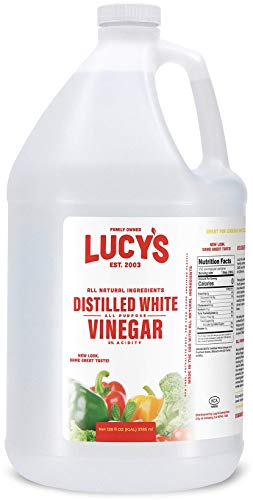
White distilled vinegar is the foundation of this routine because the most common tank problems are mineral scale and mold, and a long acetic-acid soak dissolves the scale, kills the mold and leaves every rubber and plastic part in the tank exactly as it found them.
Acetic acid at 5 to 6 percent concentration dissolves calcium carbonate, the main component of hard-water scale, at a rate slow enough to leave rubber seals unharmed but fast enough to clear a coating of scale in four to eight hours. Plumbers recommend it over concentrated acids precisely because the risk of seal damage is negligible. A gallon of cleaning-strength white vinegar costs a few dollars and covers a full tank soak, making it the most cost-effective tank cleaner available. Owners and plumber forums consistently report that clearing scale from the rim jets with a vinegar soak and a brush restores flush power that seemed permanently diminished.
The two limits are scope rather than quality. A heavy, long-standing rust stain is iron, not calcium, and vinegar only fades it rather than removing it, so you need a dedicated rust dissolver for that job. And vinegar works by contact time, so if you want results in twenty minutes rather than overnight, it is not the tool. For everything else the tank collects, it is the clear standout. It also pairs with the scale picks in our guide to the best hard water stain removers.
Fill the empty tank to the water line with vinegar and walk away. The overnight soak is the shortcut that most guides skip, because most people assume a few minutes will do. Four hours is the minimum for routine build-up; overnight for hard-water scale that has been accumulating for a year or more. The acetic acid is doing chemical work that scrubbing cannot replace, and because it is safe for every part in the tank, there is no downside to leaving it as long as needed.

CLR Calcium Lime Rust Remover is the step up for a tank that has not been cleaned in years, a fast-acting acid blend that dissolves thick calcium and lime crust in minutes rather than hours, with the caution that it must be diluted, kept brief, and rinsed thoroughly because it is aggressive enough to affect rubber on extended contact.
CLR is the right tool when a vinegar overnight soak leaves behind a hard mineral shell that resisted the mild acid. The blend of acids dissolves thick calcium and lime crust in about two minutes, which means a neglected tank that has months of accumulated hard-water deposits can be treated quickly and rinsed clean before the acid contacts the seals long enough to matter. The method is to dilute it according to the label, apply it to the scale with a brush, let it work briefly, scrub the loosened material, and rinse immediately and thoroughly with two or three flushes before turning the water back on.
Owners value how quickly it clears a heavy lime crust that gentler cleaners only scratch, and many use it annually on a hard-water tank. The tradeoff is that its strength is its caution: it is too aggressive for a long soak and must not sit on rubber longer than the label specifies. Used correctly, it is the right escalation from vinegar for the tank that truly needs it.
CLR is the product we reach for when vinegar soak number two still leaves crust. That usually means a tank that went years without cleaning and has built up a hard shell that mild acetic acid cannot penetrate in overnight soaking time. The rule is simple: dilute it, two minutes maximum, scrub and rinse. Never treat it like vinegar and leave it to soak. Short contact and a thorough flush-rinse keeps everything safe.

Iron OUT Rust Stain Remover is the pick for orange or brown iron staining from well water, a targeted rust-dissolving chemistry that breaks down oxidized iron deposits where vinegar only fades them and bleach actively makes them worse by further oxidizing the stain.
Iron OUT uses a reducing chemistry that chemically converts oxidized iron (the rust compound responsible for orange and brown staining) back into a soluble iron salt that rinses away. This is fundamentally different from an acid that dissolves calcium, which is why iron removers work on rust where general cleaners fail. Well water that carries dissolved iron deposits it on contact surfaces as it oxidizes into ferric oxide, leaving the characteristic orange streaking inside tank walls, on the fill valve, and often on the bowl itself. No amount of vinegar, bleach or general cleaner dissolves ferric oxide, because they attack different chemistry.
Owners in well-water regions consistently report that Iron OUT clears rust staining that nothing else touched, and many pair it with a water filter or iron-reducing softener to slow the re-staining. The firm tradeoff: bleach makes iron stains worse, so never combine the two, and rinse the tank thoroughly after use so no iron-remover chemistry lingers on the seals. For related well-water toilet guidance, see our picks for the best toilets for well water.
The moment someone mentions orange or brown and says it returns no matter what they try, we ask if they are on well water. If yes, the tank needs Iron OUT, not more vinegar. The stain is iron, not calcium, and they respond to completely different chemistry. The critical mistake to avoid: never put bleach on a rust stain, because it oxidizes the iron further and locks the stain in more firmly. Iron OUT per the label, thorough rinse, done.

Baking soda is the scrub booster that finishes what a vinegar soak starts, a mild abrasive that lifts loosened scale and film off the walls and corners without scratching the porcelain glaze or marring the plastic fill valve, making it safe to use freely around every rubber and plastic part in the tank.
Baking soda is useful precisely because it is not aggressive. After a vinegar soak softens the scale and film, the material still needs mechanical scrubbing to detach from the porcelain and plastic. Baking soda provides mild abrasive grit without the risk of scratching the tank glaze or scoring the fill-valve housing. Sprinkle it directly onto the wet surface after draining the soak, scrub with a soft brush, and the loosened material comes away cleanly. It also neutralizes the acetic acid from vinegar and any residual tank odor, leaving the interior smelling neutral rather than sharp.
Baking soda is the part of the routine that keeps the tank safe while still providing grit. Steel wool and metal scrubbers are what you want to avoid at all costs in a tank, because they scratch the glaze and create rough spots that build-up then clings to faster next time. Sprinkle baking soda, use a soft brush, and you get enough abrasion to lift what the soak loosened without ever putting the glaze or the plastic at risk.
Diluted Clorox Disinfecting Bleach is the pick for mold that survived the vinegar soak, a registered disinfectant that destroys black and pink mold growth decisively, used only in a half-cup-per-gallon dilution and only briefly so it sanitizes the surface without sitting long enough to degrade the rubber flapper and seals.
Bleach has a narrow, specific role in a tank: killing mold the vinegar pass left behind. At a half-cup-per-gallon dilution it destroys black mold, pink Serratia bacteria and stubborn slime quickly and with a registered disinfection claim, and at that dilution the brief contact time involved is too short to meaningfully affect the rubber. The steps that must not be skipped are the rinse afterward, two or three full flushes to clear the bleach chemistry from every surface, and never mixing bleach with the vinegar that preceded it, because that combination produces chlorine gas in an enclosed bathroom.
The misuse that causes harm is when bleach goes into the tank undiluted, or diluted but left to sit for hours, which is exactly the failure mode of in-tank bleach tablets. Brief, diluted, followed by a thorough rinse: those three conditions make bleach safe as a finishing step and harmful as anything else.
Diluted bleach in a tank is fine for one thing: killing mold that vinegar could not fully clear. The rules are simple and non-negotiable: dilute it to roughly half a cup per gallon, apply it only to the mold spots, wait no more than a few minutes, scrub, and then rinse with at least two flushes. What harms toilets is undiluted bleach left to sit, which is exactly what in-tank drop-in tablets do around the clock. Never leave it in there. Never mix it with the vinegar you used earlier.

The OXO Good Grips Deep Clean Brush Set is the pick for the scrub itself, pairing a wide soft brush for the flat walls with a narrow detail brush that reaches into the tight corners and around the fill valve and flush valve, the tools that mechanically clear build-up without scratching the glaze or marring the plastic parts.
The wide brush covers the flat wall panels efficiently after the soak has softened the build-up. The narrow detail brush is the one that matters most for flush power: it reaches into the fill-valve outlet, around the base of the fill valve where scale accumulates, and along the flush-valve housing. Work it gently into any opening where you see mineral build-up and the loosened scale breaks free. An old toothbrush is a workable substitute for the narrow brush in a budget routine. What must never enter the tank is anything stiff or metal, because porcelain scratches and plastic fill-valve housings can crack or chip.
An old toothbrush is an honest substitute for the narrow brush in a pinch, and it works well. What matters is the principle: soft bristles, not stiff; reaching the fill-valve outlet, not just the broad walls; and getting into the corners where film builds. The detail work on the fill-valve opening is what brings back flush power, and a rigid scrubber or metal brush is what damages the glaze and creates rough spots that attract more build-up next cycle.

The MR.SIGA Reusable Cleaning Gloves are the pick for protecting your skin through the whole routine, a waterproof reusable glove with a textured palm grip and an extended cuff that matters more for tank work than for bowl cleaning because you are reaching down into a container of cleaner rather than wiping a flat surface.
Tank cleaning requires reaching both hands into a container of acidic cleaner or, in a follow-up step, diluted bleach. The extended cuff on these gloves is the feature that separates them from a standard kitchen glove: it keeps cleaner off the forearms when reaching to the bottom of a deep tank to scrub around the flush valve. The textured palm maintains grip on a wet brush or a slippery fill-valve housing. Rinse the gloves after each use, hang them to dry, and keep them dedicated to the toilet to avoid cross-contamination with kitchen tasks. They do not replace ventilation when using bleach, CLR or a rust remover in a small bathroom.
For a tank clean, gloves with a short cuff mean getting cleaner on your wrist and forearm every single time you reach to the bottom to scrub the flush valve. A long cuff is the one feature that matters most here. Get a pair, keep them only for the toilet, and put them on before you open the supply valve, not after the cleaner is already in.
A complete tank-cleaning kit needs three things: white vinegar for the soak, because it dissolves scale and kills mold while leaving every rubber part intact; a soft detail brush or old toothbrush to scrub what the soak loosened and to clear the fill-valve outlet; and long-cuffed gloves to keep the cleaner off your skin while you reach in. Add baking soda as a scrub booster, CLR for a crust vinegar cannot budge, Iron OUT for well-water rust, and briefly diluted bleach for stubborn mold. Those six things cover every situation a tank produces, and the one rule that spans all of them is never mix bleach with vinegar or any acid in the same tank.
A cleaning is the most convenient time to inspect the working parts, because the tank is already empty and your view is clear. A few minutes of inspection while the vinegar soaks can catch a failing part before it causes a bigger problem.
The flapper sits at the bottom of the tank covering the flush valve opening. Press it down with a gloved finger and note whether it is pliable or stiff, cracked or intact, slimy from build-up or clean. A flapper that has turned hard and brittle, has visible cracks or chips, or does not spring back when you press it is past its service life. Replace it before you close the tank, because a worn flapper leaks water continuously from the tank into the bowl, wasting water silently. Our guide on how to replace a toilet flapper covers the full process.
Look at the fill valve for scale build-up around its base and at the outlet at the top where water enters the tank. Clear any visible scale with the detail brush during the scrub step. After you turn the water back on, watch the fill valve shut off cleanly when the water reaches the set level. A fill valve that continues running or starts and stops intermittently is failing and should be replaced. See our guide on how to replace a toilet fill valve for the full process.
The large valve seat at the bottom center of the tank, where the flapper seals, sometimes accumulates a ring of mineral build-up that prevents the flapper from seating flat. Clean that ring with the brush and baking soda during the scrub step. The tank-to-bowl gasket sits below the tank where it meets the bowl. This gasket does not need replacing unless the toilet is leaking at the joint, but a cleaning is a good time to confirm that the bolts holding the tank to the bowl are not loose or corroding.
The right approach depends on what you find when you lift the lid, what your water supply contains, and how long the tank has gone since the last clean.
Most U.S. households on municipal water deal primarily with calcium and lime scale. A twice-yearly vinegar soak is usually sufficient to keep the walls clear and the rim jets open. When the scale has accumulated for a year or more and vinegar needs two soak cycles to remove it, schedule the cleans at every six months rather than waiting for build-up to thicken. Adding a whole-house water softener or a tank-specific anti-scale device does not eliminate the need for periodic cleaning but can extend the interval substantially.
Well water commonly contains dissolved iron that oxidizes on contact with air and surfaces inside the tank. The orange or brown staining it leaves requires a dedicated iron remover, not vinegar or bleach, at least once per cleaning cycle for most well-water homes. Pair the Iron OUT treatment with a vinegar soak for the scale component, since well water often contains both. A water softener with an iron-removal stage is the long-term prevention, but the tank still needs cleaning every three months to keep the jets from narrowing.
Bathrooms with high humidity and poor ventilation grow tank mold faster. Running an exhaust fan during showers, fixing any dripping supply lines and keeping the bathroom ventilated reduces the rate at which mold returns after cleaning. A vinegar soak kills the existing growth; ventilation is what slows the next cycle. If mold returns within two months of a thorough cleaning, the issue is ambient humidity rather than cleaning frequency, and the fix is better ventilation rather than more frequent cleaning. For products to pair with this routine, see our roundup of the best bathroom cleaners of 2026.
Vinegar and baking soda are safe for septic tanks in any amount because they are biodegradable and do not disrupt the bacterial culture that breaks down waste. CLR, bleach and commercial rust removers should be used in limited amounts on a septic system and the tank should be thoroughly rinsed before the water supply is turned back on, so that concentrated cleaner drains into the septic as small a dose as possible. Avoid in-tank bleach tablets entirely on a septic system. For related guidance, see our list of the best drain cleaners of 2026.
The pattern we see most is homeowners cleaning the bowl regularly and never cleaning the tank until the flush weakens enough to notice. By that point the rim jets are significantly narrowed and the fill-valve outlet is partially clogged, and a single vinegar soak may not fully clear years of hard-water build-up. Twice a year is the maintenance schedule that keeps each cleaning a simple vinegar soak. Let it go to every two or three years and you are dealing with CLR and multiple cleaning cycles to restore what a regular routine would have kept open automatically. The toilet brands that MaP rates highest, TOTO, Kohler, American Standard, all assume the tank is getting periodic maintenance for the toilet to perform at its rated flush score over time. For a guide to the top performers, see our best toilet brushes of 2026 and related cleaning tools.
Shut off the water supply valve, flush to empty the tank, then fill it with plain white vinegar to the water line and let it soak at least four hours or overnight. Flush to drain the vinegar, scrub the walls and parts with a soft brush and baking soda, work the detail brush around the fill-valve outlet to clear scale, then turn the water back on and flush twice to rinse. The vinegar soak does most of the work, so keep the active scrubbing time short and let the chemistry do its job.
Plain white distilled vinegar at 5 to 6 percent acidity is the best all-around toilet tank cleaner because it dissolves mineral scale, kills mold and bacteria, and is completely safe for the rubber flapper, fill-valve seals and gaskets. For thick mineral crust vinegar cannot shift, use diluted CLR briefly. For rust and iron staining from well water, use Iron OUT. For stubborn mold after vinegar, use a half-cup-per-gallon dilution of bleach for a few minutes, then rinse fully.
Only diluted and briefly, never left to soak. A half cup of bleach per gallon of water applied for a few minutes kills mold effectively. Concentrated bleach soaking in the tank, or bleach tablets releasing low levels of bleach around the clock, degrade the rubber flapper and fill-valve seals over time, causing leaks. Most toilet manufacturers including TOTO, Kohler and American Standard warn against continuous in-tank bleach use in their care documentation.
Black build-up in a toilet tank is usually mold or mildew colonizing the dark, moist environment, or sometimes manganese deposits from the water supply, or degraded material from an aging rubber flapper. A vinegar soak removes the mold and a brief diluted bleach pass finishes any stubborn growth. If the black material is gritty and originates from the flapper, the flapper is breaking down and should be replaced before it stops sealing the flush valve.
About twice a year for most homes on municipal water, and every three months for homes on hard water or well water. Lift the lid every couple of months and look for white scale crust, orange iron staining or black mold starting to develop. Catching build-up early keeps each cleaning a simple vinegar soak instead of a multi-step heavy-duty session with stronger chemicals.
Yes, frequently. Hard-water mineral scale builds up inside the fill-valve outlet and the small rim jets under the bowl rim, narrowing the openings that move water into the bowl and reducing flush force and volume. Clearing the scale with a vinegar soak and a detail brush often restores the flush power that seemed permanently diminished. This is one of the most common overlooked causes of a weak flush on toilets in hard-water areas.
At least four hours for routine scale and mold, and overnight for heavy hard-water build-up. Vinegar is safe to leave against every rubber and plastic part in the tank for as long as needed, which is its key advantage over stronger cleaners. Longer dwell time gives the acetic acid more contact time to dissolve thick calcium deposits, then you drain and scrub what is left.
Yes for a proper deep clean. Shutting the supply valve and flushing empties the tank so the cleaner sits at full concentration against the build-up instead of being diluted by refilling water. Turn the valve clockwise until it stops, flush to drain, clean, then turn it back on and flush to rinse. A quick surface wipe can skip this step, but a vinegar soak that is meant to dissolve scale needs the tank empty and dry to work at concentration.
Yes, over time. Bleach-based in-tank drop tablets release bleach continuously into the tank water, and that ongoing low-level exposure hardens and cracks the rubber flapper and fill-valve seals over months. The flapper stops sealing the flush valve, the toilet runs silently, and EPA WaterSense estimates a running toilet can waste up to 200 gallons per day. Most toilet manufacturers including TOTO, Kohler and American Standard recommend against in-tank bleach tablets in their care and warranty documentation.
Use a dedicated rust-dissolving product like Iron OUT, because rust and iron staining is oxidized iron from well water, and it requires a reducing chemistry to dissolve. Vinegar only fades iron staining, and bleach actually sets it by further oxidizing the iron compounds and making the stain darker and harder to remove. Apply Iron OUT per label directions, let it dwell, scrub and rinse fully. Never apply bleach to rust staining at any point in the process.
A musty smell coming from a toilet is almost always from the tank, not the bowl. Mold, mildew or Serratia bacteria colonizing the tank walls in the dark, damp environment produce the characteristic mildew odor that persists no matter how well the bowl is scrubbed. A vinegar soak kills the growth and clears the smell. If a sewer-gas odor rather than mildew smell persists after tank cleaning, the source is likely a dry wax-ring seal or a P-trap issue rather than the tank.
White chalky build-up is calcium and lime scale, the mineral deposit left by hard water as it evaporates or moves through the tank. It forms on every surface that water contacts, including the tank walls, the fill valve, the flush valve and the rim jets. Scale is what weakens the flush by narrowing the fill-valve outlet and rim-jet openings. A vinegar soak dissolves it, and diluted CLR clears a thick crust that vinegar cannot shift in one cycle.
Yes. Clean around the flapper, fill valve and flush valve in place rather than removing them. Empty the tank, soak with vinegar, then brush the walls and around each part without disconnecting anything. Removing parts is only needed if you are replacing a worn flapper or fill valve, in which case the cleaning is a convenient time to do both. Leaving the parts in place during a routine clean is the standard approach and does not reduce cleaning effectiveness.
Never. Mixing vinegar, which is an acid, with bleach, which contains sodium hypochlorite, releases toxic chlorine gas that is dangerous to inhale, especially in a small enclosed bathroom. If both are part of your cleaning routine, use the vinegar soak first, flush and rinse the tank completely, then apply diluted bleach only to any mold spots that remain. Never combine them in the same tank at the same time.
No. Steel wool and stiff metal scrubbers scratch the porcelain glaze and mar the plastic fill-valve housing, creating rough surfaces that mineral build-up then clings to more readily on the next cycle. Use a soft-bristle brush, an old toothbrush for tight spaces, and baking soda as a gentle abrasive if you need extra scrubbing power. Soft tools paired with a proper vinegar soak clean thoroughly without any risk of surface damage.
Replace them if you find them worn, which a cleaning is the perfect time to discover. Check the flapper for stiffness, cracks or sliminess that prevent a proper seal. Check the fill valve for a clean shut-off when the tank reaches its water level. Both parts are inexpensive and can be replaced in under thirty minutes. If both look intact and the toilet is sealing and filling properly, close the tank and move on without replacing anything.
Indirectly but meaningfully. A clean tank in good condition helps the flapper seal flat against the flush valve and the fill valve shut off cleanly, both of which prevent silent water waste. EPA WaterSense notes that a leaking flapper can waste up to 200 gallons per day, and a fill valve that does not shut off cleanly wastes a continuous stream. Keeping the tank clean and the parts in working condition is part of the water-efficiency maintenance behind EPA WaterSense-certified toilets.
Lift the lid off the tank and hold it briefly over the opening. If the mildew or musty smell is noticeably stronger from the open tank than from the room, the tank is the source. Mold, mildew and Serratia bacteria in the tank produce the same odor that rises through the flush water and into the bowl and bathroom. A vinegar soak that clears the tank growth will eliminate the smell, usually within one cleaning cycle.
No. White distilled vinegar at 5 to 6 percent acidity is one of the only cleaning agents that dissolves hard-water scale and kills mold while posing no risk to the rubber flapper, fill-valve seals, gaskets or plastic tank components. This is why plumbers recommend it specifically for tank cleaning: the mild acid is strong enough to do the job but too weak to degrade rubber even on extended overnight contact. Concentrated acids and bleach present genuine rubber-degradation risk; vinegar does not.
To clean a toilet tank correctly, shut off the water, flush it empty, fill it with plain white vinegar to the water line, and let it soak at least four hours (overnight for hard-water build-up). Drain it by flushing, scrub the walls and parts with a soft brush and baking soda, clear the fill-valve outlet to restore flush power, then refill and flush twice to rinse. Step up to diluted CLR only when thick mineral crust resists vinegar, use Iron OUT for orange or brown well-water rust, and apply briefly diluted bleach only for mold vinegar could not finish. While the lid is off, inspect the flapper and fill valve and replace either if worn. Clean the tank twice a year on soft water, every three months on hard or well water. The cardinal rule across all products: never mix bleach with vinegar or any acid in the same tank.
Clean a toilet fully once a week, wipe the handle and seat with a disinfecting cloth two to three times between weekly…
Read the guideOrange and rust-brown streaks in a toilet bowl are iron oxide, a mineral deposit that bleach cannot dissolve and often intensifies. This…
Read the guideCleaning a toilet the right way is a ten-minute task when you match the chemistry to the stain and follow the correct…
Read the guide