
How Often Should You Clean a Toilet?
Cleaning & Maintenance4.6
Clean a toilet fully once a week, wipe the handle and seat with a disinfecting cloth two to three times between weekly…
Read the guideCleaning a toilet the right way is a ten-minute task when you match the chemistry to the stain and follow the correct sequence. Most people apply bowl cleaner, scrub immediately, and flush, then wonder why the ring under the rim or the waterline band never fully disappears. This guide covers every surface, every stain type, the correct dwell time for disinfection, and the safety rules that prevent dangerous chemical combinations, so your toilet ends up genuinely sanitized rather than just rinsed.
Apply a thick clinging gel such as Clorox Toilet Bowl Cleaner with Bleach under the rim and let it dwell 5 to 10 minutes while you disinfect the seat, lid, handle and base with Clorox Disinfecting Wipes, working clean-to-dirty. Scrub the bowl, flush, then switch to an acid cleaner like Lime-A-Way only if a hard-water or rust ring survives. Never mix bleach and acid cleaners in the same bowl.
The principle behind a properly cleaned toilet is simple: the chemistry must match the stain, and the cleaner must dwell long enough to dissolve it. Brown, gray, black or pink grime and the film that builds at the waterline are organic. A bleach or disinfecting gel handles these. A chalky white band or an orange-brown streak is a mineral deposit, calcium, lime or iron, and bleach cannot dissolve a mineral. Only an acid cleaner can. Mixing these two categories in the same bowl at the same time produces dangerous chlorine gas, so they must be used in separate sessions with a full flush in between.
We do not run cleaning trials. Our guidance is built on published manufacturer specifications and safety data sheets, EPA public-health guidance on disinfection versus cleaning, the dwell times required by registered disinfectants for verified germ-kill, and patterns across thousands of verified owner reviews. We separated what each product actually does and what stain it matches so you reach for the right tool every time. For the fixtures this routine keeps clean, see our guide to the best flushing toilets.
The supplies that cover every stain type and surface break into five categories. You do not need all of them for a standard weekly clean, but a house with hard water or well water needs the acid cleaner as a periodic add-on, and everyone needs protective gloves regardless of which product they reach for.
| Product | Role | Type | Stain Target | Septic Safe | Rating |
|---|---|---|---|---|---|
| Clorox Toilet Bowl Cleaner with Bleach | Step 2: bowl dwell | Bleach gel | Organic grime, bacteria | Yes (directed use) | 4.8 |
| Clorox Disinfecting Wipes | Step 3: seat, lid, handle, base | Disinfecting wipe | Bacteria, viruses on hard surfaces | Trash only | 4.8 |
| Lime-A-Way Toilet Bowl Cleaner | Optional: mineral/rust pass | Acid gel | Calcium, lime, rust rings | Yes (directed use) | 4.6 |
| OXO Good Grips Toilet Brush | Step 5: mechanical scrub | Brush + canister | Loosened grime, under-rim band | N/A | 4.7 |
| Lysol Toilet Bowl Cleaner | Alternative bowl cleaner | HCl disinfecting gel | Germs, grime, light limescale | Yes (directed use) | 4.7 |
| Iron OUT Rust Stain Remover | Optional: deep rust | Sulfamic acid | Iron and rust from well water | Yes (directed use) | 4.6 |
| Reusable Rubber Cleaning Gloves | Safety: every step | Protective gloves | N/A | N/A | 4.6 |
The steps below run the bowl chemistry and the surface disinfecting in parallel so the cleaner dwells while you handle the rest of the toilet. Follow the sequence precisely, because the order is the method. Skipping dwell time or mixing the wrong products at the wrong point is why rings survive and surfaces go unsanitized.
The step the vast majority of people skip is dwell time, and that is the one step that determines whether the cleaner actually works. Apply the gel under the rim and immediately walk away to disinfect the seat, lid, handle and base. By the time those surfaces are done, the bowl cleaner has been sitting for 5 to 10 minutes and the organic grime is already loosened. The scrub becomes easy, and the bowl comes clean in one pass instead of requiring repeated effort across multiple cleanings.
A toilet that has not been cleaned regularly, or one in a hard-water area, often carries a combination of stains that require more than a standard weekly routine. The approach is to work through the stain types in order, never combining chemistries in the same session.
A thick brown band at the waterline or under the rim that has accumulated over weeks is still organic if it scrubs off with a fingernail or a pumice stone. Apply a thick clinging bleach gel and extend the dwell time to 15 to 20 minutes, or apply it before bed and scrub in the morning. The extended contact dissolves what a 5-minute dwell cannot. For the jet holes under the rim, work the brush bristles directly into each hole. If the ring still resists, try a gel labeled with a higher active-ingredient concentration, or consider a toilet cleaner stamp or in-tank tablet for the in-between weeks to slow the rate of redeposition.
A white or blue-white ring at the waterline in areas with high mineral content (above 180 mg/L total dissolved solids is considered hard water by EPA standards) will not respond to bleach. The correct product is an acid-based toilet bowl cleaner. Lime-A-Way, which uses citric and phosphoric acid, dissolves calcium and lime deposits effectively on porcelain. Apply it generously at the waterline, let it dwell the full label time, and scrub with a brush or a non-scratch pumice sponge. Repeat the application if the ring is thick. Do not use acid cleaners on natural stone surfaces or metal fittings, and always confirm the bowl has fully flushed clear of any bleach before applying acid.
Orange-red or rust-brown streaks running from the jet holes or from the waterline down toward the trap are iron stains, which require a sulfamic or oxalic acid rust remover rather than a general acid toilet cleaner. Iron OUT is the standard product for this, available as both a powder and a liquid. Powder applied dry to a wet bowl and spread with a gloved hand provides higher concentration at the stain. Dwell time for heavy rust can run 15 to 20 minutes. Households on well water with high iron content may need to treat monthly rather than seasonally. For toilets that resist staining from this type of water, see our guide to the best toilets for hard water and our roundup of the best drain cleaners of 2026 for full drain maintenance.
A pink film under the rim or in the jet holes is Serratia marcescens, a bacterium that grows in moisture and thrives on residual minerals. Black spotting is usually mold. Both respond to bleach gel with extended dwell time, but they return quickly in bathrooms without adequate ventilation. After cleaning, improve airflow, run the exhaust fan for 30 minutes after every shower, and clean the toilet at least weekly rather than monthly to break the growth cycle.
The most common mistake with a badly stained bowl is reaching for more product when the problem is actually more time. A bleach gel that fails after a 5-minute dwell often works completely after a 15-minute dwell on the same stain. If extended dwell time still does not clear the ring, the stain is almost certainly mineral rather than organic, and the solution is not more bleach but a different chemistry entirely.
The tank is the part of the toilet most people never clean, yet it supplies every flush. A tank with visible buildup, discoloration or slime transfers that material into the bowl with every flush, which explains why a cleaned bowl sometimes shows new staining within a few days. Cleaning the tank requires a slightly different approach because the rubber flapper, the fill valve and the float inside are not bleach-tolerant in large amounts or for prolonged contact.
For a full walkthrough of tank cleaning and the products to use, see our dedicated guide to how to clean a toilet tank.
The band under the rim is the hardest part of the bowl to clean and the fastest to develop biofilm because it is warm, dark and wet. Jet holes (siphon holes) in this band release flush water, and mineral deposits, mold and bacteria all accumulate at exactly these openings.
Position the angled nozzle of the bowl cleaner inside the curve of the rim and work it around the full circumference so gel coats the band and drips slowly into the bowl. The angled neck on Clorox and Lysol bowl cleaners is designed for this. Do not use a thin-liquor cleaner here because it runs straight to the water before contacting the rim surface.
The under-rim band benefits most from a longer dwell, 10 to 20 minutes, because the film there is thicker and often older than the open bowl wall. Cleaning the outer surfaces during this time keeps you productive while the chemistry works.
A flat brush head cannot reach the inside of the rim curve. A brush with an angled or curved head, or one with stiff bristles that can be pressed upward into the rim band, reaches the jets and the surrounding porcelain. Work the bristles into each jet hole individually on a thorough cleaning, since mineral buildup in those holes reduces flush pressure over time.
For persistent mineral deposits inside the rim, apply Lime-A-Way with a squirt bottle or by soaking paper towels in the product and pressing them up into the rim band for 15 minutes. This delivers sustained acid contact to the calcified deposits in the jet holes and under the rim curve. For a detailed guide on this specific problem, see our article on how to clean under the toilet rim.
The best cleaner for toilet bowl stains depends on the stain type. Organic grime, brown film and bacteria respond to a clinging bleach gel such as Clorox Toilet Bowl Cleaner with Bleach, applied under the rim for 5 to 10 minutes before scrubbing. Hard-water mineral rings and calcium deposits require an acid cleaner such as Lime-A-Way, used in a separate session after the bleach has fully flushed away. Mixing bleach and acid in the same bowl produces chlorine gas and is a chemical safety hazard.
The easiest way to identify which product you need is to look at the stain color. Brown, gray, black or pink residue is organic and responds to bleach. A chalky white or blue-white ring at the waterline is calcium or lime and needs acid. An orange-brown streak is iron from the water supply and needs a rust remover. Using the wrong chemistry does not damage the porcelain, but it also does not remove the stain, which is why some rings survive bottle after bottle of the wrong product.
For the full evaluation of bowl cleaners by active ingredient, stain target, cling and owner satisfaction, see our guide to the best toilet bowl cleaners of 2026.
A toilet in regular use should receive a full bowl-and-surface clean once a week to prevent organic biofilm from hardening into a permanent ring. The seat, handle and exterior can be spot-wiped with a disinfecting wipe two to three times per week, especially in shared bathrooms or during illness in the household. Hard-water mineral rings may require an acid-cleaner pass every two to four weeks depending on local water hardness, and the tank should be inspected and cleaned every three to six months.
Frequency also depends on the number of users and the water chemistry. A single-person household in a low-mineral water area may get away with cleaning every 10 to 14 days without visible staining. A household of four in an area with very hard water (above 300 mg/L) may need to treat the bowl with acid cleaner weekly to prevent the ring from becoming a thick mineral crust that requires extended treatment to dissolve. High-use bathrooms, guest bathrooms during peak periods, and bathrooms used by young children or during illness warrant more frequent disinfecting of the seat and handle than the weekly bowl-clean schedule.
Bleach (sodium hypochlorite) is more effective than white vinegar for disinfecting a toilet bowl because it carries a registered EPA claim to kill bacteria and viruses at labeled concentrations. White vinegar, at 5 percent acetic acid, is a mild acid that can dissolve light calcium deposits and deodorize, but it is not an EPA-registered disinfectant and does not kill pathogens at the concentration available in household products. For organic grime and disinfection, use bleach. For light mineral deposits, vinegar is a safer tank-cleaning option than acid cleaners because it is gentle on rubber components.
The common hybrid approach, pouring bleach and vinegar into the toilet together to "boost" cleaning power, is a safety mistake. Bleach and acetic acid react to release chlorine gas in concentrations that irritate airways and eyes even at the small amounts produced in a toilet bowl. Always use one or the other, never together and not in the same session without a complete flush between.
For natural cleaning methods that avoid bleach entirely, a sequence of baking soda and citric acid followed by a scrub handles light grime and deposits without fumes. These approaches are covered in our guide to natural toilet cleaner methods. They are not replacements for bleach disinfection when pathogen kill is needed, but they are a reasonable maintenance option between deeper cleans.
Hard water stains in a toilet bowl are calcium and lime deposits that require an acid-based cleaner, not bleach. Apply a gel such as Lime-A-Way under the rim and at the waterline, let it dwell 5 to 15 minutes for moderate staining or up to 20 minutes for heavy buildup, then scrub with a brush or pumice sponge and flush. Repeat weekly in very hard water areas. For thick crusted deposits, pressing acid-soaked paper towels against the ring during dwell time improves contact and effectiveness.
Water hardness is measured in milligrams of calcium carbonate per liter (mg/L or ppm). The EPA classifies water above 120 mg/L as hard and above 180 mg/L as very hard. Municipalities with limestone-rich aquifers, and properties on private wells in mineral-rich geology, often supply water in the 200 to 400 mg/L range, which builds a visible ring in as little as one week between cleanings. In these situations, an acid cleaner is not an occasional tool but a regular part of the weekly routine.
For the toilets with surface glazes that resist mineral bonding, see our roundup of the best toilets for hard water. TOTO's CeFiONtect glaze and Kohler's CleanCoat both create an ion-barrier surface that slows the rate at which calcium bonds to the porcelain, reducing the frequency of acid treatments needed.
A toilet that is not cleaned regularly develops a hardened mineral ring at the waterline within weeks in most water supplies, bacterial and mold growth under the rim and in the jet holes within 2 to 4 weeks, and a progressive buildup of organic biofilm that darkens to brown or black. After several months, mineral scale in the jet holes can reduce flush pressure noticeably. In extreme cases, years of uncleaned mineral buildup can partially block the trapway, causing slow drainage that resembles a partial clog. The health risk is primarily from bacterial contamination of the seat, handle and surrounding surfaces where flush spray lands.
The practical consequence of letting a toilet go uncleaned for extended periods is that each subsequent cleaning requires longer dwell times, stronger products and more mechanical effort. A thick mineral crust that has calcified over months bonds tightly to the porcelain and may require repeated acid treatments over multiple cleaning sessions or careful use of a pumice stone. Starting a weekly routine prevents this accumulation from reaching the stage where standard products are insufficient.
The Clorox Toilet Bowl Cleaner with Bleach is the anchor product in this routine because the most common bowl problem is organic grime and bacterial film, and a thick clinging bleach gel addresses both at once while the angled neck delivers it where the stain actually lives, under the rim.
The gel's thick consistency is the feature that matters most for effective cleaning. A thin liquid runs from the rim to the trap in seconds, spending almost no time on the stain. A clinging gel sits on the organic film for the full 5 to 10 minutes needed to dissolve and disinfect it. The angled nozzle completes this by delivering the product under the rim where the film accumulates, rather than into the open bowl water where it is immediately diluted.
Owners consistently report that it whitens a dingy bowl in a single session and holds its consistency well enough to coat the rim without constant squeezing. The one limit is scope: bleach cannot dissolve a mineral ring, so a white or rusty waterline band that survives this cleaner needs an acid product as a separate treatment. For a broader look at bowl cleaner options by ingredient and stain, see our guide to the best toilet bowl cleaners of 2026.
Apply this first, point the nozzle under the rim and work all the way around, then walk away and disinfect the seat while it dwells. That dwell time is what separates a thorough cleaning from a cosmetic rinse. The gel clings rather than sliding to the trap, so the chemistry stays on the stain. For the everyday bowl in a house with municipal water, this is the product that works reliably without requiring anything else.
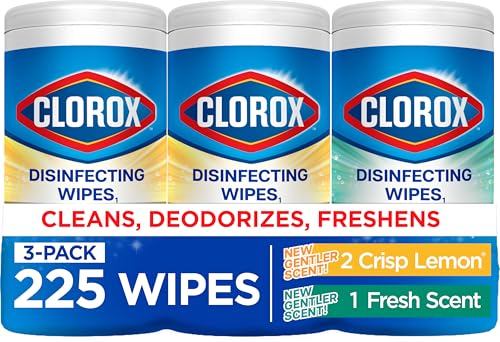
The Clorox Disinfecting Wipes cover everything outside the bowl, a registered disinfectant on a ready-to-use cloth that sanitizes every surface that flush spray reaches, converting a bowl-only cleaning into a fully disinfected toilet without requiring a second spray bottle.
Flush spray from a flushing toilet disperses bacteria-carrying water droplets onto the seat, underside of the lid, the handle and any surfaces within approximately 6 feet, which is why disinfecting these surfaces matters as much as cleaning the bowl. A registered disinfectant wipe carries an EPA-approved claim to kill bacteria and viruses at the concentrations present in the wipe, which requires the surface to remain wet for the contact time (4 minutes for Clorox wipes) rather than being wiped dry immediately.
The practical advantage of wipes over a spray bottle and paper towels is speed and convenience in the clean-to-dirty sequence. One wipe handles the handle and tank, a fresh wipe handles the seat top and lid, another handles the seat underside and rim edge, and a final wipe covers the base and floor seam. Owners value that one container covers the whole bathroom. The firm rule is to trash the used wipes, not flush them, as they do not break down in plumbing and are a recognized contributor to sewer clogs. See our guide to the best bathroom cleaners of 2026 for surface disinfecting options beyond wipes.
The seat, handle and tank are often more contaminated than the bowl after a flush, because flush spray goes up before it goes down. Disinfecting these during the bowl cleaner dwell time adds no extra time to the routine and converts a single-surface clean into a fully sanitized toilet. The key detail most people miss is that the surface needs to stay wet for 4 minutes to actually disinfect rather than just wipe. Spray a wipe on, move to the next surface, and come back to wipe dry after the contact time is up.

Lime-A-Way is the product for the stain a bleach gel cannot touch: the white or blue-white mineral ring at the waterline formed by calcium and lime precipitation from hard water, dissolved by the citric and phosphoric acid base while the thickened gel holds the chemistry against the deposit long enough to work.
The chemistry here is the inverse of a bleach cleaner. Acids dissolve mineral salts by reacting with calcium carbonate and calcium phosphate to form soluble compounds that rinse away. Bleach does not react with these compounds at all, which is why a bleach gel leaves a mineral ring completely intact regardless of how long it dwells or how hard you scrub. Lime-A-Way's thickened formula provides the same cling benefit at the waterline that a bleach gel provides at the rim, keeping the acid in contact with the mineral band for the full dwell time rather than running off the curved bowl surface into the water.
Owners in hard-water regions, particularly the US Southwest, Great Plains and areas served by limestone aquifers, treat this as the only toilet cleaner that actually works on their bowls. Some use it as their weekly product and reserve bleach for periodic disinfection. For rust from iron in well water, Iron OUT provides a more targeted chemistry (sulfamic acid) that specifically dissolves iron compounds. Always ventilate when using acid cleaners, and see our guide to the best drain cleaners of 2026 for keeping the whole drain system clear in hard-water homes.
This is the cleaner to recommend the moment someone describes a ring that bleach simply will not budge, because the ring is mineral and only acid dissolves it. The rule to enforce every time is the flush between sessions: fully flush out the bleach before applying the acid, because even a residual amount of bleach reacting with acid in the bowl produces chlorine gas. After that one safety step, the application is the same: apply to the ring, dwell the full label time, scrub and flush.

The OXO Good Grips Toilet Brush pairs dense angled bristles that reach under the rim and into the trapway with a ventilated canister that holds the brush above its own drips, the mechanical delivery tool that turns a properly dwelled bowl cleaner into a fully cleaned bowl.
The scrub brush completes the chemical step rather than substituting for it. After a bowl cleaner has dwelled 5 to 10 minutes, the organic film is already loosened or dissolved. The brush then dislodges it mechanically and distributes the cleaner into the trap and along the waterline. For this to work under the rim, the head must be angled or curved enough to press into the rim band. The OXO head achieves this with rigid enough bristles to stay in contact rather than splaying away from the surface.
The ventilated canister is the feature most competing brushes skip. A sealed cup traps a wet brush in a dark enclosure where mold and bacteria grow within days, contaminating the brush and eventually the bowl it is supposed to clean. The OXO canister's open base allows airflow and drip drainage, so the brush dries between uses. For the full category view, including silicone-head brushes and disposable options, see our guide to the best toilet brushes of 2026.
Flush while the brush is still in the bowl to rinse the bristles in the clean water, then hold it horizontally over the rim for 30 seconds to drip before putting it in the canister. A brush returned wet to a sealed cup is contaminated again within 24 to 48 hours. The ventilated canister solves this, but only if you let the brush drip before storage. The angled head also matters more than most people realize, because a flat brush misses the entire rim band where the oldest film builds.
The four products above cover every surface and every stain in the routine without redundancy. Bowl cleaner handles the inside. Wipes handle the outside. Lime-A-Way handles minerals when they appear. The brush delivers the scrub. You do not need a fifth product in the weekly routine, and adding products without matching them to a specific stain or surface creates the safety risk of incompatible chemistries meeting in the same bowl. Keep it to the minimum that covers every job.
The chemical safety rules for toilet cleaning are simple but non-negotiable. Most injuries and toxic exposures happen when people try to boost cleaning power by combining products.
| Combination | Reaction | Hazard Level |
|---|---|---|
| Bleach + Acid cleaner (same bowl, same session) | Produces chlorine gas | Dangerous |
| Bleach + Ammonia (in cleaning products) | Produces chloramine gas | Dangerous |
| Two different acid cleaners together | Unpredictable reaction, increased fumes | Avoid |
| Bleach + Vinegar (acetic acid) | Releases chlorine gas | Dangerous |
| Bleach + Hydrogen peroxide | Accelerated bleach decomposition, oxygen release | Avoid |
The most important rule in practice: if you clean the bowl with a bleach product, flush completely before applying any acid cleaner. Do not apply acid to the bowl in the same session as bleach even if you believe the bleach has drained, because residual bleach on the porcelain walls can still react with the acid product when it arrives. A complete flush, followed by a visual check that no bleach foam remains in the bowl, is the required safety step between products.
Most clinging gel toilet bowl cleaners require a minimum dwell time of 5 to 10 minutes to dissolve organic grime and complete disinfection. For heavily stained bowls or thick mineral rings, 15 to 20 minutes provides better results. Scrubbing before the dwell time is up removes most of the cleaner before the chemistry can work.
Yes. Leaving a clinging bleach gel in the bowl overnight is a common method for tackling badly stained toilets. Apply the gel under the rim before bed, allow it to dwell overnight, and scrub and flush in the morning. Avoid leaving highly concentrated acid cleaners in the bowl overnight because prolonged acid contact can affect older or lower-quality porcelain glazes over time.
A brown ring at the waterline is usually organic biofilm and responds to a clinging bleach gel with a 10 to 15 minute dwell, followed by scrubbing. If the ring has a hard, slightly rough texture and survives bleach treatment, it is a mineral deposit with organic staining on top and needs an acid cleaner such as Lime-A-Way as a separate treatment after flushing the bleach away.
A standard dose of bleach bowl cleaner used weekly is generally compatible with a functioning septic system because the bleach is heavily diluted by flush water before reaching the tank. Products labeled septic-safe when used as directed, such as Clorox Toilet Bowl Cleaner, confirm this within manufacturer guidelines. Pouring large quantities of undiluted bleach directly into the toilet repeatedly is more likely to affect beneficial bacteria in the tank.
Fast resoiling usually points to one of three causes: a hard-water supply depositing new calcium at the waterline within days, organic biofilm growing back because the jet holes under the rim were not fully cleaned and continue seeding the bowl, or an in-tank product that is partly degraded and depositing tinted residue with every flush. Cleaning the jet holes under the rim directly and treating with an acid cleaner if you have hard water typically resolves rapid resoiling.
A pumice stone designed for toilet use can remove hard mineral deposits from glazed porcelain without scratching if the stone and the porcelain are both wet during use. Dry pumice on dry porcelain scratches. Never use a pumice stone on a colored, coated or unglazed toilet, and avoid the trap where the geometry prevents controlled pressure. For standard white glazed porcelain, a pumice stone is a safe mechanical option for mineral rings that resist chemical treatment.
Baking soda and citric acid is the most effective natural combination. Pour half a cup of citric acid powder into the bowl, add half a cup of baking soda, let the fizzing reaction subside for 15 to 20 minutes, then scrub and flush. Citric acid dissolves light mineral deposits and the mechanical fizzing action helps loosen grime. White vinegar is a milder alternative but is less effective on established mineral rings than citric acid.
Yes. A 2022 study published in Scientific Reports confirmed that flushing with the lid open releases a visible aerosol plume containing bacteria and viral particles that rises above the toilet and settles on surrounding surfaces. Closing the lid before flushing significantly reduces the dispersal of this spray onto the seat, handle, toothbrushes and other bathroom surfaces. It does not eliminate the need to disinfect the toilet exterior, but it reduces the rate of surface contamination between cleanings.
Rinse the brush by swirling it in the clean flush water at the end of each use. For deeper disinfection, fill the canister with a diluted bleach solution (1 tablespoon of bleach per quart of water), place the brush in it for 5 to 10 minutes, rinse by swirling in a clean flushed bowl, and air-dry before returning to the canister. Replace the brush when bristles show visible splaying, discoloration or an inability to be rinsed clean, typically every 3 to 6 months.
Standard bleach gel toilet bowl cleaners do not damage glazed porcelain at the concentrations sold in consumer products. However, prolonged or repeated contact with rubber components, including the flapper, fill valve seals and tank gaskets, can accelerate degradation over time. This is why in-tank bleach tablets placed directly in the tank are discouraged for long-term use, while applying bowl cleaner to the bowl and flushing it through causes negligible rubber contact.
Black spots in or around the toilet bowl are usually mold (commonly Aspergillus or Cladosporium) and respond to bleach gel with an extended 15 to 20 minute dwell. Apply generously under the rim and at the waterline, allow to dwell, scrub directly into the moldy spots with a brush, and flush. Mold reappears quickly in poorly ventilated bathrooms, so improving airflow by running the exhaust fan during and after showers reduces recurrence.
Bleach is more effective for disinfection because it carries an EPA-registered kill claim for bacteria and viruses at consumer concentrations, while hydrogen peroxide at the 3 percent concentration available commercially is a weaker disinfectant. Hydrogen peroxide is a safe alternative for households avoiding bleach and provides some disinfection for light loads, but it does not match the pathogen-kill performance of a registered bleach product at labeled concentrations and contact times.
A folded paper towel held with gloved hands, a disposable toilet cleaning wand (such as Scrubbing Bubbles Fresh Brush) with a pre-loaded cleaner head, or a scrubbing sponge reserved for toilet use can substitute for a brush. The principle remains the same: apply cleaner, allow it to dwell, then use the scrubbing tool to provide mechanical agitation before flushing. Disposable wand heads are useful for households that prefer not to store a used brush.
Urine smell around a toilet typically originates from the base seal (wax ring), the floor around the base, or under the seat where urine has seeped beneath the hinges. Clean under the seat and seat hinges with a disinfecting wipe or an enzymatic cleaner that breaks down urea compounds. If the smell persists after thorough cleaning of these surfaces, inspect the wax ring seal at the base, as a failed seal allows sewer gases to escape from around the toilet base.
Pink or reddish film in the toilet bowl or under the rim is most commonly Serratia marcescens, a naturally occurring bacterium that thrives in moist environments and feeds on mineral and organic residue. It is not typically harmful to healthy adults but it returns quickly if the underlying conditions persist. Clean with bleach gel, allow a 15-minute dwell, scrub the jet holes directly, and ventilate the bathroom. Increasing cleaning frequency to twice weekly breaks the growth cycle in persistently affected bathrooms.
The base and the floor seam around the toilet collect splatter and urine residue that is easy to miss in a standard cleaning. Wipe the base and the floor caulk line with a disinfecting wipe or paper towels dampened with an all-purpose disinfectant, working from the tank side toward the front and finally around the underside of the bowl. A flat mop head or a scrub brush with a narrow edge reaches the floor seam where the base meets the tile. This area is the most common source of persistent bathroom odor.
Dish soap poured into a toilet bowl, often combined with hot water, can loosen waste in a clog and is a recognized emergency unclogging technique. For routine cleaning, dish soap is a mild surfactant that removes light surface grime but does not disinfect and does not dissolve organic film or mineral deposits. It is a useful emergency measure but not a replacement for a purpose-formulated bowl cleaner in the regular routine.
A citric acid and baking soda combination is the most effective chemical-free approach for light to moderate grime and mineral deposits. Citric acid (food-grade powder, applied at about half a cup) dissolves light calcium deposits and kills some bacteria. For mechanical cleaning without any liquid product, a pumice stone on a wet surface removes mineral rings from glazed porcelain without chemicals. Neither approach matches the pathogen-kill performance of a registered disinfectant, so households where disinfection matters should use a registered product at least periodically.
Start with a full organic pass: apply bleach gel under the rim and at the waterline, extend the dwell time to 20 minutes or overnight, scrub thoroughly with a brush focusing on the jet holes and rim band, and flush. After the bowl has fully flushed, identify any remaining rings. A white or colored mineral ring needs a separate acid-cleaner session. Repeat each pass until the ring breaks up. Very thick mineral crusts may require two or three acid treatments across consecutive days before the deposit is thin enough to scrub off.
A properly cleaned toilet takes 10 minutes when you apply a clinging bleach gel under the rim first, let it dwell 5 to 10 minutes while you disinfect the seat, lid, handle and base with registered wipes working clean-to-dirty, then scrub and flush. A separate acid-cleaner pass with Lime-A-Way handles any mineral ring that survives the bleach step, but only after a complete flush and never mixed in the same bowl. The dwell time and the correct chemistry for the stain type are the two decisions that determine whether the cleaning works or leaves the same ring behind. Stick to the sequence above, match the product to the stain, and a weekly routine keeps the toilet genuinely sanitized without extended scrubbing effort. For the toilets with the glazes that resist staining longest, see our guide to the best flushing toilets.
Clean a toilet fully once a week, wipe the handle and seat with a disinfecting cloth two to three times between weekly…
Read the guide
Orange and rust-brown streaks in a toilet bowl are iron oxide, a mineral deposit that bleach cannot dissolve and often intensifies. This…
Read the guide
The toilet tank sits out of sight and out of mind until the flush goes weak, the bowl develops a mystery ring,…
Read the guide