Toilet Fill Valve Guide: How It Works and How to Replace It
The fill valve is the tall part on the left side of your toilet tank that refills the tank with fresh water after every flush and shuts the water off at the right level. When it fails, the toilet runs nonstop, refills too slowly, or never fills enough to flush properly. This guide explains exactly how a fill valve works, the difference between float-cup and ballcock styles, how to diagnose a bad one, how to replace it step by step, how it interacts with the flush valve and water level, and which proven fill valves and toilet brands like TOTO, Kohler, American Standard, Woodbridge, Swiss Madison and Gerber rely on, all from published specifications and aggregated owner reviews rather than guesswork.
Quick Answer
For a quiet, reliable refill that fixes a running or slow-filling toilet, replace a worn unit with a universal float-cup fill valve, and the Fluidmaster 400A is the standout because it fits nearly every two-piece toilet, installs in about 15 minutes, and adjusts height without tools. Older ballcock float-arm valves are best swapped out entirely rather than rebuilt.
If your toilet hisses long after the flush ends, takes forever to refill, or runs in random bursts through the night, the culprit is almost always one part: the fill valve. It is the vertical column standing on the left side of the tank, connected to the water supply line underneath, and its only job is to refill the tank with clean water after each flush and then shut off cleanly at the right level. When it works, you never think about it. When it wears out, it can waste hundreds of gallons a day or leave the tank too empty to flush hard.
This guide is built the way we research every topic on this site. We do not physically install or test toilets in a lab. Instead we compare published manufacturer specifications, the design differences between fill valve styles, EPA WaterSense efficiency standards, and the patterns that surface across thousands of verified owner reviews and plumber feedback. By the end you will understand exactly how the fill valve works, how to tell a bad one from a bad flapper, how to replace it yourself in about 15 minutes, how to set the water level correctly, and which dependable fill valves and toilet brands deliver a quiet, trouble-free refill for years.
Read this first. The fill valve and the flush valve are two different parts that people constantly confuse. The fill valve (left side of the tank) brings water IN and refills the tank. The flush valve and flapper (center of the tank) let water OUT into the bowl when you flush. A toilet that runs constantly can be caused by either one, so the first step in any repair is figuring out which part is leaking before you buy anything.
How Does a Toilet Fill Valve Work?
A toilet fill valve refills the tank with water after each flush and shuts off automatically when the water reaches the set level. A float rises with the water and, once it hits the cutoff point, presses a seal closed to stop the flow. It also sends a small stream of water through the refill tube into the overflow pipe to restore the bowl's water level.
The fill valve is a deceptively simple mechanism. When you flush, the tank empties and the float drops with the falling water. As the float drops, it opens an internal seal and lets pressurized water from the supply line rush up through the valve and into the tank. As the tank refills, the float rises again, and once it reaches the preset cutoff height it pushes the seal shut, stopping the water at exactly the right level. The whole cycle takes about a minute on a healthy valve.
There is a second job most people never notice. While the tank is refilling, the fill valve also pushes a thin stream of water through a small flexible refill tube that clips onto the overflow pipe in the center of the tank. That stream goes down the overflow into the bowl to restore the standing water you see, which forms the trap seal that blocks sewer gas. This is why a worn fill valve can leave both a weak flush and a low bowl water level. If the tank never refills fully, there simply is not enough water stored to deliver a strong flush. For the full picture of how stored water turns into flush force, our guide to the best flushing toilets ranks the models that turn a full tank into a powerful surge.
What Are the Different Types of Toilet Fill Valves?
The two main fill valve types are the modern float-cup valve and the older ballcock float-arm valve. A float-cup valve has a doughnut-shaped float that slides up and down the central column, while a ballcock uses a floating ball on a long horizontal arm. Float-cup valves are quieter, more compact, easier to adjust and now standard on nearly all new toilets.
Fill valves come in a handful of designs, but residential toilets fall into a small set of categories. The differences matter because they affect noise, reliability, how you adjust the water level, and whether the part is worth rebuilding or simply replacing. The table below summarizes how the common types compare.
Fill valve type
How the float works
Noise level
Found on
Recommendation
Float-cup (anti-siphon)
Cup slides up the column
Quiet
Nearly all modern toilets
Best choice
Ballcock (float-arm)
Ball on a long arm
Often noisy
Older toilets pre-1997
Replace, do not rebuild
Diaphragm (plunger)
Pressure-actuated diaphragm
Moderate
Some older and commercial
Aging design
Float-cup with delay/dual
Cup plus dual-flush logic
Quiet
Dual-flush and premium models
Good for dual-flush
The takeaway is straightforward. If your toilet still has an old ballcock with a brass body and a ball floating on a wire arm, the best move is to replace it entirely with a modern float-cup valve rather than chase a rebuild. Float-cup valves like the Fluidmaster 400A and Korky QuietFill are quieter, more reliable, and adjust without tools. The diaphragm and older brass designs still function but are an aging approach worth retiring when they fail. Most new toilets from TOTO, Kohler, American Standard and Woodbridge ship with a float-cup valve already installed.
How Do I Know If My Fill Valve Is Bad?
Signs of a bad fill valve include a toilet that runs constantly, refills very slowly, makes a hissing or whistling noise, or cycles on by itself in bursts. To confirm, lift the tank lid and watch: if water is pouring into the overflow pipe in the center, the fill valve is failing to shut off. If the tank water level looks fine but the toilet still runs, the flapper is more likely the cause.
A failing fill valve announces itself in a few recognizable ways. The most common is a toilet that never fully stops running, often with water trickling into the overflow tube because the valve will not seal shut. Another is a slow refill, where the tank takes several minutes to fill and the next flush is weak because the tank was not full. You may also hear a hiss, whistle or vibration as worn internal parts struggle to seal against the water pressure.
The quickest diagnostic is to remove the tank lid and look. If water is steadily flowing into the central overflow pipe, the fill valve is set too high or failing to shut off, and adjusting or replacing it is the fix. If the water level sits below the overflow but the toilet still runs, the problem is usually the flapper leaking water out the bottom of the tank instead. A simple dye test confirms this: add food coloring to the tank and wait ten minutes without flushing, and if color appears in the bowl, the flapper is the leak. Our guides on a toilet that keeps running and fixing ghost flushing walk through isolating the fill valve from the flapper step by step. If the tank barely fills at all, our explainer on a toilet tank not filling covers supply and valve causes.
Common mistake. Replacing the flapper when the fill valve is the real problem, or the reverse. The two are the most-confused parts in the tank. Always do the dye test and watch the overflow pipe before you buy a part. A toilet running with water in the overflow points to the fill valve. A toilet running with the water level below the overflow points to the flapper.
How Do You Replace a Toilet Fill Valve?
To replace a toilet fill valve, shut off the supply valve, flush to empty the tank, sponge out the remaining water, then disconnect the supply line and the locknut under the tank to remove the old valve. Drop in the new float-cup valve, secure the locknut, reconnect the supply line, set the height, and turn the water back on. The job takes about 15 minutes and needs no special tools.
Replacing a fill valve is one of the most approachable toilet repairs and rarely requires more than a pair of hands and an adjustable wrench. Most homeowners finish it in about 15 minutes with a universal float-cup valve that fits the vast majority of two-piece toilets. Here is the full sequence.
Step by step fill valve replacement
Work through these steps in order. Keeping a sponge and a small bucket nearby makes the job clean and dry.
Step
What to do
Why it matters
1
Turn off the supply valve behind the toilet
Stops water flow so the tank can drain
2
Flush and hold the handle to empty the tank
Removes most of the standing water
3
Sponge out the last inch of water
Prevents spills when you remove the valve
4
Disconnect the supply line from the tank bottom
Frees the valve from the water source
5
Unscrew the locknut under the tank and lift out the old valve
Removes the failed part
6
Set the new valve height, drop it in and tighten the locknut
Secures the new valve at the right level
7
Clip the refill tube to the overflow pipe
Restores the bowl water and trap seal
8
Reconnect the supply line and turn the water on
Refills the tank and tests the seal
Once the water is back on, watch the tank refill and confirm the valve shuts off cleanly with the water level about one inch below the top of the overflow pipe. If it overfills or keeps running, adjust the height on the float cup until it stops at the right line. Do not push the refill tube down into the overflow pipe, since that can cause a siphon that quietly drains the tank. Clip it so it sits just above the rim of the overflow. If the supply line is old or corroded, replacing it at the same time is cheap insurance against a future leak.
Editorial Take
The single most common installation error we see is setting the water level too high so the valve never fully shuts off, then blaming the new valve. Set the float so the water stops about an inch below the top of the overflow pipe, and make sure the refill tube clips above the overflow rather than dangling inside it. Get those two details right and a quality float-cup valve will run silently for a decade.
What Is the Best Toilet Fill Valve?
The best toilet fill valve for most homes is a universal float-cup model like the Fluidmaster 400A or Korky QuietFill Platinum. Both fit nearly every standard two-piece toilet, install in about 15 minutes, adjust height without tools, and refill quietly. For dual-flush toilets, a matching brand-specific valve from TOTO or Kohler is the safest choice to preserve the dual-flush function.
For a standard two-piece gravity toilet, a universal anti-siphon float-cup valve is the right answer for the vast majority of buyers. These valves are inexpensive, stocked at every hardware store, and engineered to fit almost any tank with a standard shank. The Fluidmaster 400A is the long-running default, while the Korky QuietFill is favored by owners who want the quietest possible refill. Both adjust by twisting or sliding the column to set the height, with no tools needed.
There are two situations where a brand-matched valve is the smarter pick. Dual-flush toilets from TOTO, Kohler, Swiss Madison and Gerber often use a specialized fill valve tied to the dual-flush mechanism, and replacing it with a generic part can break the half-flush function. Likewise, one-piece toilets sometimes have tight tank dimensions that suit a low-profile valve. In those cases, buy the manufacturer's listed replacement for your exact model number. When the flush itself has weakened, our guides on improving toilet flush power and fixing a weak flush cover the water level and valve checks worth making.
Top Fill Valve Recommendations
These three options cover the most common replacement scenarios, from the universal workhorse to the quietest refill and the dual-flush matched part. Each is a model where the design and aggregated owner feedback agree on reliability. Confirm your toilet's shank height and whether it is dual-flush before ordering, since dual-flush tanks often need a brand-specific valve.
Best Overall
Fluidmaster 400A
Universal float-cup fit
4.7
The 400A is the universal float-cup valve that fits nearly every standard two-piece toilet, installs in about 15 minutes, and adjusts height by twisting the column, which is why it is the most recommended replacement valve in the category.
The Korky QuietFill uses a sealed cap and a quieter flow path to refill with noticeably less hiss, making it the pick for bathrooms next to bedrooms where a noisy refill is the main complaint.
For TOTO dual-flush and premium models, the genuine TOTO fill valve preserves the exact refill behavior the toilet was engineered for, avoiding the dual-flush problems a generic valve can introduce.
Set the fill valve so the tank water stops about one inch below the top of the overflow pipe. On a float-cup valve, slide or twist the float cup down to lower the level or up to raise it. The water level controls flush strength: too low means a weak flush, while too high wastes water down the overflow and can make the toilet run.
The water level in the tank is one of the most overlooked factors in flush performance. The fill valve sets that level, and getting it right is the difference between a strong flush and a weak one. Nearly every modern toilet has a fill line or mark stamped or printed on the inside of the tank, and the target is to stop the water about an inch below the top of the overflow pipe, or right at the marked line. Too low and the tank does not hold enough water to build a full flush. Too high and water spills continuously down the overflow, wasting water and mimicking a running toilet.
On a float-cup valve, you adjust the level by moving the float cup along the central column. Most use a clip or a turn-to-adjust knob: lowering the cup makes the valve shut off sooner for a lower level, and raising it allows a higher fill. Older ballcock valves adjust by bending the float arm or turning a screw at the top, though replacing them with a float-cup valve is usually the better long-term move. If your flush feels weak and the water level looks low, our guide on a toilet water level that is too low covers the fill valve and supply causes in detail. For how water level ties into overall efficiency, our explainer on how much water a toilet uses breaks down GPF and WaterSense.
How the Fill Valve Works With the Flush Valve and Water Level
The fill valve does not work in isolation. It is one of three tank components that together decide whether your toilet flushes hard and refills cleanly: the fill valve that brings water in, the flush valve and flapper that let water out, and the water level the fill valve sets. Reading them as a system is the key to diagnosing problems quickly.
Fill valve plus flush valve
The fill valve refills the tank, and the flush valve releases that water into the bowl. They are matched but independent. A perfect flush valve cannot do its job if the fill valve never refills the tank fully, and a flawless fill valve is wasted if the flapper leaks the water back out. When a toilet runs, the first task is always identifying which of the two is the cause. Our flush valve size guide covers the other half of this pairing in depth.
Fill valve and water level
The water level the fill valve sets is what determines how much water is available for each flush. A 3 inch flush valve and a wide glazed trapway can only deliver their full clog-clearing power if the tank is filled to the correct line. This is why a slow or low-filling fill valve so often shows up as a weak flush rather than an obvious leak. Set the level right, and the rest of the flush system can do its job.
Symptom
Likely cause
Fix
Runs with water in overflow
Fill valve not shutting off
Adjust level or replace fill valve
Runs with level below overflow
Leaking flapper
Replace flapper or seal
Slow refill, weak flush
Clogged or worn fill valve
Clean or replace fill valve
Hissing or whistling
Worn fill valve internals
Replace fill valve
Phantom flush at night
Flapper or fill valve
Dye test, then replace bad part
For the full checklist of tank components and specs to weigh when buying or repairing a toilet, our complete toilet buying guide lays the whole process out step by step, and our walkthrough on how to choose a toilet puts performance and fit in the right order.
Which Toilet Brands Have the Best Fill Valves?
While most fill valve replacements use a universal float-cup part, the original valve a toilet ships with varies by brand, and that affects how easy long-term service will be. The picks below group dependable brands by their fill valve approach so you can match a new toilet to easy parts availability, from universal-friendly designs to premium dual-flush systems. Always confirm whether your specific model is dual-flush before ordering a replacement valve.
1
Best Universal Fit
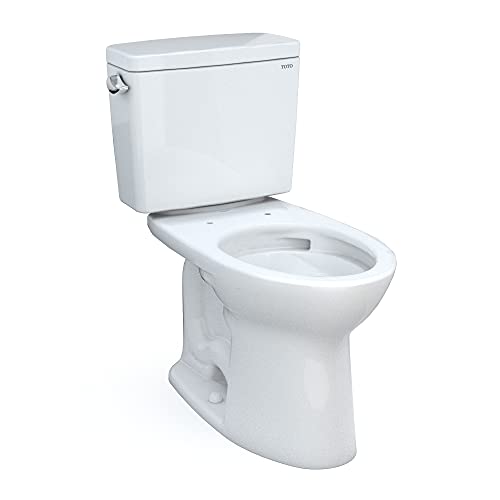
TOTO Drake
4.7Easy parts
The TOTO Drake uses a standard single-flush tank that accepts common universal float-cup fill valves, making long-term service simple and inexpensive at any hardware store.
Flush TypeGravity, 3 in G-Max
GPF1.28
MaP Score1000 g
Bowl HeightStandard / Comfort options
Warranty1 year limited
Best For
Buyers who want cheap, easy parts
Busy family bathrooms
Maximum clog resistance on low water
Not Ideal For
Buyers wanting a seamless one-piece look
Anyone needing the quietest possible refill stock
Because the Drake's single-flush tank uses standard fittings, a worn fill valve can be swapped for an off-the-shelf Fluidmaster or Korky in about 15 minutes. The wide availability of matching seals and valves is a big reason plumbers favor it.
Owner reviews repeatedly note how easy the Drake is to service, with the fill valve and flapper both being common parts rather than proprietary cartridges, which keeps long-term ownership cheap.
Editorial Take
If easy, cheap repairs matter to you, a single-flush toilet like the Drake is the safe bet. Its tank accepts a universal float-cup fill valve, so you are never locked into an expensive proprietary part when the original eventually wears out.
Bottom Line: The Drake's standard tank takes a universal fill valve, keeping service simple and inexpensive.
2
Best Canister System
Kohler Cimarron
4.5Durable refill
The Kohler Cimarron pairs a 3 inch canister flush valve with a reliable float-cup fill valve, and Kohler stocks genuine replacement parts that match the original refill behavior closely.
Flush TypeGravity, 3 in canister
GPF1.28
MaP Score1000 g
Bowl HeightComfort height
Warranty1 year limited
Best For
Buyers who want power plus efficiency
Taller and older users wanting an easier seat
A clean concealed-trap profile
Not Ideal For
Buyers wanting only off-brand universal parts
Small children who need a lower bowl
The Cimarron's fill valve is a conventional float-cup design, so universal replacements fit, while Kohler genuine parts preserve the exact tuning. The canister flush valve also tends to outlast a hinged flapper before needing service.
Owner reviews praise the balance of a powerful flush, low water use and a comfortable seat height, with both the fill valve and canister seal earning a reputation for long service life.
Editorial Take
The Cimarron is the pick when you want a durable refill in a comfort-height body. Its float-cup fill valve accepts universal replacements, and Kohler's genuine parts keep the original behavior intact if you prefer an exact match.
Bottom Line: The Cimarron combines a durable float-cup fill valve with a long-lasting canister flush valve.
3
Best Value Refill
American Standard Cadet 3
4.5Reliable value
The American Standard Cadet 3 uses a standard float-cup fill valve and a 3 inch flush valve, delivering dependable refill and flush performance with widely available replacement parts.
Flush TypeGravity, 3 in valve
GPF1.28
MaP Score1000 g
Bowl HeightComfort height
Warranty10 year limited on china
Best For
Value buyers wanting dependable parts
Households wanting strong flush on low water
Long manufacturer warranty on china
Not Ideal For
Buyers wanting a seamless one-piece
Anyone needing the quietest stock refill
The Cadet 3's fill valve is a conventional float-cup unit, so a universal Fluidmaster or Korky drops right in when the original wears out. The wide trapway and 3 inch flush valve back up the refill with a strong, clog-resistant flush.
Owner reviews highlight the Cadet 3 as a dependable, easy-to-service workhorse, with the standard fill valve and the long 10 year china warranty adding to its value.
Editorial Take
The Cadet 3 is the value choice for a toilet with an easy-to-service refill. Its standard float-cup fill valve takes universal replacements, and the long china warranty makes it a low-risk pick for busy homes.
Bottom Line: The Cadet 3 pairs a universal-friendly fill valve with a strong 3 inch flush and a long warranty.
4
Best Dual-Flush Value
Woodbridge T-0001
4.5Modern value
The Woodbridge T-0001 packs a 3 inch flush valve and a modern fill system into a skirted one-piece, hitting the 1,000 gram MaP ceiling, though its tank parts are typically ordered online rather than stocked locally.
Flush TypeGravity, 3 in valve
GPF1.28
MaP Score1000 g
Bowl HeightComfort height
Warranty5 year limited (varies)
Best For
Value buyers wanting maximum flush power
A modern skirted look with hidden trapway
Included soft-close seat
Not Ideal For
Buyers who want local same-day parts
Anyone wanting a long-established brand
The T-0001 gives premium flush performance for less, and its fill valve is a modern float-cup style. The main caveat is that replacement valves and seals are ordered through Woodbridge or online rather than pulled off a hardware store shelf.
Owner reviews consistently praise the flush strength and modern look for the money, while noting that planning ahead for online-ordered tank parts is wise with a younger brand.
Editorial Take
The T-0001 is the value play for a modern skirted toilet with a strong flush. Just keep a spare fill valve and seal on hand, since this newer brand's parts come from online rather than the local hardware aisle.
Bottom Line: The T-0001 brings premium flush power and a modern fill system to a value-priced one-piece.
5
Best Trade-Grade
Gerber Viper
4.3Rental durability
The Gerber Viper uses a 3 inch flush valve and a standard float-cup fill valve, posting a full 1,000 gram MaP score with trade-grade parts that hold up under heavy rental use.
Flush TypeGravity, 3 in valve
GPF1.28
MaP Score1000 g
Bowl HeightStandard / Comfort options
Warranty5 year limited on china
Best For
Rentals and heavy-use bathrooms on a budget
Trade-grade durability
Standard, easy-to-replace tank parts
Not Ideal For
Buyers wanting premium fit and finish
Anyone needing a seamless one-piece
The Viper's standard float-cup fill valve means a universal replacement drops right in, and Gerber's plumbing-trade pedigree means the whole toilet survives heavy use that breaks cheaper builder specials.
Owner and plumber reviews repeatedly cite the Viper as a dependable, no-frills workhorse, with both the fill valve and flush valve being standard, easy-to-find parts.
Editorial Take
For rentals and heavy-use bathrooms, the Viper is the one we trust. Its standard float-cup fill valve takes a universal replacement, and Gerber's trade roots mean it survives abuse that breaks budget toilets.
Bottom Line: The Viper combines a universal-friendly fill valve with trade-grade durability for rentals.
6
Best Modern Dual-Flush
Swiss Madison St. Tropez
4.3Dual-flush style
The Swiss Madison St. Tropez wraps a dual-flush fill and flush system inside a low skirted one-piece, delivering water-saving refills, with the caveat that its dual-flush valve is a brand-specific part.
Flush TypeDual flush, 3 in valve
GPF1.1 / 1.6 dual
MaP Score800 g (varies)
Bowl HeightComfort height
Warranty1 year limited
Best For
Modern bathrooms wanting a low skirted look
Dual-flush water savings
A seamless, easy-clean body
Not Ideal For
Buyers who want universal off-the-shelf parts
Anyone needing the very highest MaP score
The St. Tropez's dual-flush system uses a specialized fill valve tied to the half-flush function, so replacements should be the brand-specific part rather than a generic universal valve, which can break the dual-flush feature.
Owner reviews praise the modern style and water savings, with the usual newer-brand caveat that the dual-flush fill and flush parts are ordered online rather than found locally.
Editorial Take
The St. Tropez is for buyers who want dual-flush savings in a modern shell. Just remember its fill valve is dual-flush specific, so buy the matching Swiss Madison part rather than a universal valve when it needs service.
Bottom Line: The St. Tropez offers dual-flush savings but needs a brand-specific fill valve at service time.
7
Best One-Piece Refill
TOTO UltraMax II
4.6Seamless body
The TOTO UltraMax II carries a 3 inch flush valve and a reliable float-cup fill valve into a seamless one-piece body, delivering a strong, consistent refill in an easy-to-clean shell.
Flush TypeGravity, 3 in Double Cyclone
GPF1.28
MaP Score1000 g
Bowl HeightComfort height
Warranty1 year limited
Best For
Buyers who want a seamless, easy-clean body
A strong 3 inch flush in a one-piece
Reliable single-flush refill
Not Ideal For
Tight budgets, since one-pieces cost more
Anyone needing the lightest unit to install
The UltraMax II uses a standard float-cup fill valve in a single-flush configuration, so universal replacements fit despite the one-piece body. The seamless shell removes the tank seam where grime collects.
Owner reviews highlight how easy the seamless body is to clean and how consistently the flush and refill perform over time, with the standard fill valve keeping service simple.
Editorial Take
If you want a one-piece with an easy-to-service refill, the UltraMax II is the one we point people to. Its single-flush tank takes a universal fill valve, so the seamless body does not lock you into proprietary parts.
Bottom Line: The UltraMax II delivers a reliable, universal-friendly refill in a seamless one-piece shell.
How Long Does a Toilet Fill Valve Last?
A quality toilet fill valve typically lasts about 5 to 7 years, though many run longer with clean water and good water pressure. Hard water, sediment and debris shorten its life by clogging the internal seal. Replacing a fill valve every several years is normal maintenance, and the part is inexpensive and easy to swap in about 15 minutes.
Fill valves are wear items, not permanent fixtures. The internal seal and float mechanism work through a full open-and-close cycle on every flush, which adds up to tens of thousands of cycles over a few years. Most quality float-cup valves give roughly 5 to 7 years of service, and some last well beyond a decade in homes with clean, soft water. The biggest enemies are hard-water mineral buildup and sediment, which collect on the seal and prevent a clean shutoff, leading to the slow hiss or constant run that signals the end of the valve's life.
Because the part is inexpensive and the swap is quick, replacing a fill valve at the first sign of trouble is far cheaper than the water a running toilet wastes. A toilet that runs continuously can waste a striking amount of water, sometimes hundreds of gallons a day, so a worn fill valve is one of the highest-return small repairs in a home. If you would rather reduce water use overall, our guide on reducing toilet water use covers fill valve adjustment, displacement and dual-flush options.
Editorial Take
The mistake we see most often is treating the fill valve as a permanent part and ignoring an early hiss for months while it quietly wastes water. The smarter approach is to keep a universal float-cup valve on the shelf and swap it the moment the toilet starts running or refilling slowly. The part is cheap, the job is quick, and the water savings pay for it many times over.
Putting It All Together
The fill valve is the part that refills your tank and sets the water level, making it central to both a strong flush and a quiet, leak-free toilet. For most repairs, a universal float-cup valve like the Fluidmaster 400A is the right answer, installing in about 15 minutes with no special tools and fitting nearly every two-piece toilet. Step up to a brand-matched valve only for dual-flush models from TOTO, Kohler or Swiss Madison, where the dual-flush function depends on the original part. Whatever valve you choose, set the water level about an inch below the overflow, clip the refill tube above the overflow rather than inside it, and confirm whether your toilet is dual-flush before ordering. Read the fill valve alongside the flush valve, the flapper and the water level, because those parts together, not any one alone, are what give you a toilet that refills cleanly and flushes hard for years.
The fill valve is the tall part on the left side of the toilet tank, connected to the water supply line, that refills the tank with clean water after each flush and shuts the water off at the correct level. It also sends a small stream through the refill tube into the overflow pipe to restore the bowl's water level. It is different from the flush valve, which releases water into the bowl.
? What is the difference between a fill valve and a flush valve?
The fill valve brings water into the tank and refills it after a flush, sitting on the left side. The flush valve and flapper sit in the center and release the stored water into the bowl when you flush. A constantly running toilet can be caused by either part, so the first repair step is always identifying which one is leaking before buying a replacement.
? How do I know if my fill valve is bad?
Common signs of a bad fill valve are a toilet that runs constantly, refills very slowly, hisses or whistles, or cycles on by itself in bursts. Lift the tank lid and look: if water is steadily flowing into the central overflow pipe, the fill valve is failing to shut off. If the water level is below the overflow but the toilet still runs, the flapper is the more likely cause.
? How do I replace a toilet fill valve?
Shut off the supply valve, flush to empty the tank, and sponge out the remaining water. Disconnect the supply line, unscrew the locknut under the tank, and lift out the old valve. Set the height on the new float-cup valve, drop it in, tighten the locknut, clip the refill tube to the overflow, reconnect the supply line and turn the water on. The job takes about 15 minutes.
? What is the best toilet fill valve?
For most standard two-piece toilets, a universal float-cup valve like the Fluidmaster 400A or Korky QuietFill Platinum is the best choice. Both fit nearly every tank, install in about 15 minutes, and adjust without tools. For dual-flush toilets from TOTO, Kohler or Swiss Madison, a brand-specific valve is safer because a generic part can break the dual-flush half-flush function.
? How long does a toilet fill valve last?
A quality fill valve typically lasts about 5 to 7 years, and many run longer in homes with clean, soft water. Hard water and sediment shorten its life by clogging the internal seal, which causes the slow hiss or constant run that signals the end. Because the part is inexpensive and easy to swap, replacing it every several years is normal maintenance.
? How do I set the water level on a fill valve?
Set the tank water to stop about one inch below the top of the overflow pipe, or at the marked fill line inside the tank. On a float-cup valve, slide or twist the float cup down to lower the level or up to raise it. Too low gives a weak flush, while too high wastes water down the overflow and can mimic a running toilet.
? Why does my toilet keep running after the flush?
A toilet that keeps running is usually caused by a fill valve that will not shut off or a flapper that leaks. Watch the overflow pipe: if water flows into it, the fill valve is the problem, often because the level is set too high or the valve is worn. If the level is below the overflow, the flapper is leaking and a dye test will confirm it. Replacing the bad part stops the running.
? Are toilet fill valves universal?
Most modern float-cup fill valves are designed as universal replacements and fit the vast majority of standard two-piece toilets with a standard shank. The exceptions are dual-flush toilets and some one-piece or proprietary designs, which need a brand-specific valve to preserve the original function. Always check whether your toilet is dual-flush before buying a universal valve.
? Why is my toilet filling so slowly?
A slow-filling toilet usually points to a partly clogged fill valve, a partly closed supply valve, low water pressure, or sediment in the supply line. Clean the fill valve cap and check that the supply valve is fully open. If the slow fill persists, the valve internals are likely worn or clogged with mineral buildup, and replacing the fill valve restores a normal refill speed.
? Can a bad fill valve cause a weak flush?
Yes. The fill valve sets how much water the tank holds, and a slow or low-filling valve leaves the tank under-filled before the next flush. With less stored water, the flush cannot build a full, fast surge, so it feels weak. Checking that the fill valve refills to the correct line is one of the first steps in diagnosing a weak flush.
? What is the refill tube on a fill valve for?
The refill tube is the small flexible tube that runs from the fill valve to the overflow pipe. While the tank refills, the fill valve pushes a stream of water through this tube into the overflow, which flows into the bowl to restore the standing water and trap seal. The tube should clip above the overflow rim, never pushed down inside, which can siphon the tank dry.
? Should I replace an old ballcock fill valve?
Yes, replacing an old ballcock float-arm valve with a modern float-cup valve is usually the best move rather than rebuilding it. Float-cup valves are quieter, more reliable, more compact, and adjust without tools. The swap takes about 15 minutes and uses an inexpensive universal valve that fits nearly every standard toilet.
? Why does my fill valve make a hissing or whistling noise?
A hiss or whistle from the fill valve is caused by worn internal parts or mineral buildup that prevents a clean seal, so water leaks slowly past it. The noise often comes with a toilet that runs intermittently or refills slowly. Cleaning the valve cap can help temporarily, but a persistent noise usually means the valve is near the end of its life and should be replaced.
? Does a fill valve affect water efficiency?
Yes, indirectly. The fill valve sets the tank water level, and a level set too high wastes water down the overflow on every fill. Setting the valve to the correct line, about an inch below the overflow, keeps water use efficient. Some adjustable valves also let you fine-tune the refill volume, which helps a WaterSense toilet hit its rated efficiency.
? Do one-piece toilets use a different fill valve?
One-piece toilets like the TOTO UltraMax II often use the same standard float-cup fill valves as two-piece models, so universal replacements fit. The main exceptions are dual-flush one-pieces, which need a brand-specific valve, and a few designs with tight tank dimensions that suit a low-profile valve. Check your model's specs before ordering.
? How much water does a running toilet waste?
A toilet that runs continuously from a failed fill valve or flapper can waste a striking amount of water, in some cases hundreds of gallons a day. This makes a worn fill valve one of the highest-return small repairs in a home, since the inexpensive part pays for itself quickly in reduced water use. Fixing a run promptly is well worth it.
? Can I install a fill valve without a plumber?
Yes, replacing a fill valve is one of the most beginner-friendly toilet repairs and needs no special tools beyond an adjustable wrench. The whole job takes about 15 minutes: shut off the water, drain and sponge the tank, swap the valve, set the height, and turn the water back on. A universal float-cup valve makes it straightforward for most homeowners.
Our Verdict
The fill valve is the part that refills your tank and sets the water level, so a failing one is behind most running, slow-filling and weak-flush complaints. For nearly every two-piece toilet, a universal float-cup valve is the fix, and the Fluidmaster 400A is the default because it fits almost any tank and installs in about 15 minutes. Step up to a brand-matched valve only for dual-flush models from TOTO, Kohler or Swiss Madison. Set the water level about an inch below the overflow, clip the refill tube above it, confirm whether your toilet is dual-flush, then check the current price on Amazon before you order.
N
Researched by Nadia Okafor
Nadia tracks EPA WaterSense certification, GPF and long-term water-saving performance, focusing on fixtures that cut water use without sacrificing flush power. All findings come from published efficiency data and verified owner reviews, not lab testing.
Updated August 2026 · Buying Guides
Keep reading
Related guides
Where Does Toilet Water Go After You Flush
Buying Guides
4.6
When you flush, where does it go? Follow toilet water from the bowl through the trap, drain, and stack to a septic…