

How Much Water Does an Old Toilet Use?
Buying Guides4.6
Find out how many gallons per flush an old toilet really uses, how to check your own tank, and how much water…
Read the guideA thorough breakdown of what causes toilet clogs, how severe each type is, and the exact remedies that work at every level -- from a slow drain to a full blockage requiring a professional.
Research updated June 2026.
Most toilet clogs fall into three tiers: partial (slow drain), full (no movement), or deep-line (recurring). Partial clogs respond to a plunger in under five minutes. Full blockages usually need a toilet auger. Deep-line or recurring clogs require camera inspection to rule out root intrusion or collapsed pipe sections.
Toilet clogs happen when material accumulates faster than the flush can clear the trapway or drain line. The three leading culprits are excess toilet paper, non-flushable items (wipes labeled "flushable," cotton balls, paper towels), and low flush volume that cannot carry waste through older 3.5 GPF trapways now retrofitted on 1.28 GPF toilets. Hard-water scale can also narrow the trapway diameter by up to 30 percent over a decade, compounding the problem.
Understanding the cause before picking a remedy saves time and protects your toilet. Forcing a plunger on a deep-line blockage, for example, can push the clog further into the stack and convert a simple fix into a multi-hundred-dollar service call.
Plumbing code requires a minimum 2-inch drain line for toilets, but many older homes still use 3-inch or even cast-iron lines with decades of mineral buildup that effectively reduce the bore to 2 inches or less. A toilet that flushes perfectly in a test showroom can clog weekly in an older home simply because the drain line conditions are entirely different.
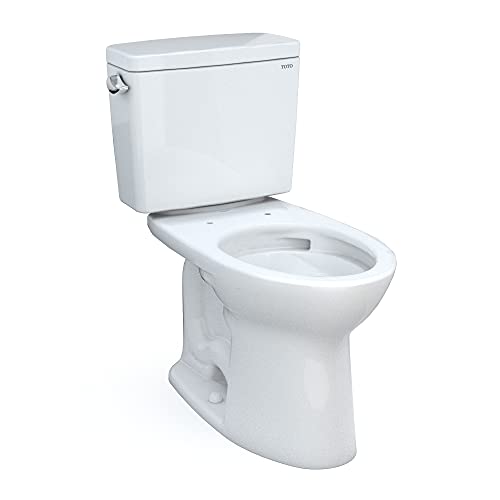
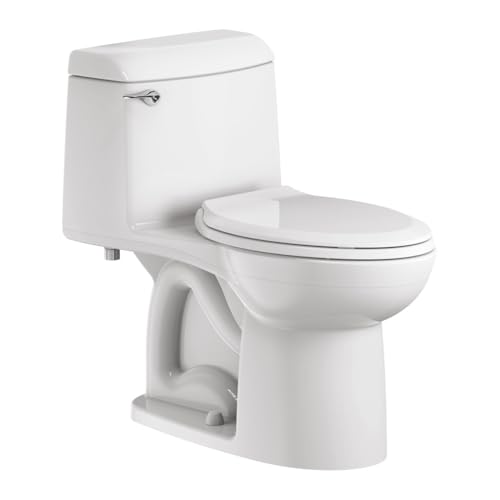
Trapway diameter is the single most overlooked clog factor. The TOTO Drake and American Standard Champion 4 both use a 2-3/8-inch fully glazed trapway -- the largest widely available in their price tiers. Models with unglazed or narrow (2-inch) trapways accumulate waste residue significantly faster, even when flush volume is identical. If your household clogs more than twice per year on a newer toilet, check the trapway spec before calling a plumber.
Toilet clog severity breaks into three observable tiers. A Level 1 (partial) clog drains slowly but eventually clears on its own or with a plunger. A Level 2 (full) clog produces no drain movement at all and risks overflow. A Level 3 (deep-line) clog recurs within days or weeks even after clearing, indicating a root intrusion, grease buildup, or pipe defect downstream of the toilet itself.
| Severity Level | Observable Signs | First Remedy | Escalation | Typical Cost |
|---|---|---|---|---|
| Level 1 -- Partial | Slow drain, water rises then falls | Cup plunger, 10--15 strokes | Enzyme cleaner overnight | $0--$10 |
| Level 2 -- Full | No drain movement, imminent overflow | Flange plunger, 20+ firm strokes | Toilet auger (closet snake) | $0--$30 |
| Level 3 -- Deep Line | Recurs within days, gurgling in other drains | Toilet auger to confirm it is not in-toilet | Plumber with camera inspection | $150--$600+ |
| Level 4 -- Structural | Sewage backup in tub/shower, multiple fixtures affected | Do not use any plumbing fixtures | Emergency plumber + pipe repair | $500--$5,000+ |
Before choosing a tool, confirm the level. Pour a bucket of water directly into the bowl from waist height. If it drains normally, the clog is actually in the trap or bowl rim jets -- not the drain line. If the level rises even with the bucket test, the blockage is at the drain line level or deeper.
Clog-clearing should escalate in steps: plunger first, then toilet auger, then enzyme or hot-water soak, then professional snaking or camera inspection. Skipping steps -- particularly jumping straight to chemical drain openers -- can damage the wax ring seal, degrade rubber components, and corrode older brass fittings without reliably clearing a solid blockage.
Use a flange plunger, not a cup plunger. A flange plunger has an extended rubber lip that fits into the toilet drain opening and creates a proper seal. Cup plungers are designed for flat sink drains and lose 40 to 60 percent of their suction force in a toilet bowl.
Technique matters as much as tool choice. Insert the flange, push gently to expel air (avoid the first hard push that sprays bowl water), then use firm, rhythmic strokes maintaining the seal. Fifteen to twenty strokes at one stroke per second is the standard professional recommendation. Run a test flush only after you feel suction resistance disappear -- premature flushing on a full blockage will overflow the bowl.
A heated plunger performs noticeably better on partial clogs involving toilet paper. Run the plunger under hot tap water for 60 seconds before use. The warmer rubber forms a tighter conforming seal against the porcelain drain opening, increasing pressure differential by an estimated 15 to 20 percent based on plumbing trade guidance.
A toilet auger (also called a closet snake) is a 3- to 6-foot cable with a protective rubber boot that prevents scratching the porcelain. It is designed specifically for the tight radius of a toilet trapway, which a standard drain snake cannot navigate without damaging the bowl.
Feed the cable until you feel resistance, then rotate the handle clockwise while applying light forward pressure. The goal is to either break up the clog or hook and retrieve the obstruction. If you retrieve a non-flushable item (wipe, toy, cotton product), dispose of it in the trash -- do not attempt to flush it.
After clearing, pour a full bucket of water from waist height to confirm free drainage, then perform two test flushes before considering the issue resolved.
Enzyme-based drain treatments contain bacterial cultures that digest organic matter (waste and toilet paper) without damaging PVC, ABS, or cast-iron pipe. They are not fast -- typical dwell time is 6 to 8 hours -- but they are safe for all pipe types and septic systems, unlike chemical openers.
Hot water (not boiling -- boiling water can crack porcelain) poured from waist height adds hydraulic pressure and heat that softens toilet paper accumulation. Use water between 140 and 160 degrees F (hot tap in most homes) and add one gallon slowly to avoid overflow. Let it sit for 5 minutes before plunging again.
Squirt 1/4 cup of liquid dish soap into the bowl and let it sink to the drain opening. Wait 10 minutes. The surfactant lubricates the trapway walls and can reduce friction enough for hot water and plunging to push a partial clog through. This is a legitimate technique recommended by licensed plumbers for soft, organic blockages -- not for solid objects or tree roots.
If a clog recurs within one week of clearing, do not continue plunging. Repeated forceful plunging on a deep-line issue can displace the wax ring or crack the toilet base. A licensed plumber with a video inspection camera (typically a 3/4-inch camera head on a 100-foot cable) can identify root intrusion, pipe sag, grease buildup, or collapsed sections in under 20 minutes and give you a precise repair scope.
Standard chemical drain openers -- sodium hydroxide (lye) or sulfuric acid formulations -- are not recommended for toilets. They generate significant heat during the chemical reaction, which can crack porcelain, soften the wax ring seal, and degrade rubber flappers and supply line washers. Enzyme-based biological treatments are safe for all toilet components and septic systems and are the only chemical option worth considering for toilet use.
Products like Drano Max Gel contain sodium hydroxide and sodium hypochlorite (bleach). The manufacturer itself advises against using these in toilets with standing water. The heat generated in a confined trapway can reach over 200 degrees F, which consistently damages the porcelain glaze and wax ring over multiple uses. If you have used a chemical opener and notice the toilet rocking or a sewage odor at the floor level, have the wax ring inspected.
The most common outcome when homeowners use chemical openers on solid clogs is a dissolved exterior layer around the clog that makes subsequent plunging messier but does not actually clear the obstruction. Save the chemical opener for slow sink drains with hair and soap buildup -- where it genuinely works. For toilet clogs, mechanical tools (plunger and auger) are faster and safer in every documented scenario.
Clog-resistant toilets share three design features: a fully glazed trapway of at least 2-1/4 inches in diameter, a high MaP flush score (600 grams or higher at the published GPF rating), and a siphon-jet or pressure-assisted flushing mechanism. Among widely available models, the TOTO Drake II, American Standard Champion 4, Gerber Viper, and Kohler Cimarron consistently earn the highest real-world clog-resistance reviews based on aggregated owner feedback and MaP testing data.
MaP (Maximum Performance) testing measures how many grams of a standardized soybean paste and toilet paper mixture a toilet can flush in a single flush. A score of 500g meets minimum adequacy; 1,000g (the maximum tested load) is achievable by the best-performing models. EPA WaterSense certification requires a minimum 350g MaP score at 1.28 GPF or less. Toilets with scores below 500g at 1.6 GPF are far more likely to produce repeat clogs in households with multiple users.
| Model | MaP Score | GPF | Trapway (in.) | WaterSense | Clog-Resistance Profile | Check Price |
|---|---|---|---|---|---|---|
| TOTO Drake II | 1,000g | 1.28 | 2-1/8 fully glazed | Yes | Consistently highest-rated; siphon jet | Check price |
| American Standard Champion 4 | 1,000g | 1.6 | 2-3/8 fully glazed | No (1.6 GPF) | Industry-widest trapway; excellent for high use | Check price |
| TOTO UltraMax II | 1,000g | 1.28 | 2-1/8 fully glazed | Yes | One-piece; easier bowl cleaning | Check price |
| Kohler Cimarron | 1,000g | 1.28 | 2-1/8 fully glazed | Yes | Class Five flushing; very wide owner approval | Check price |
| American Standard Cadet 3 | 800g | 1.28 | 2-1/8 fully glazed | Yes | Solid mid-range; EverClean surface | Check price |
| Gerber Viper | 1,000g | 1.28 | 2-1/8 fully glazed | Yes | Less marketed but consistently high MaP scores | Check price |
| Woodbridge T-0001 | 600g (est.) | 1.28 / 0.8 | 2-inch dual | Yes | Dual-flush; lower full-flush force than single-flush peers | Check price |
| TOTO Aquia IV | 600g full / 250g half | 1.0 / 0.8 | 2-1/8 fully glazed | Yes | Ultra-low water; use full flush for solid waste | Check price |
If clog frequency is your primary concern, single-flush toilets with a 1.6 GPF rating consistently outperform dual-flush models in real-world households. Dual-flush toilets encourage half-flush use for solid waste (to save water), which statistically increases partial-clog events. The TOTO Drake at 1.6 GPF or the American Standard Champion 4 at 1.6 GPF remain the most defensible choices for clog-prone households.
For a comprehensive ranking of the best performers across all criteria, see our guide to the best flushing toilets, which covers MaP scores, GPF ratings, and long-term owner satisfaction in detail.
The single most damaging category is "flushable" wipes, which do not disintegrate the way toilet paper does and routinely cause deep-line clogs and sewer fatbergs. Cotton products (swabs, balls, pads), paper towels, feminine hygiene products, and dental floss are the next most common offenders. Even thick or quilted toilet paper can overwhelm toilets with MaP scores below 500g when used in large quantities.
Municipal wastewater utilities consistently report that so-called flushable wipes account for the majority of pump station clogs and require millions of dollars in annual maintenance. The IWSFG (International Water Services Flushability Group) publishes a standard that requires wipes to disintegrate within 30 minutes on a rotating drum test -- most wipe products on the market fail this test despite the "flushable" label.
Dental floss is one of the most underestimated clog contributors. A single strand does not clog a toilet, but floss accumulates around the trapway bottom, catches toilet paper, and forms a net that traps everything that follows. In homes where dental floss is flushed regularly, technicians frequently find dense fiber mats at the base of the trapway that require retrieval with an auger hook. Dispose of floss in the trash -- this single change prevents a surprising number of service calls.
The rule used by plumbing professionals is simple: flush only the three Ps -- pee, poo, and (toilet) paper. Standard single-ply and two-ply toilet paper is tested to disintegrate rapidly in water. Multi-ply "ultra" products take longer to break down and can contribute to clogs in low-flush toilets with MaP scores below 600g. If your household uses a premium thick toilet paper and clogs frequently, switching to a single-ply or rapidly-dissolving brand may eliminate the issue entirely without replacing the toilet.
Early low-flow toilets from the mid-1990s had significantly higher clog rates than the 3.5 GPF models they replaced, because manufacturers simply reduced water volume without redesigning the trapway or flushing mechanism. Modern 1.28 GPF WaterSense-certified models have fully overcome this gap through improved trapway geometry and pressure-optimized rim jets -- but the clog risk gap between high-scoring and low-scoring models at the same GPF rating is substantial.
EPA WaterSense certification sets a floor of 350 grams MaP at 1.28 GPF, but the actual spread among certified models runs from 350g to 1,000g. A toilet at the certification floor will clog at rates comparable to a poorly designed 3.5 GPF vintage unit. A toilet at 1,000g MaP on 1.28 GPF will outperform most older high-volume models. GPF alone tells you almost nothing about clog risk -- always check the MaP score at map-testing.com before purchasing.
See our related article on how to unclog a toilet for a step-by-step visual walkthrough, or why your toilet keeps clogging if the issue is recurring despite clearing attempts.
Two measurements determine how much material can pass through a toilet trapway without accumulating: the minimum diameter at the narrowest point and whether the trapway surface is glazed or unglazed. A fully glazed trapway (smooth vitreous china coating throughout the passage) reduces friction and waste adhesion. An unglazed or partially glazed trapway accumulates a bio-film layer that narrows the effective bore over time and catches toilet paper strands.
The American Standard Champion 4 publishes a 2-3/8-inch trapway diameter -- the largest among mainstream models. TOTO models use a 2-1/8-inch fully glazed trapway with SanaGloss (or CeFiONtect) coating that reduces bacterial adhesion. Kohler's best performers use a 2-1/8-inch trapway with their Class Five flushing system. Swiss Madison and Woodbridge dual-flush units typically use 2-inch dual-trap passages, which is the WaterSense minimum and more prone to accumulation with heavy use.
Prevention costs nothing and works better than any remedy. Four habits eliminate the majority of household toilet clogs:
See our article on toilet clog prevention for a full maintenance schedule, and our guide to clogged toilet jet holes if slow rim flow is the suspected cause.
A toilet that clogs more than four times per year despite good flushing habits and no non-flushable items being disposed of in it is a strong candidate for replacement rather than repeat service calls. Plumbing service costs for a toilet auger call range from $100 to $250 per visit. Two to three service calls per year exceeds the cost of a TOTO Drake or American Standard Cadet 3 installation in under two years.
Replacement is also warranted when the trapway is cracked internally (common in homes with repeated chemical drain cleaner use), when the wax ring has failed and the toilet rocks at the floor, or when the toilet predates 1994 and uses 3.5 GPF or more. Pre-1994 toilets with 3.5 or 5 GPF tanks are not actually more clog-resistant than modern high-MaP models -- they simply use more water per flush. A TOTO Drake II at 1,000g MaP / 1.28 GPF will outperform a 1988 3.5 GPF toilet in every real-world clog scenario.
A flange plunger used with correct technique (expel air first, then firm rhythmic strokes maintaining the seal) is the fastest reliable method and works on the majority of Level 1 and Level 2 clogs within two to three minutes. Dish soap plus hot water accelerates the process when added five minutes before plunging.
A partial clog (water drains slowly) can be left overnight without immediate damage. A full blockage with no drain movement should not be left unattended because sewer gas can accumulate and the bowl could overflow if anything causes additional water to enter the bowl. Turn off the toilet supply valve at the wall until the clog is cleared.
Small-load clogs on modern toilets almost always indicate one of three issues: a partially blocked trapway from accumulated mineral scale, clogged rim jets reducing flush velocity, or a toilet with a MaP score too low for 1.28 GPF to clear the load reliably. Inspect the rim jets first -- this is the easiest fix and is often overlooked.
Yes. Flushable wipes do not disintegrate in water the way toilet paper does. They pass through the toilet trapway intact and accumulate in the drain line or sewer main. Virtually every major plumbing association and municipal water utility advises against flushing any wipe product regardless of label claims.
A cup plunger is a simple rubber dome designed for flat surfaces like sinks. A flange plunger has an extended rubber sleeve (the flange) that inserts into the toilet drain opening to create a seal against the curved porcelain surface. Only the flange plunger creates adequate suction for toilet use -- a cup plunger loses most of its pressure on a toilet.
A toilet auger (closet snake) is a shorter (3- to 6-foot) cable with a protective rubber or plastic boot designed to navigate the tight radius of a toilet trapway without scratching the bowl. A standard drain snake has no boot, cannot negotiate the toilet trapway without damage, and is designed for open drain pipes accessible from a cleanout or sink drain.
Drano and similar sodium hydroxide products are not recommended by their own manufacturer for toilet use due to heat generation that can damage porcelain and wax rings. They are largely ineffective on solid-material clogs (toilet paper, wipes, objects) that require mechanical removal. Enzyme-based biological treatments are the safe alternative for organic buildup.
GPF alone does not determine clog resistance. A 1.28 GPF toilet with a 1,000g MaP score outperforms a 1.6 GPF toilet with a 500g MaP score in real-world clog resistance. Always evaluate the MaP flush-test score (available at map-testing.com) alongside GPF when selecting a toilet for a clog-prone household.
A MaP score of 600g or higher at the toilet's rated GPF is the recommended minimum for standard households. Households with three or more daily users, or anyone flushing premium thick toilet paper, should target 800g or higher. The maximum MaP score tested is 1,000g -- models at this level are essentially immune to toilet-paper-related clogs.
Gurgling indicates negative air pressure in the drain line, often caused by a partial blockage or a compromised vent stack. If the toilet flushes and drains normally but gurgles, the issue is usually the vent stack (blocked by leaves or a bird nest) rather than a drain clog. Persistent gurgling with slow drainage indicates a partial Level 1 clog at the drain line level.
Quarterly cleaning is adequate for most households with moderately hard water. Homes with water hardness above 150 ppm (milligrams per liter) benefit from monthly rim-jet maintenance using white vinegar poured into the overflow tube in the tank, which gravity-feeds the jets. Reduced jet flow reduces rim-water coverage and weakens the flushing action enough to cause partial clogs.
Repeated forceful plunging on a persistent clog can displace the wax ring over time, particularly on toilets that are already slightly loose at the base. Chemical drain openers generate heat that can soften the wax ring directly. Signs of wax ring failure include the toilet rocking, water seeping at the base after flushing, or a persistent sewage odor at floor level.
Dual-flush toilets have higher real-world clog rates in households where users default to the half-flush (0.8 GPF) for solid waste. The half-flush cycle on most dual-flush models is calibrated only for liquid waste and does not generate sufficient velocity to clear solid material through the trapway. Single-flush 1.28 GPF models from TOTO (Drake II, UltraMax II) eliminate this user-error variable.
Call a licensed plumber if the clog does not clear after one plunger session and one auger attempt, if the clog recurs within one week of clearing, if sewage backs up in other fixtures (tub, shower, floor drain), or if you suspect a non-retrievable object (toy, phone) is lodged in the trapway or drain line.
Among widely available models, the TOTO Drake II (1.28 GPF, 1,000g MaP) and the American Standard Champion 4 (1.6 GPF, 1,000g MaP) consistently earn the highest clog-resistance ratings based on MaP test scores and aggregated owner reviews. The Champion 4's 2-3/8-inch fully glazed trapway is the largest in its price tier, making it the top recommendation specifically for households with chronic clog histories.
Yes, measurably. Ultra-thick multi-ply products (Charmin Ultra Strong, Cottonelle Ultra) take significantly longer to disintegrate than standard two-ply and can cause clogs on toilets with MaP scores below 600g. Scott 1000 (single-ply) and similar rapidly dissolving brands are the professional recommendation for low-flush toilets in households prone to clogs.
Yes. Tree roots entering clay or older PVC drain lines is a major cause of recurring Level 3 clogs, particularly in homes over 30 years old with mature trees near the sewer lateral. Root intrusion typically presents as clogs that recur every 1 to 3 months despite clearing, often accompanied by slow drains in all fixtures. Camera inspection is the only reliable way to confirm and locate root intrusion.
If only the toilet is affected and all other drains (sink, shower, tub) drain normally, the clog is almost certainly in the toilet trapway or the immediate drain line serving only the toilet. If two or more fixtures drain slowly or back up simultaneously, the blockage is in the shared main sewer line -- a distinctly different repair requiring professional equipment.
Hot water (140 to 160 degrees F) poured from waist height, combined with 1/4 cup of dish soap, is the most effective no-tool method for partial organic clogs. Baking soda followed by vinegar produces a mild foaming reaction that can loosen soft blockages. Neither method is effective on solid objects, and neither replaces a plunger or auger for full Level 2 blockages.
Toilet paper-only partial clogs (Level 1) may dissolve and clear within 30 minutes to a few hours if left undisturbed in standing water, since toilet paper is designed to disintegrate rapidly when wet. Any clog involving wipes, cotton products, or solid objects will not self-clear -- these require mechanical removal. Do not attempt to flush repeatedly while waiting, as this risks overflow.
Most toilet clogs are a Level 1 or Level 2 event that resolves with a flange plunger and correct technique in under five minutes. If plunging fails, a toilet auger clears the vast majority of remaining cases without a service call. Recurring clogs signal a root cause that requires camera inspection rather than repeated mechanical clearing. Households with chronic clog problems are better served by replacing a low-MaP toilet with a verified 1,000g-rated model -- such as the TOTO Drake II or American Standard Champion 4 -- than by managing the symptom indefinitely. Prevention through disposal habits and quarterly jet-hole maintenance eliminates most clog events before they start.
How we rank & our data sources
We do not run physical lab tests. Rankings are built from published, verifiable data and real owner feedback, never paid placement.
Researched by Derek Whitman · Last updated August 14, 2026 · Our review method
Find out how many gallons per flush an old toilet really uses, how to check your own tank, and how much water…
Read the guideA higher MaP score means stronger waste removal, but not always a better toilet. Learn what MaP really measures and when the…
Read the guideModern low-flow toilets can flush as well as older models. Learn why some struggle, how to diagnose weak flushes, and which fixes…
Read the guide