
Why Toilet Trapways Are Curved Like an S
Toilets4.6
Learn why toilet trapways curve like an S, how each bend blocks sewer gas, and what the shape means for clogs and…
Read the guideThe small angled holes drilled into the underside of your toilet rim are called rim jets, jet holes, or siphon jets, and they do most of the actual flushing work. When tank water rushes in through each flush, these jets spray water at a downward angle around the bowl, creating the swirling vortex that carries waste into the trapway. Hard water minerals, calcium carbonate, iron deposits and decades of biofilm all accumulate inside these openings, slowly narrowing them until flow drops and the flush loses power. A toilet that flushes weakly, fills the bowl incompletely or leaves waste behind is almost always showing signs of blocked rim jets before any mechanical problem is suspected. This guide explains how to diagnose clogged jets, clean them chemically and mechanically, and prevent the buildup from returning, covering the real brands and toilet models where this problem shows up most often.
Clogged toilet rim jet holes are caused by calcium and mineral buildup from hard water. Pour white vinegar into the overflow tube inside the tank to let it soak through the jets overnight, then scrub each hole with a small brush or stiff wire. For severe blockage, use a CLR or Lime-A-Way descaler and a dental pick to clear individual jets. This fix restores flush power without replacing any parts.
Most homeowners reach for a plunger or a toilet auger when a flush weakens. The trapway gets blamed first. But if the bowl fills normally, the flapper seals correctly, and the tank refills to the proper level yet the flush still feels sluggish or fails to clean the bowl in one pass, the problem is almost always the rim jets. This is one of the most commonly overlooked toilet maintenance tasks, and it is also one of the cheapest and most effective fixes available. Understanding how these jets work, why they clog, and how to clear them is core toilet maintenance knowledge that saves a service call and, in many cases, extends the useful life of a fixture by years.
For a broader look at which toilets resist jet clogging by design, see the guide to the best flushing toilets that ranks models by flush performance, MaP test scores, and owner-reported clog resistance.
Inside the toilet rim runs a hollow channel called the rim channel or siphon channel. When you flush, water from the tank drops through the flush valve, travels into this rim channel, and exits through the individual jet holes spaced around the underside of the rim. Depending on the toilet model, there may be anywhere from eight to twenty-four jet holes, each typically two to four millimeters in diameter.
The angle of each jet is not random. Manufacturers drill these holes at a slight downward and lateral angle so that the water exiting each one contributes to a single rotating current in the bowl. On well-designed two-piece and one-piece toilets from TOTO, Kohler, American Standard and Gerber, this coordinated jet pattern accounts for a large portion of the effective flushing force, supplementing or even dominating the gravity pull of water dropping from the tank. MaP flush-test methodology, developed independently by engineers to evaluate real-world toilet performance at scores from 250 grams to 1,000 grams or more, shows a consistent correlation between jet condition and sustained flush performance over repeated test cycles. A toilet scoring 800g or 1,000g MaP when new can drop dramatically once its jets narrow by even thirty percent.
Mineral buildup is the most common cause of clogged jets, but it is not the only one. The three main culprits are:
The rim jet channel holds standing water between every flush. In hard-water regions, that water slowly deposits calcium carbonate on every surface it contacts, including the inside of the jet passages. The narrowing happens so gradually that most users do not notice until the flush is visibly weak. By that point, the jets may be sixty to seventy percent blocked. A simple annual descaling treatment with diluted white vinegar or a commercial acid product prevents the buildup from ever reaching the point where mechanical clearing with a pick is needed. Think of it the same way you think of descaling a coffee machine: the same chemistry, the same mineral, the same solution.
You do not need any tools to run a basic jet-condition check. Lift the toilet seat and lid, crouch down to eye level with the rim, and use a flashlight or your phone flashlight to look up into the underside channel. You should see a row of small angled holes spaced evenly around the inside of the rim. Healthy, open jets are smooth-edged holes with no visible obstruction. Clogged jets show a white, chalky or brown buildup around and inside the opening, and in severe cases the hole is partially or completely filled with solid mineral scale.
The dye-test method provides a more definitive check. Add several drops of food coloring to the toilet tank and let it sit for ten minutes without flushing. If the colored water seeps into the bowl without a flush, you have a leaking flapper, which is a separate problem. If the tank holds the colored water until you flush, then watch where the colored water enters the bowl on the flush stroke. It should appear in a swirling ring from the rim jets all around the bowl. If you see it entering only from the main siphon jet at the bottom or from only part of the rim, the rim channel has blockage preventing flow to the other jets.
Symptom checklist for clogged rim jets:
| Symptom | Likely Cause | DIY Fix | Difficulty |
|---|---|---|---|
| Weak or incomplete flush, jets visible but crusty | Calcium/mineral scale in jets | Vinegar soak + descaler + pick | Easy |
| Orange or rust color at jet openings | Iron/manganese deposits | Iron-dissolving acid (CLR or Iron OUT) | Easy-moderate |
| Pink or black film at jets | Bacterial biofilm | Bleach gel dwell + rim brush | Easy |
| Water enters bowl from one side only | Partial channel blockage | Vinegar into overflow tube + scrub | Moderate |
| No water from jets, full flow from siphon jet only | Severe mineral fill in rim channel | Extended acid soak, repeat cycles | Moderate |
| Weak flush plus low water in tank | Float set too low, not jets | Adjust float height first | Easy |
| Weak flush, no visible deposits, new toilet | Flapper closes too fast | Adjust flapper chain length | Easy |
White vinegar is five percent acetic acid, which reacts with calcium carbonate and dissolves it. The key to getting the acid to the jet openings is routing it through the overflow tube in the tank, not just pouring it into the bowl.
Products like CLR (Calcium, Lime and Rust Remover) and Lime-A-Way Toilet Bowl Cleaner are formulated with stronger acids, typically lactic acid or phosphoric acid, and dissolve mineral scale significantly faster than household vinegar. For toilets with visible white or orange deposits inside the jet holes, a commercial descaler is more reliable.
When jets are fully filled with hardened calcium scale, chemical soaking dissolves the outer layer but the core of the blockage may be so dense that chemical treatment alone does not open the hole. Mechanical clearing with a small sharp tool restores the opening and allows subsequent acid treatments to penetrate deeper.
The dental pick step is the one that most DIY guides omit, and it is the one that actually makes the biggest difference on toilets that have been neglected for several years. Chemical soaking removes light to moderate scale efficiently, but if you have a ten-year-old toilet in a hard-water area and the jets are visibly packed with white material, you need to physically open each one before the acid can reach the interior. Do the chemical soak first, then the pick, then a second acid treatment. The sequence matters: acid first to soften, pick to open, acid again to clean. Skipping straight to the pick on hardened scale is slow work that leaves residue behind; skipping the pick on severely blocked jets leaves you with a toilet that is slightly better but still not fully restored.
Rim jet clogging is a design-related problem as much as a maintenance one. The following breakdown covers how the major brands handle this issue and which specific models are most or least vulnerable to it.
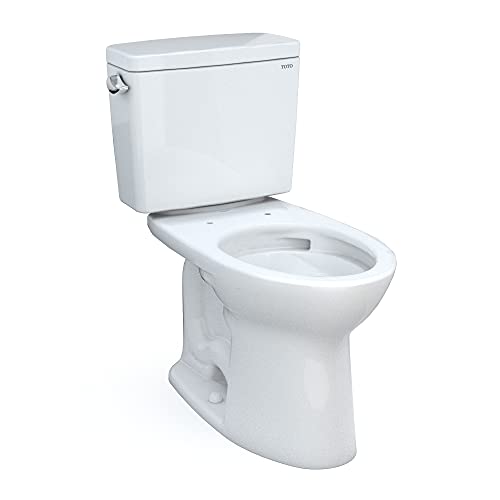
TOTO has moved aggressively away from traditional multiple-hole rim jets in its contemporary models. The TOTO Drake II (two-piece, 1.28 GPF, EPA WaterSense certified) uses TOTO's Double Cyclone flush technology, which replaces the typical row of jet holes with two large nozzles positioned on opposite sides of the rim. These nozzles are wide enough that mineral deposits would need to accumulate to an extreme degree before meaningfully restricting flow. The TOTO Drake II consistently achieves MaP scores at or above 800 grams, a level maintained across repeated flush cycles without jet maintenance becoming a factor in most water conditions.
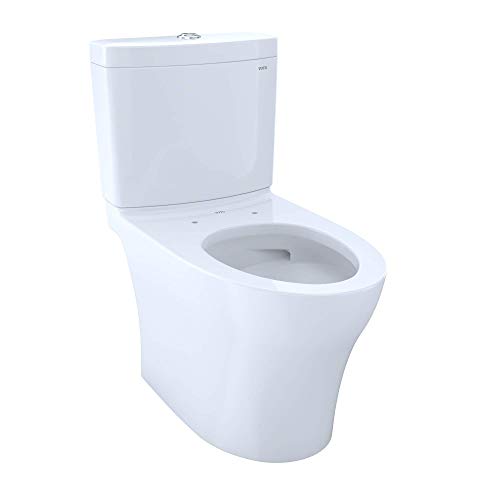
The TOTO UltraMax II (one-piece) uses the same Double Cyclone system. The TOTO Aquia IV dual-flush model uses TOTO's Tornado Flush with a rimless design in some configurations, meaning there is no conventional under-rim channel at all and no jet holes to clog. Owners of older TOTO Drake (first generation) or TOTO Nexus models with traditional rim jets do report mineral buildup in hard-water areas, typically after five or more years without descaling treatment.
The Kohler Highline uses a traditional rimmed design with a rim channel and individual jet holes. In hard-water regions, Kohler Highline owners report visible jet narrowing within three to five years. The Kohler Cimarron uses Kohler's AquaPiston flush valve, which improves water delivery but still routes water through a conventional rim channel. The Kohler Santa Rosa one-piece uses a Comfort Height bowl with a 1.28 GPF AquaPiston system and similarly requires periodic jet maintenance in hard water. Kohler's ContinuousClean technology, available on some higher-end models, doses the bowl with a cleaning tablet from an under-rim dispenser and can help slow biofilm formation but does not prevent calcium scale.
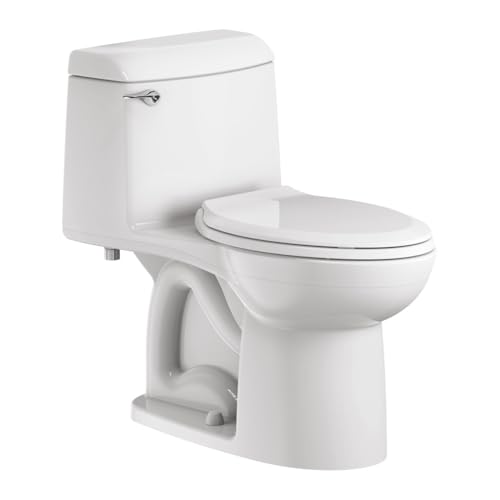
The American Standard Champion 4 is one of the most clog-resistant toilets in the market by MaP score (rated at 1,000 grams by MaP testing) due to its oversized 4-inch flush valve and 2-3/8 inch glazed trapway, but its rim design uses conventional individual jet holes. In areas with water hardness above 200 mg/L, Champion 4 owners report jet narrowing within four to six years. The American Standard Cadet 3 uses a PowerWash rim that delivers water in a wider sheet pattern from the rim channel, which is somewhat less prone to individual jet blockage than the Champion 4's design.
The American Standard Vormax uses EverClean antimicrobial surface on all exposed porcelain, which slows biofilm growth, and a high-velocity single-jet rim flush that focuses water from fewer, larger openings. The Vormax has fewer individual small holes than a traditional rim design, making it less prone to complete jet blockage.
The Woodbridge T-0001 is a wall-faced one-piece design with a dual-flush system (1.0/1.6 GPF). Its flush uses a siphon-jet design with a limited number of rim wash holes. In markets where Woodbridge has a large installed base, owner forums report jet clogging appearing after two to four years in hard-water areas, faster than comparable TOTO models, which is attributed to the smaller rim channel dimensions in the Woodbridge design. The Woodbridge is EPA WaterSense certified and MaP tested, but the jet design is more traditional than TOTO's Tornado or Double Cyclone systems.
Swiss Madison's Well Made Forever line, including the St. Tropez and Sublime models, uses a concealed trapway and dual-flush systems. These toilets have been more recently designed and use fewer, slightly larger rim nozzles than vintage toilet designs. The Gerber Viper and Gerber Avalanche models use Gerber's high-performance flushing systems with traditional rim jets; Gerber specifies glazed rim channels in its premium models, which slows but does not prevent mineral adhesion.
| Model | Flush System | Jet Design | Clogging Risk | MaP Score | GPF | Check Price |
|---|---|---|---|---|---|---|
| TOTO Drake II | Double Cyclone | 2 large nozzles | Low | 800g+ | 1.28 | Check price |
| TOTO UltraMax II | Double Cyclone | 2 large nozzles | Low | 800g+ | 1.28 | Check price |
| TOTO Aquia IV | Tornado Flush | Rimless/wide nozzle | Very Low | 600g+ | 1.0/1.28 | Check price |
| American Standard Champion 4 | Gravity, large trapway | Traditional multi-hole | Moderate | 1000g | 1.6 | Check price |
| American Standard Cadet 3 | PowerWash rim | Wide rim channel | Low-moderate | 800g | 1.28 | Check price |
| Kohler Highline | Gravity, AquaPiston | Traditional multi-hole | Moderate | 800g | 1.28 | Check price |
| Kohler Cimarron | AquaPiston | Traditional multi-hole | Moderate | 800g | 1.28 | Check price |
| Woodbridge T-0001 | Siphon jet dual-flush | Traditional multi-hole | Moderate-high | 800g | 1.0/1.6 | Check price |
| Gerber Viper | High-performance gravity | Traditional glazed rim | Moderate | 1000g | 1.28 | Check price |
| Swiss Madison St. Tropez | Dual-flush siphon | Fewer larger nozzles | Low-moderate | 600g+ | 1.0/1.6 | Check price |
Reactive cleaning, waiting until jets are visibly blocked before treating them, means each cleaning session requires aggressive mechanical clearing. Preventive maintenance performed annually or twice yearly keeps mineral accumulation thin enough that it dissolves with a standard acid soak and requires no picking. Here are the prevention strategies ranked by effectiveness:
Once per year, turn off the water supply, empty the tank, and pour two to four cups of undiluted white vinegar into the overflow tube. Let it soak for eight hours or overnight. This single step, repeated annually, is enough to prevent significant jet narrowing in homes with moderately hard water (up to about 200 mg/L). In very hard water above 300 mg/L, do this every six months.
A regular monthly toilet cleaning routine that includes squeezing a phosphoric or hydrochloric acid-based gel under the full rim and letting it dwell for ten minutes before scrubbing contacts the outer face of the jet holes and dissolves any thin mineral film forming there. This does not replace the overflow-tube soak, which addresses the inside of the rim channel, but it keeps the openings themselves clear of surface deposits.
Drop-in in-tank tablets marketed as toilet cleaners, including many blue-tablet products, should be used with caution. Chlorine-based in-tank tablets do inhibit biofilm growth but accelerate rubber component degradation in the flush valve and flapper, requiring earlier part replacement. If you want a passive prevention option, citric acid-based in-tank disks or a Fluidmaster Flush-N-Sparkle under-rim dispenser are softer on rubber components while still delivering mild acid to the rim channel on each flush.
The most definitive solution to rim jet clogging in hard-water regions is a whole-house water softener, which exchanges calcium and magnesium ions for sodium ions, dramatically reducing mineral deposition in all plumbing fixtures including toilet rim channels. The EPA and WaterSense program note that hardness above 120 mg/L accelerates scale formation in fixtures, and softened water at or below that level makes annual jet maintenance largely unnecessary. This is a significant installation investment but addresses the root cause rather than treating the symptom.
If jet clogging has been a recurring problem in your home and your toilet is more than fifteen years old, the most permanent maintenance reduction strategy is replacing it with a model that uses a rimless design or a minimal-nozzle flush system. TOTO's Tornado Flush and Double Cyclone toilets, EPA WaterSense certified at 1.0 or 1.28 GPF, effectively eliminate the multiple-small-hole rim jet design that is vulnerable to mineral clogging. This also happens to be an upgrade in flush performance, since these systems score at or above 800 grams on MaP testing while using less water than many older 1.6 GPF toilets with traditional rim jets. Related: best no-clog toilets and best TOTO toilets.
Prevention is vastly easier than cure here. A fifteen-minute annual vinegar soak through the overflow tube keeps jets open indefinitely in most homes. The toilets we see with jets that are sixty or eighty percent blocked are almost always in hard-water regions where neither the homeowner nor any previous service visit addressed the rim channel specifically. Once you get to mechanical clearing with a pick, you are already well past the point where prevention would have made the job trivial. Do the vinegar treatment every autumn when you are already thinking about seasonal home maintenance, and you will likely never need a pick at all.
Active cleaning time is fifteen to thirty minutes, but the chemical soak requires six to twelve hours of dwell time. For a complete treatment, plan to start the vinegar or descaler soak in the evening and do the scrubbing and mechanical clearing the following morning. Budget about twenty minutes for the hands-on work after the overnight soak.
Bleach kills biofilm and bacteria inside the rim channel but does not dissolve calcium or mineral scale. If the jet blockage is organic (pink or black film), a bleach gel dwell will clear it. If the blockage is mineral scale, which is the most common cause, you need an acid-based product (vinegar, CLR, Lime-A-Way or citric acid), not bleach. Never use bleach and acid at the same time in the bowl.
Yes. White vinegar diluted by tank water and routed through the rim channel is safe for porcelain and, for short contact times, for the rubber flapper and fill valve. For extended soaks, pour the vinegar directly into the overflow tube rather than letting it sit in the full tank, so the acid concentrates in the rim channel rather than bathing the rubber flapper for hours.
Most traditional rimmed toilets have between eight and twenty-four rim jet holes, with the exact count depending on the manufacturer and bowl size. Elongated bowls typically have more jets than round bowls due to the greater rim circumference. TOTO Tornado Flush toilets replace the array of small holes with two large nozzles, and some rimless designs eliminate under-rim jets entirely.
Clogged rim jets reduce flush power but do not directly cause overflow. An overflow occurs when the drain is blocked and the bowl fills faster than it drains. However, a toilet with severely clogged jets may require two flushes to clear solid waste, and if a partial clog already exists in the trapway, the reduced flushing force from blocked jets can turn a marginal clog into a full blockage. Restoring jet function is part of maintaining adequate flush force to clear the trapway reliably.
A dental pick or dental floss pick is the most commonly recommended tool for mechanically clearing individual rim jet holes because it is thin enough to insert into the two-to-four-millimeter openings and strong enough to break up softened scale. A thin wire (stripped coat hanger wire or mechanic's wire), a small flat-head jeweler's screwdriver, or a dedicated toilet jet cleaning brush with stiff narrow bristles are equally effective. Avoid anything that could scratch the porcelain inside the hole.
CLR used as directed on the label, with dwell times of two minutes for standard application and rinsed thoroughly, does not damage vitreous china or glazed porcelain. Exceeding label dwell times or using undiluted CLR on colored or porous ceramic finishes can cause etching or dulling. For standard white vitreous china toilets from TOTO, Kohler, American Standard, Gerber or American Standard, label-directed CLR use is safe.
The overflow tube in the toilet tank is the tall open vertical plastic tube, usually located in the center of the tank and typically two to three inches in diameter. It is always open at the top and connects to the rim channel inside the bowl. Pouring water or vinegar into it will flow into the bowl through the rim jets. If you pour vinegar in and see it seeping through the jet holes into the bowl, you have confirmed the correct tube and clear passage to the jets.
Baking soda and vinegar react to produce carbon dioxide and water, which is the fizzing reaction you see. While the brief acid contact has some mild descaling effect, the reaction neutralizes the vinegar quickly and reduces its effectiveness compared to allowing undiluted white vinegar to soak alone. Using vinegar alone for a longer soak produces better results than a baking soda and vinegar combination for mineral scale in jet holes.
If a new toilet flushes weakly from day one, the cause is almost always not the jets. Check that the water supply valve behind the toilet is fully open, that the float in the tank is set to the correct water level (typically one inch below the top of the overflow tube), and that the flapper chain has the correct amount of slack. Installation problems and incorrect float height account for the majority of weak flush complaints on new toilets. Jet clogging from minerals requires months to years to develop.
Water hardness above 120 mg/L (7 grains per gallon), which the EPA considers moderately hard, is sufficient to cause visible jet narrowing over several years without maintenance. Water above 180 mg/L (very hard) can produce significant jet restriction within two to three years. The United States Geological Survey estimates that roughly eighty-five percent of U.S. homes receive hard water, making rim jet maintenance relevant for most households.
The flush system design matters more than whether the toilet is one-piece or two-piece. Both configurations route water from the tank through the rim channel in the same way. However, one-piece toilets with skirted or concealed designs sometimes have slightly more restricted rim channels than open two-piece designs, which can make them marginally more prone to flow restriction from mineral buildup. The brand and flush technology are more predictive of jet clogging risk than the one-piece versus two-piece distinction.
A water flosser or oral irrigator can deliver a concentrated stream of water into each jet hole and is effective at dislodging softened mineral scale after a chemical soak. Some plumbers and home maintenance professionals recommend this approach for flushing loose debris from the inside of jet passages without manual scraping. Use the narrowest tip available and angle it directly into each hole after the descaler has soaked.
Clean the rim jets before installing a new toilet seat, or at any time the seat is removed. With the seat out of the way, you have full unobstructed access to the underside of the rim on both sides of the bowl and can see and reach every jet hole more easily. Cleaning jets with the seat in place is possible but slightly awkward and can result in missing the rear jets.
Yes. TOTO's Tornado Flush and Double Cyclone systems use only one or two large-diameter nozzles instead of many small holes, making meaningful flow restriction from mineral buildup far less likely. Rimless toilet designs from TOTO (Aquia IV), Swiss Madison, and some European manufacturers eliminate the under-rim channel entirely. American Standard's Vormax uses a single high-velocity jet pattern from fewer, larger openings. For buyers in hard-water regions, these flush system designs significantly reduce maintenance requirements compared to traditional multi-hole rim designs. See the guide to best flushing toilets for current top picks.
In areas with water hardness below 120 mg/L, once per year is typically sufficient. In moderately hard water (120-200 mg/L), twice per year, spring and autumn, is a practical schedule. In very hard water above 300 mg/L, quarterly vinegar treatments combined with monthly acid-gel rim cleaning produces the best results. If you have a whole-house water softener maintaining hardness below 50 mg/L, you may find annual treatment is more than adequate.
EPA WaterSense certification requires toilets to use 1.28 GPF or less and to meet minimum flush performance standards, but it does not test or certify the jet design's resistance to mineral clogging. WaterSense certification is a water-efficiency marker. Jet clogging risk is determined by the specific rim design and flush system, which varies among WaterSense-certified models. A WaterSense-certified TOTO Drake II with Double Cyclone has lower jet clogging risk than a WaterSense-certified toilet with traditional multi-hole rim jets.
Prolonged neglect of clogged rim jets leads to progressively weaker flush performance, increased waste-remaining incidents, and secondary problems including trapway partial clogs from incomplete flushing. In extreme cases, jets can become completely blocked with solid mineral scale, requiring extended professional descaling or replacement of the toilet. Long-term partial blockage also tends to increase water consumption because multiple flushes are needed to accomplish what the toilet was designed to do in one.
Rim jet cleaning is within the skill level of most homeowners with basic comfort around household maintenance. The tools are a flashlight, a dental pick or thin wire, a bottle of white vinegar or CLR, and an angled toilet brush. No disassembly or plumbing knowledge is needed beyond turning the water supply valve. If a thorough DIY cleaning does not restore flush performance, a plumber can confirm whether the issue is jet-related or mechanical (flapper, fill valve or flush valve), but in most cases the DIY approach fully resolves the problem.
Clogged toilet rim jet holes are one of the most common and most overlooked causes of weak flush performance, and they are also one of the easiest to fix without professional help. An overnight vinegar soak through the tank overflow tube, followed by light scrubbing with an angled rim brush and targeted mechanical clearing with a dental pick for any fully blocked holes, restores full flush performance in most toilets. For homes in hard-water areas, an annual preventive soak keeps jets open indefinitely and avoids the more labor-intensive deep cleaning that neglected fixtures require. If recurring mineral buildup is a persistent problem, upgrading to a TOTO Drake II, UltraMax II or Aquia IV with Double Cyclone or Tornado Flush technology essentially eliminates the traditional multi-hole rim jet design and the maintenance burden that comes with it.
Learn why toilet trapways curve like an S, how each bend blocks sewer gas, and what the shape means for clogs and…
Read the guideAlmost every US toilet has a left-side handle. Learn the plumbing and mechanical reasons behind the layout and when it actually changes.
Read the guideHome toilets rely on tanks because household water lines lack the pressure that public flushometer systems use to flush straight from the…
Read the guide