

Where Does Toilet Water Go After You Flush
Buying Guides4.6
When you flush, where does it go? Follow toilet water from the bowl through the trap, drain, and stack to a septic…
Read the guideAnswer these 15 questions before you buy and you will avoid the two most common regrets: a toilet that clogs constantly and one that does not fit.
Before buying any toilet, confirm rough-in distance, bowl height preference, GPF rating, MaP score above 500 grams, and trapway size. Those five factors eliminate 90% of buyer regret and narrow a wall of options down to a shortlist of three or four genuinely suitable models.
A toilet is the most-used fixture in any home, typically flushed between 2,500 and 3,000 times per year per person. Yet most buyers spend under 10 minutes researching the purchase. The result: thousands of one-star reviews that all say the same things: would not fit the rough-in, clogs weekly, or the seat is too low for a bad knee.
This checklist covers every dimension of the decision, from plumbing specs to flush technology to long-term water savings. Work through it in order and you will not need to return anything. Many of the measurable claims below are anchored in EPA WaterSense certification data and MaP (Maximum Performance) flush-testing scores, the two most objective benchmarks available to residential buyers.
For a shortlist of pre-vetted models that already pass most of this checklist, see our roundup of the best flushing toilets on the market today.
The rough-in is the distance from the finished wall behind the toilet to the center of the floor drain (closet flange). Standard rough-ins are 12 inches; older homes and some floor plans use 10-inch or 14-inch rough-ins. Buying the wrong size means the toilet will either not reach the wall or will overlap the drain entirely.
Measure from the wall (not the baseboard) to the center of the flange bolts. If an old toilet is already installed, measure from the wall to the bolt caps on each side of the base. Write this number down before you open a single product page.
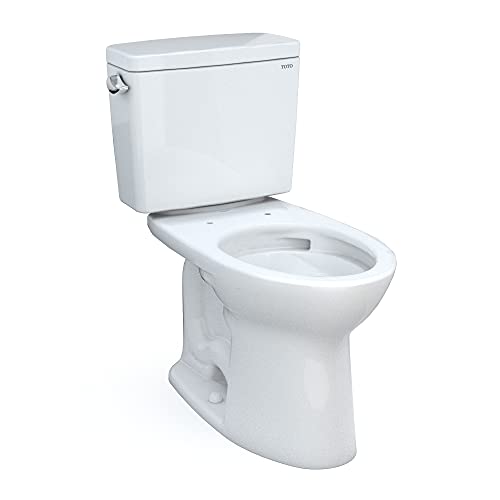
Most toilets sold in the US are designed for a 12-inch rough-in. Kohler, TOTO, and American Standard all publish rough-in dimension in their spec sheets, but it is easy to overlook. The TOTO Drake and Drake II are available in 10-inch, 12-inch, and 14-inch variants. Kohler's Highline Classic is available in 10-inch and 12-inch. If your rough-in is non-standard, confirm availability in your size before comparing any other features.
Plumbers routinely report that rough-in mismatch is the number-one reason toilets are returned or create an ugly gap at the wall. A 12-inch toilet dropped into a 14-inch rough-in will sit 2 inches out from the wall with no baseboard trim to hide it. Always measure twice, buy once.
Standard bowl height is 14 to 15 inches from floor to rim. Comfort height (also called chair height or ADA height) runs 16 to 18 inches, roughly the same as a kitchen chair. Most adults over 50, taller individuals, and anyone with knee or hip concerns report significantly less discomfort with comfort-height bowls.
Households with young children often find comfort-height bowls create a need for a step stool. Consider who uses the bathroom most frequently before committing to one height over the other.
Bowl height is labeled differently by every brand. TOTO calls their comfort-height offering "Universal Height." Kohler uses "Comfort Height." American Standard says "Right Height." Swiss Madison markets "Comfort Height" explicitly. Despite different names, all refer to a rim height in the 16-to-18-inch range.
If the bathroom is shared between adults and small children, a standard 15-inch bowl with a quality soft-close seat is typically the compromise that works for both. Related reading: our ADA-compliant toilet guide covers accessibility requirements in more detail.
Round bowls measure approximately 16 to 17 inches from the seat bolts to the front rim. Elongated bowls extend roughly 18 to 19 inches forward. In a bathroom where the door swings toward the toilet or the space between the toilet front and vanity is less than 24 inches, a round bowl is often the only practical option.
Elongated bowls are preferred by most adults for comfort. They distribute weight more evenly and are the default shape on most higher-end models. Confirm front-to-back clearance in your bathroom before choosing shape.
Measure the distance from the wall behind the toilet to whatever faces the toilet front. NKBA (National Kitchen and Bath Association) guidelines recommend a minimum of 21 inches of clearance in front of any toilet, with 30 inches preferred. An elongated bowl adds roughly 2 inches over a round bowl, which can matter in tight powder rooms.
| Bowl Shape | Front Projection | Best For | Comfort Level | Notes |
|---|---|---|---|---|
| Round | ~16 to 17 in | Small bathrooms, kids | Adequate | Saves 2 in. vs. elongated |
| Elongated | ~18 to 19 in | Master baths, adults | Higher | Most higher-end models |
| Compact Elongated | ~17 in | Tight spaces with comfort priority | High | Best of both worlds |
GPF stands for gallons per flush. Federal law since 1994 caps toilets at 1.6 GPF. EPA WaterSense-certified toilets use 1.28 GPF or less while meeting the same MaP performance threshold of 350 grams minimum. Dual-flush models offer a 0.8 GPF liquid cycle and a 1.28 GPF solid cycle.
A household of four switching from a 3.5 GPF toilet (pre-1994) to a 1.28 GPF WaterSense model saves roughly 13,000 gallons of water annually according to EPA estimates. For most buyers, 1.28 GPF is the right target: it satisfies efficiency goals without sacrificing flush power when paired with a high MaP score.
Do not confuse low GPF with weak flushing. The MaP score measures actual waste removal, not water volume. A 1.28 GPF toilet with a MaP score of 1,000 grams (the maximum tested) outperforms a 1.6 GPF model with a 400-gram MaP score in every real-world scenario.
The EPA WaterSense label is a floor, not a ceiling. It guarantees 1.28 GPF or less and at least 350 grams on the MaP test. But the best toilets on the market score between 800 and 1,000 grams at 1.28 GPF. Always look up the MaP score separately from the WaterSense label.
For a deeper breakdown of how these numbers interact, see our guide on 1.28 GPF vs. 1.6 GPF toilets.
MaP (Maximum Performance) testing is an independent protocol that measures how many grams of soybean paste-packed latex a toilet can clear in a single flush. Scores range from 250 grams (minimum for the test) to 1,000 grams (the ceiling of the protocol). A score of 500 grams or higher is considered good for residential use; 800 grams or higher is excellent.
MaP scores directly predict real-world clog resistance because the test simulates worst-case solid waste loads. A toilet that scores 1,000 grams will almost never clog under normal residential use. Scores below 350 grams carry a measurable risk of repeat clogging, particularly in households with multiple users.
Published MaP scores are available at map-testing.com. The database is searchable by brand, model, and GPF rating. High scorers include the TOTO Drake II (1,000 grams at 1.28 GPF), American Standard Champion 4 (1,000 grams at 1.6 GPF), and Gerber Avalanche (1,000 grams at 1.28 GPF). The Kohler Cimarron scores 1,000 grams at 1.28 GPF, placing it solidly in the excellent tier.
MaP is the single most predictive public data point for clog resistance. Owner reviews are useful for flagging quality-control issues, but MaP removes the guesswork from flush performance. Any toilet with a score below 500 grams should require additional justification before you buy it.
Two-piece toilets have a separate tank and bowl bolted together; one-piece toilets are molded as a single unit. Two-piece models are almost always less expensive and easier to ship, but the seam between tank and bowl accumulates grime and can develop leaks at the gasket over time. One-piece toilets eliminate that seam, simplifying cleaning, but weigh significantly more and cost more upfront.
For most buyers on a moderate budget, a high-quality two-piece toilet from TOTO or Kohler is the practical choice. One-piece models from Woodbridge (T-0001) and Swiss Madison offer a sleek profile at a relatively accessible price point.
Weight matters during installation. A standard two-piece toilet separates into a 25-to-35-pound bowl and a 20-to-30-pound tank, making it manageable for a solo installer. A one-piece can weigh 90 to 120 pounds as a unit, often requiring two people or a professional installation.
The trapway is the glazed channel inside the toilet that waste passes through to reach the drain. A fully glazed trapway with a 2.125-inch minimum diameter is the industry standard for clog-resistant performance. Larger trapways of 2.25 inches or more, such as those found in the American Standard Champion 4, significantly reduce clogging frequency by allowing bulkier waste to pass without obstruction.
Concealed or skirted trapways add a smooth exterior wall that makes the toilet easier to clean but do not inherently improve or worsen clog resistance. The interior glazing and diameter are what matter for performance.
Always look for "fully glazed trapway" in the specifications. Partially glazed trapways, which are more common in low-cost models, create friction that slows waste movement and increases clog probability. The American Standard Champion 4 features a 4-inch piston action flush valve and a 2.375-inch trapway, one of the largest available in a residential toilet.
Gravity-flush toilets use the weight of water falling from the tank to power the flush. Pressure-assist toilets use compressed air stored in a sealed tank insert to blast water into the bowl. Pressure-assist models are louder but achieve higher effective flush force, making them popular in commercial and high-use residential settings where clog prevention is paramount.
For most homes, a high-MaP gravity-flush toilet is sufficient and quieter. Pressure-assist makes sense in homes with older, narrower drain lines, households with frequent clogging history, or bathrooms that have caused repeated problems despite multiple toilet replacements.
Pressure-assist mechanisms require municipal water pressure of at least 20 PSI to function correctly. If your home has low water pressure, a pressure-assist toilet may not achieve its rated performance. Brands like Gerber and American Standard offer pressure-assist models, but the Sloan Flushmate cartridge (used inside many pressure-assist tanks) is the component to service when problems arise.
Dual-flush toilets offer a partial flush (typically 0.8 GPF) for liquid waste and a full flush (1.28 GPF) for solid waste. In theory this saves water, but studies suggest many users consistently press the full-flush button regardless of waste type, reducing actual savings. Single-flush WaterSense models at 1.28 GPF can be more reliable in practice for households where multiple users interact with the toilet differently.
Dual-flush is genuinely worthwhile in households where the adults are consistent about using the partial-flush cycle. The Aquia IV from TOTO and the H2Option from American Standard are two highly rated dual-flush models with strong MaP scores on the full-flush cycle.
Dual-flush toilets also require more complex handle or button mechanisms. Some users find touch-top buttons difficult in low light, and they can develop leaks more frequently than a simple lever flush. If simplicity and reliability are priorities, a single-flush 1.28 GPF model is lower maintenance.
White and biscuit (bone) are the overwhelmingly dominant colors for residential toilets. Cotton white is TOTO's proprietary bright-white formulation; it differs subtly from American Standard's Arctic White, which can create a mismatch when mixing brands in the same bathroom. If you are replacing one fixture without replacing others, bring a photo of existing fixtures to a showroom or order finish samples if available.
Beyond white and biscuit, a small number of manufacturers offer black matte toilets (Woodbridge, Swiss Madison), grey, and sandalwood or bone tones from older production runs. Colored toilets from the 1970s and 1980s used formulations that have been discontinued by most brands. Our American Standard colors guide covers their current palette in detail.
Color mismatches are subtle but persistent. Cotton White (TOTO) reads slightly cooler than Colonial White (American Standard). If you are keeping an existing vanity or tile grout in the same room, compare physical chips rather than relying on screen color renditions, which vary by monitor calibration.
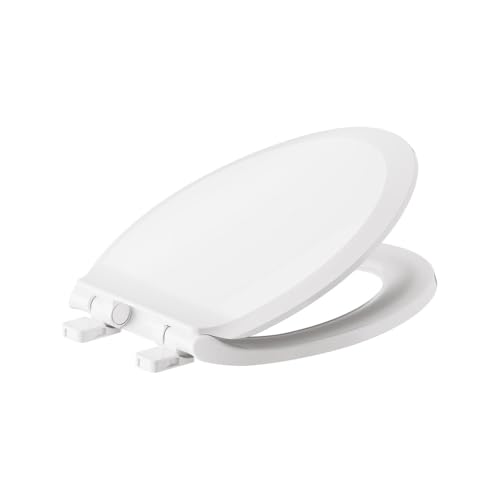
Toilet seats are often an afterthought, but they have a meaningful impact on daily experience. Key features to evaluate:
TOTO's SoftClose seat series and Kohler's Cachet seat are consistently well-rated in aggregated owner reviews for hinge durability. Some TOTO models, including the Drake II and UltraMax II, come with a SoftClose seat included. Most Kohler and American Standard toilets do not include a seat in the base purchase price.
Most major-brand toilets carry a limited lifetime warranty on the vitreous china (the porcelain bowl and tank). This covers cracks from manufacturing defects. What is almost never covered: cracks from improper installation, impact, freeze damage, or normal wear. Flush mechanisms, flappers, and fill valves typically carry a one-year to three-year warranty separate from the porcelain.
TOTO's warranty is lifetime on the toilet itself, with one year on the flush valve, fill valve, and seat hardware. Kohler offers a similar tiered structure. American Standard provides a limited lifetime warranty on porcelain and a one-year warranty on mechanical components. Woodbridge provides a one-year full warranty plus a five-year warranty on the toilet itself, shorter than the big three but adequate for the price tier.
Important: warranties are typically void if you use tank drop-in tablets containing bleach, which degrade rubber seals and can cause fill valves to fail within two to three years.
Before purchase, confirm these four items:
For most DIY-capable homeowners, toilet installation is a two-hour project with hand tools. If your existing floor has any flex at the flange location, or if you notice water damage around the base of the current toilet, call a plumber before proceeding.
Brand reliability data comes from aggregated owner reviews, warranty claim patterns described in consumer forums, and professional plumber surveys. Based on these sources:
| Brand | Porcelain Warranty | Flush Mechanism Reputation | Parts Availability | Tier | Check Price |
|---|---|---|---|---|---|
| TOTO | Lifetime | Excellent (G-Max, Tornado) | Excellent | Premium | Check price |
| Kohler | Lifetime | Very Good | Excellent | Premium / Mid | Check price |
| American Standard | Lifetime | Good (Champion 4 strong) | Very Good | Mid | Check price |
| Gerber | Lifetime | Very Good | Good | Mid | Check price |
| Woodbridge | 5 Year | Good | Fair | Value | Check price |
| Swiss Madison | 1 Year | Adequate | Fair | Value | Check price |
TOTO's Tornado Flush technology, introduced on the UltraMax II and Drake II, creates a dual-nozzle centrifugal rinse pattern that cleans the bowl with less water and fewer moving parts than a traditional rim-feed system. Owner reviews across retail platforms consistently describe fewer clogging incidents and less visible bowl staining over time compared with conventional designs.
Parts availability matters more than most buyers realize. TOTO and Kohler replacement flappers, fill valves, and flush handles are stocked at nearly every hardware store in the US. If you buy a niche import brand, confirm that replacement parts are available domestically before committing. A toilet that cannot be repaired cheaply eventually becomes a replacement project.
Toilet pricing often catches buyers off guard because the purchase price typically excludes the seat (unless noted), supply line, wax ring, and mounting bolts. Budget for these separately:
Budget-tier toilets from Woodbridge and Swiss Madison can deliver acceptable performance if the MaP score supports it. Mid-range models from American Standard and Kohler represent the best price-to-performance ratio for most households. TOTO's Drake or Drake II commands a premium but the difference in long-term clog reduction and bowl hygiene justifies it for many buyers, particularly in higher-use bathrooms.
For a curated look at options across price tiers, see our best flushing toilets guide and the supporting ADA toilet guide if accessibility is a factor.
Measure from the finished wall (not the baseboard) to the center of the floor drain or the center of the bolt caps on the existing toilet base. Standard is 12 inches, but 10-inch and 14-inch rough-ins exist in older homes. Always confirm before ordering.
MaP (Maximum Performance) is an independent flush-performance test measuring how many grams of simulated waste a toilet clears per flush. Scores run from 250 to 1,000 grams. Look up any model at map-testing.com using the brand and model name. Target 500 grams minimum; 800 or higher is excellent.
WaterSense-certified toilets use 1.28 GPF or less, which is lower than the federal 1.6 GPF maximum. The label also requires a minimum MaP score of 350 grams. It is a useful floor but not a performance ceiling, so always check MaP score alongside the WaterSense badge.
Standard height toilets sit 14 to 15 inches from floor to rim. Comfort height (ADA height) sits 16 to 18 inches, similar to a standard chair. Most adults over 50 and taller individuals prefer comfort height. Younger children typically manage better with standard height or a step stool.
No. Flush performance depends on flush valve design, trapway diameter, and glazing, not on whether the toilet is one or two pieces. One-piece toilets offer easier cleaning at the tank-to-bowl seam and a sleeker profile, not better flushing.
The trapway is the internal passage waste travels through. A fully glazed trapway is coated with vitreous china the entire length, reducing friction and the surface area where solids can catch. Partially glazed trapways create more drag, increasing clog likelihood over time.
They can be, if household members consistently use the partial-flush setting for liquid waste. Research suggests many users default to the full flush regardless of waste type, reducing theoretical savings. TOTO's Aquia IV and American Standard's H2Option are the best-regarded dual-flush models with high MaP scores on the full-flush cycle.
A straightforward toilet replacement on an existing flange in good condition is within the capabilities of most DIY homeowners and takes one to two hours. If the flange is damaged, the subfloor has water damage, or drain alignment is uncertain, hire a licensed plumber. Plumbing errors at the flange can cause slow leaks that damage flooring over months before they become visible.
Standard wax rings work when the flange sits at or up to 1/4 inch above the finished floor. If the flange is recessed below the floor (common after tile installations), use a jumbo or double-wax ring, or switch to a wax-free gasket such as the Fluidmaster 7530P8 that can be adjusted to different flange heights.
TOTO and Kohler have the widest replacement-part distribution in the US. Flappers, fill valves, handles, and seats for both brands are stocked at Home Depot, Lowe's, and most independent hardware stores. American Standard parts are slightly less universal but still widely available. Niche imports can require ordering directly from the manufacturer or a specialty supplier.
Chlorine-based drop-in tablets break down rubber seals inside the tank, including the flapper and fill valve components. Most manufacturers explicitly state that use of these tablets voids the warranty on flush mechanisms. Use rim-mount cage cleaners or add cleaning solution directly to the bowl instead.
The vitreous china bowl and tank of a quality toilet will last 25 to 50 years with proper installation. The mechanical components (flapper, fill valve, flush handle) typically need replacement every five to ten years. Cracks in the porcelain, a rocking base, or persistent leaks at the base are the primary signs a toilet needs full replacement.
The TOTO Drake uses the G-Max flush system with a 3-inch flush valve. The Drake II upgrades to the Double Cyclone (Tornado Flush) system with dual nozzles for a more thorough bowl rinse. The Drake II achieves a 1,000-gram MaP score at 1.28 GPF. The original Drake scores 800 grams. The Drake II is the meaningful upgrade if budget allows.
Yes. The Champion 4 holds a 1,000-gram MaP score at 1.6 GPF, one of the highest gravity-flush scores available. Its 4-inch flush valve and 2.375-inch trapway handle large waste loads reliably. The trade-off is higher water consumption than WaterSense-certified 1.28 GPF alternatives. If clog resistance in a high-use bathroom is the priority and water efficiency is secondary, it remains a strong choice.
IBC (International Building Code) requires a minimum of 15 inches from the toilet centerline to any side obstruction. NKBA guidelines recommend 18 inches. Front clearance should be at least 21 inches to the facing wall or door; 30 inches is preferred. These minimums apply to new construction; older bathrooms may not meet them, which limits bowl-shape options.
Generally yes, provided you select a model with a high MaP score. Older drain lines with reduced slope benefit from a high-velocity flush rather than a high-volume flush. A 1.28 GPF toilet with a 1,000-gram MaP score and a large trapway is appropriate for most older drain configurations. A plumber can assess drain slope if clogging has been a recurring problem regardless of which toilet is installed.
The Kohler Cimarron is a mid-range two-piece toilet with a Class Five flush system, scoring 1,000 grams on the MaP test at 1.28 GPF, matching the Drake II's maximum MaP score. It is WaterSense certified and widely available. The Drake II differentiates itself with its Tornado Flush bowl-cleaning system rather than raw flush power. The Cimarron is a reasonable choice where budget is the primary constraint.
The Woodbridge T-0001 is a skirted one-piece toilet with a clean, contemporary aesthetic at a value-tier price. It offers a dual-flush system and a concealed trapway that is easier to clean than traditional exposed-trapway designs. The warranty is shorter than TOTO or Kohler, and replacement-part sourcing requires more effort. It suits design-forward renovations where aesthetics and budget drive the decision more than long-term service ease.
The TOTO Aquia IV is a dual-flush two-piece toilet using 0.8 GPF (partial) and 1.0 GPF (full) cycles, both of which are below the standard 1.28 GPF WaterSense threshold. It uses the Tornado Flush system and achieves strong MaP scores. Its lower total GPF makes it one of the most water-efficient options with genuine flushing power available in the residential market.
Repair is almost always cheaper when the issue is a worn flapper, faulty fill valve, or running tank. Replace the toilet when you see hairline cracks in the porcelain, persistent leaks at the base despite a new wax ring, or when the fixture pre-dates 1994 and uses 3.5 GPF or more. Upgrading a pre-1994 toilet typically pays back in water savings within two to three years at average residential usage rates.
A toilet purchase fails most often when buyers skip the rough-in measurement, ignore the MaP score, or underestimate how much bowl height matters for daily comfort. Work through all 15 questions on this checklist before opening a product page and the decision becomes straightforward. For the widest range of household use cases, a TOTO Drake II or Kohler Cimarron at 1.28 GPF with a MaP score of 800 grams or higher, matched to your exact rough-in and bowl height preference, will outperform any toilet chosen on price alone.
When you flush, where does it go? Follow toilet water from the bowl through the trap, drain, and stack to a septic…
Read the guideDo toilets need electricity to flush? Most do not. Learn which toilets use power, how a standard flush works, and how to…
Read the guideFind out how many gallons per flush an old toilet really uses, how to check your own tank, and how much water…
Read the guide