

Why Toilet Trapways Are Curved Like an S
Toilets4.6
Learn why toilet trapways curve like an S, how each bend blocks sewer gas, and what the shape means for clogs and…
Read the guideReal cost data, what drives the bill up, when to call vs. DIY, and how the right toilet design prevents the problem entirely.
Plumbers typically charge between $100 and $275 to unclog a toilet in 2026, with a national average near $175. Simple drain-snake jobs at the low end take under an hour. Severe clogs requiring hydro-jetting or camera inspection can push the bill past $400 to $600 or more.
A toilet clog is one of the most common plumbing calls a homeowner makes. Most are resolved quickly and cheaply, but the wrong circumstances can turn a simple fix into a multi-hour job with a bill that surprises you. This guide breaks down exactly what plumbers charge, why costs vary so widely, what you can safely handle yourself, and how choosing a toilet with a larger trapway and a high MaP score dramatically reduces how often you ever need to make that call.
The national average cost for a plumber to unclog a toilet in 2026 sits around $150 to $200 for a standard job, with most homeowners paying between $100 and $275. After-hours emergency calls, permit-required work, or clogs located deep in the main sewer line can raise the total well above $500.
Service call fees alone (the cost just to have the plumber show up) typically run $50 to $125 before any work begins. Always confirm whether the service call fee is applied toward the total or charged separately.
| Clog Type | Typical Method | Estimated Cost Range | Time on Site |
|---|---|---|---|
| Minor toilet clog (close to bowl) | Plunger or hand snake | $100 – $175 | 30 – 60 min |
| Mid-drain clog (trap or drain pipe) | Electric drain snake (auger) | $150 – $275 | 1 – 2 hours |
| Deep drain or branch line clog | Electric snake + possible camera | $200 – $400 | 1.5 – 3 hours |
| Main sewer line clog | Hydro-jetting or rooter service | $350 – $700+ | 2 – 4+ hours |
| Emergency / after-hours call | Any of the above + premium rate | $200 – $800+ | Varies |
| Camera inspection add-on | Drain camera | $100 – $300 extra | 30 – 60 min extra |
Note: Cost ranges are aggregated from publicly available plumber pricing databases, HomeAdvisor, Angi, and Thumbtack data as of 2026. Prices vary significantly by region and by contractor.
The biggest cost drivers are clog location, time of day, and the method required to clear it. A clog sitting just below the bowl is far cheaper to fix than one 30 feet down a drain line. After-hours and weekend emergency rates often add 50 to 100 percent to a standard job total.
Geographic region also matters substantially. Plumbers in high cost-of-living metros like New York, San Francisco, or Boston routinely charge two to three times what plumbers in rural Midwest or Southeast markets charge for identical work. Labor rates, licensing overhead, and local demand all feed into that gap.
Licensed master plumbers note that repeat clogs in the same toilet are almost always a signal, not a coincidence. A toilet that clogs multiple times a year likely has one of three problems: a partial obstruction that was never fully cleared, a slow drain caused by a venting issue, or an undersized or worn trapway that traps waste before it reaches the drain. Paying to snake a problem toilet every few months adds up faster than a toilet replacement.
Regional pricing for plumber services varies significantly across the United States:
| Region | Low End | High End | Average |
|---|---|---|---|
| Northeast (NY, MA, CT) | $175 | $400+ | $250 |
| West Coast (CA, WA, OR) | $150 | $375+ | $225 |
| Southeast (FL, GA, NC) | $100 | $250 | $160 |
| Midwest (OH, IL, MI) | $100 | $225 | $150 |
| Southwest (TX, AZ, NV) | $110 | $275 | $170 |
DIY methods like plunging and using a toilet auger are appropriate for minor clogs caused by too much toilet paper or a small obstruction near the bowl. You should call a plumber when the toilet is overflowing, when multiple drains are backing up simultaneously, when plunging has not worked after two or three solid attempts, or when the clog returns within days.
Multiple drain backups (toilet, tub, and sink slow at the same time) almost always indicate a main sewer line issue that requires professional equipment to resolve safely.
Before calling a plumber, try these steps in order:
Chemical drain openers like Drano or liquid caustic products are not recommended for toilet clogs. These products are designed for sink and tub drains. In a toilet, they can sit in the bowl and trap, potentially damaging the porcelain, wax ring seal, or PVC drain pipe. They also do not dissolve non-organic material like wet wipes or cotton swabs, which are among the most common toilet clog causes. See our article on whether Drano can unclog a toilet for more detail.
A standard toilet unclog service generally includes the diagnostic visit, the clearing of the clog using a hand snake or electric auger, and a functional test flush to confirm water flows freely. Disposal of any extracted material, cleanup of splashed water, and a short verbal explanation of the cause are also standard at most licensed plumbing companies.
Camera inspection, hydro-jetting, and drain line repair are separate services billed on top of the base unclogging fee. Always ask for a written estimate that itemizes the base service fee and any add-ons before work begins.
A thorough plumber does more than rod the drain. Expect them to:
Standard homeowner’s insurance policies almost never cover the cost of unclogging a toilet. Routine plumbing maintenance and blockages are considered owner-responsibility wear and tear. However, if a toilet clog causes water to overflow and damage a floor, subfloor, or adjacent rooms, the resulting water damage may be covered under your dwelling or personal property coverage, subject to your deductible.
Home warranty plans vary: some cover drain stoppages as part of a plumbing coverage tier, while others explicitly exclude clogs. Review your home warranty contract language or call your provider to confirm before assuming coverage.
If your toilet overflowed before you could address the clog and water has soaked a floor or seeped under baseboards, the service call cost becomes the least of your financial concerns. Water damage restoration averages $1,200 to $5,000 depending on affected area, material type, and whether mold remediation is needed. Document all damage with photos immediately for any insurance claim.
Toilet trapway diameter and flush power are the two most predictive factors in clog frequency. Toilets with a fully glazed 2.125-inch trapway and a high MaP flush-test score consistently produce fewer clogs than older models with smaller, unglazed passageways. Upgrading to a high-performance toilet is one of the most practical ways to reduce repeat plumber calls.
The MaP (Maximum Performance) test, conducted by independent labs and reported at map-testing.com, measures how many grams of solid waste a toilet can flush in a single pass. Toilets scoring 800 grams or above are considered strong performers; models at 1,000 grams (the test maximum) handle even dense loads reliably without clogging.
Plumbers who service high-volume residential buildings often report that specific toilet models generate a disproportionate share of their service calls. Older 1.6 GPF toilets from the 1990s and early 2000s with small, unglazed trapways are still common in many homes and routinely clog because the trapway narrows over time with mineral buildup. Replacing these with a modern EPA WaterSense-certified model that uses 1.28 GPF and carries a MaP score of 1,000 grams typically eliminates the recurring clog problem entirely.
These are established, well-reviewed models whose published specifications and aggregated owner feedback consistently point to strong clog resistance. This is not a ranked list; all are worth considering for any bathroom where clogs are a recurring concern.
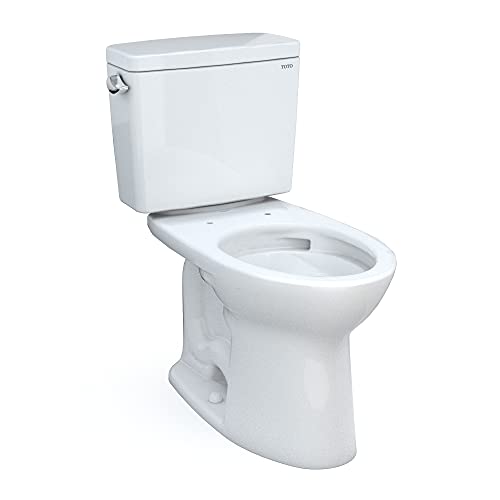
TOTO Drake II (CST454CEFG) uses TOTO’s G-Max flushing system with a 3-inch flush valve and a fully glazed 2.125-inch trapway. MaP score: 1,000 grams. It is one of the most frequently recommended toilets by plumbers for clog-prone households. EPA WaterSense certified at 1.28 GPF. See more in our best flushing toilets guide.
TOTO UltraMax II (MS604114CEFG) is a one-piece version of the Drake II, using the same G-Max system in a skirted, easy-clean design. MaP score: 1,000 grams. The one-piece design also eliminates the tank-to-bowl joint that can loosen over time and contribute to rocking or seal failures.
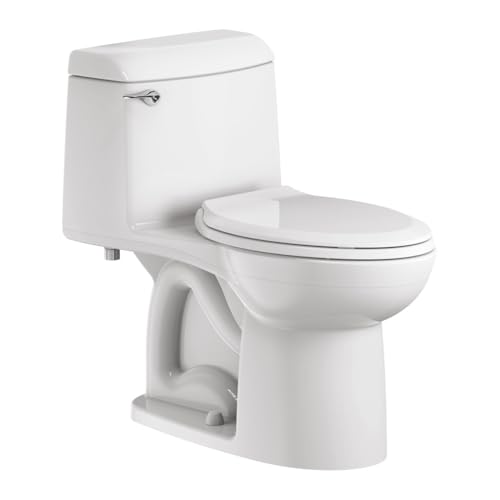
American Standard Champion 4 features a 4-inch flush valve (the widest on this list) and a fully glazed 2.125-inch trapway. The manufacturer cites a 16-cup bulk flush capacity. MaP score at or near the 1,000-gram maximum. This toilet is designed specifically for households that flush items that would challenge smaller-valved toilets, though flushing anything other than waste and single-ply toilet paper is never recommended.
Kohler Cimarron (K-6422) uses AquaPiston technology with a canister flush valve that allows 360-degree water flow entry into the bowl. MaP score: 1,000 grams. Fully glazed trapway. EPA WaterSense certified at 1.28 GPF. The Cimarron is a consistent performer in Consumer Reports-style aggregate data and plumber reviews alike.
Gerber Viper (DF-21-318) is a value-positioned model with a 3-inch flush valve, fully glazed 2.125-inch trapway, and a MaP score of 1,000 grams. The Viper punches well above its price tier for flush performance. EPA WaterSense certified. Gerber backs it with a lifetime warranty on the china.
Woodbridge T-0001 is a skirted one-piece design with a dual-flush system (1.0 and 1.6 GPF options) and a fully glazed 2.125-inch trapway. Owner reviews consistently praise its strong full-flush performance. The skirted design also simplifies cleaning, reducing the buildup around the trapway base that can aggravate slow drains over time.
| Model | Flush Valve | Trapway Diameter | MaP Score | GPF | Glazed Trapway | Check Price |
|---|---|---|---|---|---|---|
| TOTO Drake II | 3 inch | 2.125 inch | 1,000 g | 1.28 | Yes | Check price |
| TOTO UltraMax II | 3 inch | 2.125 inch | 1,000 g | 1.28 | Yes | Check price |
| American Standard Champion 4 | 4 inch | 2.125 inch | 1,000 g | 1.6 | Yes | Check price |
| Kohler Cimarron | 3 inch | 2.125 inch | 1,000 g | 1.28 | Yes | Check price |
| Gerber Viper | 3 inch | 2.125 inch | 1,000 g | 1.28 | Yes | Check price |
| Woodbridge T-0001 | 3 inch | 2.125 inch | 800+ g | 1.0 / 1.6 | Yes | Check price |
The most common cause of toilet clogs is flushing non-flushable items, particularly so-called "flushable" wipes, cotton balls, cotton swabs, paper towels, and feminine hygiene products. These items do not break down the way toilet paper does and routinely form blockages in the toilet trapway or further down the drain line. Excessive toilet paper use in a single flush is the second most common cause.
Structural causes include partial obstructions from calcified mineral deposits narrowing the trapway over time, low-slope drain pipe installation that allows waste to settle rather than flow, and venting problems that prevent waste from pulling freely through the system.
The rule is simple: only human waste and toilet paper belong in a toilet. The following items are common clog causes that plumbers remove on a daily basis:
See our detailed guide on what not to flush for a comprehensive list and the reasoning behind each item.
Not all toilet paper is equal from a plumbing standpoint. Ultra-thick, multi-ply toilet paper dissolves more slowly than single or double-ply options. In older toilets with undersized trapways, this difference is meaningful. A high-MaP toilet like the TOTO Drake or American Standard Champion 4 handles even premium-thick paper with little issue at normal single-flush quantities; the problem arises when large amounts are flushed at once through any toilet. See our related article on toilet paper thickness and clogs for more detail.
Prevention is cheaper than any plumber call. These habits and modifications reliably reduce clog frequency:
For non-emergency clogs, getting two or three quotes from licensed plumbers in your area is always worthwhile. Most plumbing companies offer free phone estimates for straightforward jobs. Be specific when calling: tell them the toilet will not flush after several plunging attempts, whether other drains are affected, and whether you can hear gurgling in other fixtures. This information helps the dispatcher estimate the scope and give you a more accurate range. Large national franchise plumbing companies (Roto-Rooter, Mr. Rooter, Benjamin Franklin Plumbing) tend to be priced at or above the regional average but offer consistent service standards and licensed technicians. Local independent plumbers often charge less for the same work.
Plumbing contractors advise against accepting any quote that is purely hourly with no estimate of total job duration. A flat-rate or not-to-exceed quote for a standard toilet unclog protects you from a situation where a simple job stretches to three hours. Ask specifically: "What is your flat rate to rod a toilet clog?" rather than "What do you charge per hour?"
Most toilet clogs cost between $100 and $275 to clear professionally in 2026, with the average landing near $175. Emergency, deep-line, and hydro-jet jobs cost more. If your toilet clogs regularly, the right long-term fix is upgrading to a high-MaP toilet with a fully glazed 2.125-inch trapway and a large flush valve, such as the TOTO Drake II, Kohler Cimarron, or American Standard Champion 4. A one-time toilet replacement investment eliminates the recurring plumber bill and gives you a more water-efficient, reliable fixture for the next decade or more.
Most homeowners pay between $100 and $275 for a plumber to clear a toilet clog in 2026. The national average is around $150 to $200 for a standard job completed with a hand snake or electric auger. Severe clogs, after-hours calls, or main line issues cost more.
A simple toilet clog takes 30 to 60 minutes for a licensed plumber to clear, including setup, clearing, and test flushes. Deeper drain or main line clogs can take 1.5 to 4 hours depending on clog location and method required.
Yes, if the toilet has not responded to two or three solid plunging sessions, if multiple drains are slow simultaneously, if the clog returns repeatedly, or if there is any risk of overflow. Attempting to force a stubborn clog deeper with improvised tools can turn a $150 service call into a $500 pipe repair.
A service call fee is what the plumber charges just to come to your home, typically $50 to $125. Some companies apply it toward the total job cost; others charge it in addition to the labor and materials fee. Confirm this before scheduling.
Yes, significantly. After-hours, weekend, and holiday emergency rates can run 50 to 100 percent higher than standard rates. A $175 standard job can become a $300 to $350 emergency call in the same region. If the clog is not causing overflow or immediate damage, waiting until regular business hours saves money.
Often yes. A flange plunger handles the majority of household toilet clogs. A toilet auger handles most of the rest. You should call a plumber when multiple fixtures are backing up, when plunging and augering have both failed, or when the toilet is actively overflowing without signs of clearing.
For most clogs, a plumber uses a heavy-duty electric drain snake (also called a drain auger or rooter machine) that reaches further and with more torque than a consumer-grade toilet auger. For deep-drain or main line clogs, hydro-jetting uses high-pressure water to blast the blockage and clean pipe walls. Camera inspection can locate the clog precisely before any clearing work begins.
Hydro-jetting uses a high-pressure water stream (typically 1,500 to 4,000 PSI) to clear blockages and scour the interior of drain pipes. It is typically reserved for main sewer line clogs, grease buildup, or root intrusion rather than simple toilet clogs. Hydro-jetting adds $300 to $600 or more on top of the base service call fee.
Standard homeowner’s insurance policies do not cover routine drain clogs. If the clog caused water damage to floors, walls, or ceilings by overflowing, that consequential water damage may be covered, subject to your deductible. Always document overflow damage with photos before cleanup begins.
Recurring clogs after professional clearing usually point to one of three causes: a partial obstruction that was pushed deeper rather than removed, a venting issue creating negative pressure that slows drain flow, or an aging toilet with a calcified or undersized trapway that catches waste repeatedly. A camera inspection reveals which problem you have.
Toilets with a fully glazed 2.125-inch trapway and a high MaP flush-test score offer the best clog resistance. Models like the TOTO Drake II, TOTO UltraMax II, American Standard Champion 4, and Kohler Cimarron all achieve 1,000-gram MaP scores and are consistently cited by plumbers as the least-clogging toilets in residential use.
MaP (Maximum Performance) is an independent flush test conducted by Veritec Consulting and reported at map-testing.com. It measures how many grams of solid waste a toilet can clear in a single flush. Toilets scoring 800 grams or more are considered high performers; 1,000 grams is the test maximum. A toilet with a high MaP score is less likely to clog under normal household use.
Generally yes. A larger flush valve (3-inch or 4-inch vs. 2-inch) releases water into the bowl faster and with more volume, creating a stronger siphon pull. The American Standard Champion 4 uses a 4-inch flush valve and is specifically designed to flush 16 cups of water in a single pass. Combined with a fully glazed trapway, this dramatically reduces clog potential.
Yes. Despite their labeling, most "flushable" wipes do not break down in water at a rate comparable to toilet paper. Wastewater utility reports and independent tests consistently show that flushable wipes remain largely intact after traveling through residential drain lines. They are a leading cause of both toilet clogs and municipal sewer fatbergs.
Turn off the water supply immediately using the shutoff valve located on the wall behind and below the toilet. If the valve is stuck, remove the tank lid and lift the float ball or press down the flapper to stop water flow. Then address the clog or call a plumber. Do not attempt to flush again before clearing the blockage. See our guide on what to do when a toilet overflows for step-by-step instructions.
Pressure-assist toilets use compressed air to force water into the bowl with significantly more velocity than gravity-fed models. They are very effective at preventing clogs and rarely fail to clear waste in a single flush. The trade-offs are noise (substantially louder than gravity-fed toilets), higher initial cost, and the need to replace proprietary pressure cartridges when they fail. For most households, a high-MaP gravity-fed toilet is a quieter and more practical solution.
Verify that any plumber you hire holds a current state plumbing license and carries liability insurance. State licensing databases are publicly searchable. Angi, Thumbtack, and the Better Business Bureau are useful for reading aggregated reviews. For a standard clog in a non-emergency situation, get two to three quotes before committing. For after-hours emergencies, prioritize a company that can confirm licensing over the phone.
Yes. Toilets manufactured before 1994 typically use 3.5 to 5 gallons per flush and have larger trapways that handle most clogs without issue, but their water use is very high. Toilets made between 1994 and the mid-2000s often have smaller trapways introduced to meet the new 1.6 GPF standard without optimized flush engineering, and these models tend to clog most frequently. Modern 1.28 GPF EPA WaterSense models use optimized bowl geometry and larger flush valves to flush effectively with less water, and most score well on MaP testing.
Occasionally yes, if the clog is caused entirely by toilet paper. Toilet paper dissolves in water over time, and a partial paper clog may break up enough overnight to drain on its own. Do not leave a fully blocked toilet unattended overnight, however, as any additional water from condensation or a stuck fill valve could cause overflow. Attempt to clear it with a plunger before leaving it.
The cheapest effective method is a good flange plunger, which costs $10 to $25 at any hardware store. Applied correctly with a proper seal over the drain opening, a flange plunger clears the majority of common household toilet clogs in under five minutes and at zero ongoing cost. A toilet auger ($20 to $50) handles deeper clogs that a plunger cannot reach and is a worthwhile purchase for any homeowner.
Learn why toilet trapways curve like an S, how each bend blocks sewer gas, and what the shape means for clogs and…
Read the guideAlmost every US toilet has a left-side handle. Learn the plumbing and mechanical reasons behind the layout and when it actually changes.
Read the guideHome toilets rely on tanks because household water lines lack the pressure that public flushometer systems use to flush straight from the…
Read the guide